
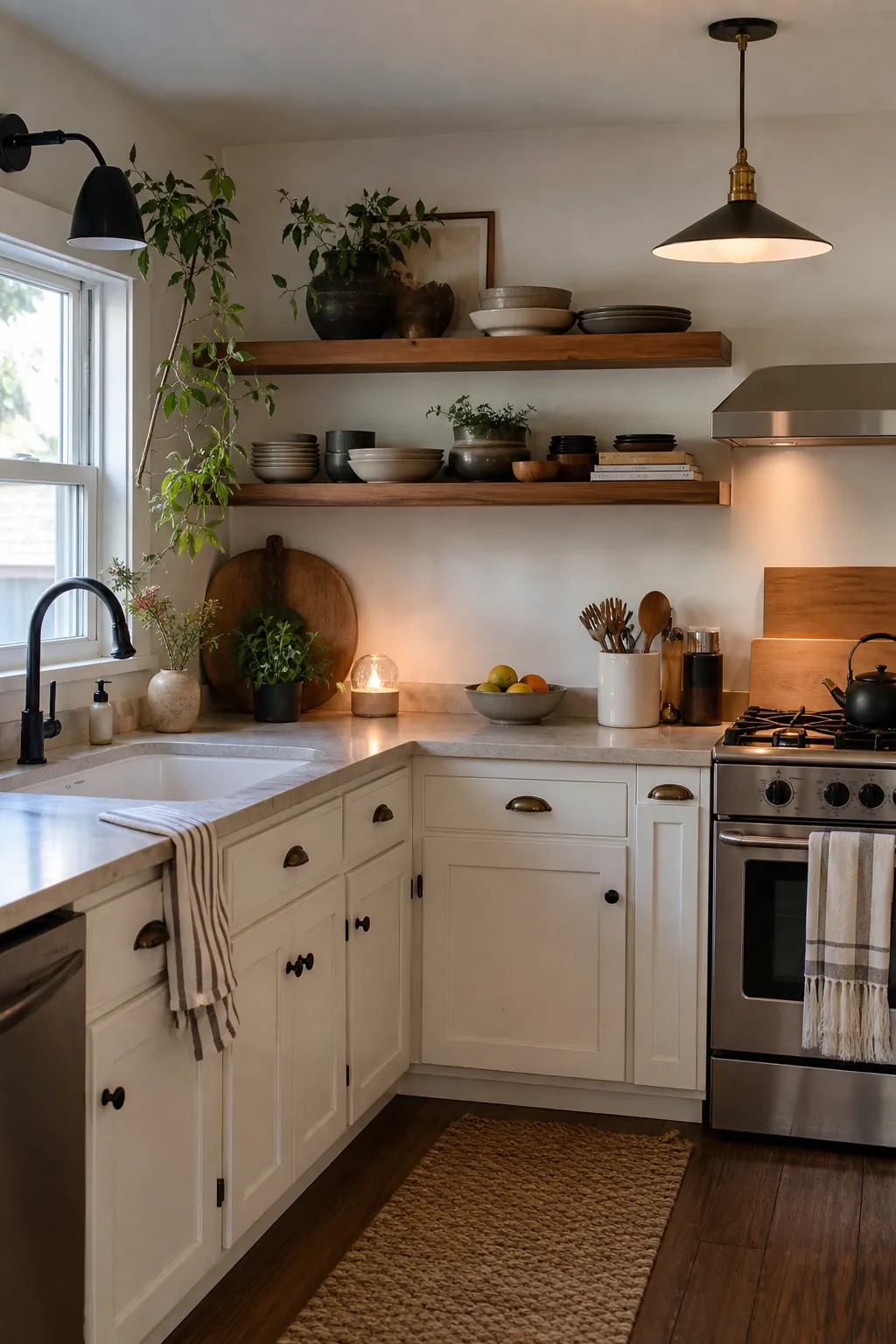
A plain kitchen usually does not feel unfinished because it lacks expensive cabinets. It feels unfinished because every visible choice is fighting for attention: random countertop clutter, cool overhead light, mismatched small appliances, bare walls, and shelves that are storing things instead of framing them. The fastest path to a more designed kitchen is not a full renovation. It is a tighter set of decisions repeated with confidence.
Think of this as a kitchen refresh with design rules, not a shopping list. The goal is to make ordinary pieces look intentional, give the room a natural rhythm, and create enough breathing room that the best details can actually be seen.
Choose One Calm Palette and Repeat It
The easiest way to make a kitchen feel designed is to stop adding new colors casually. Pick a base color, a wood or woven tone, one metal finish, and one small accent. Then repeat those choices in visible places: a runner, a utensil crock, cabinet hardware, a plant pot, a tray, or a framed print near the breakfast table.
For a natural kitchen, this might mean warm white walls, honey-toned wood, matte black or aged brass, and a muted green accent. For a boho kitchen, it might be soft cream, cane or bamboo texture, terracotta, and leafy plants. The palette should be obvious enough that the room looks edited, but quiet enough that it still feels easy to live in.
Clear the Counters, Then Rebuild Them in Zones
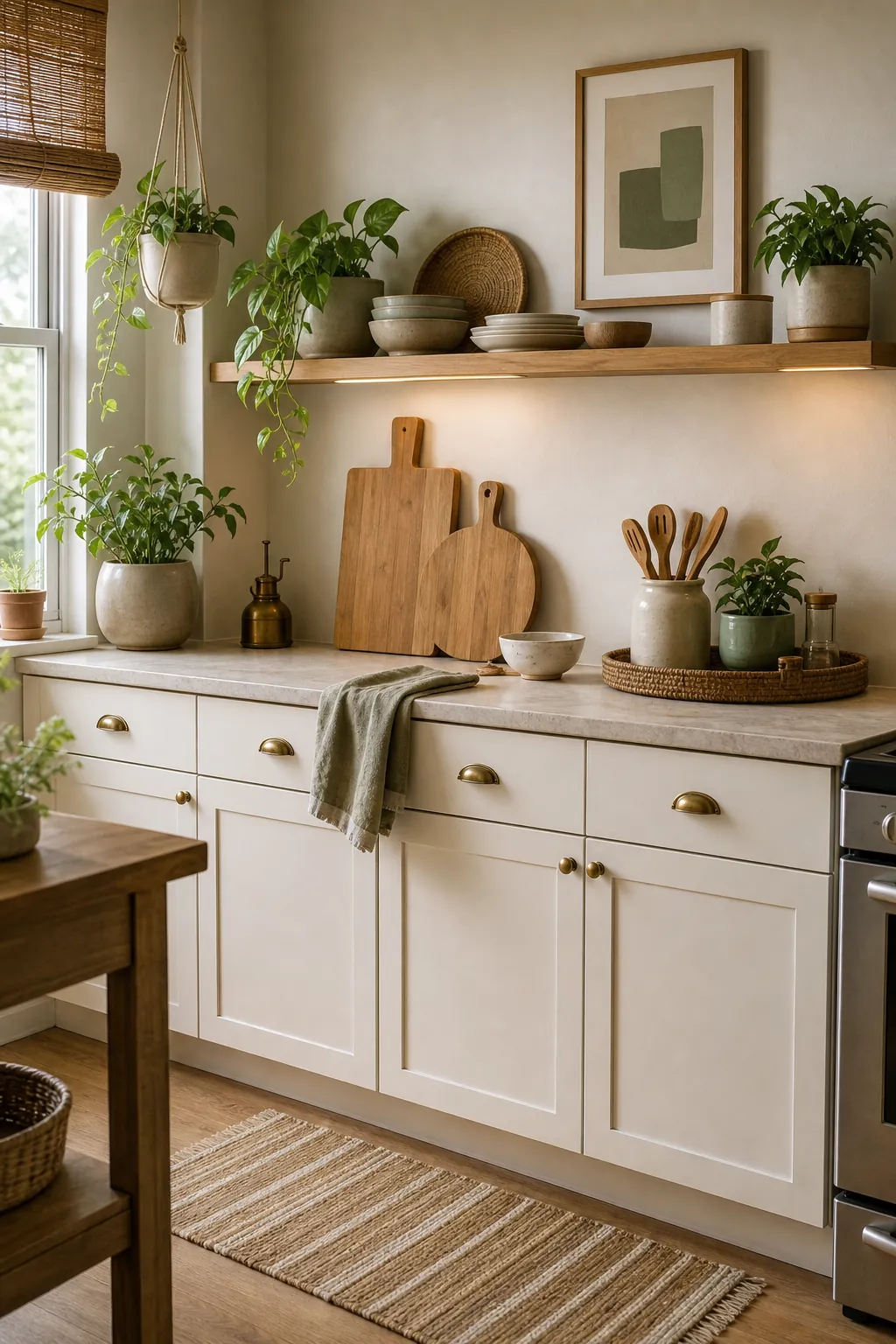
Countertop styling is where many budget kitchen decor attempts go wrong. Empty counters can feel sterile, but crowded counters make even good cabinets look messy. The middle ground is to create small working zones: a coffee corner, a prep zone, a sink zone, and maybe one display moment.
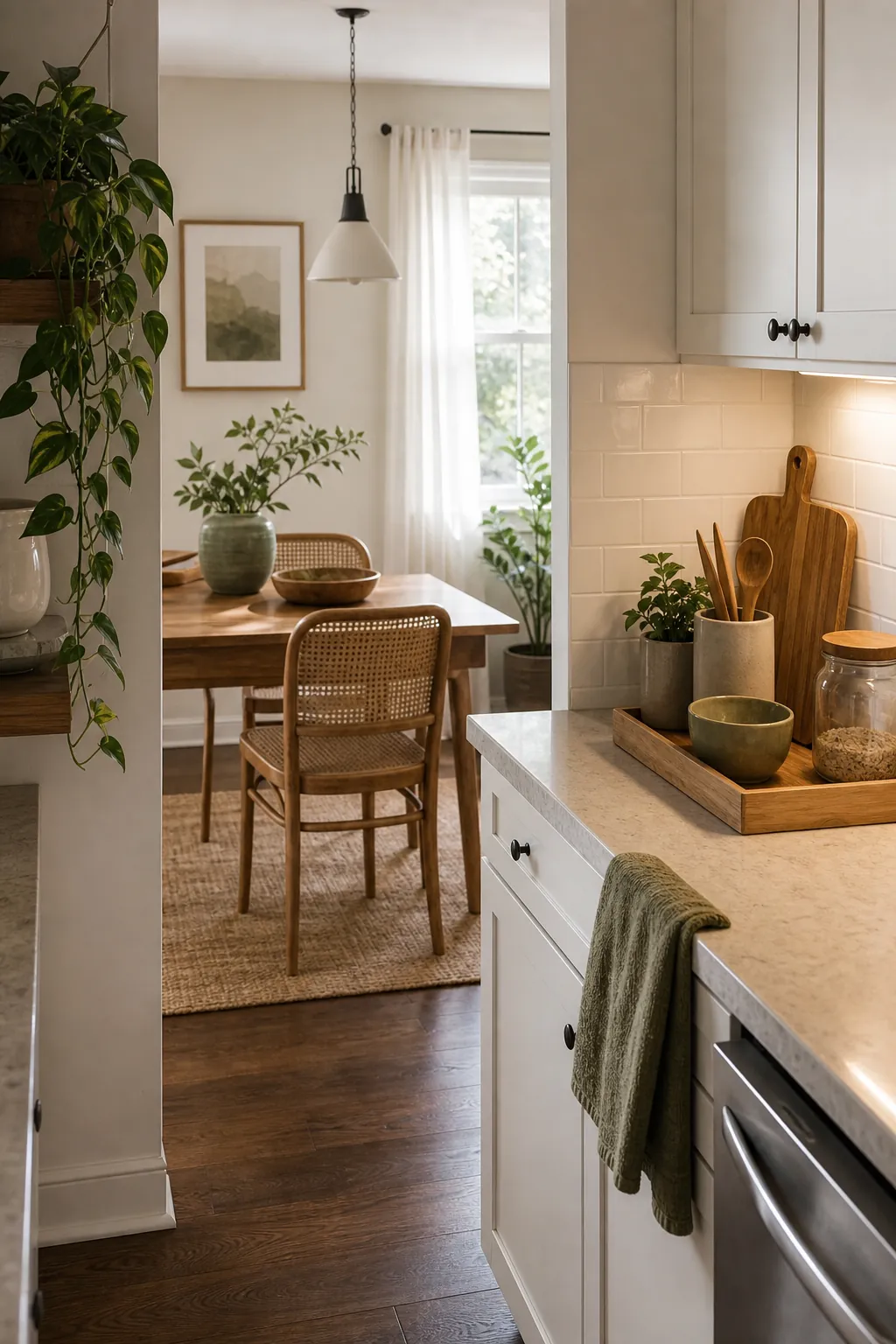
Use trays, cutting boards, crocks, and lidded jars to gather objects that would otherwise scatter. A wood board behind the stove, a ceramic crock with tools, and a small bowl of lemons can do more for kitchen styling than five unrelated decorative pieces. If an item is visible every day, it should either work hard or look like it belongs there.
Upgrade the Touch Points First
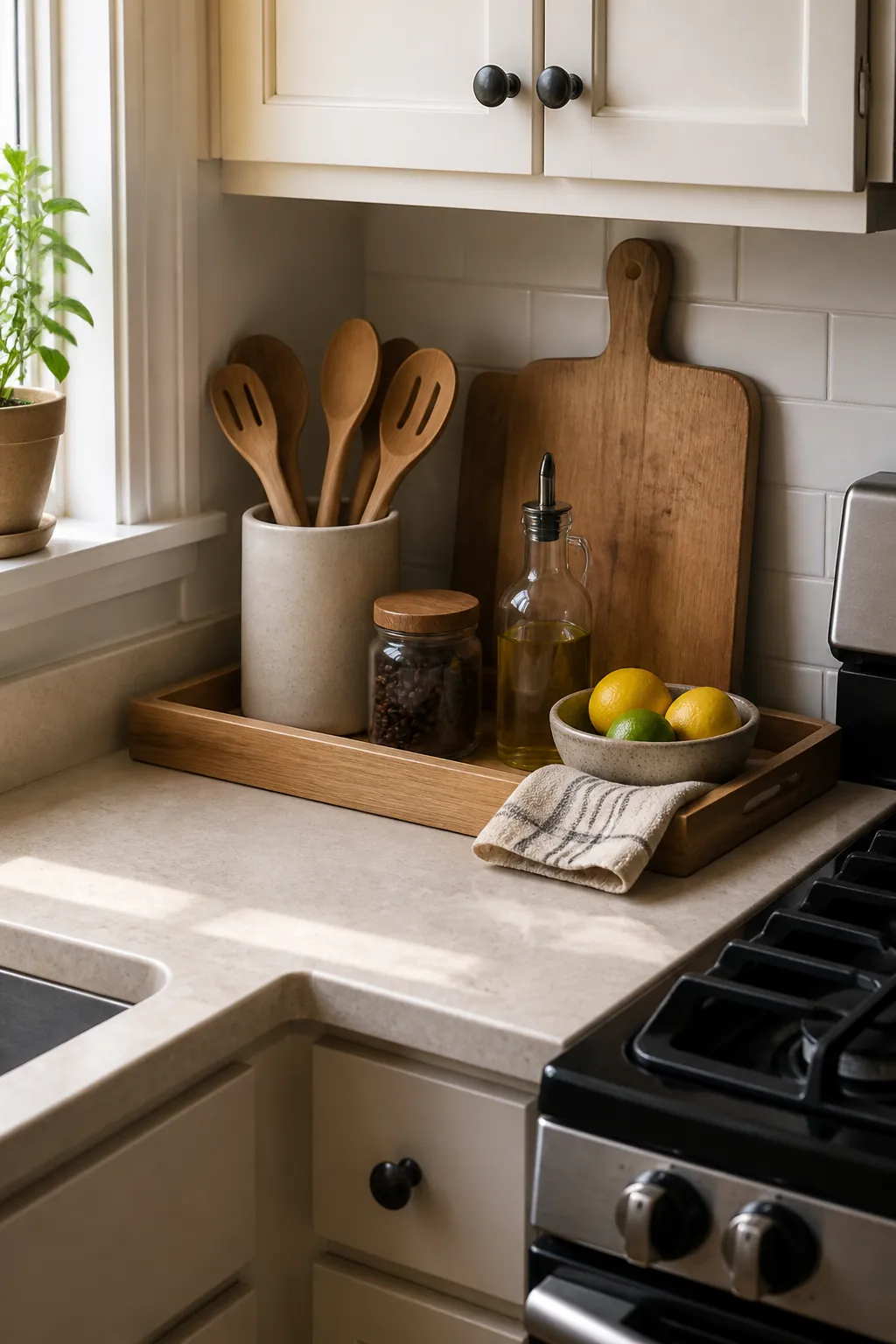
When a kitchen is plain, the small repeated details carry more weight. Cabinet pulls, knobs, faucet finish, switch plates, and visible hinges are the touch points your eye reads over and over. If they are dated, flimsy, or inconsistent, the whole room feels less considered.
You do not need every metal to match perfectly, but you do need a clear rule. Choose one dominant finish and use it repeatedly. Warm brass can soften a white kitchen. Matte black can sharpen a rental kitchen. Brushed nickel can work when the appliances are already stainless. Changing hardware is one of the rare budget kitchen makeover moves that looks small on paper and large in the room.
Treat Open Shelving Like Display, Not Overflow Storage
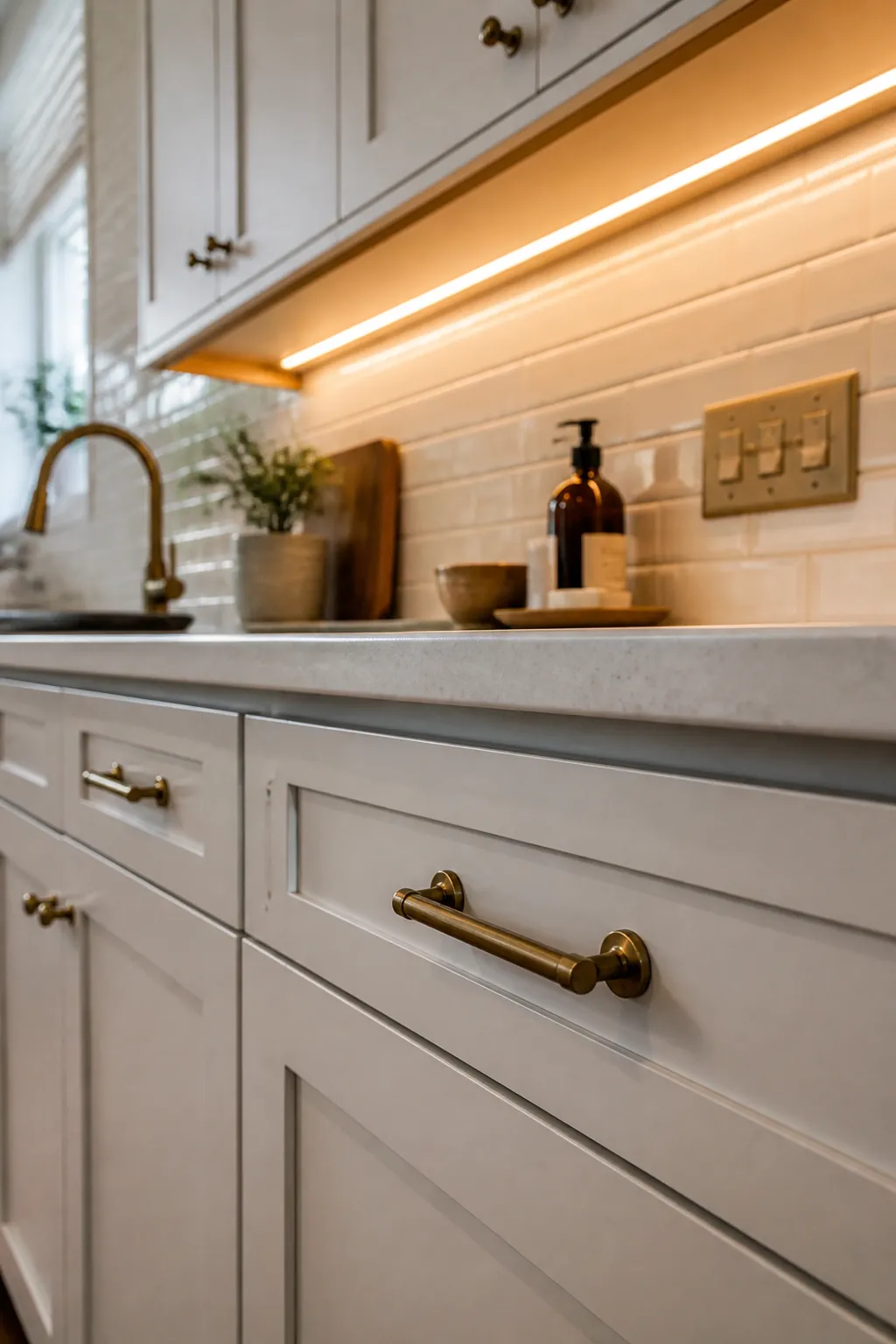
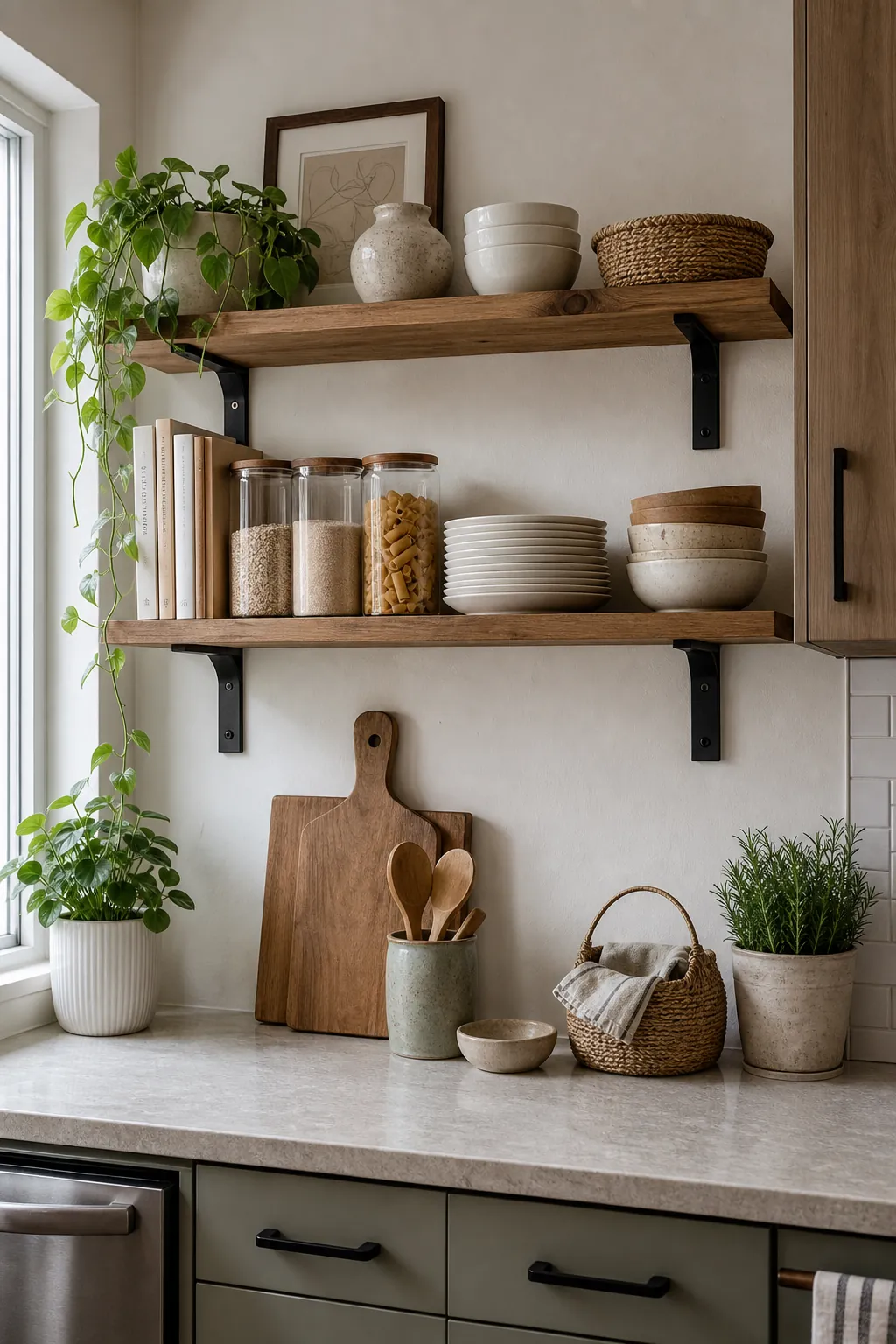
Open shelving can make a plain kitchen feel airy, but it can also make the room feel chaotic. The difference is restraint. Put the everyday things you use most often on the lowest shelf, then leave space around them. Use matching stacks, clear jars, baskets, a small plant, or a handmade bowl to make the shelf feel composed.
The rule is simple: open shelving should show the best version of your kitchen habits, not every kitchen habit you have. If you need storage more than display, keep upper cabinets and style one small shelf, a rail, or a narrow ledge instead.
Bring in One Strong Natural Texture
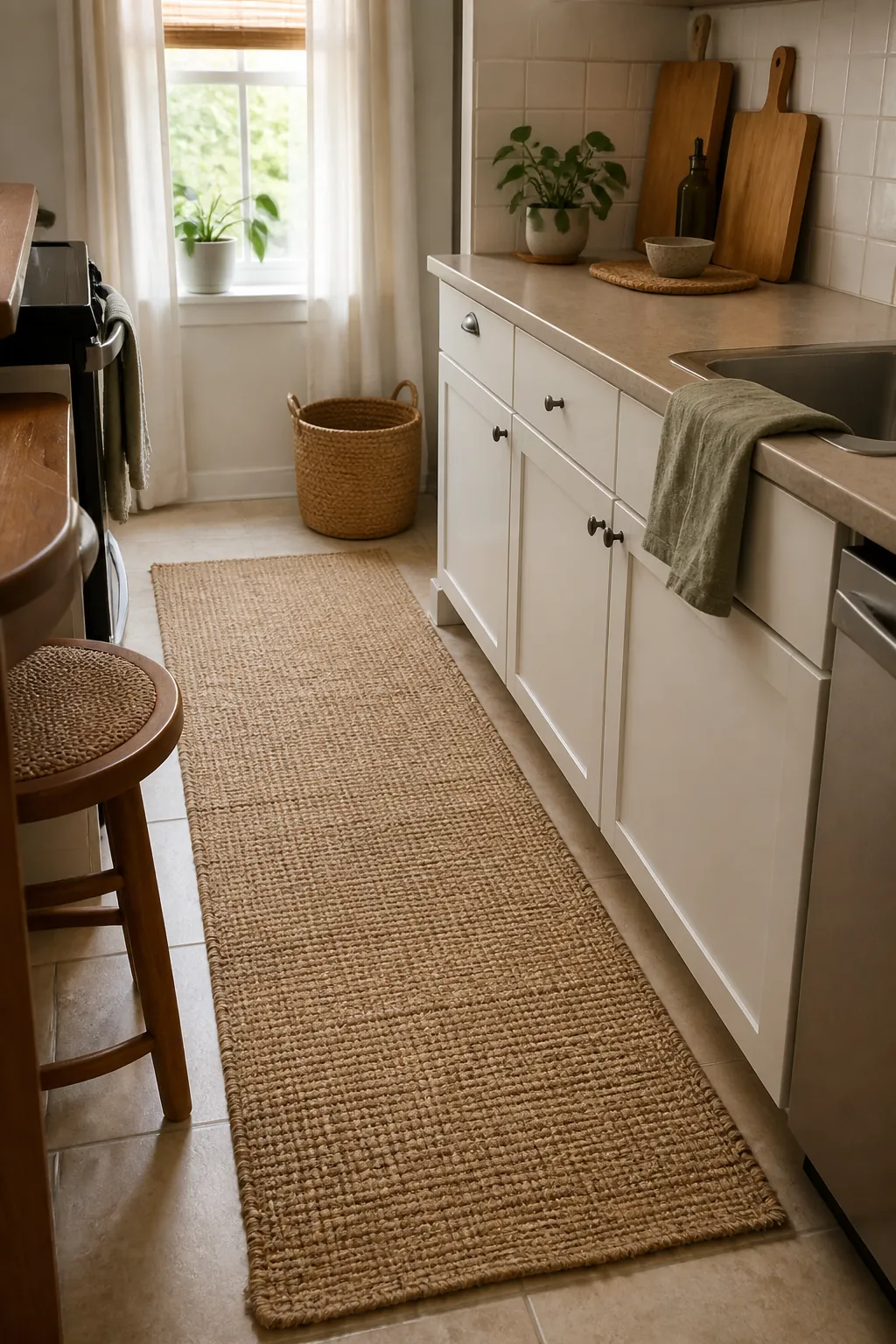
Plain kitchens often have too many hard, flat surfaces: cabinet fronts, appliances, counters, tile, and flooring. Natural texture breaks that flatness without making the room busy. Try a jute or cotton runner, bamboo cutting boards, cane stools, woven baskets, linen cafe curtains, or a wooden dining table visible from the kitchen.
This is where kitchen decor can overlap with dining room decor. If your kitchen opens into a breakfast nook or dining area, repeat the same texture in both places. A woven pendant over the table and a bamboo tray on the counter can make two separate zones feel connected. Texture is the bridge between functional and warm.
Use Warm Layers of Light Instead of One Ceiling Fixture
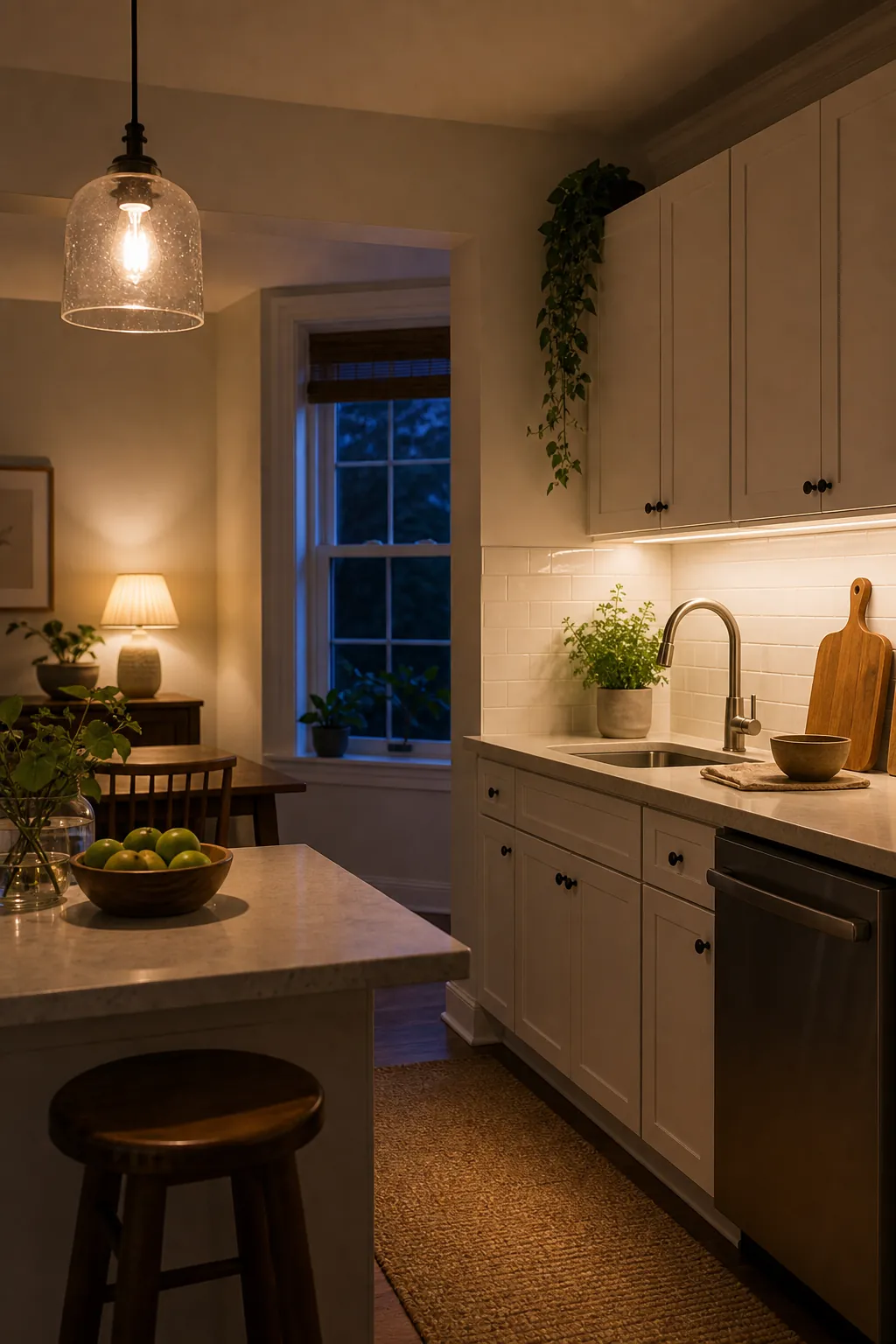
A kitchen can have good colors and still feel flat under harsh overhead light. Designers use layers: general light, task light, and mood light. In a budget kitchen, the biggest difference often comes from warm under-cabinet strips, a softer pendant, or a small shaded lamp placed safely away from water and heat.
Choose bulbs in a warm white range and keep the color temperature consistent. A kitchen does not need to be dim, but it should not feel like a storage room. Good lighting makes simple materials look more expensive because it gives them shadow, depth, and texture.
Add Kitchen Plants Where They Look Intentional
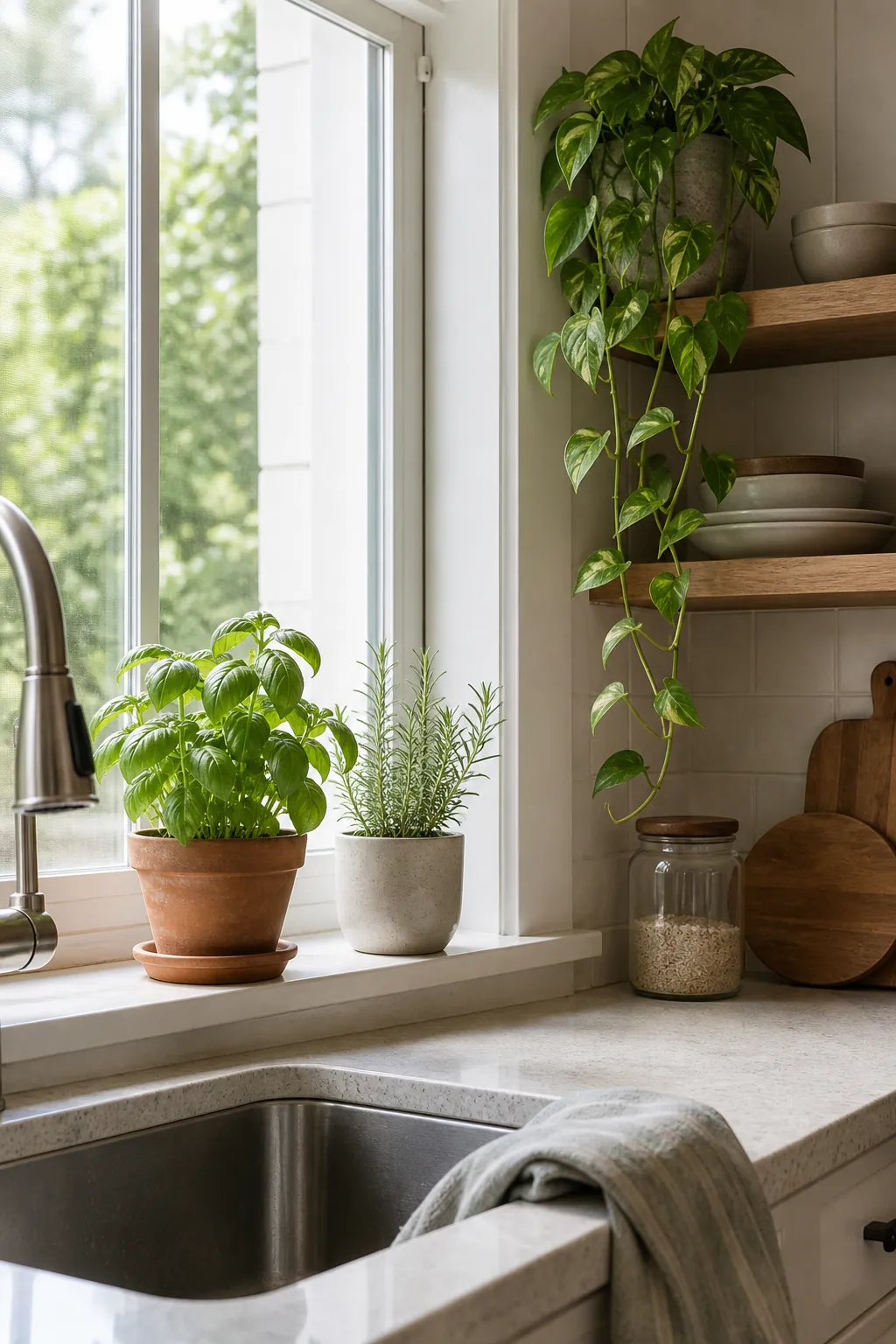
Kitchen plants are useful because they soften straight cabinet lines and make a room feel cared for. The trick is placement. Put herbs near a sunny window, a trailing plant on a high shelf, or one sculptural plant in a simple pot near the dining corner. Avoid scattering small pots everywhere.
Plants work best when they repeat the room’s palette. Terracotta feels warm and relaxed. White ceramic feels clean. Woven planters lean boho. One healthy plant in the right place looks more designed than six struggling plants fighting for counter space.
Connect the Kitchen to the Dining Area
If the kitchen opens to a dining nook, breakfast table, or visible dining room, treat them as one visual story. Repeat a material, a color, or a shape from one zone to the other. A black cabinet pull can echo a black dining chair. A wood shelf can echo a wood table. A green plant pot can echo a framed print near the table.
This is especially helpful in small homes because it makes the kitchen feel less like a leftover workspace and more like part of the home. A designed kitchen does not stop at the cabinets; it relates to the rooms you see from it.
Leave Some Space Unstyled
The final move is the one people skip: edit. A designed room has pauses. Leave part of the counter empty. Let one shelf breathe. Keep the top of the fridge clear unless you can style it with one neat basket or one substantial plant. Remove duplicates, loud packaging, extra mugs, and anything that makes the room look like it is waiting to be cleaned.
A plain kitchen starts to feel more designed when the useful pieces, natural textures, lighting, and decor all look like they were chosen by the same person. You are not trying to hide that the kitchen is simple. You are making simple look deliberate.