
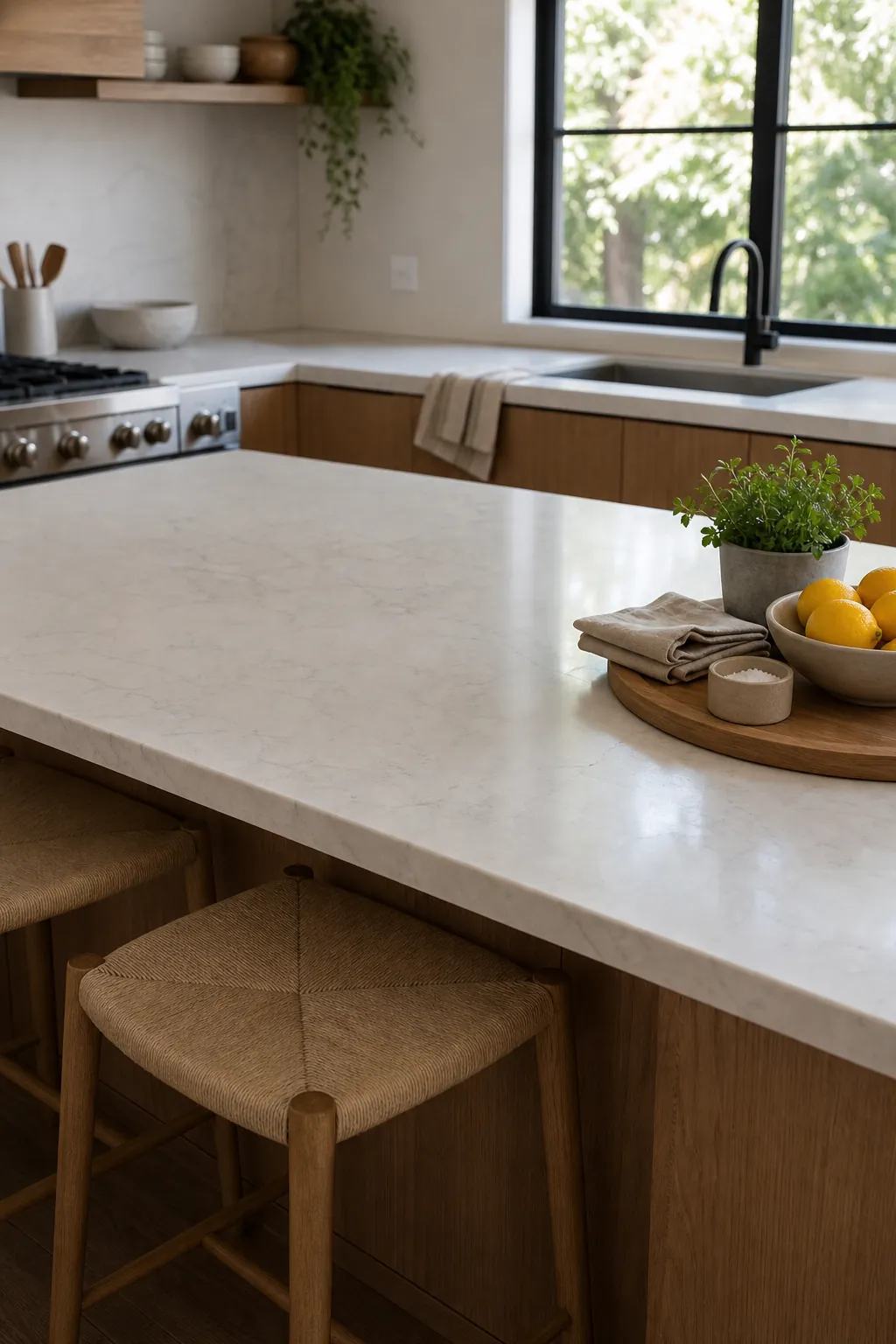
A kitchen island has to do more than look good in a photo. It catches groceries, breakfast plates, mail, homework, mixing bowls, and whatever lands there when dinner is halfway done. The best Kitchen Island Decor respects that reality.
After looking at real homeowner questions, the pattern is clear: people want a styled island, but they do not want to move a pile of decor every time they cook. Use this as the rule: decorate the island in a way that protects the work surface first. These ideas keep Kitchen Styling, Counter Decor, and daily function on the same side.
Keep One Long Work Lane Empty
Most kitchen island decor fails because it starts in the center. That is where groceries land, dough gets rolled, lunch boxes get packed, and somebody sets down keys while asking what is for dinner. Keep the middle honest: leave a long, uninterrupted lane that can be wiped in one pass. Then style only one short end or one corner. The island should look intentional before you move anything, not after you clear a display out of the way.
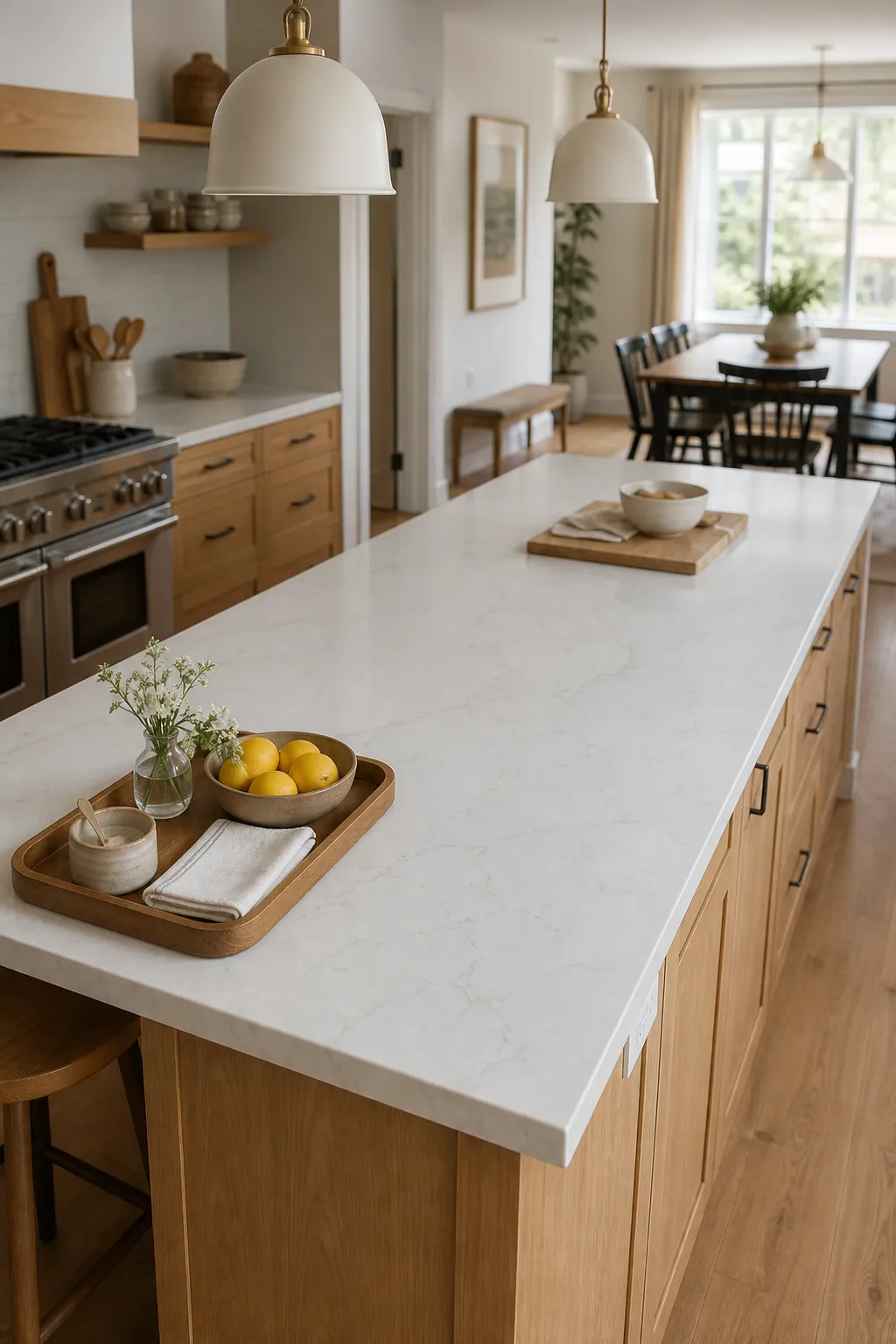
A good test is the sheet-pan test. If you cannot set down a sheet pan, a cutting board, and a bowl without rearranging decor, the styling is too ambitious for daily use.
For narrow islands, push the vignette to the end closest to the wall or refrigerator. For large islands, use the end opposite the stove so cooking tools and hot pans do not compete with flowers, bowls, or candles.
Use a Tray as the Boundary
A tray is not just a pretty layer. It is a boundary that tells everyone where the counter decor begins and ends. Choose one low bamboo, wood, ceramic, or woven tray and keep the whole display inside it. When the tray is full, the island is full.
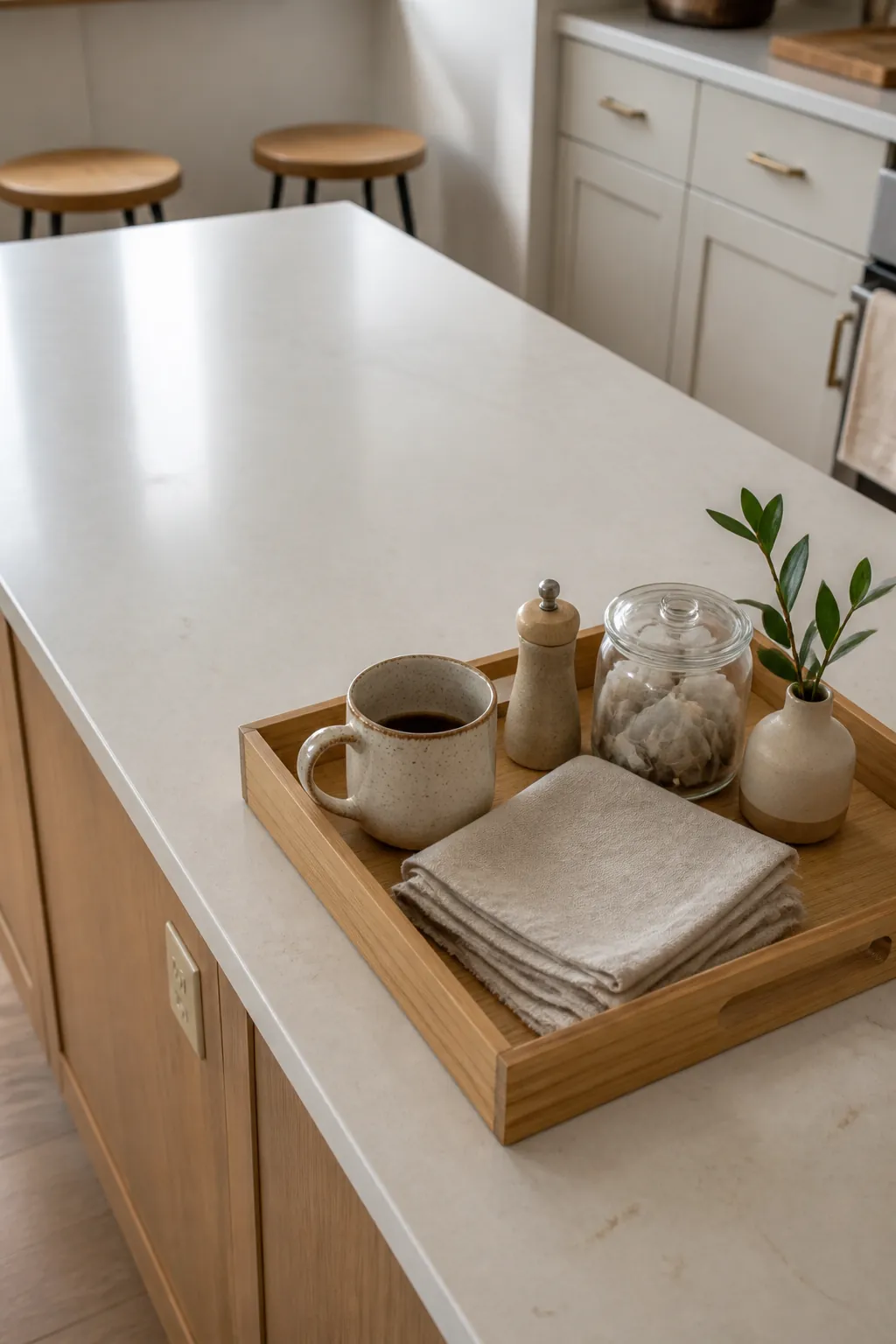
This is where useful items earn their place: a salt cellar, pepper grinder, cloth napkins, a small bowl for fruit, a morning mug, or a tiny vase that can be lifted with one hand. A tray also makes cleaning realistic. Pick it up, wipe the island, put it back.
Avoid oversized round trays if your island is short. Rectangular trays usually leave more usable prep space and line up naturally with the edge of the counter.
Let Food Do the Decorating
Fruit, herbs, and a good cutting board do more for kitchen styling than most purely decorative objects. They add color, height, and texture while still belonging in a working kitchen. A wood bowl of lemons, a small basil pot, or a linen-lined produce basket can make counter decor feel alive instead of staged.
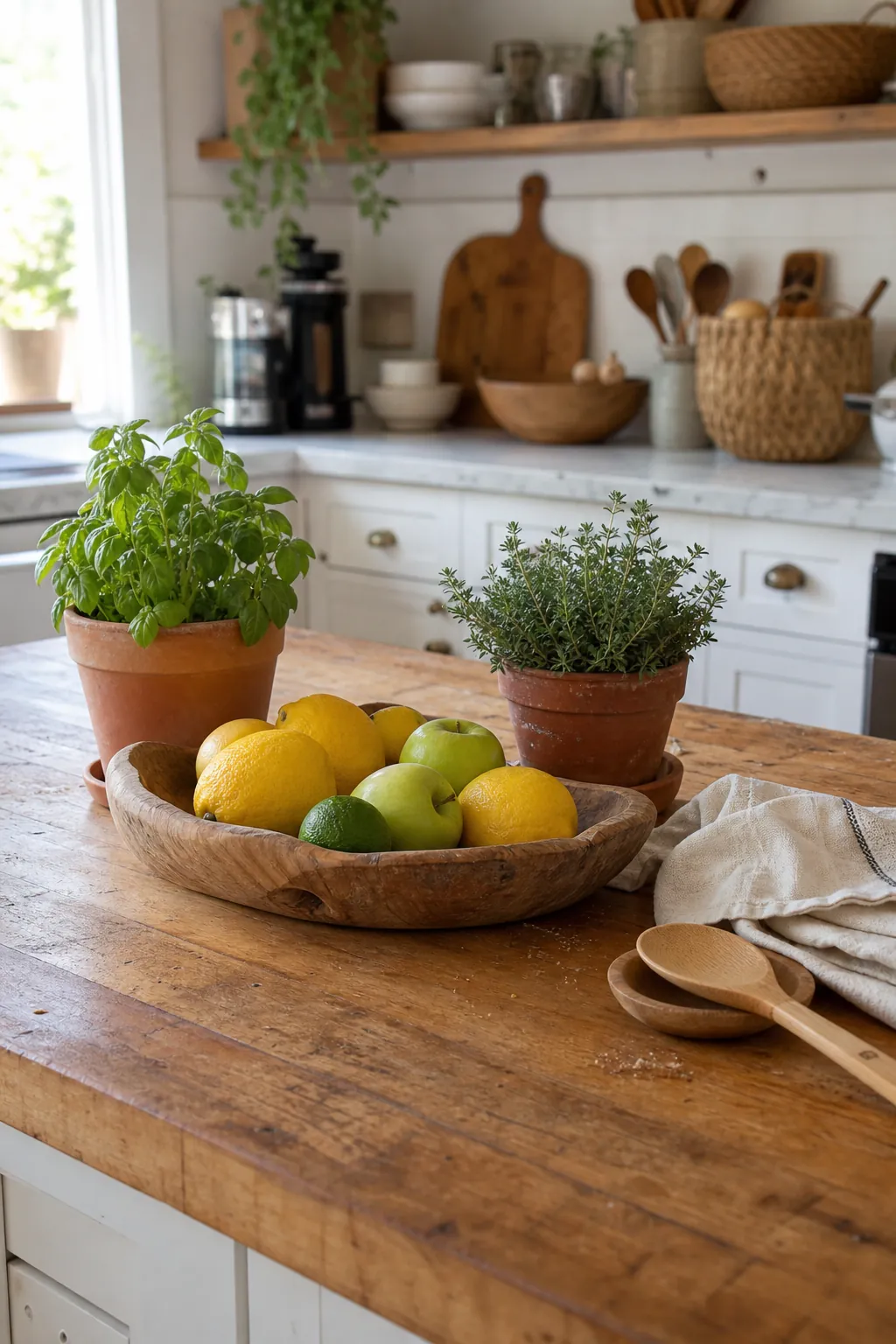
The trick is editing the quantity. One bowl and one living thing are enough for most islands. If you already have open shelving, kitchen plants, and visible cookware nearby, keep the island quieter so the whole kitchen decor scheme can breathe.
For a natural kitchen, repeat materials you already use: bamboo utensils, rattan, stoneware, pale wood, cotton towels, or green herbs. That keeps boho kitchen touches grounded rather than busy.
Move Tall Tools Off the Surface
Cutting boards, cookbooks, and serving trays look beautiful, but they can steal the exact counter space you need. Instead of laying everything flat on the island, store tall pieces upright at the side, on hooks, or against open shelving nearby. Vertical storage gives you the texture without sacrificing the worktop.
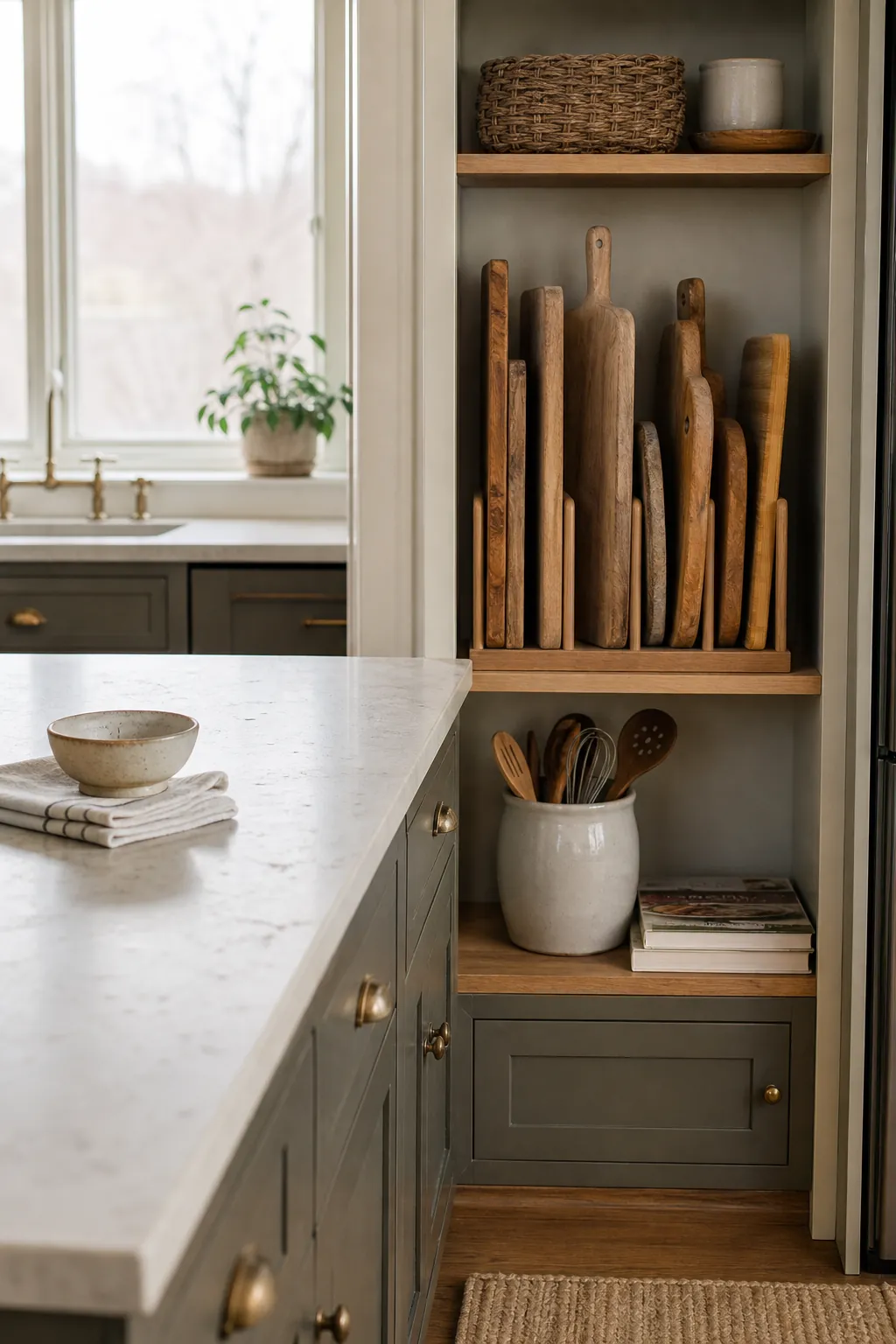
This is especially useful when the island is the bulk of your counter space. A few boards leaning on a wall shelf can soften the kitchen and keep them within reach, while the island stays open for chopping and mixing.
If you like a collected look, group by material rather than by object type: two wood boards, one ceramic crock, and one woven basket will feel calmer than five unrelated pieces scattered across the counter.
Add Soft Light, Not More Stuff
A small lamp can change the island more than another vase. In the evening, warm light makes the counter feel like part of the dining room decor instead of a cold prep zone. Keep the lamp compact, place it at an end, and use it with one other practical object, not a full display.
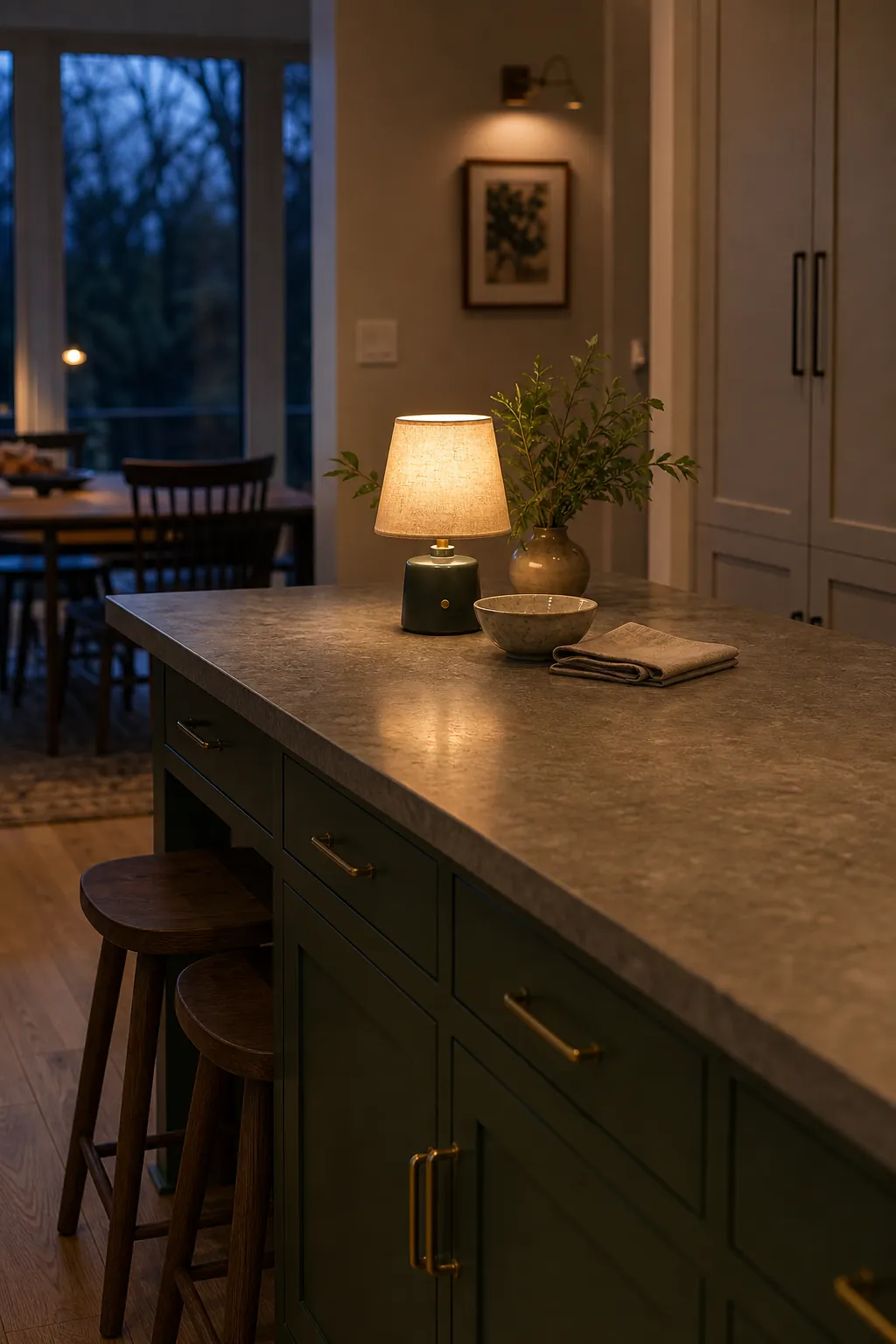
This works best when the island has an outlet, a nearby wall socket, or a rechargeable lamp. Choose a shade that hides glare and a base that will not tip when people pass behind stools. The goal is atmosphere without blocking the daily reset.
If your kitchen already has strong pendants, skip the lamp and soften the surface with a folded runner, a ceramic bowl, or linen napkins instead.
Choose Plants That Can Survive the Kitchen
Kitchen plants should be easy to move, easy to water, and happy with the light you actually have. Herbs near a window, a trailing pothos on a nearby shelf, or one compact plant at the end of the island can bring life without turning the work surface into a garden bench.
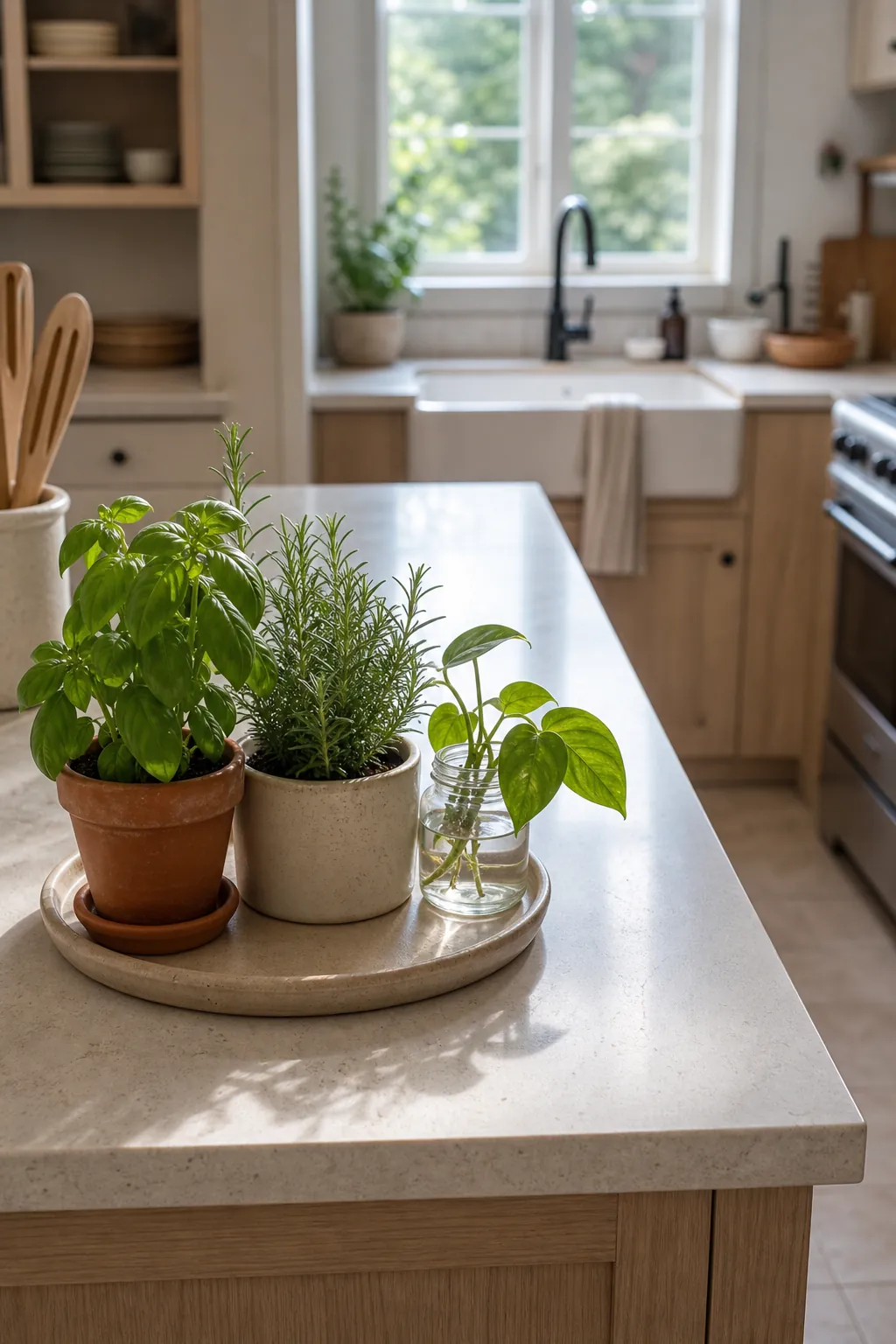
Skip delicate plants beside a cooktop or sink splash zone. Heat, steam, and constant wiping are rough conditions. If the plant needs special care every day, it is not practical kitchen island decor.
For a natural home decor look, use one pot material repeatedly: terracotta, stoneware, bamboo cachepots, or simple white ceramic. Repetition makes plants read as styling, not random clutter.
Style Around How People Sit
If the island also works as a breakfast nook, style for elbows, plates, and conversation. Keep decor low near seating so people can see over it, and leave the eating edge empty enough for bowls, laptops, homework, or coffee. Stools are part of the styling too; their material and shape change the whole island.
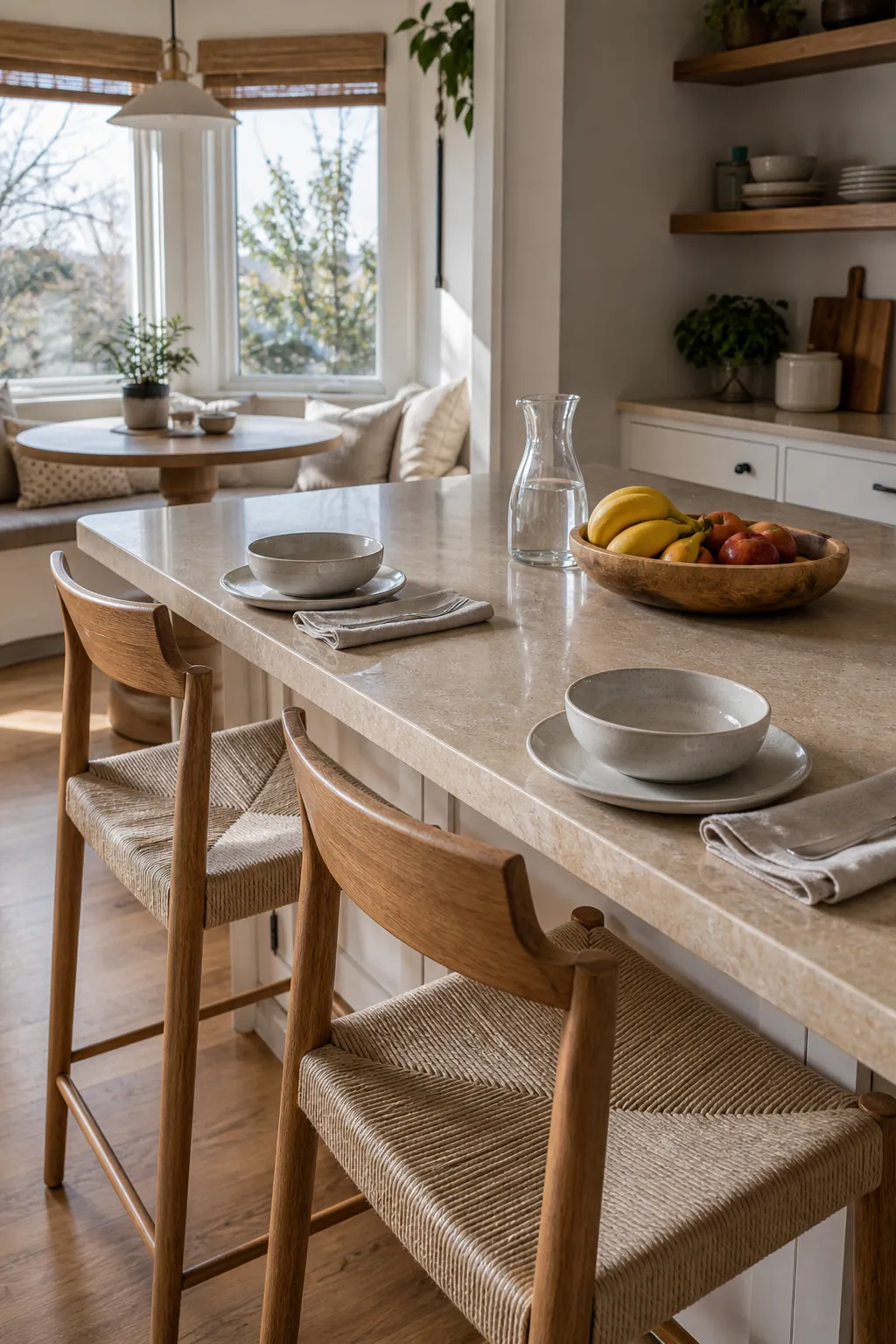
Backless stools keep tight walkways open. Stools with backs make longer meals feel less temporary. Either way, the counter edge should feel usable, not like a display shelf people are afraid to touch.
A small napkin stack, a fruit bowl at the far end, or a water carafe can make the island feel ready for breakfast without crowding the dining surface.
Keep an Entertaining Swap Ready
Daily styling and guest styling should not be the same setup. Keep the everyday island simple, then swap in a serving board, water glasses, a candle, or a larger flower arrangement when people come over. The best kitchen island decor changes quickly because real kitchens change quickly.
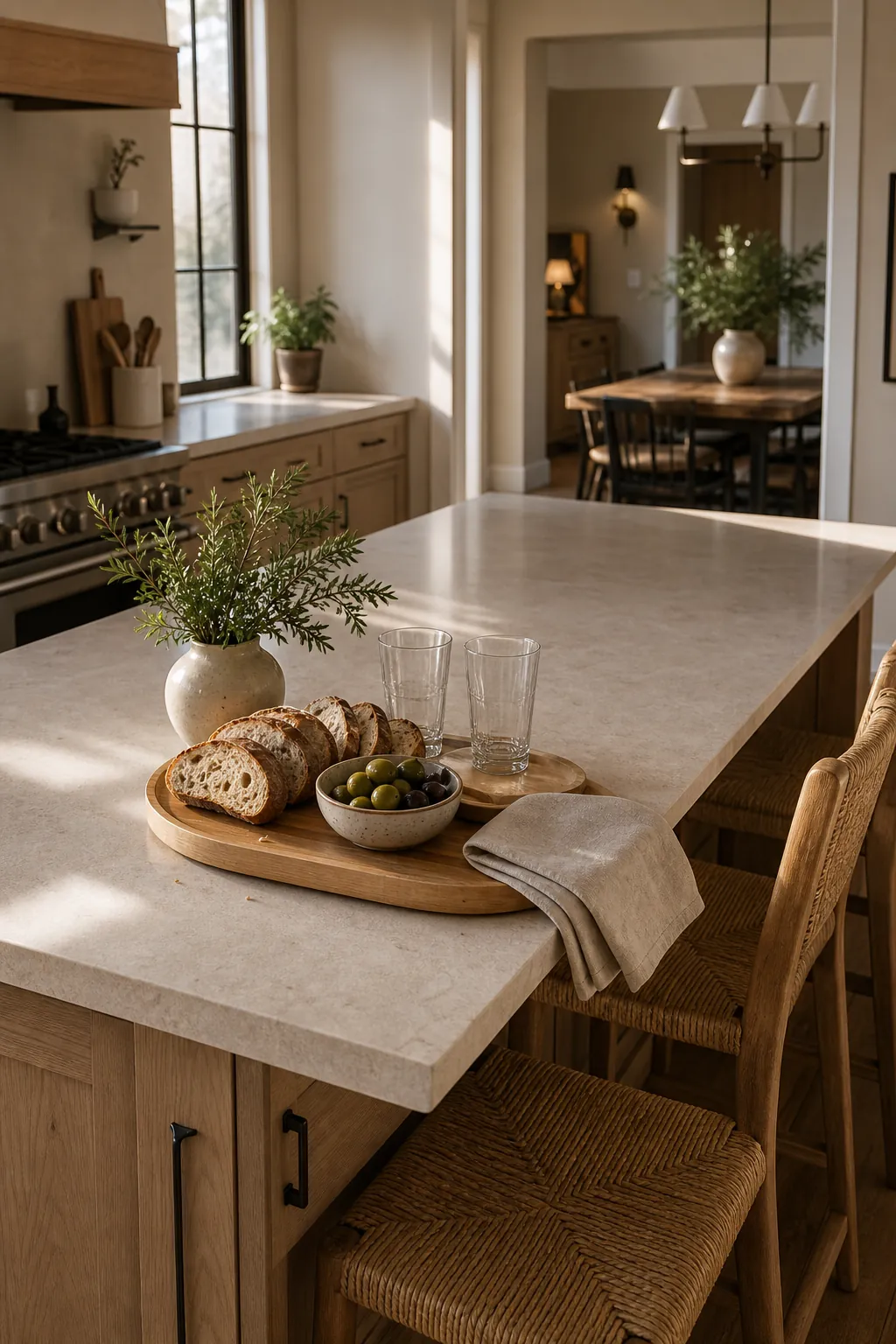
Store the entertaining pieces together so the island can shift in five minutes. A bamboo board, a low bowl, a linen runner, and a few small dishes are enough. Leave one side open for people to set down plates or lean in while talking.
This approach keeps your kitchen styling flexible: quiet on weekdays, warmer for hosting, and never so precious that cooking becomes annoying.
For most homes, the island only needs three things: one useful styling zone, one open work lane, and one simple reset habit. Clear what does not belong there every night, keep the beautiful daily-use pieces within reach, and let the kitchen look lived-in without letting clutter take over.
- Best daily formula: one tray, one useful object, one natural accent.
- Best small-island rule: style an end, not the center.
- Best natural kitchen detail: wood, bamboo, herbs, linen, or stoneware repeated in small doses.