
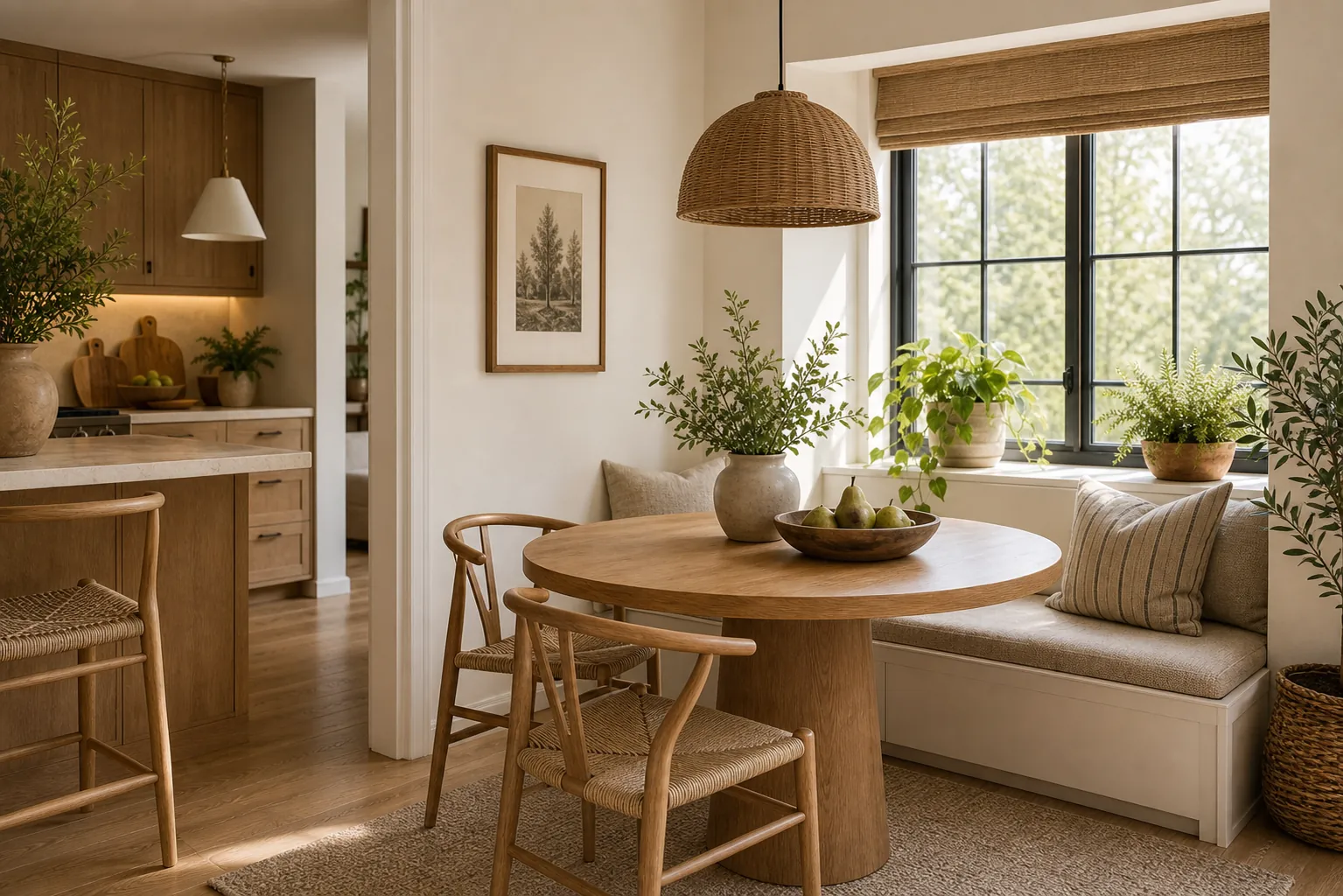
A cozy breakfast corner works best when it feels easy to use. It should give you a place for coffee, toast, homework, quiet reading, or a casual weeknight meal without making the kitchen harder to move through. The mistake is starting with the prettiest bench or table. Start with the corner itself: light, traffic flow, wall space, and how many people actually need to sit there.
A breakfast nook can be built into a bay window, tucked beside the kitchen, placed under open shelving, or created from a small dining area that already exists. It does not have to be large. In many homes, the most charming dining nook is a small table, two comfortable seats, one plant, and warm lighting.
The goal is not to copy a perfect magazine banquette. It is to create a corner that feels inviting every morning and still respects the way your kitchen works.
Choose the Corner That Does Not Block the Kitchen
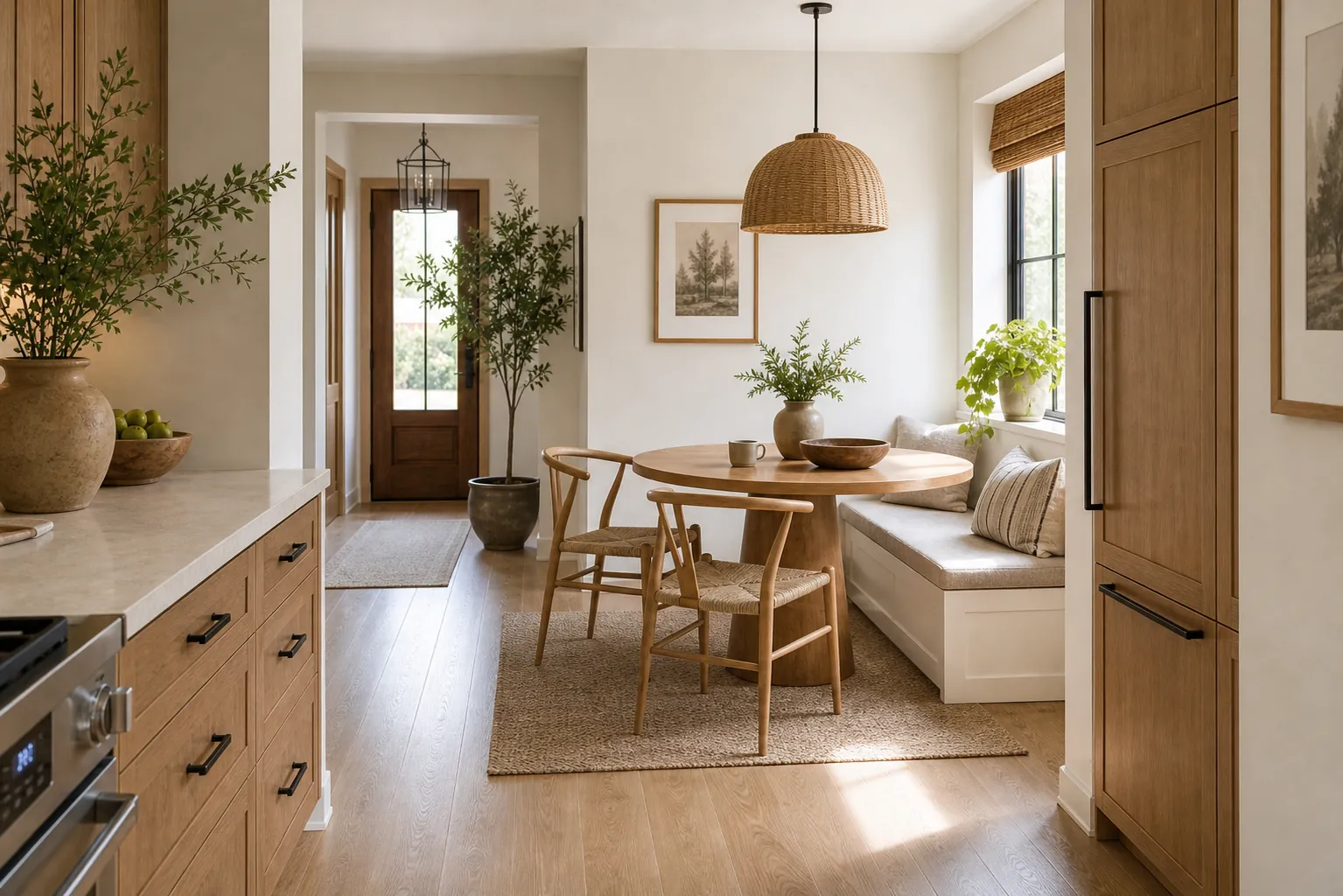
Before choosing furniture, stand in the kitchen and watch the paths you use most. The breakfast corner should not block the refrigerator, stove, dishwasher, pantry, or main walkway. A beautiful table becomes annoying if someone has to slide past it every time they open a drawer.
Look for a wall, window, or unused edge that already feels slightly separate from the cooking zone. A corner beside a window is ideal, but a blank wall near the kitchen can work too. If the area is tight, use a round or oval table so the corners do not catch hips and chairs. If the nook sits along a wall, a bench can save floor space because it tucks in tighter than loose chairs.
For a small dining area, measure clearance before buying anything. You need enough room to pull out a chair, sit comfortably, and still walk by. If the space cannot support four seats, do not force four. A cozy corner for two can feel more intentional than a crowded setup for guests who rarely sit there.
Use a Bench When the Wall Can Do Some Work
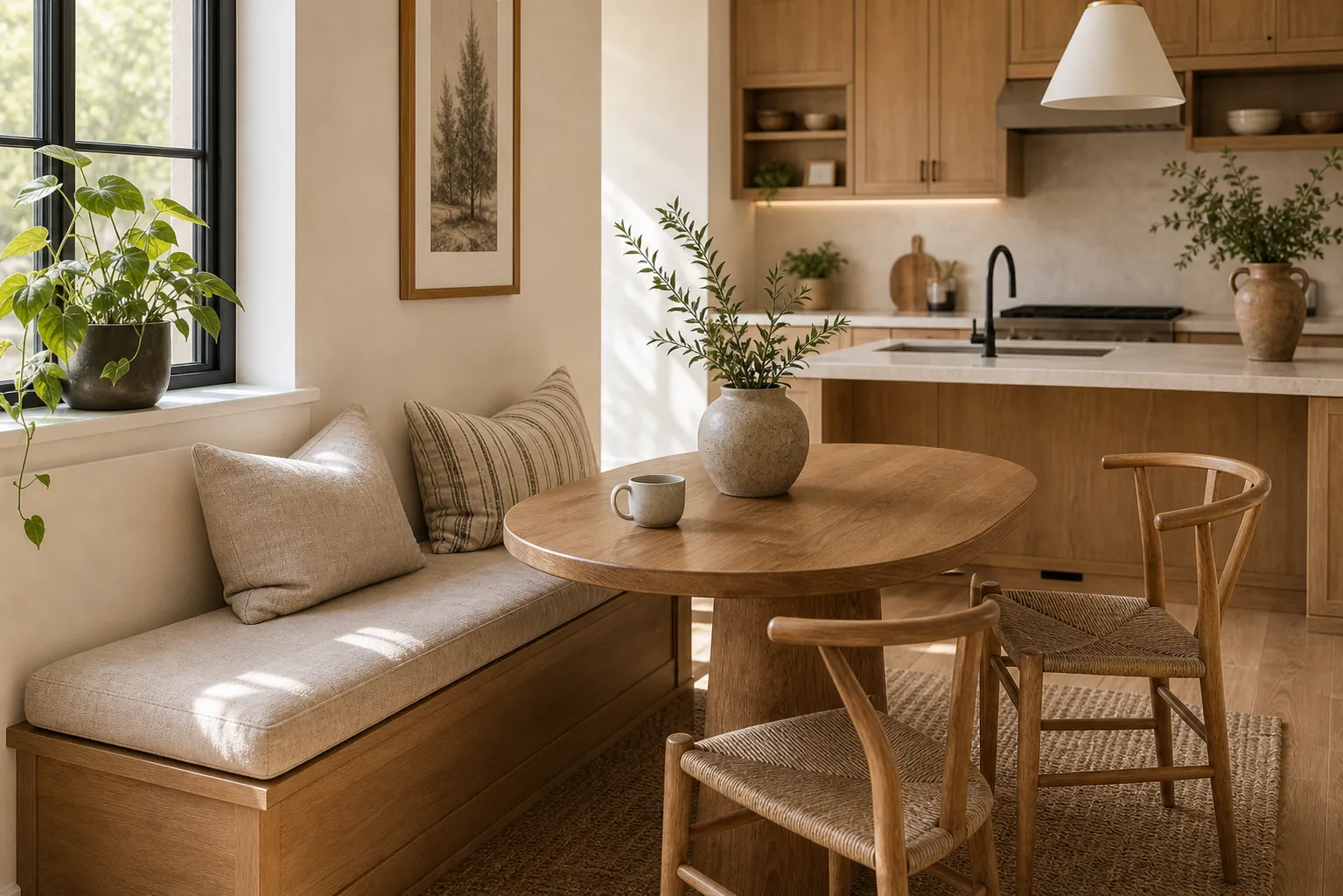
A bench or banquette makes a breakfast nook feel built-in, even when it is simple. It also lets the wall become part of the seating plan. That can be helpful in narrow kitchens, bay windows, and awkward corners where chairs would stick out too far.
The bench does not need to be custom. A low storage bench, a slim settee, or a simple wood bench with a back cushion can work if the scale is right. Add a washable seat cushion, one or two pillows, and a small table with a rounded edge. Too many pillows make the nook look cozy in photos but uncomfortable in daily life, so keep the softness useful.
Natural kitchen materials help the corner feel connected to the rest of the room. A wood bench, linen cushions, woven shades, and a ceramic vase can soften the hard surfaces nearby without turning the space into a separate decorative theme.
Pick the Table Shape for the Way You Sit
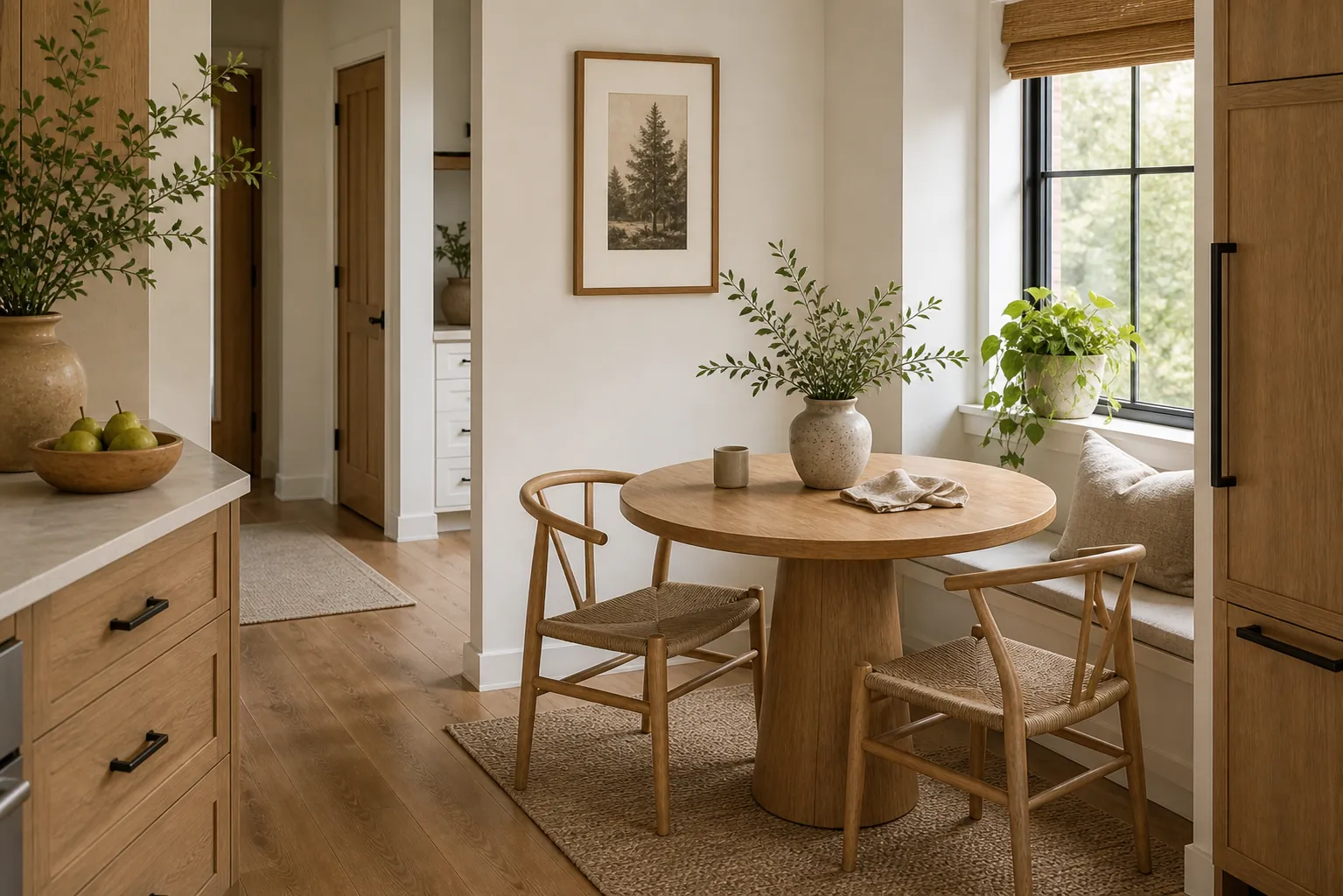
The table determines how the breakfast corner feels. A round table is friendly and forgiving in a tight space. It is easy to move around and works well for two or three people. An oval table gives a little more surface area while still softening the edges. A rectangular table is useful against a bench or wall, but it needs more careful spacing.
Think about what happens there most often. If the nook is mainly for coffee, a smaller round table may be enough. If it doubles as a homework station or small dining area, choose a table that can hold plates, notebooks, and a laptop without feeling crowded. The best table is not always the smallest one; it is the one that supports the routine.
For a soft modern or boho kitchen, wood is usually the easiest choice. It warms up tile, stone, and painted cabinets. Pair it with simple chairs so the table remains the anchor.
Add Open Shelving Without Making It Busy
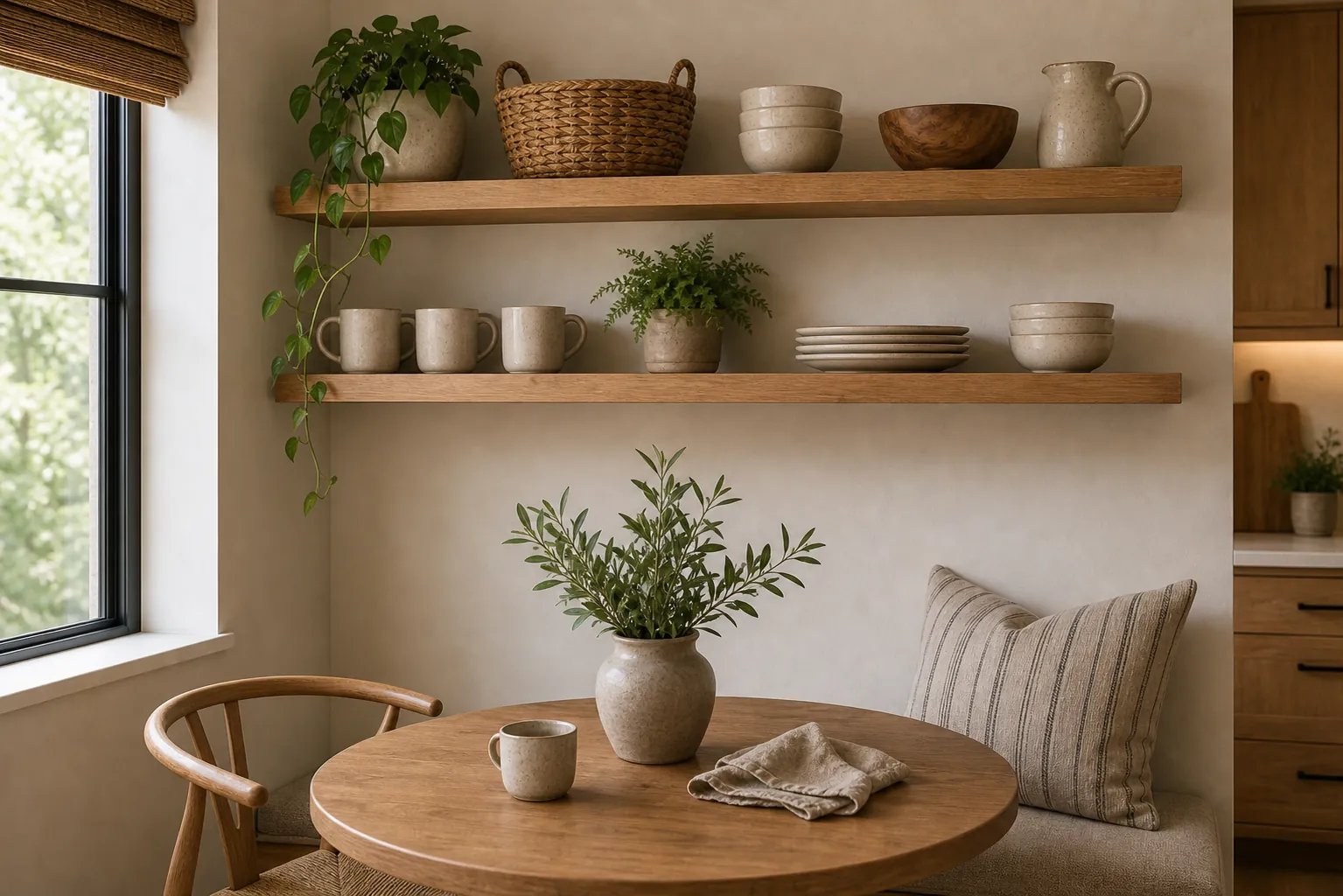
Open shelving can make a breakfast corner feel finished, especially when the wall above the table looks blank. The trick is to style it like a breakfast zone, not a display case. A few mugs, a small stack of plates, a wood bowl, and one plant are enough.
Shelves are useful when they hold things connected to the nook: coffee cups, breakfast plates, napkins, a tea tin, or a small vase. If the shelf becomes a row of unrelated decor, it can make the dining nook feel cramped. Leave open wall space around the objects so the corner still feels restful.
Match the shelf material to the kitchen decor already nearby. A warm wood shelf can repeat a table or cabinet tone. A slim black bracket can echo cabinet hardware. A woven basket on the shelf can connect to shades, chairs, or bench storage.
Bring in Plants Where the Light Is Best
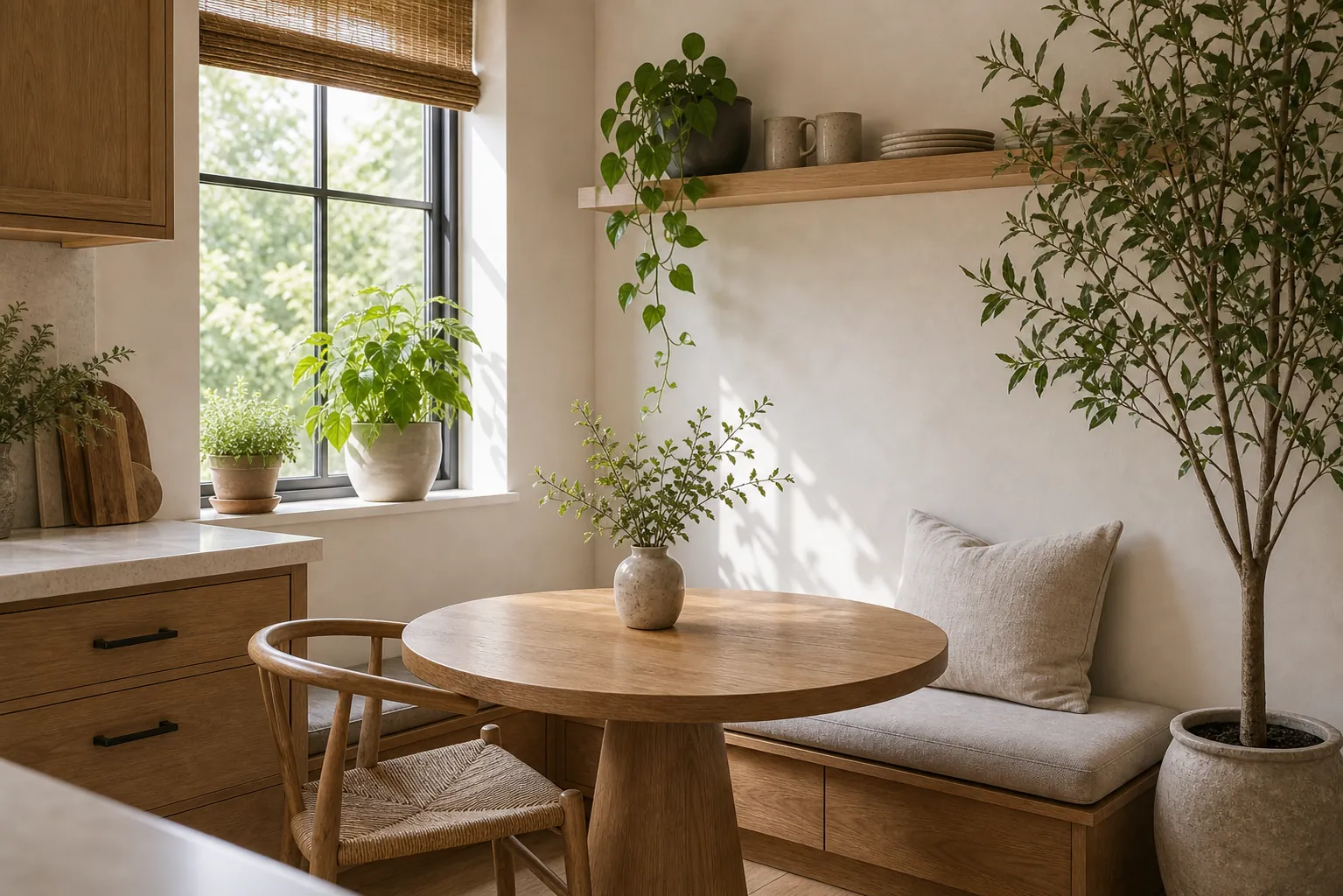
Kitchen plants can make a breakfast corner feel fresh immediately, but they should be placed where they can thrive. A window plant on the sill, a potted tree beside the bench, or a small herb pot on a shelf will look better than several struggling plants scattered around a dark table.
Use plants to frame the nook instead of filling the table. A leafy plant near the window, a trailing plant on a shelf, or a simple vase of branches can create softness without taking away eating space. If the corner is small, one healthy plant is enough.
Choose pots that support the palette: ceramic, terracotta, stone, or woven cachepots. The plant decor should feel like part of the natural kitchen, not a separate green collection.
Use Lighting to Make the Corner Feel Separate
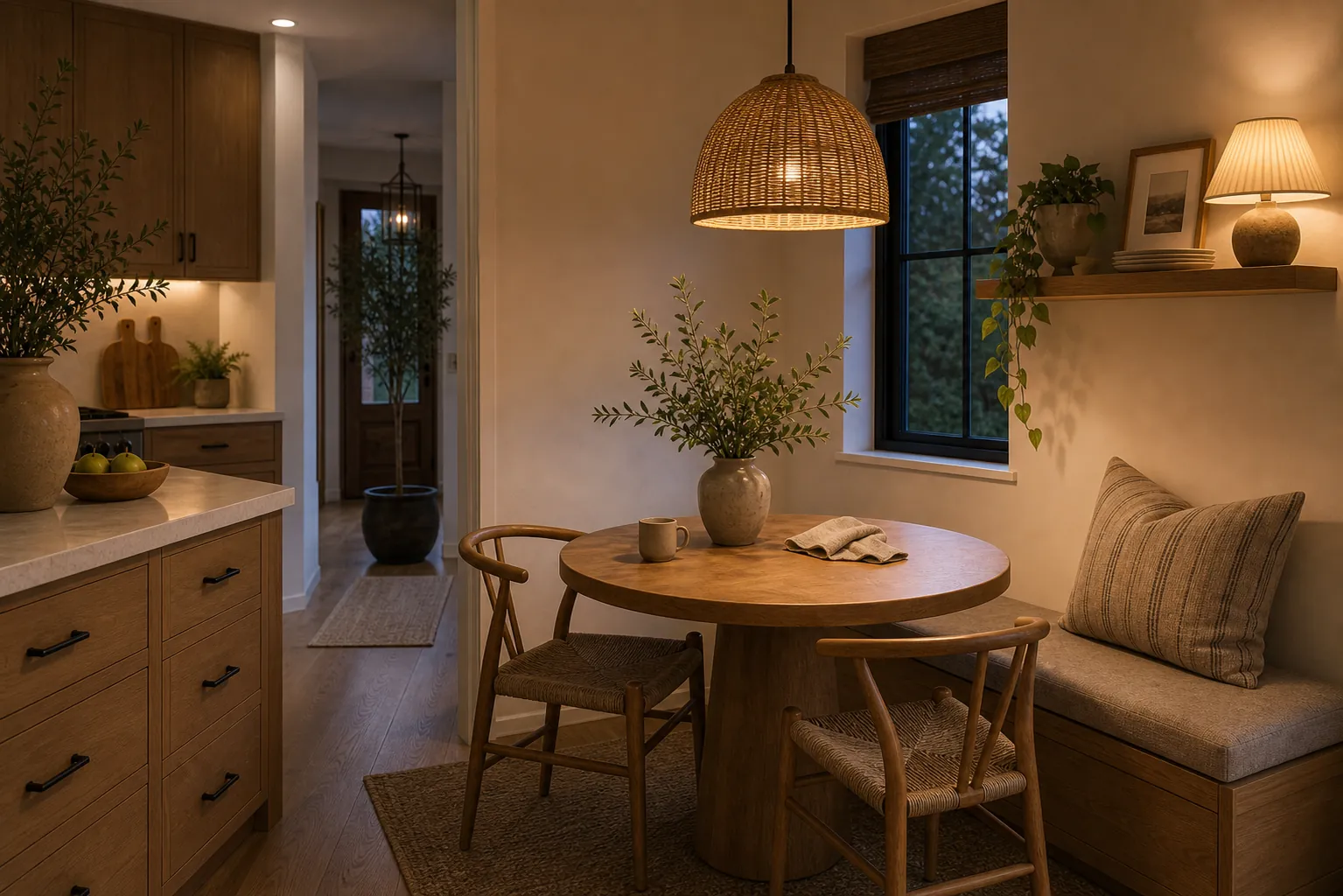
Lighting is what turns a table in a corner into a breakfast corner. A pendant, wall sconce, small lamp, or nearby picture light gives the nook its own mood. It also makes the space useful in the early morning and evening, when overhead kitchen lighting can feel too harsh.
A woven pendant adds texture and works well above a round table. A wall sconce is useful when the ceiling is not wired for a fixture. A small lamp on a nearby shelf can soften a rental kitchen without any renovation. Whatever you choose, use warm bulbs and keep the fixture scaled to the table.
The light should make the nook feel inviting, not dim. You still need to read, eat, and clean the table. Soft does not mean shadowy.
Finish With Texture, Then Stop
A cozy breakfast corner needs fewer finishing touches than most people think. Start with the right scale, add comfortable seating, choose one table shape, repeat wood or woven texture, place one healthy plant, and give the corner its own light. After that, leave room for daily life.
The best breakfast nook is not the one with the most decor. It is the one you actually use. If the table stays clear, the chairs are easy to pull out, the light feels good, and the corner connects naturally to the kitchen, the space will feel cozy without trying too hard.