
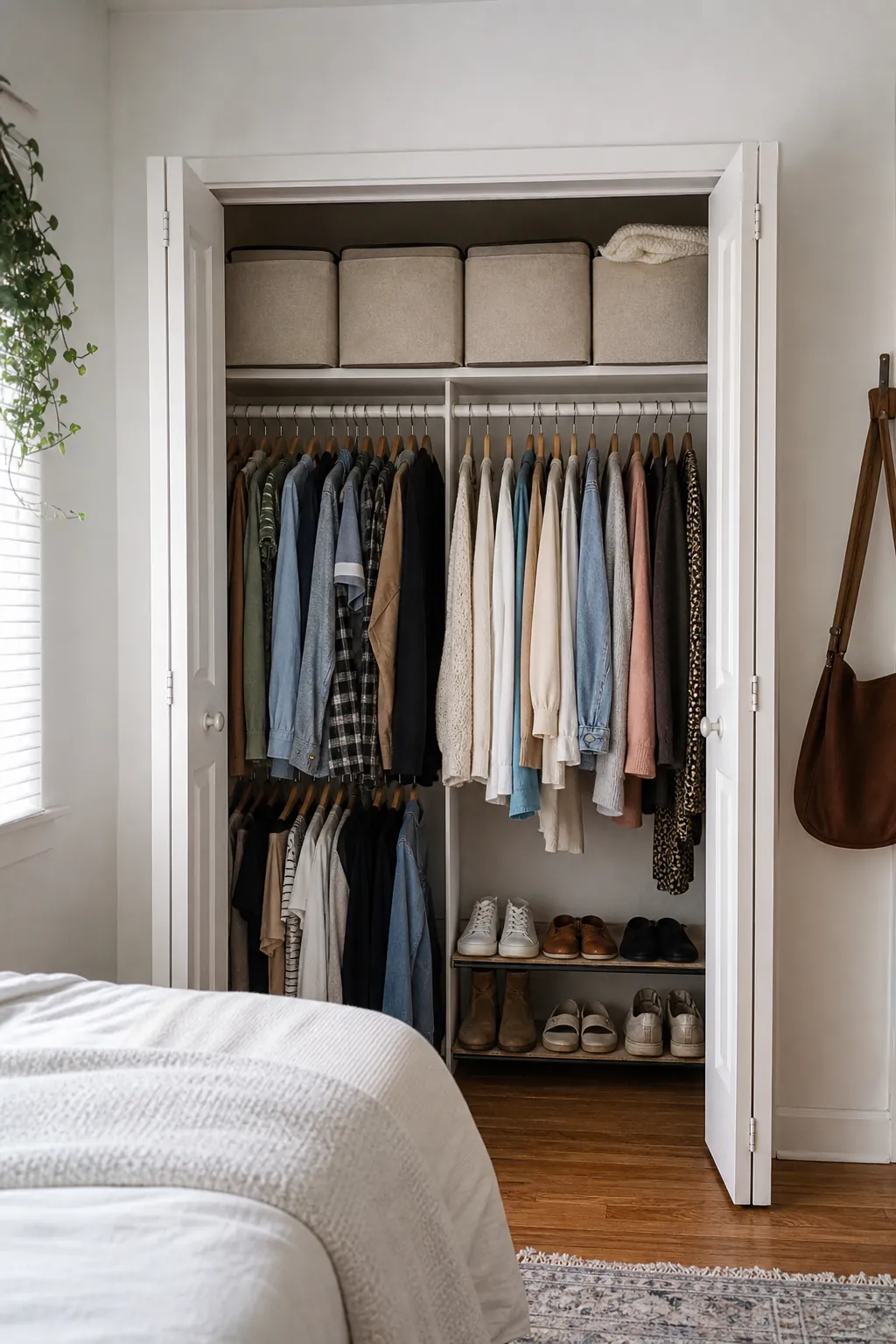
A shared closet does not usually fail because the closet is too small. It fails because two different routines are forced into one narrow space with no rules for ownership, overflow, or laundry day. The fix is not to buy every organizer at once. The fix is to make the closet easier to use when both people are tired, rushing, or putting away a half-finished load of clothes.
The best small closet ideas for a shared space start with one question: what needs to be reachable every day, and what can live somewhere else? Once that is clear, you can divide the closet fairly, add the right closet storage pieces, and stop letting off-season clothes, shoes, and “not clean but not dirty” items take over the whole bedroom.
Split the Closet by Routine, Not Just by Inches
The simplest shared closet rule is half and half, but equal width is not always equal function. One person may hang mostly shirts and pants. The other may need long hanging space for dresses, uniforms, or coats. Instead of measuring only the rod, divide the closet by daily routine: work clothes, casual clothes, laundry return, shoes, and seasonal pieces.
Give each person a clear daily zone. That zone should hold the items they reach for most often without moving anyone else’s clothes. If the closet has sliding doors, avoid putting daily pieces in the blind corners. Use those harder-to-reach spots for low-frequency items, backup shoes, or labeled bins.
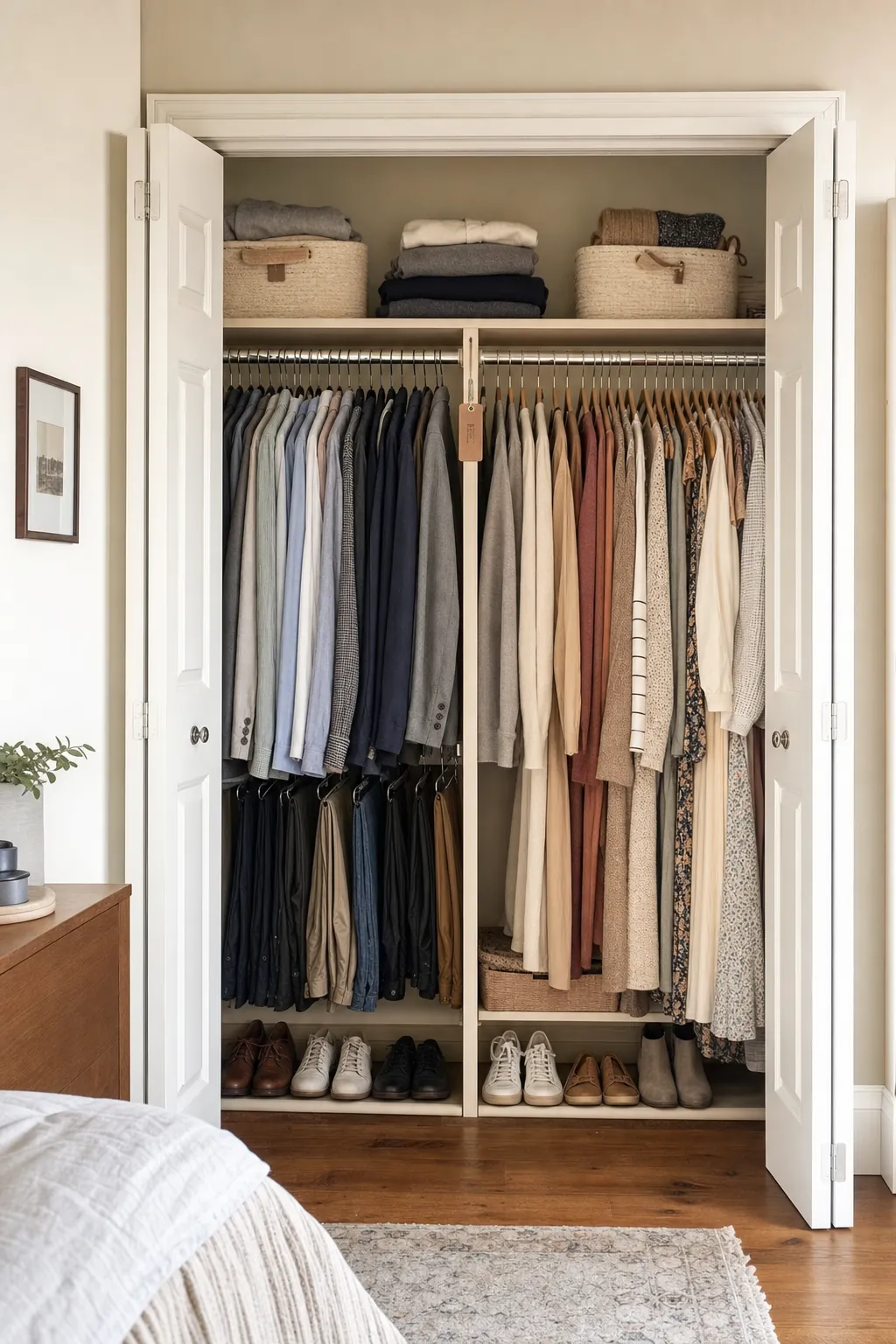
A visible divider helps more than people expect. Slim shelf labels, matching hangers in two colors, a clip-on rod marker, or separate bins can make the boundary obvious without making the closet look rigid. The point is not to police the space. It is to remove the tiny daily negotiation of “whose side is this?”
Use Double Hanging for Short Clothes First
If most of the clothing is shirts, folded pants, skirts, or short jackets, double hanging is usually the biggest space win. A high rod with a lower rod below it can turn one long stretch of closet into two practical layers. Keep a smaller full-length section for dresses, coats, robes, or anything that wrinkles badly when folded.
The mistake is double hanging the entire closet and then having nowhere for long pieces. A better shared closet layout is often three zones: double hang, long hang, and shelves or drawers. If one person owns more long items, balance the tradeoff somewhere else, such as drawer space or top-shelf bins.
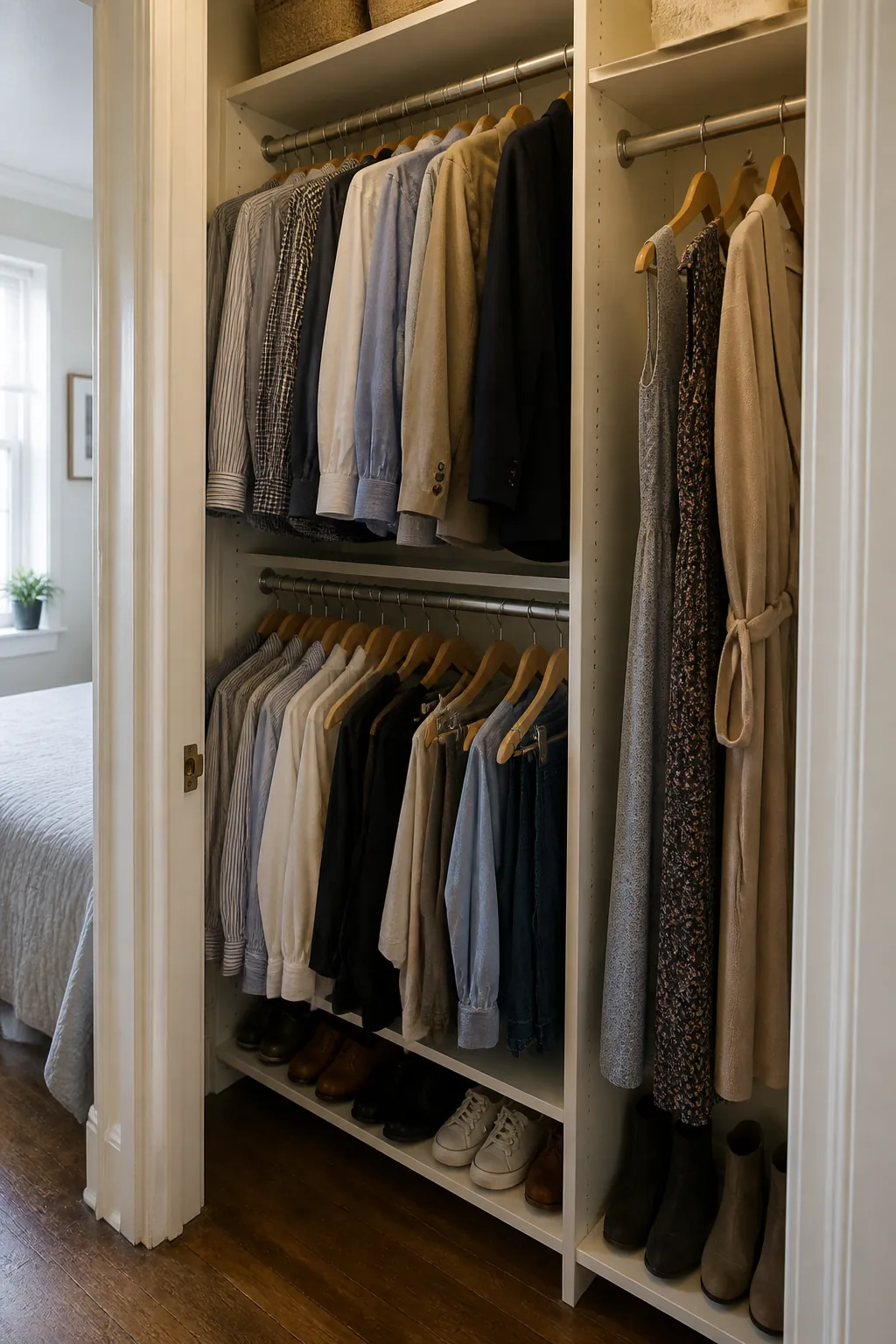
Keep the lower rod high enough that clothes do not drag across shoes or hampers. If a rod is too high for one person to reach comfortably, the system will fail. A closet organization setup should match the people using it, not a product photo.
Turn the Top Shelf Into Labeled, Low-Frequency Storage
The top shelf is valuable, but only when it has a job. Random stacks turn into leaning piles. Labeled bins turn the same shelf into calm bedroom storage for swimsuits, winter layers, sentimental pieces, spare linens, or less-used shoes.
Use fewer bin styles than you think you need. One or two matching sizes make the shelf easier to scan and easier to return to order. Clear fronts, fabric labels, or simple tag holders are enough. The labels should name categories both people understand: “off-season,” “travel,” “extra shoes,” “dress clothes,” or each person’s name.
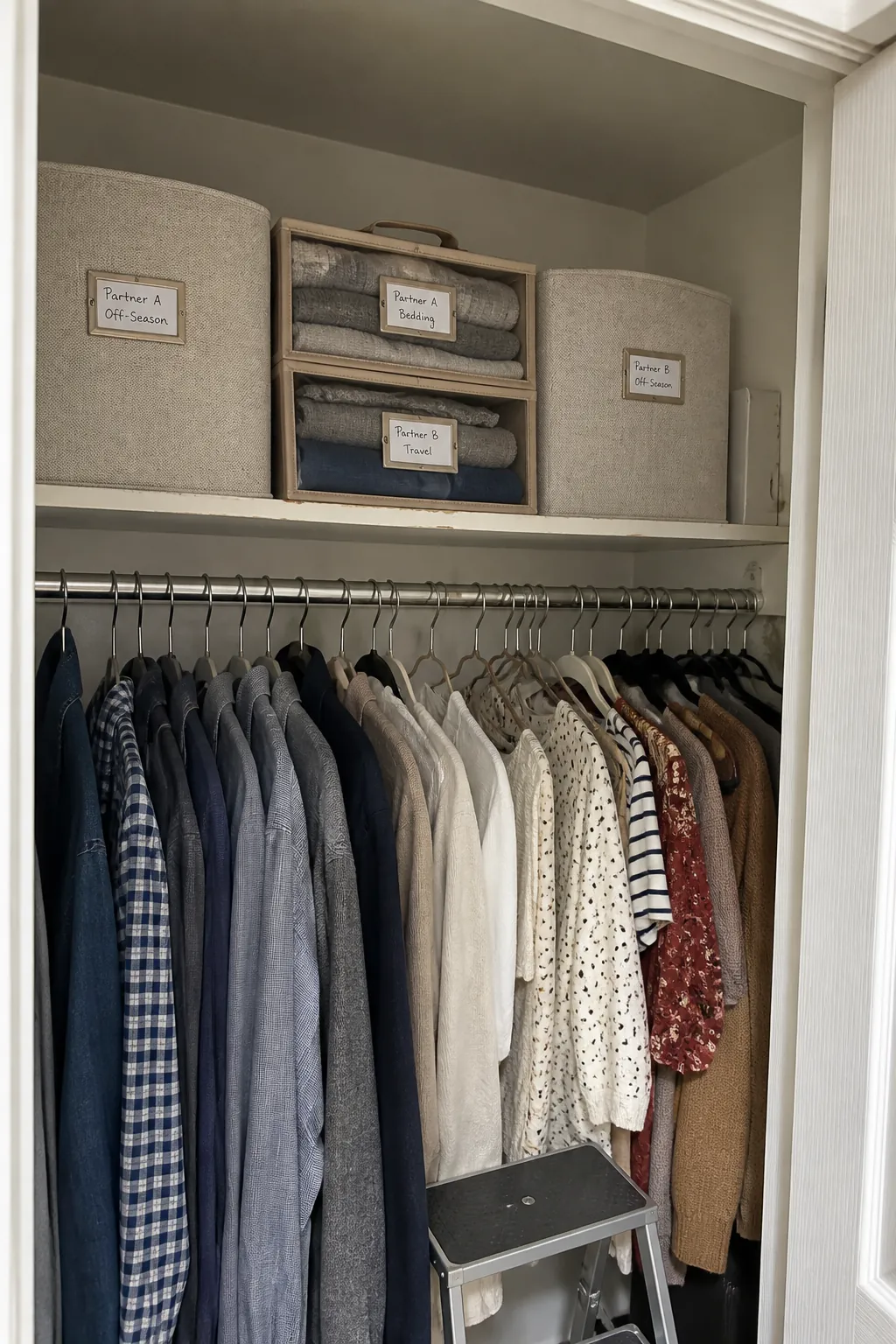
Do not store daily clothes above eye level unless you are willing to use a step stool every week. The top shelf is for things that can be slightly inconvenient because they are not part of the morning routine.
Move Some Clothes Out of the Closet on Purpose
A small closet shared by two people cannot hold every clothing category well. That is not a personal failure. It is a capacity problem. The most realistic clothes storage plan often uses the closet for hanging and the room for folded or hidden storage.
Put soft, wrinkle-resistant items in a dresser, under-bed drawers, a chest, or a storage bench. Athletic clothes, pajamas, underwear, leggings, basic T-shirts, and off-season layers do not need prime closet space. If the bedroom is tiny, choose closed storage so the room still feels restful rather than like an open wardrobe showroom.
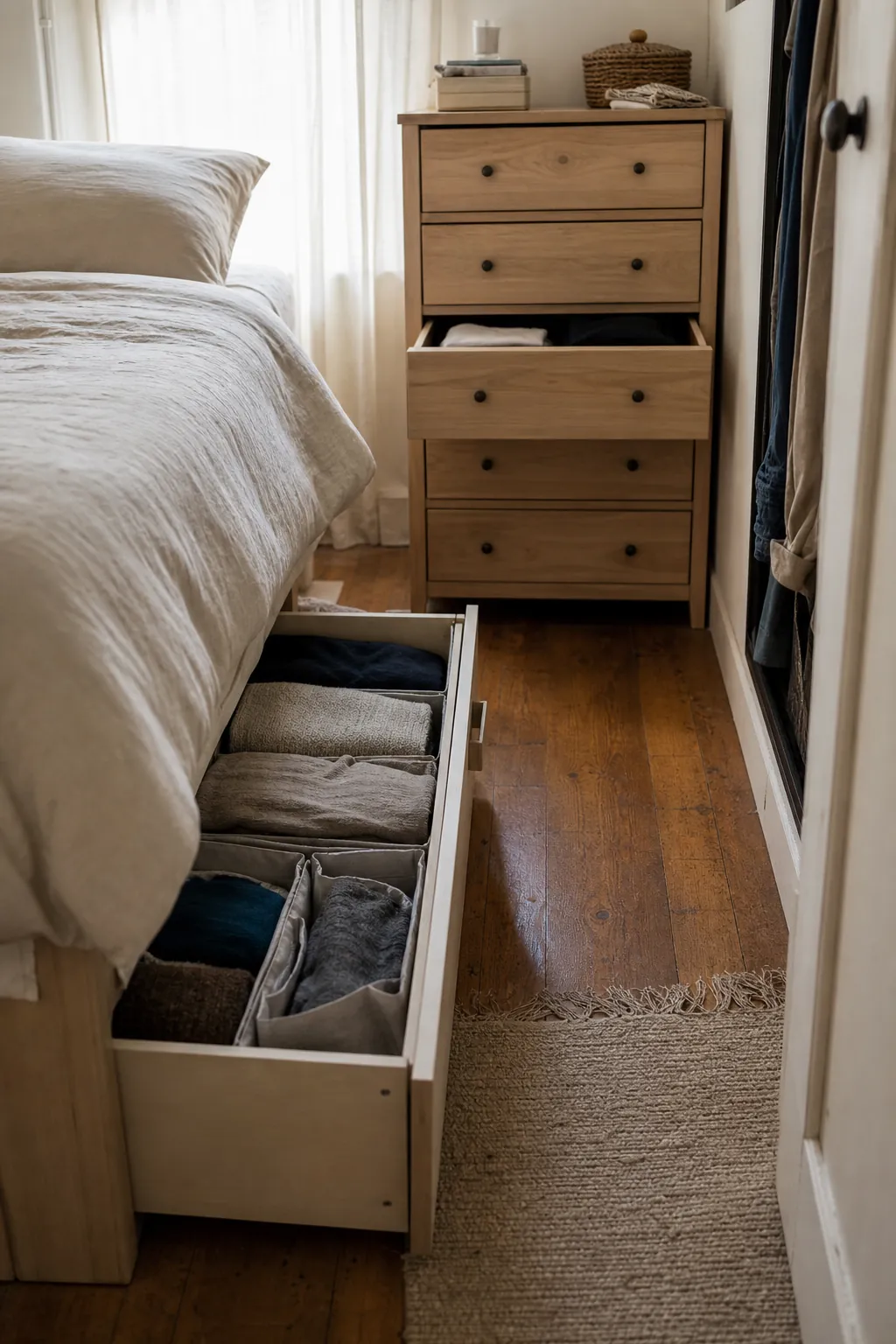
This is where many shared closet setups become more peaceful. Instead of arguing over the same 30 inches of rod space, each person gets a mix of hanging space, drawer space, and overflow storage that fits their actual wardrobe.
Use Doors, Side Walls, and Corners Without Creating Visual Noise
The back of a hinged closet door can hold belts, bags, scarves, hats, or next-day outfits. If you have sliding doors, use a slim wall hook strip near the closet or a narrow organizer on an exposed side wall instead. This keeps the idea useful even when the closet door type limits access.
Small accessories are the danger zone in shared closet organization. They spread quickly, and once they are mixed together, both people stop putting them away. Give accessories a dedicated hook, tray, or small bin. Keep the category narrow. A door rack for shoes, bags, belts, and laundry supplies all at once will look busy and become hard to maintain.
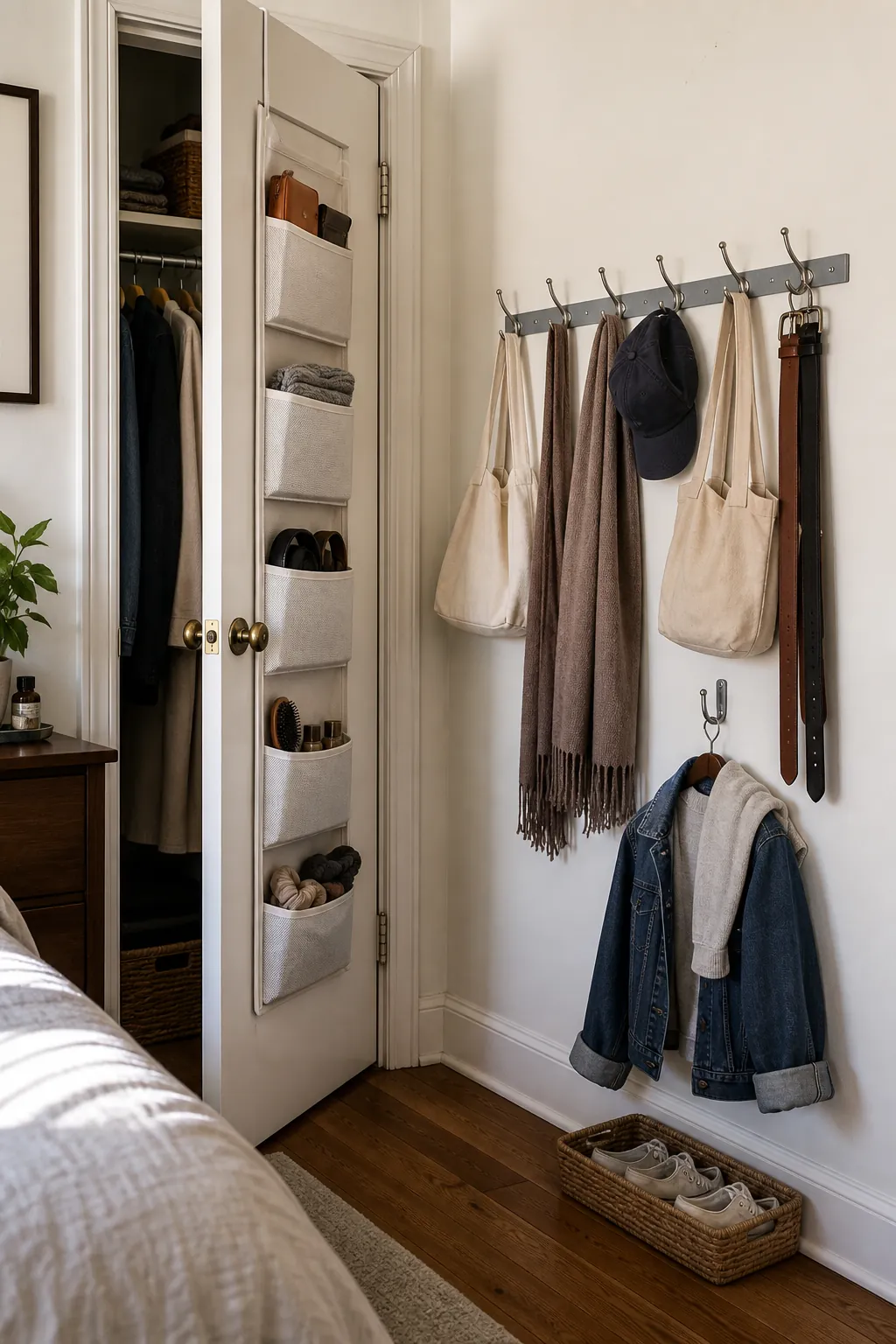
Use corners for things that do not need full visibility: extra hangers, a garment steamer, a small shoe stack, or a seasonal bin. Keep daily outfit pieces in the most accessible part of the closet.
Create a Laundry Reset That Both People Can Keep Up With
Most closet systems look good right after organizing and then break during laundry. A shared closet needs a return path: where clean clothes land, where worn-once clothes wait, and where donation items go before they sneak back onto the rod.
Use two slim hampers if laundry gets mixed in a way that causes friction. Add one small “try-on” or “worn once” basket if clothes usually pile on a chair. Keep a donation bag or box near the closet for a few weeks after the reset. When the rod is full, something has to leave before something new goes in.
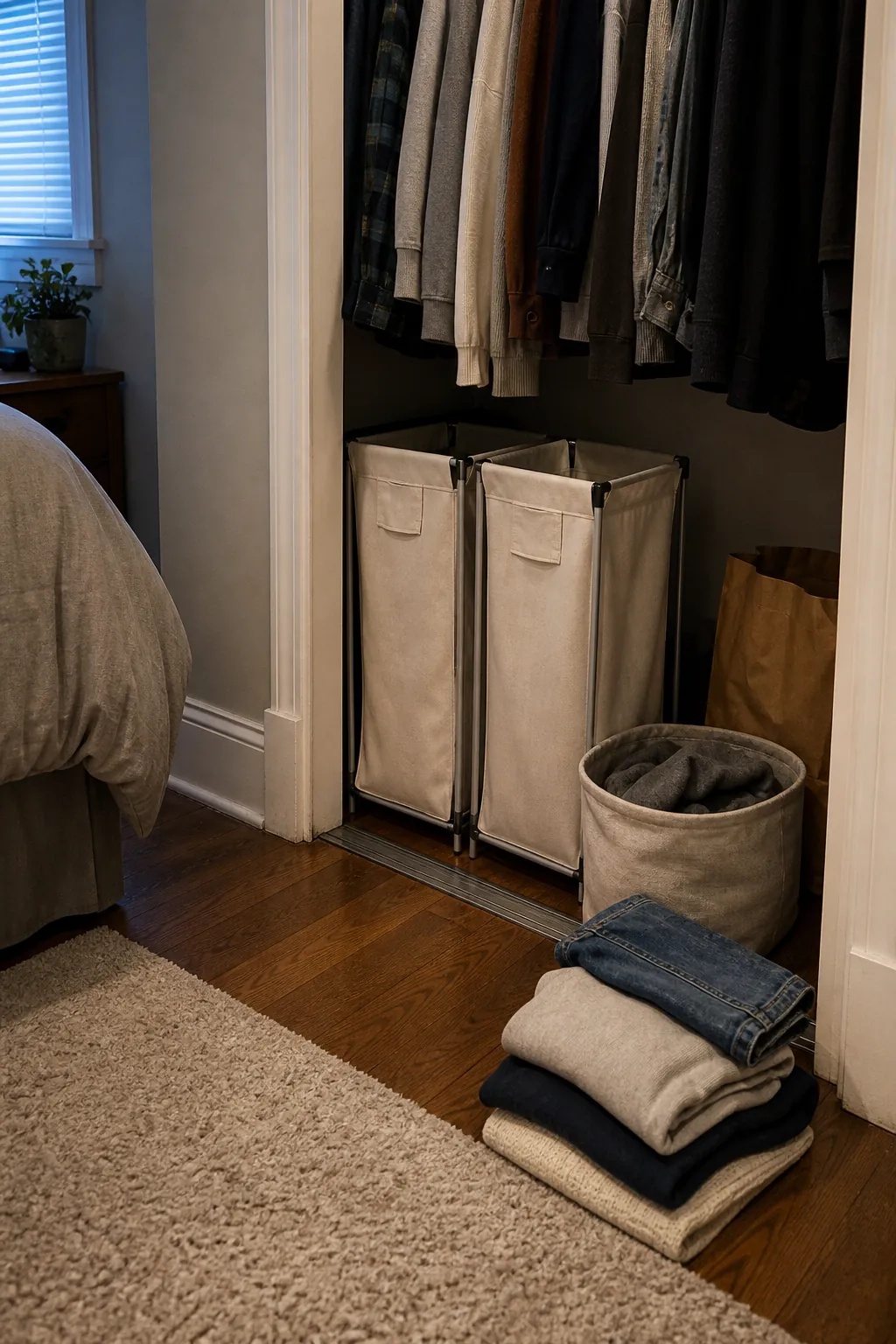
The shared closet that lasts is usually a little less full than the shared closet that looks impressive online. Leave breathing room on the rod. Leave one bin partly empty. Leave the floor simple. Small space storage works best when the system can absorb real life without collapsing.