
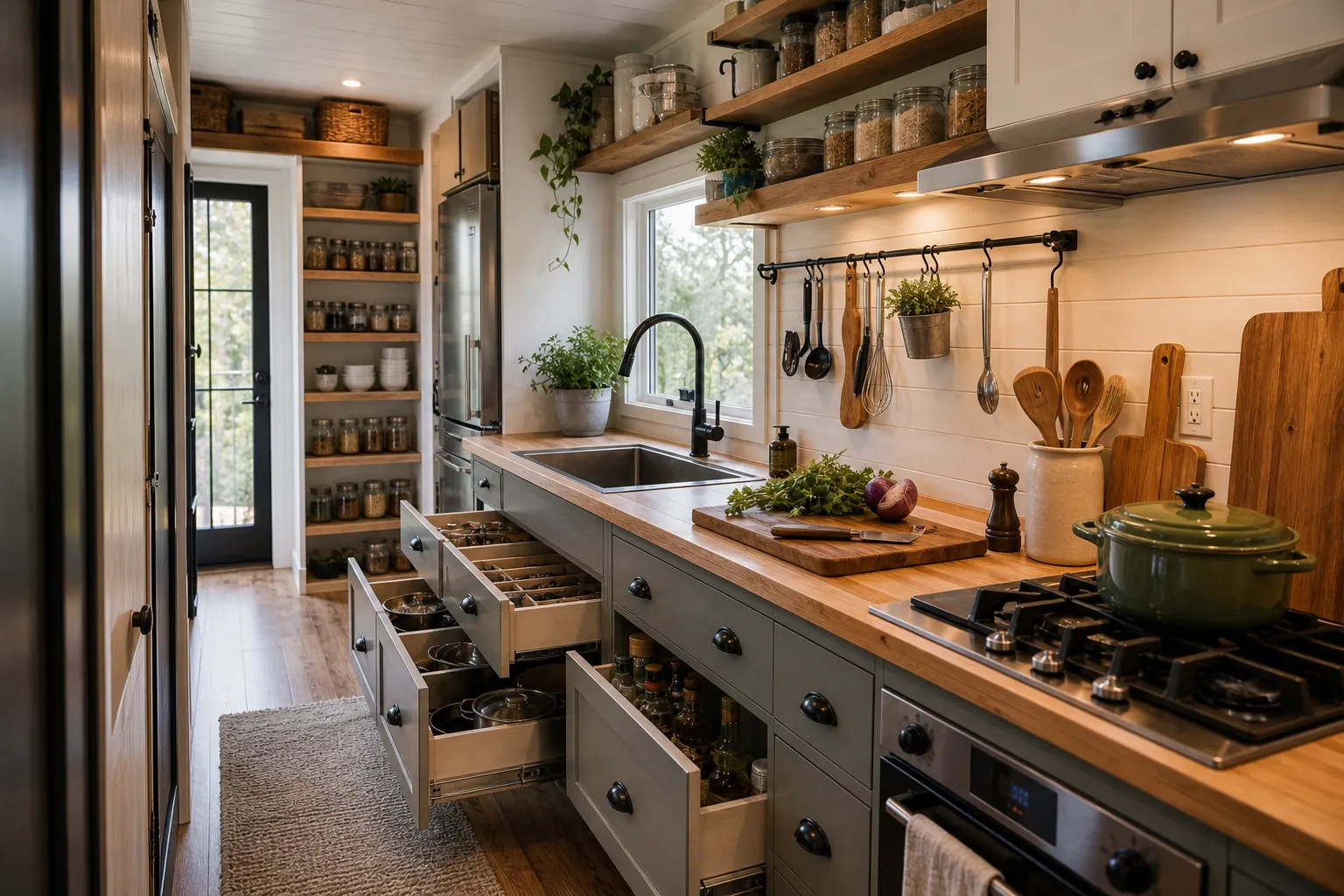
Tiny home kitchen storage has one job: make daily cooking easier. It is not just about fitting more into less space. If the storage plan makes you unload three bins to reach the skillet or move appliances every time you chop an onion, the kitchen will feel crowded even when it looks organized.
The best tiny home kitchen storage ideas are built around habits. They keep daily tools close, move occasional items out of prime space, protect meal prep space, and make the reset after cooking fast enough that you will actually do it.
Create A Daily Cooking Zone
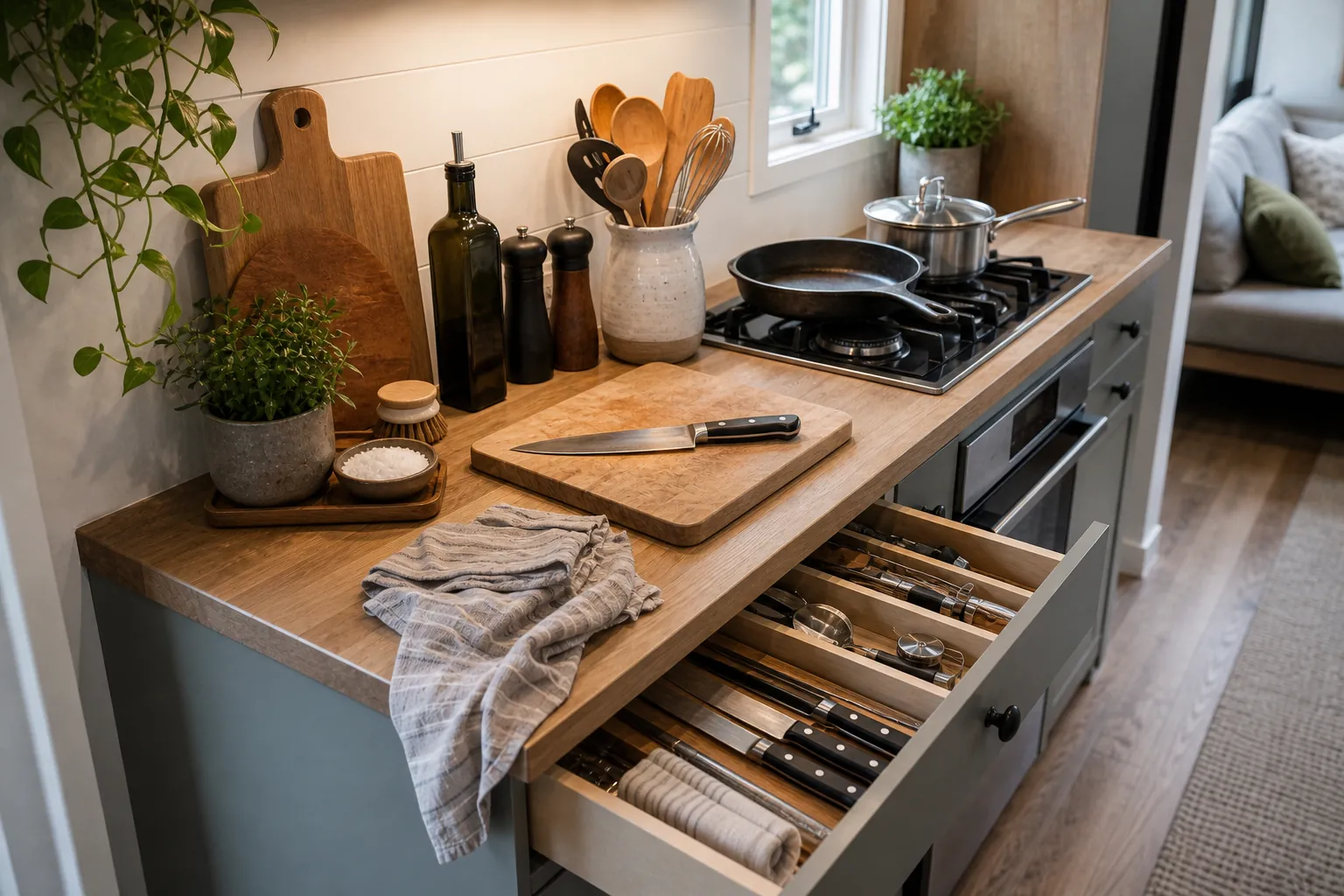
Start with the tools used for most meals: one cutting board, one knife, mixing bowl, skillet, saucepan, oil, salt, pepper, towels, and the utensils you grab without thinking. These items should live in the easiest drawers, shelves, or rails near the prep and cook area.
This single zone does more for small kitchen storage than another random basket. It reduces walking, searching, and counter clutter. It also makes it clear which tools deserve prime space and which ones should move to a higher shelf, bench drawer, or storage area outside the kitchen.
Move Daily Tools Onto The Wall Carefully
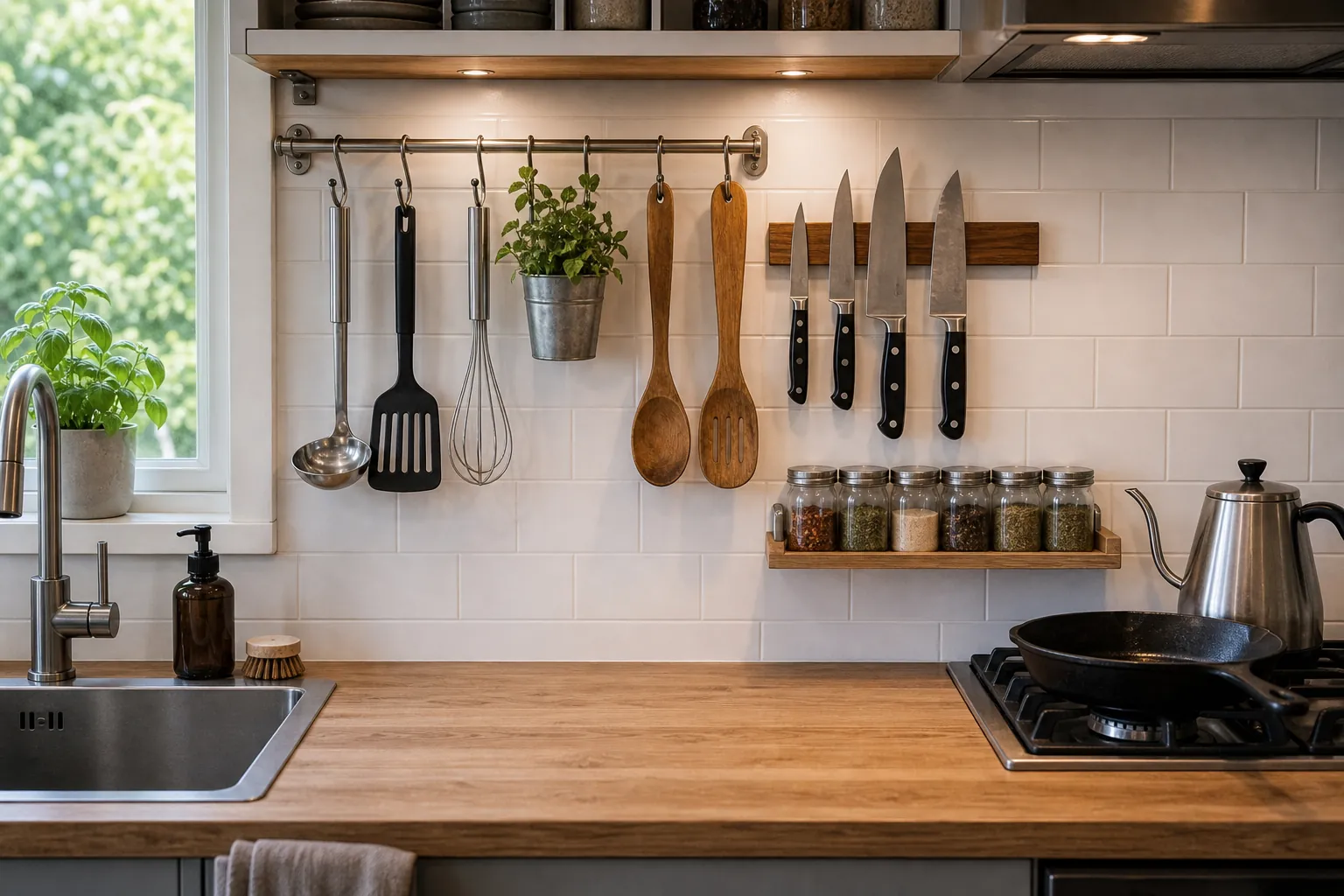
Wall storage is useful in a tiny house kitchen, but only when it serves the routine. A rail for utensils, a magnetic knife strip, a shallow spice shelf, or a small pegboard can free drawer space and keep the counter clear. The mistake is turning every wall into display storage until the kitchen feels busy.
Use wall storage for items that are sturdy, easy to clean, and used often. Avoid hanging rarely used tools in the visual center of the kitchen. In a compact kitchen, visual quiet is part of function because the living space is usually right next to the cooking area.
Make Drawers Work Harder Than Shelves
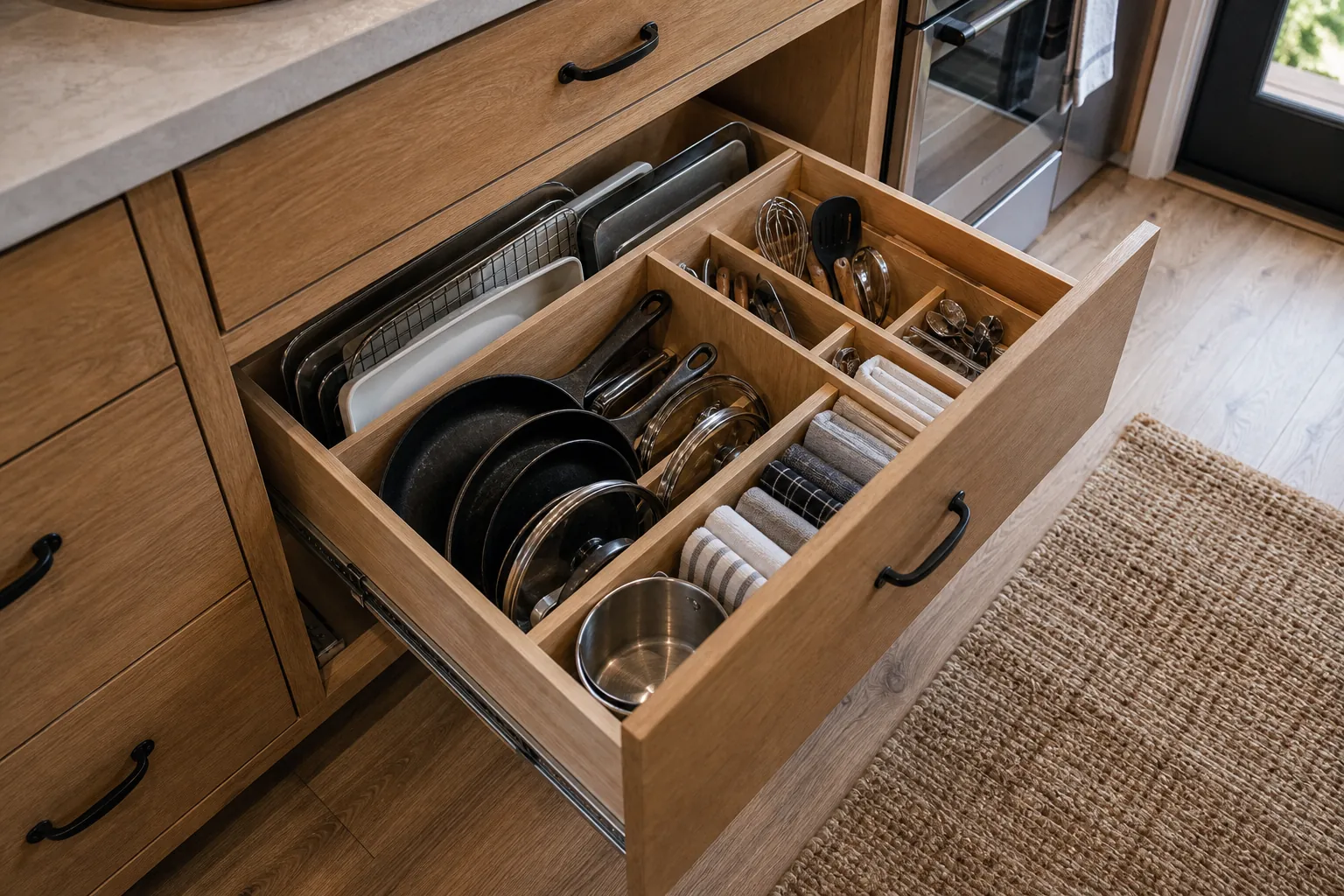
Deep lower cabinets waste space when everything stacks on top of everything else. Drawers are usually better for daily cooking because they bring the contents to you. Add dividers for lids, vertical slots for trays, shallow bins for towels, and a dedicated drawer for the tools used at the stove.
If you already have cabinets, retrofit them with pull out shelves or handled bins. The goal is to stop kneeling in front of a dark cabinet while dinner is half cooked. Good cabinet storage should let you grab, cook, and put away without turning the floor into a staging area.
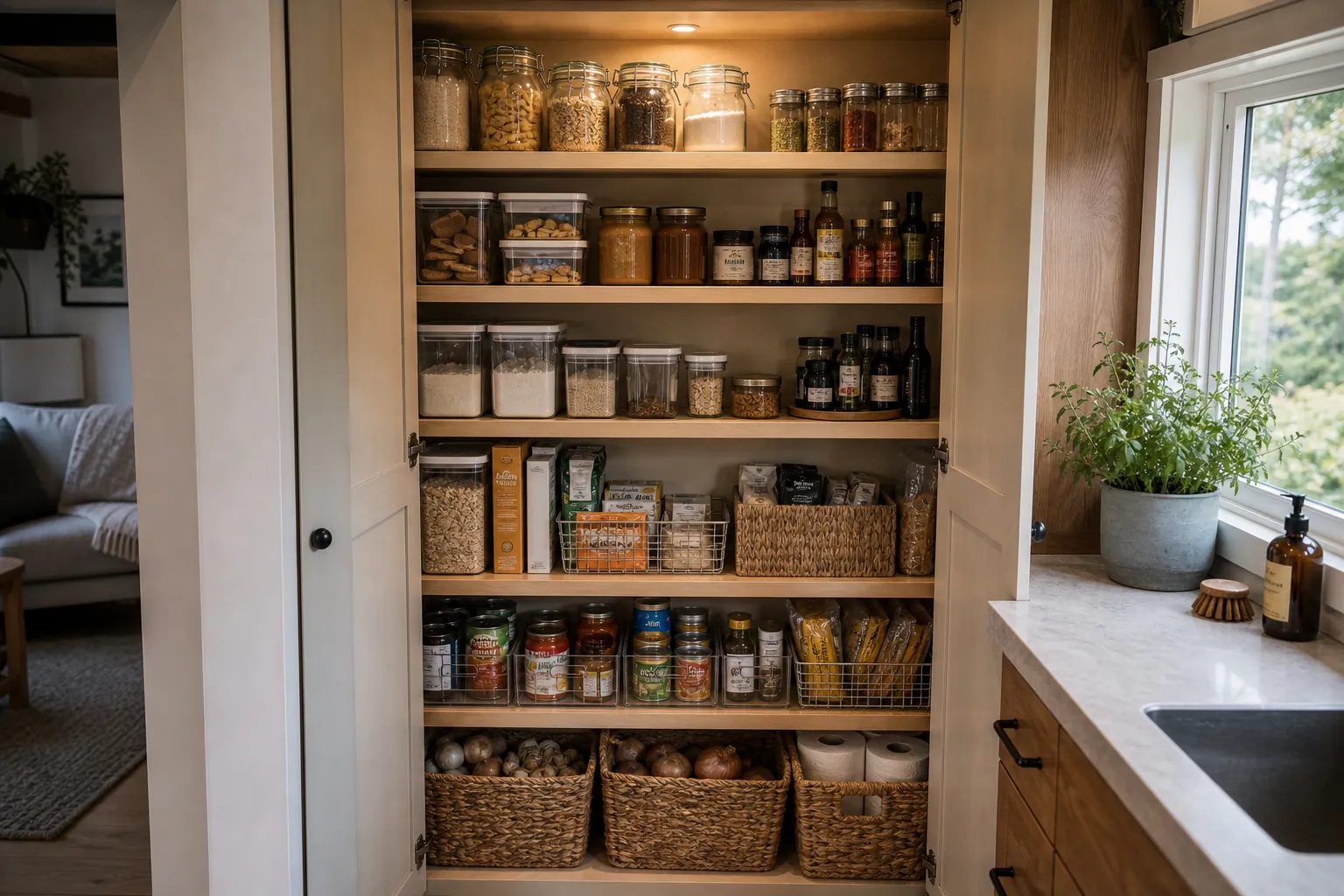
Keep Pantry Items Shallow And Visible
A tiny home pantry should be easy to scan. Shallow shelves, pull out racks, turntables, and matching containers can help, but the real win is visibility. If you cannot see the rice, pasta, beans, flour, or spices, you will buy duplicates and lose storage fast.
Group food by how you cook, not only by category. Breakfast foods can share one shelf. Weeknight staples can sit at eye level. Baking supplies can move higher if you bake less often. This makes kitchen organization match real meal prep space instead of an idealized pantry photo.
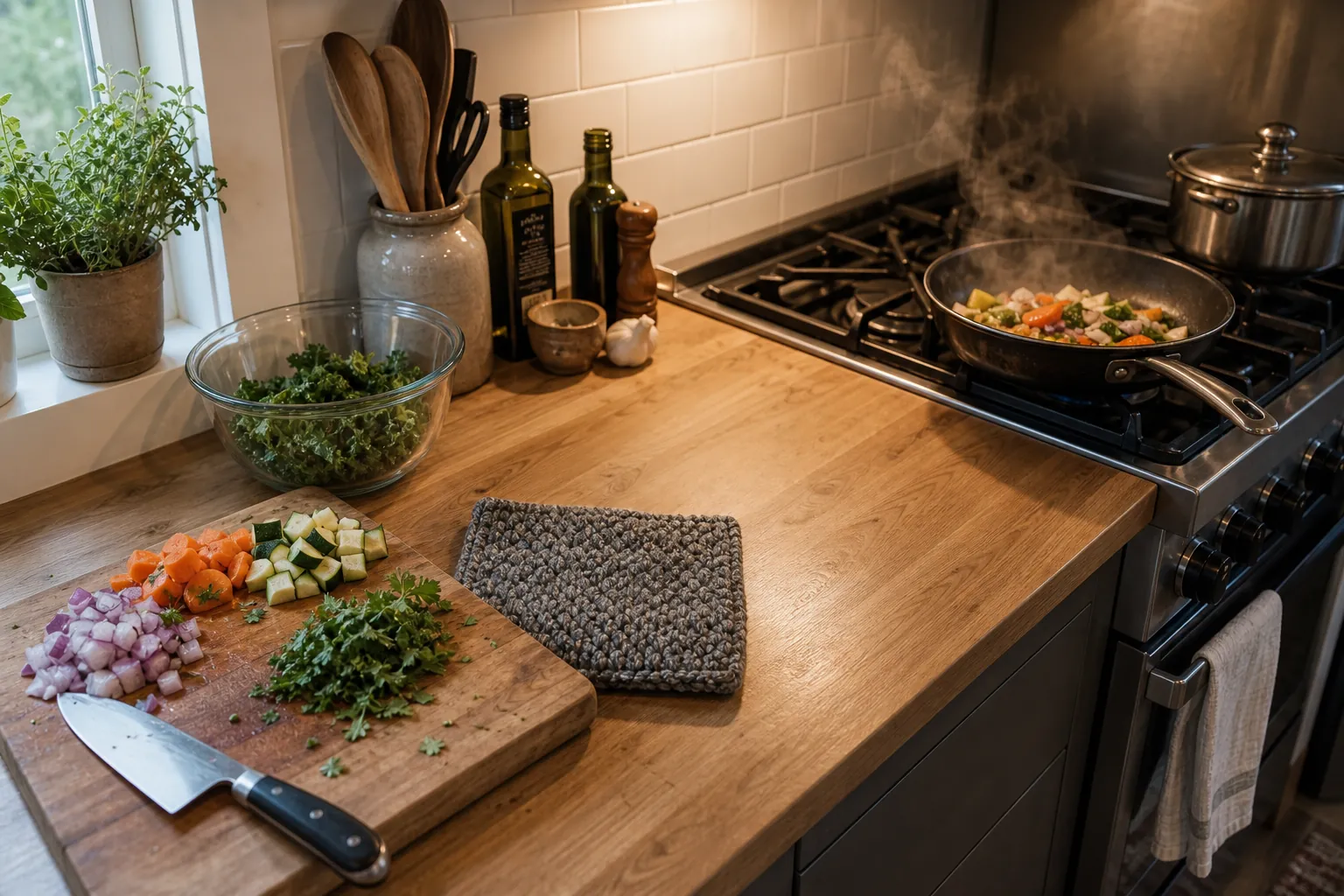
Protect A Landing Spot Beside The Stove
Daily cooking needs a landing spot for hot pans, chopped ingredients, plates, and the bowl you forgot you needed. In a small kitchen, this spot is often stolen by appliances or decor. Clear it first, then design storage around keeping it clear.
If the counter is short, create a secondary landing area with a pull out board, a hinged counter, a sink cover, or a narrow cart that parks away when not in use. The important part is that the landing spot is stable and close to the stove. A beautiful shelf across the room will not help when a pan is hot.
Use A Nightly Reset System
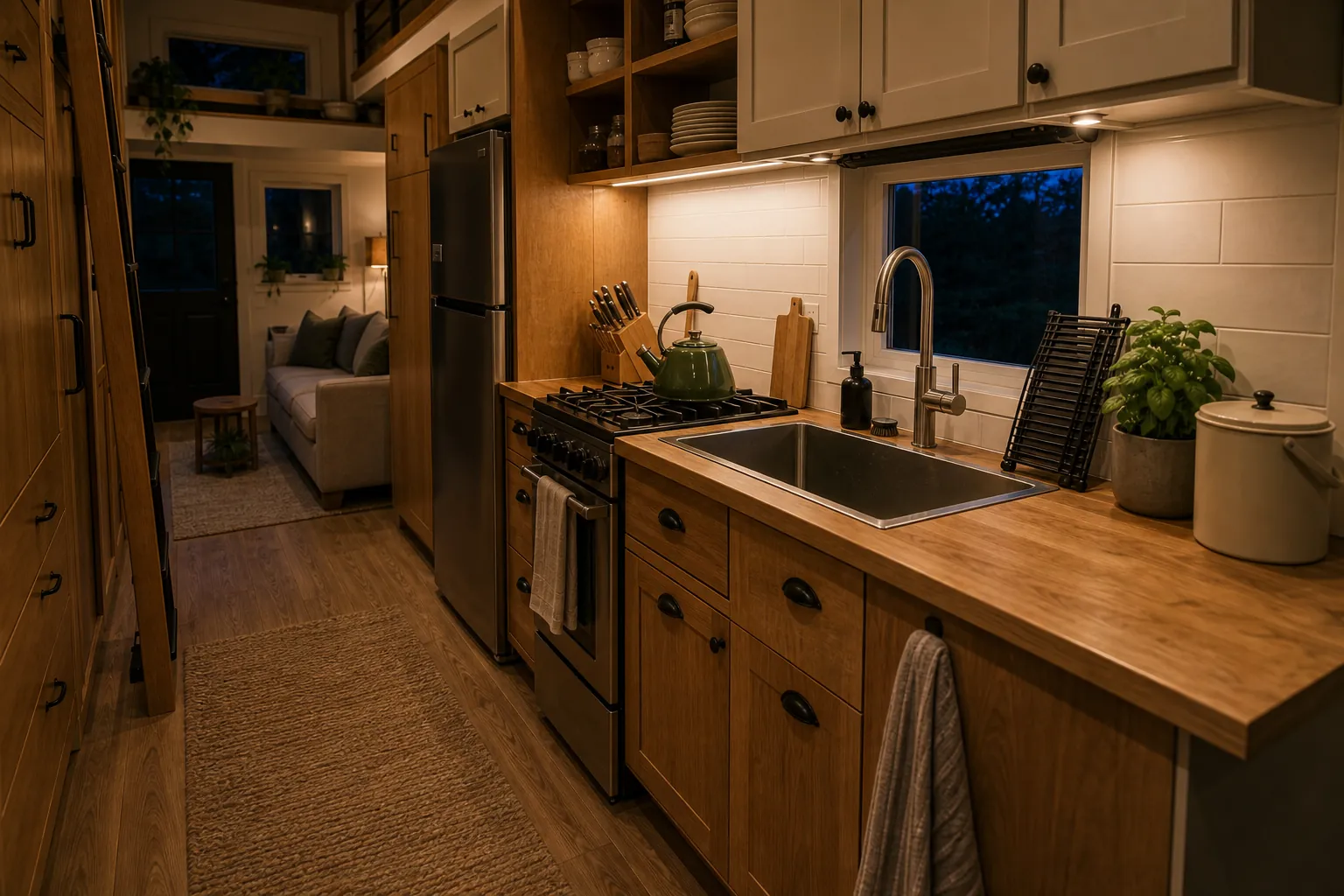
A tiny home organization system is only successful if it can be reset quickly. After dinner, the counter should return to a clear surface, dishes should have a drying plan, and every tool should have an obvious home. If the reset takes too long, clutter becomes the default.
Make the reset visible: a towel hook near the sink, a compact dish rack that folds away, a compost container that empties easily, and drawers that close without rearranging everything. Small kitchen storage is not just what you buy. It is the path back to a usable kitchen tomorrow morning.
Edit Before You Add More Storage
The fastest way to gain storage is often to remove what does not serve daily cooking. Duplicate mugs, oversized gadgets, single-use pans, extra food containers, and appliances used twice a year can quietly consume the best space. Keep the kitchen shelves for the life you actually live.
When every item earns its place, a tiny house kitchen can support real meals without feeling crowded. The storage becomes part of the cooking flow, not a separate problem you have to solve every day.