
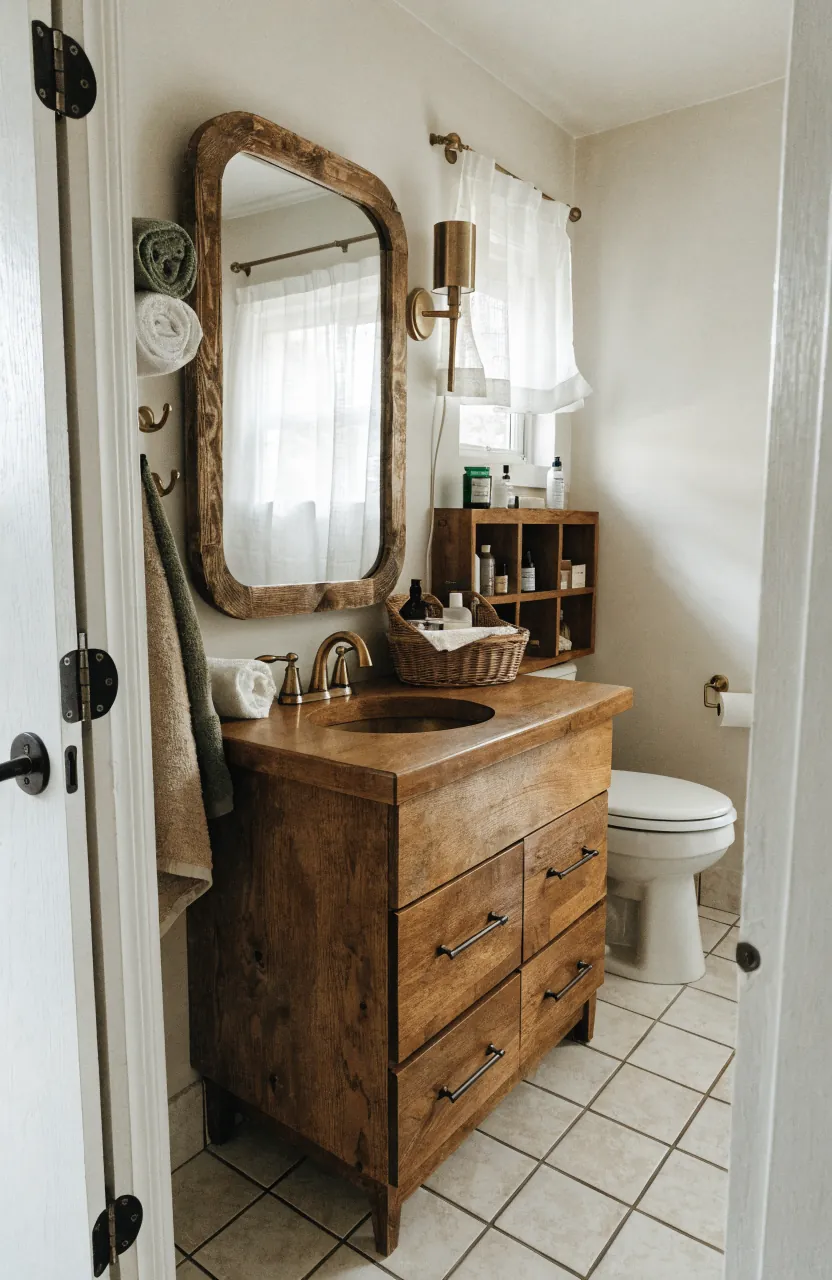
A tiny home bathroom rarely fails because it is too small. It fails because every bottle, towel, cleaning spray, hair tool, and backup roll is fighting for the same few surfaces. The sink ledge becomes a shelf. The shower floor becomes a storage zone. The top of the toilet starts holding things that should not be balanced there.
The better approach is not to squeeze in one big cabinet. In a tiny home bathroom, better storage comes from a group of small decisions: shallow storage where your body does not move, recessed storage where the wall already has depth, closed storage for visual clutter, and a few visible spots for the daily routine items you actually need to remember.
These tiny home bathroom ideas focus on storage that makes the room easier to use, not just fuller. The goal is a compact bathroom that feels calm, dries properly, and gives every essential a clear home.
Start With The Daily-Only Rule
Before adding a single shelf, divide the bathroom into three groups: daily use, weekly use, and backup storage. Daily items can stay in the bathroom. Weekly items can live in one closed bin or drawer. Backups belong somewhere else if your tiny home has any other dry storage zone.
This matters because a tiny bathroom is not a pantry, linen closet, cleaning closet, and dressing room all at once. Reddit threads about extremely small bathrooms repeat the same tension: people need routine items visible enough to use, but too much visible storage makes the whole room feel messy. The fix is not pure minimalism. The fix is a tighter edit.
Keep the toothbrush, face wash, deodorant, hand soap, one open towel, and current shower products inside the bathroom. Move bulk shampoo, extra skincare, spare medicine, seasonal products, and surplus towels to a labeled bin outside the room. If you forget items when they are hidden, use one open tray or one clear-front cabinet instead of letting the whole counter become a reminder board.
Use The Toilet Wall As A Shallow Storage Column
The wall above the toilet is usually the highest-return storage zone in a compact bathroom. It does not take floor space, it keeps traffic clear, and it can hold the light items that otherwise spread across the sink: toilet paper, hand towels, washcloths, extra soap, and a small basket for personal care.
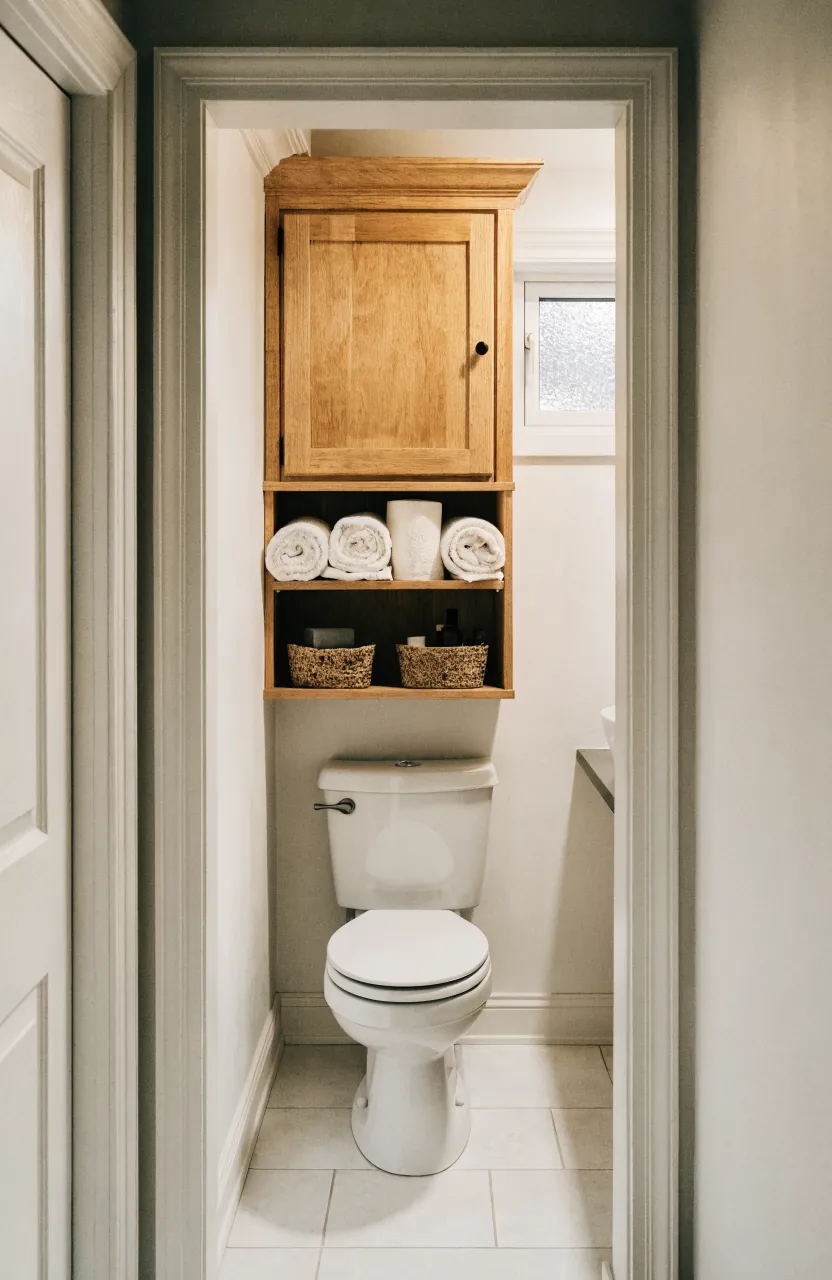
For a tiny house bathroom, shallow is better than deep. A cabinet or shelf that projects too far over the tank can make the toilet area feel crowded and can create a head-bump zone. Aim for narrow shelves, a slim wall cabinet, or a recessed cabinet if the wall allows it. Closed doors are best for backup rolls and cleaning supplies. Open shelves are better for two or three attractive daily items, not every product you own.
If your tiny home is on wheels, add a small front lip, rail, or enclosed basket so items do not slide forward during travel. Even in a stationary tiny home, a low rail keeps small bathroom storage from becoming a balancing act.
Recess Storage Wherever The Wall Gives You Depth
Recessed storage is one of the strongest tiny bathroom ideas because it adds capacity without stealing the room’s narrow walking line. A recessed medicine cabinet, a niche beside the vanity, or a small between-stud shelf can hold daily toiletries while keeping the wall face nearly flat.
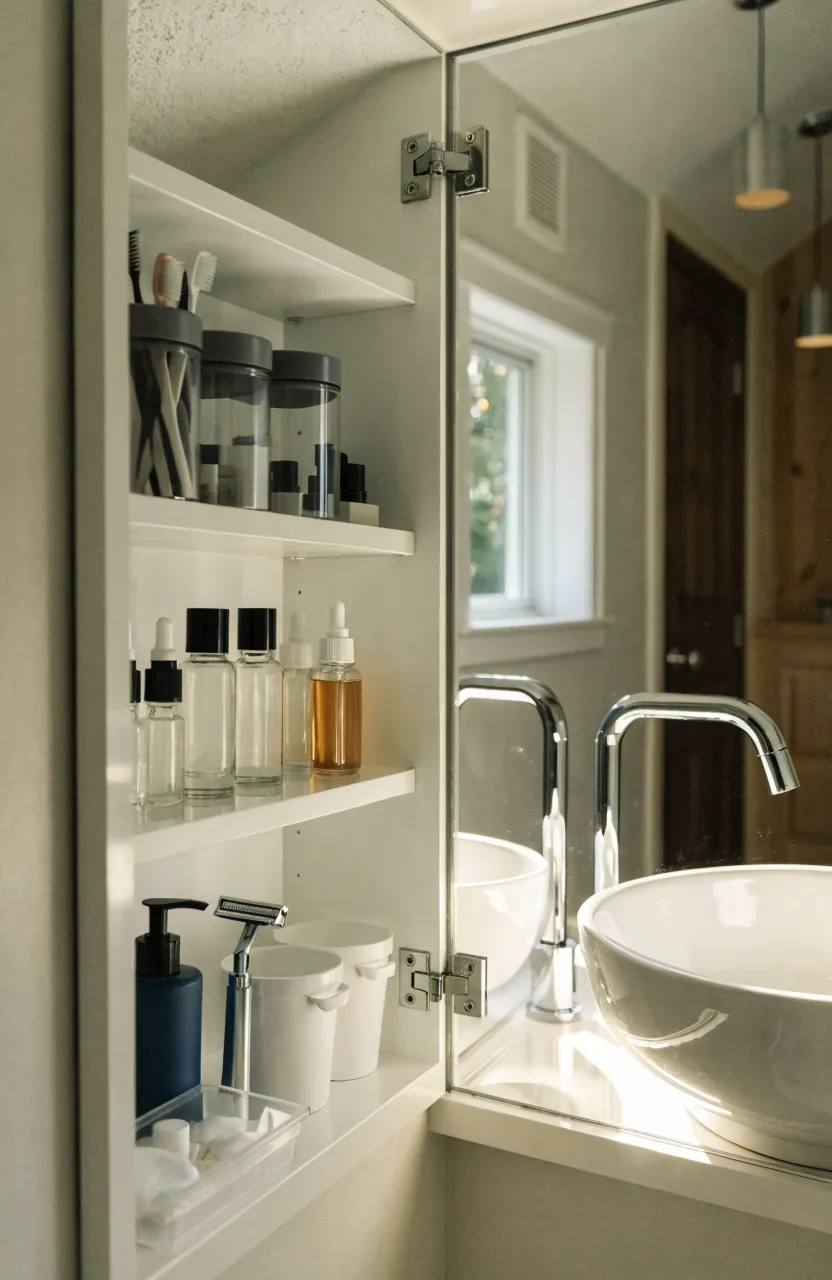
A full-height recessed medicine cabinet is especially useful when the vanity is tiny. It can replace the usual flat mirror with actual bathroom storage for toothbrushes, skincare, medicine, razors, and small grooming tools. If you are building or remodeling, ask the contractor to check stud spacing, wiring, plumbing, and vent lines before committing to a niche.
Think carefully about height. A niche that looks balanced in a drawing may be awkward in real life. Stand where you brush your teeth, open your hand naturally, and place daily items where you can reach them without leaning over the toilet or dripping water across the floor.
Make The Vanity Work Harder Than The Sink
A pedestal sink can make a compact bathroom look open, but it often creates the exact problem tiny home owners are trying to solve: no hidden storage. If you have room for even a shallow vanity, it usually earns its footprint. Drawers are often more useful than deep cabinets because small items do not disappear at the back.
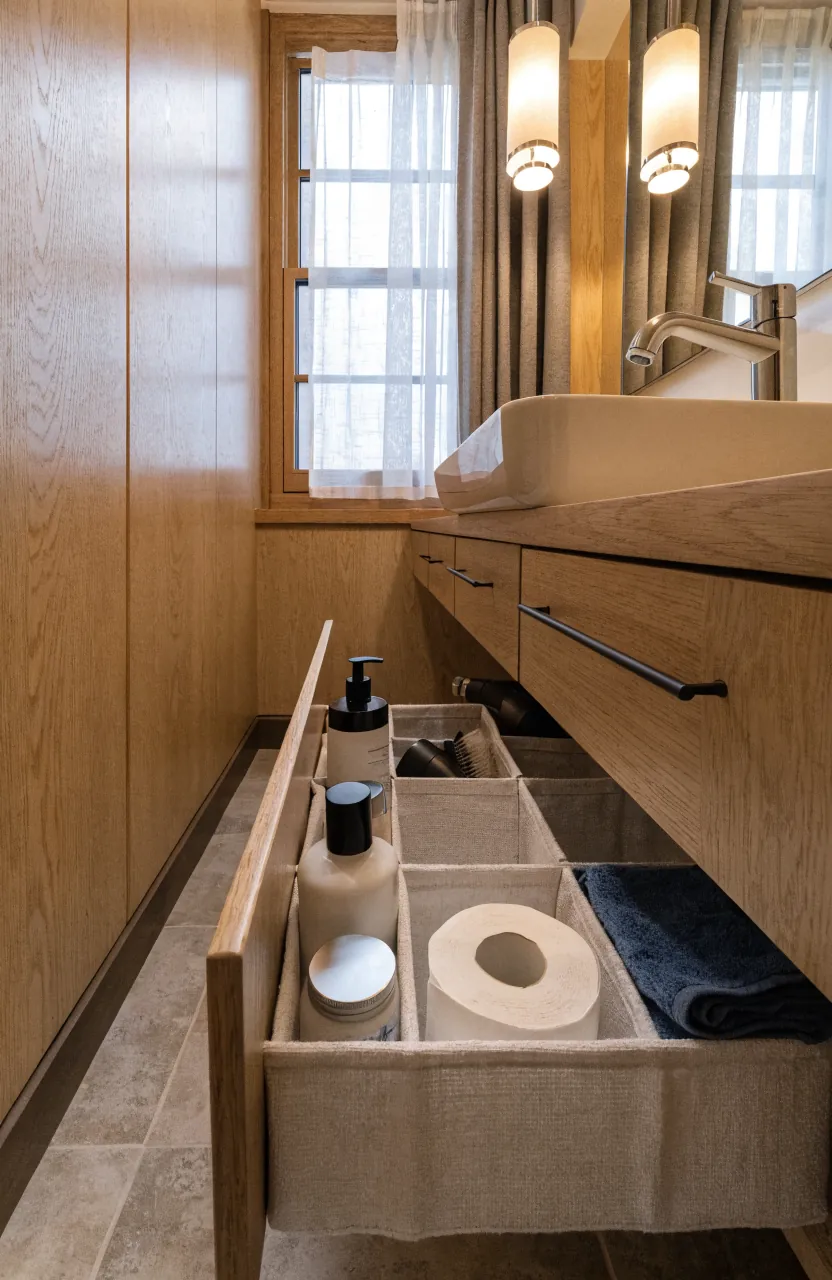
For the smallest bathrooms, look for a floating vanity with one drawer, a shallow-depth cabinet, or a wall-mounted sink with a skirted shelf below. The key is to protect the clear floor line while still giving small bathroom storage a closed home. Under-sink pull-out bins are useful for hair products, spare soap, toilet paper, and cleaning supplies because you can see the whole bin at once.
If you use heat tools, plan for them instead of hoping they will behave on the counter. A metal cup inside a drawer, a heat-safe pouch on a hook, or a narrow wall basket near an outlet can keep cords away from the sink and stop the vanity top from becoming a tangle.
Move Shower Products Off Ledges And Floors
Shower clutter is one of the fastest ways to make a tiny home bathroom feel smaller. Bottles on the floor collect water. Bottles on the tub edge fall. A hanging caddy works for renters, but a built-in niche or corner shelf is cleaner when you are building from scratch.
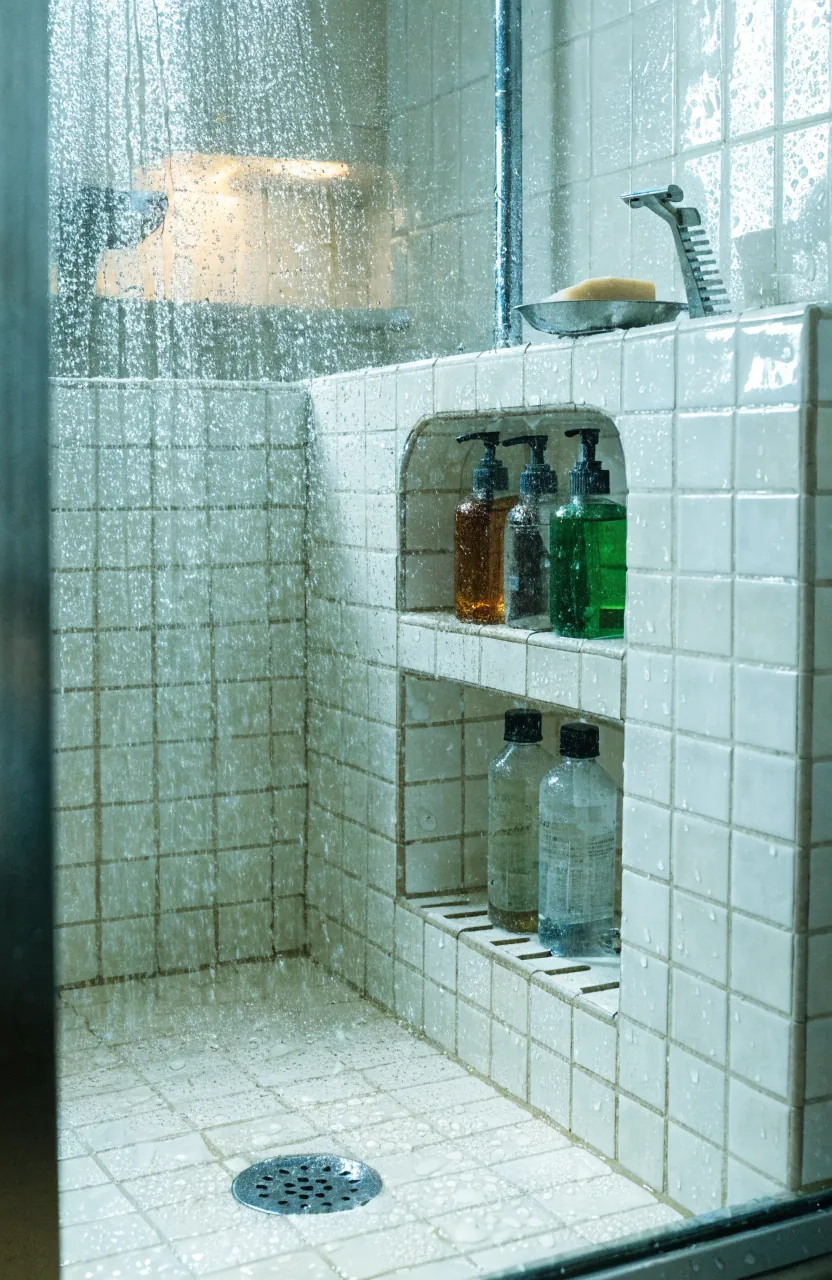
Keep the shower zone intentionally boring. One shampoo, one conditioner, one body wash, one soap, and one razor already fill a small niche. Backup products can live outside the shower. If multiple people share the bathroom, give each person one small waterproof basket that leaves the shower after use.
Choose materials that drain and dry quickly. Wire baskets, sloped niches, and shelves with open bottoms handle moisture better than solid trays. In a tiny house bathroom, ventilation and storage are connected. Anything that traps water will make the room feel damp longer.
Turn The Door And Narrow Walls Into Soft Storage
The back of the door is useful when you treat it as light-duty storage, not a second closet. Hooks are better than towel bars in a compact bathroom because they use less width and let towels hang vertically. A slim over-door organizer can hold washcloths, hair accessories, extra hand towels, or a small toiletry kit.
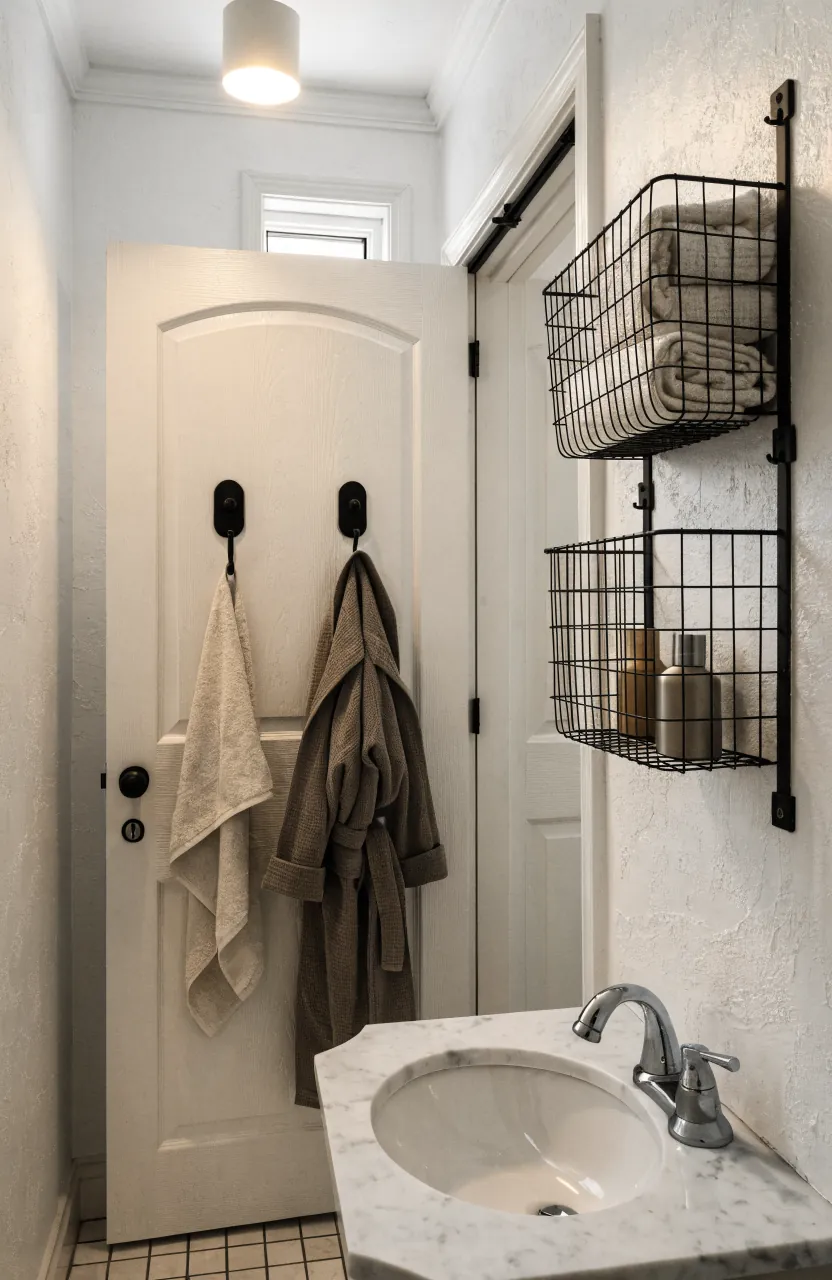
Use narrow side walls the same way. A 4-inch-deep wall basket can hold lotions or rolled washcloths without blocking movement. A magnetic strip inside a cabinet door can hold tweezers, nail clippers, or bobby pins. Adhesive hooks can work for renters, but for anything heavy or wet, screw into solid backing when possible.
The design rule is simple: anything mounted in a tiny bathroom should stay close to the wall. If it swings, bulges, or catches your shoulder when you turn, it is storage in the wrong place.
Store Towels By Routine, Not By Category
Towels take more space than most people expect. Instead of storing every towel in the bathroom, store the next towel. Keep one bath towel in use, one spare bath towel if the room can handle it, and a small stack of hand towels or washcloths. The rest can live in a bedroom drawer, hallway bin, storage loft, or laundry area.
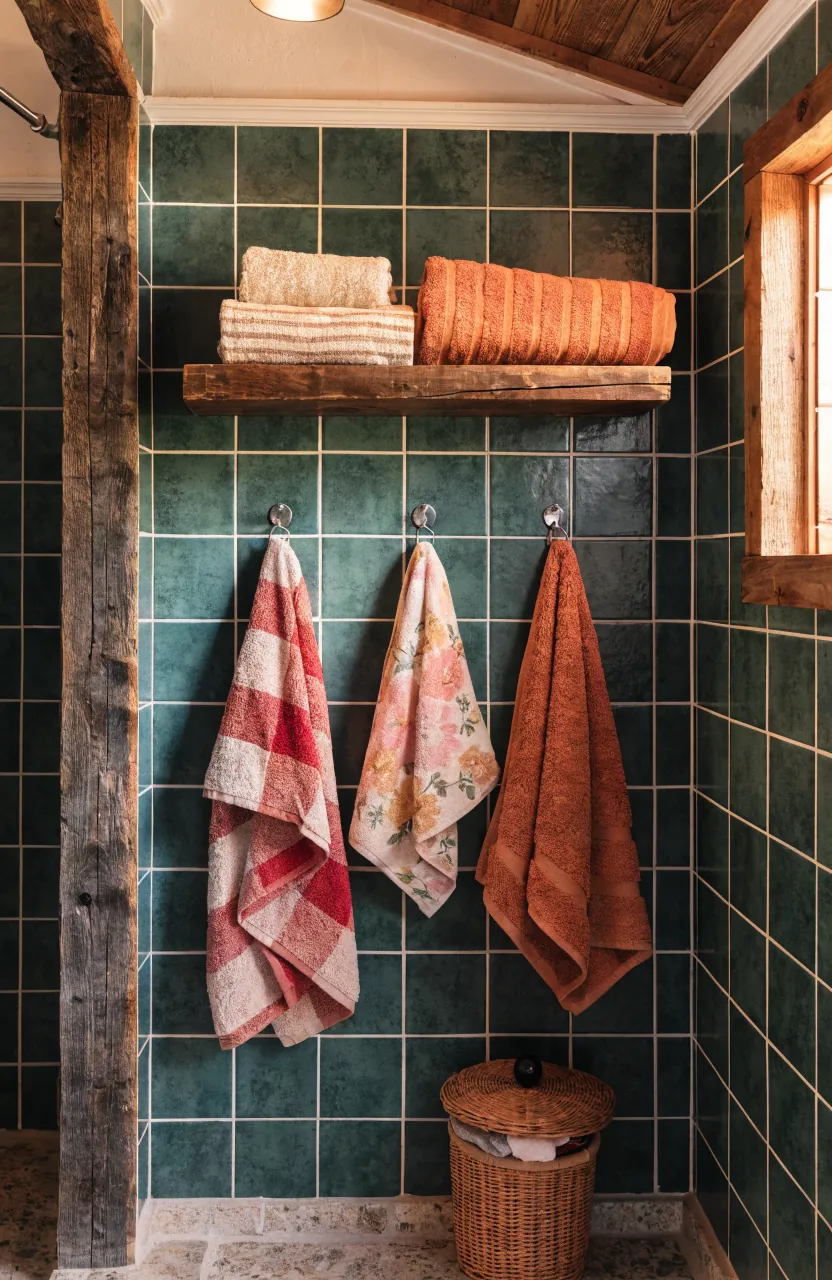
Rolling towels can make a small shelf easier to use because you can pull one without disturbing the whole stack. Hooks help towels dry where a full towel bar will not fit. If the bathroom is humid, do not pack thick towels into a closed cabinet while they are damp. Give the in-use towel air first, then store extras in a dry zone.
This is where bathroom organization becomes personal. If you use separate towels for hair, face, and body, create three small hooks or three labeled rolls instead of one mixed pile. A tiny home design works best when it respects the routine that actually happens every morning.
Choose Storage That Can Handle Moisture
Tiny bathrooms get humid quickly. Before you add more shelves, make sure the room can dry. Use an exhaust fan that vents outdoors, open a window when possible, and avoid storing moisture-sensitive items in the shower zone. The CDC and EPA both emphasize controlling moisture and using bathroom exhaust ventilation because mold needs damp conditions to grow.
For bathroom shelves, choose sealed wood, powder-coated metal, plastic bins, glass, tile, or moisture-resistant board. Avoid raw wood in splash zones unless it is properly sealed. Use baskets for texture, but keep them away from constant spray and choose washable liners if they hold toiletries.
Closed storage looks cleaner, but it should not become a damp cave. Leave breathing room around towels, wipe bottle bottoms before putting them away, and keep cleaning products in a bin that can be lifted out and cleaned.
A Simple Tiny Bathroom Storage Plan
If you are planning a tiny house bathroom from zero, build the storage in this order:
- Mirror zone: recessed medicine cabinet for daily toiletries.
- Sink zone: shallow vanity drawer or pull-out bin for small products.
- Toilet wall: slim cabinet or shelves for paper, hand towels, and backups.
- Shower zone: niche, corner shelf, or removable caddy for current products only.
- Door zone: hooks for towels, robe, or a light organizer.
- Dry overflow zone: one labeled bin outside the bathroom for bulk supplies.
If you already live with a compact bathroom, start with the least invasive changes: edit the products, roll the towels, add hooks, add one shallow wall shelf, and use one pull-out bin under the sink. Then watch where clutter returns. That spot is where your next storage upgrade belongs.
The best tiny home bathroom storage does not advertise itself. It keeps the walkway open, keeps wet things drying, keeps daily items easy to reach, and quietly removes the little piles that make a small bathroom feel smaller than it is.