
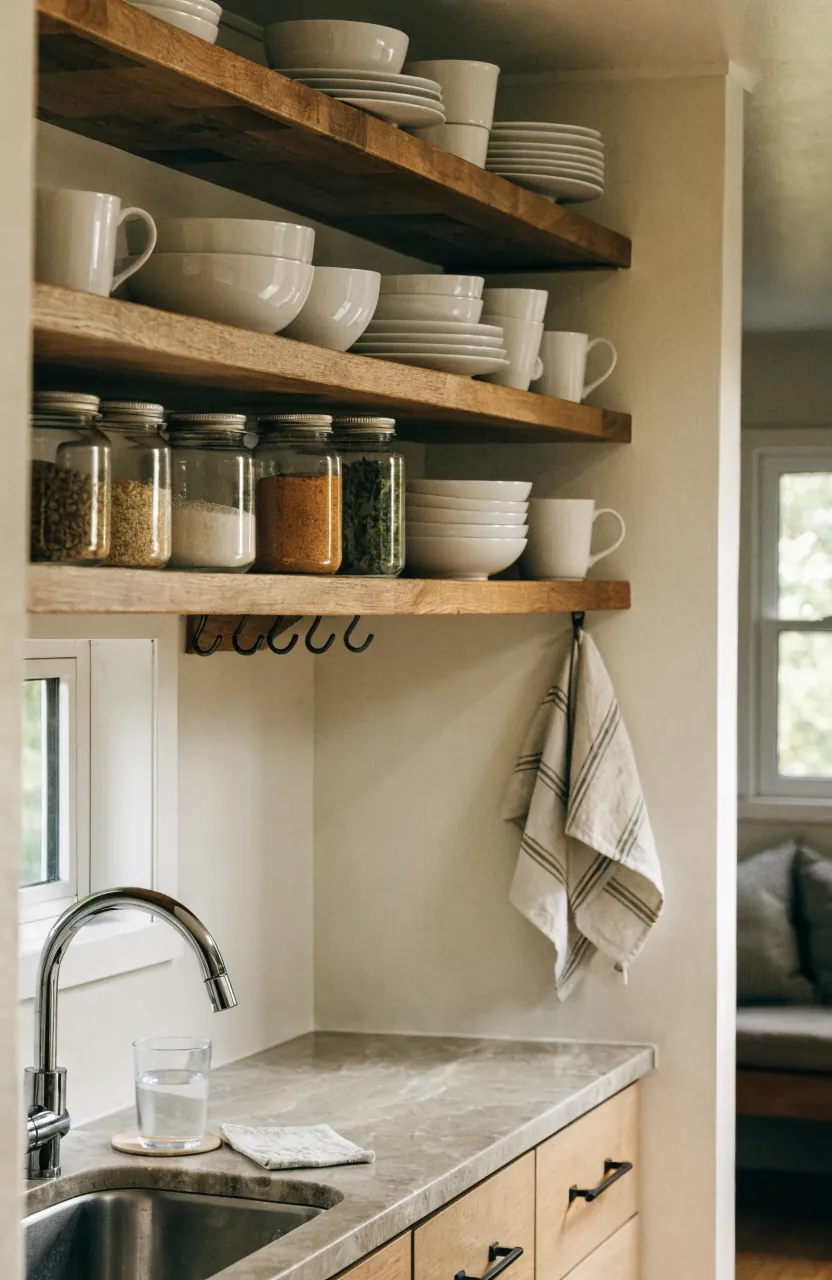
Open shelving can make a tiny home kitchen feel taller, brighter, and easier to use, but only when it is treated like working storage instead of a pretty place to hide overflow. The shelves have to earn their wall space. That means the everyday dishes sit where your hands naturally reach, bulky items stay low, pantry goods are decanted with restraint, and the whole system stays calm enough to look intentional from the living area.
The best tiny home kitchen ideas with open shelving are not about removing every upper cabinet. They are about choosing the few places where visibility improves the workflow and using closed storage for the things that would make the room feel busy. In a tiny house kitchen, that balance matters because the kitchen is rarely hidden behind a door. It is part of the main room, the entry view, and often the background of everyday life.
Start With One Hardworking Shelf Wall
The safest way to use open shelving in a compact kitchen is to begin with one hardworking wall instead of wrapping shelves around the entire room. A single shelf wall gives you the airy effect people want from open shelving without turning every visible surface into a maintenance job. It also keeps the tiny home design from looking like a storage aisle.
Look for the wall that already supports your daily routine. In many tiny homes, that is the stretch above the sink, beside the range, or along the longest uninterrupted backsplash. Two shelves are usually easier to maintain than three overloaded ones. Keep the lower shelf for items you touch every day and the upper shelf for lighter backup pieces, small serving bowls, or a short row of matching jars.
The goal is not maximum shelf count. It is maximum useful storage with minimum visual noise. If the wall feels heavy after the shelves go up, remove one shelf before buying more organizers. In a small space kitchen, empty breathing room is part of the storage strategy because it keeps the room from feeling crowded.
Put Daily Dishes Where They Work Hardest
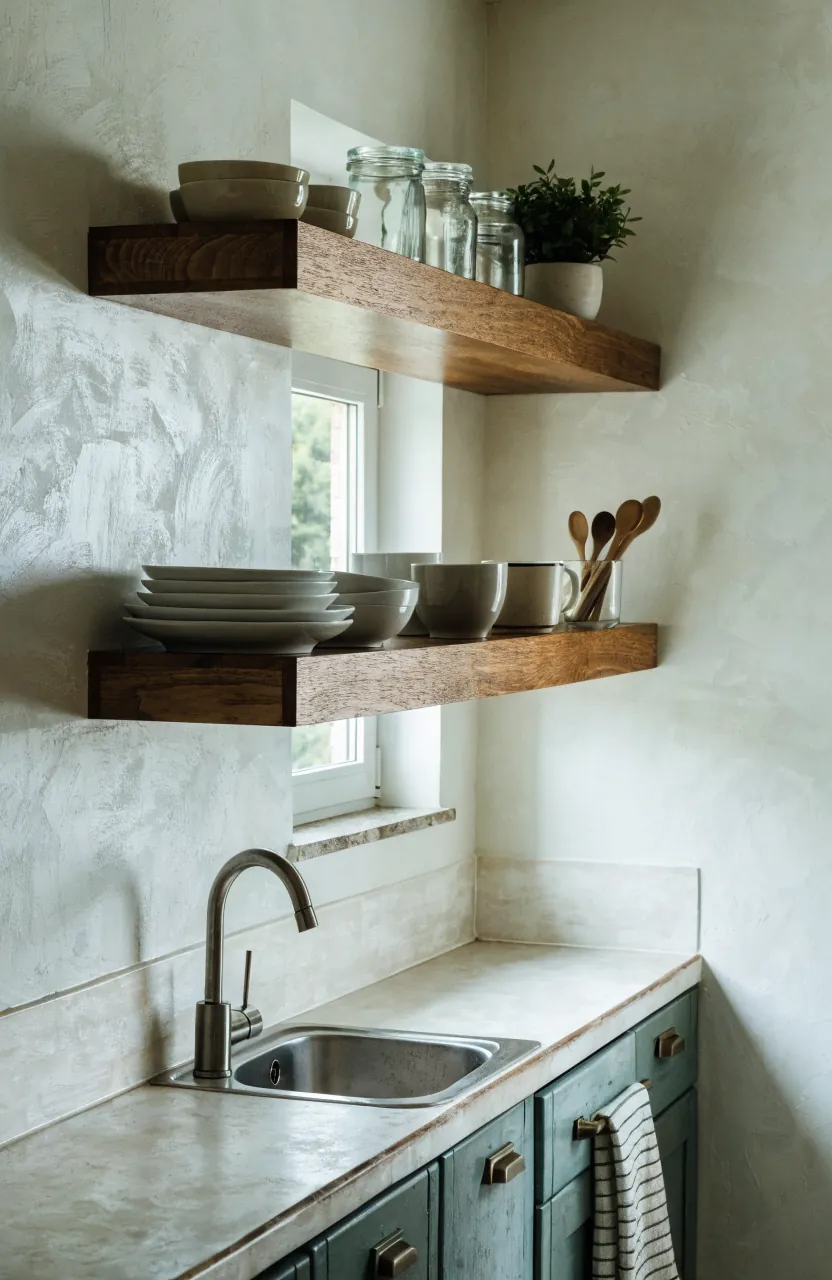
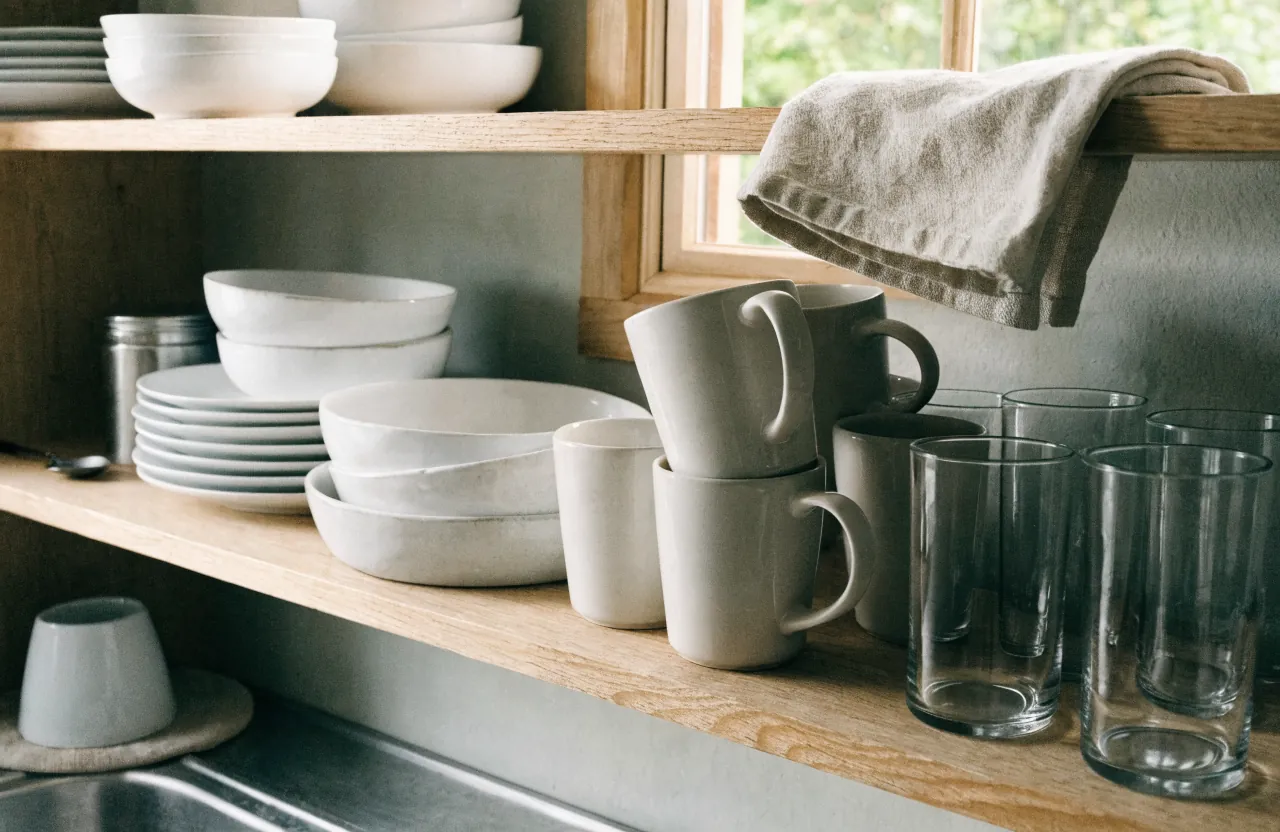
Open kitchen shelves work best when they store the things you reach for constantly: plates, bowls, mugs, drinking glasses, coffee gear, and one or two cooking staples. These items justify being visible because they move on and off the shelf every day. They do not sit long enough to gather much dust, and they make the kitchen organization feel effortless.
Place the daily dish zone between shoulder and eye level if you can. That is where open shelving feels easier than a cabinet door. Stacks should be low enough to lift with one hand. A tiny home kitchen does not need twelve plates on display if two people live there and four plates cover normal life. Keep the extras in a closed cabinet, a bench drawer, or a storage tote outside the kitchen if you only use them for guests.
There is a useful rule here: if an item is not used weekly or beautiful enough to see daily, it should not claim prime open shelf space. That one filter prevents shelves from becoming a public version of a junk cabinet.
Use Shallow Pantry Storage Instead Of Deep Piles
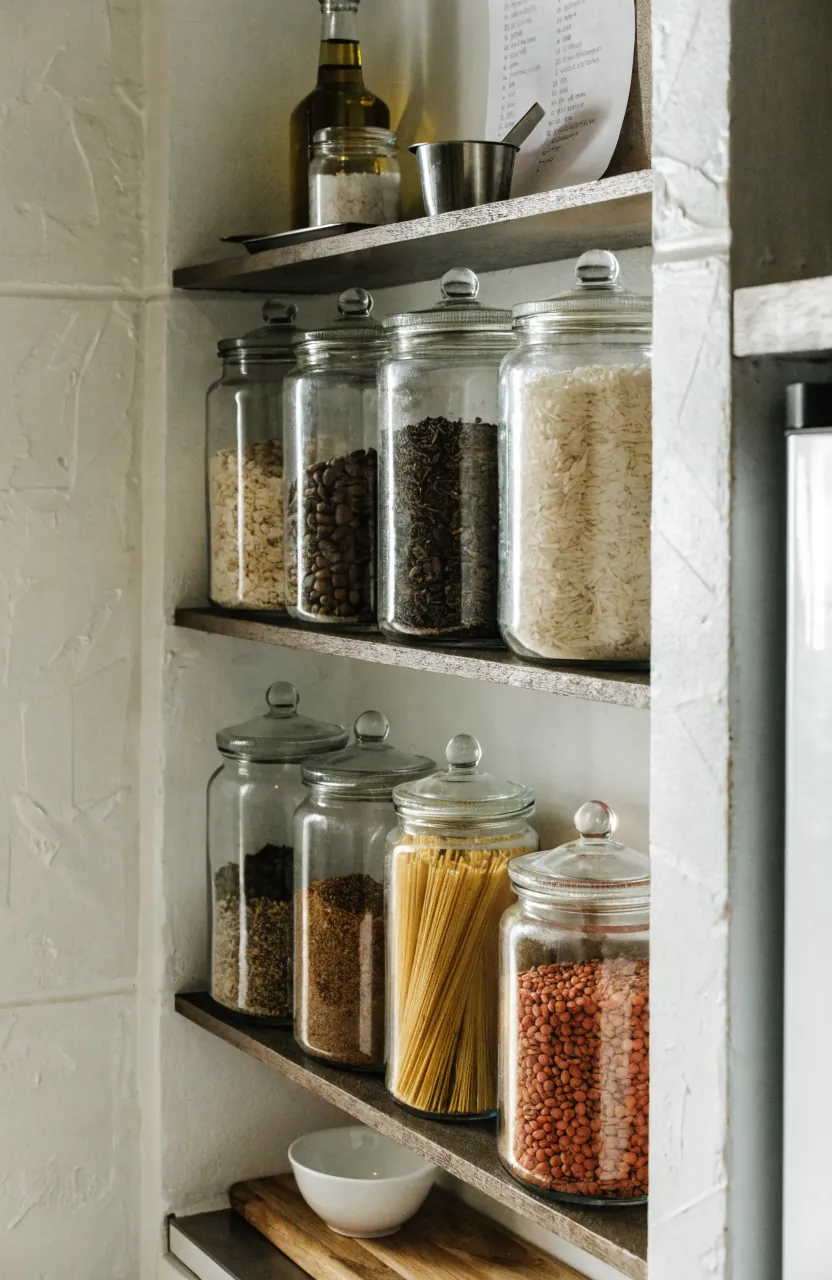
Deep shelves sound practical until half the food disappears behind the front row. In a tiny house kitchen, shallow storage often works better because everything remains visible. This is where open shelving can beat a small cabinet: you can see the rice, oats, coffee, tea, oil, spices, and baking basics before buying duplicates.
Use rectangular containers when possible because they waste less space than round baskets and bowls. Keep labels simple and facing forward. Store messy packaging somewhere else or transfer only the pantry staples that look orderly in the open. The point is not to turn your shelf into a staged grocery display. It is to make a compact kitchen easier to cook in.
For small kitchen storage, the best pantry shelf depth is the one that lets you see the back without moving the front. If you already own deeper shelves, create zones with narrow trays so a whole group can slide forward at once. Open shelving works when retrieval is simple; it fails when every meal starts with moving six things to reach one jar.
Pair Open Shelves With Closed Lower Storage
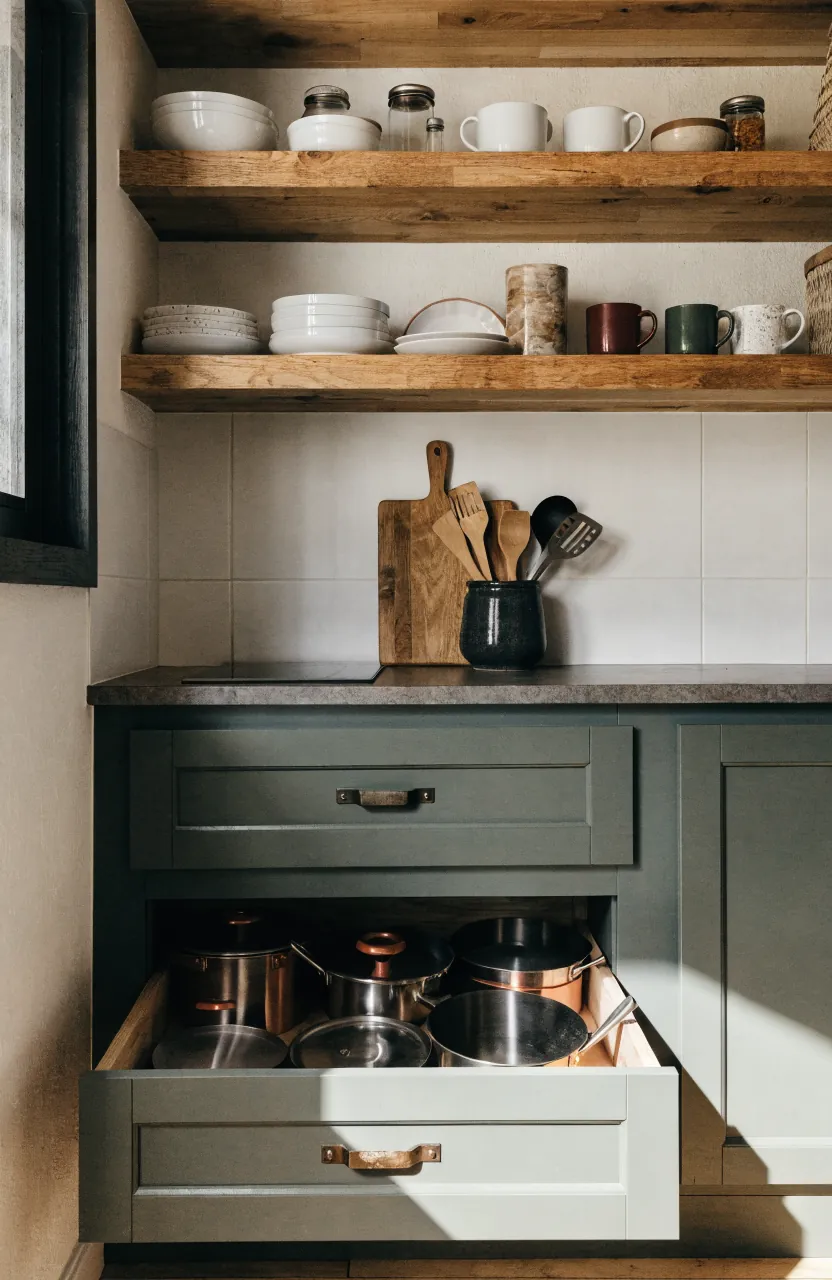
The strongest tiny home kitchen layouts usually combine open upper storage with closed lower storage. Shelves keep the wall light. Drawers and cabinets below hide the awkward pieces: food processor parts, bulk containers, cleaning products, extra cookware, plastic lids, pet bowls, and anything that would make the kitchen styling feel restless.
This mix also solves one of the biggest complaints about open shelving: visual clutter. A few open shelves can make a small kitchen feel bigger, but open storage everywhere can make the same room feel unfinished. Lower drawers give you permission to keep the visible shelves edited. If you cook often, prioritize drawers over lower cabinet shelves whenever possible because drawers let you reach the back without kneeling in the aisle.
Think of the closed storage as the engine room and the open shelves as the daily-use cockpit. The shelves should show what supports your routine, not everything you own. That distinction is what makes open shelving feel like a design choice rather than a compromise.
Add Rails And Hooks Under The Shelves
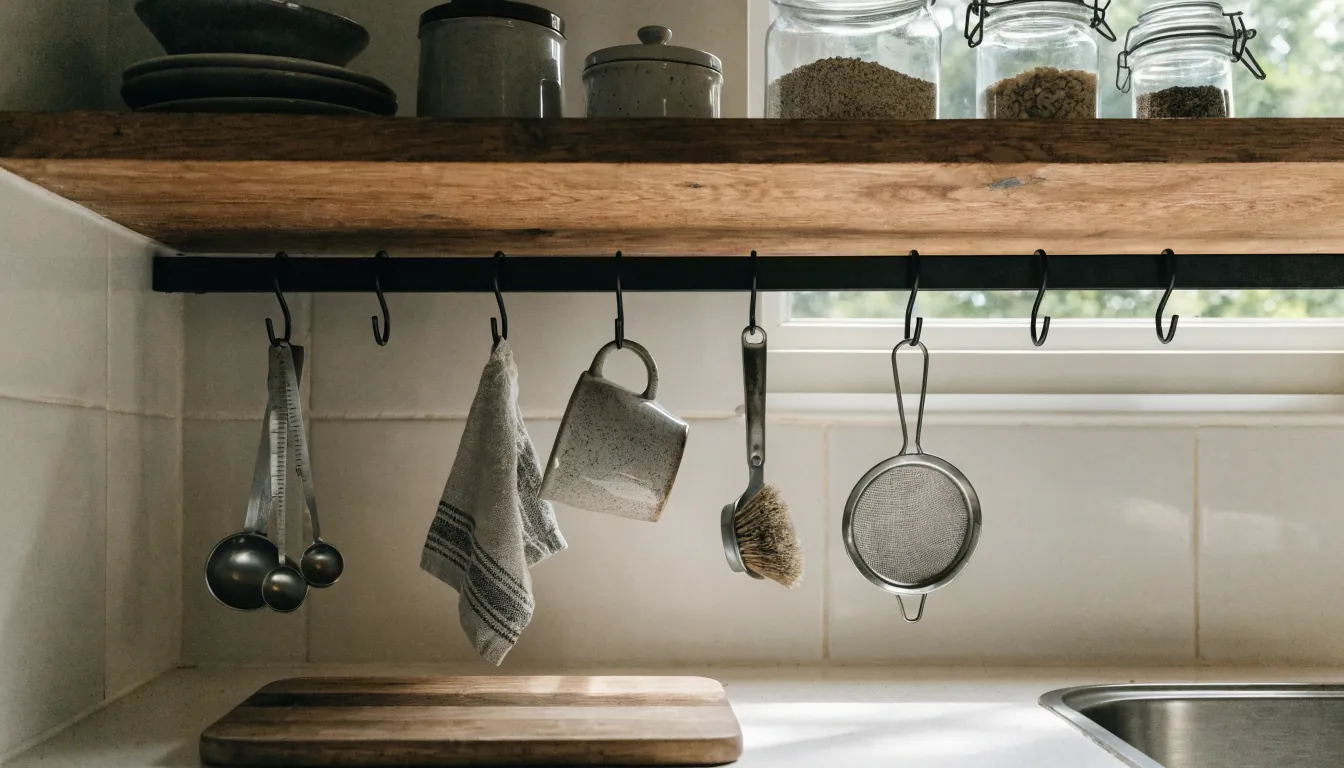
The underside of a shelf is valuable real estate in a tiny home kitchen. A slim rail can hold measuring spoons, small utensils, linen towels, a pot brush, or a few lightweight mugs. A magnetic strip can move knives or metal spice tins off the counter. Small hooks can turn the side of a cabinet into storage for cutting boards, a colander, or a handled pan.
The trick is restraint. Hanging storage saves space only when it is easy to clean around and does not block prep work. Keep anything near the stove limited to items that can handle cooking residue, and leave enough wall space so the arrangement still looks intentional. In a tiny house kitchen, every inch is close to steam, splatter, and touch, so choose washable materials and avoid crowding soft textiles near the cooking zone.
Rails are especially helpful in a small space kitchen because they let one shelf do two jobs: the top holds dishes or jars, and the underside handles tools that would otherwise fill a drawer. Use the vertical layer, but keep the counter visually open.
Make Shelf Styling Functional First
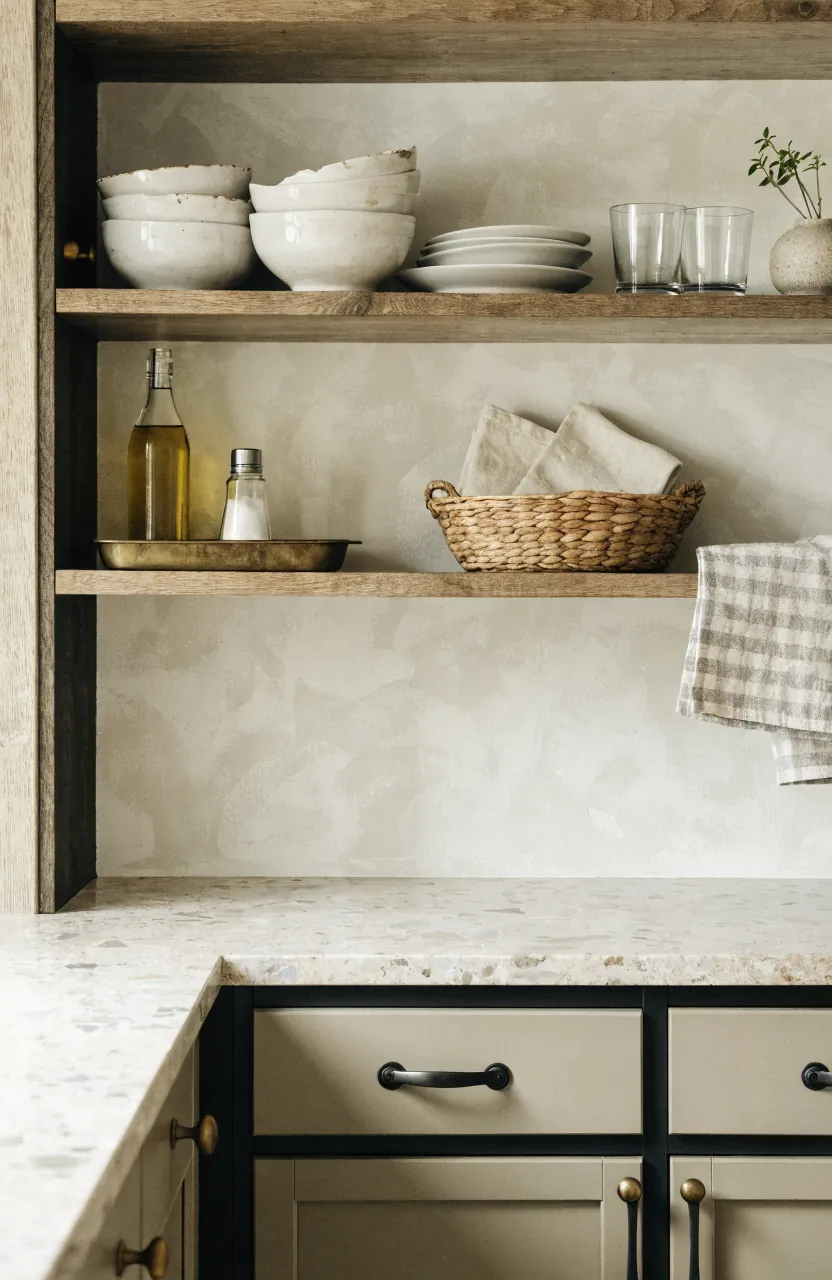
Kitchen styling matters more in a tiny home because the kitchen is almost always visible from somewhere else. But styling should support function, not replace it. The easiest approach is to repeat a few materials: wood shelves, white or warm ceramic dishes, clear glass, matte metal, woven texture, and one small plant or framed piece if it does not steal storage from daily items.
Keep color variation controlled. A shelf filled with unrelated packaging makes the whole compact kitchen feel busier. A shelf with practical items in a limited palette feels calm even when it is full. Use trays to group oils or coffee supplies. Use one basket for items that are useful but not attractive. Leave a little space between stacks so the shelves read as organized instead of packed.
That does not mean the room should look sterile. A tiny home kitchen can still feel warm and personal. The difference is that every visible detail needs a reason. Functional styling is the sweet spot: useful, reachable, cleanable, and pleasant to look at from the sofa.
Plan For Cleaning Before You Install
The practical objection to open shelving is real: dust and cooking film collect on exposed surfaces. That does not make shelves a mistake. It means they should be placed and loaded honestly. Put open shelves where items move often. Avoid storing rarely used bowls above a greasy cooking zone. Choose finishes that wipe clean. If you have pets, heavy pollen, or hate dusting, start with one small shelf before committing to a full wall.
Open shelving also needs a reset rhythm. Once a week, wipe the front edge and the items you touched. Once a month, pull everything down from one shelf and clean the wall behind it. This sounds like a chore, but it is easier when the shelf contains only daily essentials. If the cleaning feels impossible, that is a sign the shelf is storing too much or the wrong category of things.
The best open shelving in a tiny home kitchen is not the most dramatic version. It is the version that still looks good after groceries, cooking, guests, and normal life. Design the shelves for the way you live on a busy Tuesday, not the way they look in a saved inspiration photo. That is how open shelving actually works.