
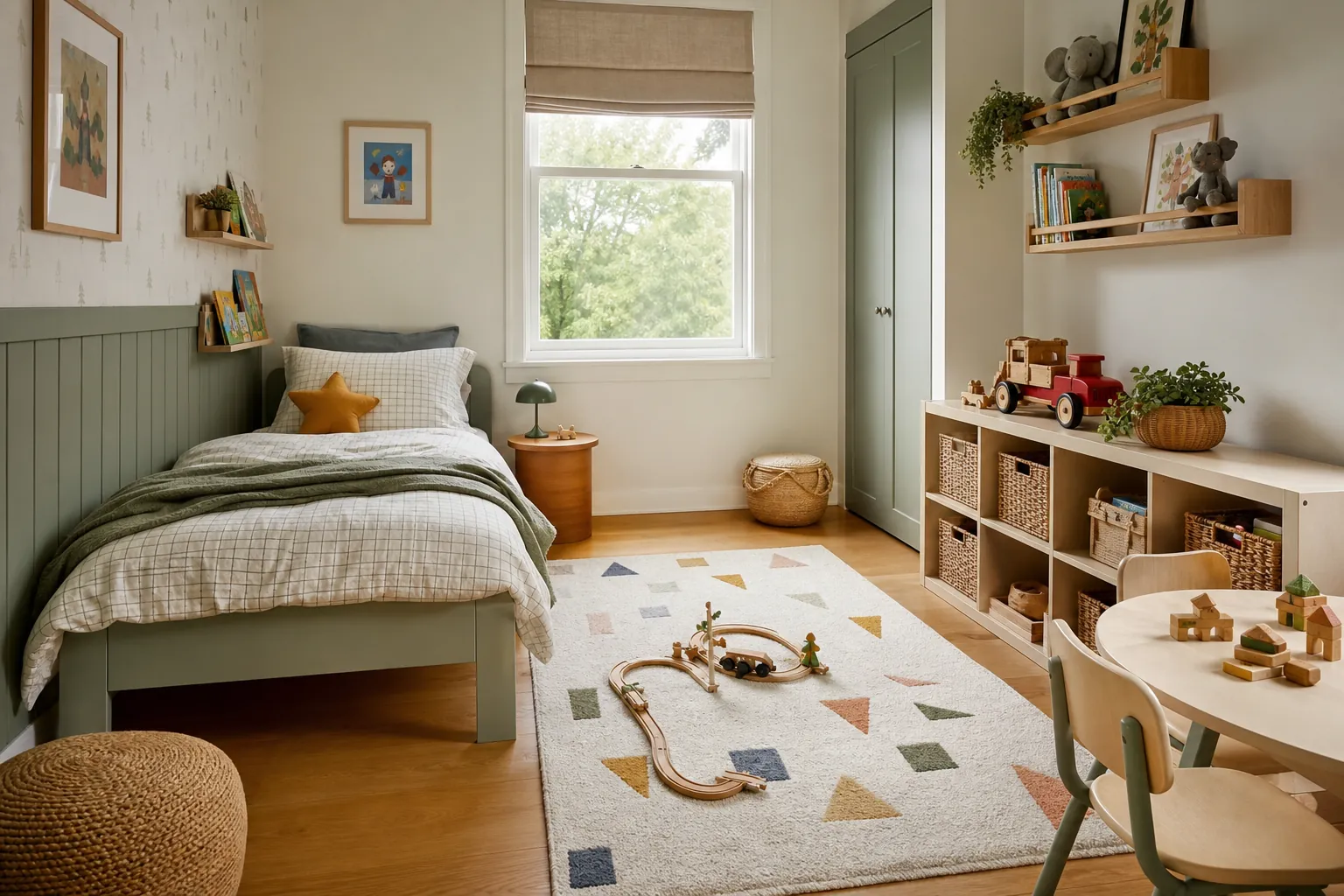
A small kids room works best when the layout is honest about what the room has to do every day. It needs a real sleep zone, a place to get dressed, toy storage that a child can use, and enough open floor for play. The goal is not to squeeze in more furniture. The goal is to make fewer pieces do clearer jobs.
Start by protecting the floor. In a compact bedroom, floor space is the play area, the getting-ready area, and the breathing room that keeps the bed from feeling boxed in. Put the biggest pieces against the wall, use vertical storage where it is safe, and keep the most-used toys low enough for independent cleanup.
Build the room around one clear play zone
The simplest small kids room layout places the bed along the longest practical wall, then leaves the center of the room open. A washable rug can define the play area without adding another piece of furniture. If the rug is easy to shake out or vacuum, it also gives kids a visual boundary for blocks, dolls, cars, puzzles, and pretend play.
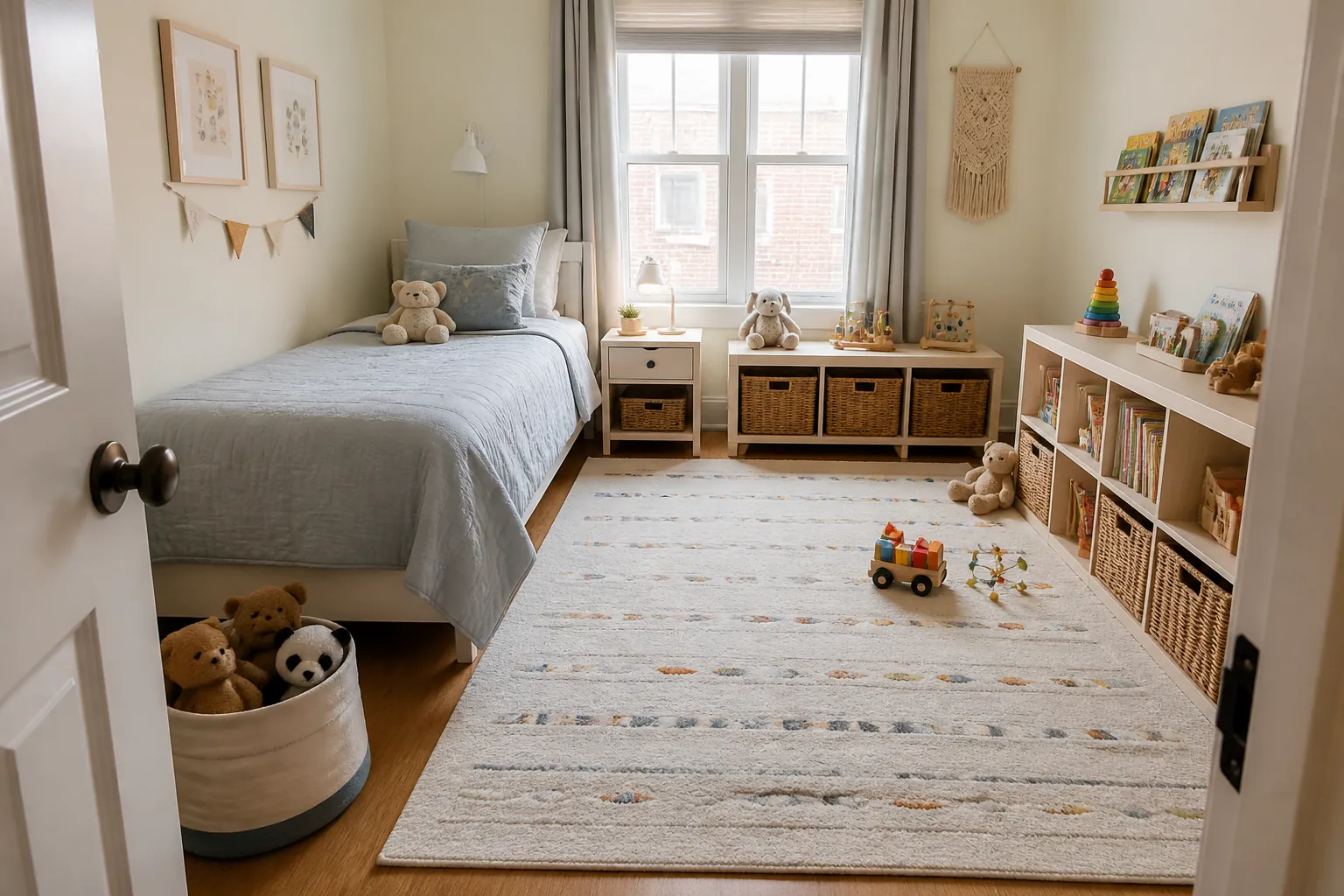
Keep the bed zone calm. Keep the play zone flexible. A narrow book ledge, one low basket, and a small bedside surface usually work better than a wide dresser, toy chest, and extra chair. When every edge of the room has a job, the middle can stay open.
Use vertical sleep space carefully
Bunk beds, loft beds, and storage beds can solve real layout problems, especially in a shared room. They move sleep upward or add drawers below the mattress, which gives the room back a usable play area. The best versions have sturdy guardrails, a safe ladder position, and storage that does not block the walkway.
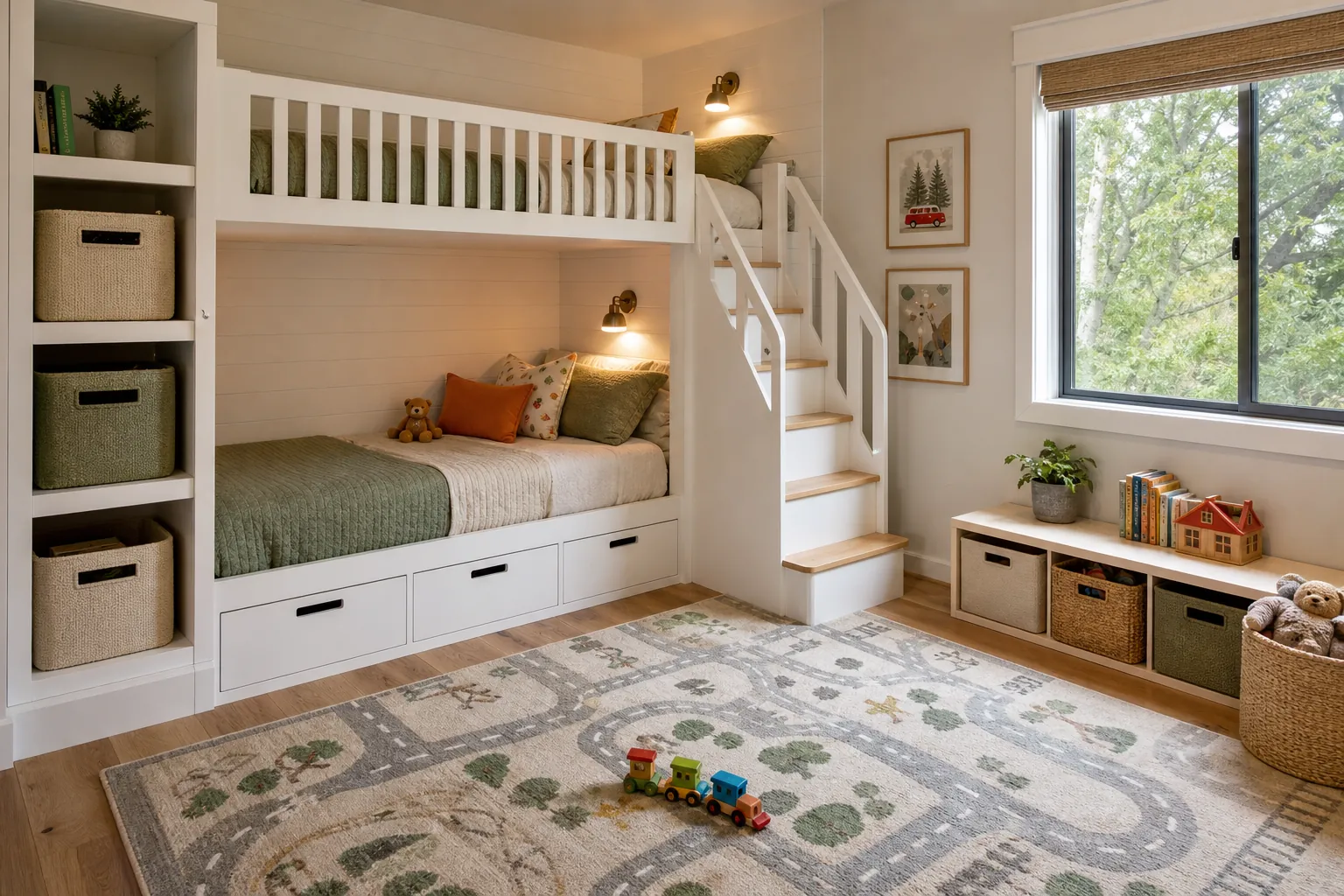
If a bunk bed is not right for your child, a low bed with drawers can still help. Store pajamas, extra sheets, dress-up clothes, or less-used toys underneath. The point is to use the bed footprint twice instead of adding a second storage piece across the room.
Move light storage onto the walls
Wall storage is most useful when it holds light, visible things: picture books, small baskets, dress-up pieces, soft accessories, or art supplies that are used with supervision. Floating shelves, peg rails, hooks, and slim wall pockets can reduce floor clutter without making the room feel heavy.
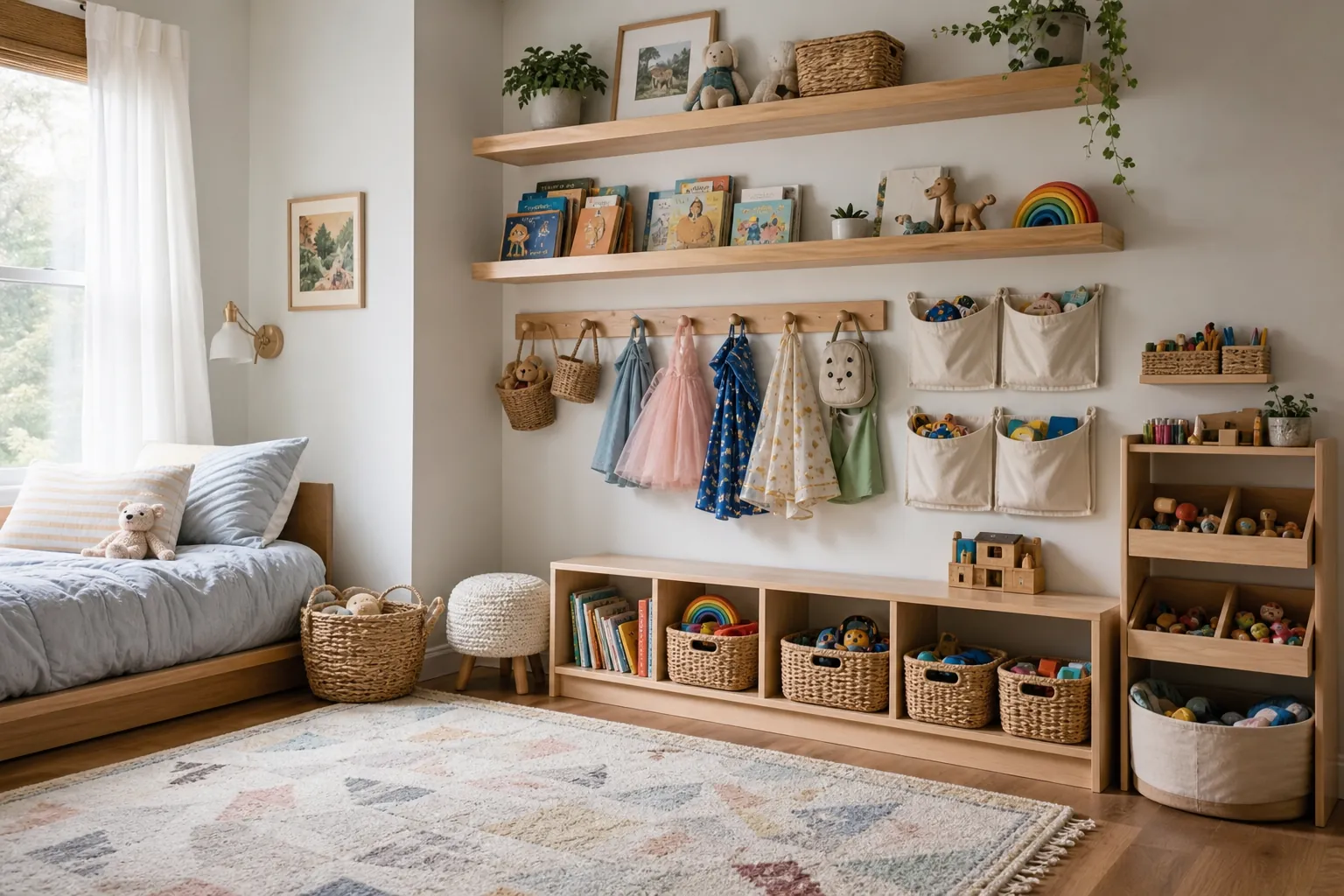
Keep safety practical. Heavy items belong low. Climbable furniture should be anchored. Hooks should sit where kids can actually reach them. A wall system only works if it makes daily cleanup easier, not if it turns every toy into a display piece.
Try toy rotation instead of one huge toy zone
Small bedroom storage gets easier when fewer toys are available at once. Keep current favorites in low bins or cube storage, then store backup toys in the closet, under the bed, or on a higher shelf. Rotating toys every week or two can make old toys feel new while keeping the room easier to reset.
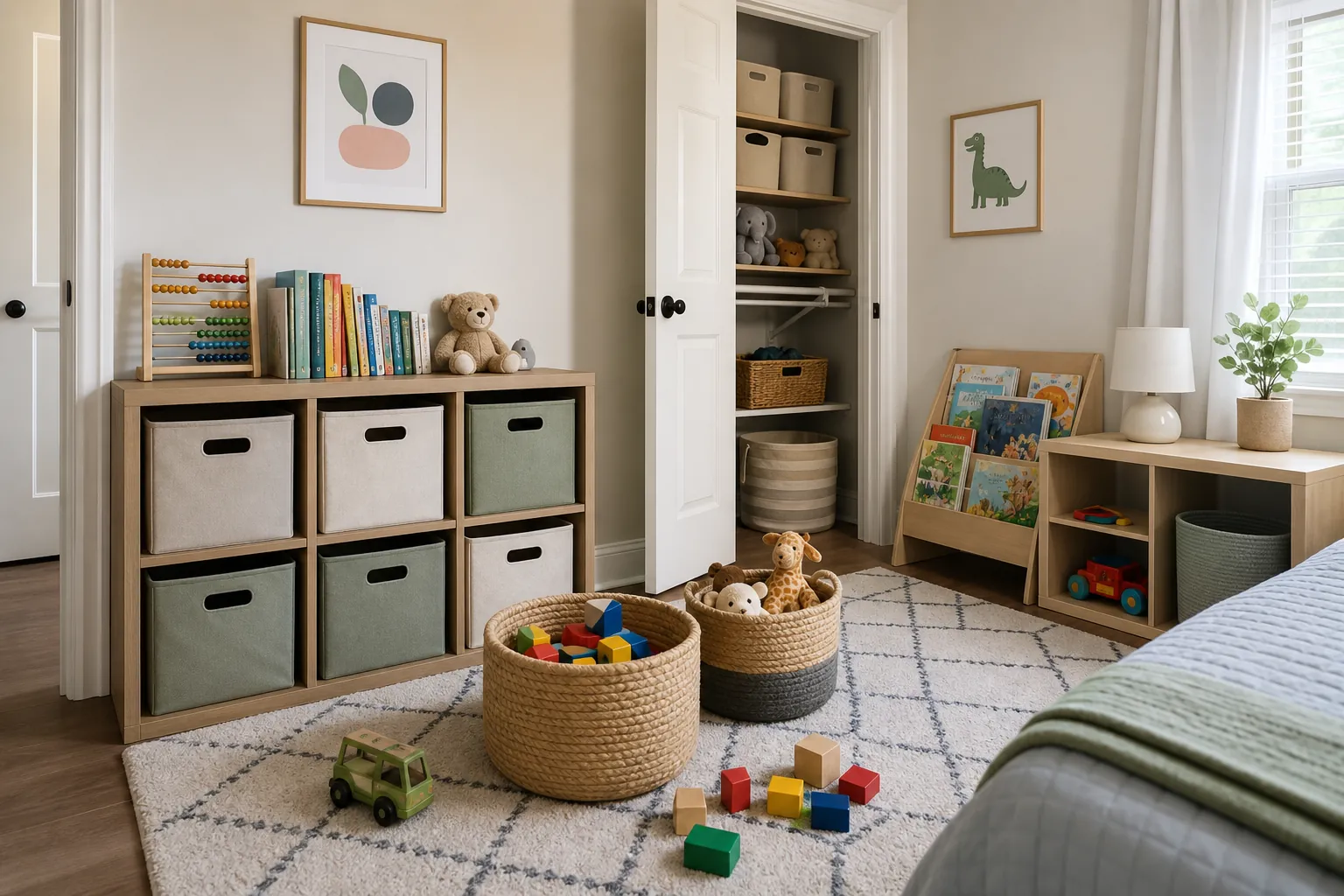
Use small bins instead of one deep toy box. Deep bins invite dumping because the toy at the bottom is hard to find. Smaller containers can hold categories like blocks, animals, cars, pretend food, dolls, puzzles, or craft supplies. For younger kids, picture labels or color categories are often easier than written labels.
Make the closet replace a bulky dresser
If the bedroom cannot handle a big dresser, let the closet work harder. Double hanging rods, low drawers, shelf bins, and a small hamper can hold clothing without taking up floor space in the room. Put everyday clothes where the child can reach them, and move out-of-season pieces higher.
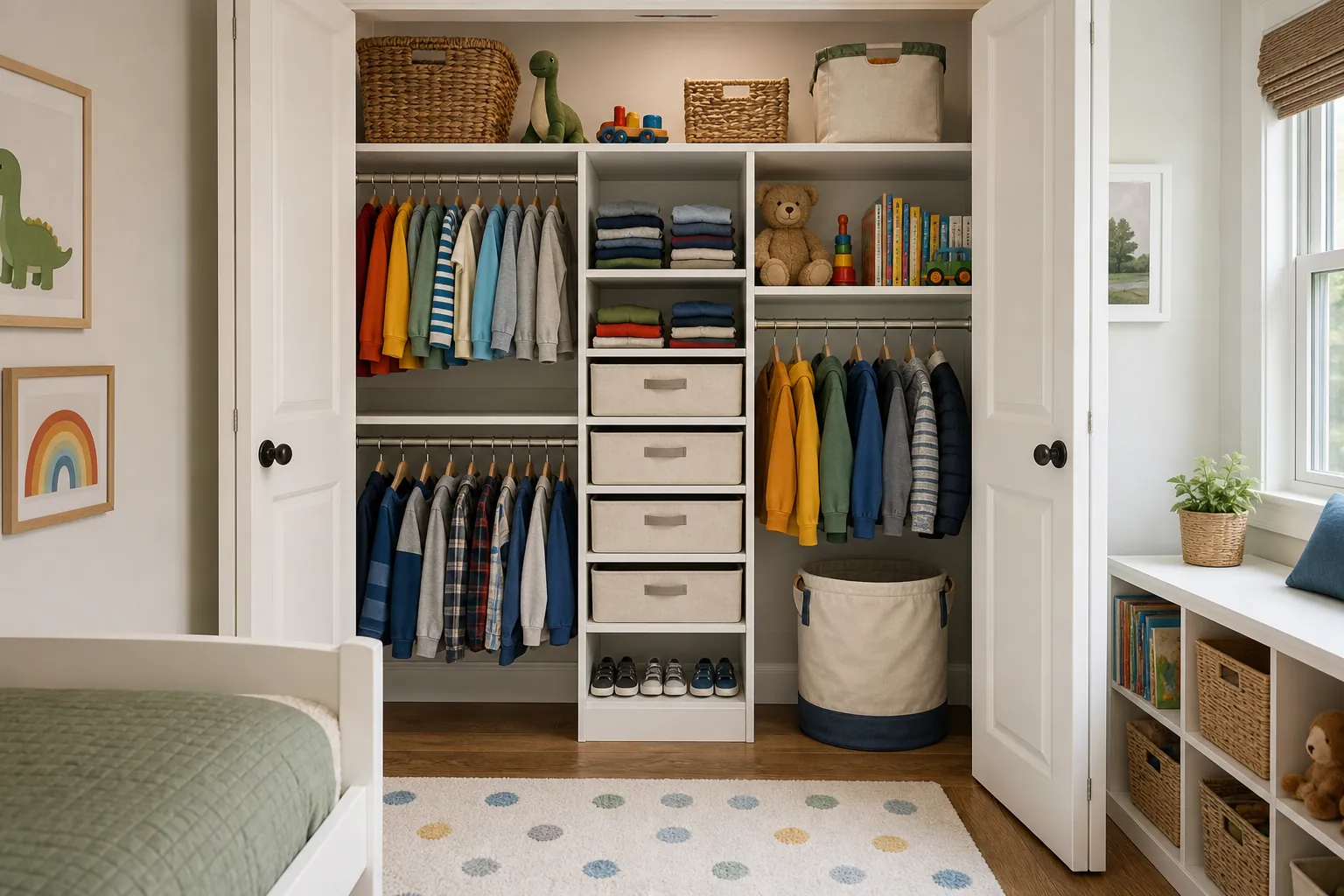
A closet can also hold toy overflow. Keep the toys used most often in the room and place special sets, messy activities, or backup bins behind the closet door. This keeps the visible bedroom calmer without removing play from the room completely.
Add a quiet corner for books and wind-down time
A reading corner does not need a chair. Floor cushions, two book ledges, a small basket, and a wall light can turn an unused corner into a quiet-play zone. This is useful in a room that also needs active play, because it gives the child a softer place to land before sleep.
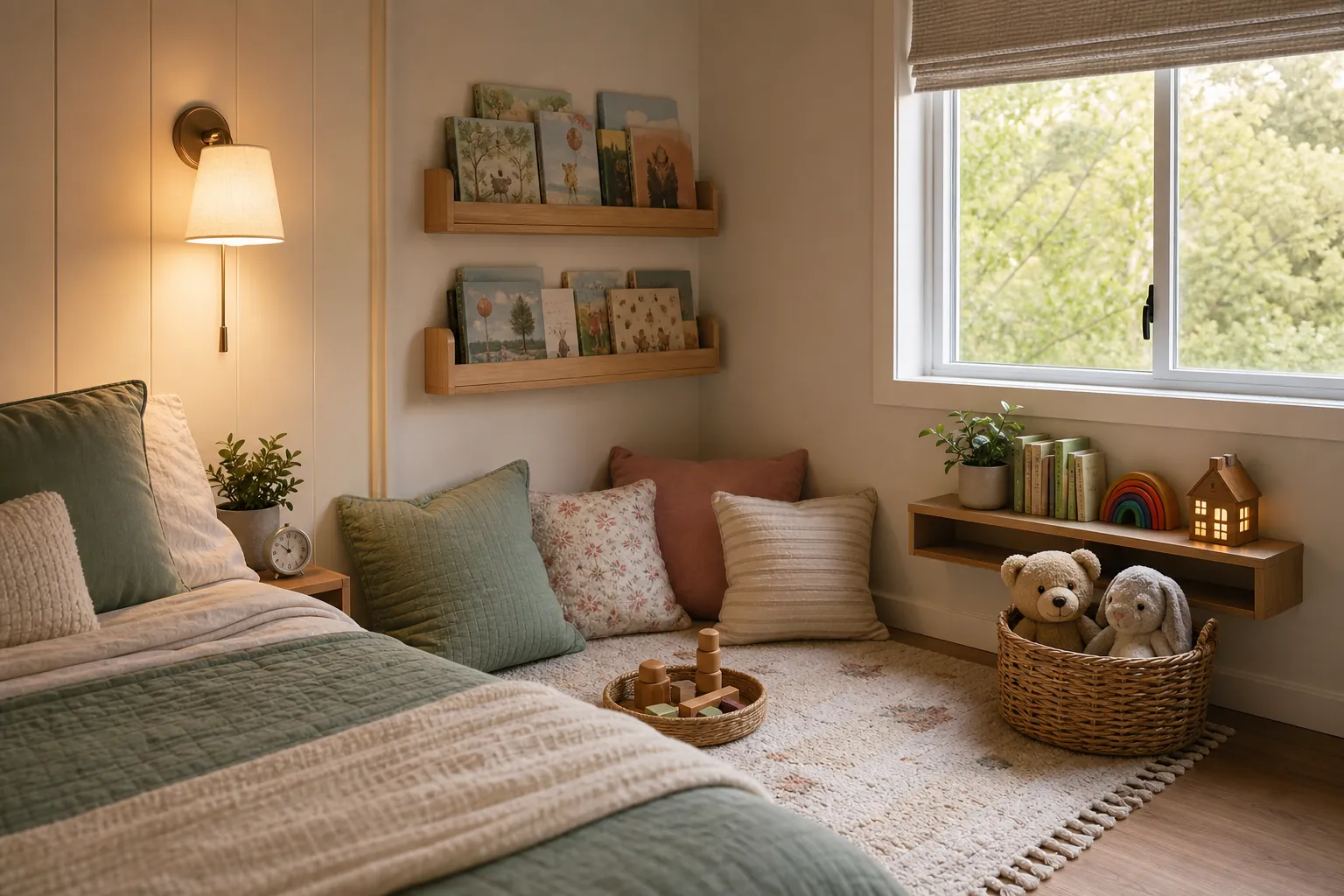
Try to keep this corner visually simple. A few favorite books and soft textures are enough. When the sleep zone, play zone, and quiet corner each have a clear purpose, a small kids room can feel organized without feeling stripped down.
A quick layout checklist
- Place the bed first, preferably against a wall that preserves the widest walkway.
- Keep one open rug area for play instead of scattering toys around the whole room.
- Use low bins for daily toys and higher storage for rotated toys.
- Choose wall shelves and hooks for light items, not heavy storage.
- Make the closet handle clothes before adding a large dresser.
- Leave enough floor space for a child to clean up without pulling everything out.
The best small kids room ideas are the ones that reduce daily friction. A child should be able to find pajamas, reach favorite toys, put books back, and clear the play rug without a parent rebuilding the whole room each night. Once the room supports those simple routines, it can hold both sleep and play without feeling crowded.