
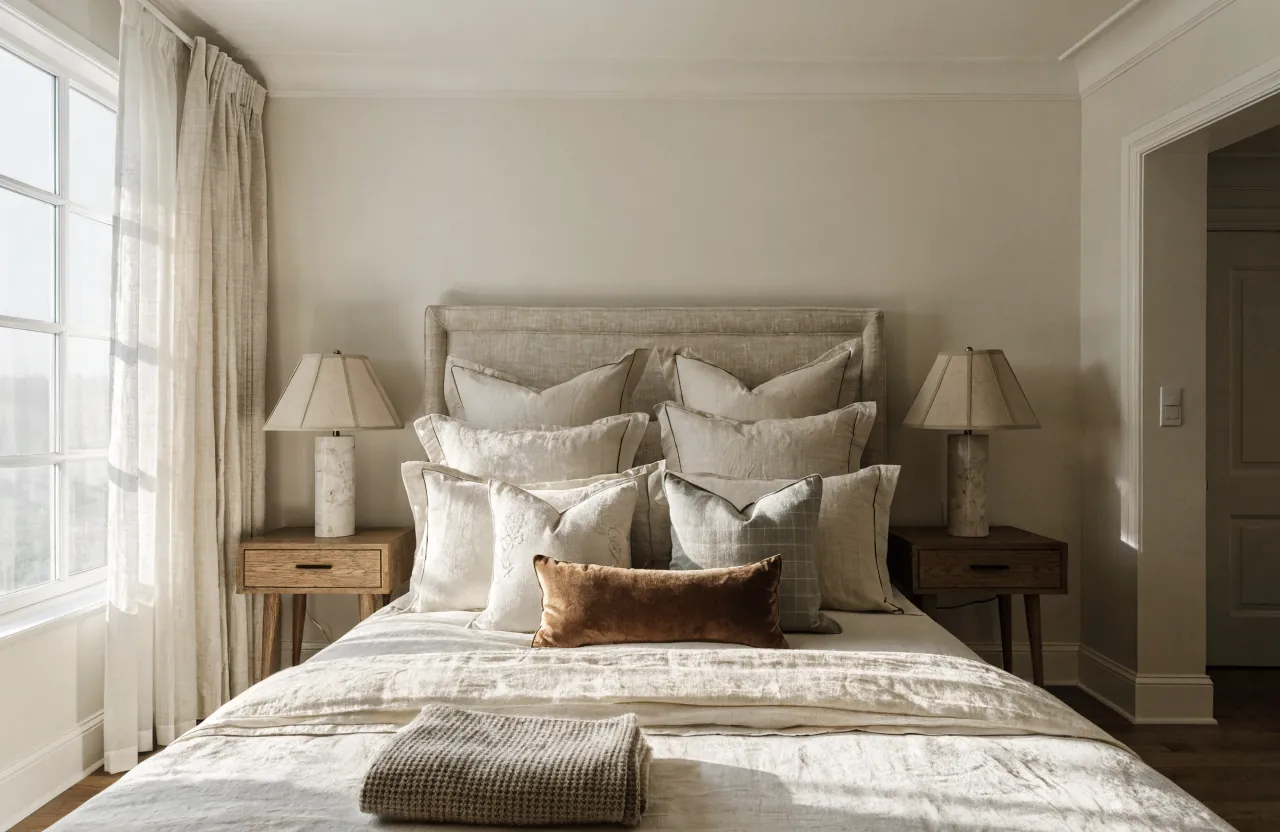
A bed can have expensive sheets and still look thin. Usually the problem is not the bedding itself. It is the order of the layers. The pillows are too flat, the duvet is pulled tight like a hotel sheet, or every accent pillow is fighting for the front row.
A soft layered bed is built from back to front. The tallest pillows create the shape, the bedding fold adds volume, and the final accent pillow gives the bed a finished line. Once you understand that order, pillow styling gets much simpler.
Start with a real back layer
The back layer is what makes the bed look full before the decorative pillows even arrive. Use your sleeping pillows against the headboard, then add shams or Euro pillows in front if the bed needs height. This gives the arrangement structure, especially on beds with low headboards or plain walls.
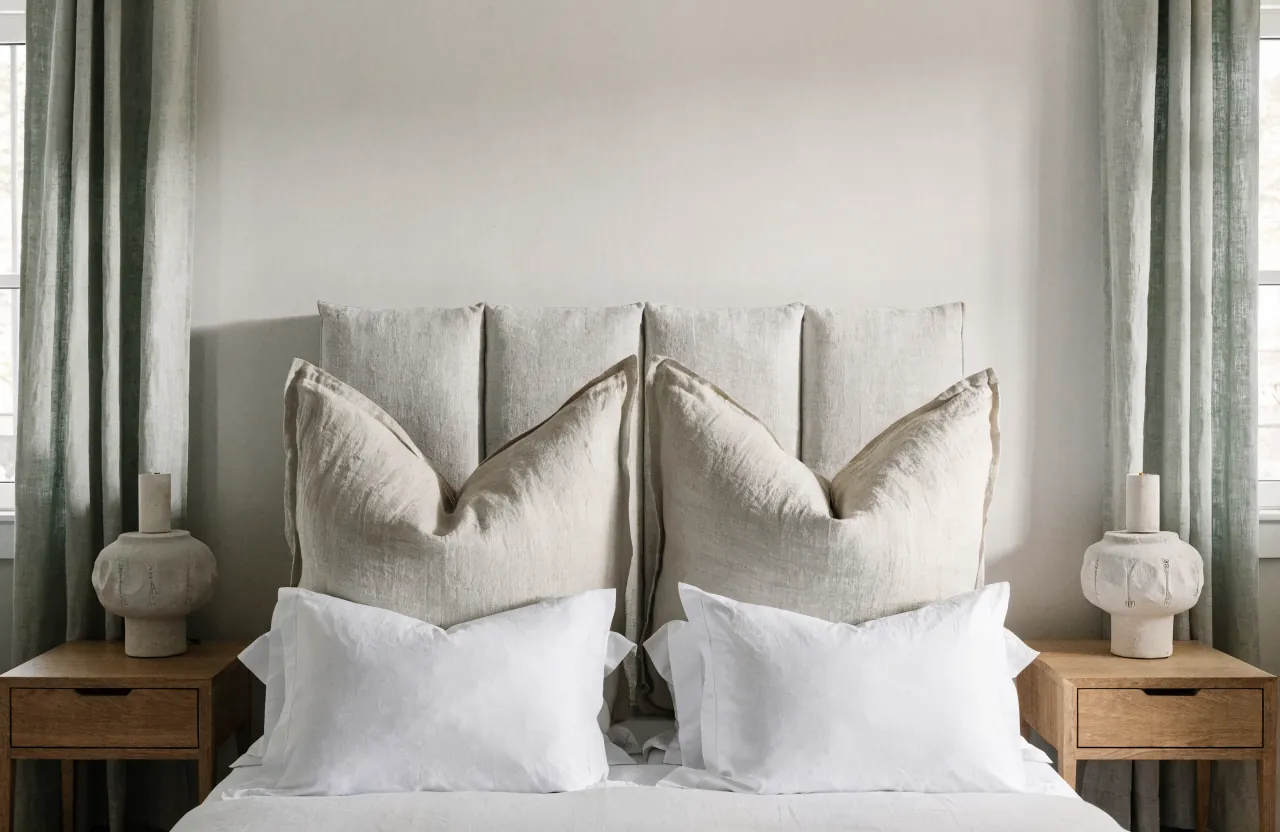
For a queen bed, two sleeping pillows plus two shams are usually enough. For a king bed, three Euro pillows can create a cleaner span across the headboard. If your bedroom is small, skip the extra row and make the shams count with better texture or a slightly fuller insert.
Fold the bedding so the pillows do not do all the work
Many people keep adding bed pillows because the bed still feels flat. The easier fix is often the duvet fold. Pull the duvet up toward the pillows, then fold it back generously so the top sheet, blanket, or duvet edge creates a soft horizontal layer. A narrow fold can look accidental; a wider fold looks intentional.
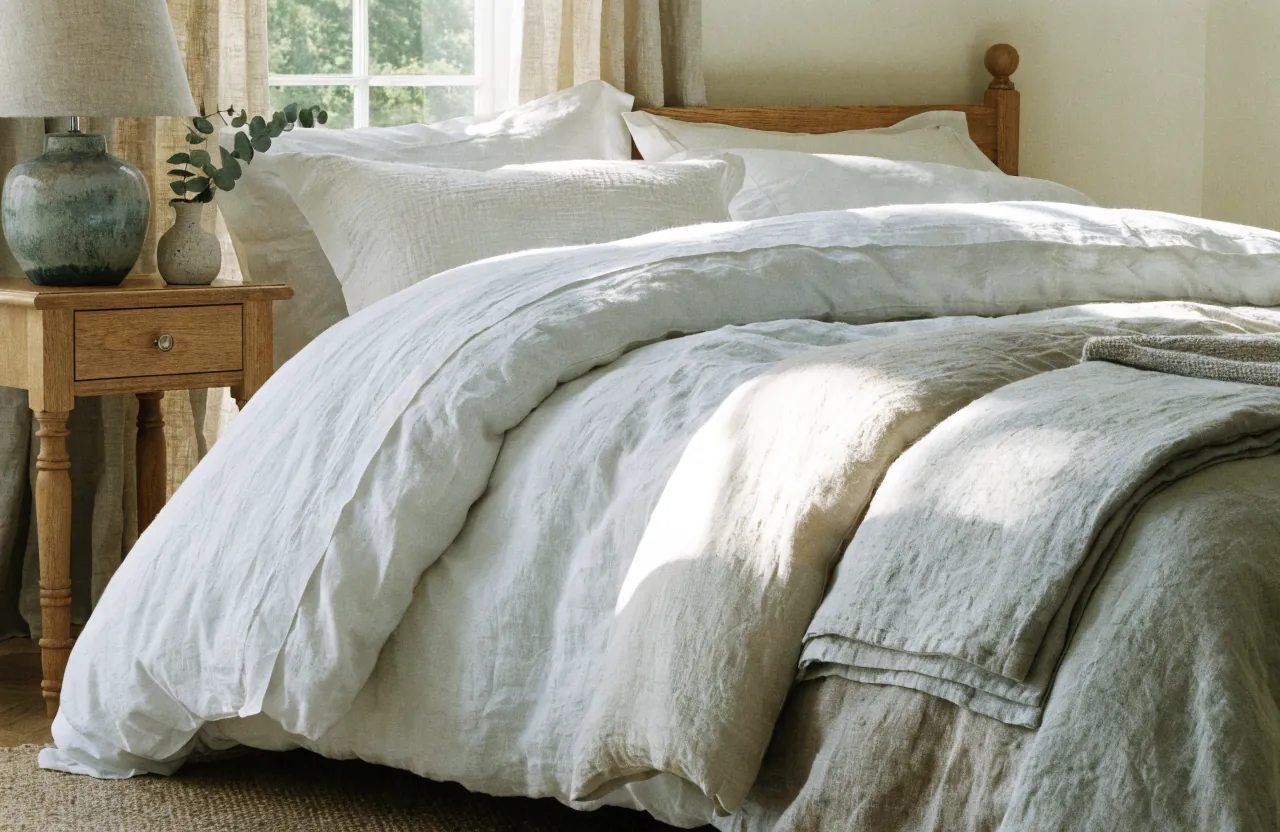
A quilt or folded throw at the foot of the bed helps too. It adds weight to the lower half of the bed, repeats the color palette, and keeps the pillows from being the only decorative element in the room.
Use one long lumbar when you want softness without clutter
A long lumbar pillow is the easiest way to make a bed look styled without managing five separate throw pillows. It gives the front layer one clean shape, works across many bedding styles, and can hide the small gaps that happen between shams.
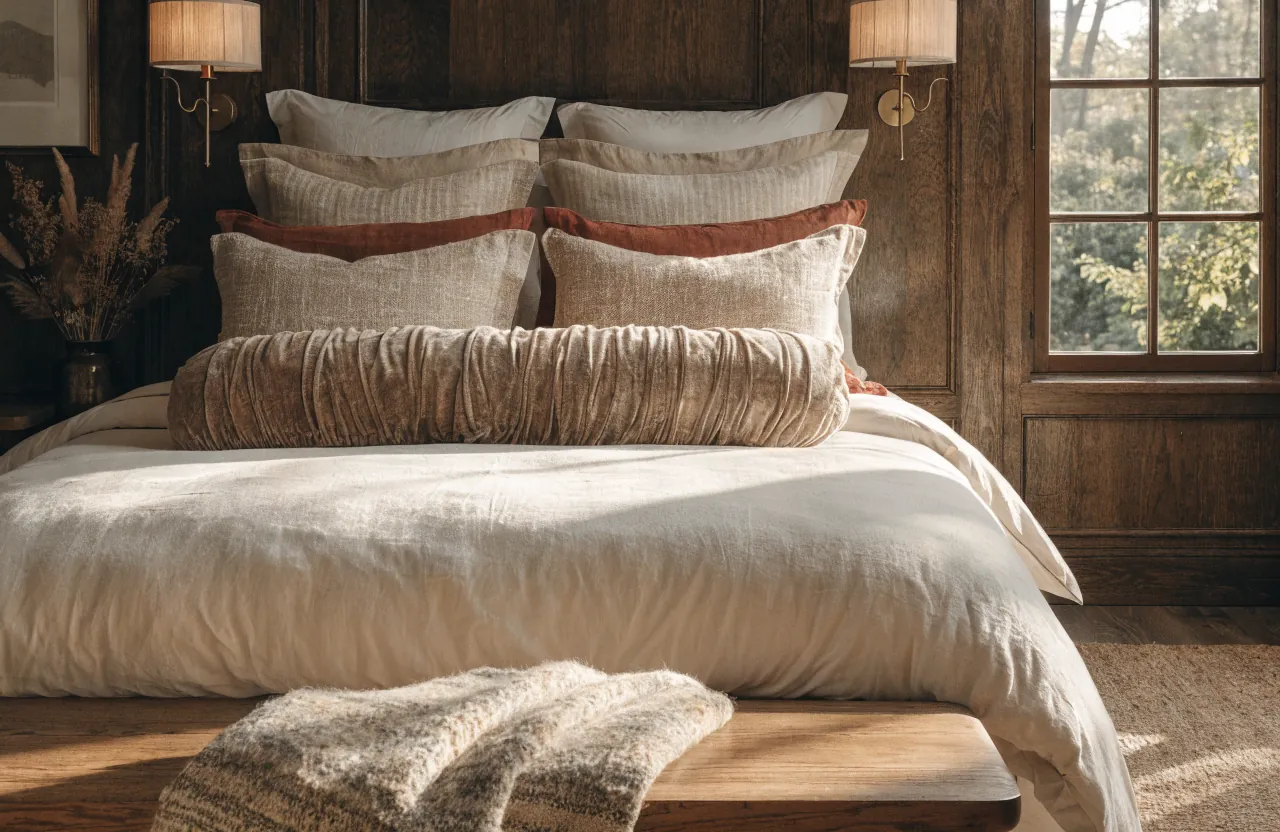
Choose a lumbar that is long enough to feel connected to the bed size. On a queen bed, a single long lumbar can replace two small throw pillows. On a king bed, look for a wider body pillow style or pair two matching lumbar pillows if one looks too short.
Let texture carry a quiet bedroom
If your bedroom is neutral, do not rush to add a loud print. Texture can make a soft bedroom feel complete while keeping the mood calm. Washed linen, boucle, matelasse, velvet, embroidery, ribbed cotton, and chunky knit all read differently even when the colors are close.
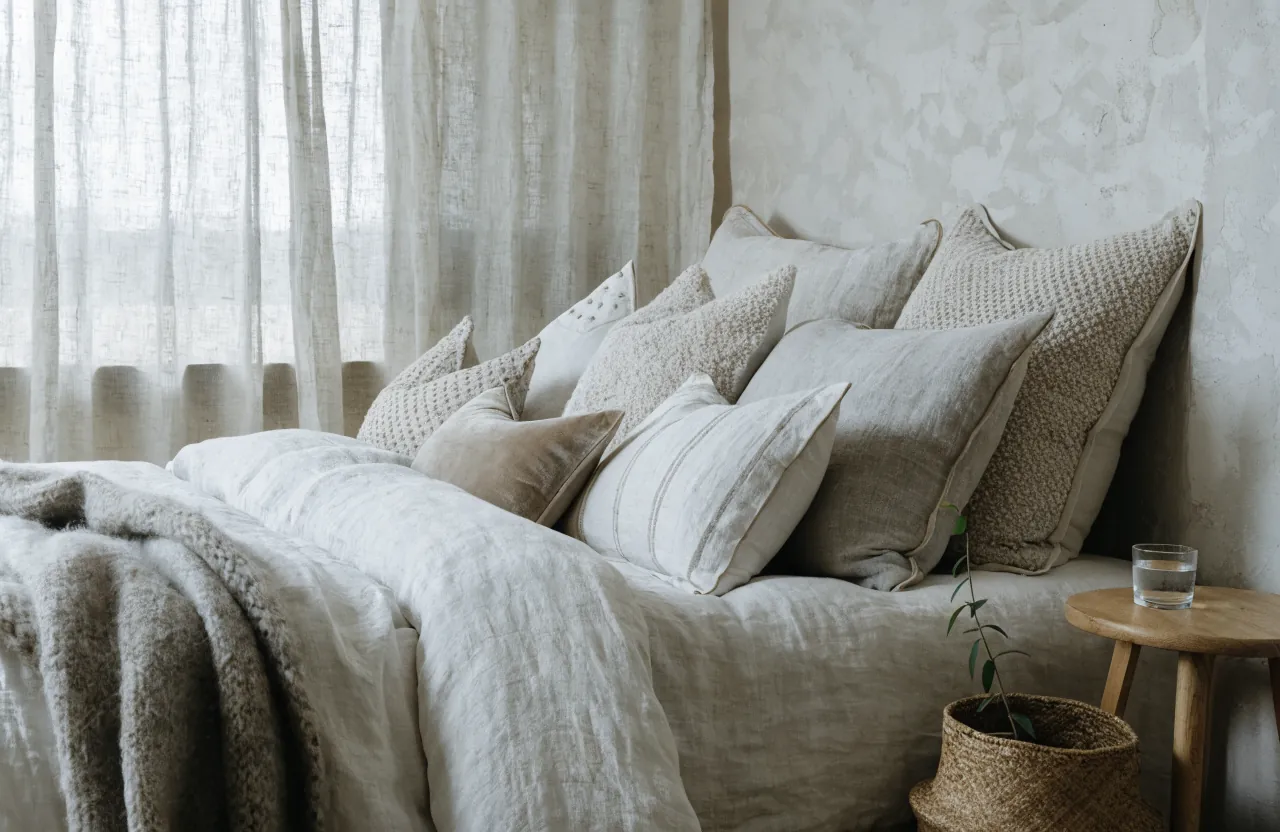
This is especially useful when a room feels sterile. Add texture to the bed pillows, then echo it with linen curtains, a woven basket, a wool rug, or a folded throw. The room gains depth without losing its soft bedroom feeling.
Keep pattern and color connected to the room
Patterned bed pillows work when they borrow from something already in the room. A floral pillow can pull sage from the art, clay from the rug, or blue from the curtains. A stripe can repeat the color of a throw. This makes the pillow styling feel chosen rather than added at the end.
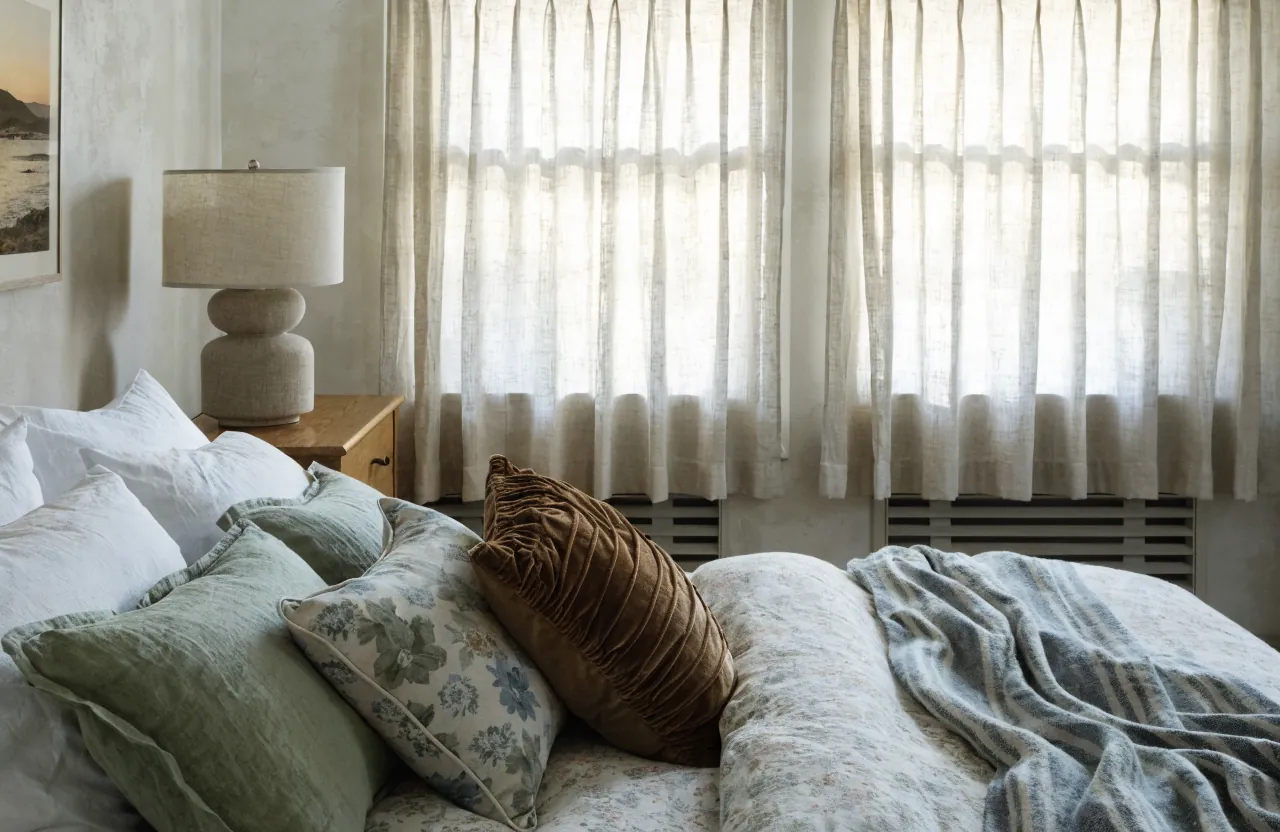
If the bedding already has pattern, keep the decorative pillows simpler. Use one small-scale print, one textured solid, or one tonal embroidery. A layered bed should feel restful from the doorway, not like every fabric sample in the house landed on the mattress.
Edit the pillow count for small bedrooms
A small bedroom does not need a smaller version of a showroom bed. It needs a cleaner formula. Use sleeping pillows, one strong row of shams, one accent pillow or lumbar, and a throw. That is enough to create layered bedding without stealing visual space from the room.
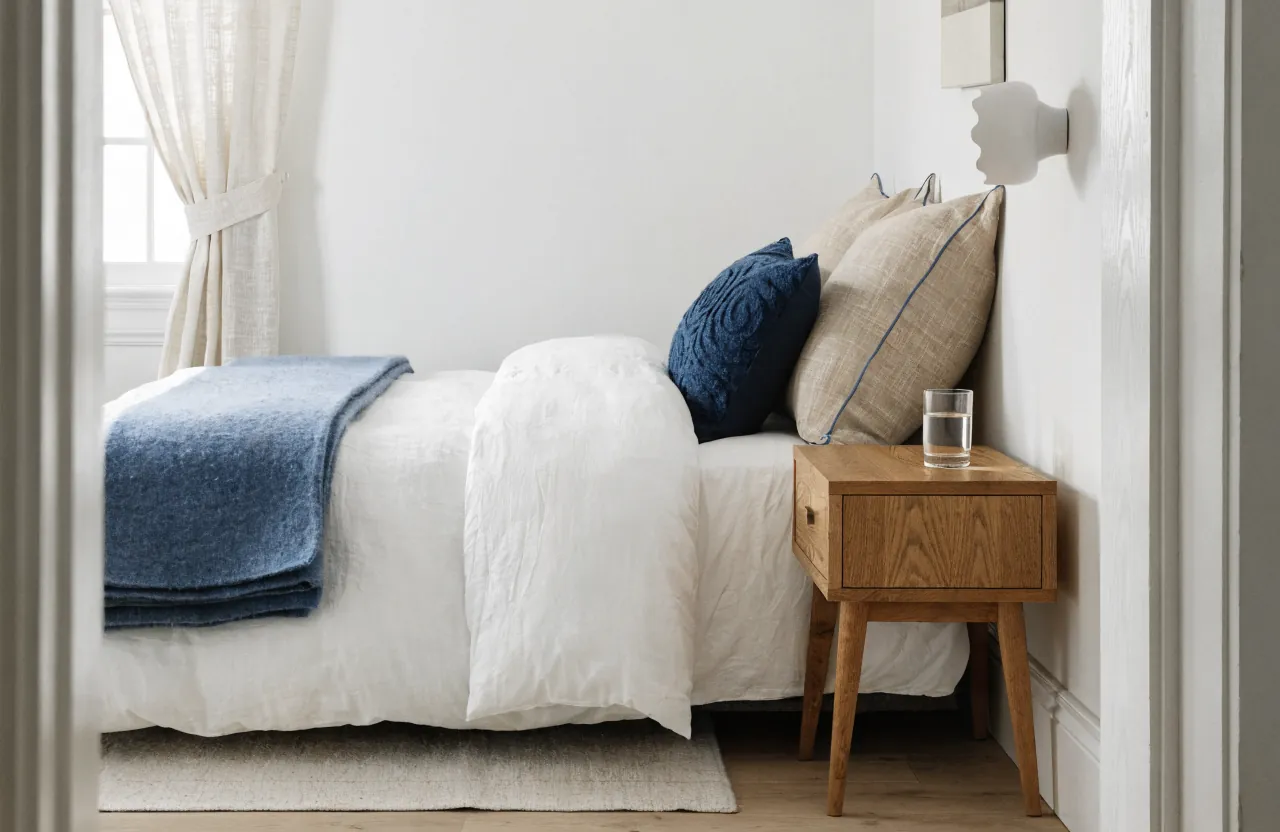
The nightly test matters: if the pillows are annoying to remove, the arrangement is too complicated for your real life. A bed can look soft and layered with fewer pieces when the proportions, fabric, and folds are doing the work.
A simple formula that works
For a queen bed, try two sleeping pillows, two shams, one long lumbar, and one folded throw. For a king bed, try three Euro shams, two king pillows, one long lumbar or two smaller lumbars, and a quilt folded across the foot. For a small room, use two sleeping pillows, two textured shams, one accent pillow, and stop there.
The soft layered look is not about piling on more. It is about giving the bed a clear back layer, a generous bedding fold, a useful front accent, and enough texture to make the room feel lived in.