
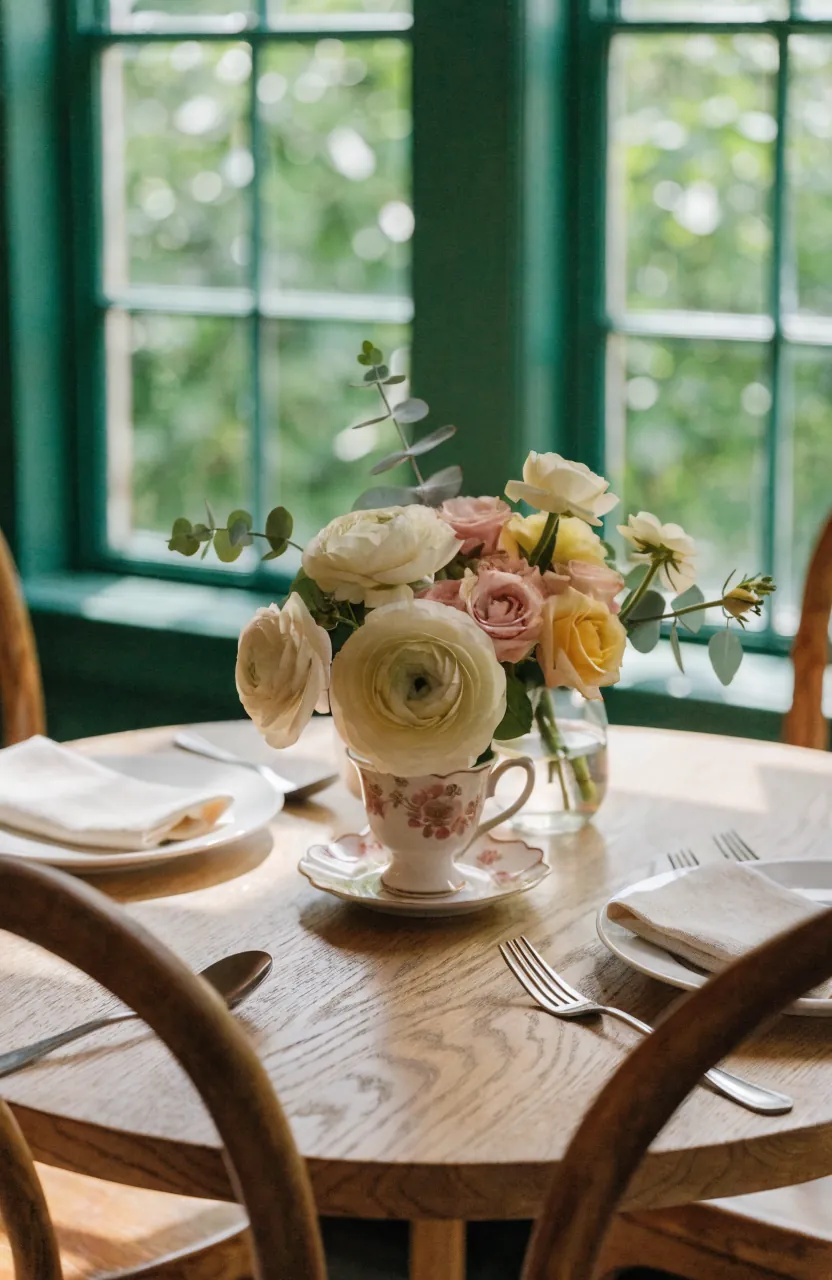
A tea cup centerpiece is one of the easiest ways to make a small table feel pretty without losing the table to decor. The scale is already right: a teacup is low, compact, and detailed enough to stand on its own. With a few short stems, a saucer, and a simple place setting, it can make a breakfast nook, bistro table, or tiny dining table feel styled but still usable.
The key is proportion. Small table decor should leave room for plates, glasses, elbows, and conversation. Instead of building a tall floral centerpiece, use the teacup as a miniature vessel and keep everything below eye level.
Keep the Centerpiece Low
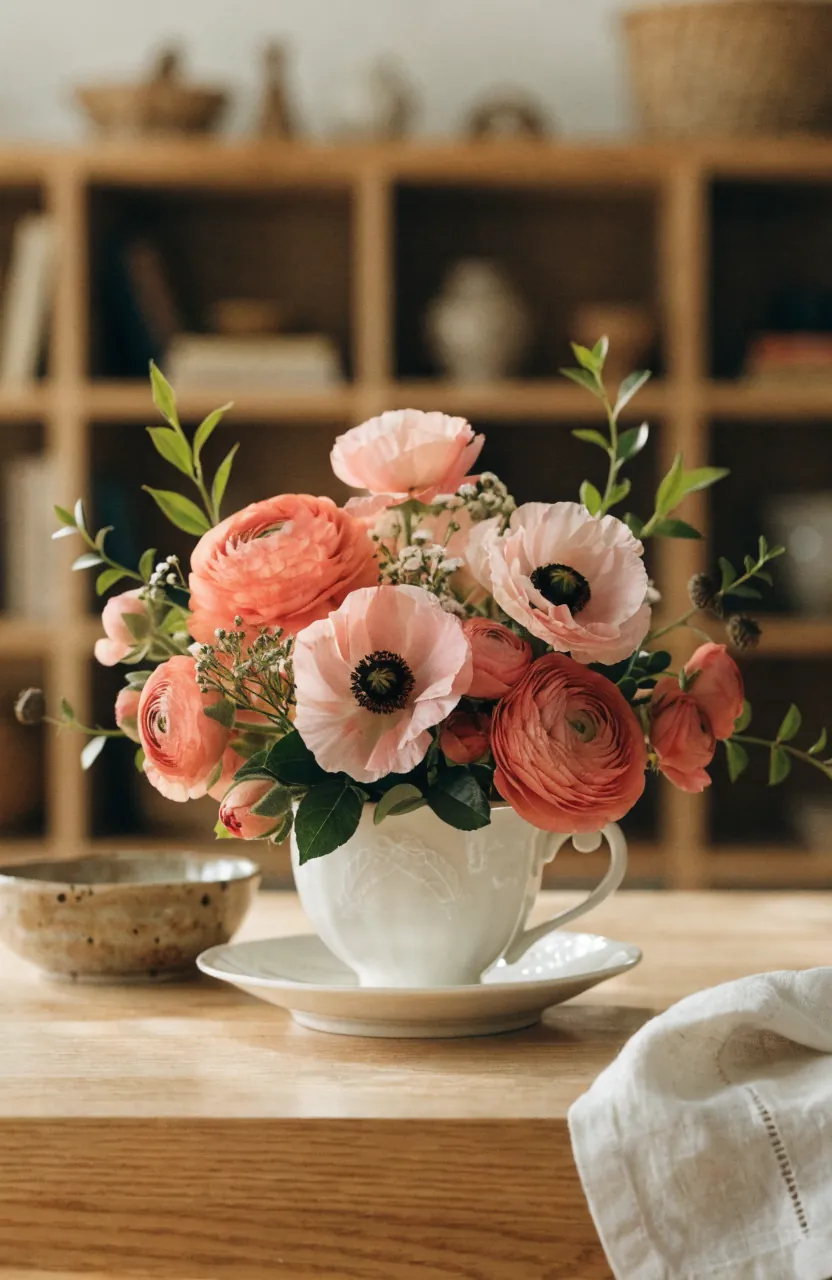
A small table usually looks best with a centerpiece that sits low and close to the surface. Fill a vintage teacup with short flowers instead of long stems. Trim each bloom so the arrangement feels full at the rim but does not rise into the sightline across the table.
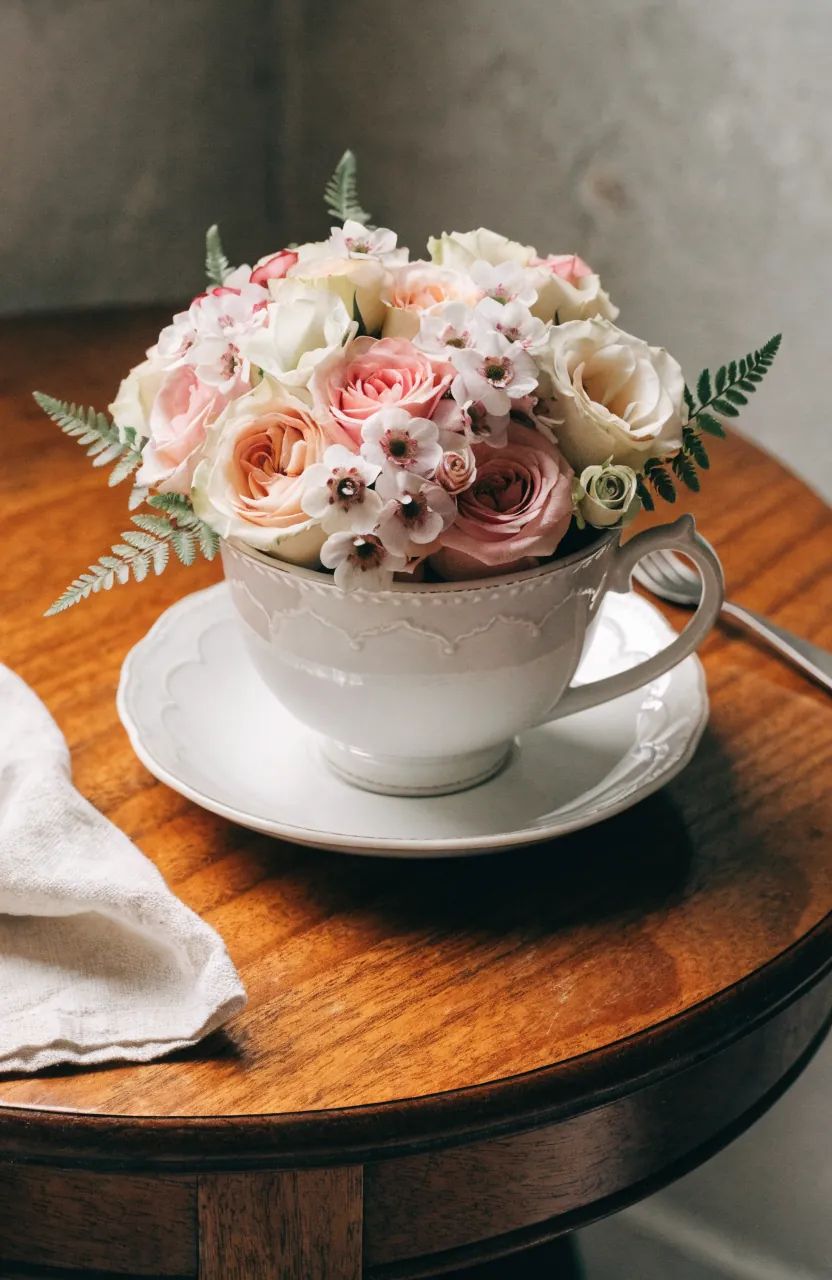
Ranunculus, spray roses, chamomile, waxflower, violets, and tiny fern sprigs all work well because they can be cut short without looking stiff. Let a few leaves soften the edge of the teacup, then stop before the arrangement becomes wider than the saucer.
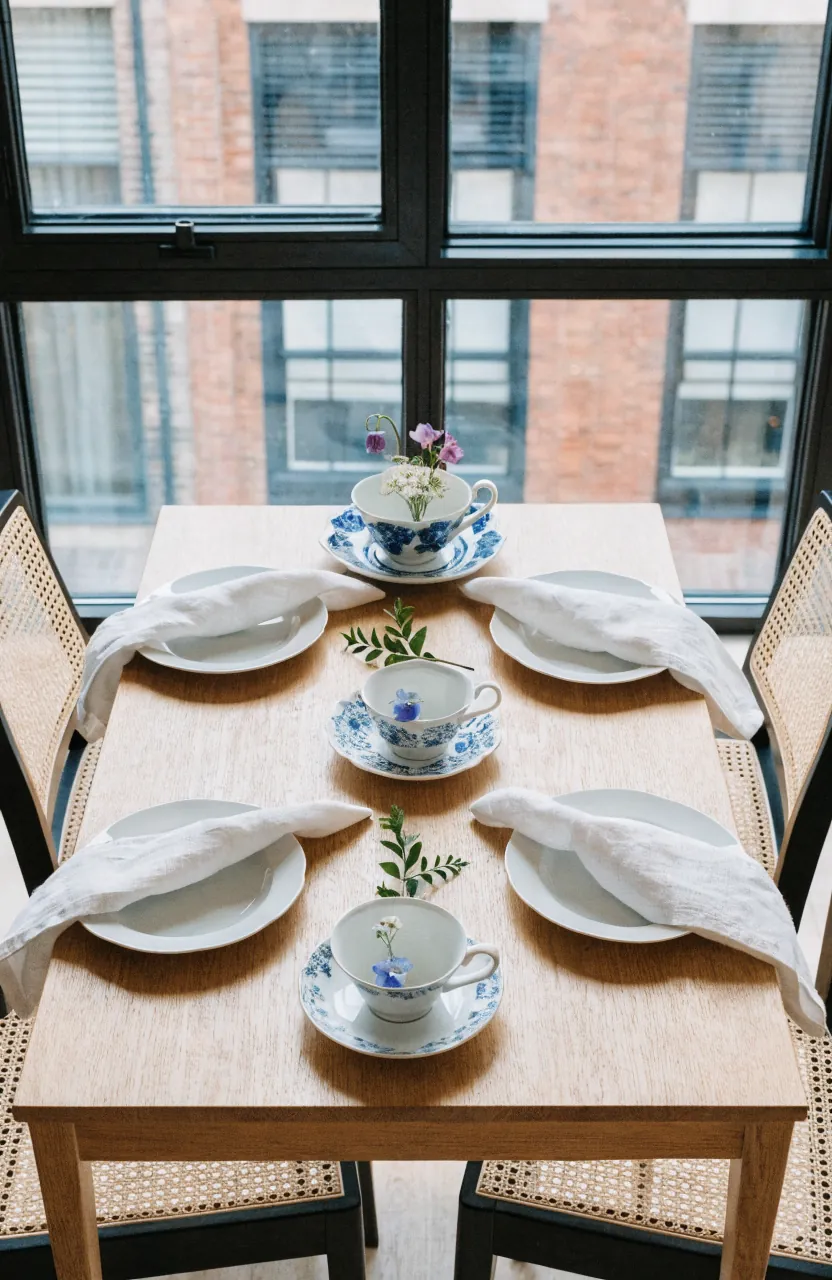
Use Three Teacups as a Narrow Runner
On a small rectangular table, one large centerpiece can feel bulky. Three small teacups spaced down the center often works better. The repetition creates a runner effect, but each arrangement stays compact enough to leave usable space on both sides.
Use mismatched vintage teacups if they share a color family, or keep the flowers consistent if the cups are very different. The table setting will look collected, not chaotic, when at least one element repeats.
Group Everything on a Tray
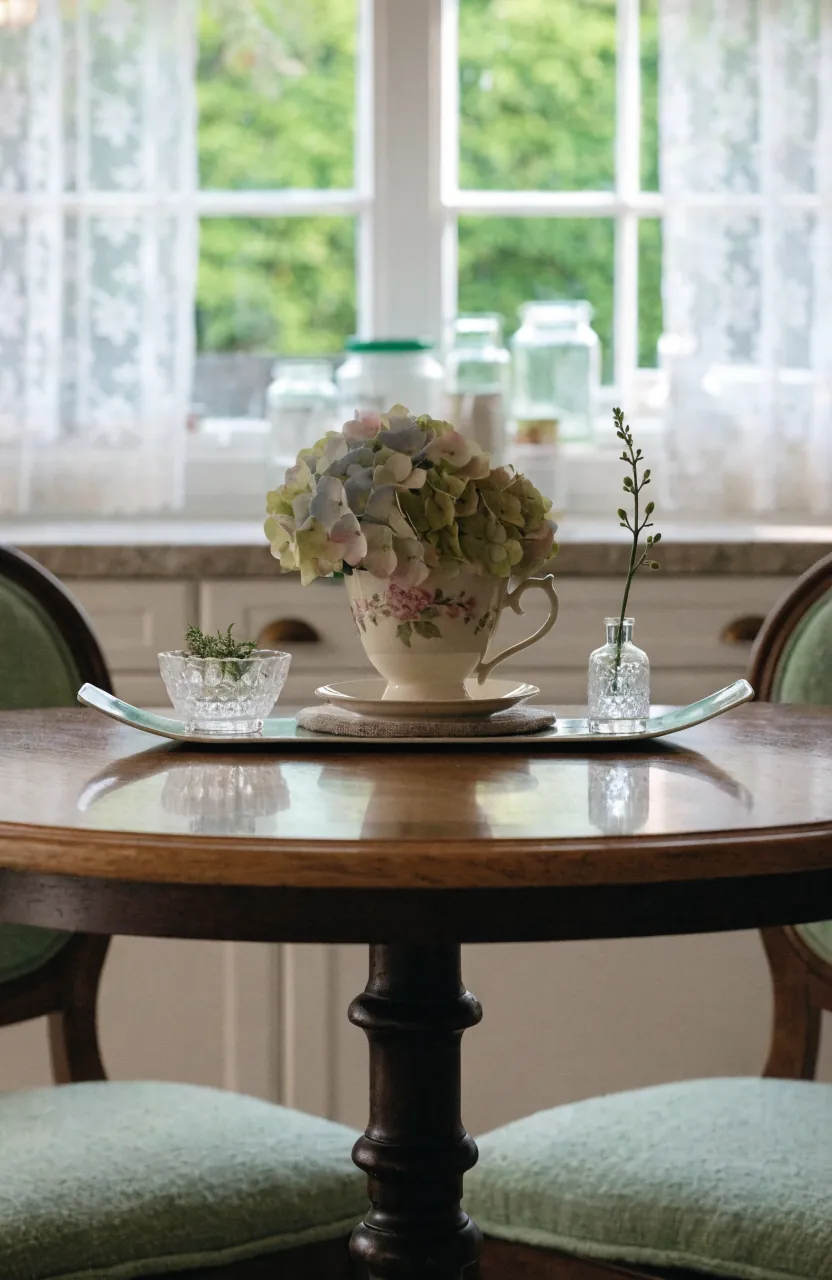
If the table needs to switch between dining, coffee, work, and homework, put the tea cup centerpiece on a small tray. A tray gives the arrangement a defined footprint and lets you clear the table in one move.
Keep the tray narrow. Add the teacup, one tiny bud vase, and a low bowl or linen coaster. That is enough to make the centerpiece feel layered without turning the tray into clutter.
Try Fresh Herbs Instead of Flowers
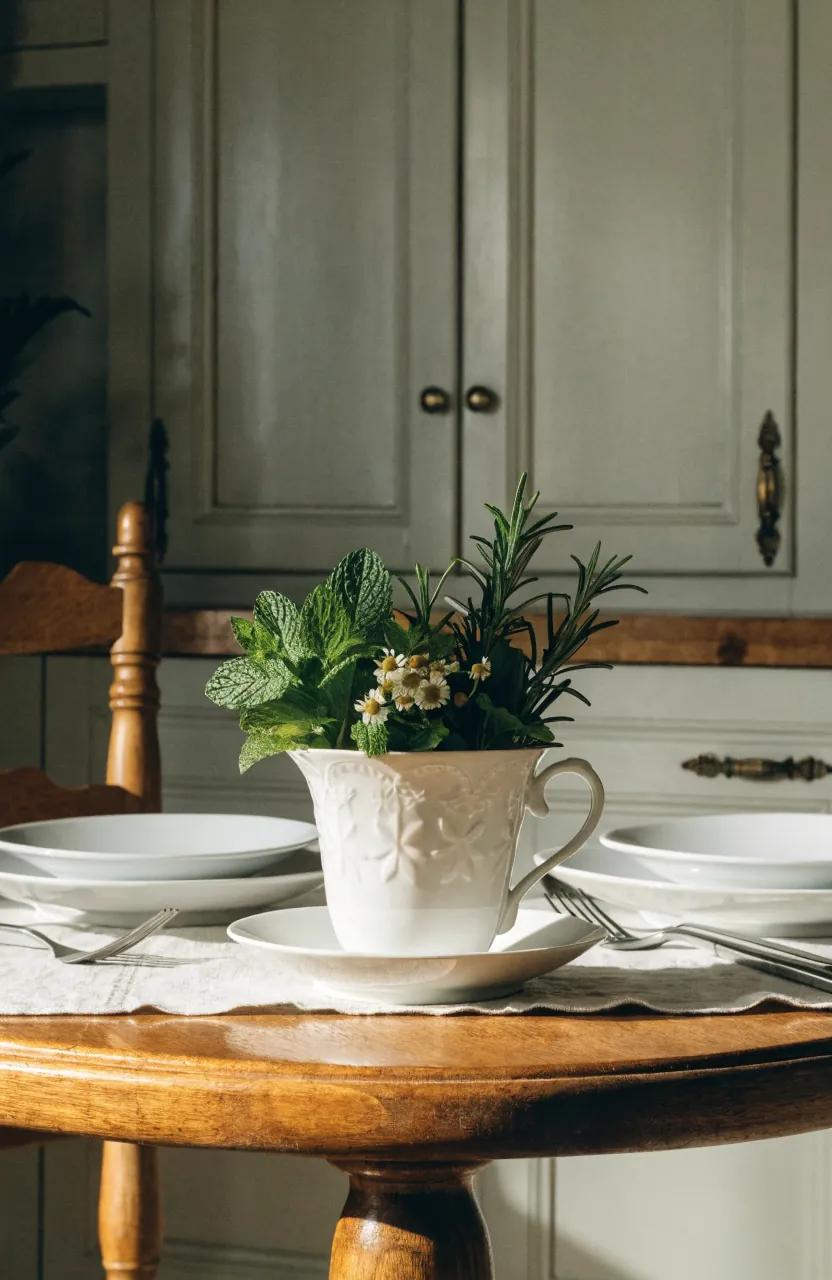
A floral centerpiece is classic, but herbs can feel fresher for everyday dining table decor. Mint, rosemary, thyme, basil, and chamomile bring texture and scent without needing a formal bouquet. They also suit cottage decor and kitchen-adjacent dining nooks.
For the cleanest look, choose one teacup, one herb family, and one simple runner. The result feels casual and useful, especially on a breakfast table where a full bouquet would be too much.
Decorate a Single Place Setting
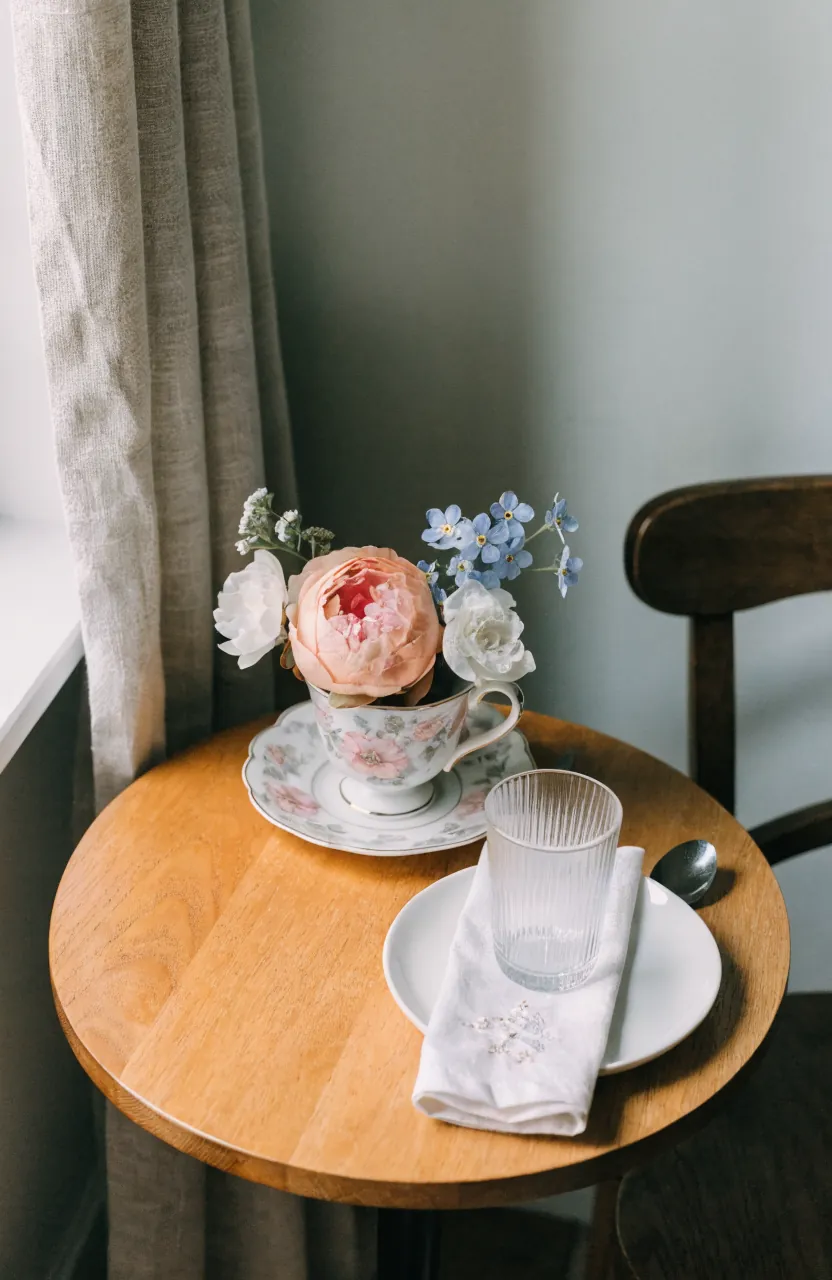
For a very small table, style one place setting and let the teacup sit just behind it. This works for a reading breakfast, a tea-for-one corner, a small apartment table, or a guest tray. The teacup gives the setting charm without requiring a full tablescape.
Use a plain plate, a soft linen napkin, and a slim glass so the teacup remains the decorative focus. If the cup is patterned, keep the rest of the table setting simple.
Change the Accents by Season
A teacup centerpiece can stay on the table all year if the accents change. In spring, use small flowers and tender greenery. In summer, try herbs and a few citrus leaves. In fall, add seed pods, dried grasses, or tiny branches. In winter, use evergreen tips, white flowers, or a few preserved stems.
Keep the seasonal pieces contained on the saucer so the table still feels tidy. The best small table centerpiece is the one that looks pretty, moves easily, and still leaves room for real life.
Small Table Styling Formula
For a reliable formula, use one tea cup centerpiece, one repeated color, one natural texture, and one practical boundary such as a saucer, tray, or runner. That combination keeps the table setting pretty without letting the centerpiece take over.