
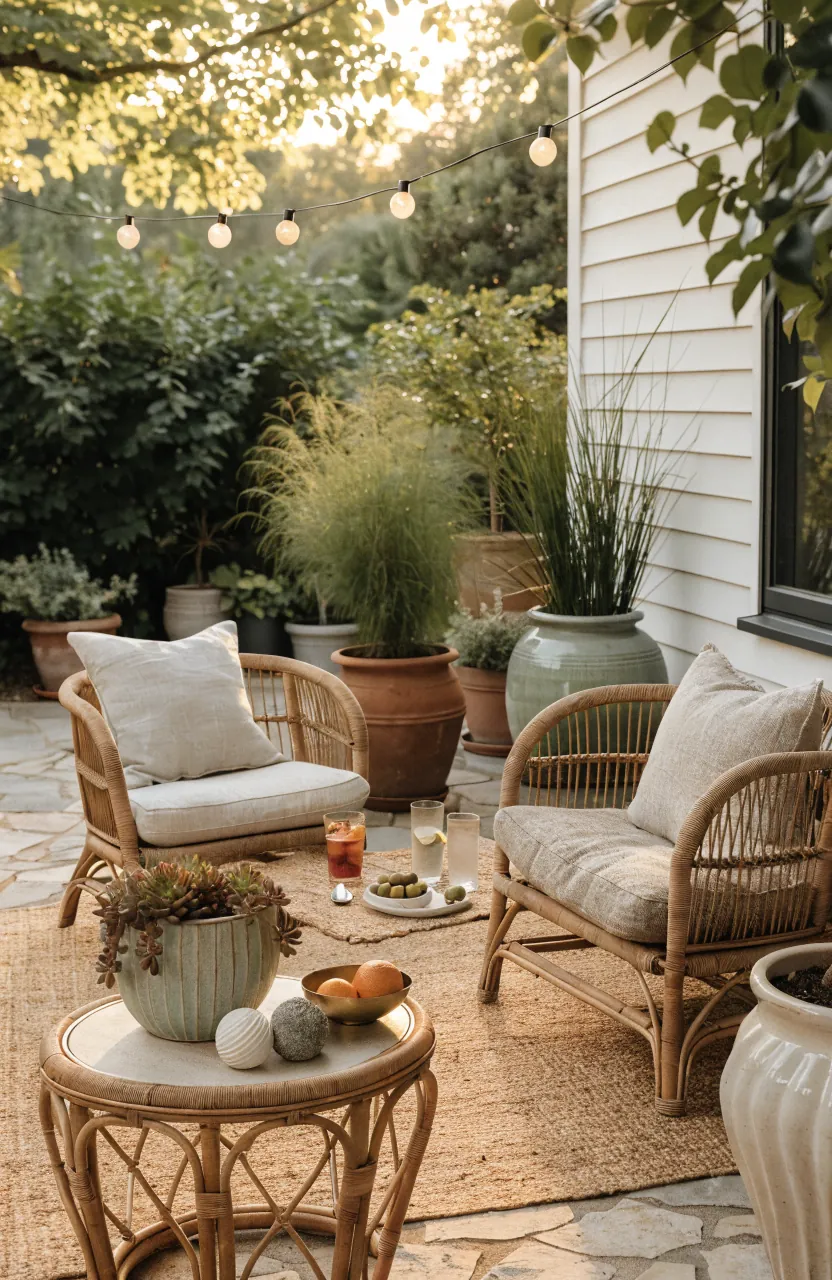
A summer patio should not feel like a place you visit only when guests come over. The best ones are ready for the slow hour after dinner, when the house is too warm, the light is soft, and sitting outside feels easier than turning on another screen.
That kind of patio decor is less about making the space look finished for a photo and more about making it comfortable enough to use. You need somewhere to sit, somewhere to set a drink, a little shade, a little privacy, light that feels warm after sunset, and enough texture that the patio feels like part of the home instead of a leftover slab.
These summer patio decor ideas are for slow evenings outside: quiet weeknights, casual porch conversations, simple outdoor living, and the kind of seasonal home decor that makes a small space feel generous.
Make One Seating Zone Feel Like an Outdoor Living Room
The fastest way to make a summer patio feel useful is to stop spreading furniture around the edges. Pull the seating close enough for conversation. A small loveseat and two chairs can feel more inviting than a row of chairs lined against the wall.
Think of the patio like a living room decor problem, just with tougher materials. You still need a main seat, a surface in reach, something soft, and a reason to linger. A weather-friendly rug can define the zone. Pillows and a throw make hard outdoor furniture feel less temporary. A low table gives the space a center.
If the patio is narrow, use one bench or loveseat along the longest side and add a small stool or folding chair that can move around. If the patio is open, angle the chairs slightly toward each other instead of aiming everything at the yard.
Use an Outdoor Rug to Make Bare Flooring Feel Intentional
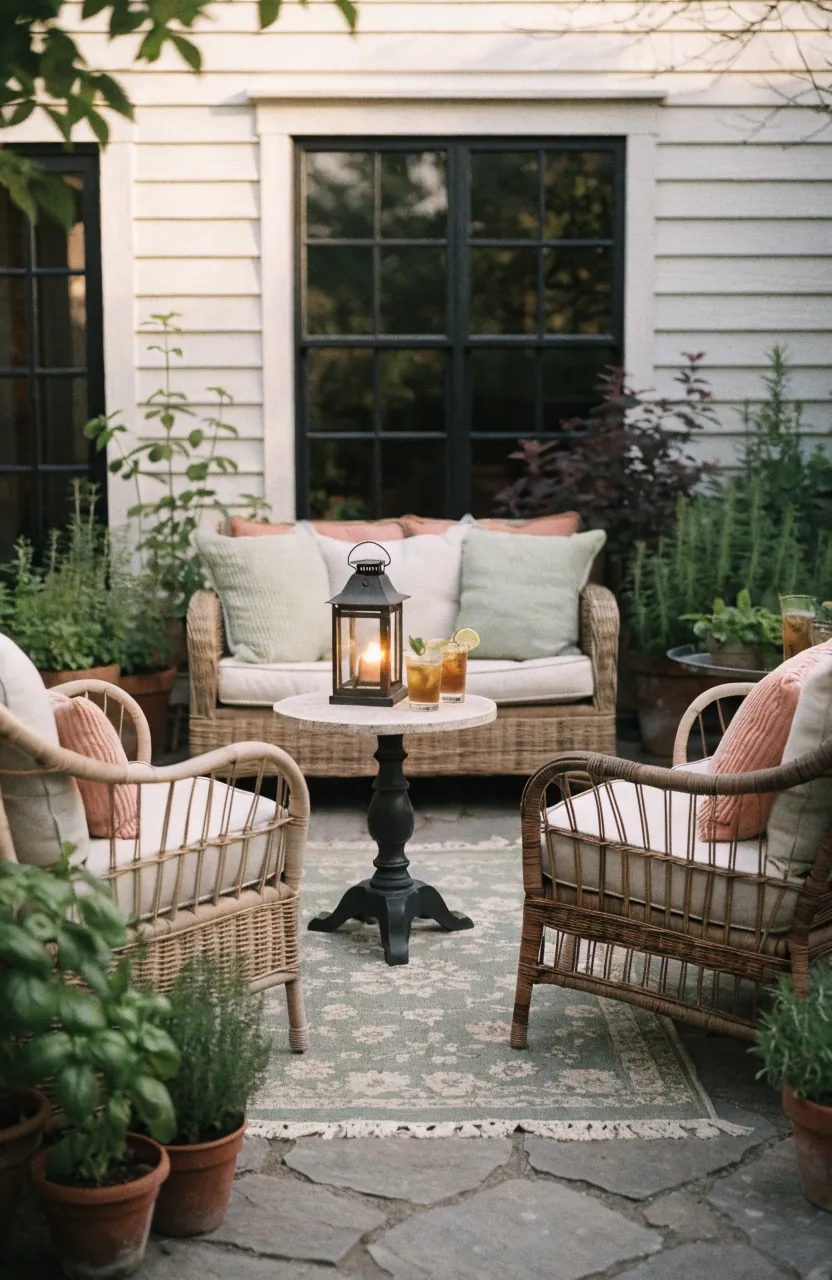
Concrete, deck boards, brick, and stone can all look beautiful, but a patio often feels unfinished when the floor is completely bare. An outdoor rug gives the furniture a boundary and makes the patio read as a room.
Choose a pattern that can handle dirt and summer use. Stripes, faded medallions, checks, and simple geometric designs work well because they hide small marks and add enough visual movement. If your furniture is plain, let the rug carry more pattern. If the furniture is already colorful, keep the rug calmer.
Layer texture around it: woven planters, ceramic pots, linen-look cushions, a wood stool, or a metal tray. This is where patio decor starts to feel like cozy home styling instead of a set of outdoor products.
Plan the Light Before the Sun Goes Down
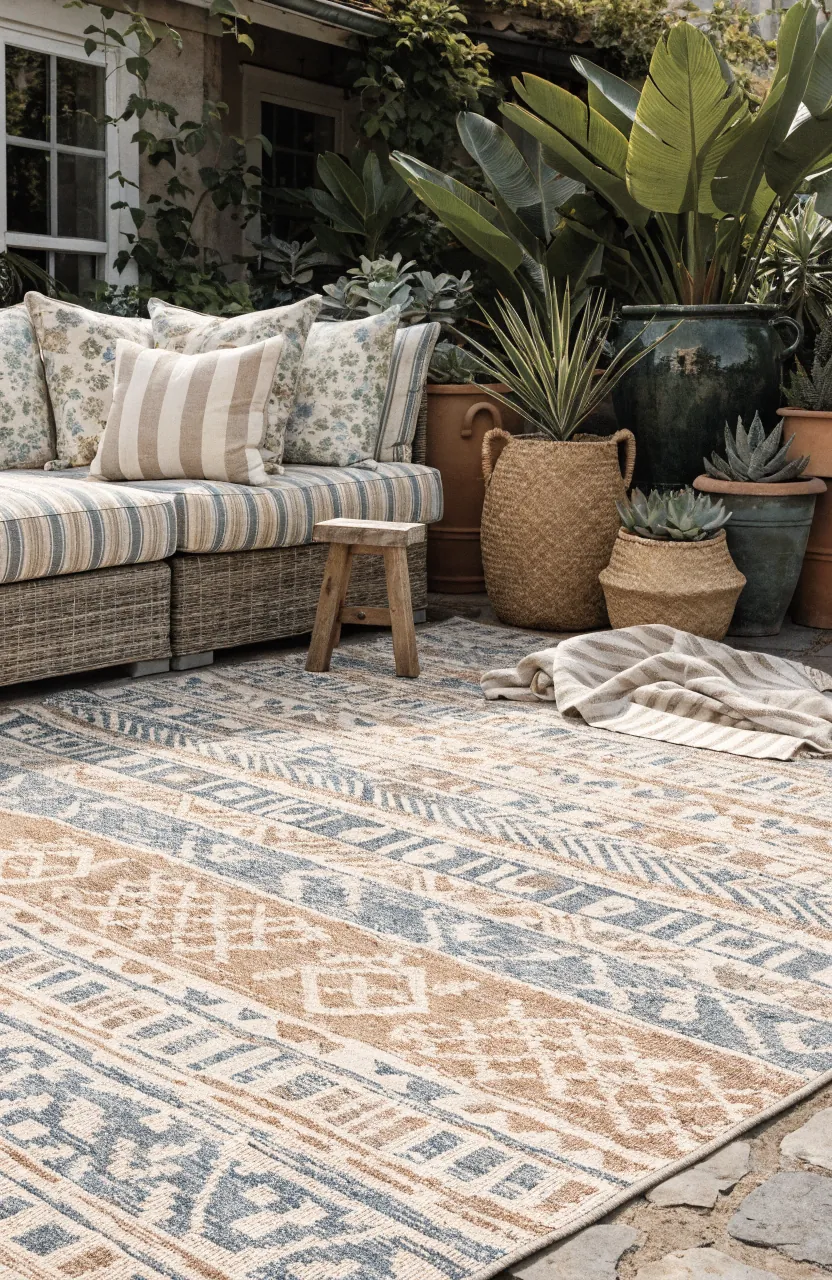
A patio can look lovely at six o’clock and feel unusable by nine if the lighting is wrong. Bright security lights flatten the space. No light at all makes people drift back inside. Slow evenings need a few small sources of warm light.
String lights are the obvious choice because they draw a ceiling over the patio. Use them to frame the seating zone rather than stretching them randomly across the yard. Add lanterns on the table, solar path lights near steps, or a battery lamp beside a chair. The goal is not brightness. It is glow.
Warm light also makes outdoor living feel more relaxed. It softens planters, cushions, and wood furniture, and it makes even simple weeknight drinks feel like a small holiday decor moment without needing a full party setup.
Style the Outdoor Coffee Table for Real Use
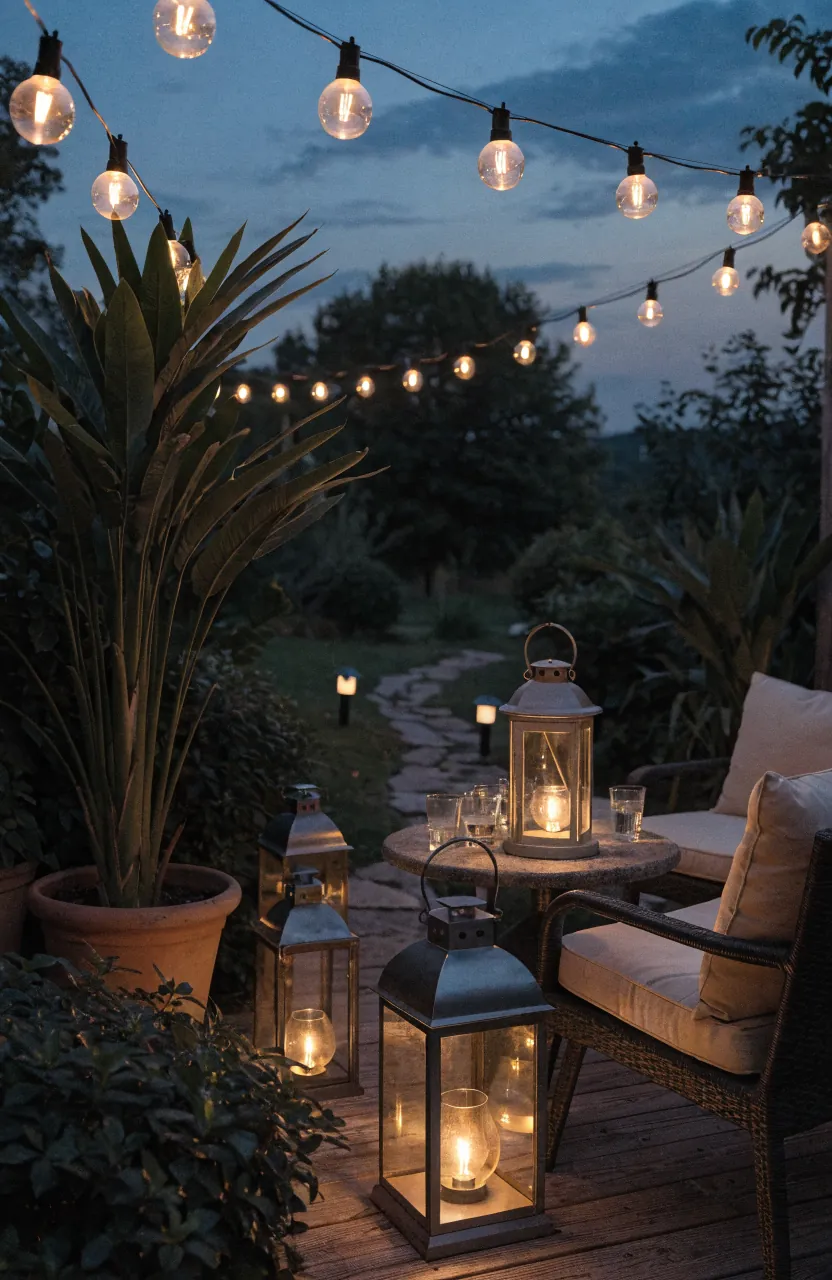
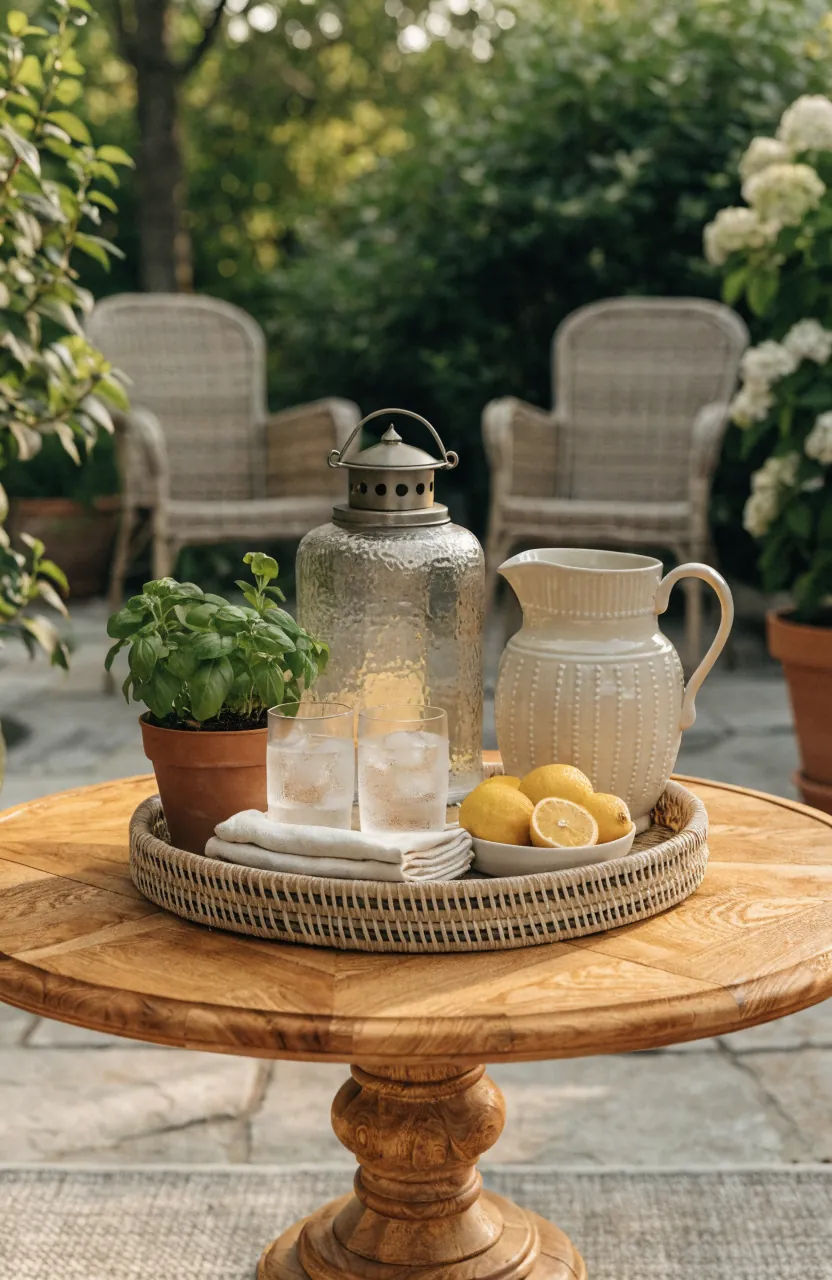
An outdoor coffee table can do more than hold one forgotten candle. Treat it like indoor coffee table decor, but simpler and sturdier. A tray keeps small things from scattering. A low plant, lantern, stack of napkins, pitcher, or bowl of citrus gives the table a reason to exist.
Keep the center low enough that people can talk across it. Use pieces that can move quickly when food arrives. A wooden tray, enamel bowl, hurricane lantern, stoneware pitcher, or rattan basket can handle the casual nature of summer patio life.
The best test is simple: if you sat down with a drink and a book, would the table help you stay outside longer? If the answer is yes, the styling is doing its job.
Let Plants Create Privacy, Shade, and Movement
Plants do the quiet work that furniture cannot. They soften railings, hide awkward corners, create privacy, and make a patio feel cooler. You do not need a full garden. A few large planters will usually do more than many tiny pots.
Put taller plants where you need screening, trailing plants on shelves or rails, and herbs near the table where you will actually touch them. If your patio gets strong sun, use heat-tolerant plants in heavier pots that will not dry out immediately. If it is shady, lean into ferns, hostas, coleus, and deep green textures.
For porch decor, match the planter material to the mood of the house. Terracotta feels relaxed and Mediterranean. Galvanized metal feels casual and farmhouse. Glazed ceramic feels more polished. Woven cachepots add softness but should be protected from heavy rain.
Connect the Patio to the Doorway
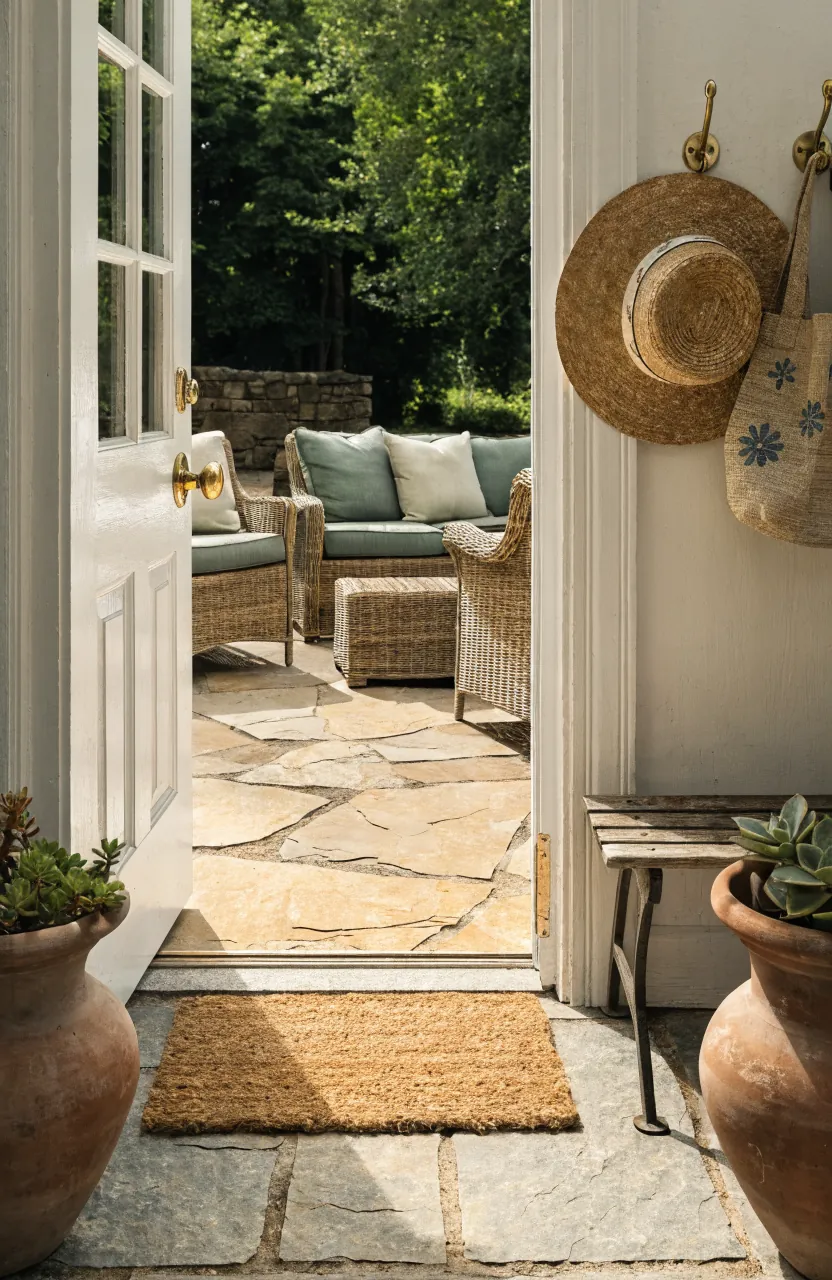
A patio feels more inviting when the transition from inside to outside is considered. The doorway, porch, or back entry should quietly lead you out. A clean mat, a pair of planters, hooks for towels or garden tools, and a small bench can make the whole area feel less accidental.
This is where entryway decor and patio decor overlap. The same rules apply: give people somewhere to pause, somewhere to put things, and a little visual warmth before they step into the main space. If the door opens straight onto the patio, use planters to frame the threshold. If there is a covered porch, treat it as the first layer of the outdoor room.
Create a Small Dining Moment, Even Without a Full Dining Set
Slow evenings outside often involve something simple: a salad bowl, iced tea, fruit, grilled bread, or leftovers that taste better in fresh air. You do not need a large outdoor dining set to make that happen.
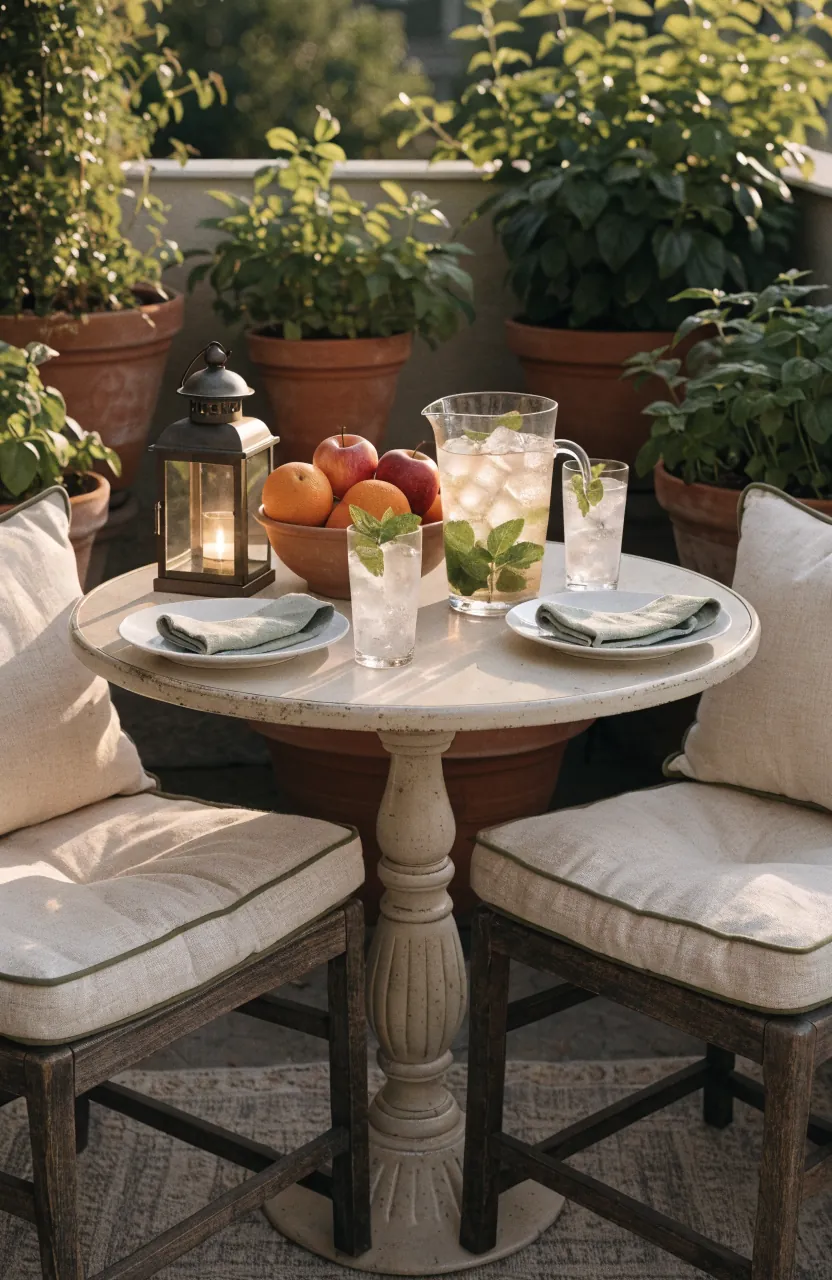
A bistro table, folding table, narrow console, or small round table can become a summer dinner spot. Add two comfortable chairs, a lantern, cloth napkins, and one planter nearby. The setup should feel easy to use, not precious. If you have more people over, bring out extra stools or indoor chairs for the evening.
This kind of seasonal home decor works because it supports a real ritual. A small table set for two can make an ordinary patio feel like a destination.
Keep a Few Things Ready for Evenings Outside
The prettiest patio still gets ignored if using it takes too much effort. Keep the basics close by: a basket of clean throws, citronella or mosquito supplies, a lighter for candles, outdoor-safe cups, and a place to store cushions when rain is coming.
If you entertain casually, keep one tray ready for drinks or snacks. If you use the patio alone, keep a cushion on your favorite chair and a small side table clear. The less you have to gather, the more often you will step outside.
Simple Summer Patio Formula
- One defined seating zone: chairs close enough for conversation.
- One soft floor layer: an outdoor rug, mat, or textured deck surface.
- Three light sources: overhead glow, table light, and path or step light.
- Two useful surfaces: a coffee table plus a side table or stool.
- Large planters: fewer, bigger pots usually look calmer than many tiny ones.
- A ready basket: throws, napkins, mosquito supplies, or outdoor cups.
When those pieces are in place, the patio can stay simple and still feel complete.
Final Thought
A slow summer patio is not built from one dramatic purchase. It comes from small decisions that make the outside easier to use: a chair that feels good after dinner, light that glows instead of glares, a table within reach, plants that soften the edges, and a doorway that invites you out.
When the patio works for ordinary evenings, it will already be ready for guests. That is the best kind of outdoor living: comfortable first, beautiful because it gets used.