
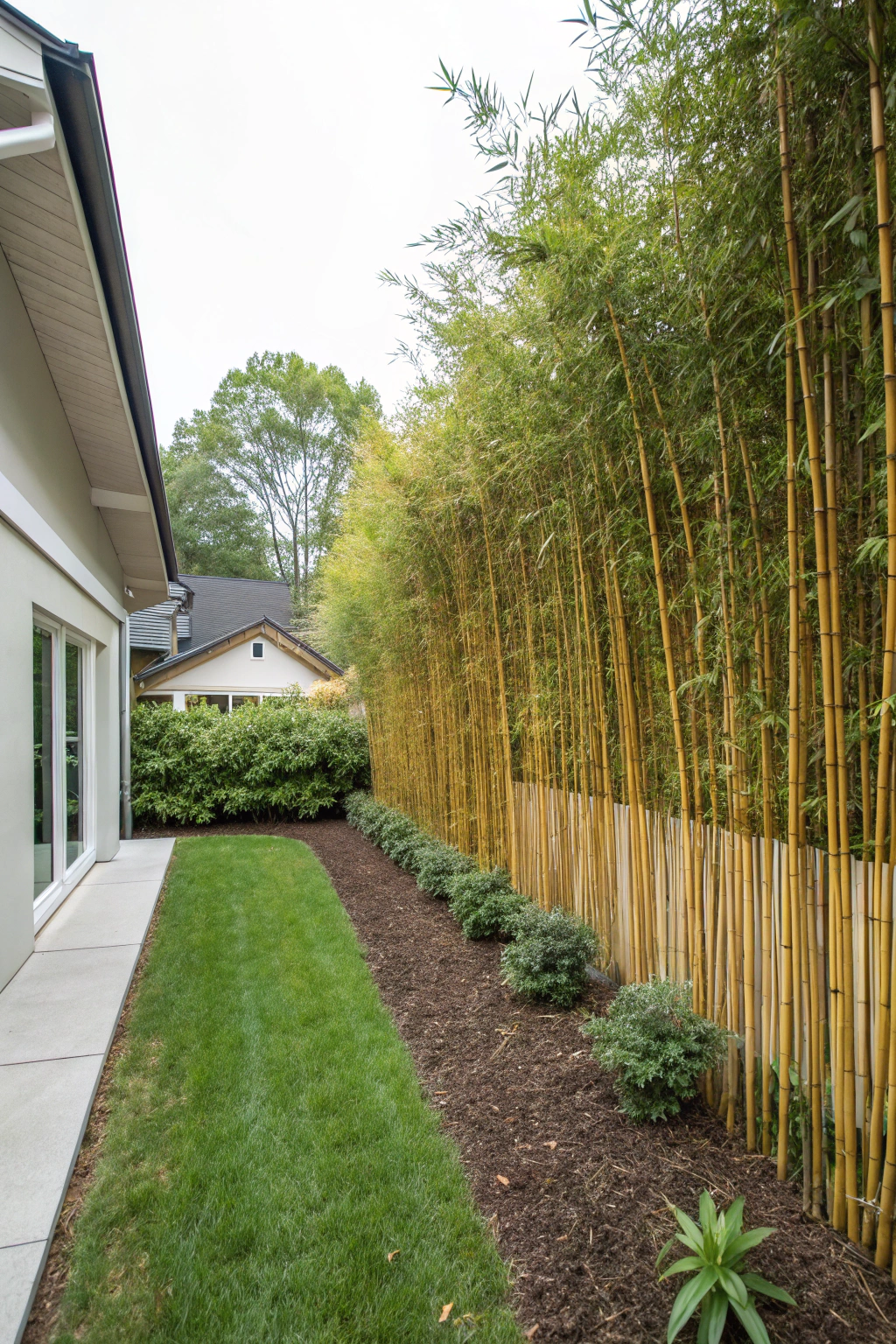
In current times, privacy is essential, and noise reduction is often a challenge for residents living close to busy roads, airports, or loud neighbors. Enter bamboo. This wonderfully versatile plant is frequently used as a privacy screen, and thanks to its tall, dense growth forms, it keeps your property hidden from view.
However, does bamboo block noise as well? The rest of this article examines how bamboo blocks noise, if it’s effective, what the best situations of use are, and when bamboo does not block noise.
Key Takeaways
- Under the correct circumstances, bamboo is an effective noise reducer; however, it won’t block the noise entirely.
- The bamboo stand must be sufficiently wide, with densely packed and tall plants, to effectively mitigate noise.
- Several countries use bamboo “green belts” next to busy roads to reduce noise pollution.
- Bamboo “blocks” noise by interrupting the sound waves as they move from the origin.
- Although bamboo noise-canceling strands are less effective than solid walls, they provide several additional benefits, are inexpensive to plant and maintain, and grow rapidly, offering a quicker solution to larger trees.
Bamboo’s Noise Canceling Properties
Unfortunately, bamboo is not noise-canceling and won’t eliminate sounds produced by traffic, airplanes, or noisy neighbors.
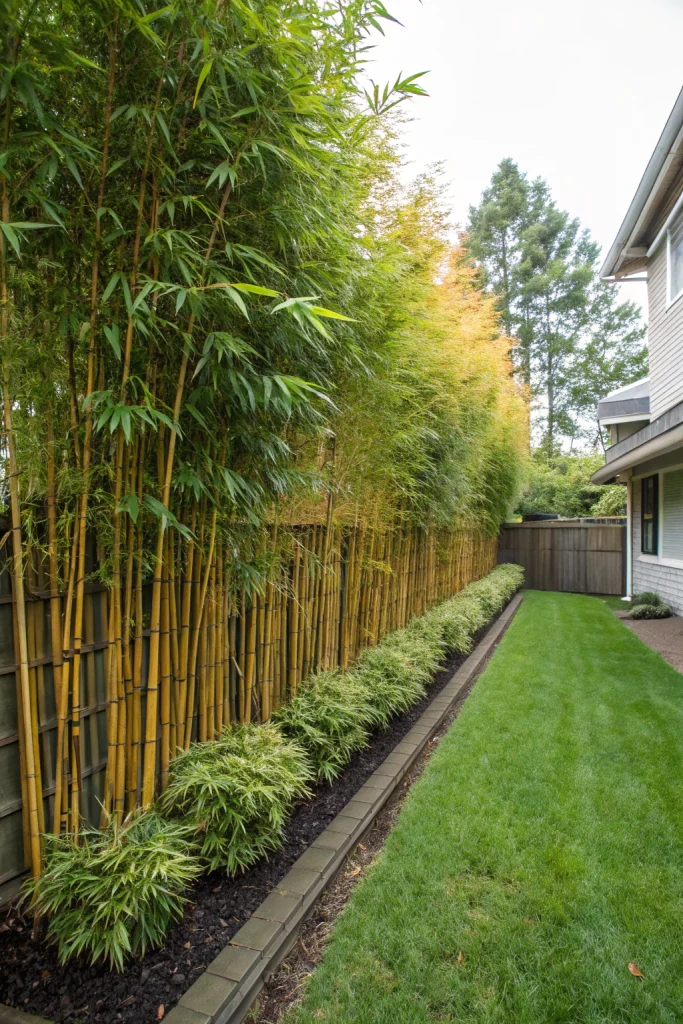
However, its structure, growing forms, and physical features reduce the noise from the origin to the shielded areas.
How Does Bamboo Block Noise?
Physical Sound Barrier of Bamboo
By planting these tall grasses, you create a wall that interferes with sound as it moves through the air.
Sound travels in waves that ripple through the air. Placing any physical obstacle in the way causes the waves to distort, scattering the sound, interfering with the other waves, and reducing the noise that arrives on the other side of the stand (group of plants).
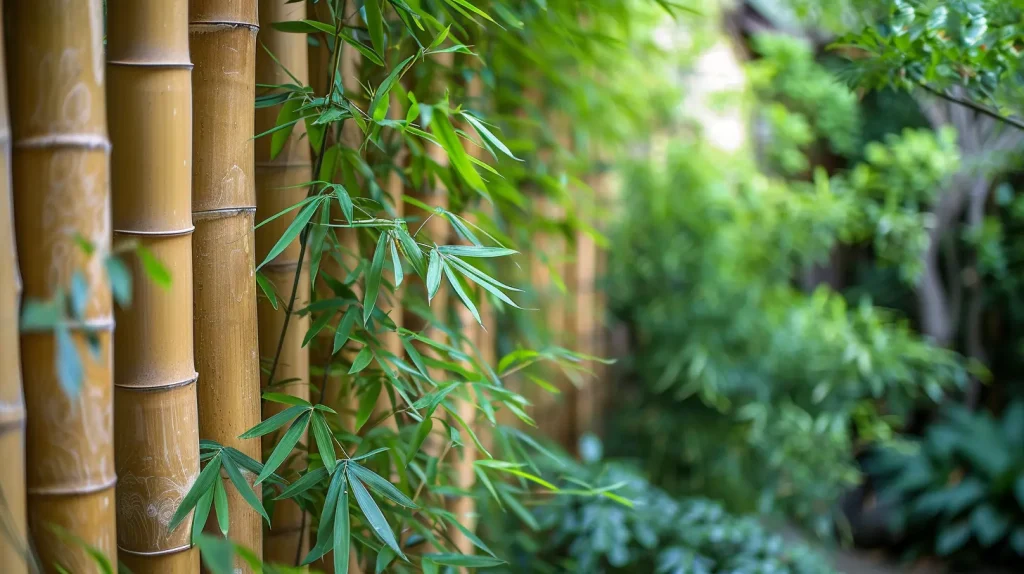
The waves strike the barrier and need to “find” a way through (like how a liquid moves around obstacles), reducing the intensity and volume. The longer the waves travel, the more noise is “lost” to the environment.
Additionally, the plant material absorbs some of the wave energy as it hits, reducing the potency of the noise. Thanks to bamboo’s height, rapid growth, and dense clumping nature, it is relatively effective in disturbing the sound waves passing through.
Bamboo and White Noise: A Natural Sound Masking Effect
Bamboo also serves an important role in noise control beyond its physical barrier properties. The movement of wind through its dense foliage generates “white noise”, a soothing sound that encompasses a broad range of frequencies. This natural sound production, arising from the rustling of leaves and stems, helps mask disruptive environmental noises like traffic.
The white noise effect of bamboo is particularly valuable in urban or suburban areas, where achieving a serene atmosphere is challenging. This feature not only enhances the tranquility of the environment but also complements bamboo’s physical sound barrier capabilities.
Bamboo, Birds, and Noise Reduction
The added benefit of using these plants as a sound barrier is that they are natural and attract birds and other organisms to the area. These other creatures also interrupt sound waves while producing their delightful sounds, drowning out more unpleasant sounds you want to block.
Does Bamboo Block Noise Effectively?
Several factors influence how effective these plants are at blocking noise.
- Plant height – taller plants are more effective at blocking sound. Sound waves “spill over” items, so taller plants further prevent this washing effect.
- Foliage – the culms are essential for blocking sound waves, but the foliage also acts as additional dampeners.
- Strand density – Paramount to the efficacy of these plant walls is how densely packed they are (how much space there is between plants).
- Strand size (how many plants) is equally important. You can block more sound with more densely packed plants.
- Noise origin – the proximity and angle of the noise. I.e., the barrier is more effective if the road is lower than the plant wall and slightly further away.
- Noise intensity – the noise you’re trying to mitigate/block is essential. I.e., it’s easier to block a children’s playpark vs. a busy road vs. an airport.
Under ideal conditions, a bamboo green belt of roughly 20 feet in thickness reduces the noise pollution by 3,5 to 4 dB.
Which Bamboo Is Better At Blocking Noise?
More than 1400 bamboo species are in the subfamily Bambusoideae (of the grass family Poaceae). These plants vary in height, diameter, foliage, and growth forms. Thanks to this variability, not all of these grass plants are suitable for producing a noise screen.
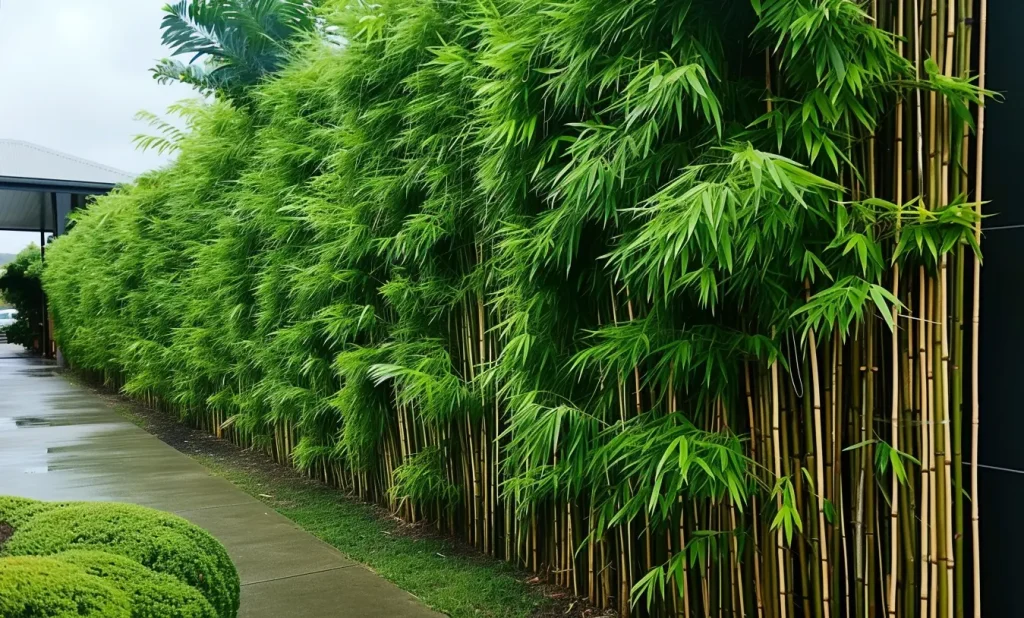
The most practical species for blocking sounds are taller plants (between 40 and 100 feet) and those that grow in dense stands (commonly called clumping bamboo).
Their behavior of growing in tightly packed clumps is beneficial in reducing sound, while running forms spread out too thinly, reducing their efficacy.
Under What Circumstances Does Bamboo Block Noise?
These plants are often planted along busy roads to create a “green belt,” hiding the roads from the view of residential areas while reducing the amount of noise that reaches these areas.
These belts are usually thick stands of clumping bamboo, planted intentionally (in a grid-like pattern) to maximize the amount of noise reduced by “covering” gaps that would otherwise be left open in natural growth.
While most instances involve planting large strands (up to 20 feet wide) of these plants to shelter residential areas from busy roads and airports (or commercial areas), they are also feasible on a smaller scale (home use), provided the noise is not particularly loud, and mitigation is more important than blocking.
Lower volume noise is relatively easy to block with obstacles (including these plants).
Sufficiently thick sound barriers of these plants are most effective when used closer to the noise origin (e.g., road) and when the area shielded is lower than the shield.
When Won’t Bamboo Effectively Block Noise?
Unfortunately, bamboo is not the most effective sound-blocking material. While it works in certain situations, there are several where these plants are less effective, including:
- When the strand is too thin (i.e., not enough plants), the most significant issue with using these plants to block noise around your yard is that most yards cannot support large enough stands to be effective.
While visual screens require 1 to 2 layers of plant material, sound is more pervasive, and the louder the noise, the thicker the screen that is required to effectively block it (up to 20 feet of plants).
- When you use running bamboo instead of clumping bamboo, these species don’t grow as densely but spread out, limiting their efficacy.
- If the noise source is too great and you’re too close. The damping efficacy is also reduced if the noise source is lower and the areas shielded are elevated.
Although they are effective as green belts, these tall grasses are less effective when used as noise screens around the yard, particularly if the noise is loud and you are looking for more than “reduction.”
Bamboo Vs. Other Noise-Blocking Interventions
Reducing the noise in an area is essential to the well-being of the surrounding communities.
There are several noise-canceling interventions, including:
- Green belts (made of trees and other plants)
- Solid walls (made of concrete, bricks, timber, steel, acrylic/perspex, etc.)
Bamboo has some advantages over other trees and noise-canceling interventions, which include the following:
- It is fast growing. Thanks to their rapid growth, they start blocking sound quicker than other trees (these plants take 2 to 4 years to reach maturity).
- It is relatively tall. Height is essential when blocking sound, and taller grass species are more effective.
- These barriers are economically viable. These plants are inexpensive to plant and require little maintenance. Provided they are strategically planted in the appropriate hardiness zone, they thrive.
- It is aesthetically pleasing. Although the “attractiveness” of these grasses is open to debate, most people agree that they are better looking than bare concrete walls.
- It grows in dense clumps. While their stem diameter is almost too thin to be effective, these plants make up for it by clumping together, effectively reducing the noise.
- Bamboo plants are excellent carbon sequesters, removing more CO2 than many other trees. Although not directly related to noise suppression, removing this gas from the air is a benefit that should not be overlooked.
- They are hardy/resilient plants, resistant to mold, bacteria, and several insect species. Their resilience further increases their appeal and affordability.
However, bamboo is typically not as effective at blocking noise as other interventions (including green belts made of other trees. I.e., willow trees reduce noise pollution by up to 30 dB).
According to a study in 2016, 16-foot high by 20-foot thick “screens” made from these bamboo plants are as effective at blocking noise as a 10-foot solid barrier.
If you’re happy with noise reduction, bamboo suits your needs. They are aesthetically pleasing, attract birds to your yard, and help sequester carbon (as added benefits).
However, if you live close to a busy road or industrial area, and blocking the noise is paramount, consider a solid structure (like a wall or fence), as they are more effective in smaller areas with restricted spaces.
Wrapping Up: The Reality of Bamboo as a Sound Barrier
Bamboo is relatively effective in blocking noise, provided the stand is made of thick enough (up to 20 feet) densely-packed, tall, clumping-type plants. The sound intensity is equally important. Very loud noises nearby are more difficult to block than residential sounds. Bamboo is great if mitigation is sufficient; however, you may consider a solid wall if you require more noise cancellation.