
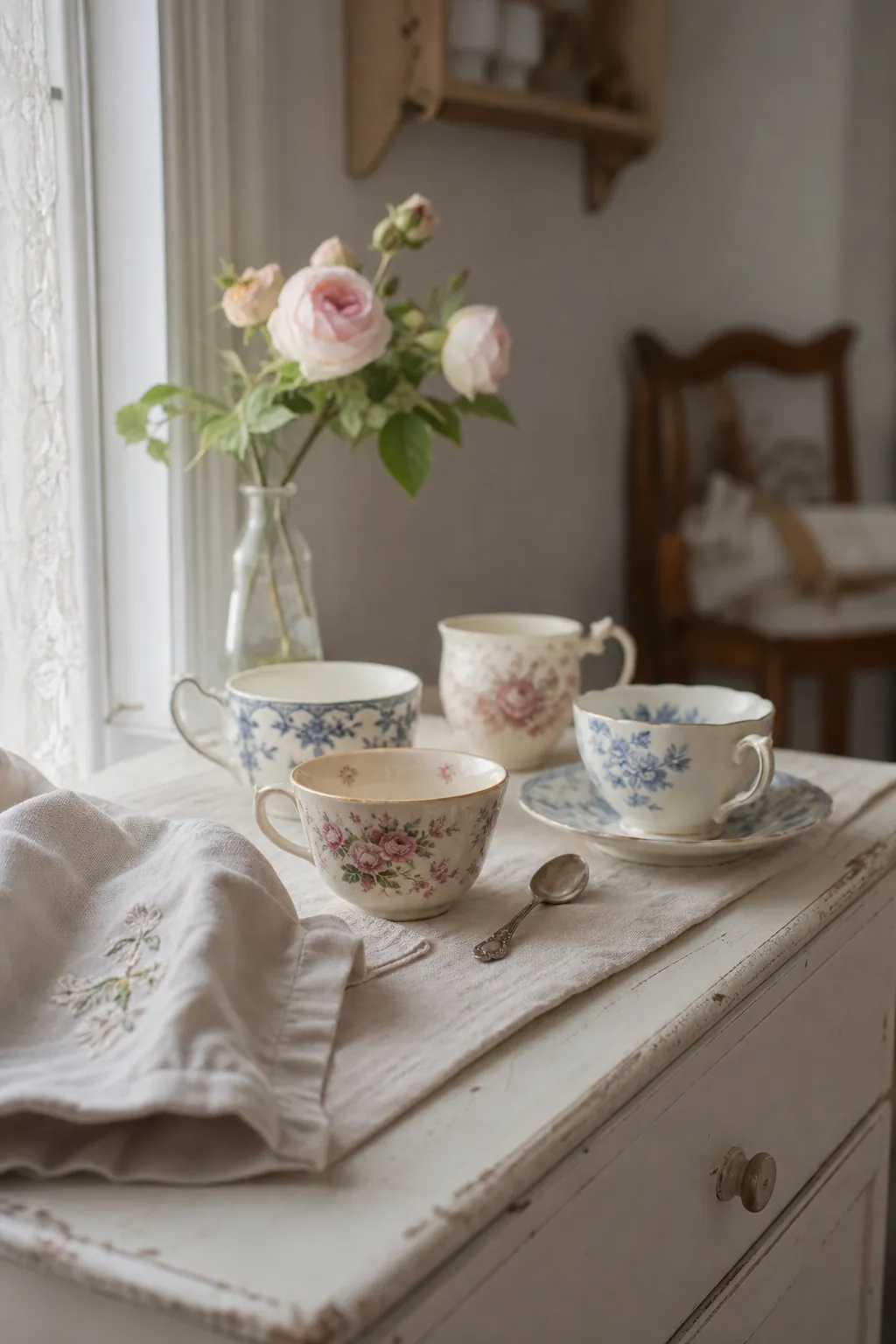
Vintage teacups can make a room feel gentle, collected, and personal, but they can also tip into clutter fast. The difference is usually not the teacups themselves. It is where they sit, how much breathing room they get, and whether they are treated like useful little accents instead of a theme spread across every surface.
The prettiest vintage teacup decor often looks casual at first glance. A floral cup on a bedside tray. A few saucers tucked behind plates on an open shelf. A single teacup holding keys near the front door. These details add feminine decor without making the home feel precious or staged.
Use these ideas if you have inherited vintage teacups, collected a few from flea markets, or keep finding tea cup decor you love but do not know how to style. The goal is a soft home decor look with warmth, patina, and restraint.
Start With a Small Color Story
Before you place a single cup, sort your vintage teacups by color, not by set. Most collected decor looks better when the eye can read a quiet palette. Pull together blush florals, faded blues, ivory porcelain, pale yellow, or soft green. You do not need everything to match. You only need the pieces to sound like they belong in the same room.
If your home already leans cottage decor, choose two or three recurring tones and let the teacups repeat them. A pink rose cup can echo a linen pillow. A blue saucer can pick up the edge of a kitchen plate. A gold rim can relate to brass hardware. This is what keeps pretty home decor from looking random.
Work Vintage Teacups Into Open Shelf Styling
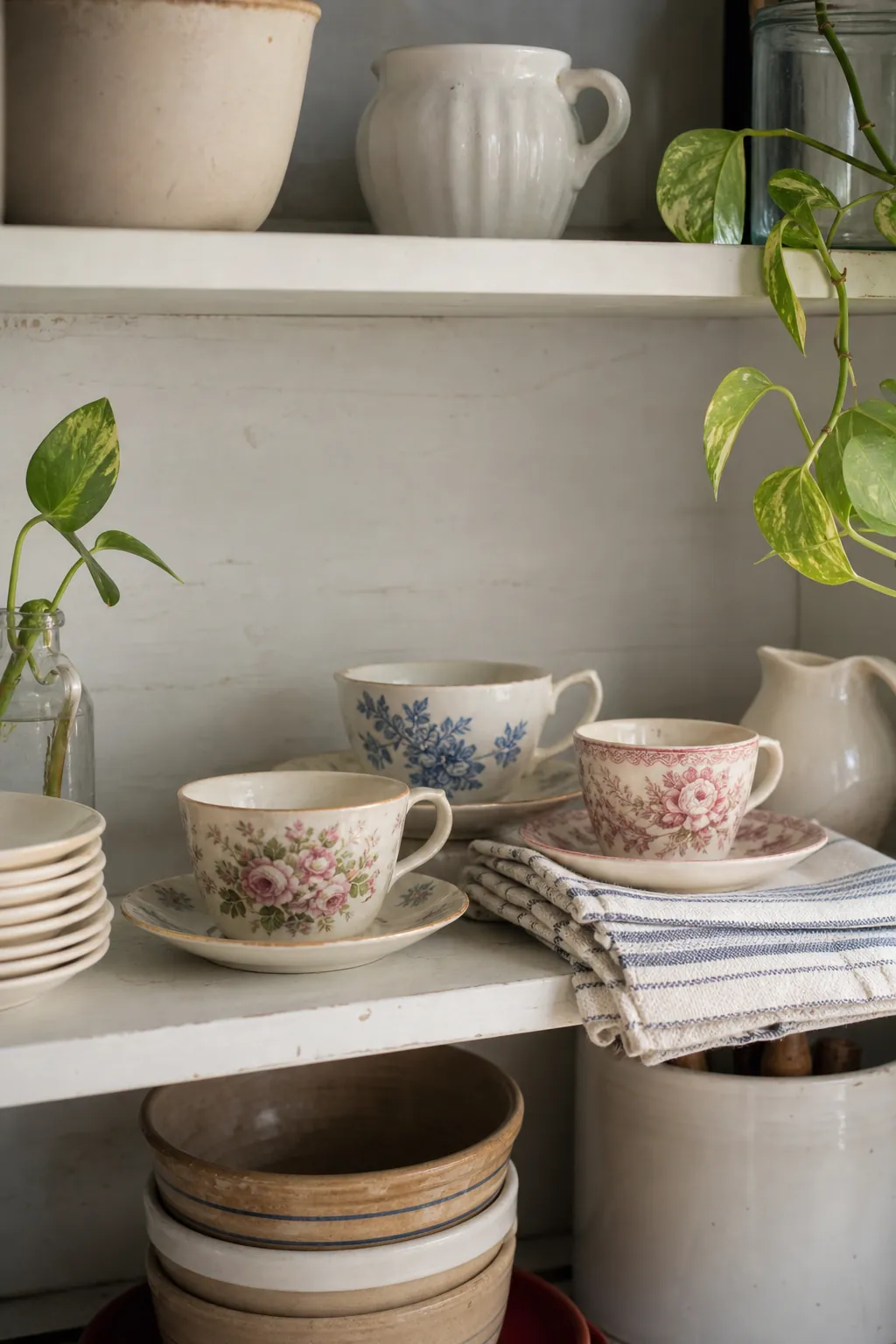
Open kitchen shelves are one of the easiest places to style vintage teacups because they already belong near dishes, linens, and everyday routines. The trick is to avoid lining every cup in a row. A row can look like storage. A small group with height changes looks like shelf styling.
Try one teacup on its saucer, one cup slightly in front of stacked plates, and one cup beside a folded towel or small creamer. Let practical kitchen decor share the shelf with the delicate pieces. That contrast is what makes the cups feel usable rather than trapped behind glass.
- Keep the best teacup near eye level so the pattern is visible.
- Stack saucers behind cups when the shelf is shallow.
- Leave a little empty space between groups so the shelf does not feel crowded.
- Repeat one material nearby, such as linen, brass, painted wood, or clear glass.
Use Wall Hooks When You Want a Collector Display
If your teacups are too pretty to hide but your shelves are full, a small wall shelf with hooks can turn the collection into a quiet display. This works especially well in a breakfast nook, kitchen pass-through, pantry wall, or dining corner.
Hang cups by their handles from sturdy brass or painted hooks, then place their saucers on a narrow ledge below. Keep the display small. Four cups can feel charming. Twelve can feel busy unless the wall is intentionally built for a larger teacup display.
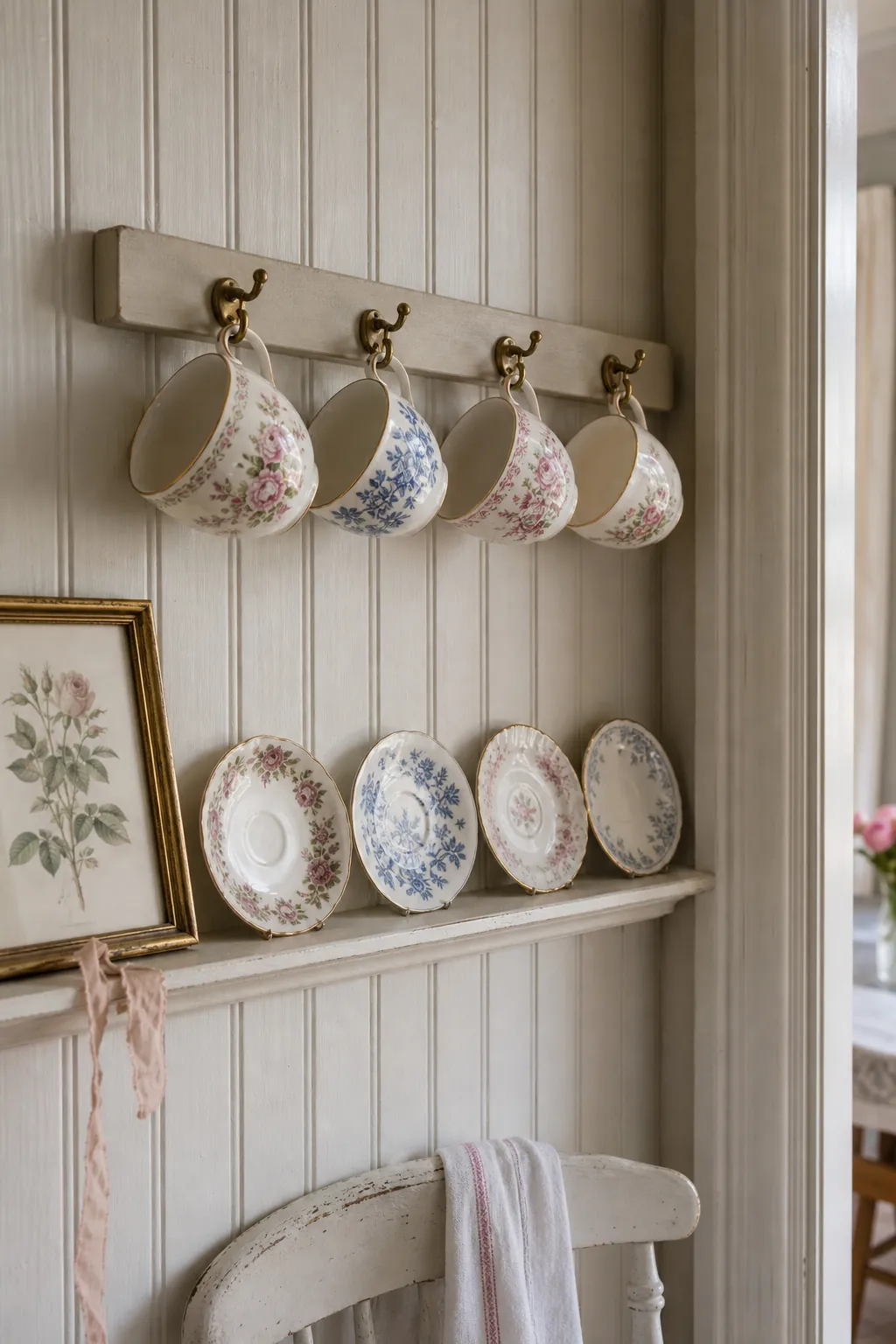
A wall display also solves a common problem with inherited vintage teacups: you may not want to drink from them every day, but you also do not want them boxed away. Hung carefully, they become part of the room without taking up a whole cabinet.
Give One Teacup a Job on a Bedside Tray
A single vintage teacup can make a bedside table feel softer without adding another decorative object that has no purpose. Use the cup for earrings, hair pins, a ring, matches, bookmarks, or tiny keepsakes. The saucer gives you a landing place for whatever you remove before bed.
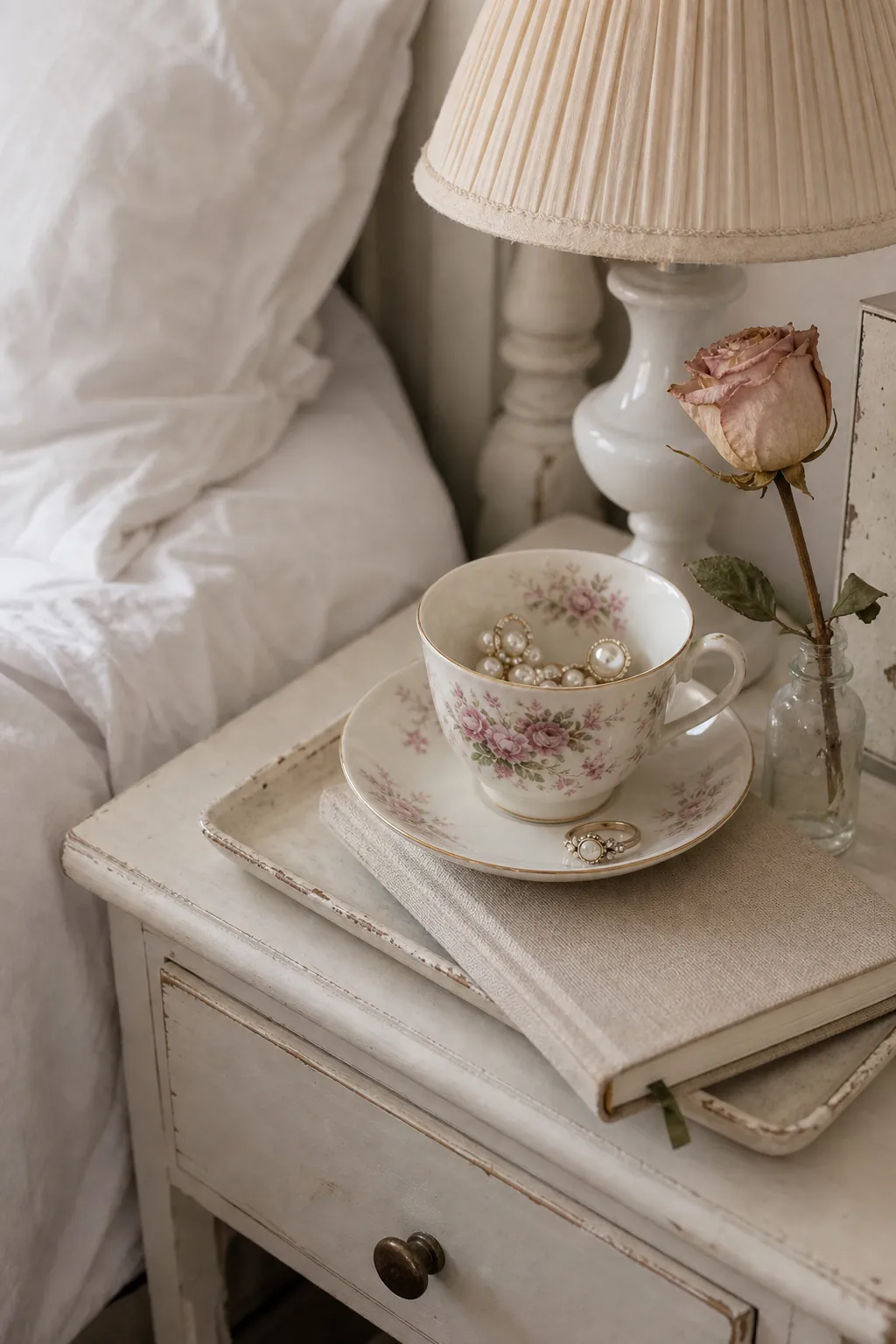
This is where feminine decor works best: small, tactile, and close to daily life. Pair the teacup with a linen-bound book, a small lamp, a dried flower, or a ceramic dish. Avoid adding too many fragile things to the nightstand. One cup is enough to make the surface feel graceful.
Make a Glass Cabinet Feel Airy, Not Packed
A glass-front cabinet is the classic place for vintage teacups, but it can easily become a wall of tiny patterns. The fix is negative space. Instead of filling every inch, group cups in small families and let saucers stand behind them like quiet backdrops.
Try grouping by mood: pink florals together, blue and white pieces together, cream and gold pieces together. Mix in one sugar bowl, dessert plate, or small pitcher so the display has different shapes. This keeps the cabinet from feeling like a shop shelf.
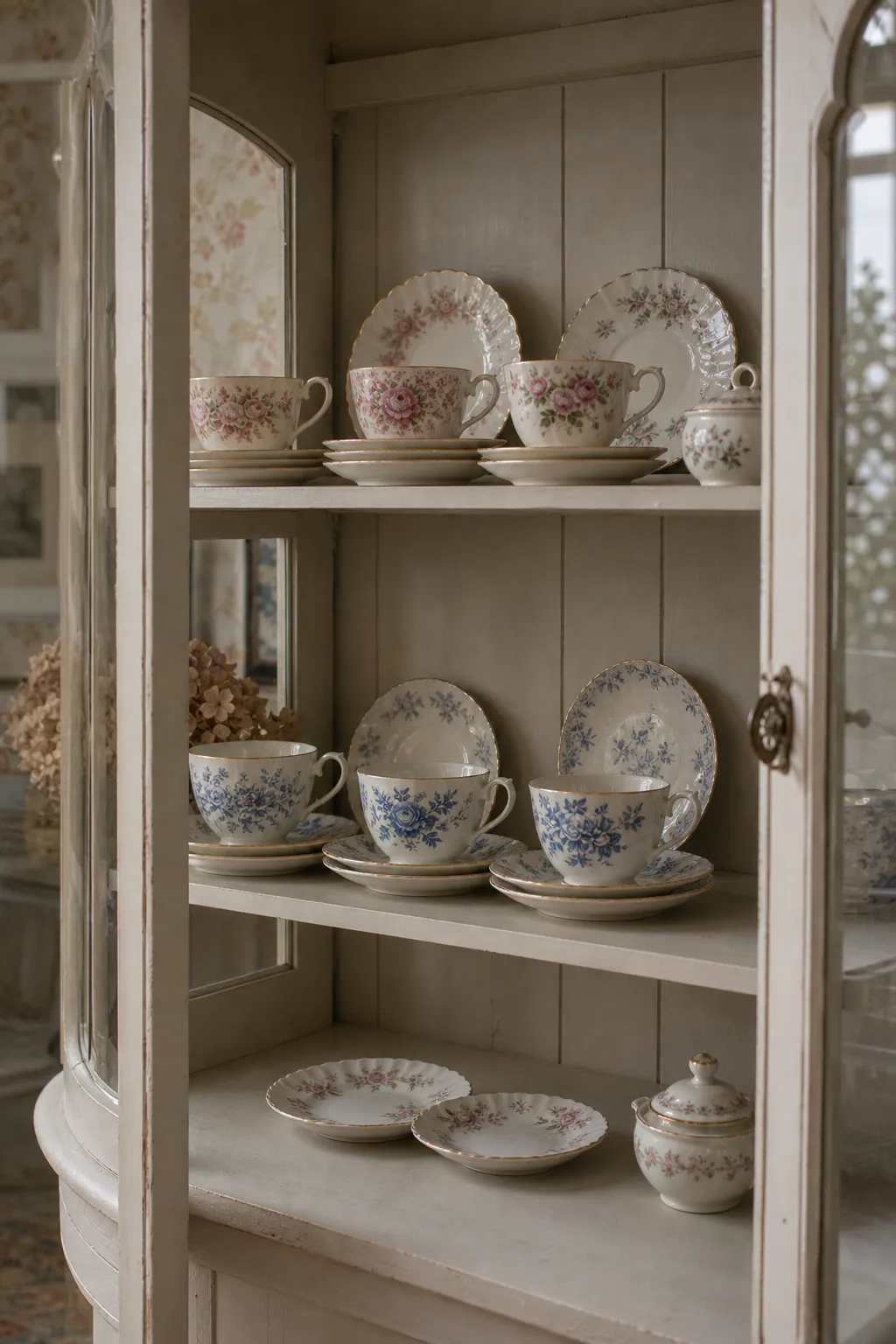
If a piece is chipped, you do not have to hide it. A tiny flaw can make vintage decor feel human. Just place damaged edges where they are less visible and reserve the most detailed teacups for the front of the shelf.
Use Teacups as Small Flower Vessels
One of the simplest tea cup decor ideas is also one of the most effective: use a teacup as a tiny vase. It is ideal for short garden stems, herbs, violets, leftover grocery-store flowers, or blooms that broke off a larger arrangement.
On a dining table, three teacups with flowers can make a softer centerpiece than one tall vase. Keep the flowers low so people can see across the table. Add washed linen, a taper candle, or a plain ceramic plate to balance the sweetness.
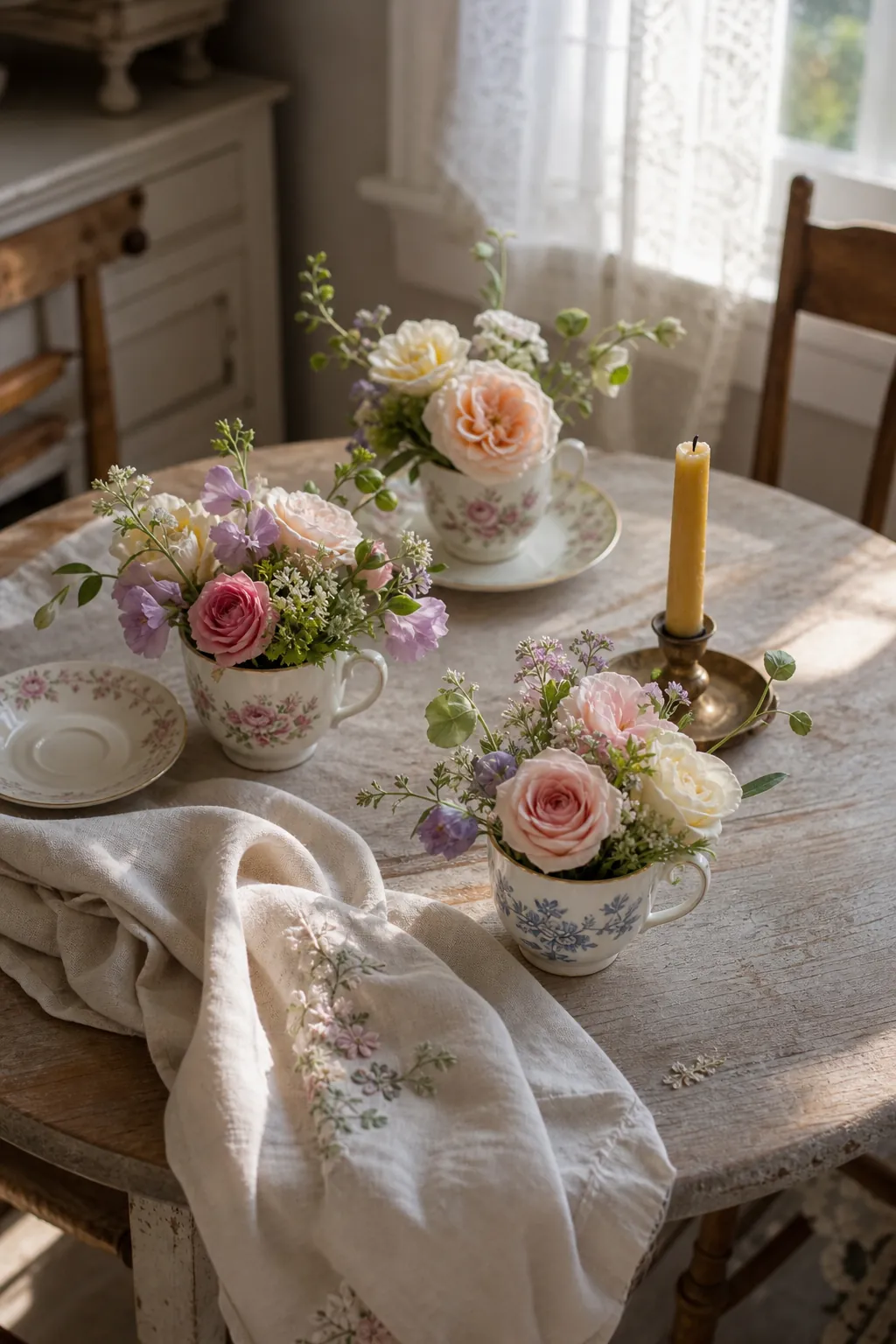
This approach works because it makes the teacups useful in an everyday way. They are not just displayed. They help shape the mood of breakfast, dinner, or a quiet afternoon at the table.
Let a Teacup Act as an Entryway Catchall
An entryway is a good place to test whether collected decor can also be practical. Place one sturdy vintage teacup on a saucer and use it for keys, a ribbon, lip balm, or the small things you reach for before leaving. It adds softness to a hardworking surface.
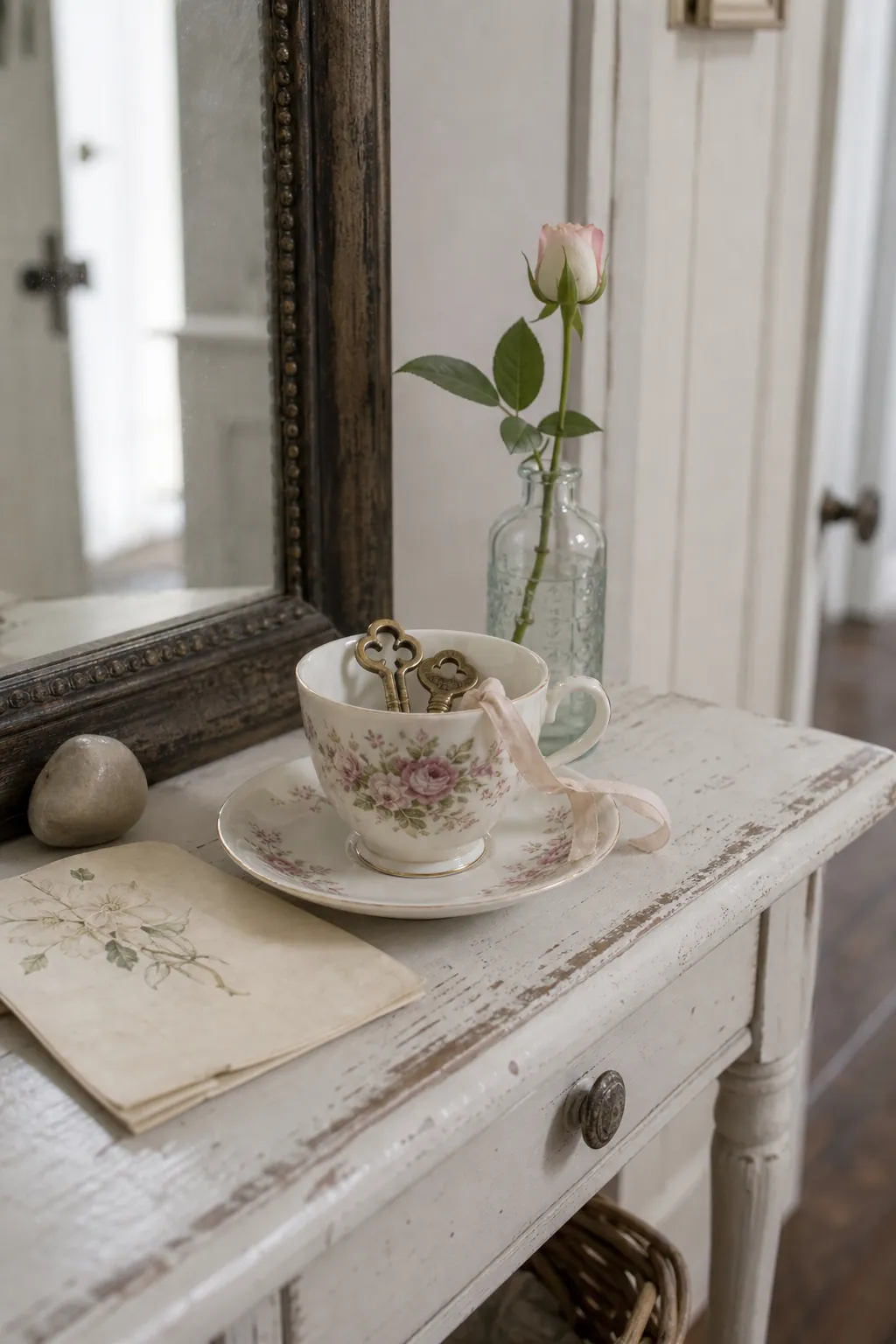
The best entryway version is restrained. Pair the teacup with a mirror, one bud vase, and a tray or note dish. If the console already holds mail, sunglasses, and bags, do not add a delicate teacup until the surface has a clear landing zone.
How to Keep the Look Soft Instead of Cluttered
Vintage teacups are small, patterned, and often sentimental, which means they need a little editing. A soft feminine home does not need every cup visible at once. Rotate pieces seasonally and let the room breathe.
- Display odd numbers when the surface is small.
- Use plain linens, wood, or glass near busy floral patterns.
- Keep heavily chipped pieces for non-food uses only.
- Avoid placing fragile cups near the edge of a crowded counter.
- Repeat the teacup colors somewhere else in the room.
If you have many vintage teacups, choose a few favorites for daily display and store the rest carefully. The collection will feel more special when each piece has room to be noticed.
A Soft Feminine Home Feels Collected, Not Perfect
The charm of vintage teacup decor is not perfection. It is the sense that the home has been gathered over time. A cup from a grandmother, a saucer from a flea market, a floral pattern that repeats the color of the curtains: these are small details, but they make a room feel personal.
Start with one surface. Style a shelf, tray, cabinet, table, or entryway with just enough vintage teacups to change the mood. When the pieces feel useful, visible, and lightly edited, they bring exactly the softness they were meant to bring.