
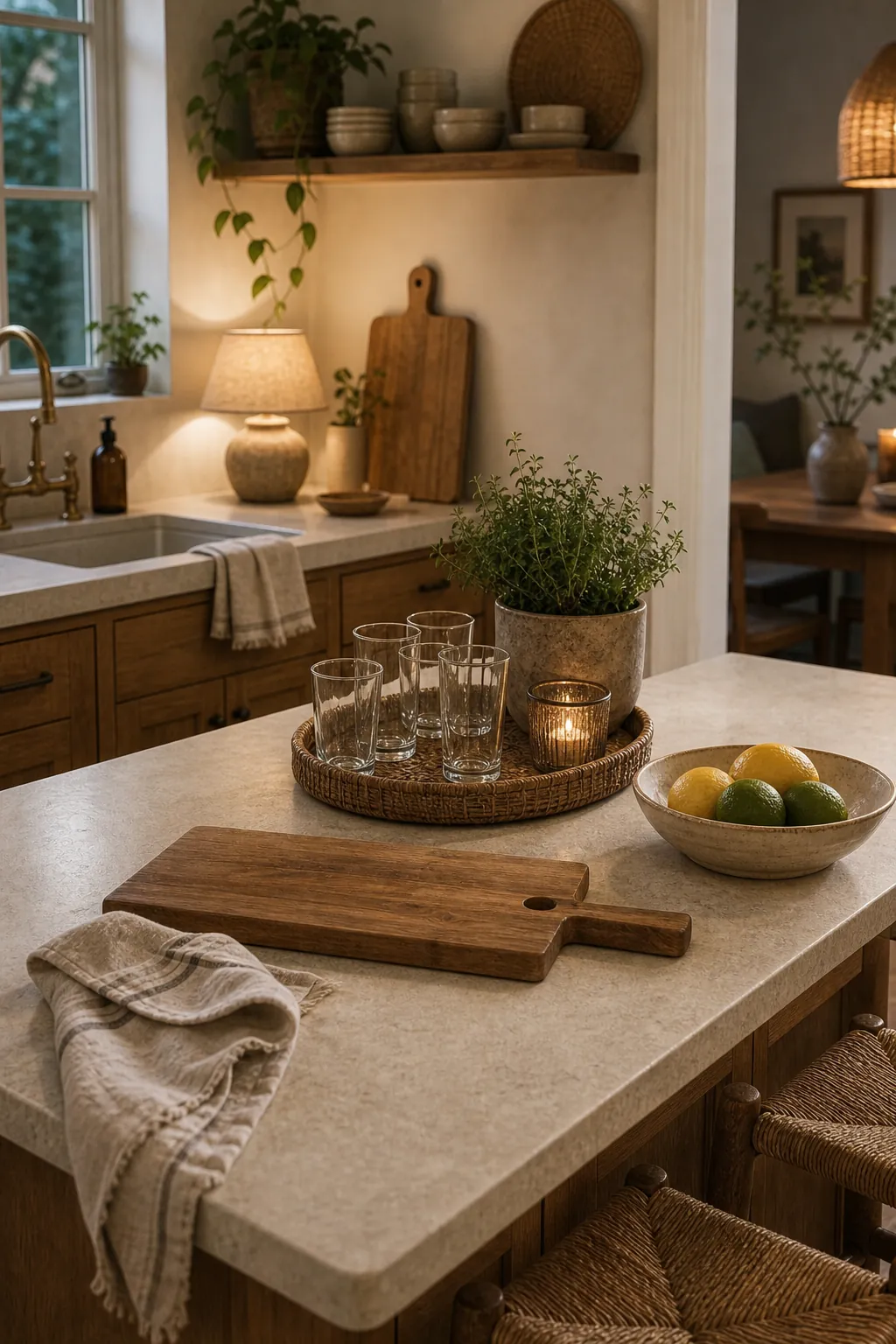
A kitchen can feel warmer before guests arrive without a remodel, a new paint color, or a full styling session. The fastest changes are small but visible: soften the lighting, clear the cold surfaces, bring in wood, add one textile, and create a welcoming place for drinks or snacks.
The point is not to make the kitchen perfect. It is to remove the signals that make a room feel rushed: harsh overhead light, crowded counters, wet sink edges, scattered packaging, and nowhere obvious for guests to gather. A warm kitchen feels calm because the room looks ready to be used.
Clear the Coldest Surface First
Before adding anything decorative, clear the counter or island where guests will naturally look first. Put away packaging, mail, small appliances you do not need, and anything that makes the kitchen feel mid-task. Leave one clean stretch of counter for serving or conversation.
This is the fastest kitchen refresh because it changes the mood immediately. **Warmth starts with space.** Once the main surface has breathing room, a wood board, bowl of fruit, or tray can look intentional instead of like one more object in a crowded room.
Turn Off the Harshest Overhead Light
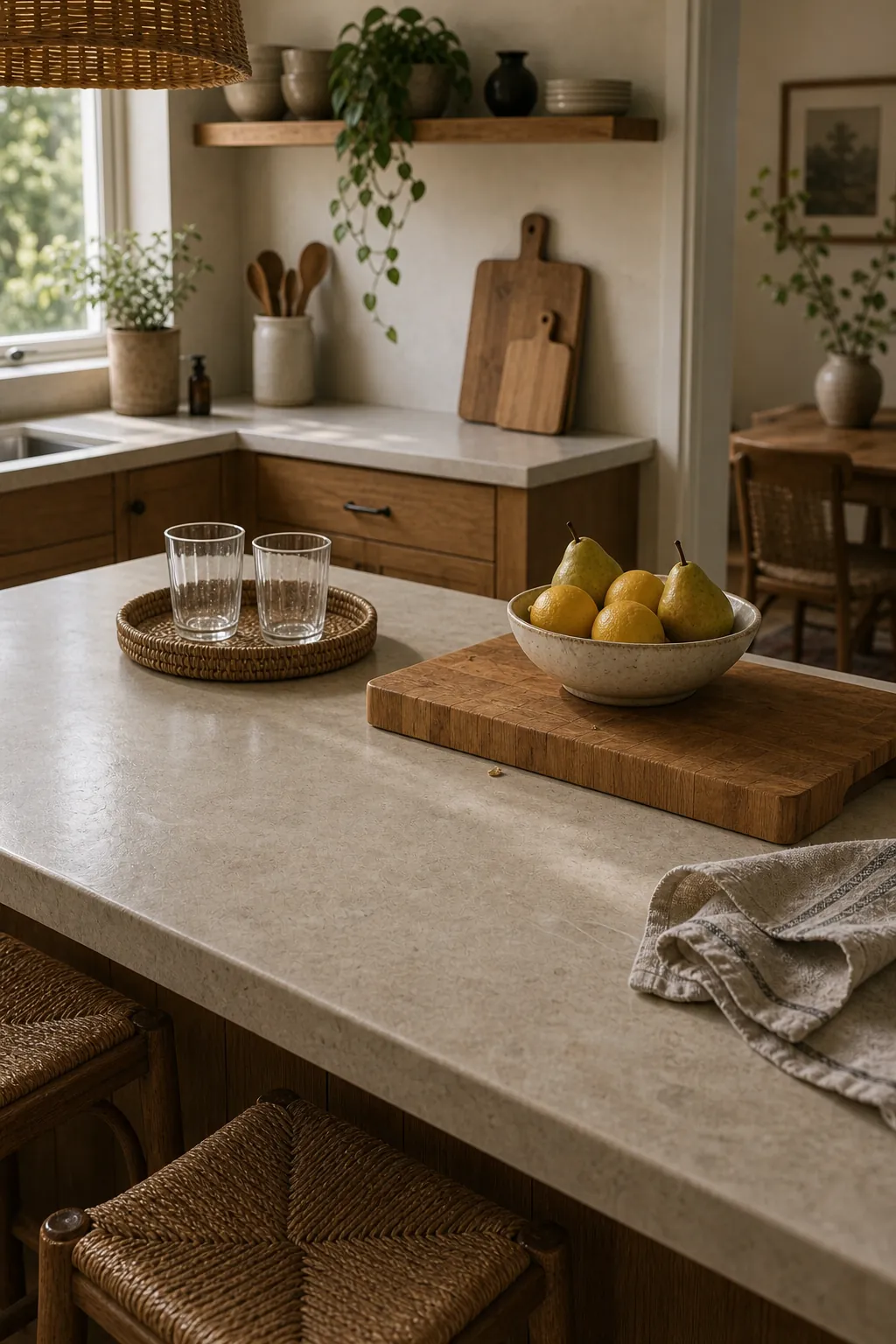
Most kitchens feel colder under one bright ceiling light. Before guests arrive, use layers instead. Turn on a small lamp in the dining room, under-cabinet lighting, a warm pendant, or a nearby table lamp. If you need overhead light for cooking, lower the intensity once the prep is done.
Warm light makes wood, stone, ceramics, and food look better. It also makes the kitchen feel less like a work zone and more like part of a guest ready home. Avoid colored bulbs or anything too dim to function. The goal is **soft enough to relax, bright enough to serve.**
Use Wood to Warm Up White or Gray Kitchens
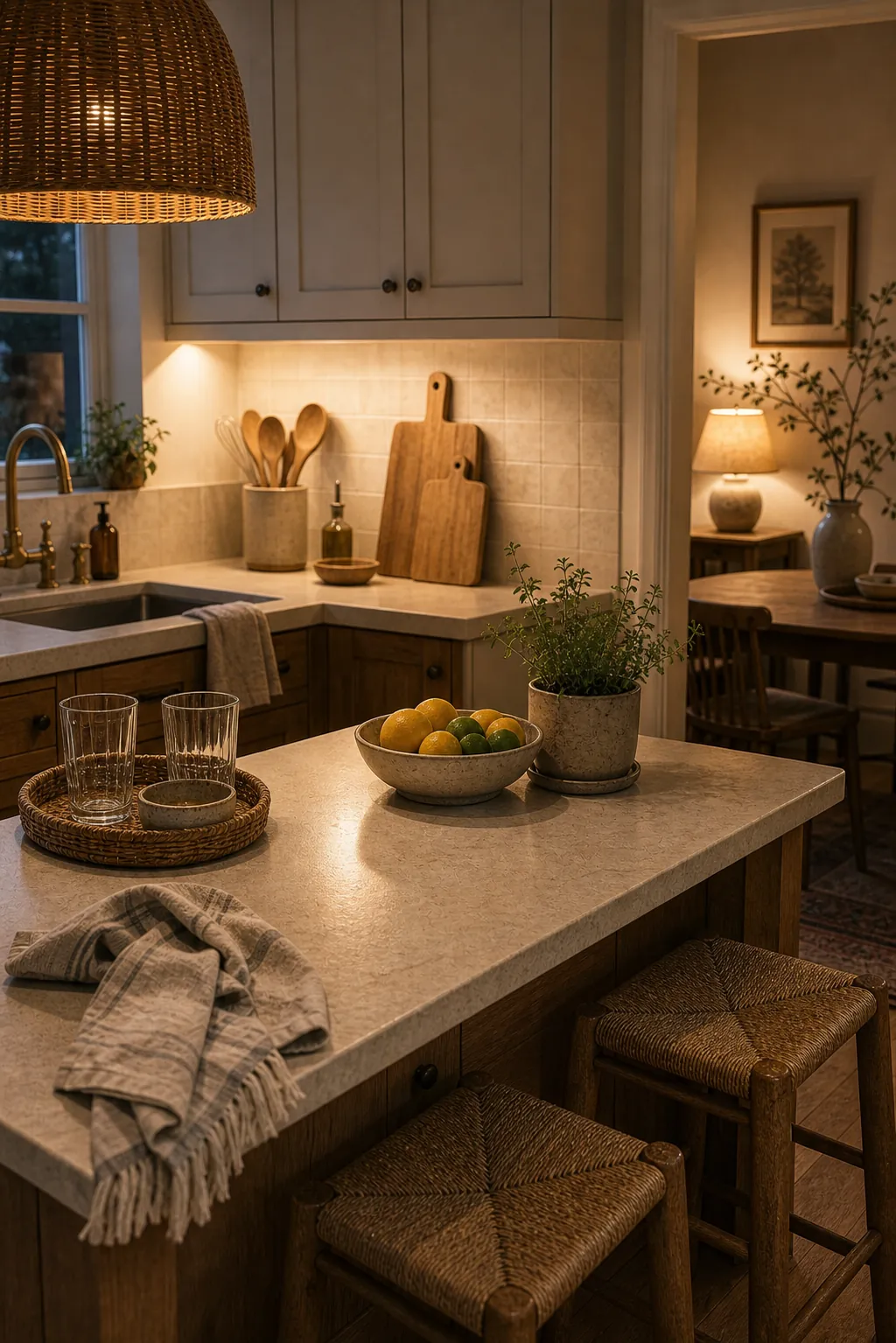
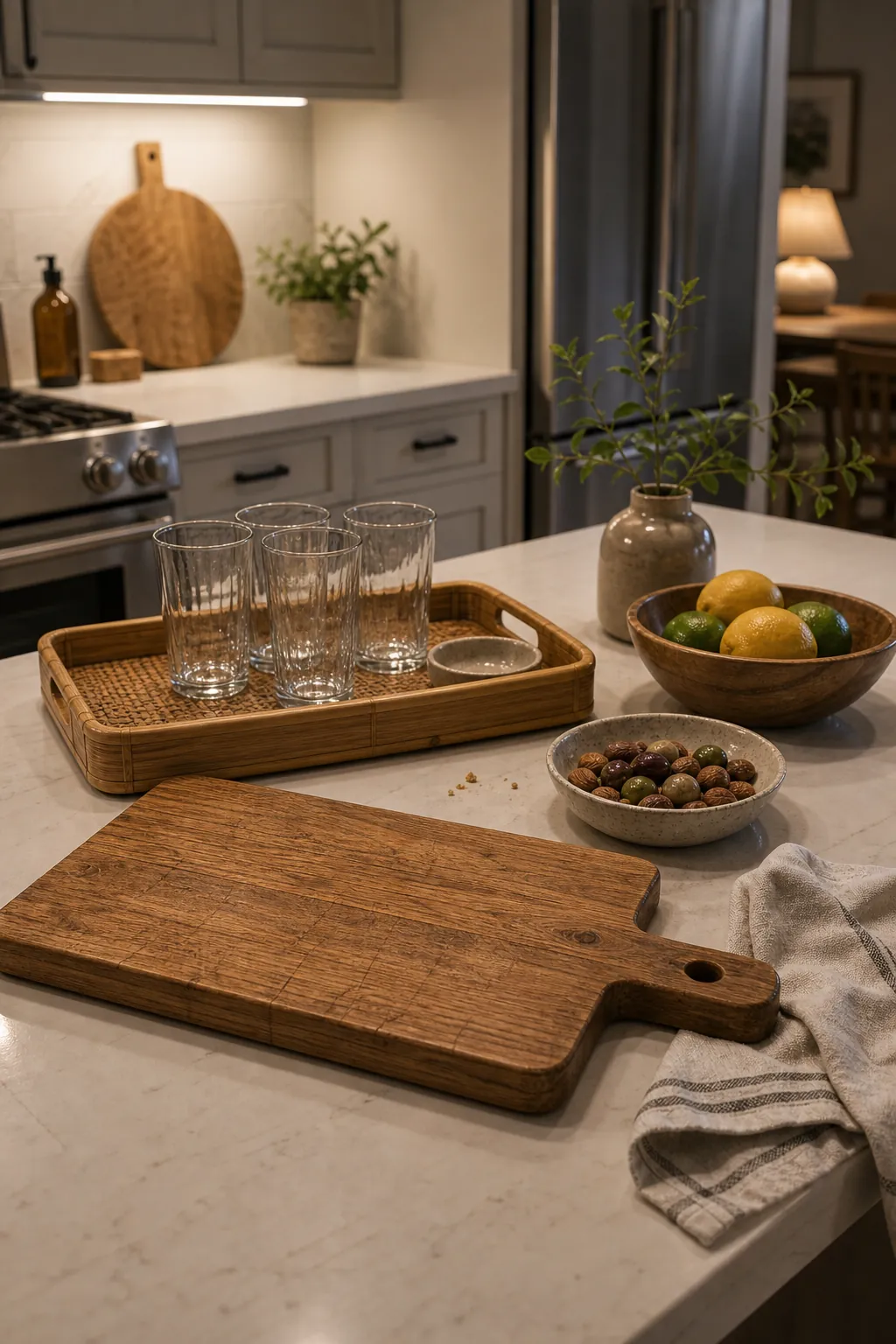
If the kitchen has a lot of white, gray, stainless steel, or stone, wood accents can warm it quickly. Bring out a large cutting board, bamboo tray, wood bowl, or serving paddle. Place it where guests will see it, not hidden behind the sink.
Wood works because it breaks up cold reflection and adds a natural texture. You do not need much. A single board behind snacks, a wood bowl on the island, or a tray for glasses can make the whole kitchen feel more grounded.
Reset the Sink Area
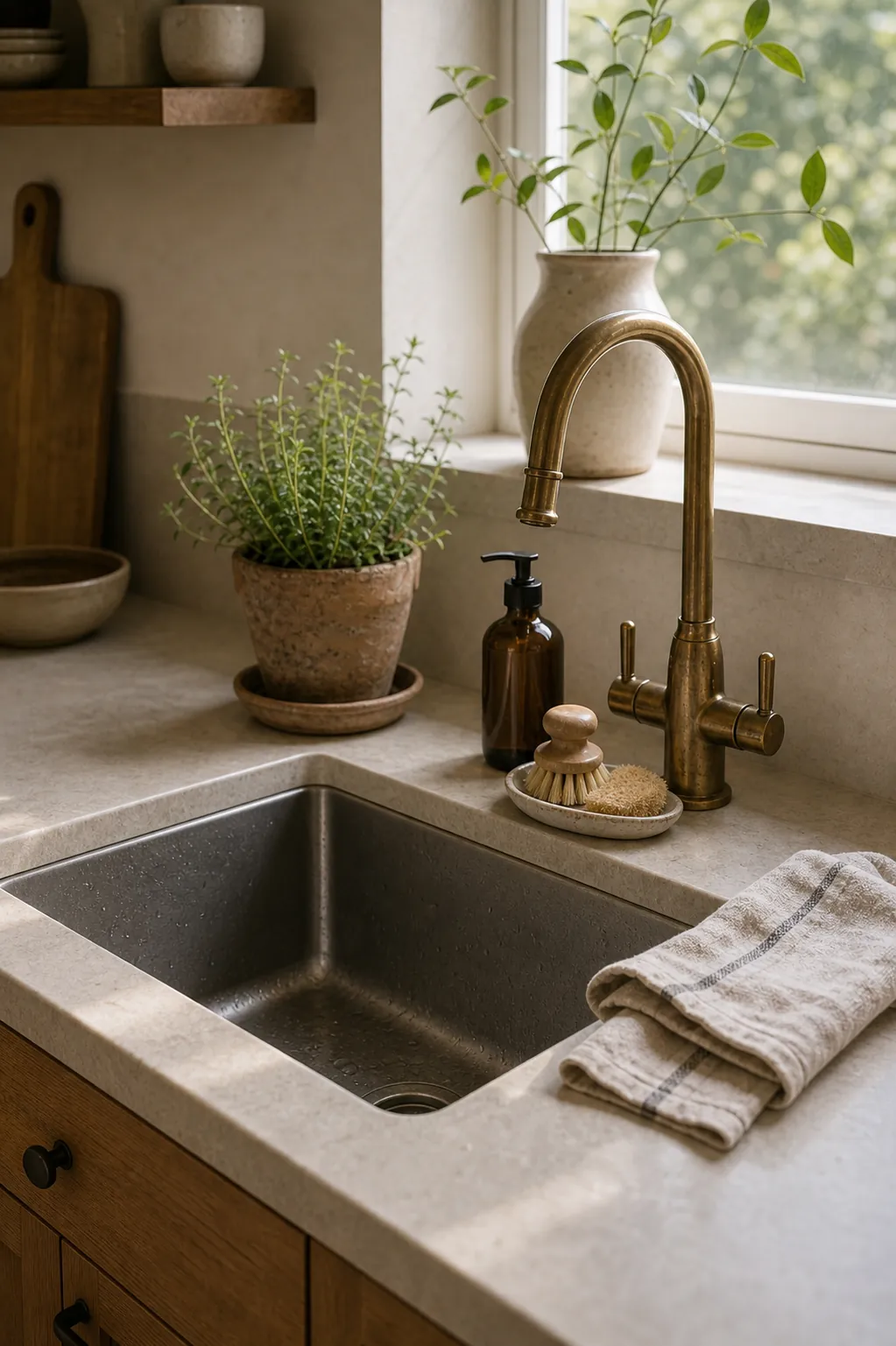
Guests notice the sink area even when they are not looking for it. A wet sponge, scattered dish soap, or crowded drying rack can make the kitchen feel unfinished. Do a quick sink reset: empty the basin, wipe the faucet, fold a clean towel, and group soap and brush on a small tray or saucer.
This small reset makes the kitchen feel cared for. It also helps during hosting because guests can find the sink without feeling like they are stepping into cleanup. A clean sink edge is one of the quietest hosting ideas, but it changes the room fast.
Soften the Edge Between Kitchen and Dining
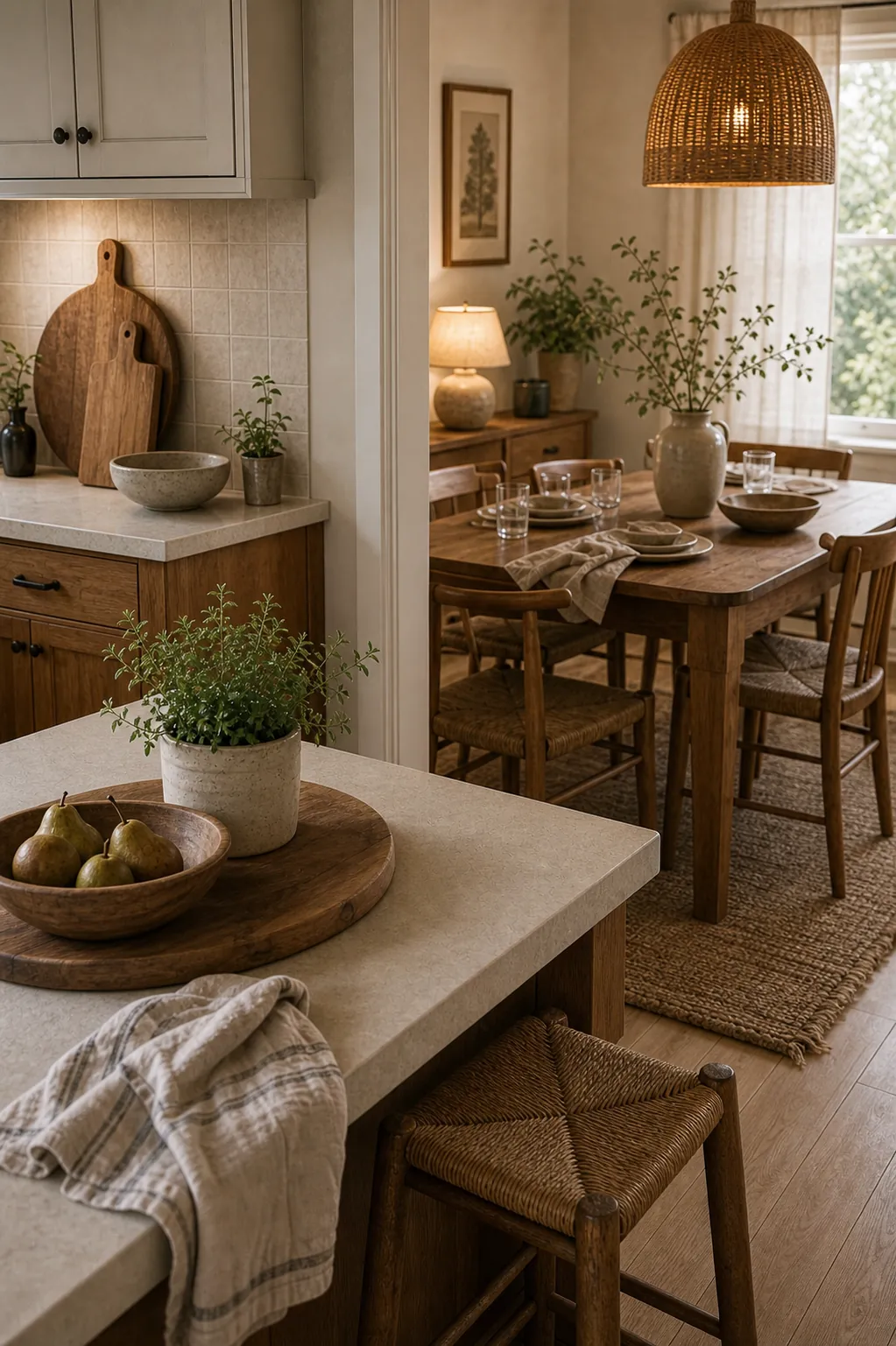
If guests will move between the kitchen and dining room decor, connect the spaces before they arrive. Repeat one material or color: a linen napkin on the kitchen tray, a wood bowl on the dining table, a ceramic vase near both zones, or greenery that appears in each space.
The connection makes the kitchen feel intentional even if the room is small. It also helps guests understand where to stand, sit, or serve themselves. A warm kitchen does not stop at the cabinet line; it flows into the way people gather.
Add One Living Detail
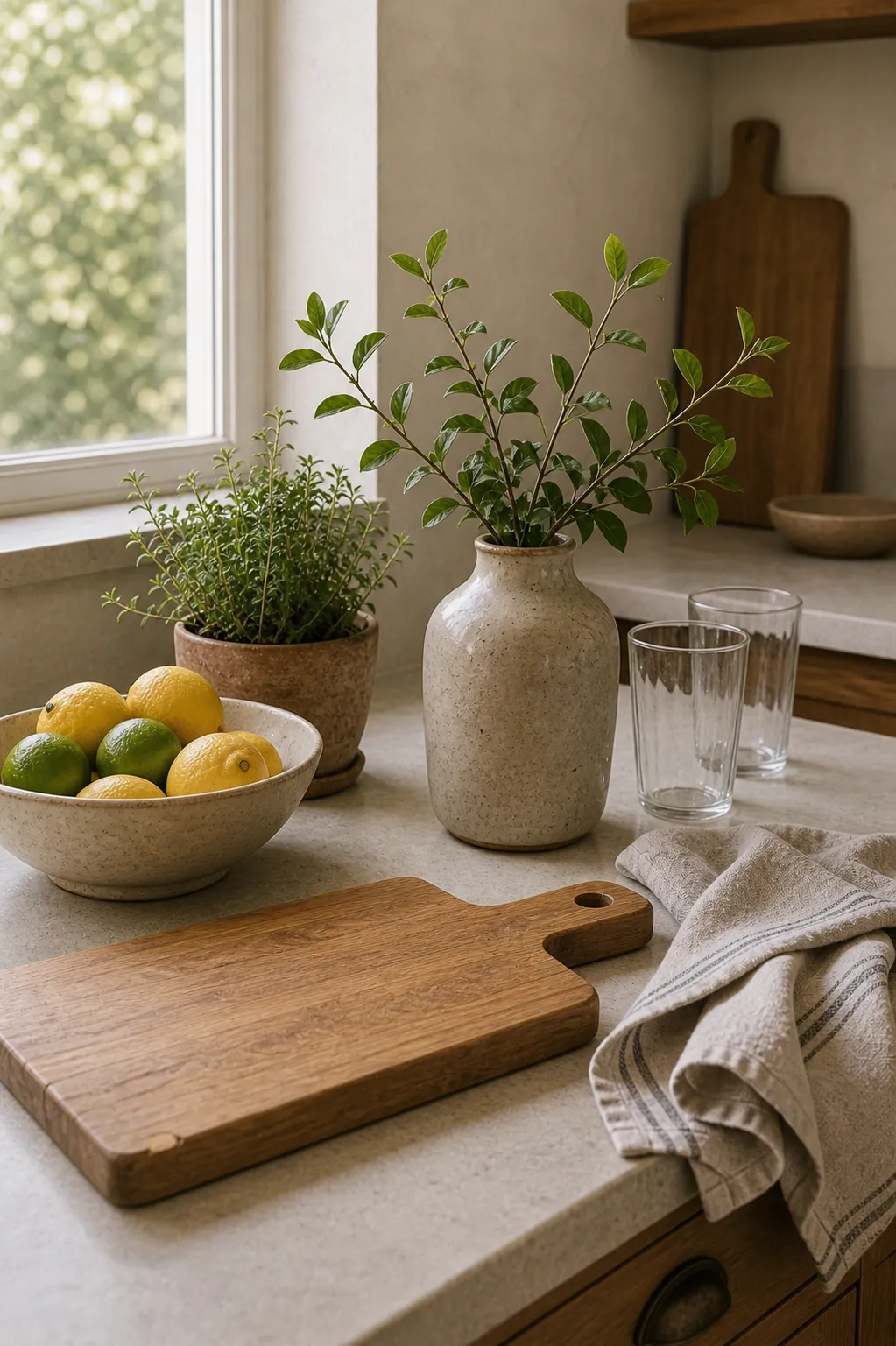
Plants, herbs, branches, or a bowl of citrus can warm a kitchen faster than extra decor. Choose one living detail and place it where it will not interrupt prep. A small herb near the window, leafy branch in a vase, or lemons in a wood bowl can make the kitchen feel fresh and generous.
Keep it simple. Too many last-minute decorative touches can make the room feel busy again. **One natural detail, one textile, and one clear serving zone are usually enough.**
Do the Five-Minute Guest Check
Stand where guests will enter and scan the kitchen from that angle. Can they see a clear surface, warm light, a place to set a drink, and a room that looks ready rather than rushed? If yes, stop adjusting. More styling is not always more welcoming.
The best warm kitchen is not the most decorated one. It is the one that makes people feel comfortable walking in, helping themselves, and staying a little longer.