
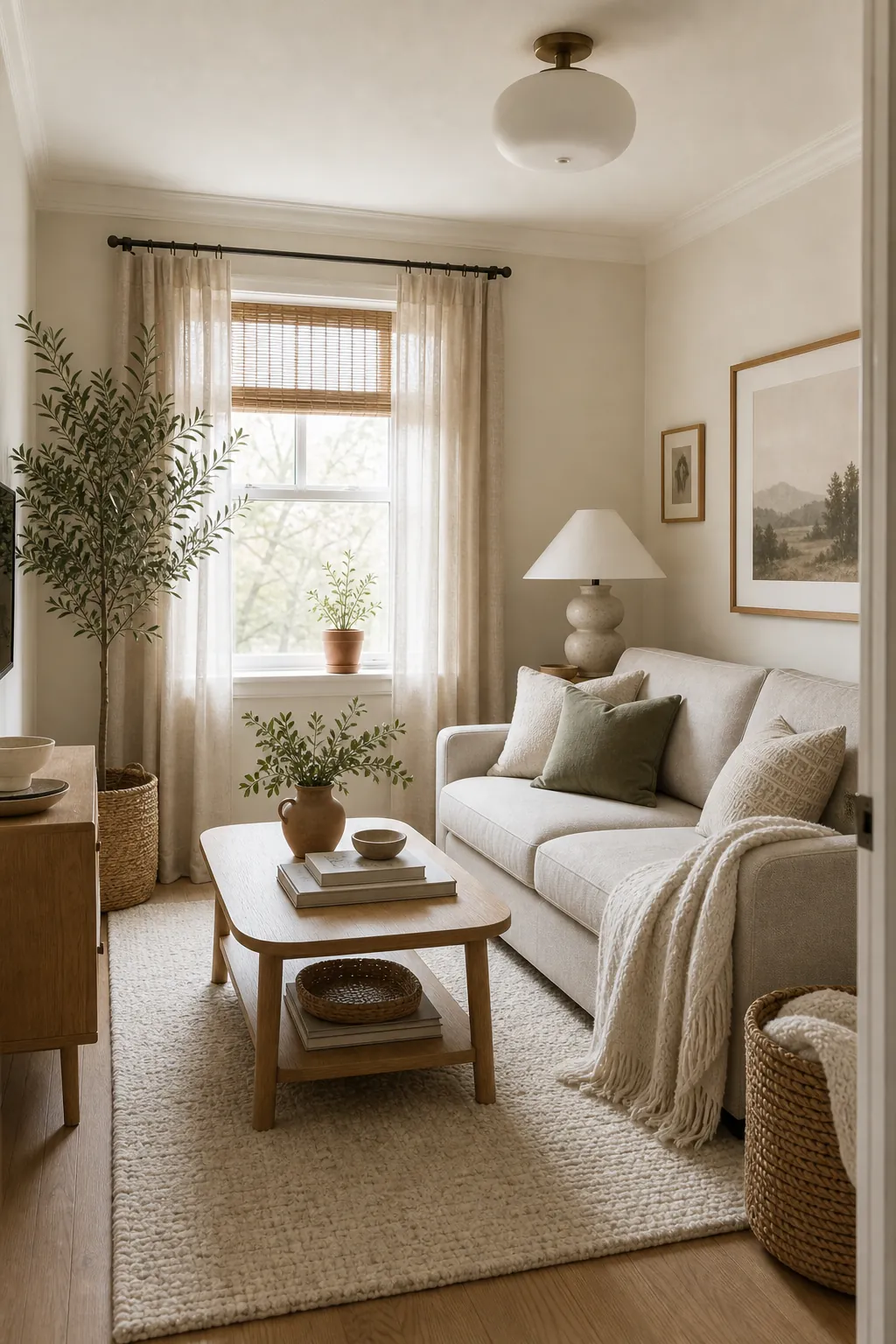
Light colors are often recommended for small room colors, but light alone does not make a room feel designed. A pale room can look bigger and still feel unfinished. The difference is whether the color plan has undertone, texture, shape, and a few intentional accents.
If a small room looks plain, the problem is usually not that the walls are too light. It is that everything in the room has the same value and surface. White wall, white sofa, white curtains, smooth rug, bare wall: the eye has nowhere to land. Use light colors as the base, then add quiet layers so the room feels spacious and lived in.
Choose A Light Color With The Right Undertone
Light wall colors can lean warm, cool, pink, yellow, gray, or green. In a small room, those undertones become obvious because every wall is close to the furniture. A clean white may look crisp in one room and cold in another. A cream may feel soft in morning light and too yellow after sunset.
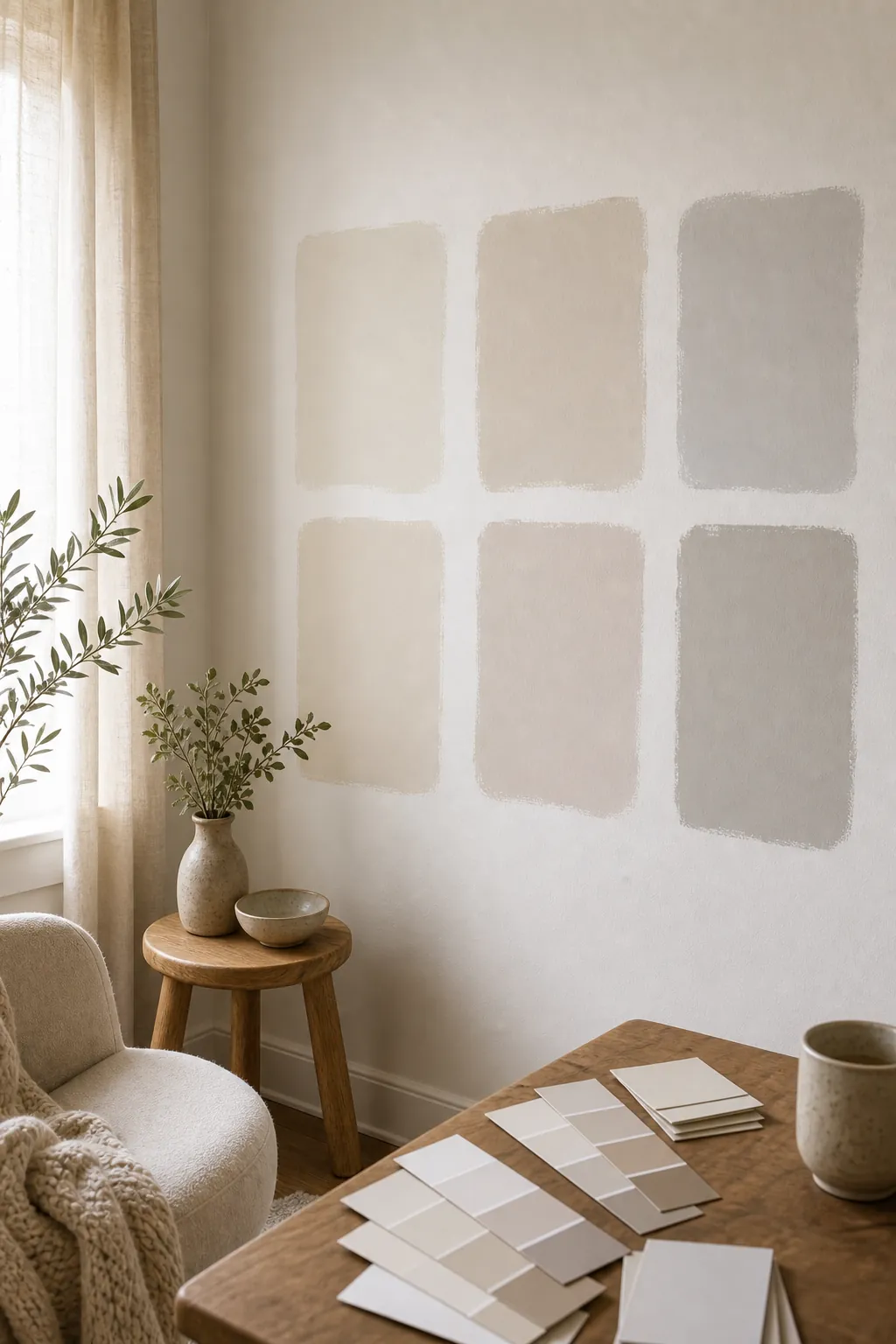
Before painting, test large samples on two walls. Compare them with the sofa, rug, flooring, curtains, and wood tones that will actually live in the room. If the space has warm flooring, a slightly muted warm white, ivory, or pale greige usually feels easier than a stark cool white. If the room has little natural light, avoid light grays that turn shadowy and dull.
Use Texture Before You Add More Color
When light colors feel plain, many people add a bold accent color too quickly. Texture is usually the better first step. Texture decor creates depth without making the small space feel crowded. A boucle pillow, ribbed ceramic vase, woven basket, linen curtain, jute shade, or wool rug can change the whole room while keeping the palette calm.
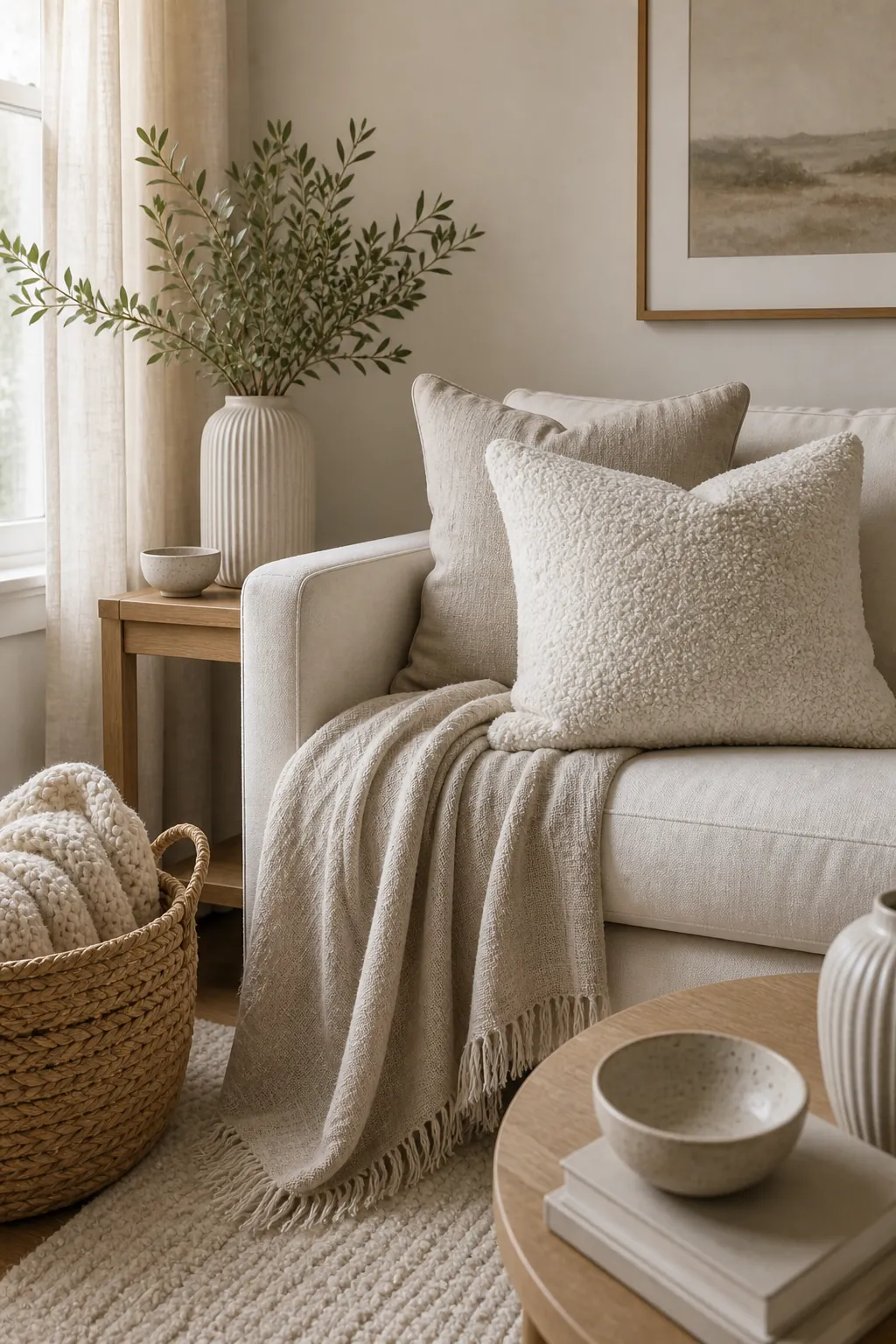
Try to mix at least three textures in every light room. One soft texture, one woven texture, and one smooth or matte texture is enough. For example: linen curtains, a wool rug, and a ceramic lamp. This keeps neutral decor interesting without relying on clutter.
Bring In Shape So The Room Has A Silhouette
A room can look plain even with beautiful light colors if every piece has the same boxy shape. Small rooms need silhouettes: a round table, a curved chair, an arched mirror, a slim floor lamp, a tall plant, or framed art with visible edges. These shapes give the eye structure without requiring dark paint or heavy furniture.
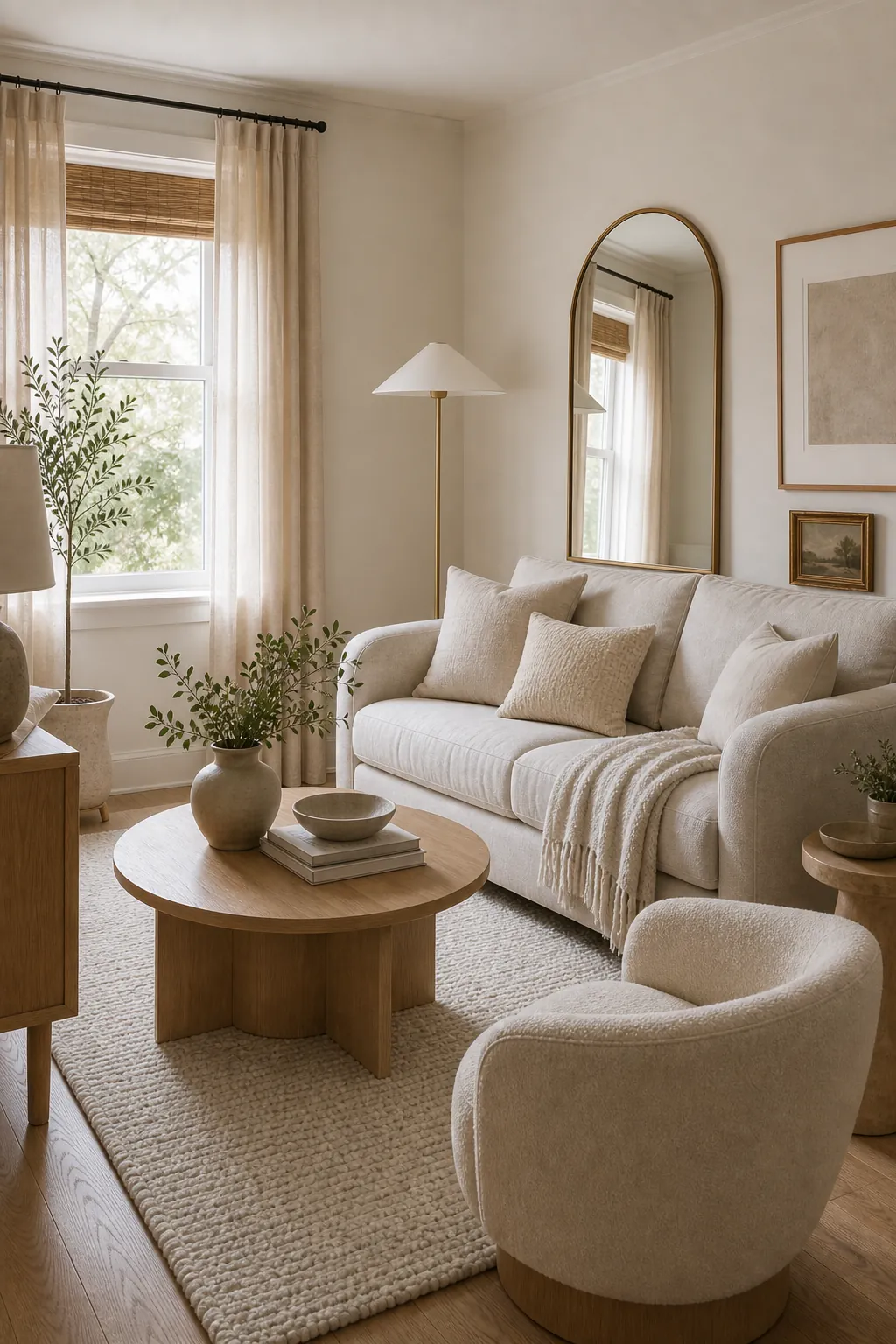
Round and arched forms are especially useful in small space decor because they soften tight corners. If the walls, sofa, rug, and curtains are all pale, a round coffee table or arched mirror can do more than another color. The room still feels light, but it no longer feels empty.
Add Color Accents In A Controlled Way
Color accents work best when they are small, repeated, and slightly muted. A light room does not need bright red, navy, or emerald to avoid being plain. It may only need one dusty blue pillow, one clay vase, a sage plant, or a brass lamp. The accent should give the room direction, not take over the palette.
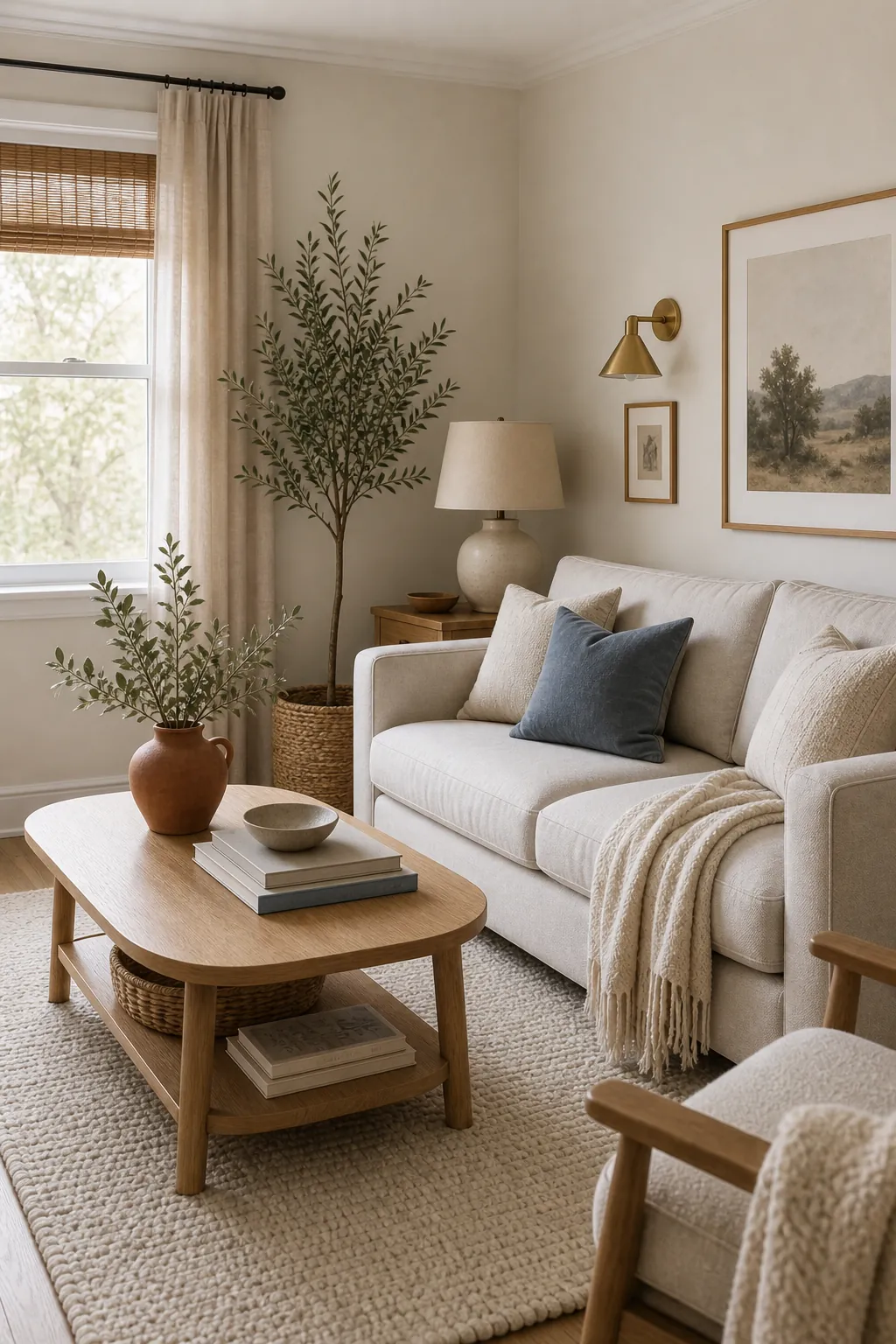
Pick one color family and repeat it two or three times. If you choose blue, use one blue pillow and a book with a blue-gray spine. If you choose clay, repeat it in a vase and a framed print. These small repetitions make the room styling feel deliberate while keeping the space visually open.
Layer Lighting So Pale Colors Do Not Wash Out
Light colors need shadow. Without it, a small room can look flat, especially at night. One ceiling fixture is rarely enough because it spreads light evenly across every pale surface. Add a table lamp, floor lamp, wall light, or picture light so the room has glow, contrast, and depth.
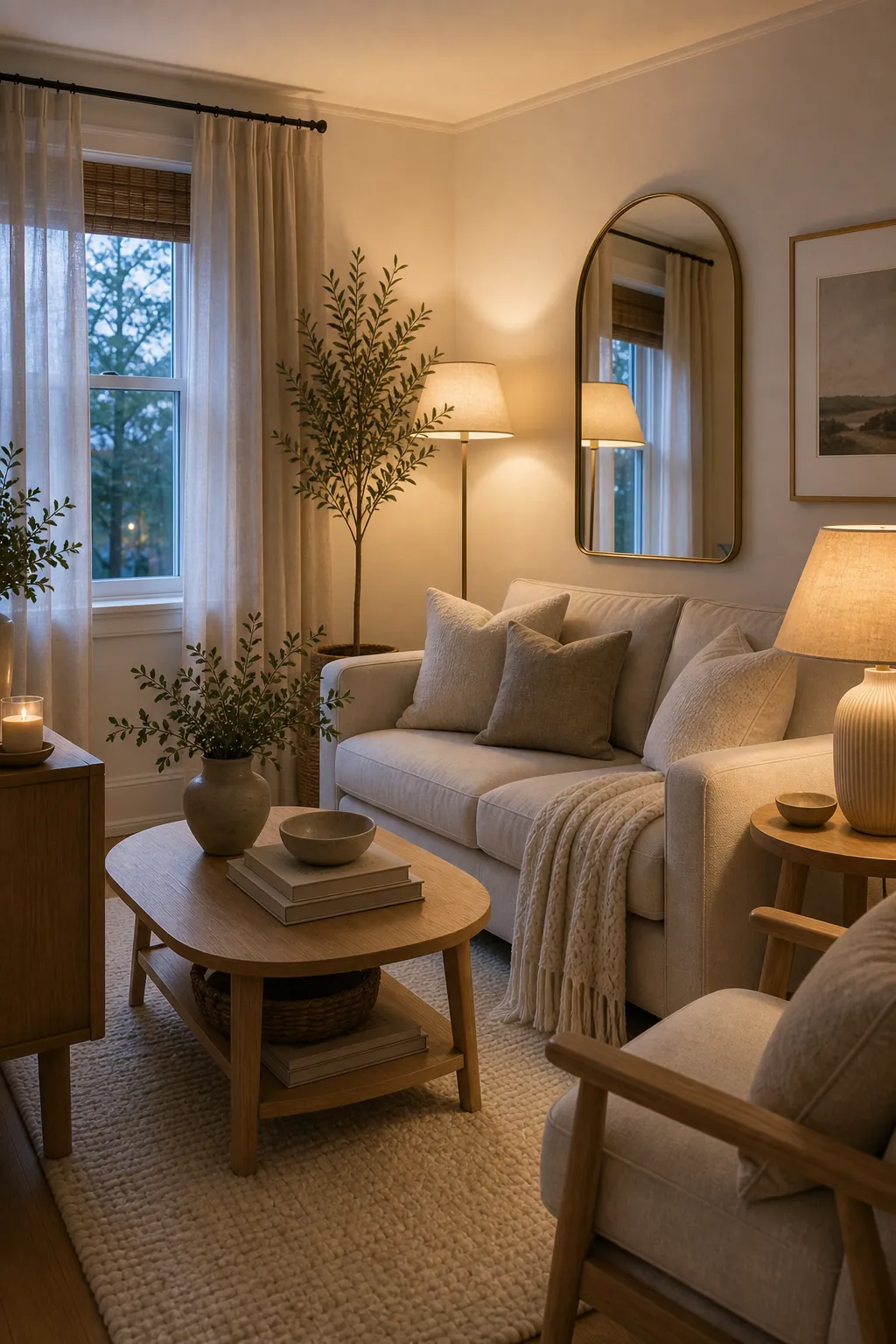
Choose warm white bulbs, but avoid anything so amber that the walls turn yellow. Lampshades matter too. Linen, paper, and fabric shades spread light softly, which helps pale wall colors feel warm instead of stark. A mirror can also help by reflecting window light or a lamp glow into a darker corner.
Style Light Walls So They Feel Finished
Blank light walls can make a room look unfinished, but a crowded gallery wall can make a small room feel busy. Aim for one simple wall moment. Two framed prints, a slim picture ledge, one small vase, or a pair of shelves can be enough. Leave space around the arrangement so the light wall still feels airy.
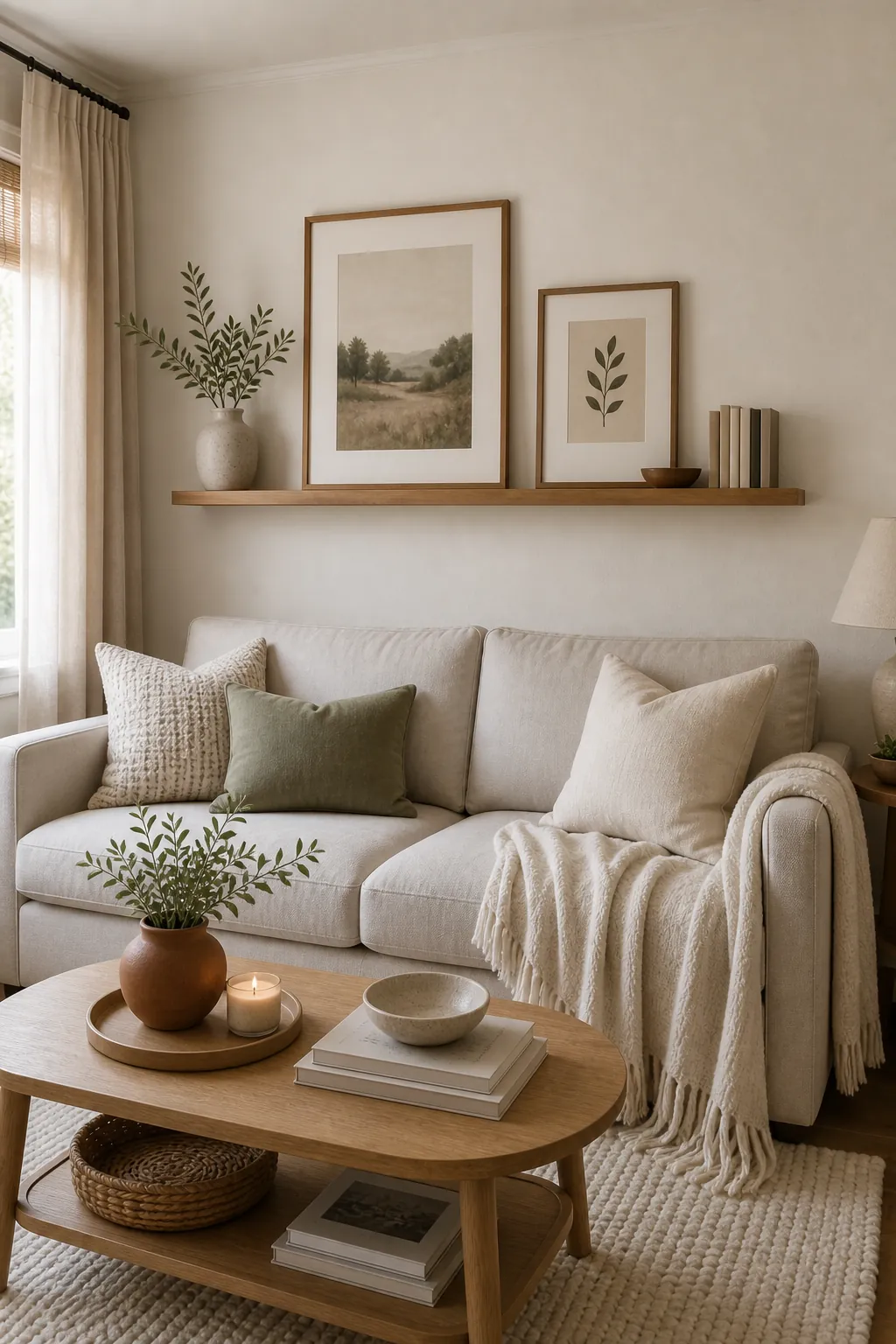
Use frame tones that connect to the rest of the room: oak frames with oak furniture, warm brass with a lamp, or soft black if the room needs a sharper edge. The art does not have to be colorful. Even neutral art can make a room feel layered if the scale is right.
A Simple Formula For Light Small Room Decor
- Base: soft white, ivory, pale greige, or warm cream on the largest surfaces.
- Texture: linen, wool, boucle, jute, oak, ceramic, cane, or woven storage.
- Shape: one curve, one vertical piece, and one framed wall moment.
- Accent: one muted color repeated in two or three small places.
- Lighting: at least two lamp sources so the room has depth after dark.
The strongest light rooms are not empty. They are edited. Start with a soft wall color, then build enough texture, shape, accent, and light to make the room feel personal. That is how to use light colors without making a small room plain.