
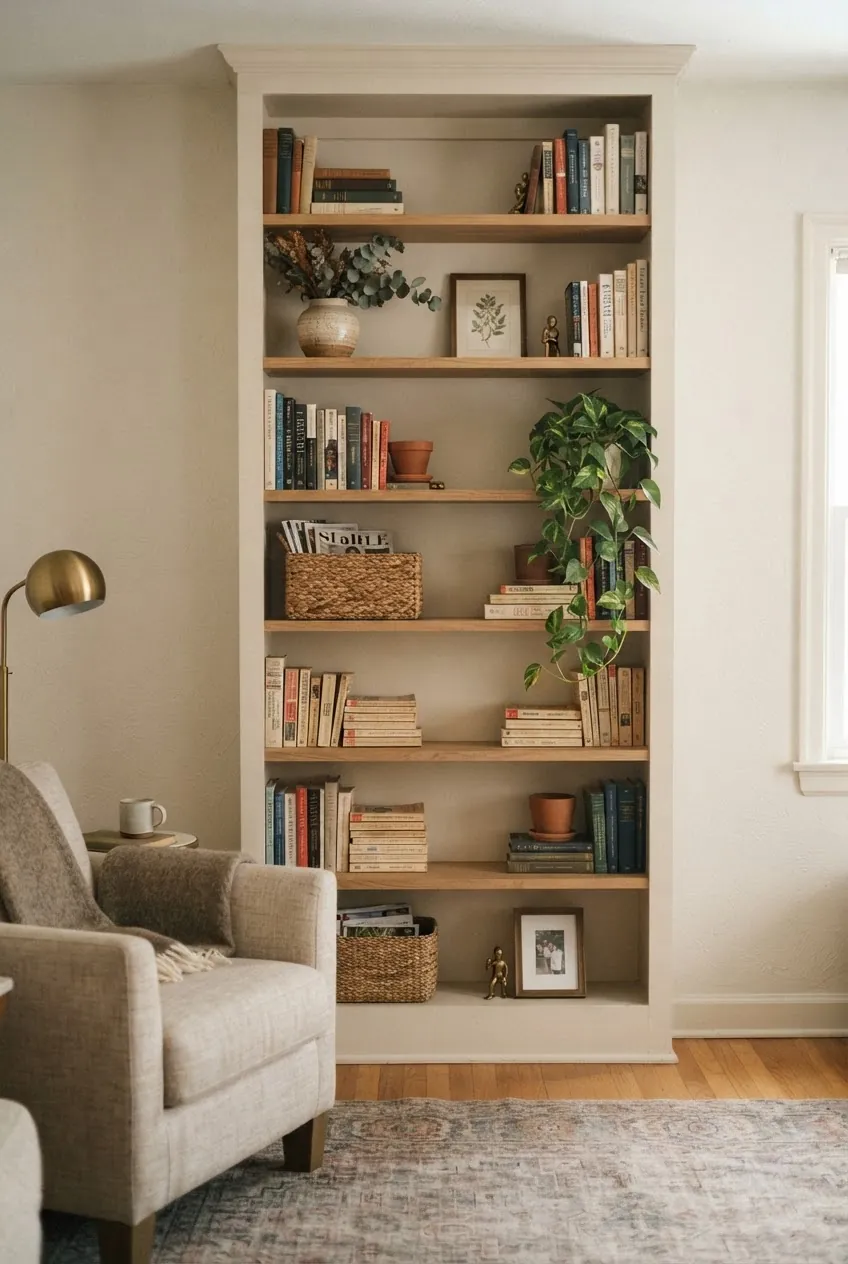
A plain bookshelf usually does not need more random decor. It needs a clearer rhythm. When every shelf is treated like storage, the room feels unfinished; when every shelf is treated like a tiny display case, it starts to look stiff. The best bookshelf decor sits in the middle: useful books, a few personal objects, texture, and enough empty space for the eye to rest.
The easiest way to style a bookcase is to stop asking, “What should I buy?” and start asking, “Where does this wall need weight, softness, height, or color?” That shift turns bookcase styling from guessing into a simple room refresh.
Start With a Shelf Reset, Not More Decor
Pull everything off first, even if you plan to put most of it back. A bookshelf that feels too plain is often hiding the opposite problem: the pieces are scattered so evenly that nothing has presence. Group books, frames, baskets, small boxes, and objects on the floor before you style the shelf again.
Build each shelf around one job. One shelf can carry a heavier row of books. One can hold two larger objects. One can create a little breathing space. A styled bookshelf looks intentional when every shelf has a different weight. If all shelves have the same number of small objects, the whole wall turns into visual noise.

Use Books as Blocks, Not Background Noise
Books should do more than fill gaps. Try a mix of upright rows and horizontal stacks. A horizontal stack can act like a riser for a small bowl, framed photo, or sculptural object. Upright books can anchor one side of a shelf so the opposite side can stay lighter.
This is where shelf styling becomes practical. Keep the books you actually use within reach, then use the prettiest spines, larger art books, and favorite novels where they help the composition. If the colors fight the room, turn a few busy spines inward or group similar tones together, but do not make the shelf so perfect that it loses character.

Add One Tall Shape to Wake Up Each Zone
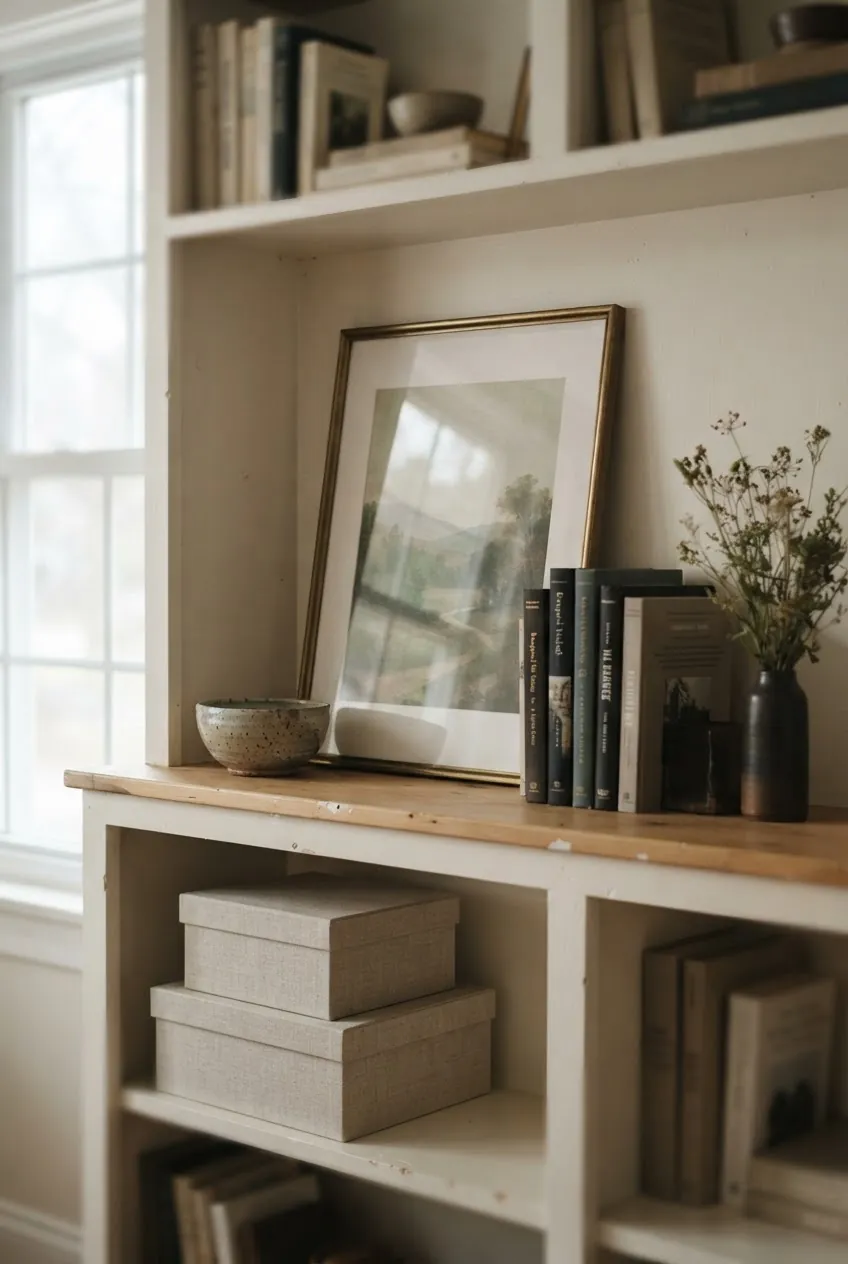
Plain shelves often look flat because everything is the same height. Add a taller shape every few shelves: a framed print, a vase with branches, a narrow lamp, a leaning canvas, or a piece of wall decor layered in front of books. Height gives the shelf a reason to be noticed from across the room.
The key is restraint. One tall piece is usually enough for a small zone. If you add a tall frame, let the nearby objects stay low and quiet. If you add branches, keep the shelf below simpler. Contrast matters more than quantity.
Bring in Texture Where the Room Feels Flat
If the room has plain drywall, smooth furniture, and simple curtains, the bookshelf can carry the texture. Use woven baskets, bamboo trays, carved wood bowls, linen boxes, stoneware, or a small plant. These pieces make a cozy home feel warmer without making the shelf crowded.
Texture also solves the book storage problem. Baskets can hide paperbacks, chargers, remotes, kids’ items, or reading accessories. Boxes can hold bookmarks and small clutter. The result looks decorated, but it still works for daily life.

Leave Breathing Room Around the Pieces You Actually Like
The fastest way to make bookshelf styling look more expensive is to remove a few things. Empty space is not wasted space. It lets your best pieces register. If a shelf has a stack of books, a plant, a candle, a framed photo, and three small objects, try removing two of the small objects and sliding the remaining pieces forward.
For a reading nook or small home library, this matters even more. The shelf should support the mood of the corner, not compete with the chair, lamp, and books. Keep the pieces that make the room feel personal, then give them room to breathe.

Repeat Color in Small Echoes
A plain shelf often feels disconnected from the rest of the room. The fix is not a strict color scheme; it is a few small echoes. Repeat the green from a plant in one book spine, the warm wood from a table in a bowl, or the black from a lamp in a thin frame.
Keep the repeats loose so the room still feels collected. Two or three quiet color connections can make bookshelf decor feel built into the room instead of placed on top of it.
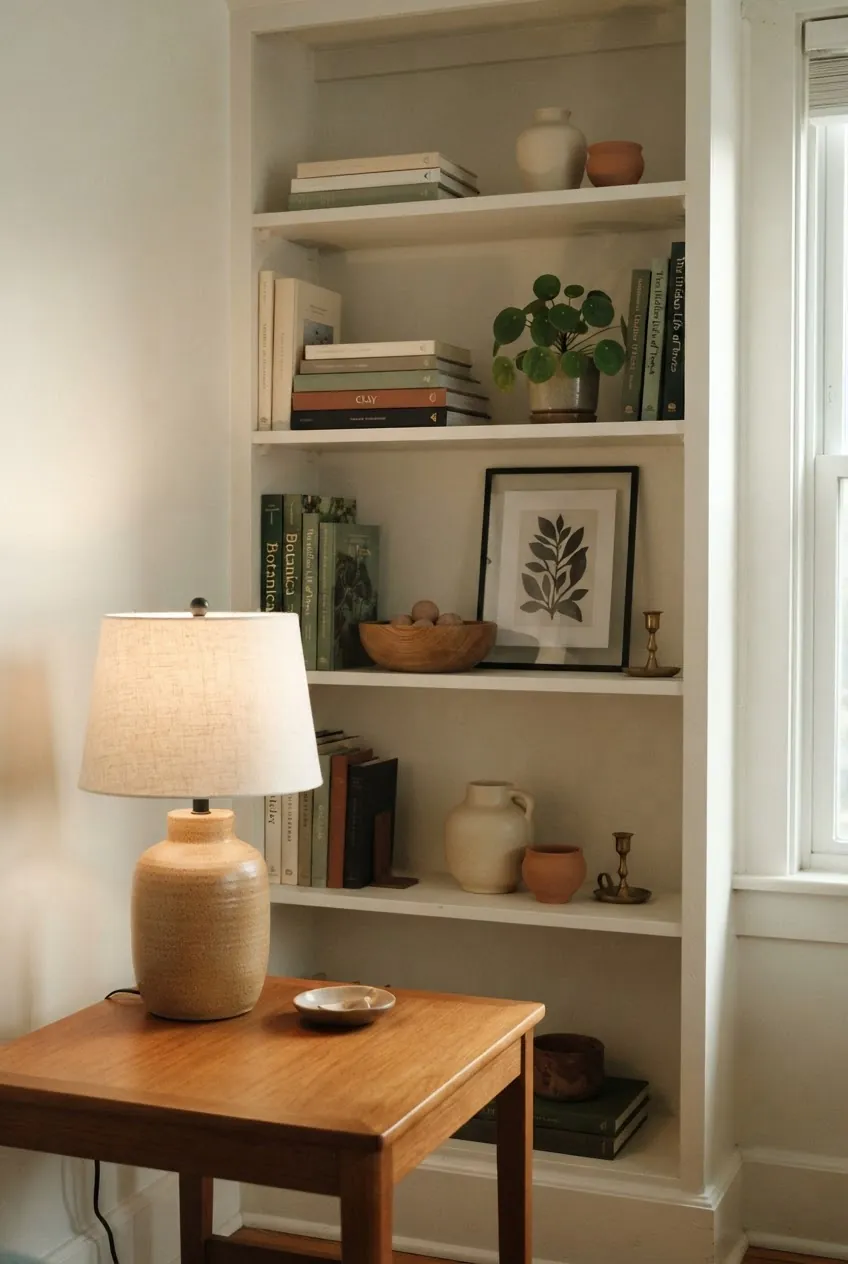
A finished bookshelf should not look like a store display. It should look like your room learned how to hold the things you already love. Start with books, add height, soften the hard edges with texture, and leave enough negative space that the whole wall feels calm instead of overworked.