
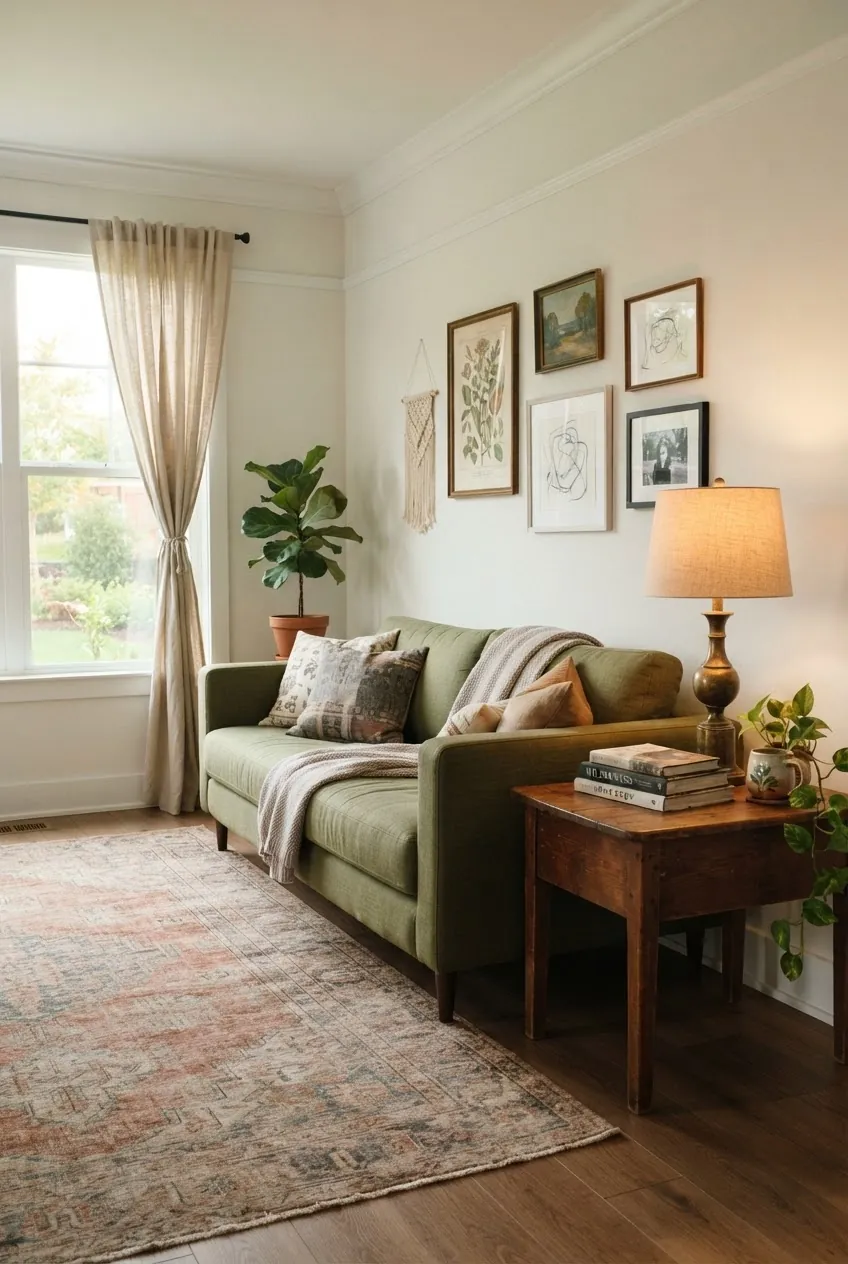
A newer house can be comfortable, bright, and easy to maintain, but still feel like it has no story. The problem is usually not the age of the home. It is the sameness: flat lighting, smooth walls, matching finishes, blank corners, and decor that looks purchased all at once.
The best character home feeling comes from contrast. Clean new surfaces need warmth, age, texture, and a few imperfect pieces. You do not have to fake old house charm. You can layer in details that make a newer house feel collected, personal, and easier to settle into.
Change the Lighting Before You Buy More Decor
Builder-grade lighting has a way of flattening a room. If every space is lit by one ceiling fixture, even good furniture can look temporary. Start with lamps, sconces, or a more interesting pendant before buying another vase.
A vintage-style lamp on a console, a shaded floor lamp beside a chair, or a warmer bulb in the entry can create instant atmosphere. Lighting is often the fastest plain room makeover because it changes the shadows, not just the objects.

Layer Vintage Pieces With Clean Furniture
Vintage decor works best when it is not trying to turn the whole room into a period set. Pair one thrifted wood table with a modern sofa. Put an old mirror over a clean-lined console. Add a retro ceramic lamp to a simple bedroom. The mix is what makes the room feel alive.
If everything is new, the room can feel like a showroom. If everything is old, the room can feel heavy. The sweet spot is a collected home: some pieces crisp, some pieces worn, all pieces chosen.

Add Texture to Flat Walls
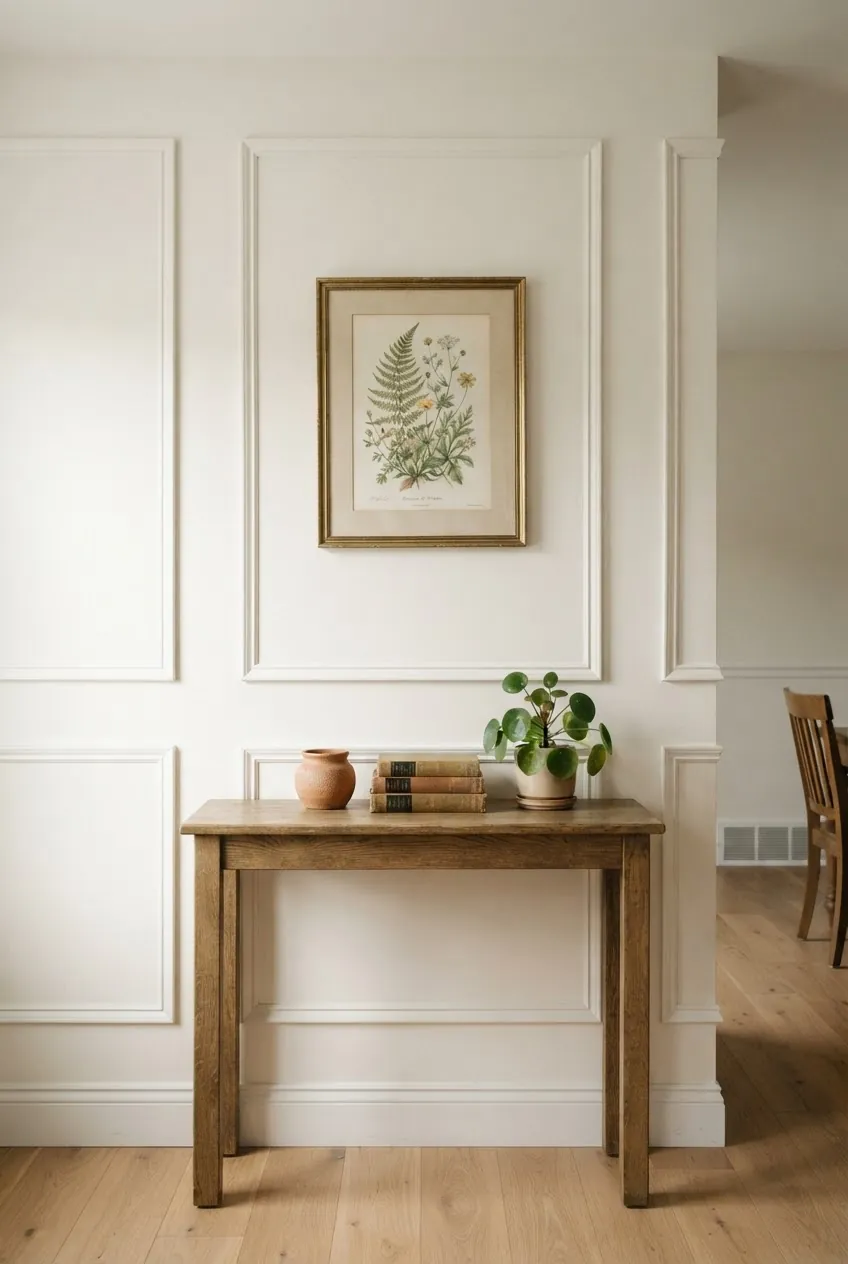
Newer houses often have large blank walls and simple trim. That clean backdrop is useful, but it needs texture. Picture molding, beadboard, limewash, wallpaper, grasscloth, a gallery wall, or even a single oversized textile can give the eye something to read.
You do not need to add texture everywhere. Choose one wall in an entry, dining room, bedroom, or vintage living room and make it feel intentional. Architectural detail works because it becomes part of the room, not just something placed in it.
Use Warm Rugs and Curtains to Soften New Rooms
Hard floors, white walls, and bare windows can make a newer home echo. Rugs and curtains add softness before you change anything permanent. Choose a rug with a little age in the pattern, curtains with real fabric weight, and colors that warm up the room instead of fighting it.
This is where cottage decor and warm home decor overlap. The room does not need to become rustic. It just needs layers that absorb sound, soften light, and make the furniture feel grounded.

Let Collections Create a Story
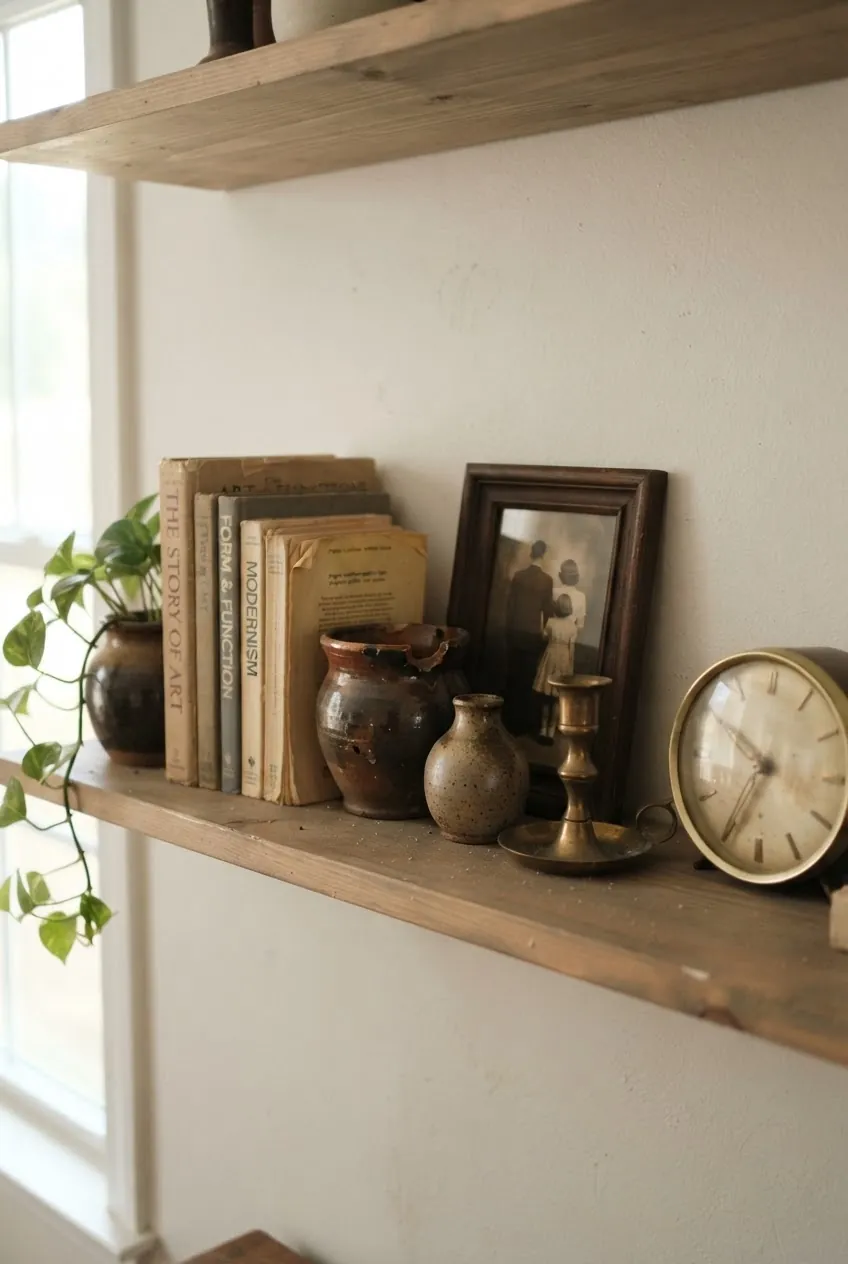
A character home is not built from filler. It is built from visible decisions: a stack of old art books, pottery from trips, framed family photos, thrifted brass candlesticks, or a few retro home decor pieces that make you smile.
Keep collections edited so they feel like a story, not storage. Group similar pieces together, vary height, and leave breathing room. One thoughtful shelf can add more character than a room full of generic accessories.
Upgrade the Small Hardware People Touch
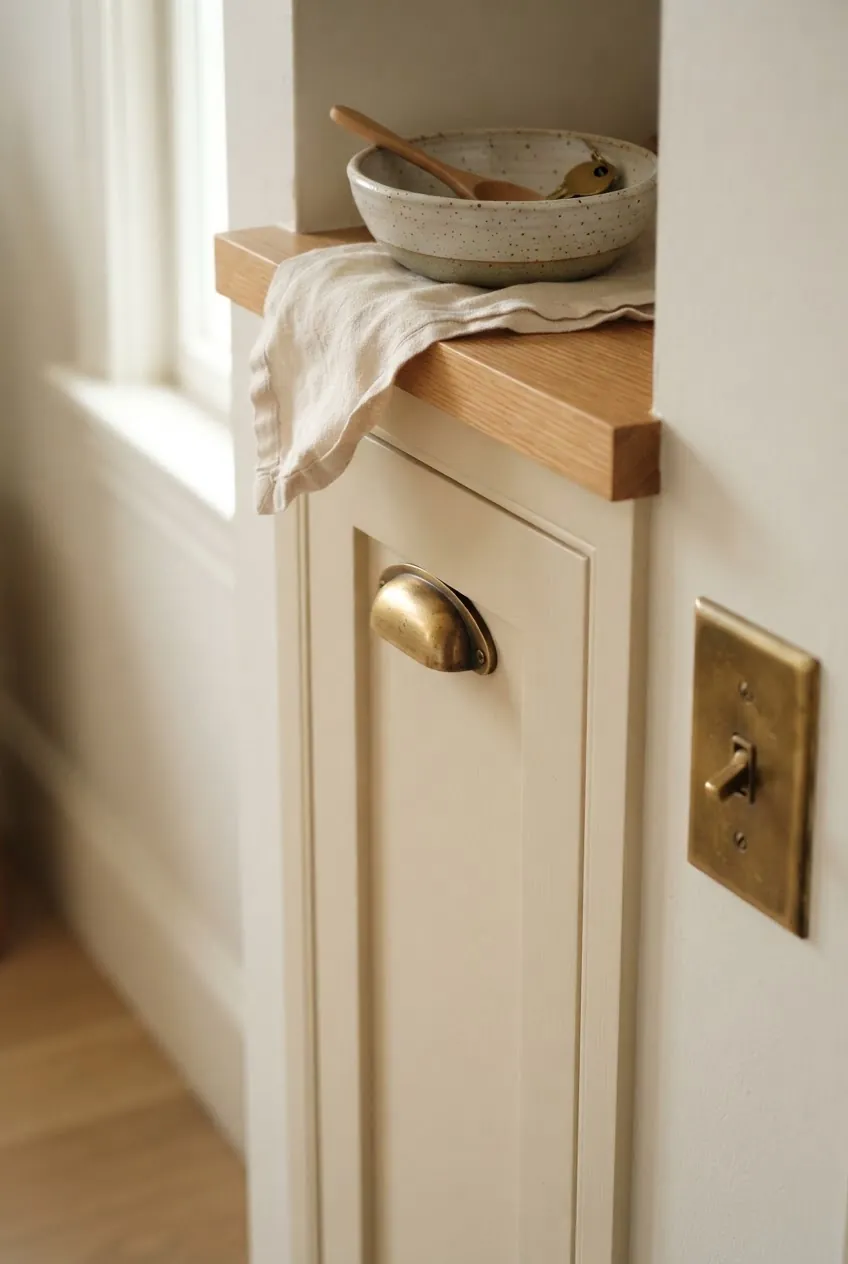
Character is not only visual. It is tactile. Door knobs, cabinet pulls, switch plates, hooks, curtain rods, and vent covers are small, but people touch or pass them every day. Replacing the flattest pieces can make a newer house feel less generic.
Look for finishes that age gracefully: aged brass, matte black, unlacquered metal, warm bronze, or simple wood. These changes are small enough to handle slowly, but they make the home feel more considered over time.
A newer house does not need instant history. It needs layers that make daily life feel more specific: softer light, warmer texture, thrifted decor, thoughtful hardware, and objects that could only belong to you. Add those slowly, and the house starts to feel less new in the best way.