
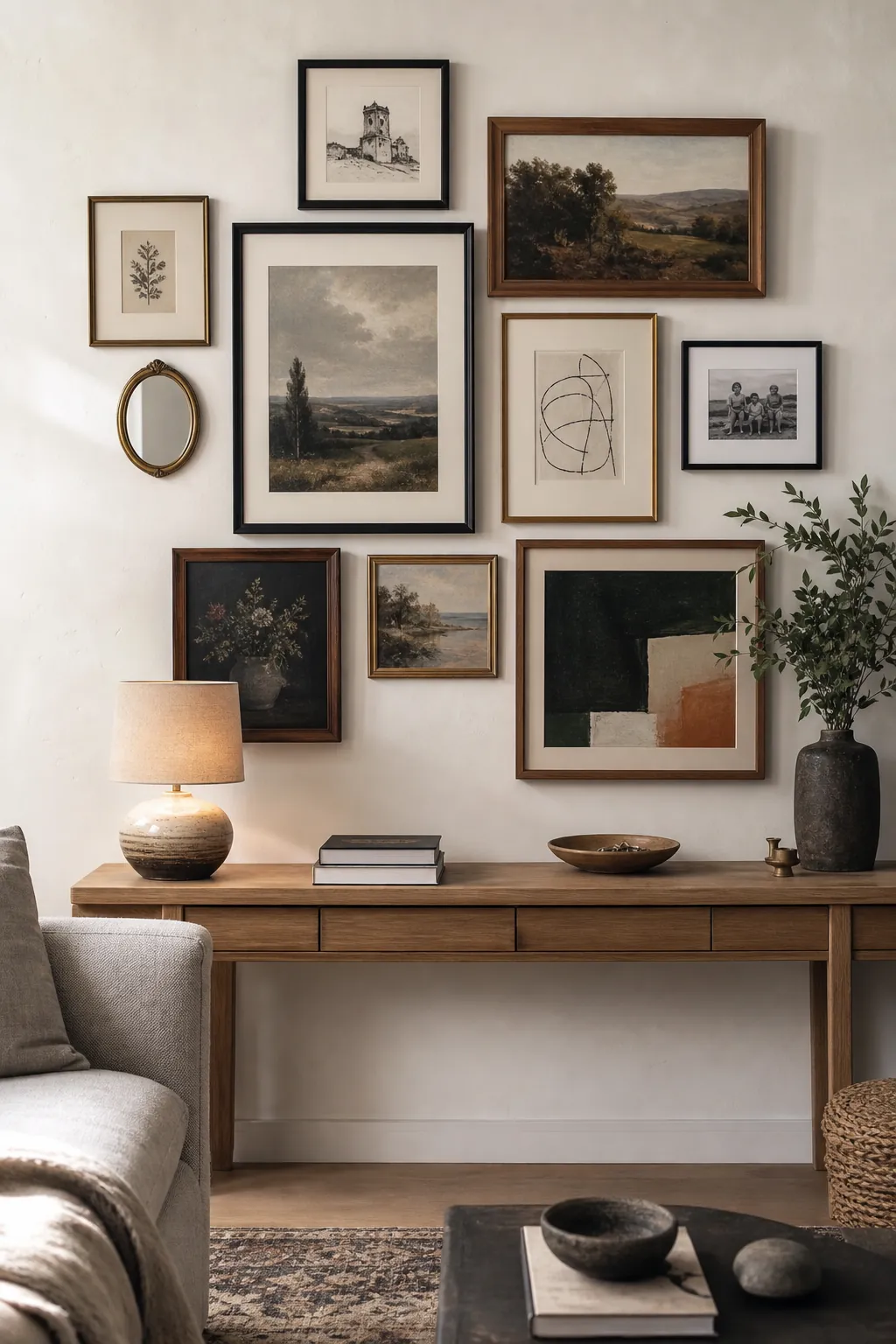
Mixed frames can make a gallery wall feel collected, personal, and layered. They can also make a room feel busy fast. The difference is rarely the frames themselves. It is usually the structure behind them: one anchor piece, repeated spacing, a few frame families, and enough visual breathing room for the wall art to read as one composition.
If your frame wall looks chaotic, do not start by buying all new frames. Start by editing the relationships between the frames you already have. A black frame, a warm wood frame, and an aged brass frame can absolutely live together when the layout gives them a shared rhythm.
Start With One Anchor Piece
A mixed gallery wall needs one piece that tells the rest of the arrangement where to gather. This does not have to be the most expensive art. It simply needs enough scale or visual weight to act as the center of gravity.
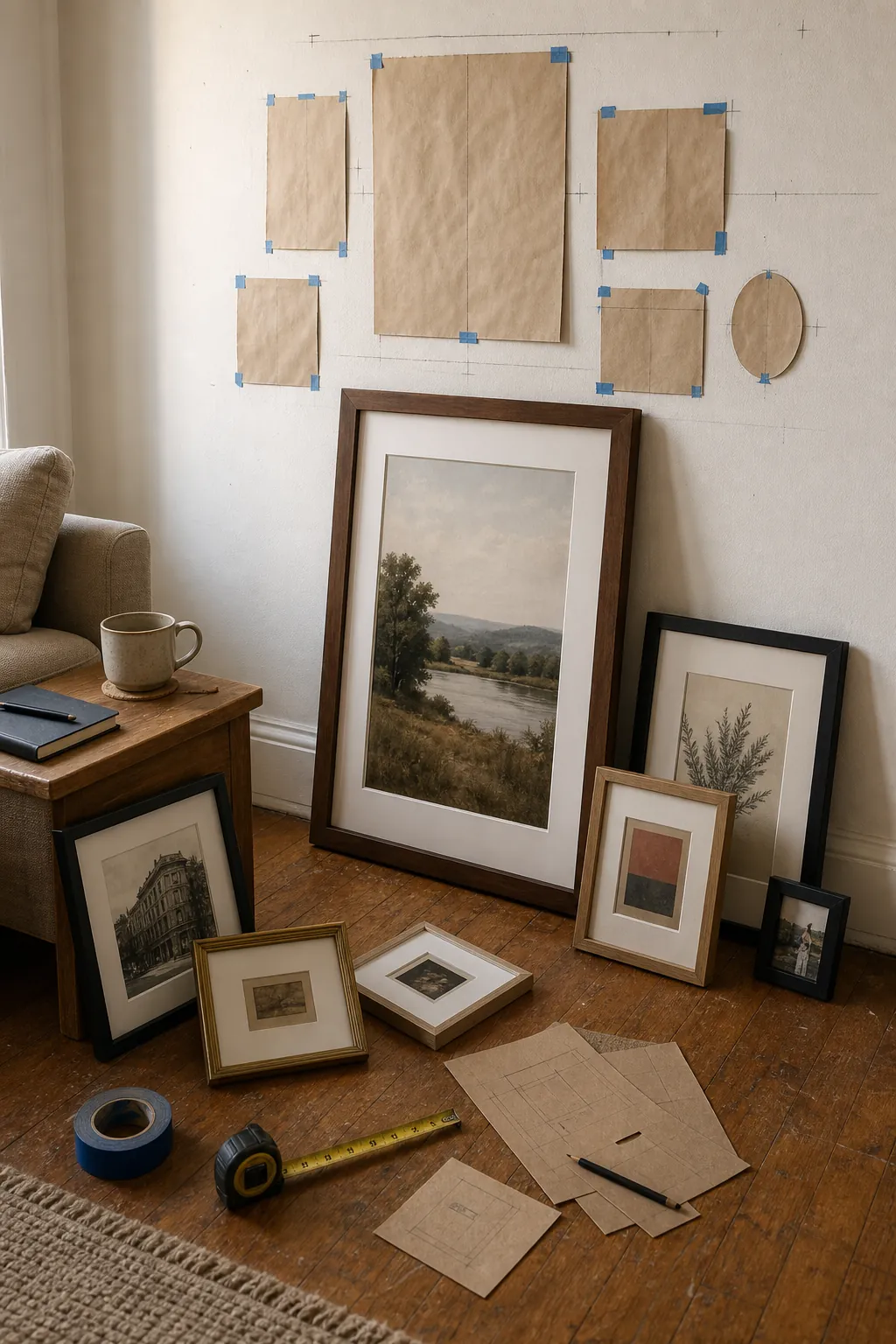
Choose the largest print, the darkest frame, the piece with the strongest color, or the art that matters most to you. Place it first, then build around it. When the anchor sits slightly off center, the finished wall feels more natural than a stiff bullseye layout.
The anchor also solves a common interior styling problem: too many small frames competing at the same volume. Without one strong piece, every small item asks for attention. With an anchor, the smaller pieces become supporting notes.
Repeat The Spacing Before You Repeat The Frames
Matching frames are not the only way to create order. Consistent spacing often does more. If the gaps jump from one inch to eight inches, the eye reads each frame as a separate decision. When the gaps stay close and intentional, the group reads as one balanced decor moment.
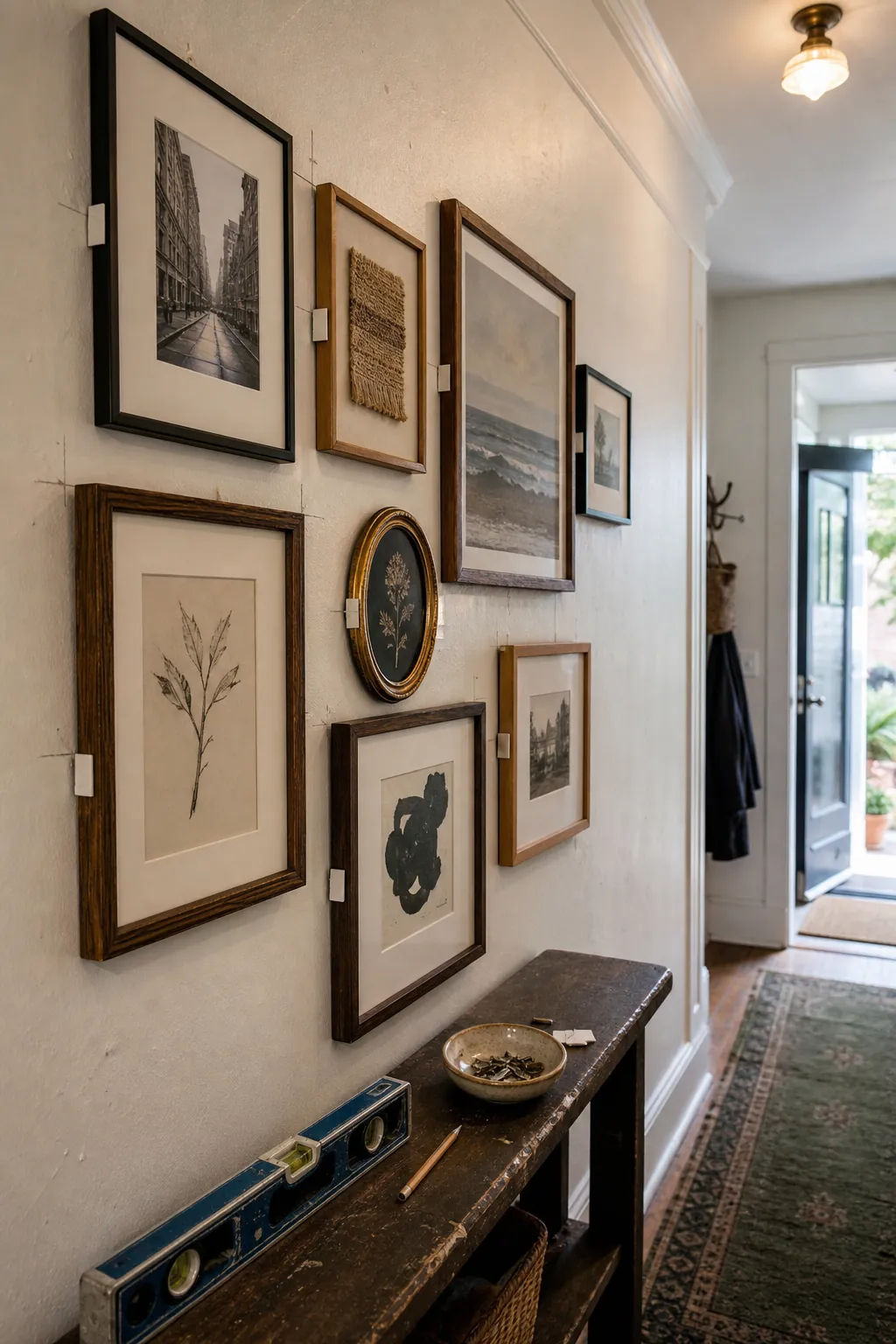
Pick a gap and keep returning to it. For most homes, two to three inches between frames is a useful starting point. Narrower gaps can feel artful and dense; wider gaps can work on a large wall, but they need larger pieces to keep the arrangement from drifting apart.
- Use paper templates when you are unsure about scale.
- Mark one or two shared lines, such as a common top edge or side edge.
- Step back often so you can judge the whole frame wall, not just the next nail.
Mix Frame Families, Not Every Frame You Own
The easiest way to mix frames without chaos is to repeat a few families. A family can be a finish, color, thickness, or mood. For example, black frames, warm wood frames, and aged brass frames can form a clear system while still looking collected.
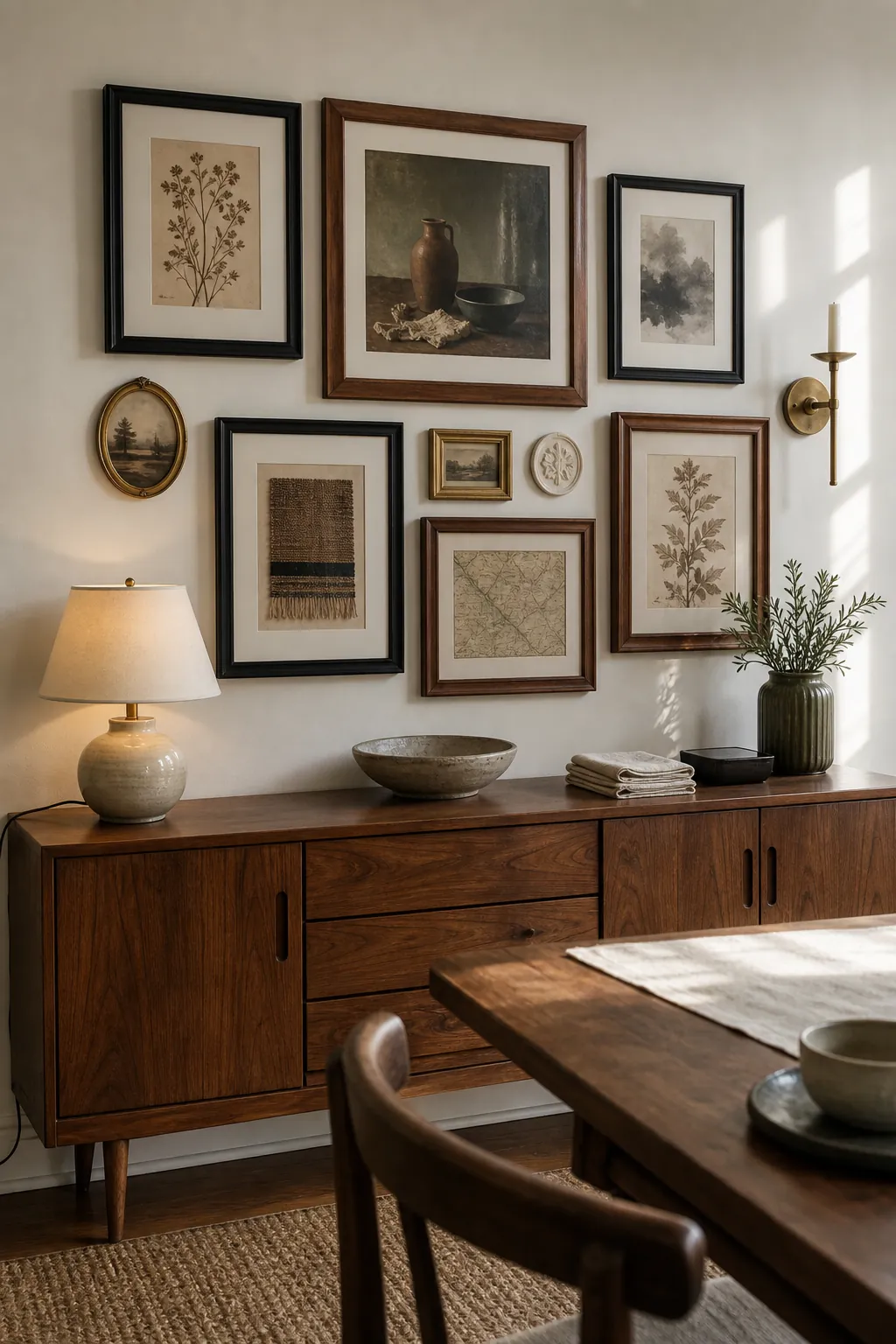
Try to avoid a wall where every frame introduces a new finish, a new thickness, and a new personality. That is when a mixed frames idea turns into visual noise. Instead, repeat each major finish at least twice. One brass frame can look accidental. Two or three brass moments look intentional.
This rule still leaves plenty of freedom. You can mix narrow and wide black frames, simple and carved wood frames, or rectangular frames with one oval mirror. The point is not sameness. The point is recognition.
Control Color So The Art Can Vary
A gallery wall becomes calmer when the art shares at least one color conversation with the room. That does not mean every print needs the same palette. It means a color appears more than once, so the eye can connect pieces across the wall.
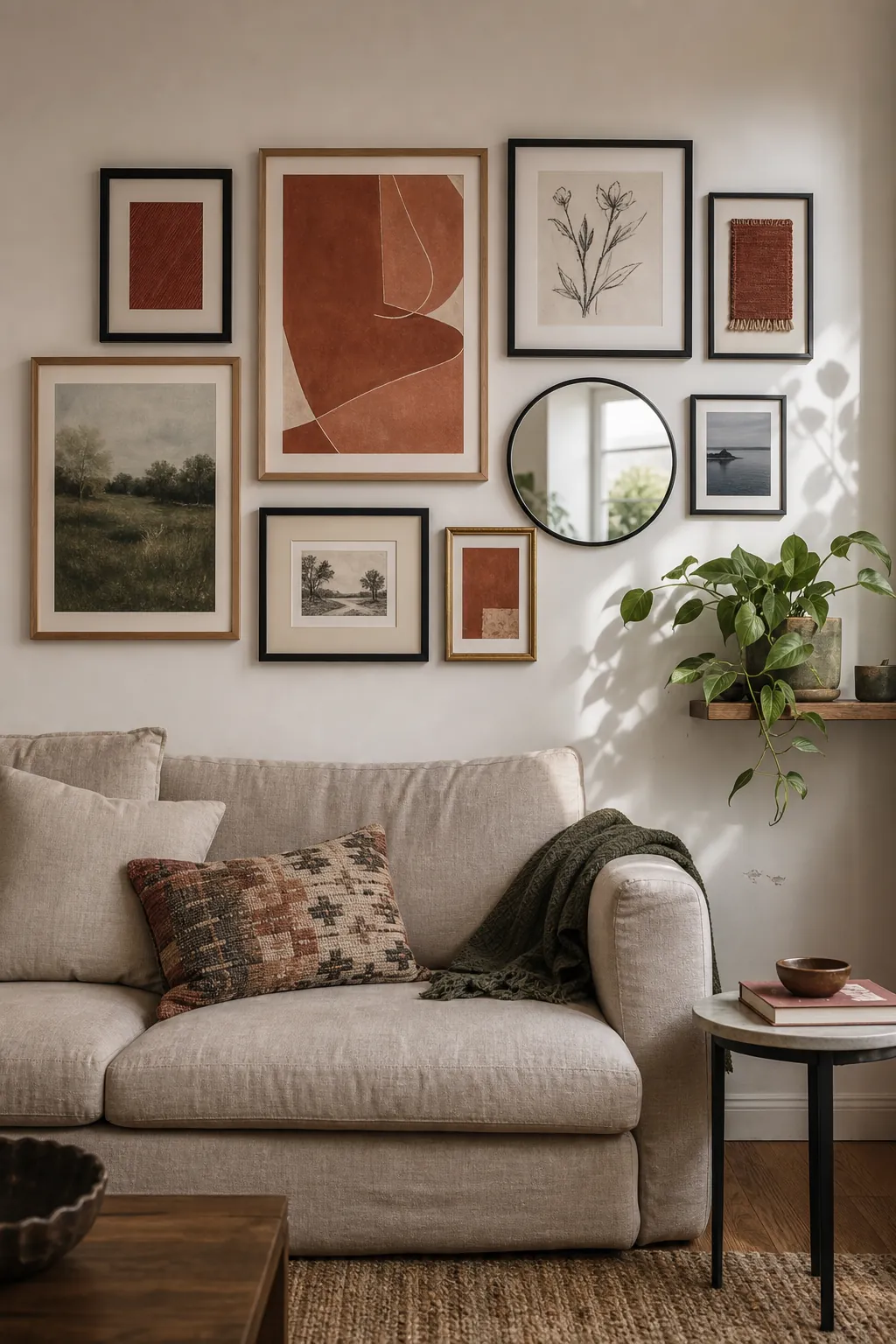
If your living room wall decor already has a rust pillow, a green plant, or a blue rug, let one or two of those colors appear in the art. The repetition can be quiet. A small terracotta line in one print and a faded clay wash in another may be enough.
For a more minimal room, use contrast as the repeated color. Black frames, charcoal sketches, and a black lamp base can make varied art feel deliberate. For a warmer room, wood tones, cream mats, and muted landscapes may do the same job.
Give Small Pieces Bigger Mats And Breathing Room
Small art is usually where gallery walls start to feel cluttered. Postcards, tiny prints, family photos, and thrifted sketches are charming, but if they are all framed close to their edges, the wall can feel like a notice board.
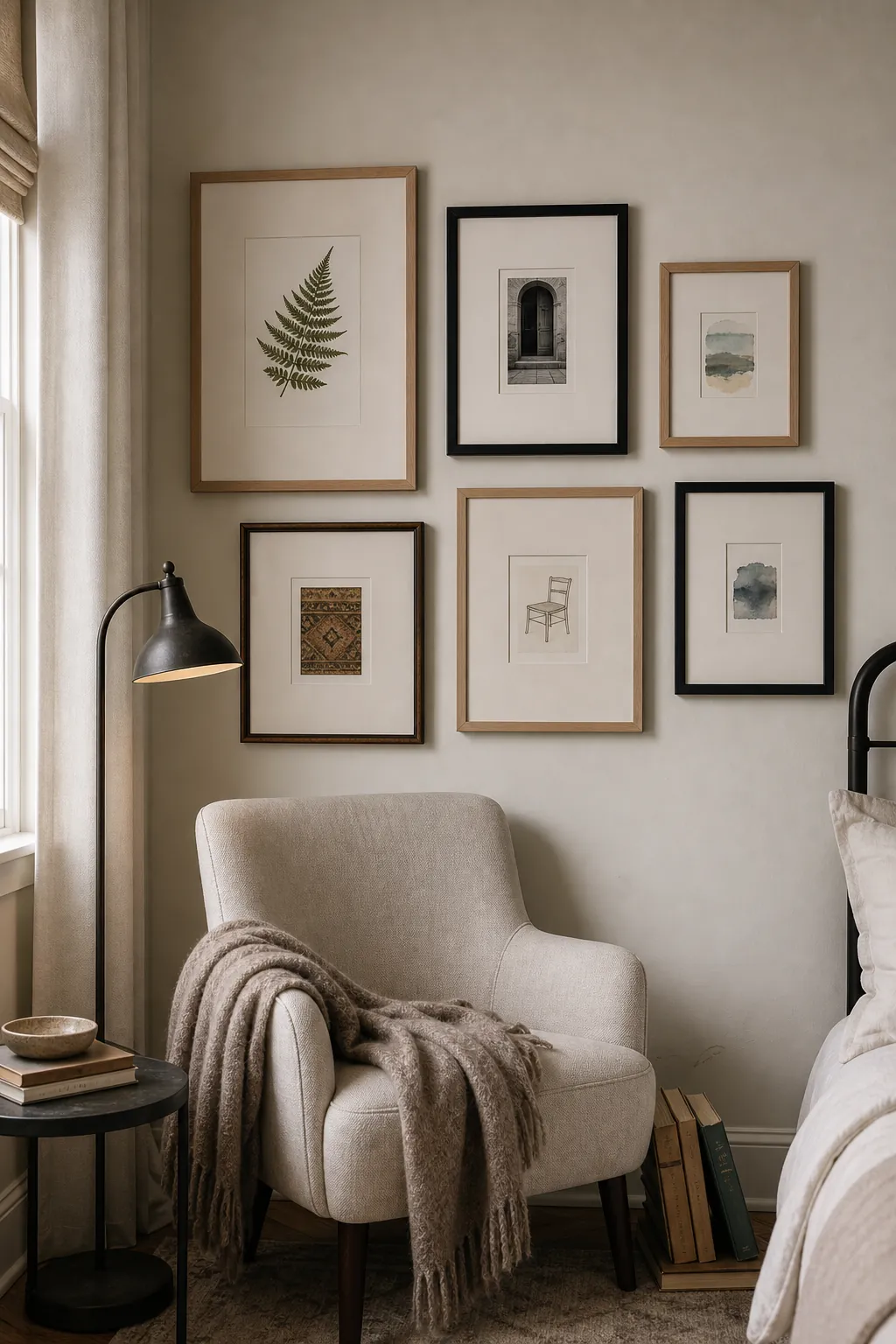
Put small pieces in larger frames with wide mats. The mat gives the art visual quiet, and the larger outer frame helps the piece hold its own in the composition. This is especially helpful when you are mixing family photos with prints, sketches, or vintage finds.
Breathing room also means editing the wall shape. You do not have to fill every gap. A few open areas around the frame wall make the whole arrangement feel cleaner, especially in bedrooms, reading nooks, and narrow hallways.
Check The Whole Wall From The Room
Before you commit to every nail, leave the wall and look at it from the place where you actually live with it. Stand in the hallway. Sit on the sofa. Walk in from the entry. A gallery wall that looks balanced from six inches away can sit too high, too wide, or too scattered once you see the furniture below it.
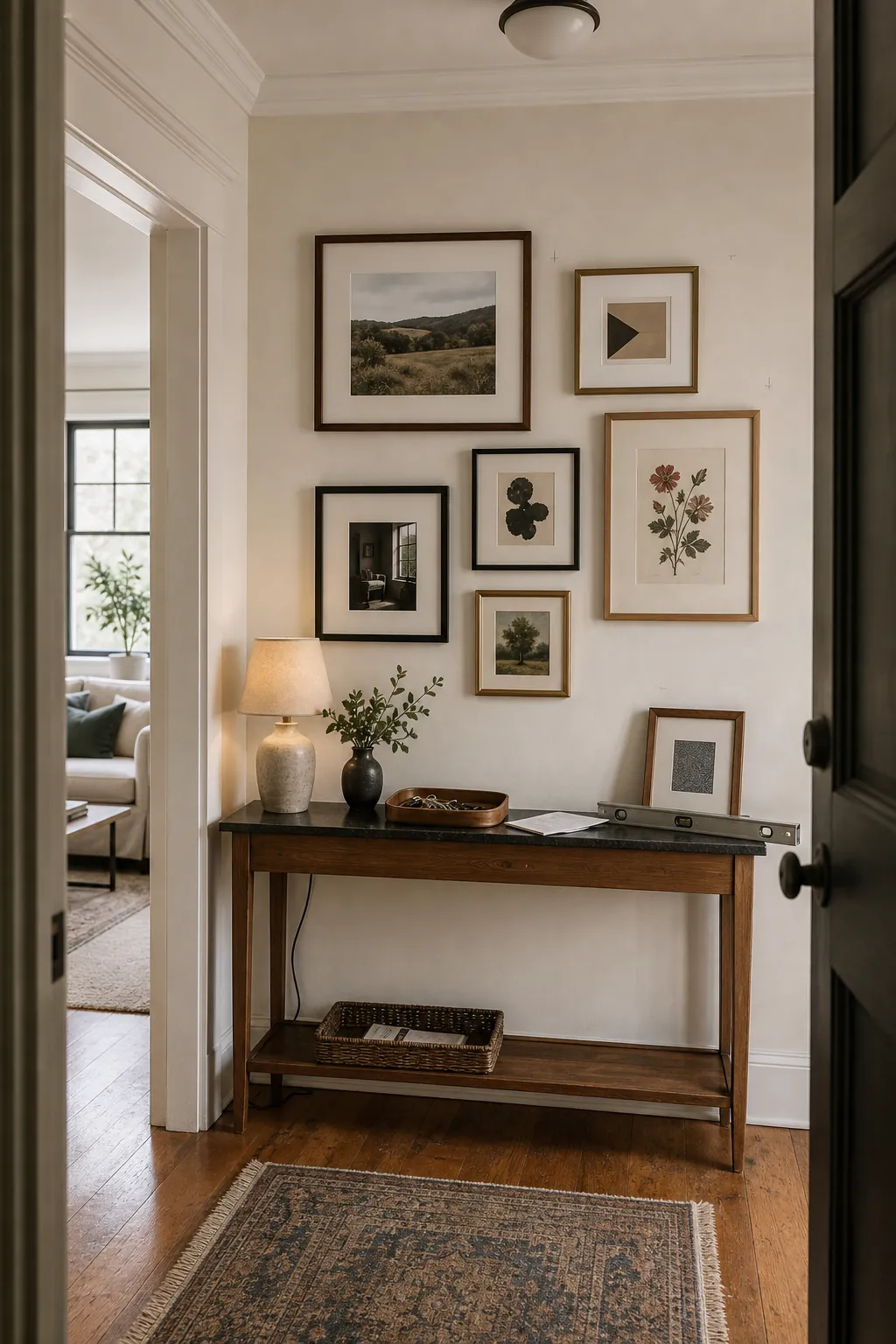
A good gallery wall usually relates to something: the back of a sofa, a console table, a bed, a reading chair, or the turn of a hallway. Let the furniture help set the bottom edge and the width. If the arrangement climbs close to the ceiling or floats far above the furniture, it can look detached no matter how beautiful the individual frames are.
The final test is simple: squint at the wall. If you see one pleasing shape first and individual frames second, the mix is working. If you see scattered objects first, tighten the spacing, repeat a frame family, enlarge one piece, or remove the item that is shouting the loudest.
The Calm Mixed-Frame Formula
For a mixed-frame gallery wall that feels collected instead of chaotic, use this order: choose an anchor, keep the spacing consistent, repeat two or three frame families, echo color across the art, give small pieces larger mats, and judge the wall from the room. The frames do not need to match. They need to agree.