
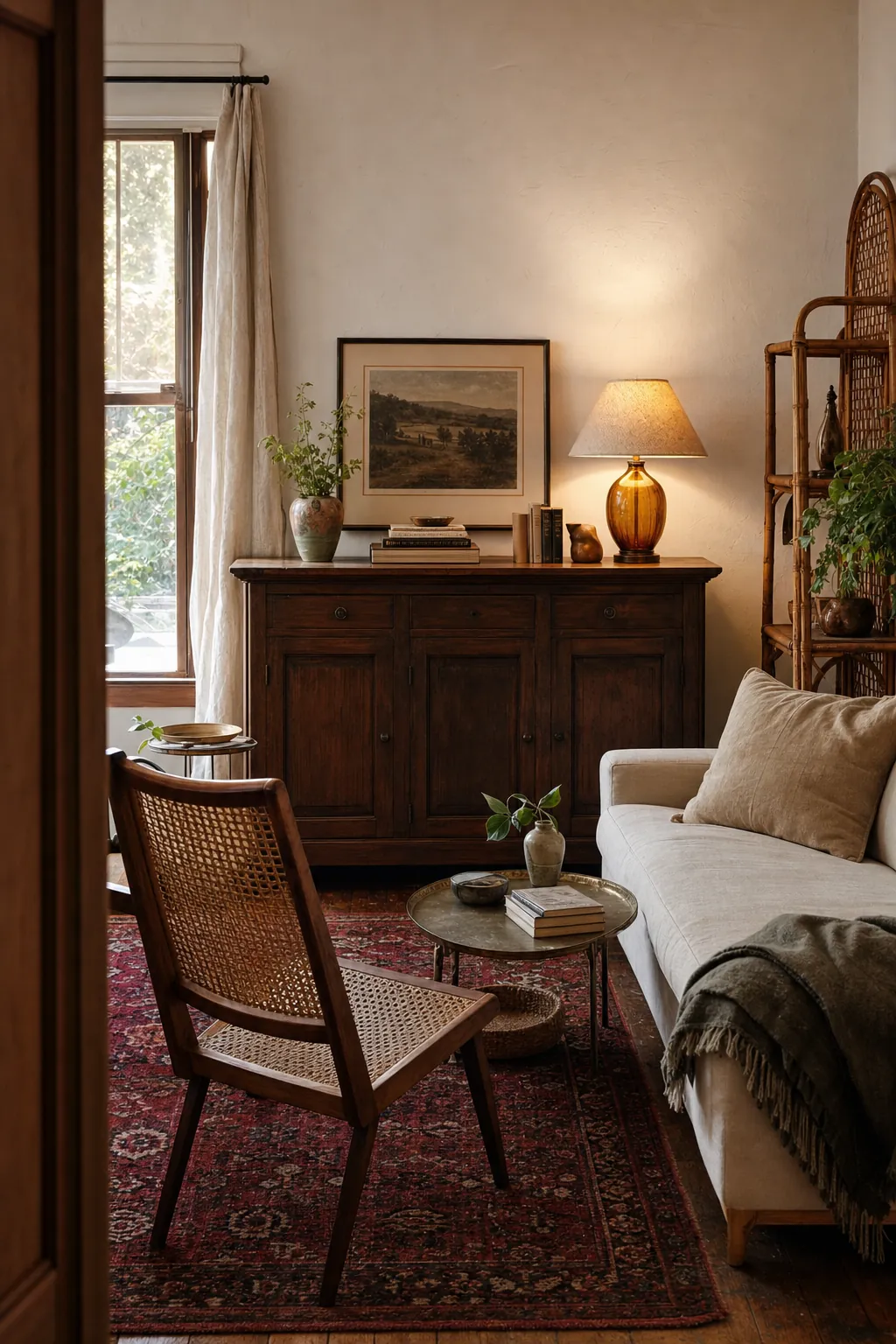
Warm vintage rooms rarely come from buying every cute thing at the thrift store. The homes that feel best usually have a quieter pattern: one strong old piece, wood tones that repeat, textiles that soften the edges, and lighting that makes ordinary corners feel cared for.
That is the difference between vintage decor and a room that only looks old. Vintage warmth is not about making a house into a museum. It is about choosing pieces with age, texture, and memory, then giving them enough breathing room to work in a modern life.
Start With One Piece That Can Hold the Room
The easiest mistake is to collect only small vintage accents: a brass tray here, a little vase there, a stack of old books somewhere else. Those pieces are charming, but if nothing in the room has weight, the space can start to feel scattered.
Choose one real anchor first. A walnut sideboard, old pine cabinet, cane chair, library table, or antique dresser used as storage gives the room a point of view. It does not need to be expensive. It needs enough scale, usefulness, and texture to make the newer pieces around it feel less flat.
A strong vintage anchor lets the rest of the room stay simple. A plain sofa, clean curtains, and a quiet rug can all work when one older piece brings the warmth.

Let Wood Tones Repeat Without Matching
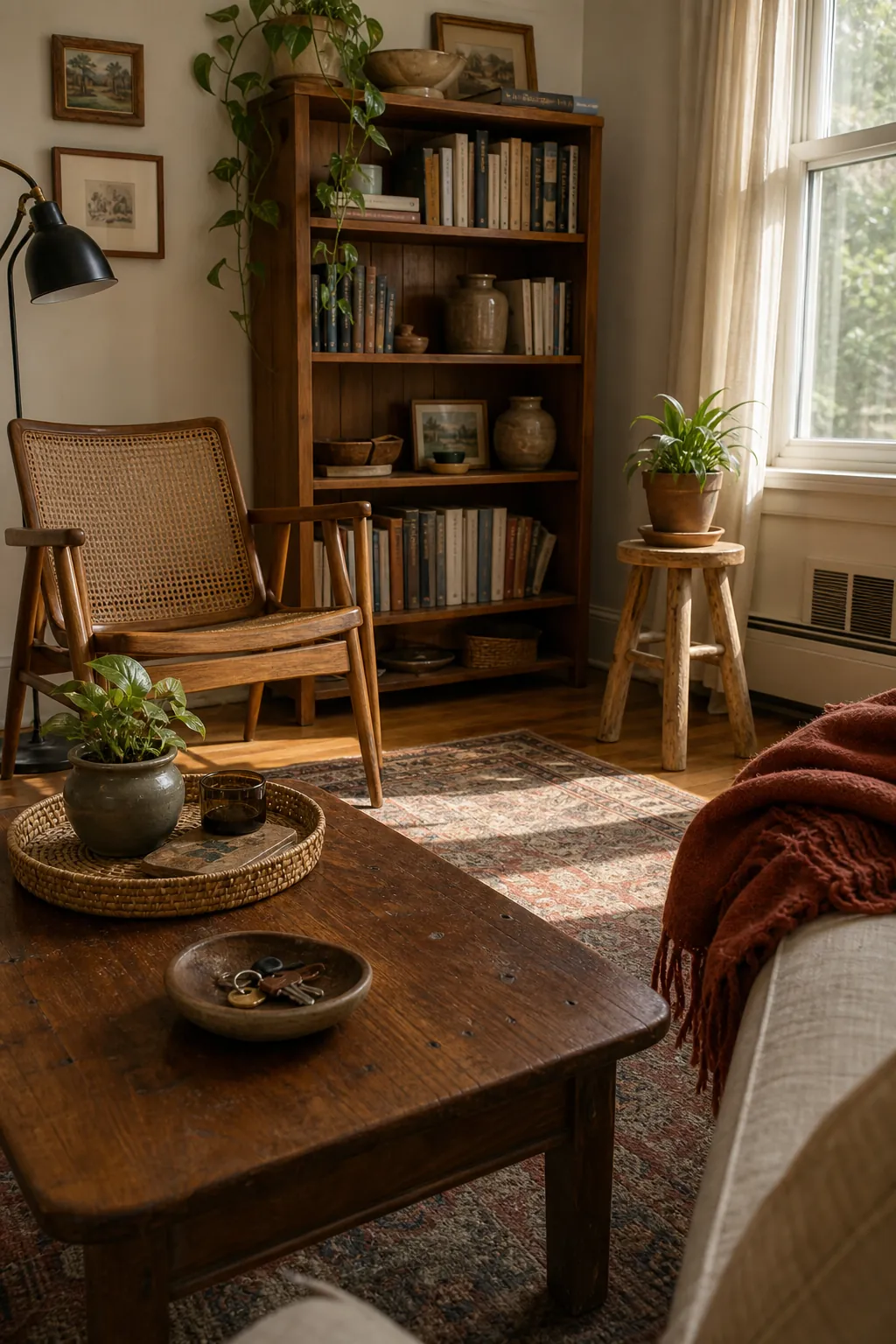
Warm home decor often depends on wood, but matching every finish can make a room feel stiff. Vintage rooms look more natural when the woods are related instead of identical. A honey floor, darker coffee table, pale stool, and bamboo picture frame can live together if the undertones repeat.
Use one wood tone as the main note, then repeat it at least twice in smaller ways. If the largest piece is dark walnut, echo that darkness with a frame, chair leg, or shelf. If the floor is golden oak, bring in a lighter basket, cane chair, or bamboo tray so the warmth moves around the room.
The goal is not a perfect set. The goal is rhythm. Mixed wood tones feel collected when the eye can find a reason for each one.
Use Textiles to Make the Old Pieces Feel Soft
Vintage furniture can be hard-edged: polished wood, metal handles, carved legs, glass fronts, and square cabinets. Textiles are what make those pieces feel like part of a cozy home instead of props in a shop window.
Layer a faded rug, a wool throw, linen curtains, cushions with different scales of pattern, or a quilt over a reading chair. The mix works best when the colors feel faded rather than brand new. Rust, olive, cream, dusty rose, brown, denim blue, and muted red usually age better than very sharp trend colors.
Do not cover every surface. Let one or two textile moments carry the comfort. A worn rug and one good throw can do more for old house charm than a dozen tiny accessories.

Trade Harsh Overhead Light for Small Pools of Glow
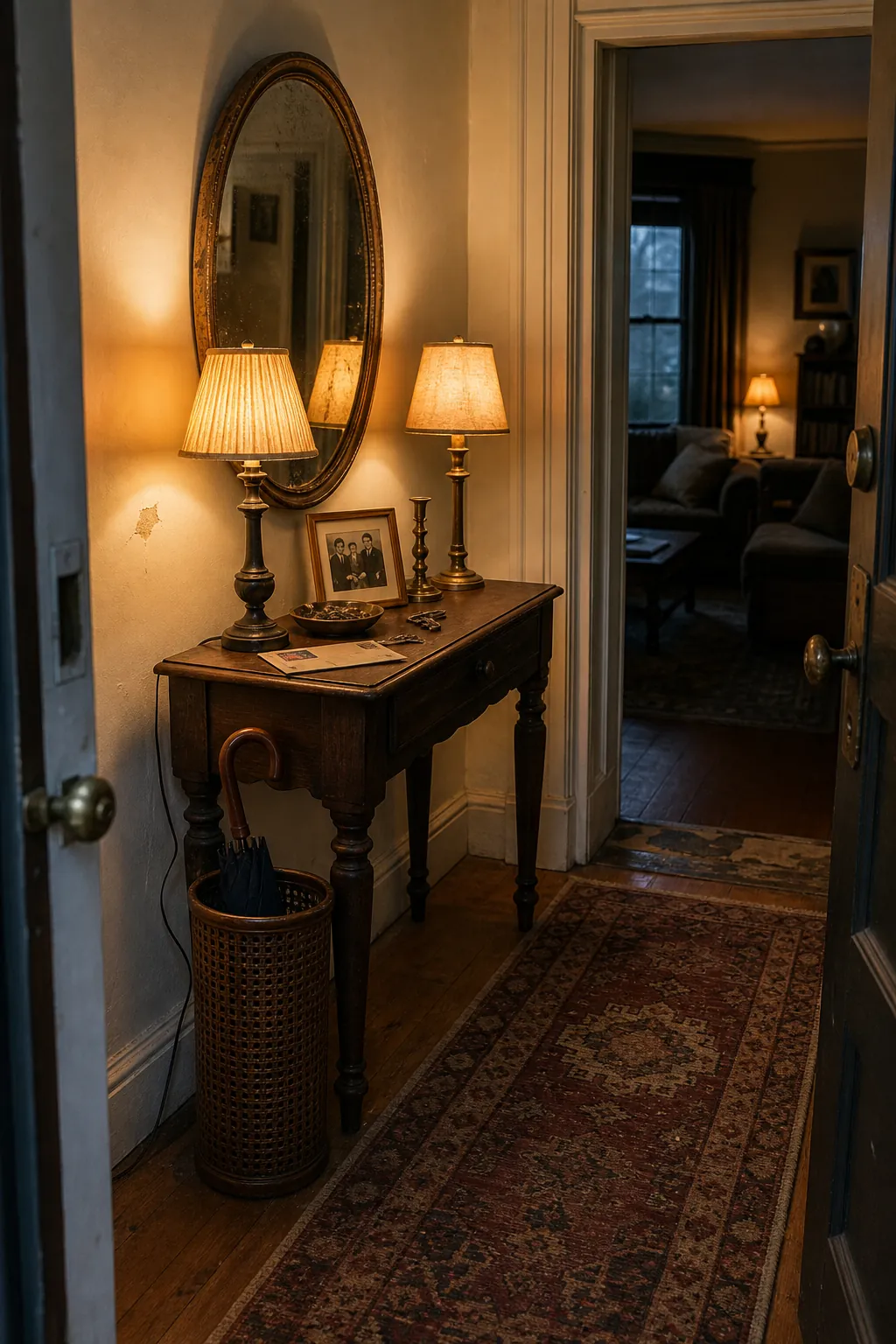
A room can have beautiful vintage pieces and still feel cold under a bright ceiling light. Lamps are one of the fastest ways to make retro home decor feel warm because they create depth. They also make old wood, brass, ceramic, and textured fabric look richer.
Use table lamps, shaded floor lamps, picture lights, or a small lamp on an entry console. If the room only has overhead lighting, leave it off in the evening and build two or three lower light sources instead. The home will immediately feel less flat.
Vintage warmth is often a lighting problem before it is a shopping problem. A thrifted lamp with a good shade can change a corner more than another chair.
Edit Collections So They Feel Personal, Not Crowded
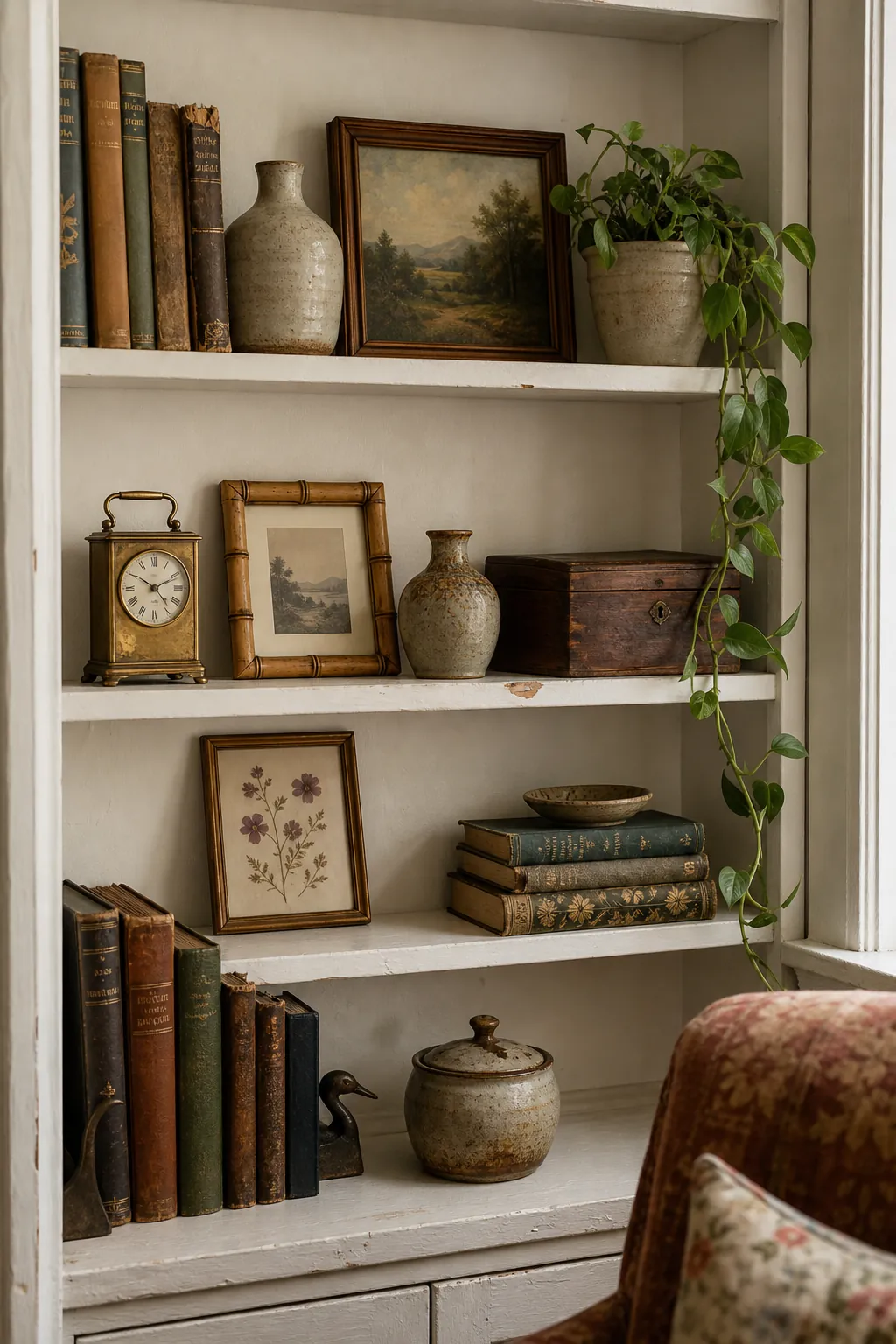
Collected homes have objects with history, but the warmest ones still leave space. If every shelf is packed edge to edge, nothing gets noticed. The room may be full of interesting pieces and still feel visually noisy.
Group small vintage decor in loose clusters. Try old books with a ceramic vase, a bamboo frame with a pressed flower, or a brass clock beside a small painting. Then leave a clear patch of shelf, mantel, or wall nearby. That pause is what keeps thrifted decor from feeling like storage.
If you are unsure what to remove, take away the newest-looking item first. One edited shelf can say more about your taste than a crowded shelf of everything you own.
Bring the Warmth Into the Kitchen, Too
Vintage style can stop feeling natural when it only lives in the living room. A kitchen needs a lighter touch because it has to work hard, but small details can make it feel cheerful and connected to the rest of the home.
Try a cafe curtain, old wooden spoons in a crock, thrifted mugs on an open shelf, a bamboo cutting board, a striped tea towel, a retro enamel colander, or mismatched chairs around a small table. These pieces add nostalgia without requiring a remodel.
The best vintage kitchen details still look usable. If an object helps with cooking, storage, lighting, or daily rhythm, it will feel warm instead of decorative for decoration’s sake.
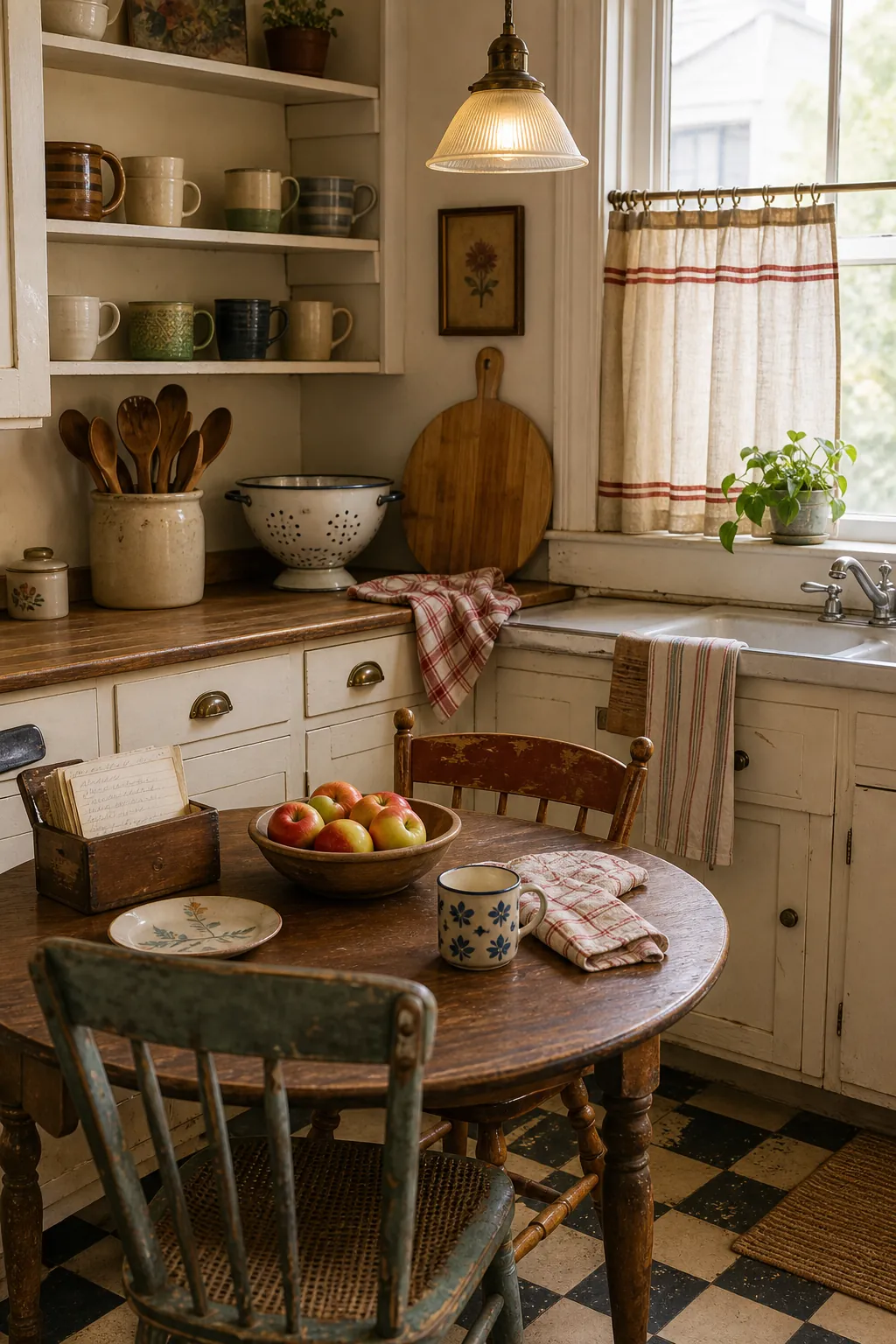
A warm vintage home does not have to look perfect. It usually feels better when it has a few scuffs, a few inherited pieces, a lamp that glows softly at dusk, and rooms that make sense for daily life. Start with one anchor, repeat the warmth, and let the house look like it has been loved over time.