
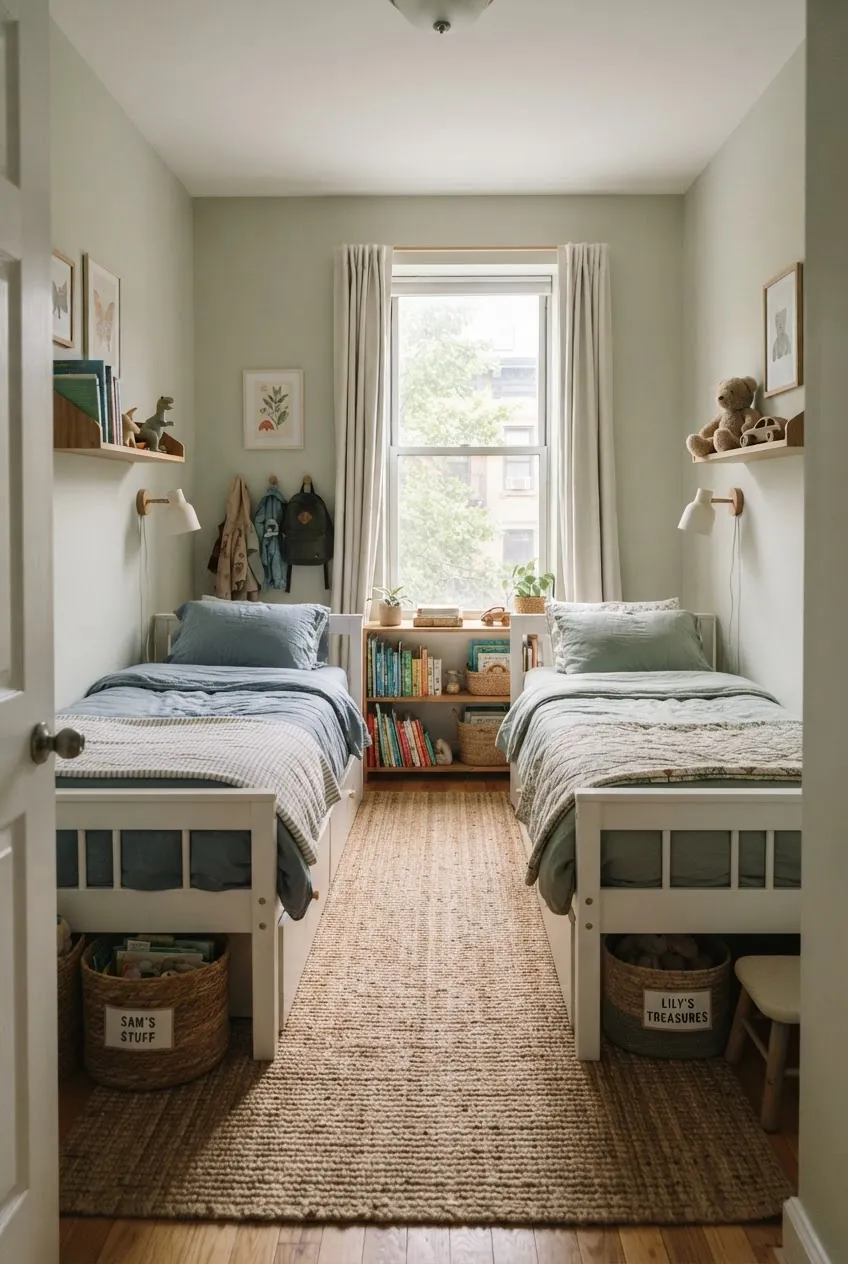
A small shared kids room works best when it stops trying to look like one perfect bedroom and starts acting like two tiny, fair, easy-to-maintain personal zones. The goal is not to build walls or buy every storage piece in the catalog. The goal is to give each child a clear place to sleep, a clear place for favorite things, and a shared floor plan that does not collapse every time laundry, toys, and bedtime routines hit at once.
Parents searching for small shared kids room ideas with personal zones are usually solving two problems at the same time: there is not enough space, and the children still need a feeling of ownership. That means every choice has to earn its footprint. A second dresser, a decorative chair, or a bulky toy bin may look harmless online, but in a tight sibling bedroom it can steal the walkway, block drawers, and create daily arguments over whose things are in the way.
Start With Sleep Zones Before Decorating
Begin with the beds because they decide the whole room. In a narrow room, placing two twins on opposite walls can create a center aisle and a natural left-side/right-side split. In a boxier room, an L-shaped layout can make one corner feel tucked-in while leaving space for a dresser, hamper, or small reading shelf. If bunk beds are the only way to free the floor, make sure the lower bunk still feels like a real personal zone instead of a dark leftover cave.
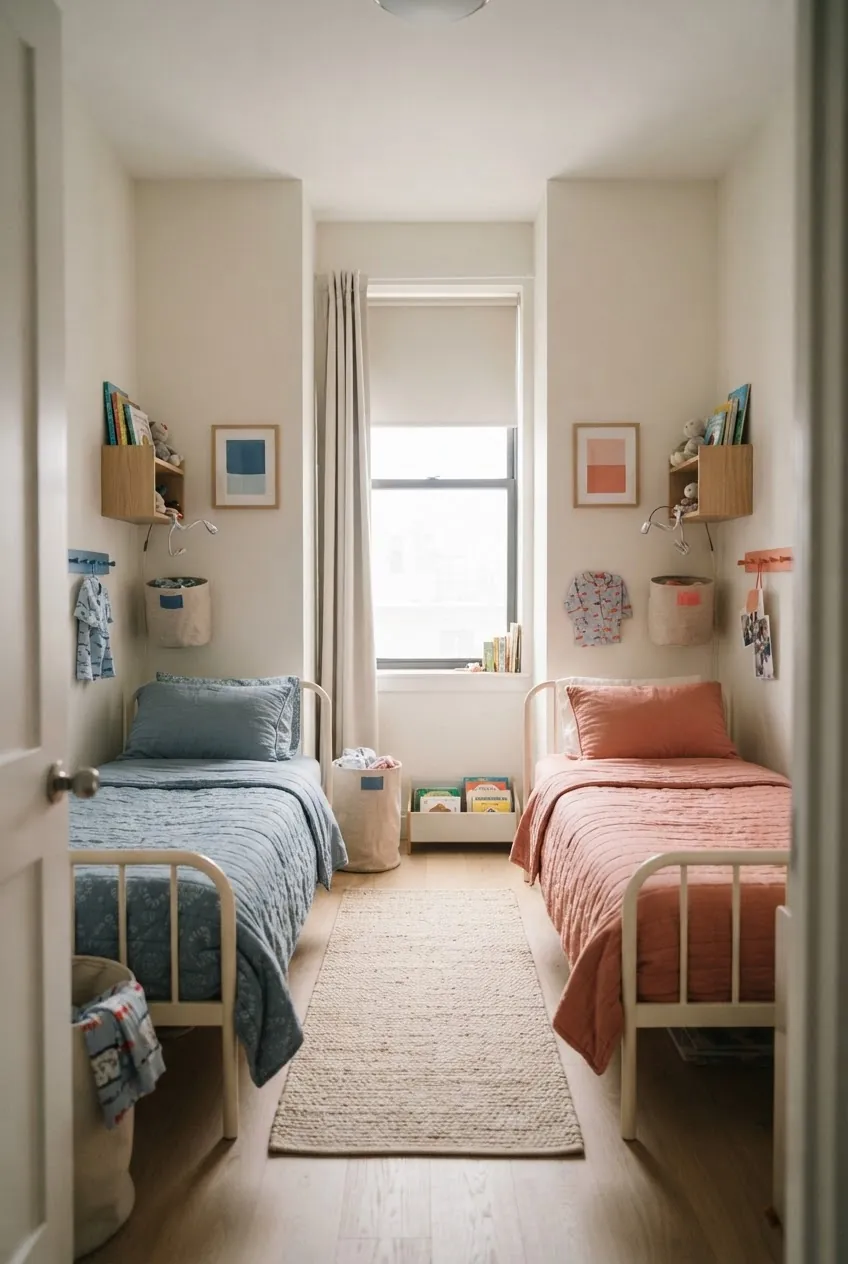
The easiest visual boundary is color, but use it in small doses. Give each child a bedding color, wall hook color, labeled basket color, or bedside shelf color. This creates color zones without slicing the room into two loud halves. Keep the large surfaces calm so the room still feels bigger: pale walls, simple curtains, matching bed frames, and one repeated material such as light wood or white metal can hold the design together.
Give Each Child A Small Ownership Spot
A personal zone does not have to be large. In fact, the most realistic version is often a narrow shelf, a bedside caddy, a wall pocket, a clip-on reading light, and one special box for treasures. The key is that the zone is visibly assigned and easy for the child to manage. If both kids share every drawer, every shelf, and every toy bin, the room may look efficient for a week, but it also creates constant negotiation.
Try this rule: shared storage can hold shared things, but personal storage should hold personal things. Pajamas, favorite books, small collections, journals, hair accessories, headphones, and comfort items need a home that belongs to one child. For younger kids, picture labels work better than written labels. For older kids, give them one private-looking container even if it does not lock; the signal matters.
Separate Shared Storage From Personal Storage
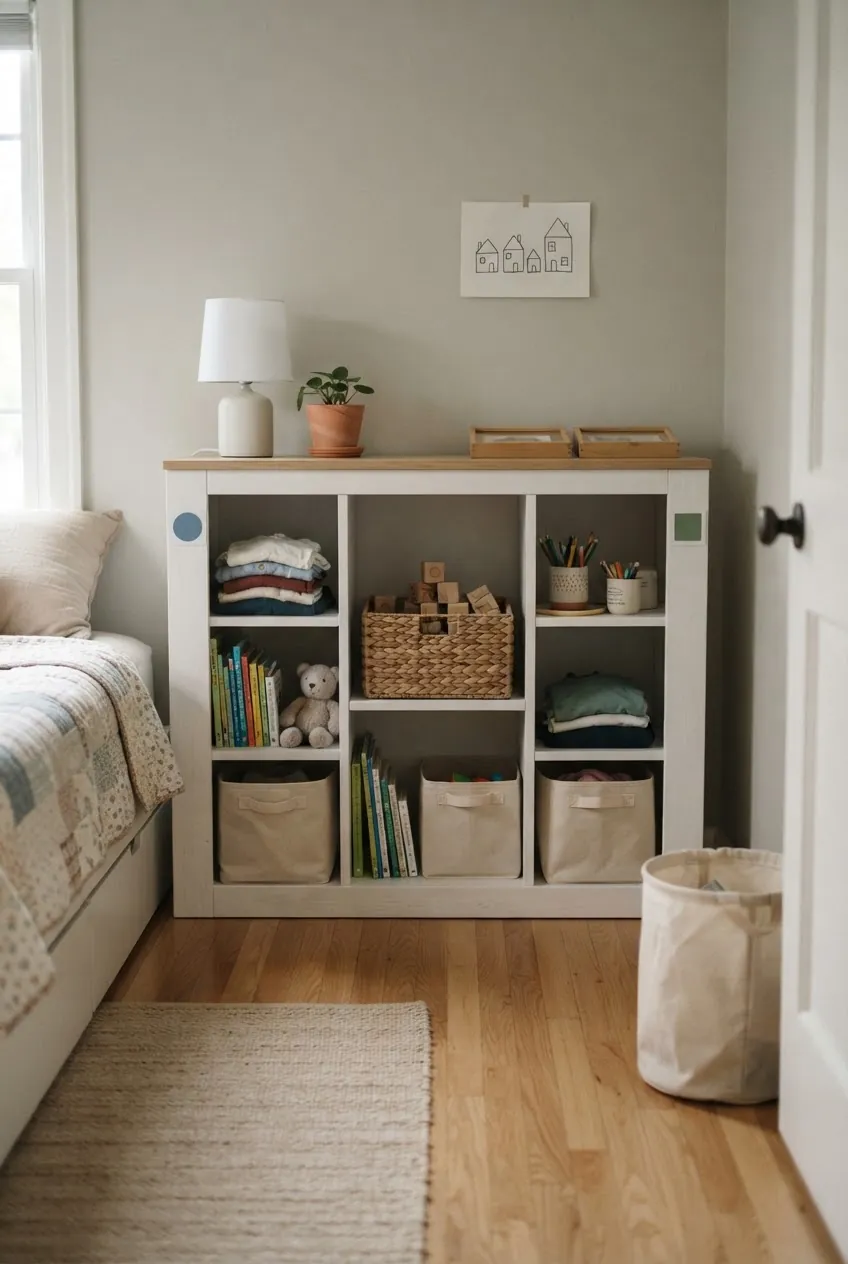
Most small kids rooms fail because storage is too vague. A large toy basket sounds practical until blocks, stuffed animals, dress-up clothes, art supplies, and missing socks all land in the same pile. Instead, build one shared storage hub for things both children use and keep it near the play area or doorway. Then give each child a smaller personal bin, drawer, or cubby that never has to be negotiated.
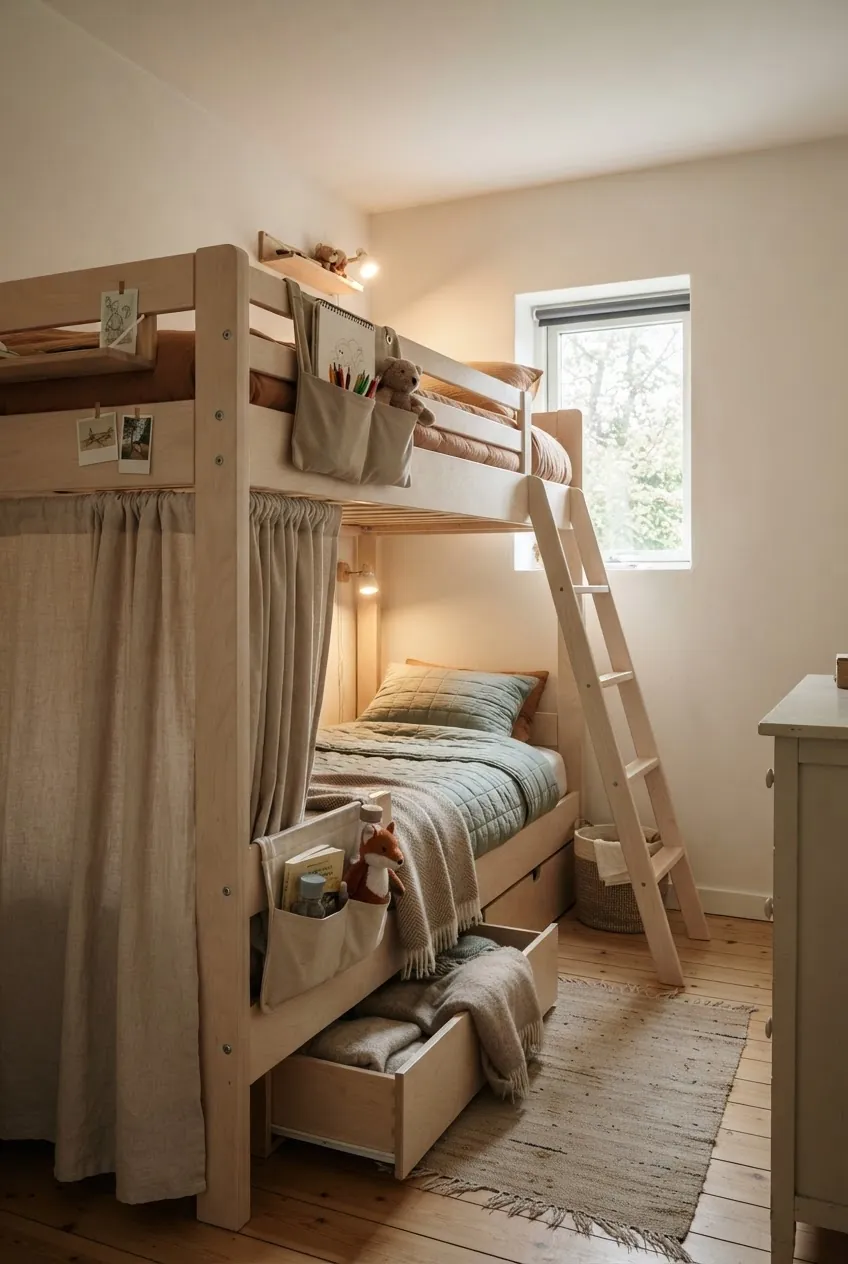
Under-bed drawers are useful when they are shallow, labeled, and easy to pull out. Deep bins often become forgotten caves. For a small kids room, the best under-bed categories are lightweight and seasonal: extra bedding, out-of-season clothes, rotation toys, costumes, and bulky stuffed animals. Daily items should stay at child height because anything difficult to reach will eventually live on the floor.
- Shared zone: building toys, pretend play, board games, art supplies, and books used by both children.
- Child A zone: clothes drawer, bedside shelf, favorite books, personal basket, and one display spot.
- Child B zone: matching storage volume, different color cue, equal display space, and the same access level.
Use Furniture As Gentle Boundaries
A divider can help, but in a small sibling bedroom it should do more than block a view. A low bookcase between beds, a slim wardrobe at the foot of a bed, or a curtain track beside a bunk can create privacy while adding function. Avoid tall, heavy pieces in the center of the room if they make the room feel chopped up or reduce airflow and light.
For school-age children, a shared desk rarely works unless it has two clearly defined sides. If there is no room for a full desk, make two micro study corners: a wall-mounted shelf, a stool that tucks under, a pencil cup, and a small magnetic board or cork strip. The point is not to turn the bedroom into a classroom. It is to stop homework, craft supplies, and tiny papers from spreading across both beds.
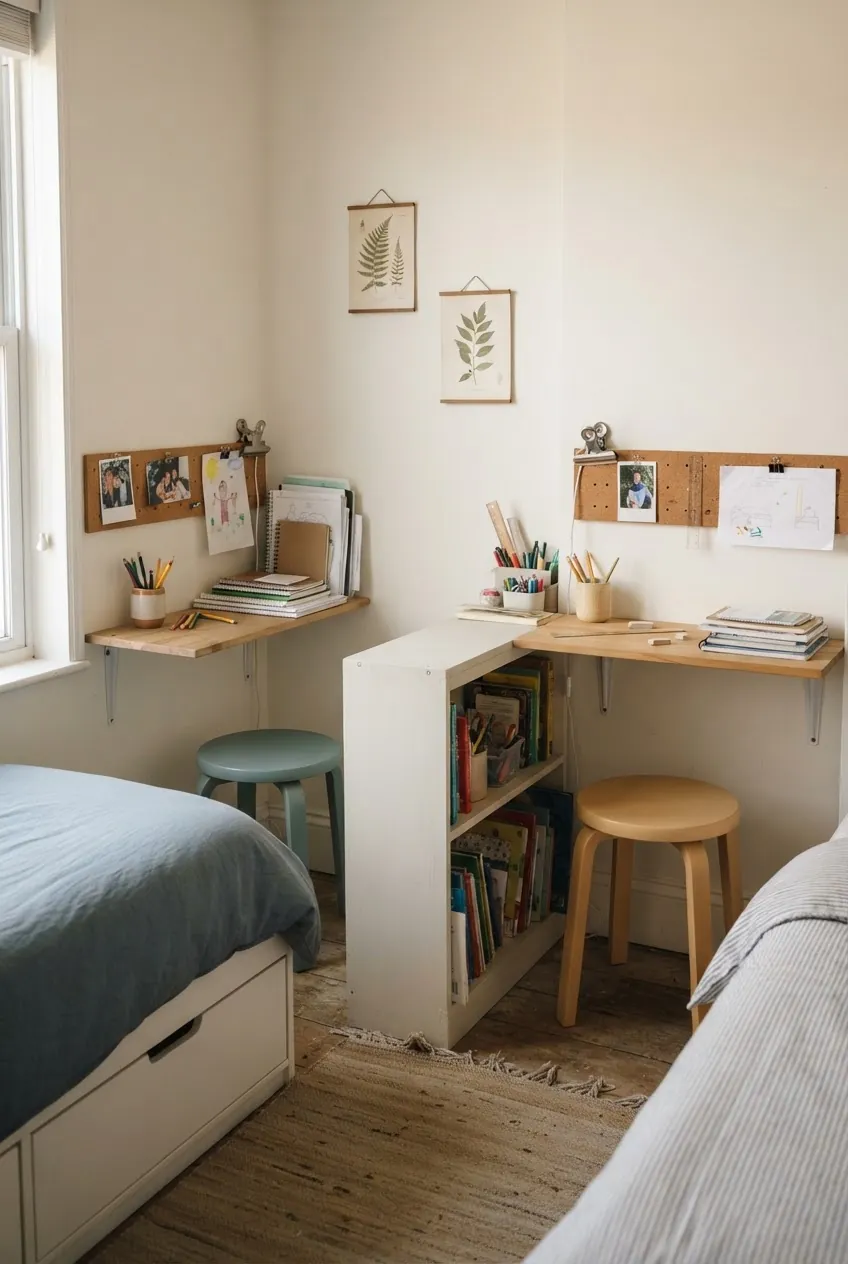
Move Excess Toys Out Of The Bedroom
If the room is small and shared, it probably cannot be a bedroom, playroom, closet, library, craft room, and laundry holding zone at the same time. Many families get better results by treating the bedroom as a sleep-and-dress room, then keeping most toys in a living room basket, hallway cabinet, or rotating bin outside the bedroom. This is not less fun for the kids. It often makes the toys they do have easier to see and use.
A simple toy rotation system can rescue a crowded sibling bedroom. Keep one small bin of current toys in the room and store the rest elsewhere. Rotate weekly, every two weeks, or whenever the room starts slipping. The practical test is simple: if both kids cannot clean the room in ten minutes with normal help, there are probably too many active items in the bedroom.
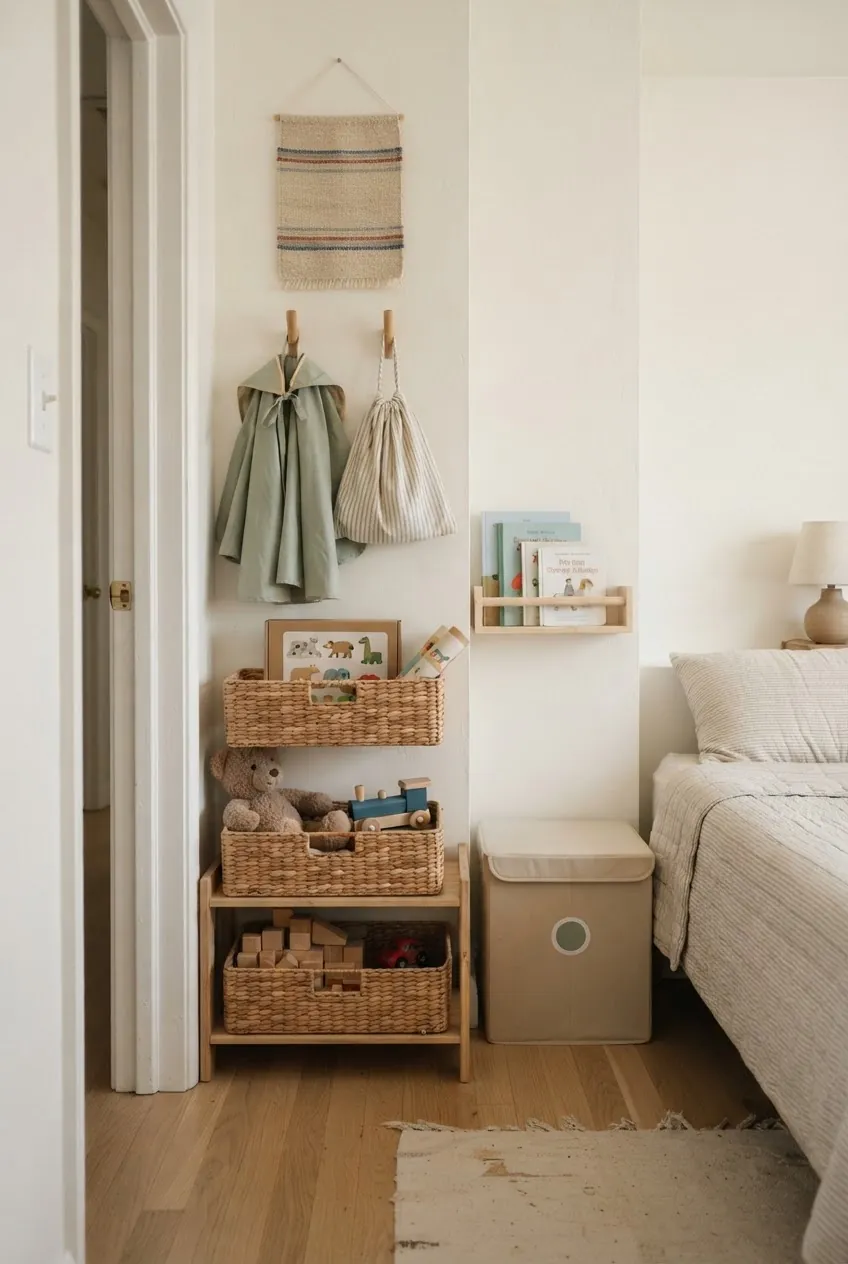
Protect The Bedtime Path
The clearest sign that a shared room layout is working is not how it photographs at noon. It is whether bedtime still works when one child is tired, the other wants a book, and someone forgot where their pajamas are. Keep the path from door to beds open. Keep the hamper visible. Keep night lights reachable. Keep step stools, ladders, and under-bed drawers from colliding with the main walkway.
For personal zones to stay peaceful, the rules need to be visible and boring. Each child gets the same amount of display space. Shared toys go back to the shared hub. Personal bins are not borrowed from without asking. The floor has to be clear before lights out. These habits matter more than the exact furniture because a small room magnifies every unfinished routine.
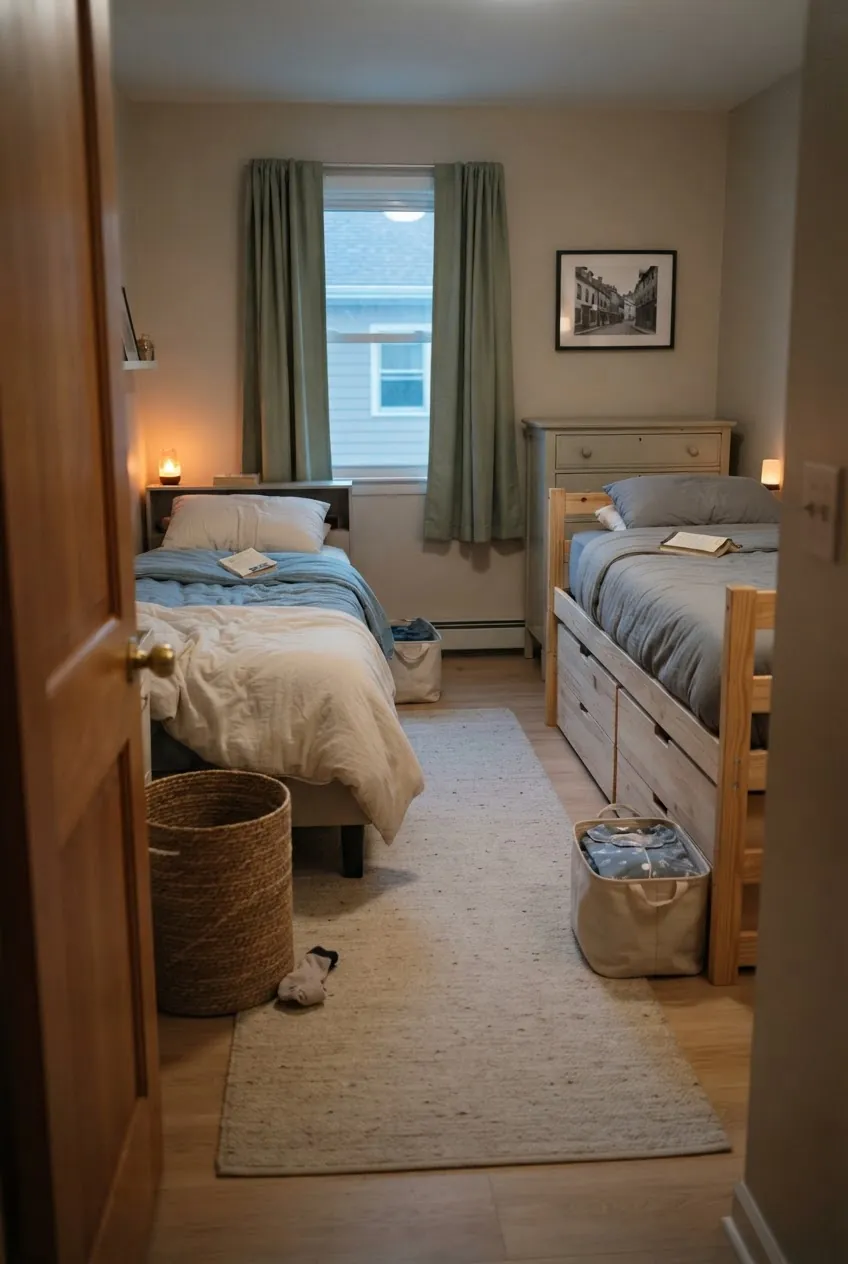
Small Shared Room Mistakes To Avoid
- Buying storage before editing belongings: storage cannot fix too much stuff in too little space.
- Using one giant toy bin: it hides clutter instead of organizing it.
- Making one child’s zone better: unequal lighting, shelf space, or privacy quickly becomes a fairness problem.
- Blocking the window or door swing: small rooms need every bit of light, airflow, and movement they can keep.
- Decorating before measuring: measure bed pull-outs, drawers, ladders, and walking paths before committing.
The best shared kids room is not the one with the most clever furniture. It is the room where each child can point to a few things and say, “That part is mine,” while the shared parts still stay simple enough for real family life. Start with beds, protect the walkway, divide storage fairly, and let personality show up in small, swappable details. That is how a tiny room begins to feel less like a compromise and more like a room that actually works.