
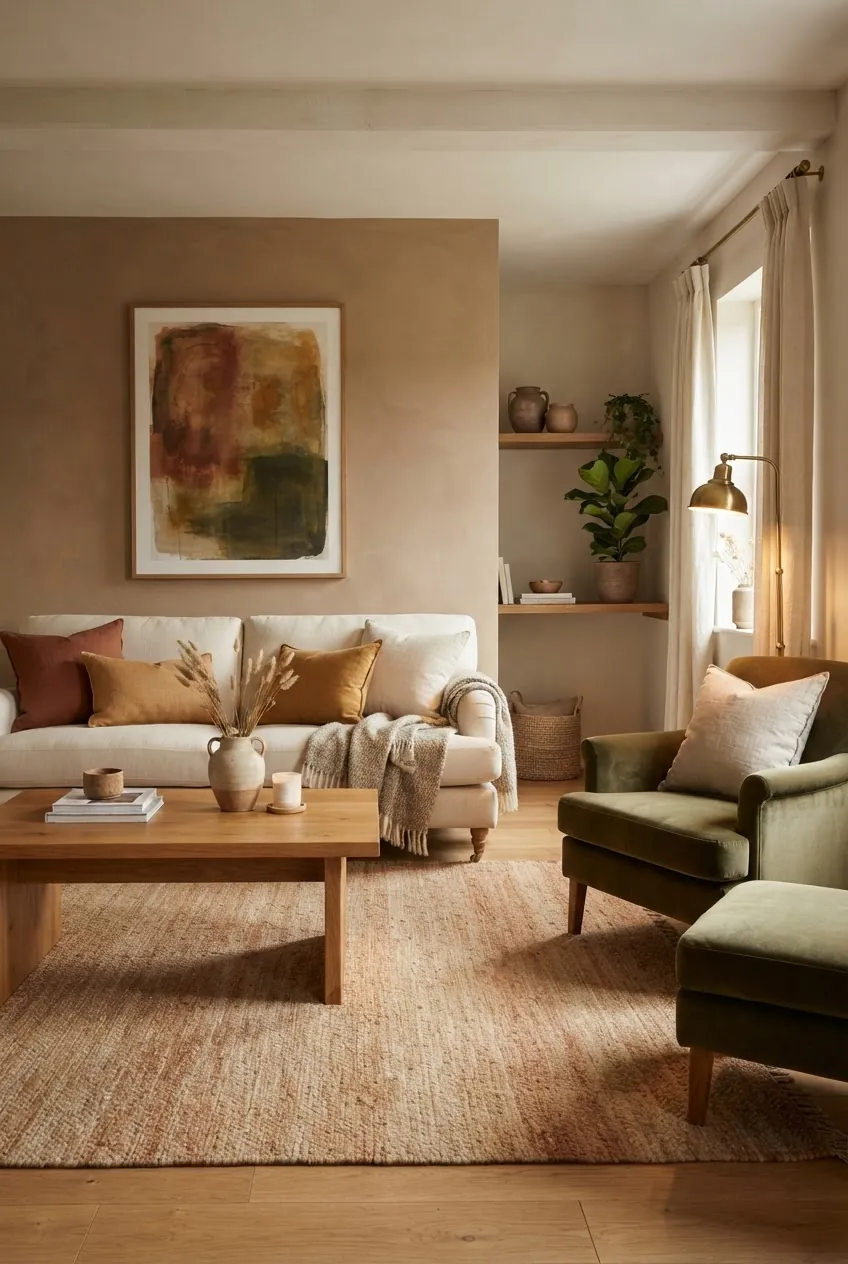
A warm colours living room does not have to be dark, orange, or overly rustic. The best warm rooms feel comfortable because the undertones agree with each other. Cream, clay, honey wood, soft brown, muted mustard, cinnamon, olive, and warm white can all work together when each colour has a clear job.
Start by deciding whether the room needs warmth from paint, fabric, wood, lighting, or a single accent. If the sofa, floor, or curtains are already warm, you may only need a cooler green or soft black to create balance. If the room has cool grey walls and blue light, warm colours can help the living room feel more welcoming.
Use Warm Light Before You Choose More Colour
Warm light changes everything. A tan sofa, cream wall, or rust throw can look flat under cold bulbs, then suddenly feel rich under a shaded lamp. Before repainting, test the room at the time of day you use it most. Evening living rooms often need lamps and warmer bulbs more than they need stronger paint.
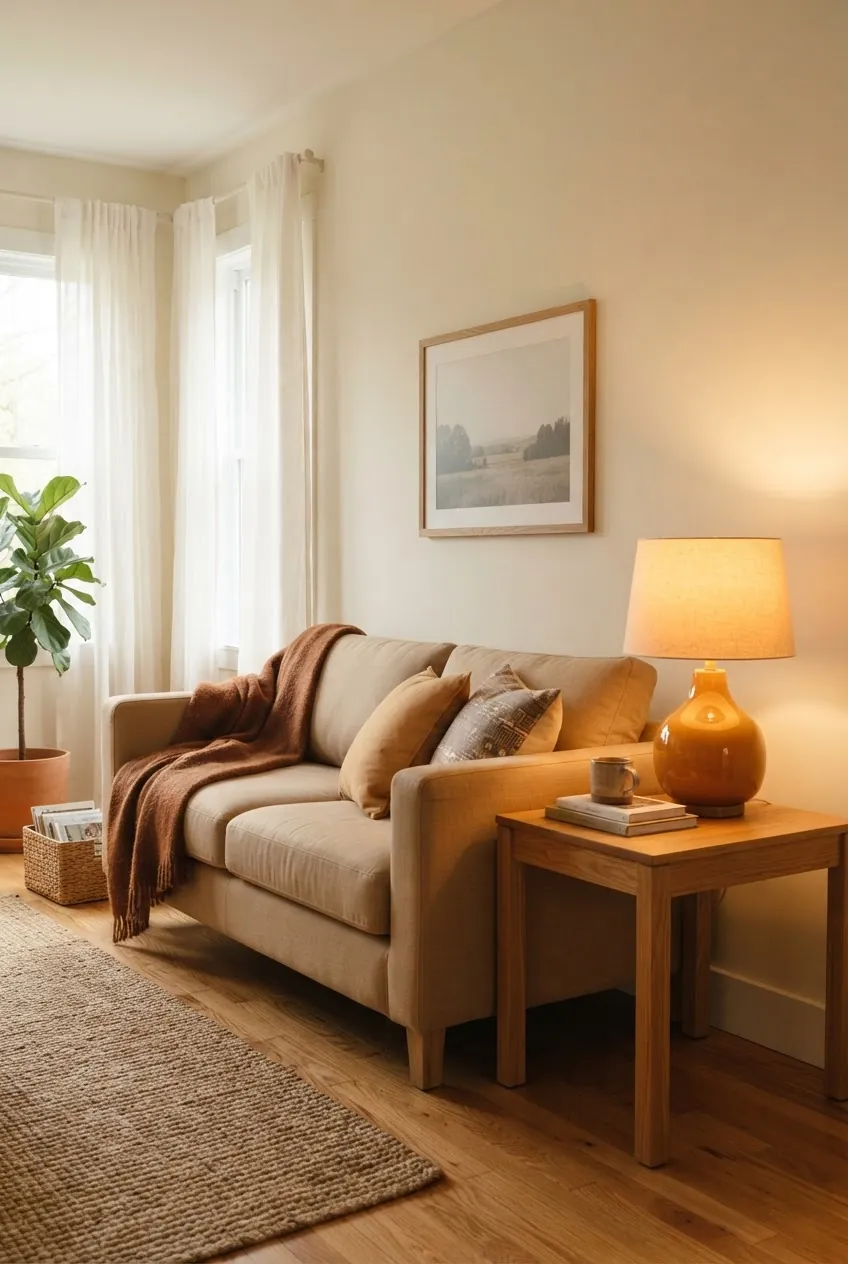
For a warm light living room, combine cream walls, tan upholstery, amber lamp light, honey wood, and small accents of ochre or rust. Use at least two lamps, not just a ceiling fixture. A table lamp beside the sofa and a floor lamp near a reading chair will soften corners and make warm tones feel intentional.
Try Warm Scandinavian Instead of Cool Minimal
A Scandinavian living room can still use warm colours. Keep the base light and simple, then warm it with pale timber, wool, oat, muted terracotta, and paper or linen shades. This approach is useful in smaller rooms because it keeps the space bright while avoiding a cold white-box feeling.
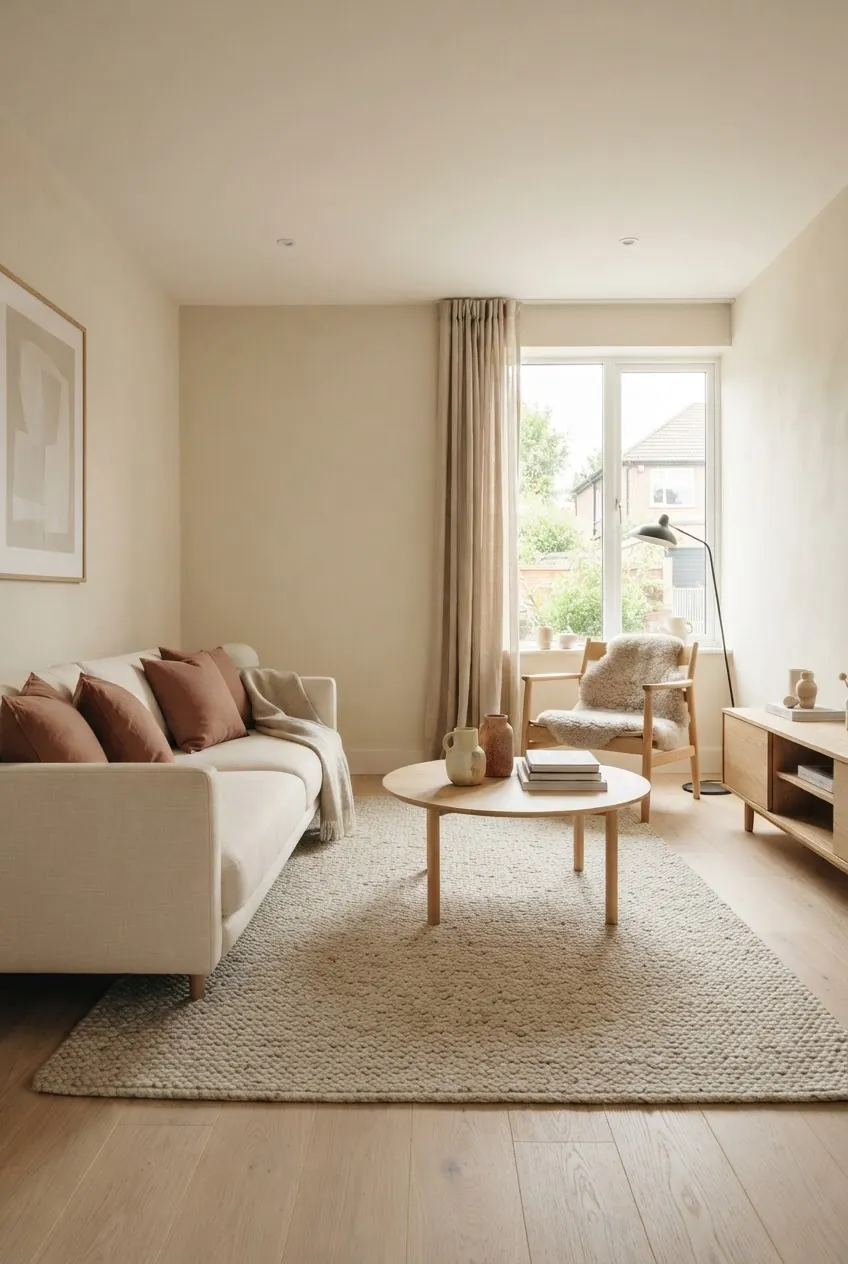
The easiest formula is ivory walls, pale oak, an oat rug, one terracotta accent, and one soft black detail. The black detail could be a lamp, picture frame, or slim table leg. It gives the room definition without making the palette feel harsh.
Soften Farmhouse Style With Muted Warm Tones
Farmhouse living room style works beautifully with warm colours, but it looks more current when the palette is muted. Instead of bright yellow or red, choose mustard, rust, greige, weathered brown, and cream. These shades suit slipcovered seating, woven baskets, aged brass, and natural wood.
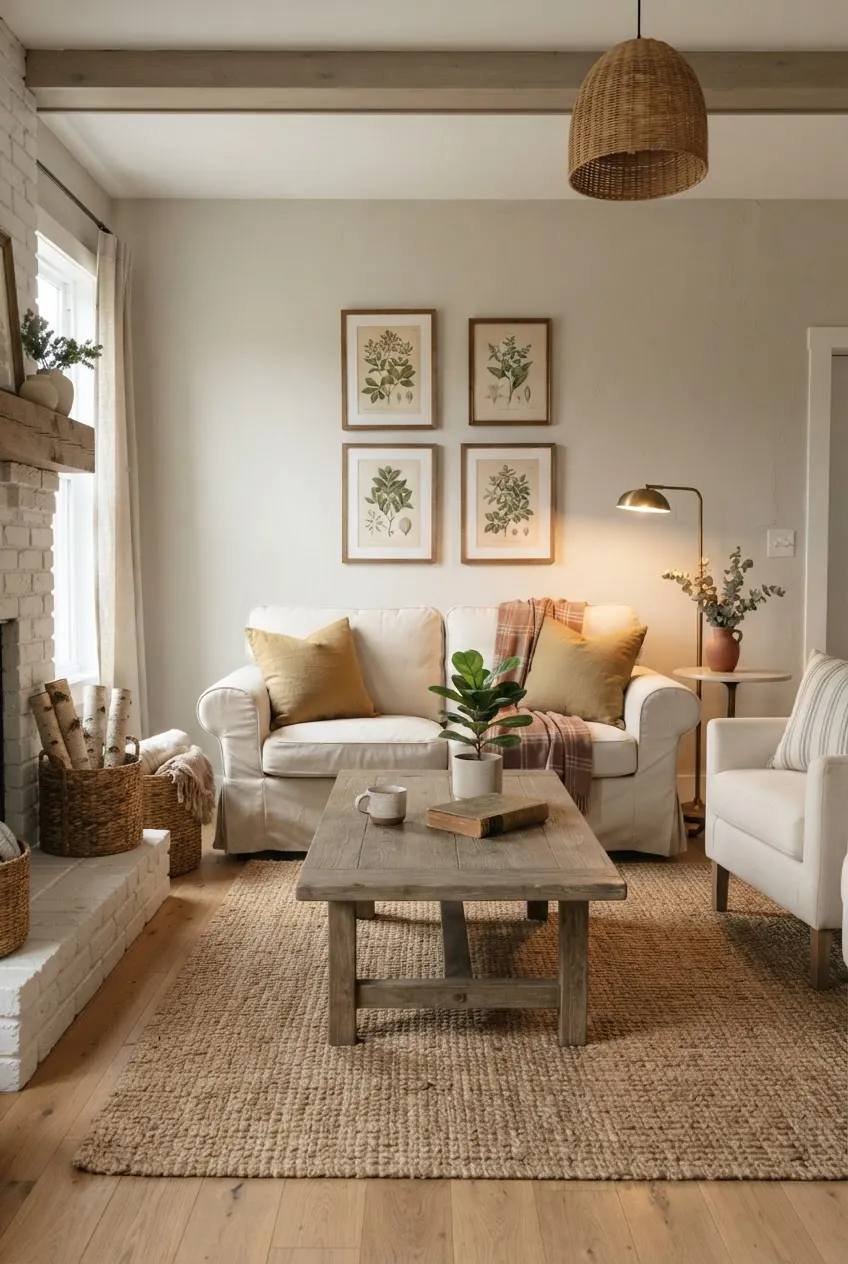
Use warm tones in pieces that already belong in a relaxed room: a rust plaid throw, a mustard pillow, a weathered wood coffee table, or botanical prints in aged frames. Avoid filling the room with word signs or themed props. The colours and textures can create the farmhouse feeling on their own.
Make a Sitting Room Feel More Intimate
Sitting room ideas often need a more intimate palette than an open family room. Warm curtains, a brown velvet chair, a patterned rug, or wall sconces can make a small conversation area feel deliberate. Cinnamon, tan, chocolate, rust, and cream are especially good when the room is used for reading or evening drinks.
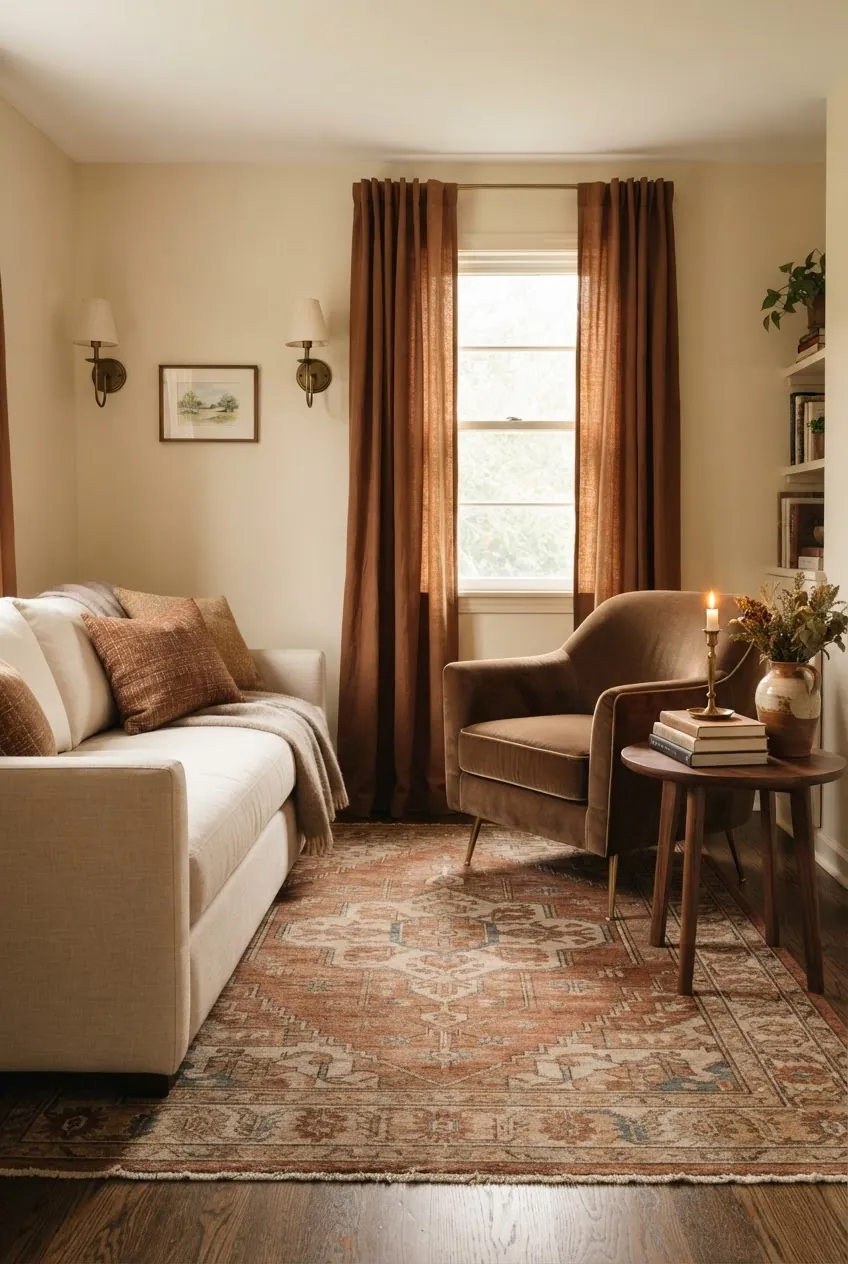
If the sitting room is compact, keep one large surface light. That might be the walls, sofa, rug background, or curtains. Then add depth through one darker chair, a warm wood table, and a few brass or ceramic pieces. This keeps the space cosy without closing it in.
Test Living Room Paint Colour Ideas in the Room
Living room paint color ideas are only useful when they are tested in real light. Warm beige, clay, taupe, soft brown, and muted peach can shift dramatically beside flooring, daylight, and upholstery. Put large samples on more than one wall and view them next to the sofa, rug, and curtains.
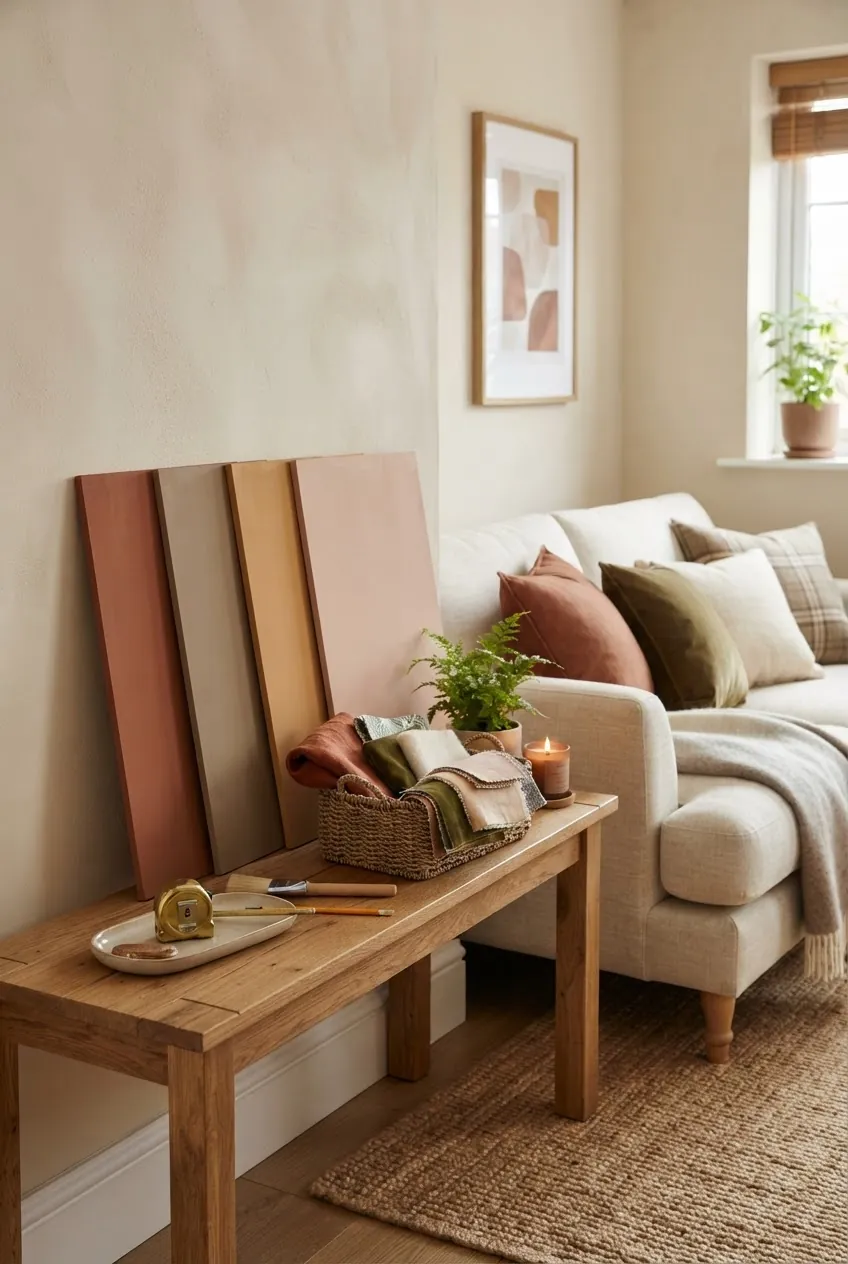
If the room faces north or receives low natural light, a warm neutral may look calmer than a saturated clay wall. If the room is bright and sunny, stronger earthy colours can feel rich rather than heavy. Always judge paint beside the fixed finishes you are not changing, especially floorboards, stone, tile, and large furniture.
Build an Earth Tone Living Room That Still Feels Fresh
Earth tones living room palettes are popular because they feel settled and natural. The risk is making the room too brown. To avoid that, mix soft brown with moss green, cream, clay, warm wood, and a little brass. The cream keeps the palette open; the green keeps it alive.
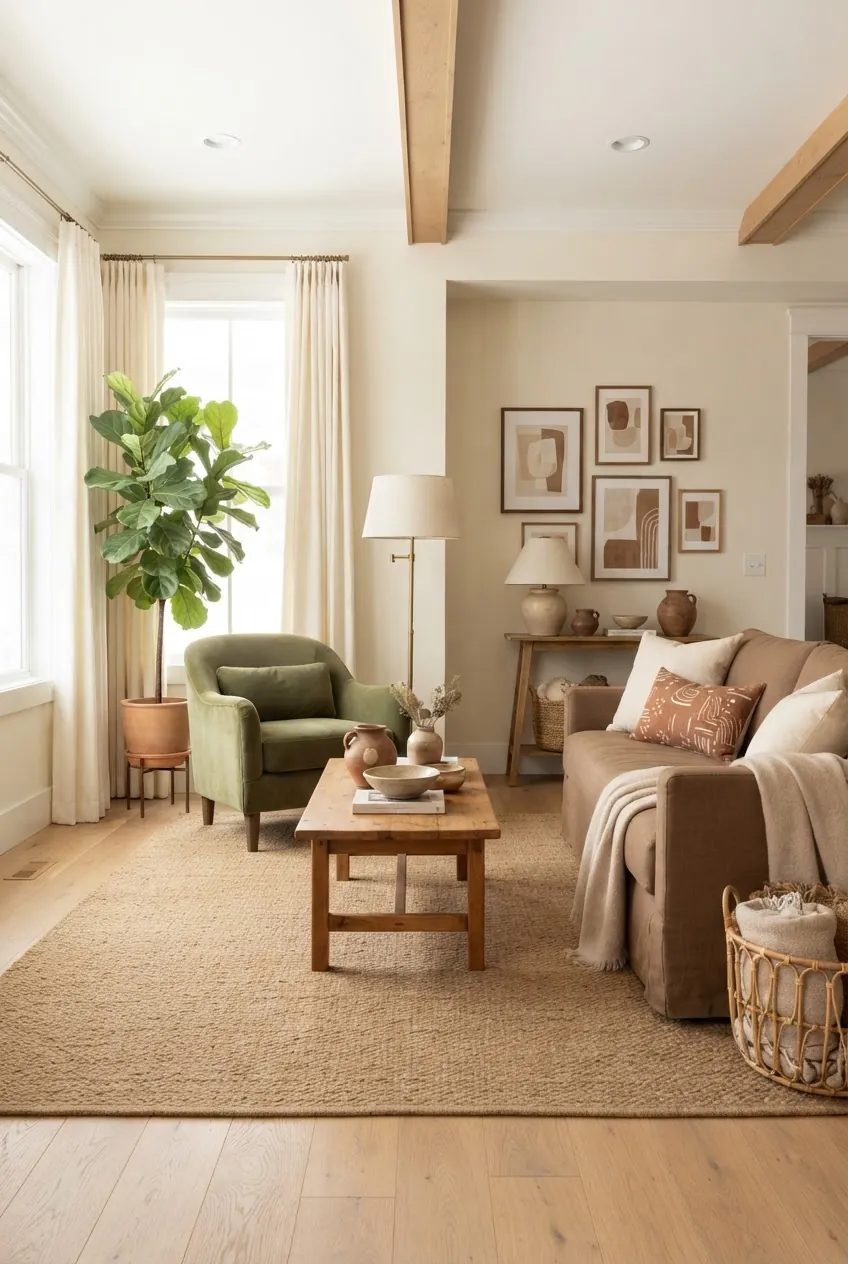
For an easy combination, try a soft brown sofa, moss green chair, clay pottery, a tan rug, and ivory curtains. Add black only in thin lines, such as a picture frame or lamp stem. This gives the scheme a modern edge while keeping the overall room warm.
Quick Warm Colour Pairings
- Ivory, pale oak, oat, terracotta, and soft black for warm Scandinavian style.
- Cream, greige, mustard, rust, and weathered wood for a farmhouse living room.
- Tan, amber, honey wood, ochre, and warm white for a lamp-lit living room.
- Cinnamon, brown velvet, cream, brass, and patterned wool for a cosy sitting room.
- Soft brown, moss green, clay, cream, and oak for a fresh earth tone palette.
The most reliable warm colours living room plan is simple: keep the biggest surfaces calm, repeat one warm accent in at least three places, and use lighting that flatters the palette. That gives the room warmth without turning it into a trend or a theme.