
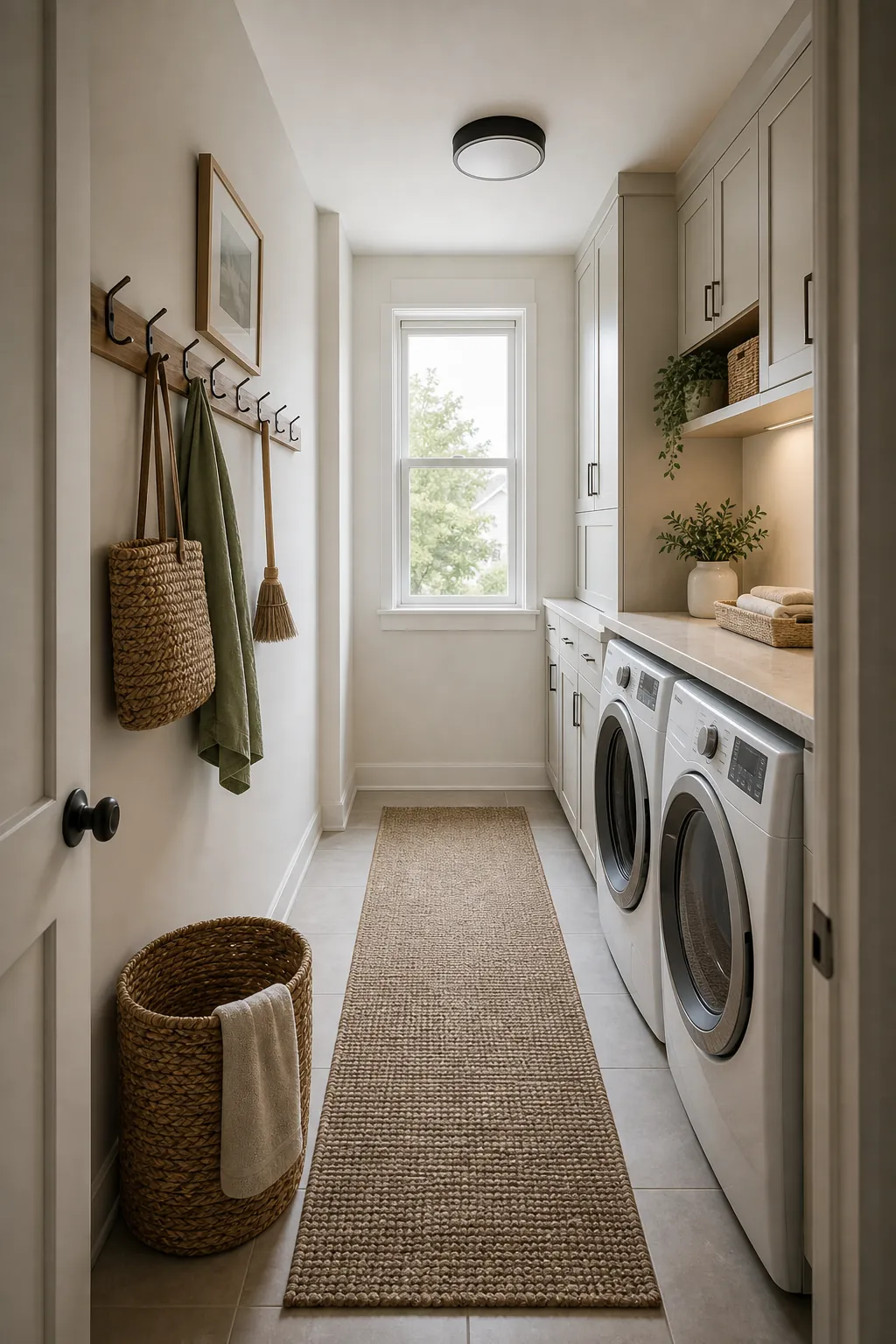
Small narrow laundry rooms are layout puzzles. The problem is rarely just storage; it is the way the door, machine doors, dryer vent, basket, sink, and your body all compete for one thin aisle.
These small narrow laundry room ideas focus on one-wall layouts, shallow storage, clear walking paths, and compact laundry room details that make a long utility space easier to use.
One-Wall Galley Run
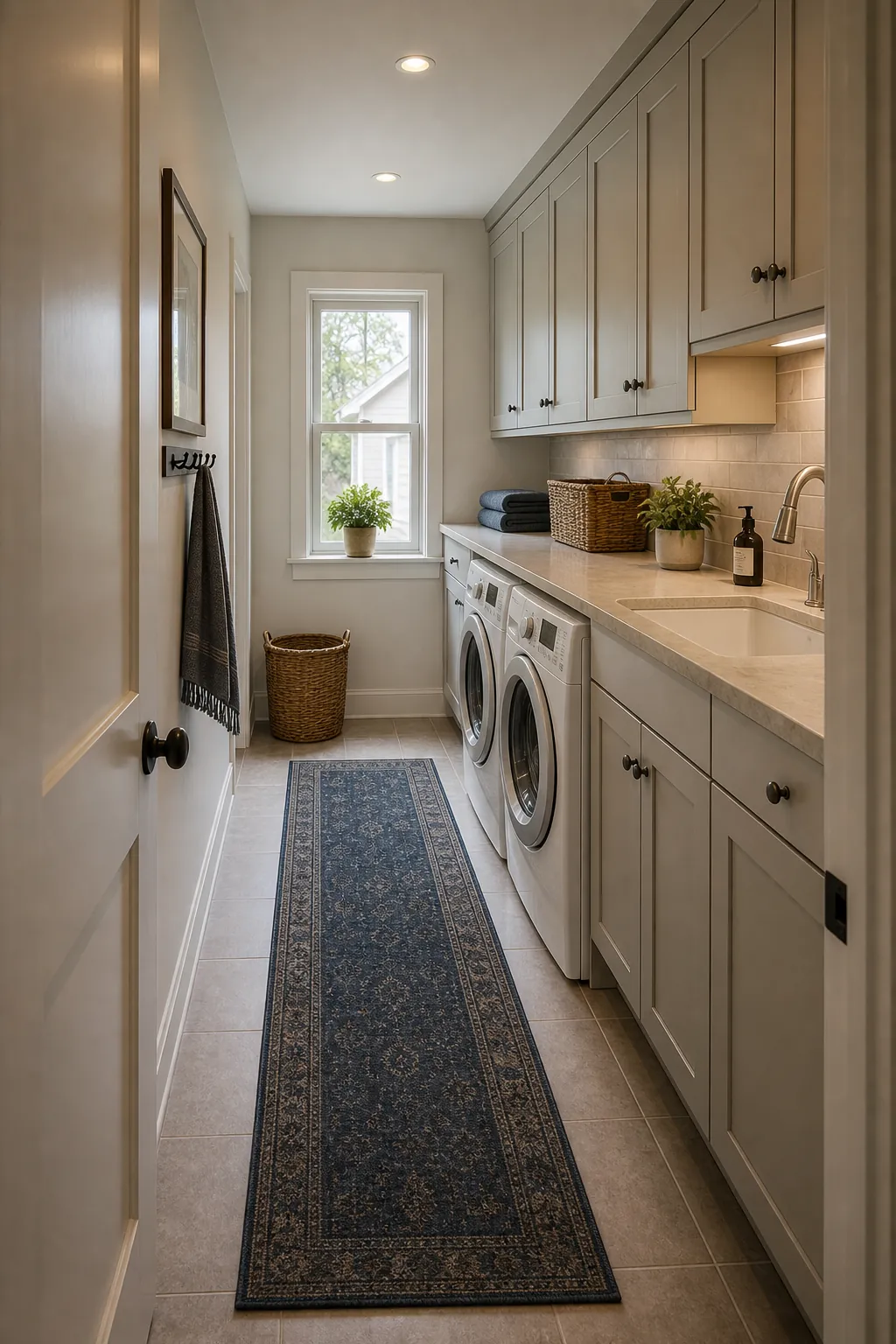
A one-wall run puts the washer, dryer, sink, counter, and tall storage on the same side, so the opposite wall can stay nearly flat. In a tight aisle, that single decision prevents the room from turning into a series of pinch points.
Measure the real depth: include hoses, vent elbows, door handles, and countertop overhang before you decide how wide the walking path will feel.
Pocket or Outswing Door
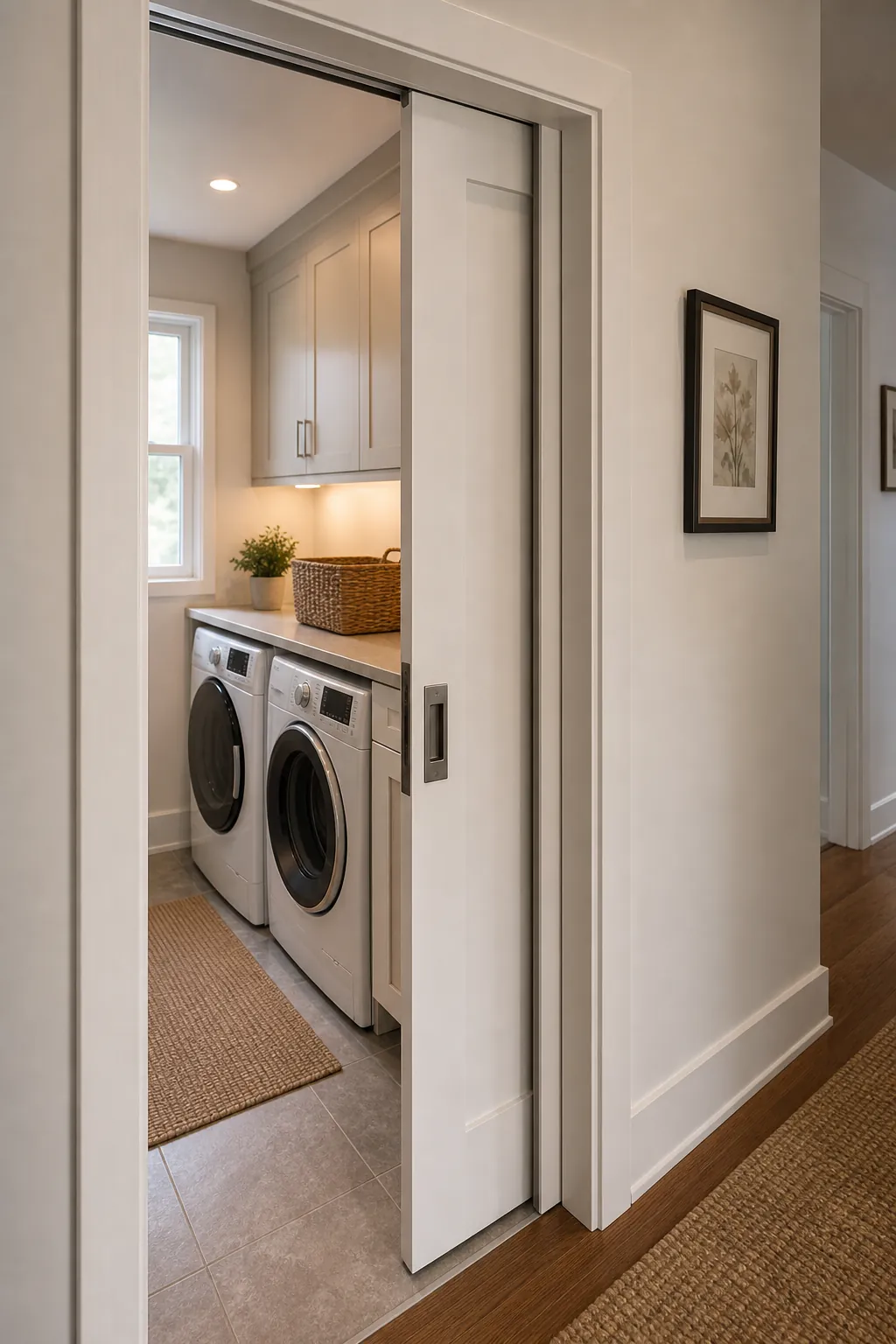
A pocket door or outswing door removes the first collision point at the entry. That matters most when the machines sit close to the doorway and an inward swing would block the basket path.
Check the wall cavity first: plumbing, switches, studs, and trim can affect whether a pocket door is possible; if not, a clean outswing or bifold can still free the aisle.
Right-Depth Vent Zone
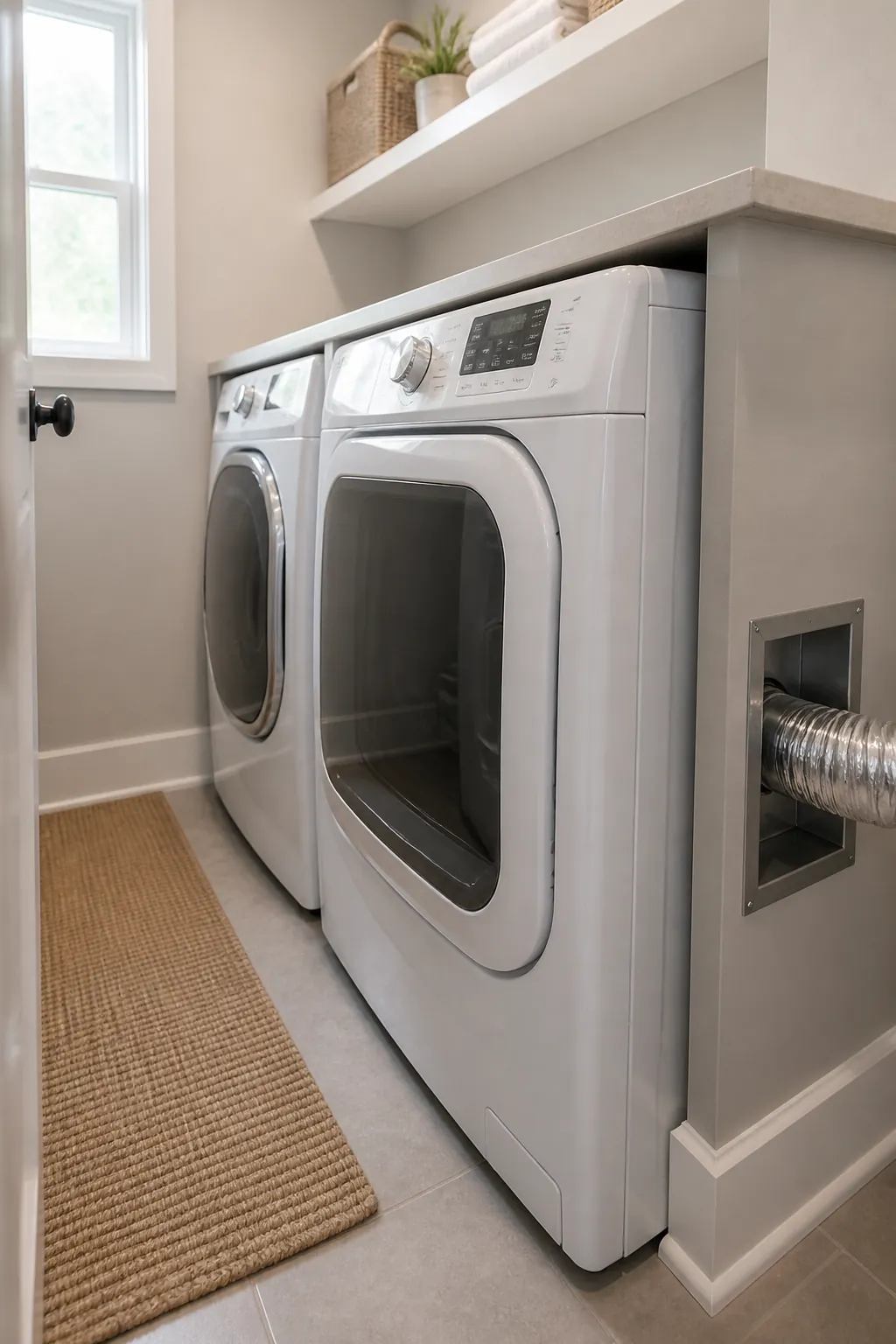
Dryers often steal more floor space than expected because the vent and hose area sits behind the machine. Planning that depth upfront keeps the front of the dryer from projecting farther than the washer or cabinets.
Use a compact vent route: a recessed vent box or short rigid run can recover inches, but it still needs safe access for cleaning and maintenance.
Shallow Opposite Wall Hooks
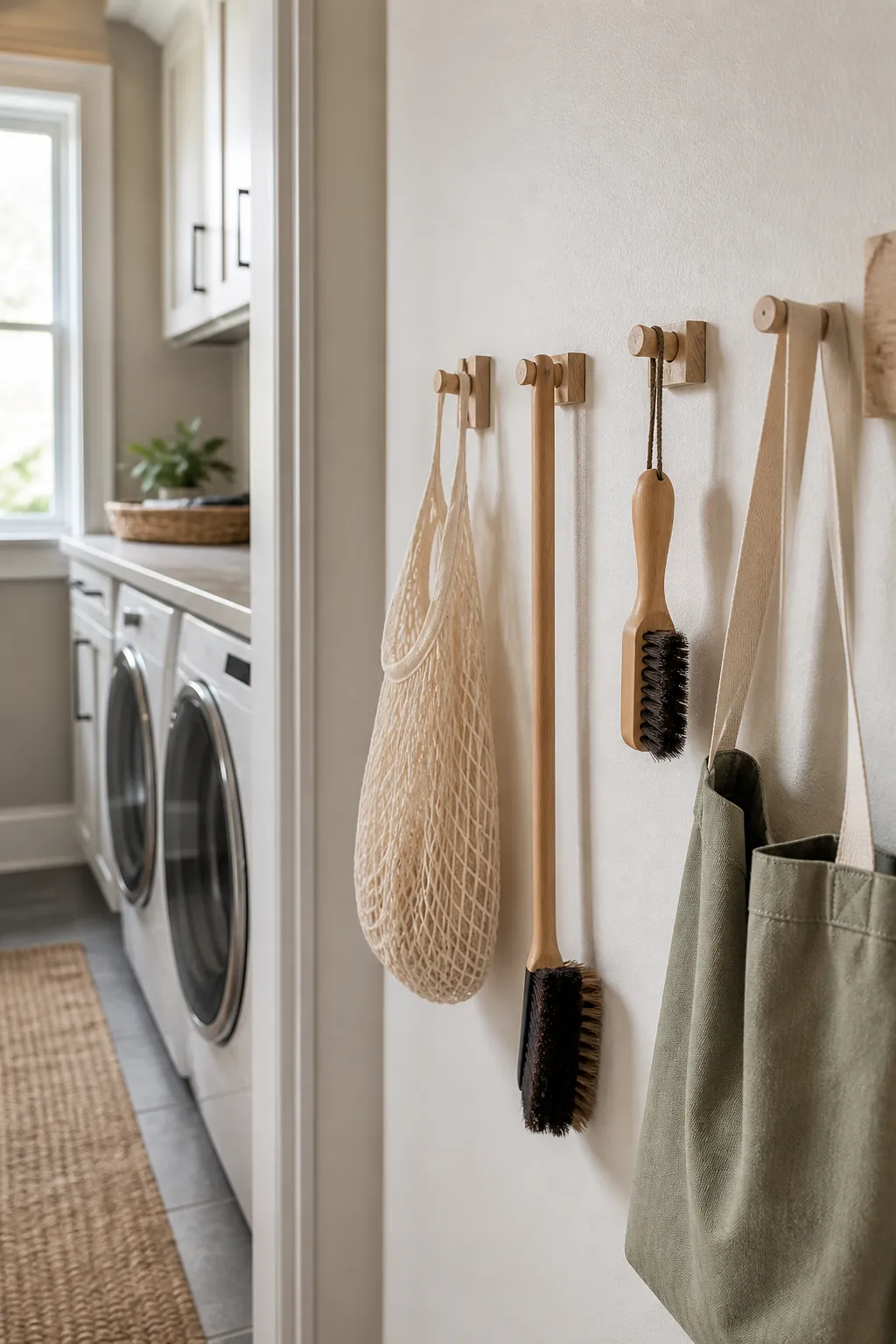
On the wall opposite the machines, shallow hooks give you a place for tote bags, garment bags, lint brushes, or a drying hanger without adding cabinet depth. They work best when they sit above shoulder or hip zones that people do not brush constantly.
Keep projections slim: choose low-profile hooks and limit what hangs there, otherwise the storage wall becomes the thing that narrows the passage.
Stacked Machines With Landing Shelf
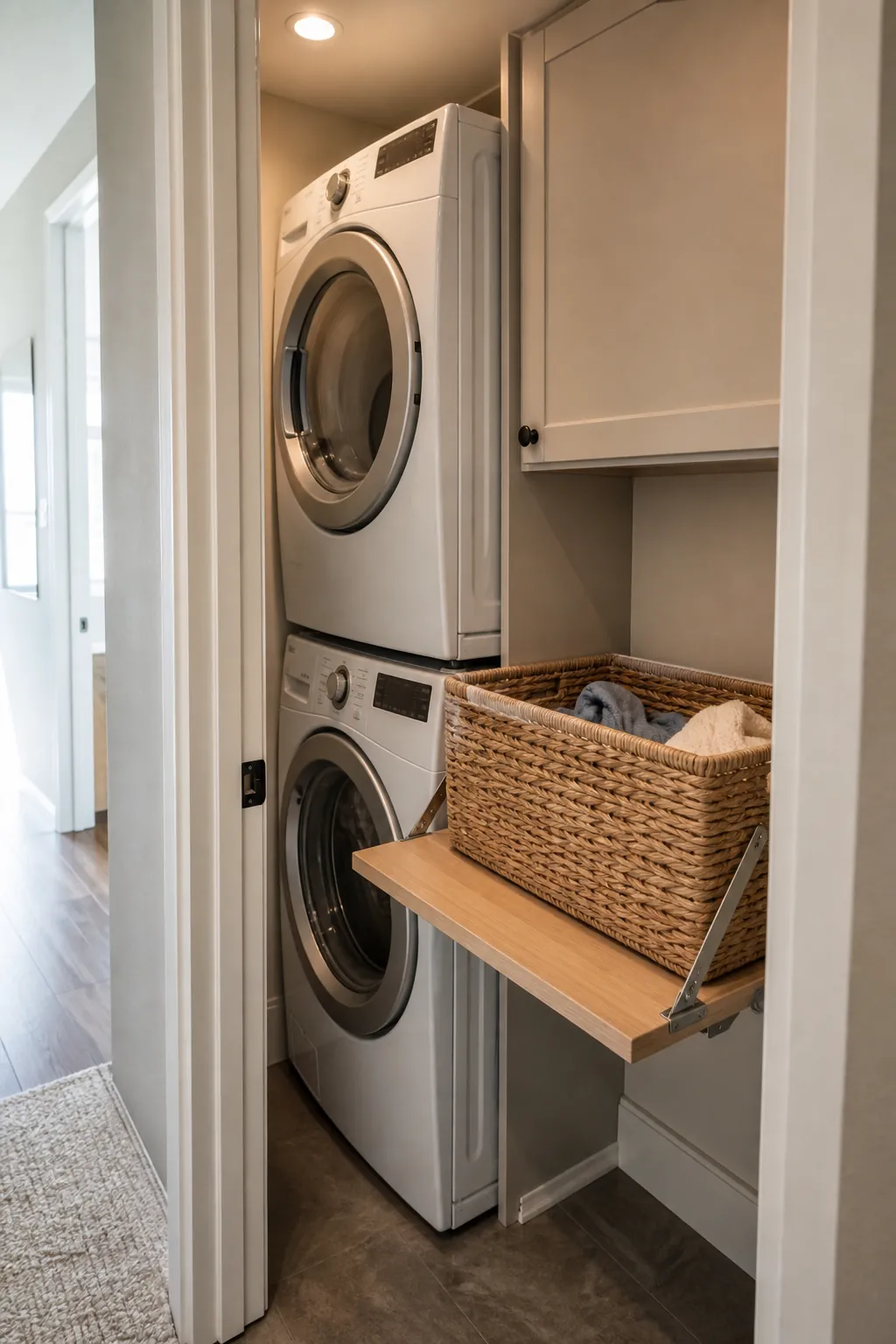
Stacking machines can turn side-by-side width into a vertical zone, leaving room for a landing shelf or a narrow basket spot nearby. The shelf is what makes the stack usable because clean clothes need somewhere to pause.
Put the landing surface at hand height: even a shallow ledge beside the stack is better than balancing baskets on the floor or blocking the doorway.
Long Runner With Light Tile
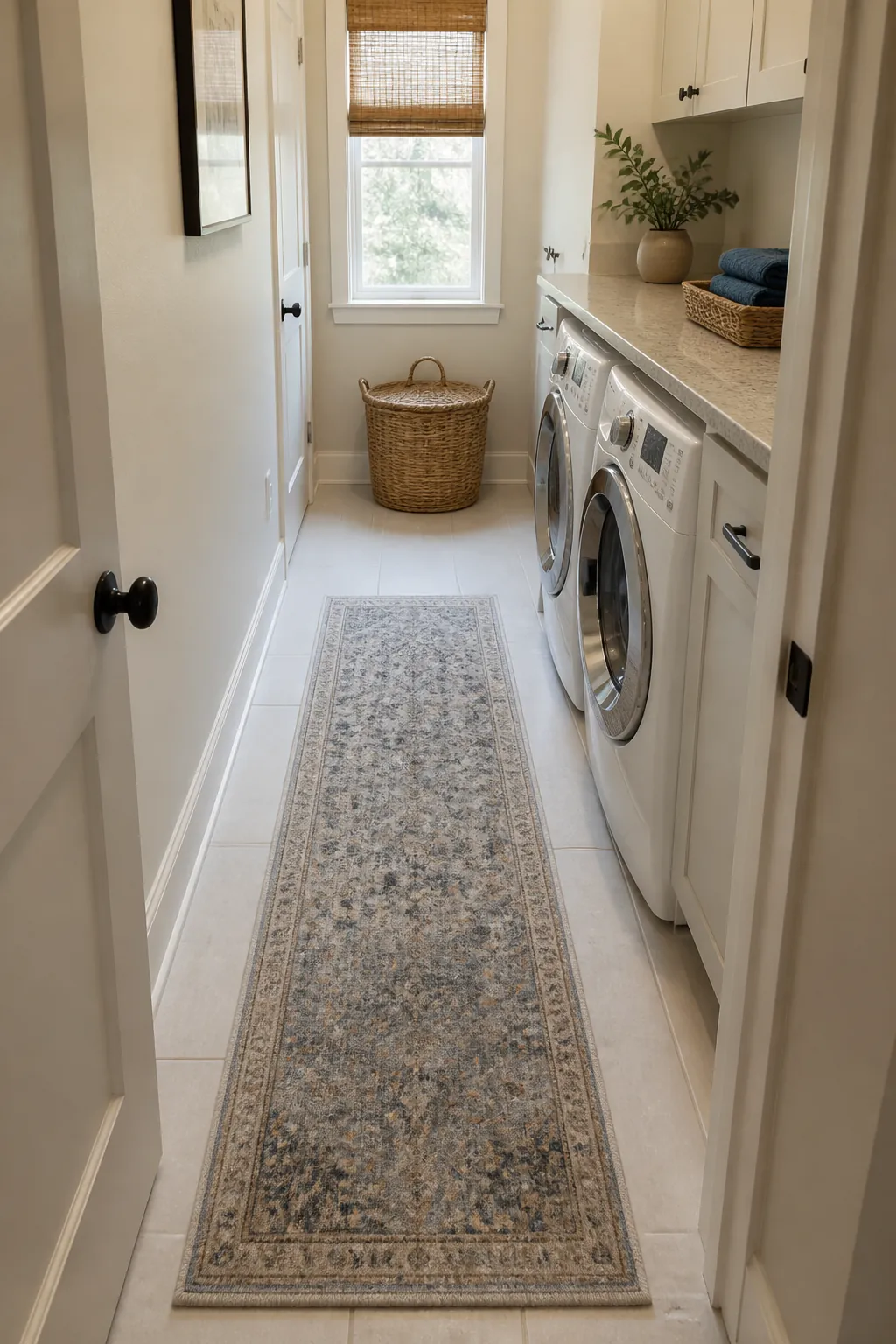
A long runner and light tile will not make the room physically wider, but they can make the aisle read as intentional instead of leftover. The most useful versions are flat, washable, and narrow enough to clear appliance doors.
Avoid bulky edges: thick rugs, curled corners, or high thresholds become trip points when your hands are full of laundry.
Low Cabinets Over the Work Side
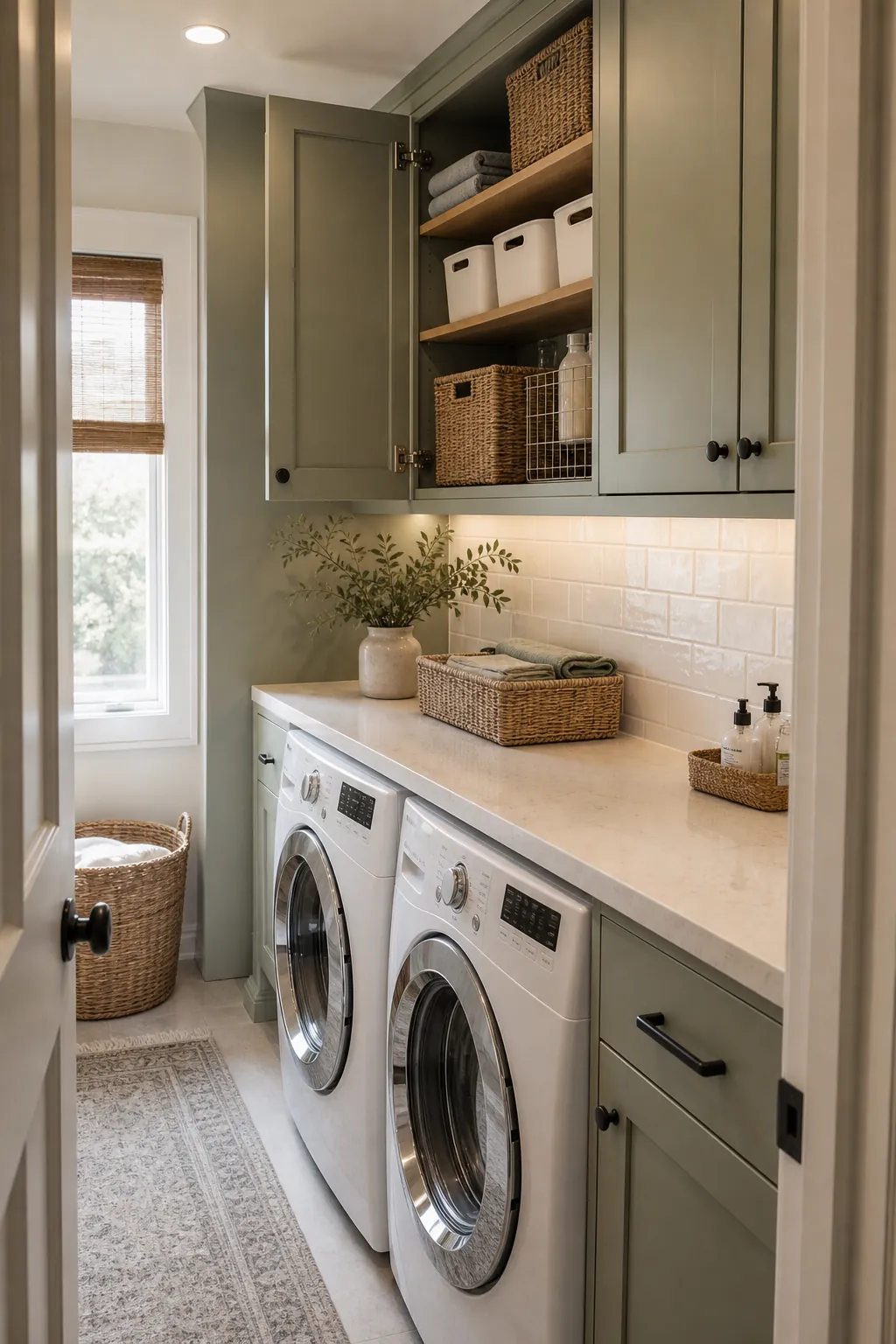
Cabinets over the work side should be reachable without stepping back into the opposite wall. Lower, shallower uppers can be more useful than tall cabinets that look good but require stretching in a tight aisle.
Store frequent items closest: detergent, stain tools, clothespins, and dryer sheets belong in the easiest cabinet; overflow supplies can move elsewhere.
Pull-Out Shelf Between Machines
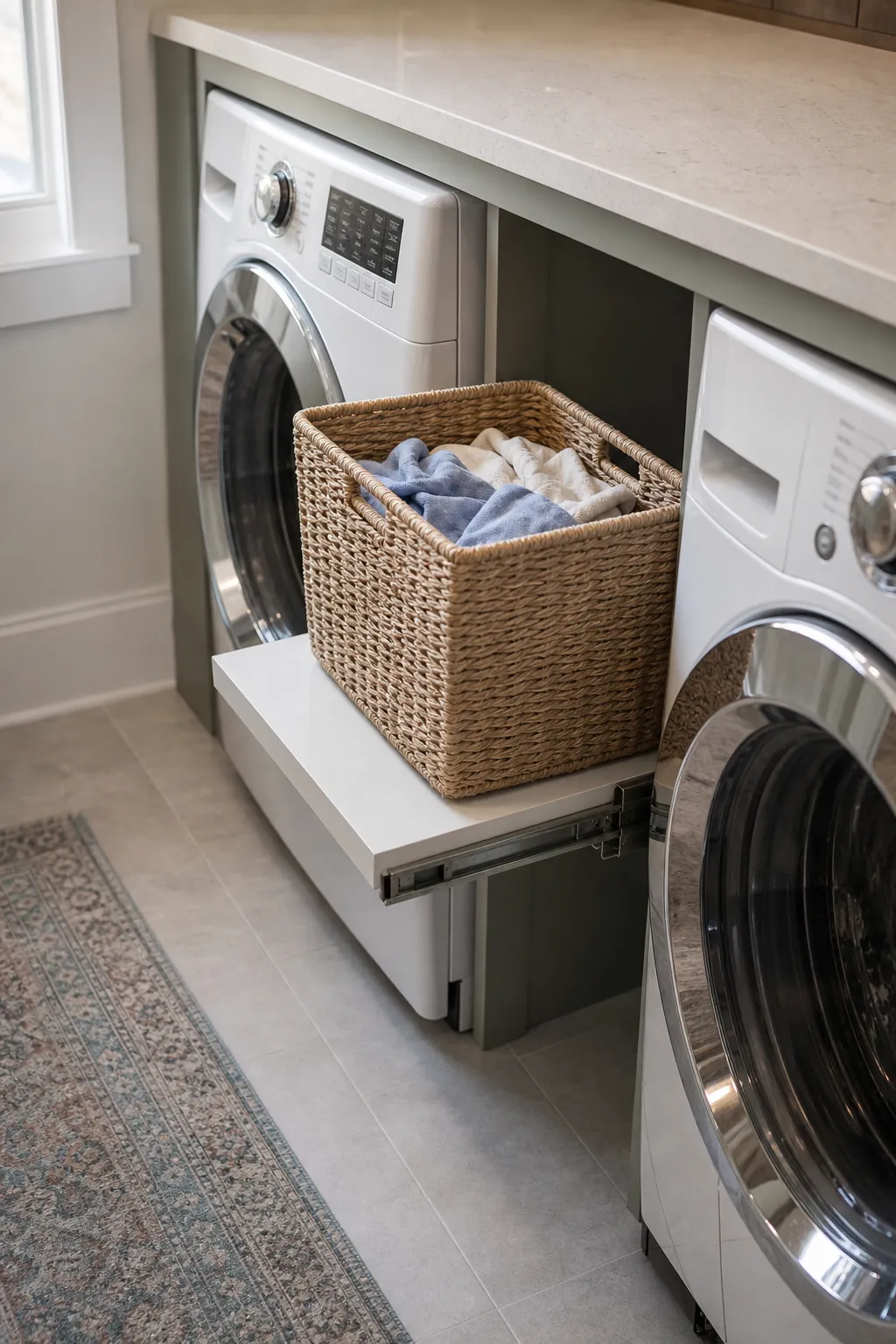
A pull-out shelf between or beside machines gives you a temporary surface only when you need it. It is especially helpful in a narrow room where a permanent table would block traffic.
Design it as a pause point: size it for one basket or a small folded stack, not a heavy worktop that will sag or stay open all day.
Far-End Utility Sink
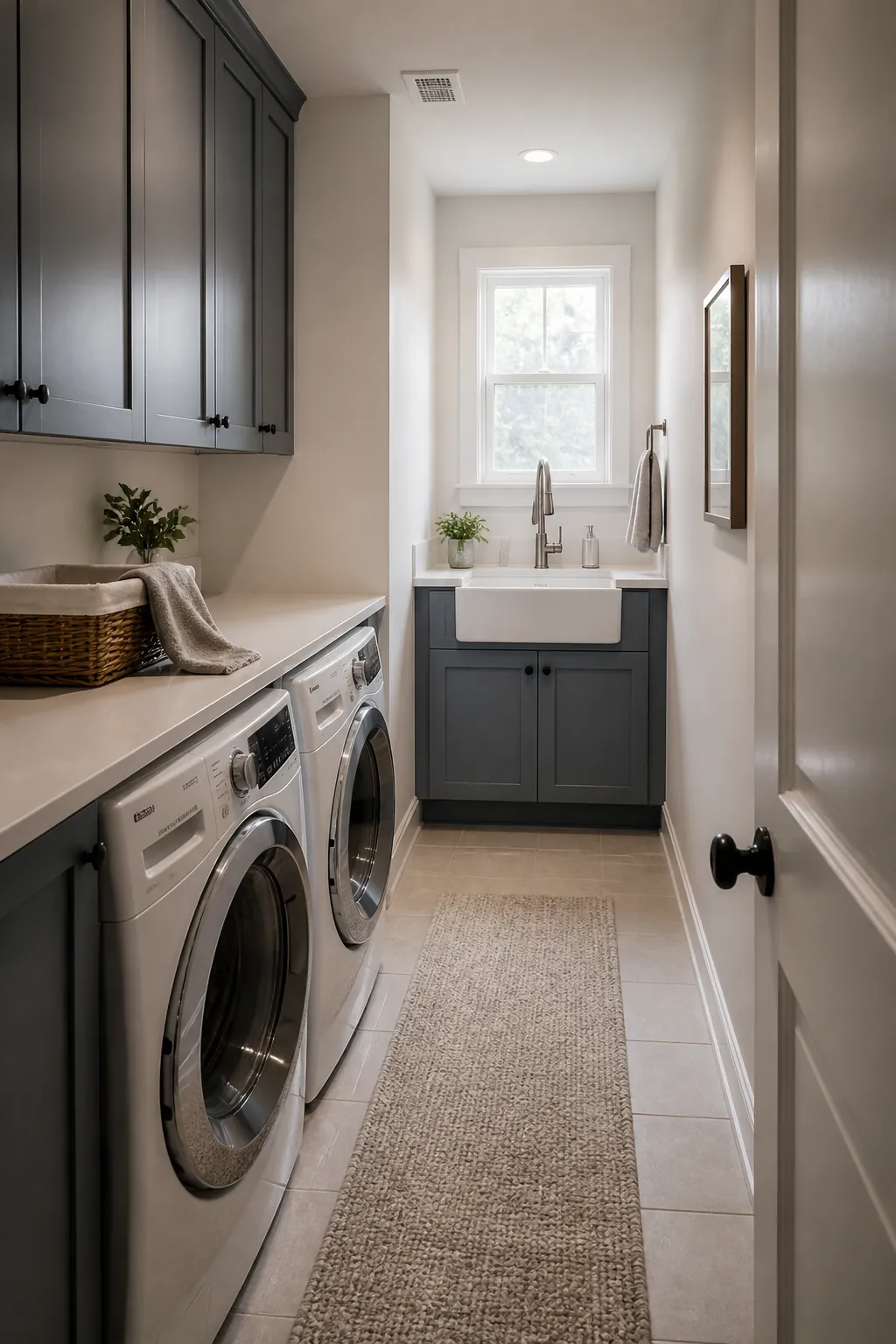
A far-end utility sink uses the dead-end wall as a task zone instead of adding another obstruction along the aisle. It can handle soaking, rinsing, and plant watering without interrupting the machine side.
Keep the basin compact: choose a small sink, wall-mounted faucet, and open knee space or slim base so the end of the room does not feel jammed.
Vertical Cleaning Tool Niche
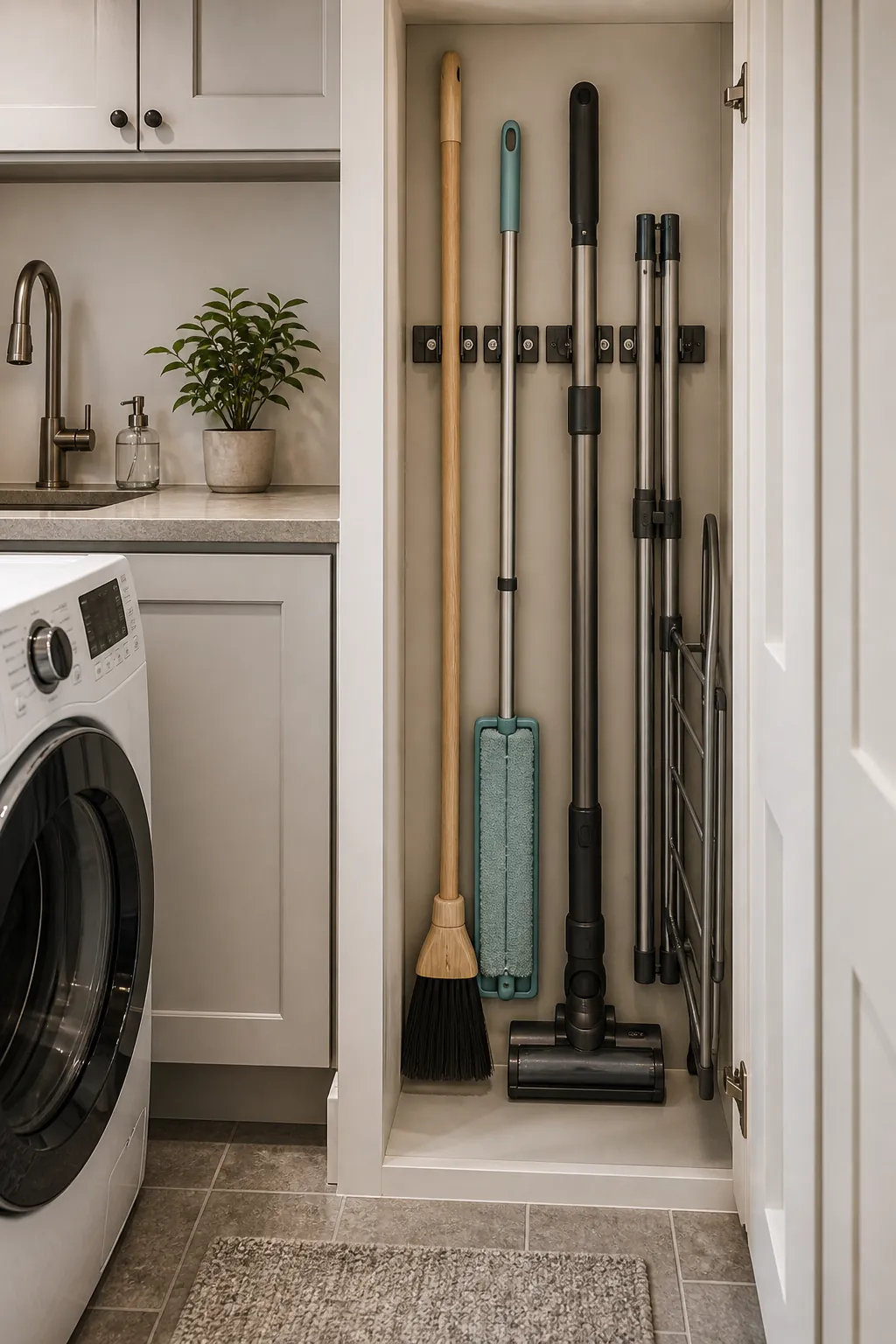
A vertical niche corrals brooms, mops, an ironing board, and cleaning sprays in one tall strip. That is better than letting long tools lean into the walking path or slide behind machines.
Give every item a clip or rail: upright storage only works when tools return to the same spot and the handles do not fan out into the aisle.
Hampers at the Open End
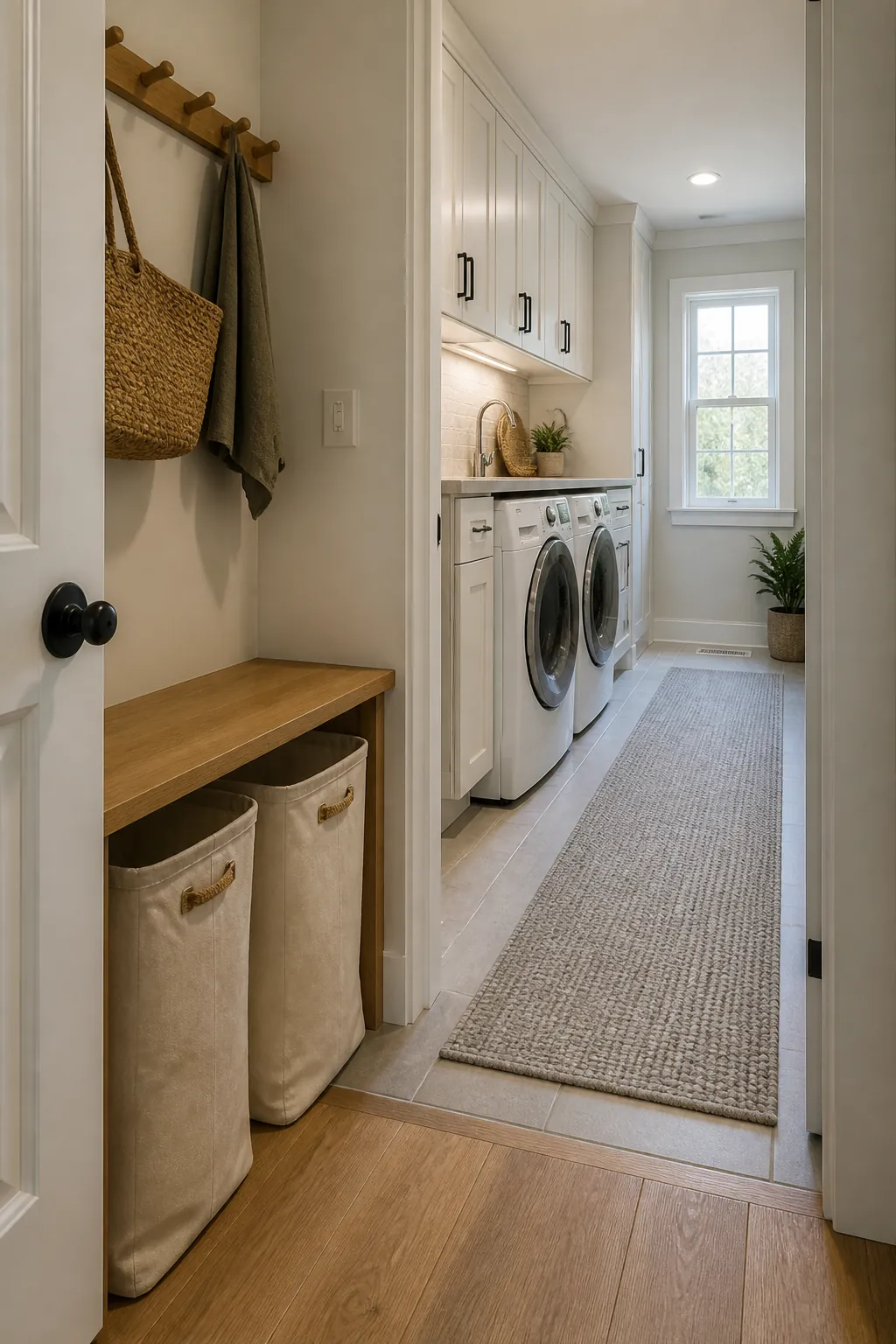
Hampers are often the widest loose object in the room, so placing them at the open end keeps sorting from happening in the tightest part of the aisle. Rolling or stackable versions can move when the machines are open.
Match hampers to traffic: one slim sorter may work better than three separate baskets if the room is also a pass-through or closet entry.
Fold-Down Drying Rack
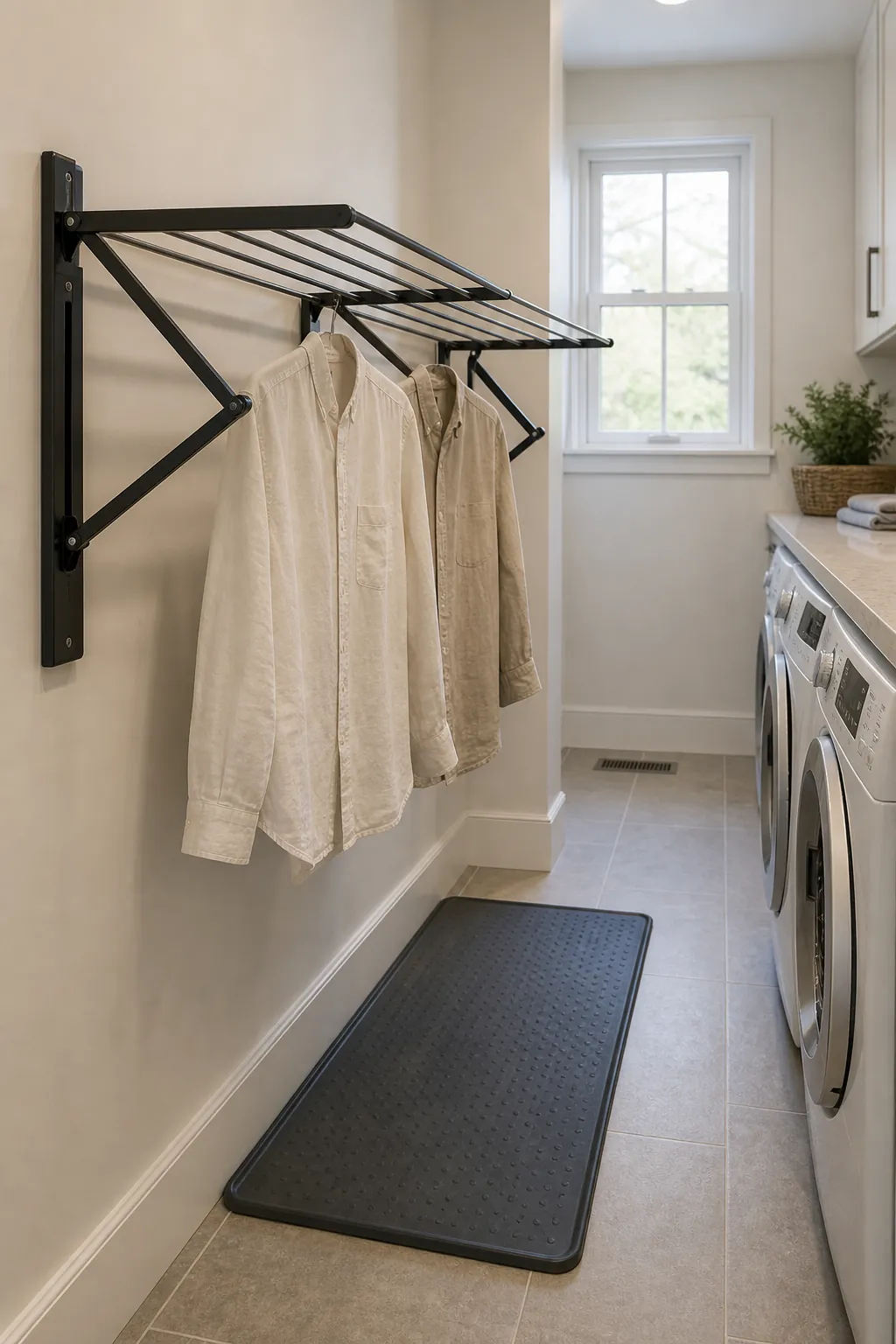
A fold-down rack gives delicate items a drying spot without permanently occupying floor space. Mounting it on a narrow wall works when it opens over an area that can be temporarily paused, not over a door swing.
Plan the open position: test the rack depth with hangers and wet sleeves included, because the usable footprint is larger than the closed rack suggests.
Calm Narrow Palette
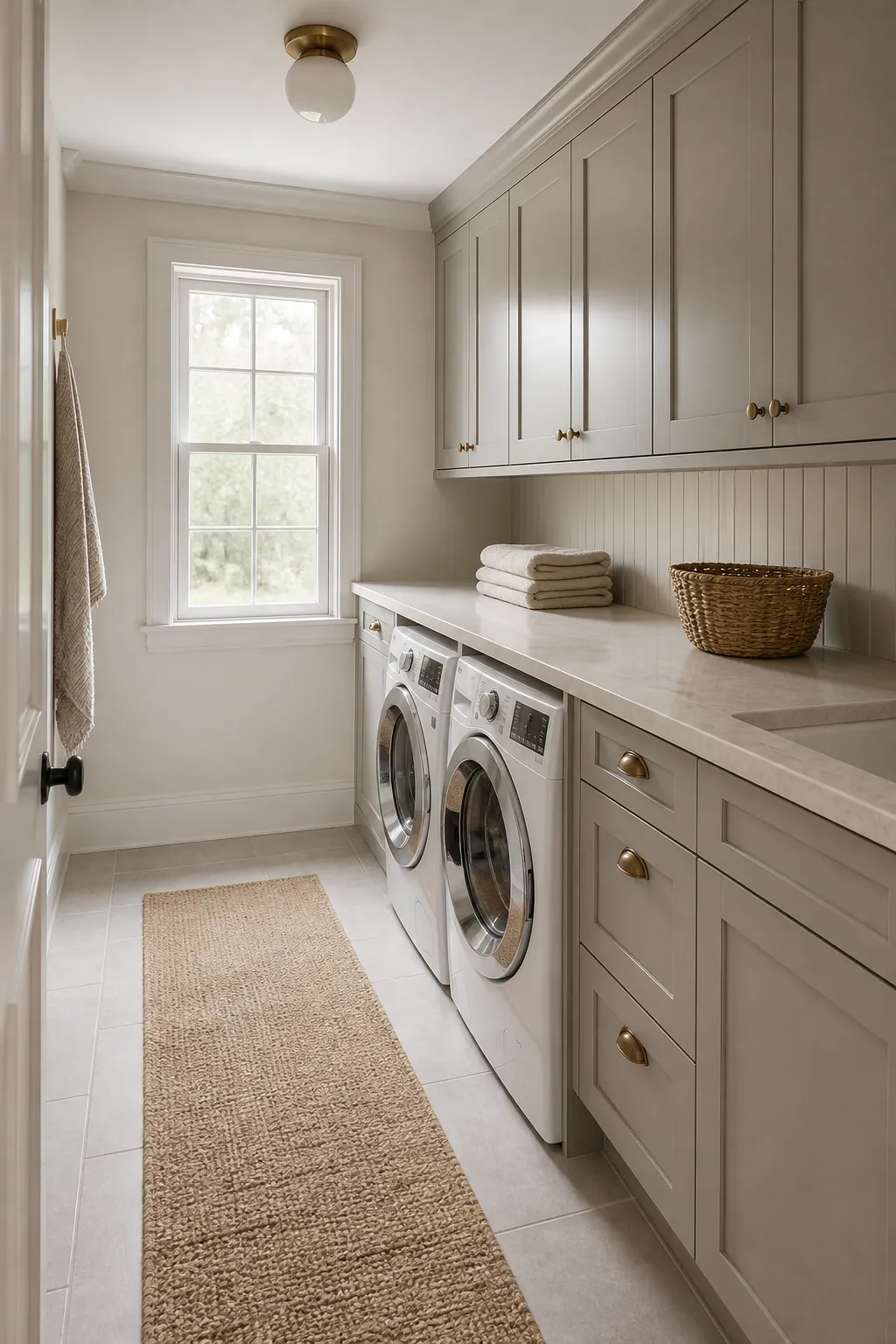
A calm palette helps when the room already has many small visual breaks: machine fronts, baskets, bottles, hinges, hooks, and tile lines. Keeping colors quiet lets the layout feel cleaner even before extra storage is added.
Hide the busy items: decant only if you maintain it; otherwise use closed bins, matching baskets, and one restrained accent so daily supplies do not become visual clutter.
Once the aisle works, the room can look calm. Keep the deepest storage on the work wall, edit the opposite wall, and use finishes that make the long shape feel intentional.