
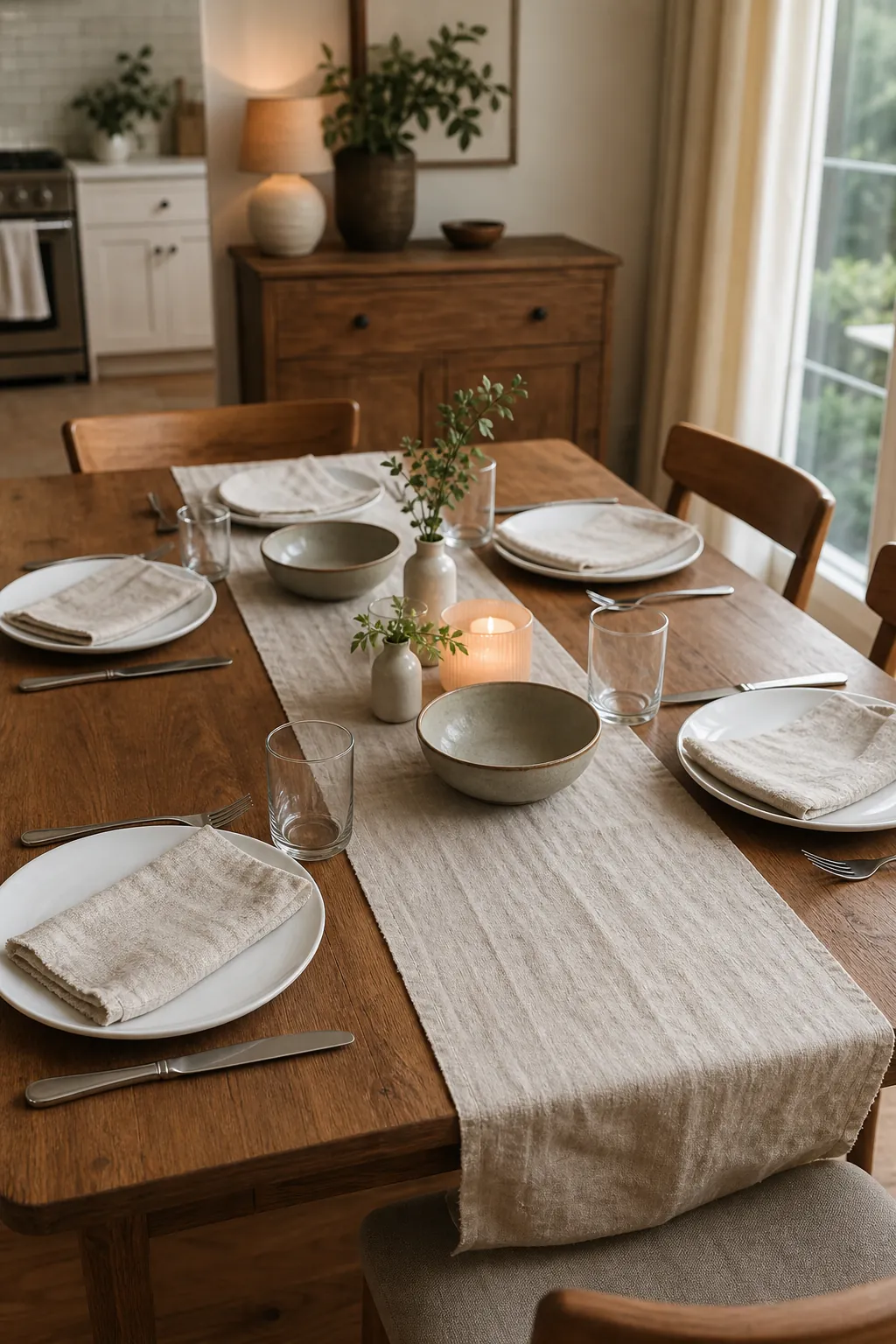
A casual dinner table works best when it feels easy to sit down at, easy to pass food around, and still pretty enough that the meal feels considered. The goal is not a formal place setting. It is a simple table setting that gives everyday plates, table linens, low centerpieces, and warm light a little more intention.
Most casual dinner tables go wrong in one of two directions. They are either so bare that the room feels unfinished, or they are so styled that there is nowhere comfortable to put the salad bowl. A better approach is to build the setting in layers: a clean base, practical plates, one low focal point, relaxed linens, and just enough repetition to make the table decor feel cohesive.
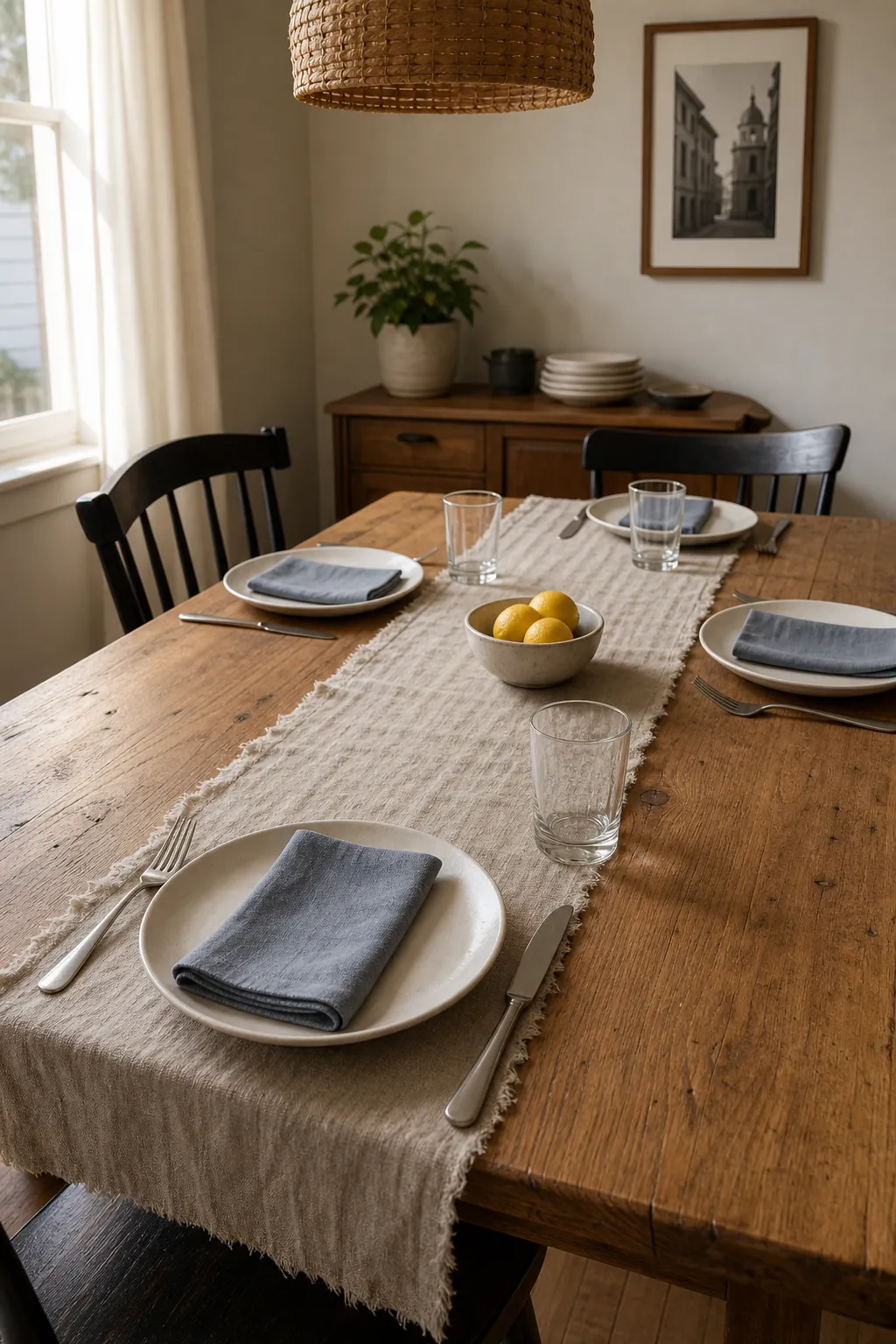
Start With A Linen Runner Instead Of A Full Tablecloth
A runner is the easiest way to make a casual dinner table look styled without turning it into a formal event. It gives the center of the dining table a finished line, but it still leaves the wood, stone, or painted tabletop visible. That balance matters because casual table decor should make the table feel used, not staged.
Choose linen, cotton, slubbed cotton, or a washed-look blend rather than anything shiny. A slightly relaxed fabric hides minor wrinkles and works with everyday dishes. If your dinner table is small, keep the runner narrow enough that dinner plates do not sit half on and half off the fabric. That one detail makes the whole tablescape feel calmer.
- For a wood table: try oatmeal, soft white, sage, faded blue, or warm gray.
- For a white or painted table: add texture with flax linen, ticking stripe, or a subtle block print.
- For a dark table: soften the contrast with ivory napkins and clear glassware.
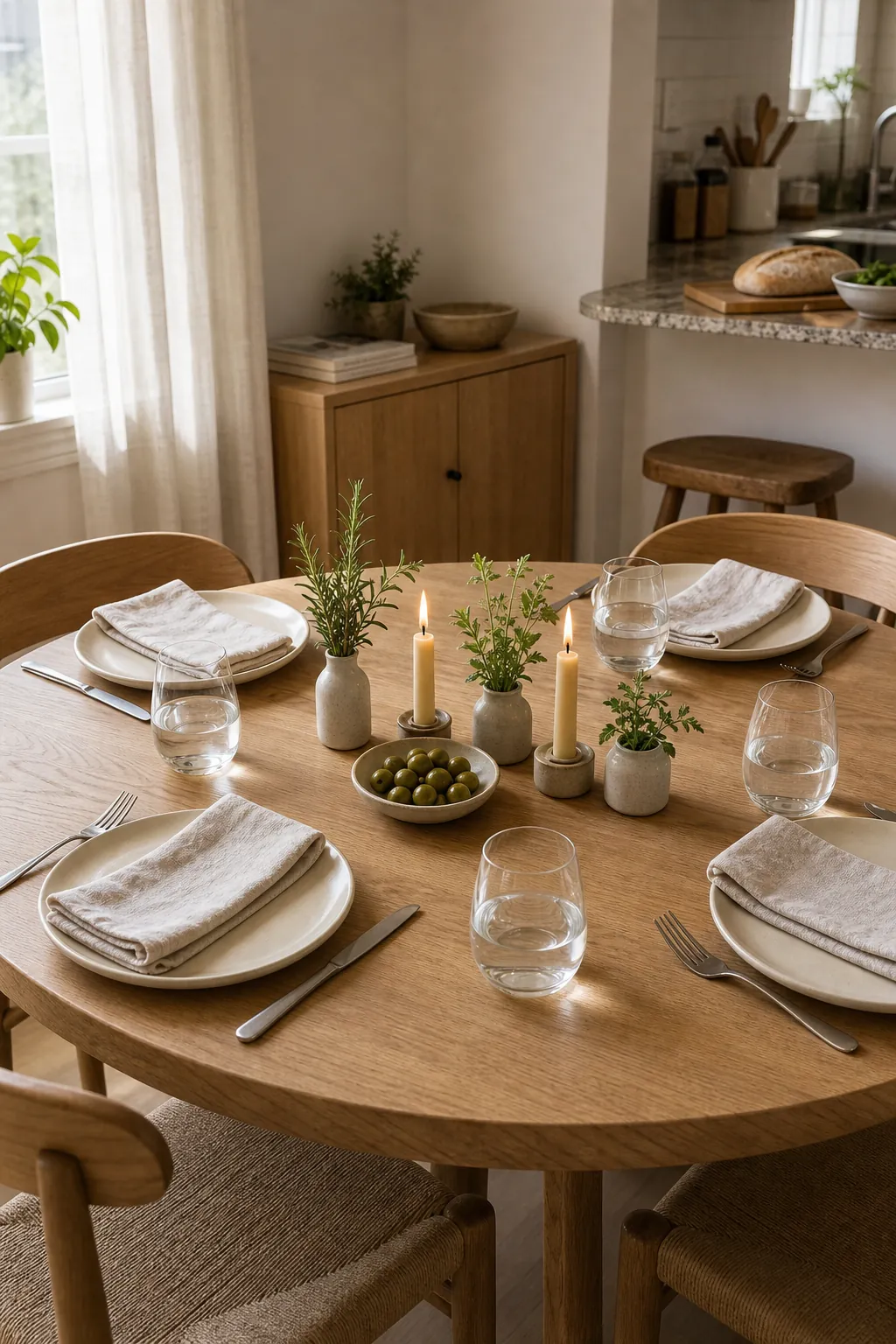
Keep The Centerpiece Low Enough For Real Conversation
The centerpiece should make the table feel special, but it should never become the thing everyone has to look around. For casual dinner table styling, stay low and spread the detail along the middle of the table. Think bud vases, a shallow bowl of lemons, a small crock with herbs, tea lights in glass cups, or two short taper candles placed where they will not crowd serving dishes.
A good test is simple: sit down and look across the table. If you cannot see the person opposite you without moving your head, the centerpiece is too tall. If there is no room for a skillet, platter, salad bowl, or bread basket, there is too much decor. Pretty table decor has to leave space for dinner.
- Use odd numbers for small objects, such as three bud vases or five tea lights.
- Repeat one material, such as glass, ceramic, brass, or wood, so the table looks intentional.
- Leave at least one clear landing zone for shared dishes.
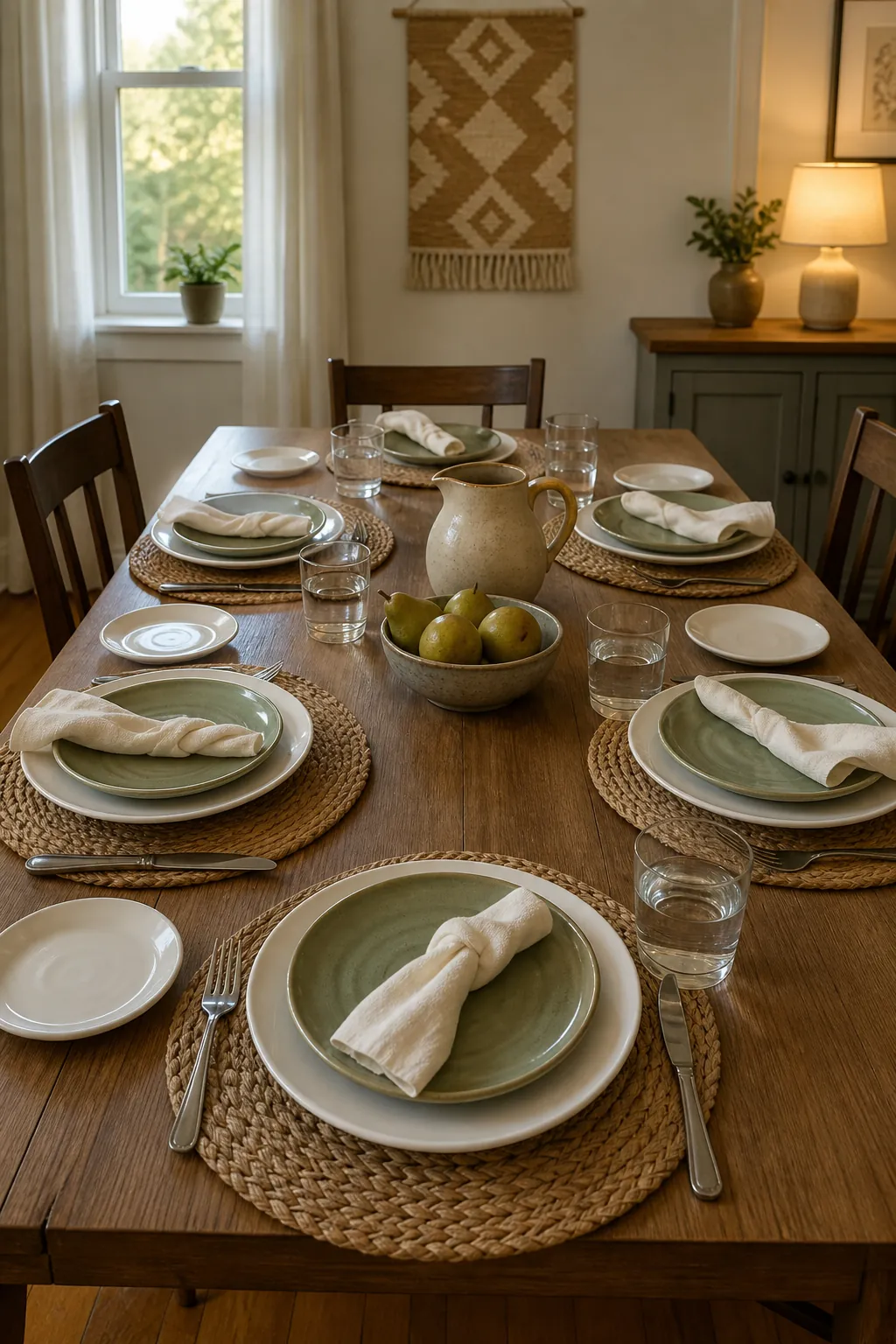
Use Everyday Plates, Then Add One Special Layer
You do not need a full matching dinnerware set for a good casual dinner table. Everyday plates are usually the right foundation because they make the setting feel relaxed. Add one elevated layer so the table looks deliberate: a salad plate in a different color, a textured charger, a patterned napkin, a small bread plate, or a stemmed glass beside a basic water glass.
This is where simple table setting ideas become useful instead of expensive. If your dinner plates are plain white, bring in warmth with woven placemats or olive-green napkins. If your plates are patterned, keep the rest of the dining table decor quieter. If you love mismatched pieces, repeat one color across the table so it feels collected rather than random.
For a casual dinner, the basic arrangement is enough: fork to the left, knife to the right with the blade facing the plate, spoon only if the meal needs one, and a water glass above the knife. Only set what people will actually use. Extra utensils make the table look busy and make guests wonder if they are missing a rule.
Let Cloth Napkins Do Most Of The Styling
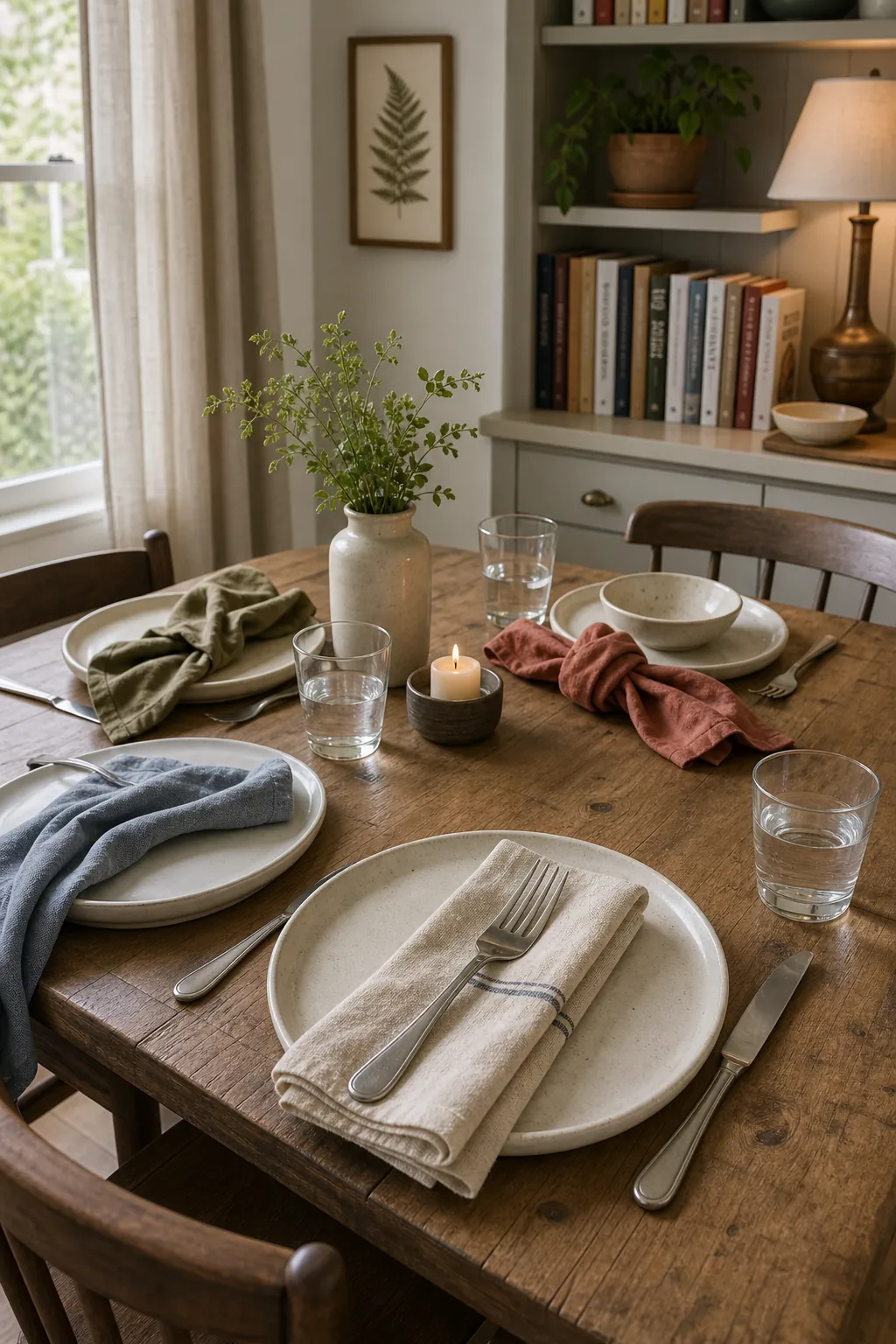
Cloth napkins are one of the fastest ways to make a casual dinner feel hosted. They add color, softness, and movement without taking up the middle of the table. They also work across many dinner table styling moods, from cottage decor to modern natural home decor.
Skip complicated folds. Fold the napkin into a rectangle and place it under the fork, lay it across the plate, or knot it loosely and set it slightly off center. A loose fold often looks better than a perfect fold because it suits the relaxed mood. If the meal is saucy or hands-on, choose darker napkins or washable cotton so guests do not feel nervous using them.
- Soft and simple: white plates, flax napkins, clear glasses, and a low green centerpiece.
- Warm and casual: terracotta napkins, wood boards, cream plates, and amber votives.
- Fresh and pretty: blue striped napkins, small flowers, white plates, and polished flatware.
Finish With Warm Light And A Clear Serving Plan
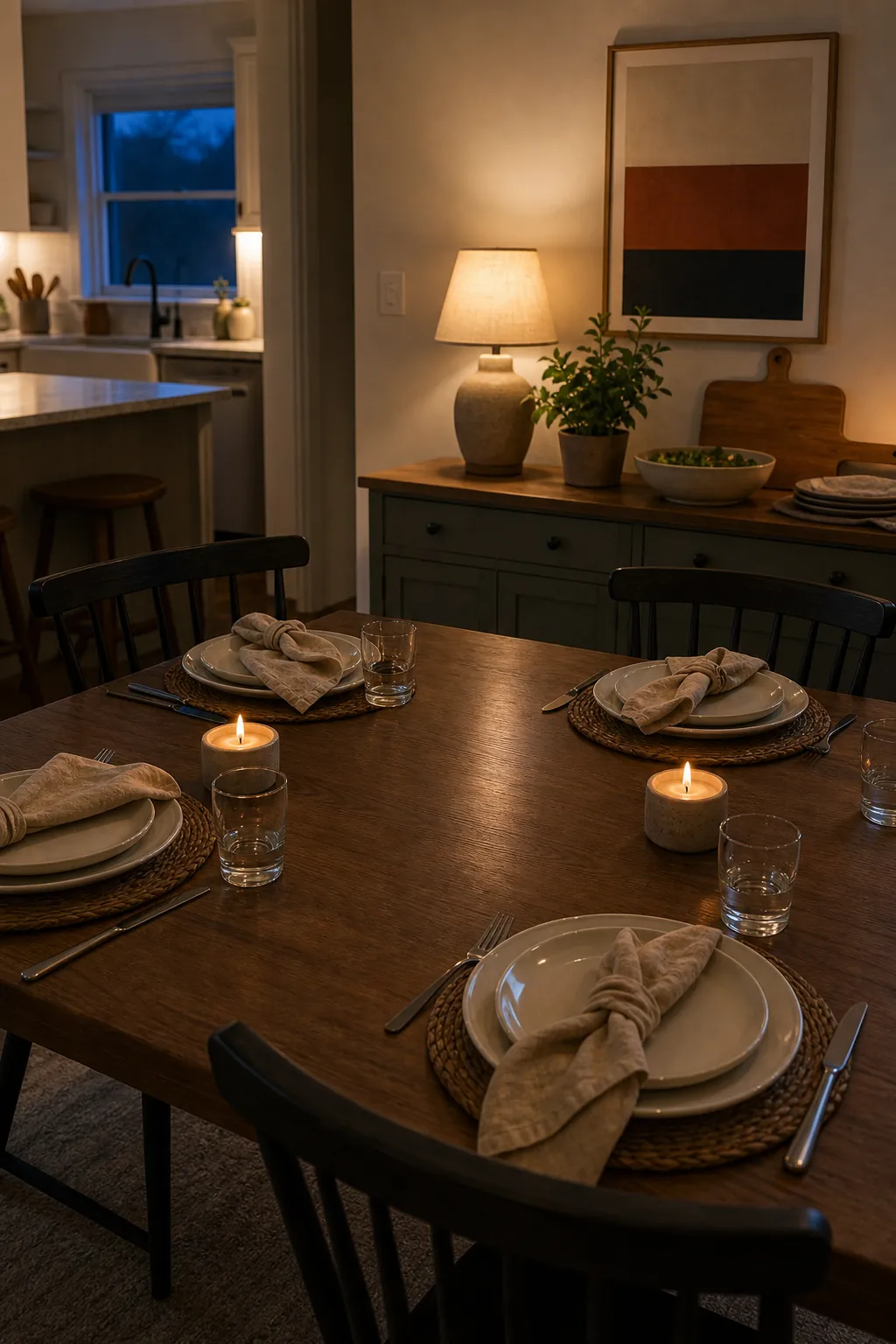
Lighting is what makes a simple tablescape feel like dinner instead of an everyday surface. Lower the overhead light if you can, add small candles, or use a nearby lamp to warm up the dining room. Unscented candles are best at the table because they do not compete with the food.
Before guests arrive, decide where the food will go. A small table may need a sideboard, kitchen counter, or bar cart for serving dishes. A larger table can handle a few shared platters, but the center still needs breathing room. This is the detail that separates pretty table decor from practical home entertaining: the table should look ready before dinner and still work once dinner lands on it.
Use A Side Station When The Table Is Small
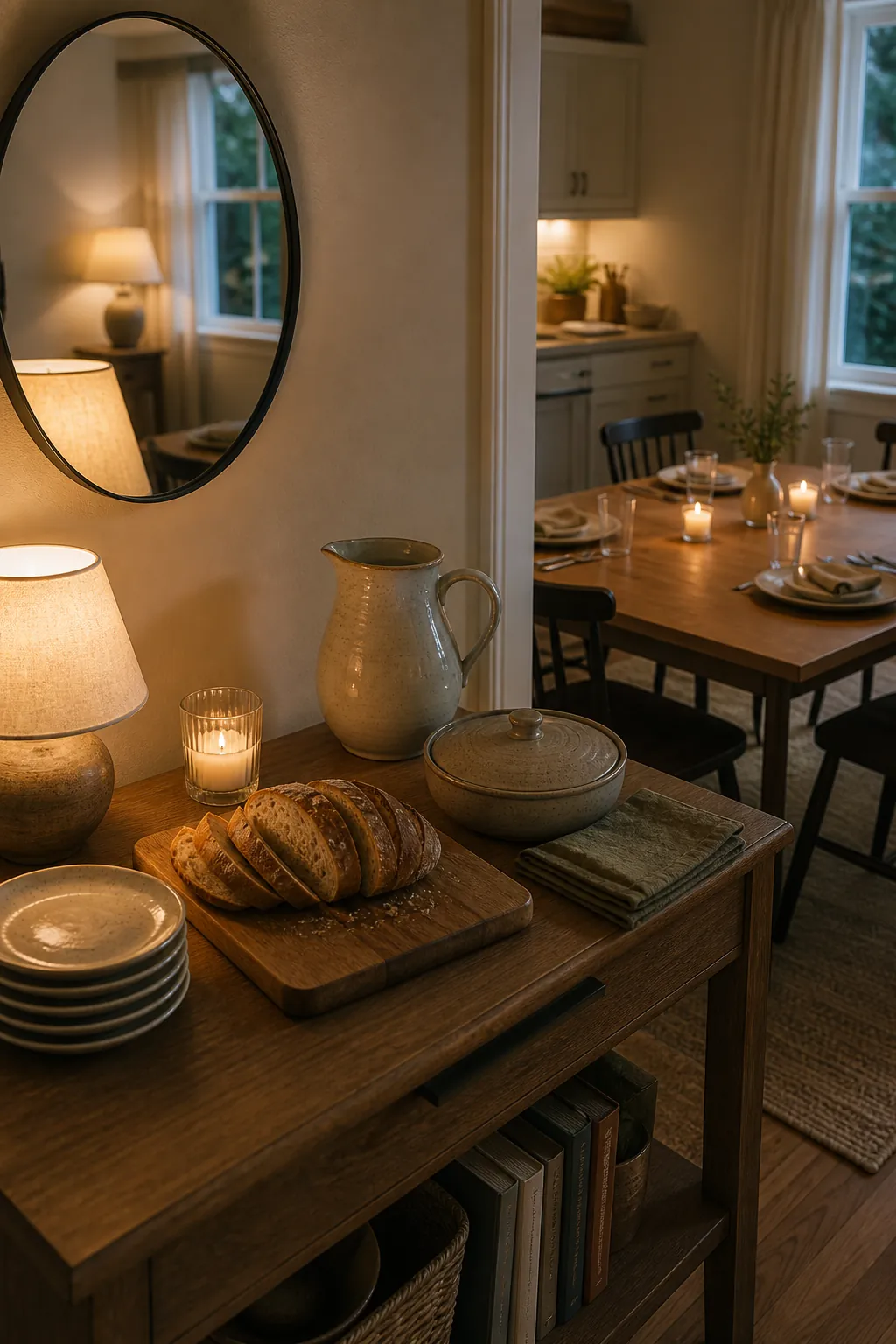
A casual dinner does not need every dish on the table at once. If the dining table is small, put water, bread, extra napkins, salad, or dessert plates on a sideboard, kitchen counter, or bar cart. The table will look more polished because it is not overloaded, and guests will have an easier time passing plates and settling in.
This also lets the centerpiece stay simple. Instead of removing candles and flowers when dinner starts, you can keep the low decor in place and serve from the side. For everyday tablescape planning, that is often the most realistic version of pretty: one styled surface for sitting and one practical surface for serving.
Use the same rule for the whole table: repeat, edit, and leave space. Repeat one color or material. Edit anything that blocks conversation or serving. Leave enough room for elbows, glasses, and the food everyone came to enjoy. That is how a casual dinner setting feels simple, pretty, and genuinely welcoming.