
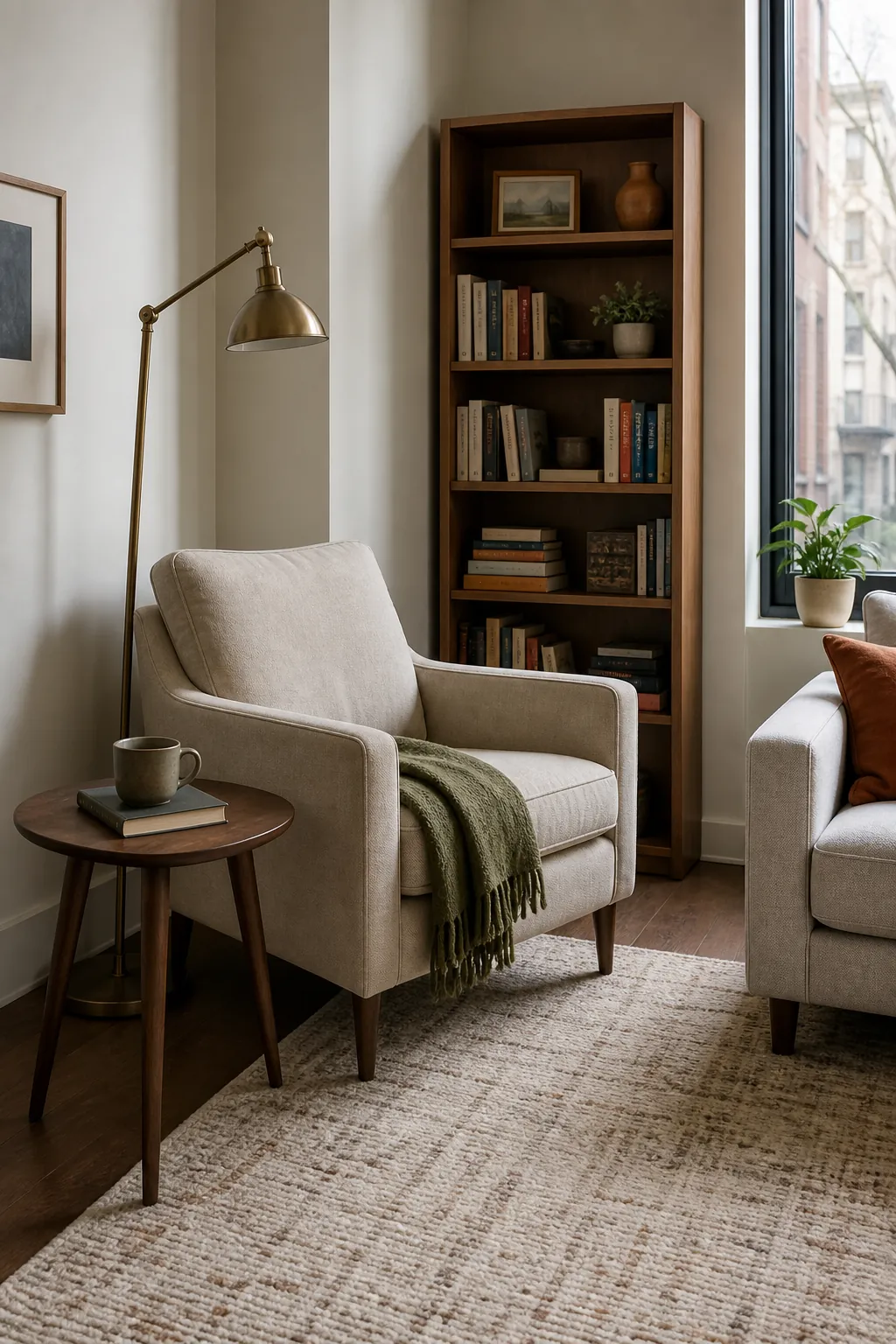
An empty living room corner can look like free space, but a reading nook only works when it is designed around what reading actually requires. The chair has to support the way you sit, the light has to reach the page without glare, and a book and drink need somewhere to land. Get those three decisions right and even a compact corner can become the most-used seat in the room.
The mistake is buying a pretty chair first and trying to make everything else fit around it. Start with the corner, test the clearances, and build the nook from function outward. The result will feel intentional without turning the living room into a miniature furniture showroom.
Choose a Corner That Can Support the Habit
Walk through the living room at the times you are most likely to read. A sunny window corner may be perfect in the morning but full of screen glare at night. A spot beside the television may look cozy in a photo but feel distracting when the rest of the household is using the room. Look for a corner that stays reasonably quiet, has an outlet nearby, and does not sit inside a main traffic route.
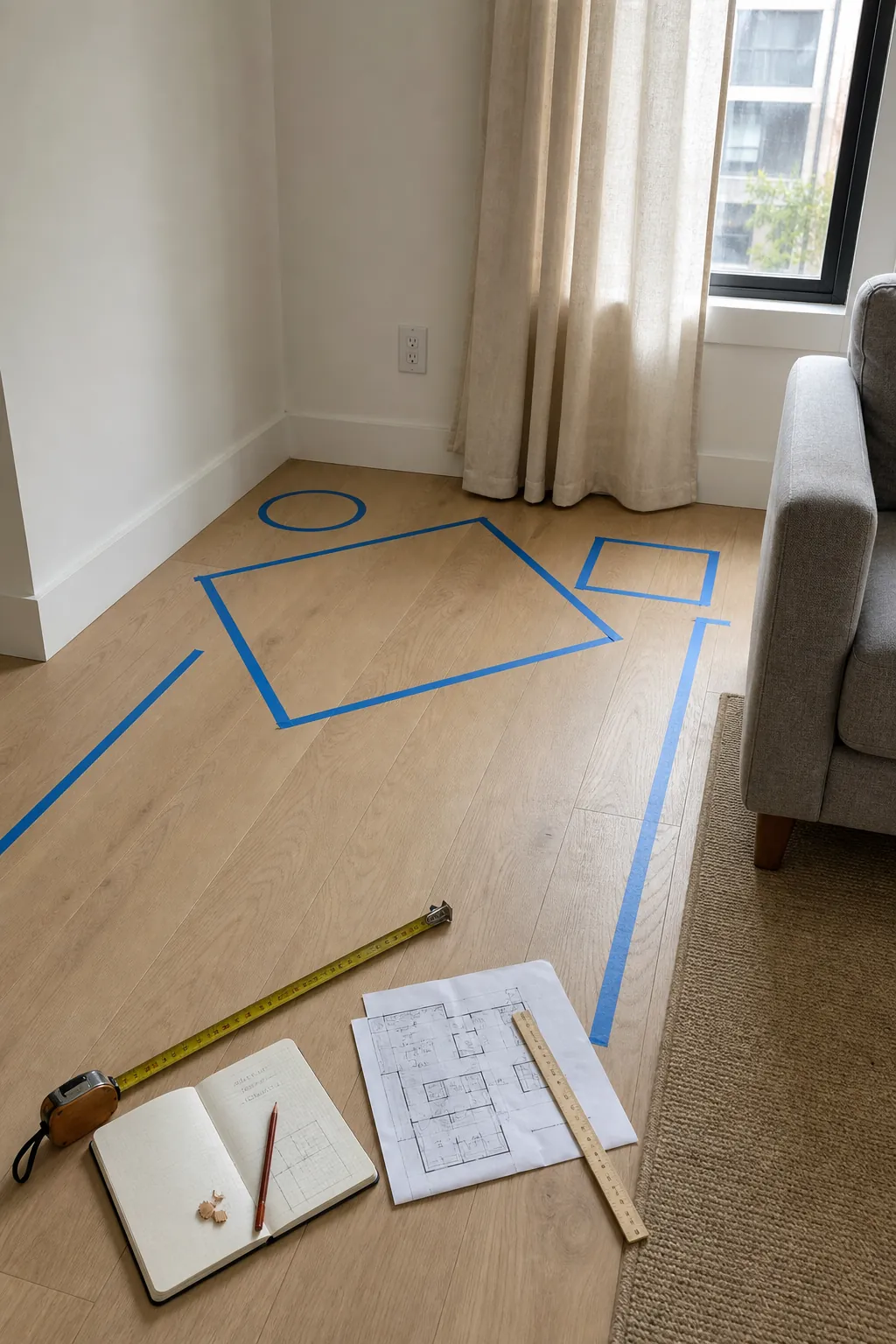
Mark the proposed footprint with painter’s tape before buying anything. Include the chair, a lamp base, a small surface, and space to approach the seat. Then live with the outline for a day. If people cut across it or a door collides with it, adjust now. A useful reading corner needs breathing room, not necessarily a large footprint.
Size the Chair to the Person and the Room
A reading chair should let you settle in without forcing one posture. Sit all the way back and check whether your feet rest comfortably, your lower back feels supported, and the arms allow your shoulders to relax. If you like to curl up, prioritize a wider seat. If you read upright, a firmer seat and supportive back will usually serve you better than a very deep lounge chair.
Scale matters just as much as comfort. In a tight chair corner, a compact armchair with visible legs keeps more floor in view and feels lighter than a bulky recliner. In a generous corner, an ottoman can extend comfort without committing to a chaise. Leave enough clearance to sit down naturally and to reach the side table without twisting. Test the chair for at least ten minutes in your real reading posture before deciding.

Place Task Lighting Where the Page Needs It
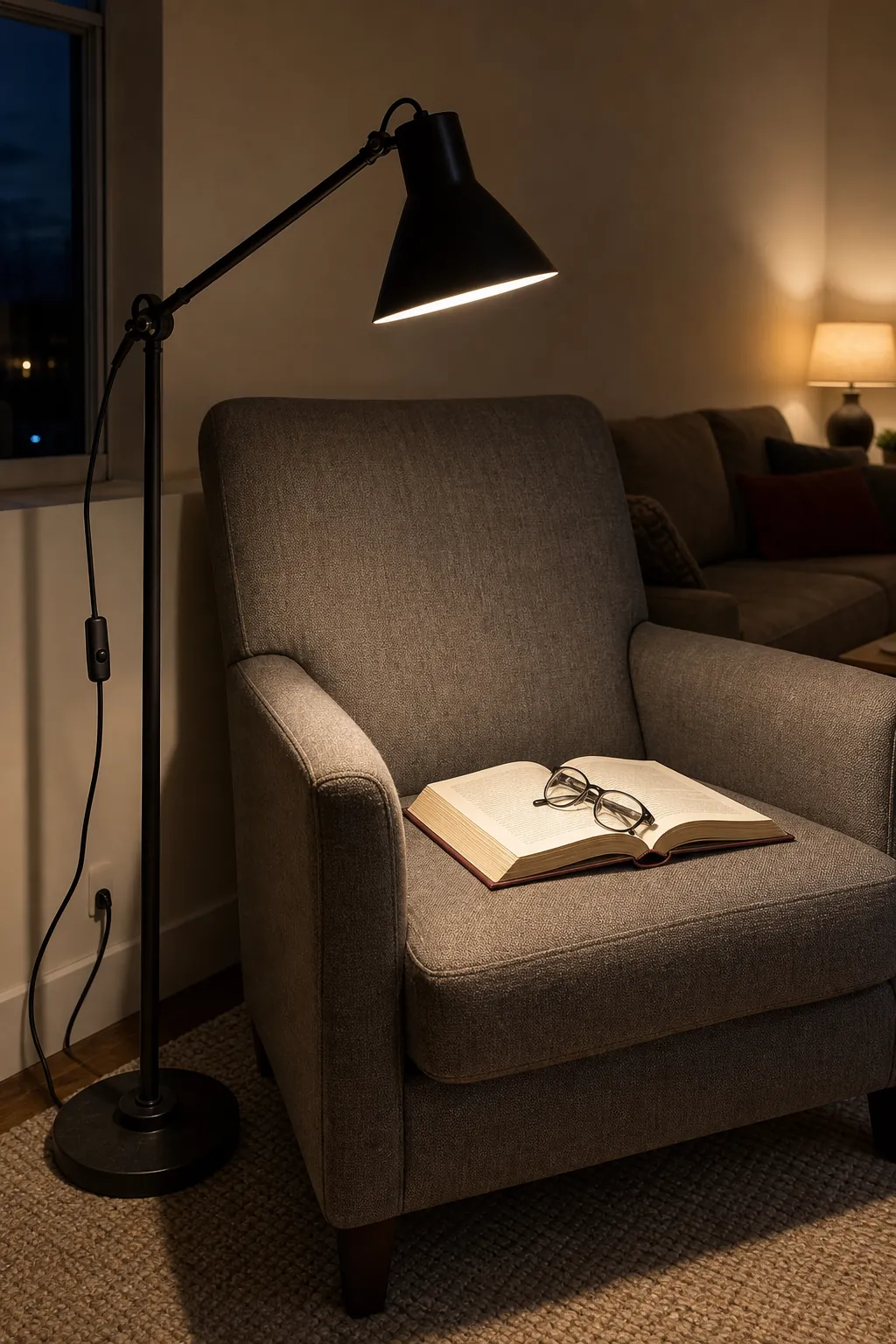
Ceiling light alone rarely makes a satisfying reading nook. Use a directional floor lamp, swing-arm sconce, or compact table lamp that sends light down toward the book. Position it slightly behind and to the side of your shoulder so your head and hands do not throw a strong shadow across the page. If you switch hands or share the chair, an adjustable arm makes the setup easier to fine-tune.
A warm-neutral bulb usually feels comfortable in a cozy home while still rendering print clearly. The exact brightness depends on the shade, distance, eyesight, and surrounding room light, so choose a dimmable lamp when possible. Sit in the chair with a real book after dark and move the light until the page is evenly illuminated without the bulb entering your direct line of sight.
Add Book Storage Without Building a Wall of Clutter
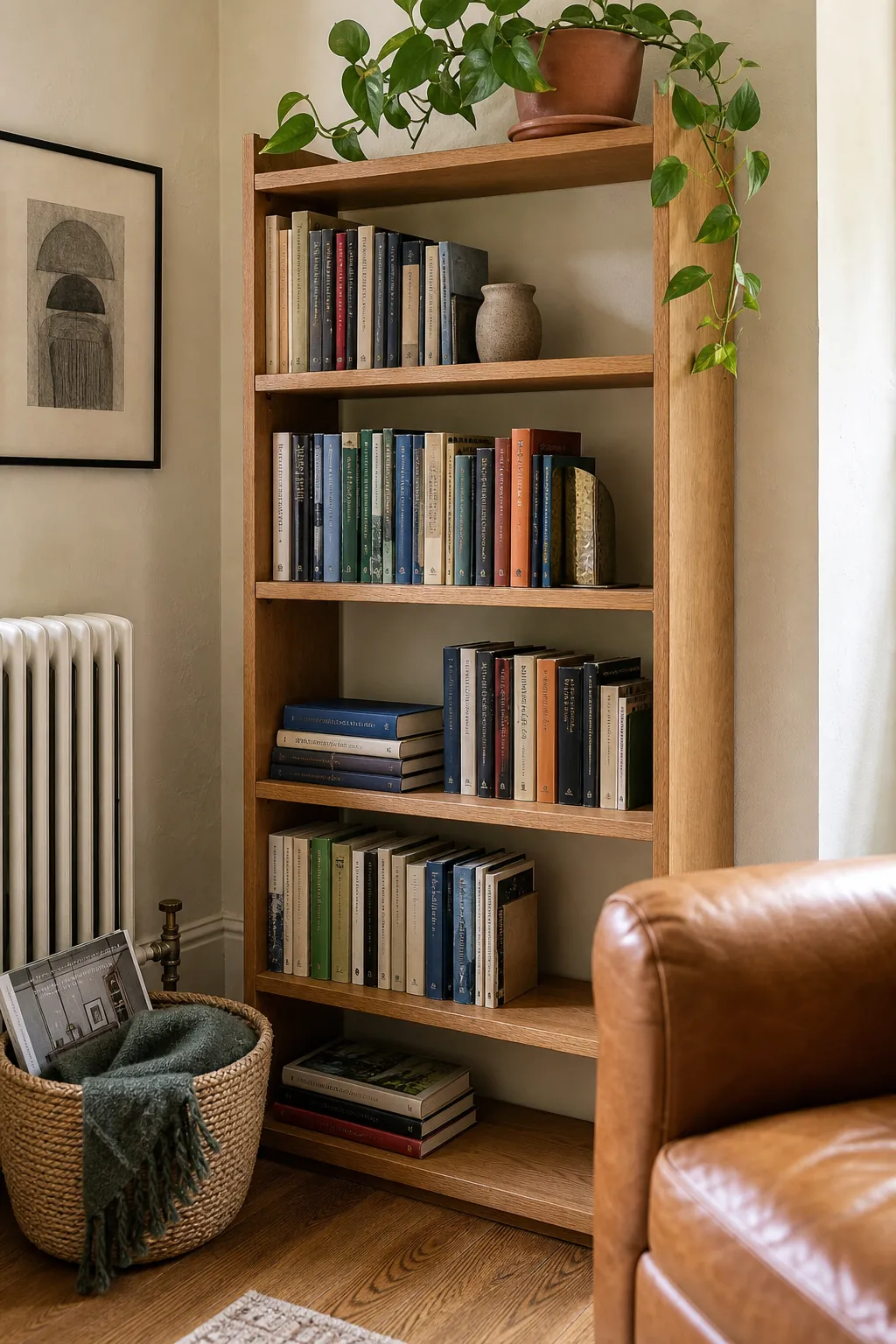
The best book storage for a nook holds what you are reading now, not necessarily your whole home library. A narrow bookcase, low cabinet, wall-mounted ledge, or basket can keep the current stack close without crowding the chair. Put frequently used books between knee and shoulder height, and leave some open space so the storage reads as part of the room rather than an overfilled archive.
For calmer bookshelf decor, group most books vertically, use one or two horizontal stacks as bookends or display platforms, and repeat a material already present in the living room. One plant, a small ceramic object, or a framed charcoal line drawing is enough. The books should remain easy to remove; decoration should never turn the shelf into a puzzle.
Give the Chair a Landing Place
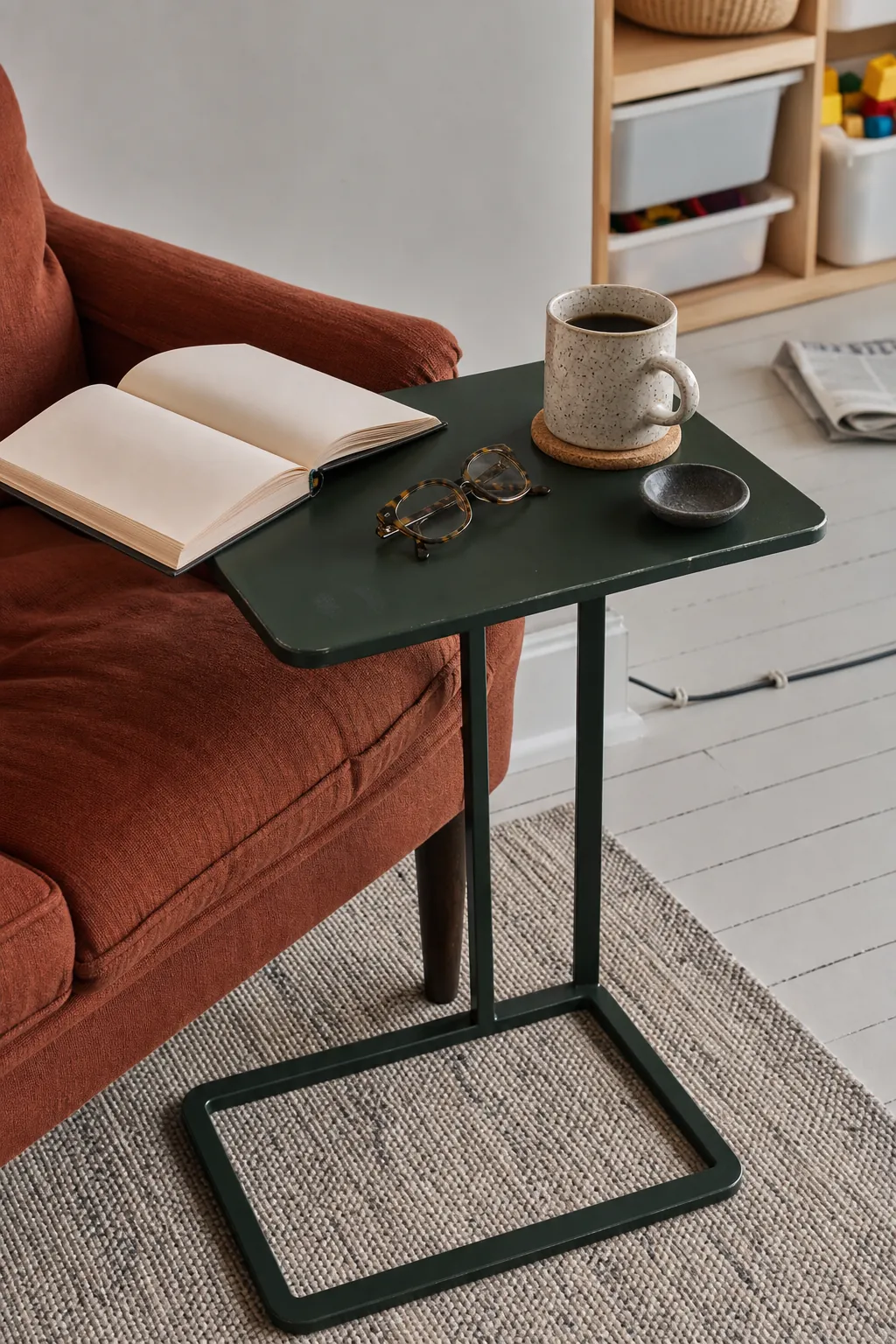
A nook becomes easier to use when you can set down a mug, glasses, and an open book without getting up. Choose a side table that is roughly level with the chair arm or slightly lower. In very small spaces, use a C-table that slides under the seat, a wall-mounted shelf, or a sturdy storage ottoman with a tray.
Keep the surface deliberately sparse. A coaster, a small dish for glasses, and the current book are usually enough. Route the lamp cable along the wall and secure excess length so feet and vacuum cleaners do not catch it. This quiet bit of organization is what makes the corner feel ready rather than staged.
Connect the Nook to the Living Room
A reading nook should feel distinct in purpose but related in style. Repeat two or three cues from the larger room: perhaps the wood tone of the coffee table, a color from the sofa cushions, or the metal finish used in other lamps. A small rug can anchor the chair corner, but it should sit securely under the front chair legs and avoid creating a raised edge in the walkway.
Add softness with one washable throw and a cushion that genuinely improves support. Choose plant decor only if the corner has suitable light and enough clearance for leaves. In a dark spot, a sculptural branch or a realistic low-light plant is easier than forcing a sun-loving plant to survive. The goal is a lived-in cozy corner, not a checklist of accessories.

Test the Nook Before You Call It Finished
Use the nook for three real reading sessions: one in daylight, one after dark, and one when the living room is busy. Notice what interrupts you. The lamp may need to move behind the opposite shoulder. The table may be too far away. The cushion may push your head forward. Fix those friction points before adding more decor.
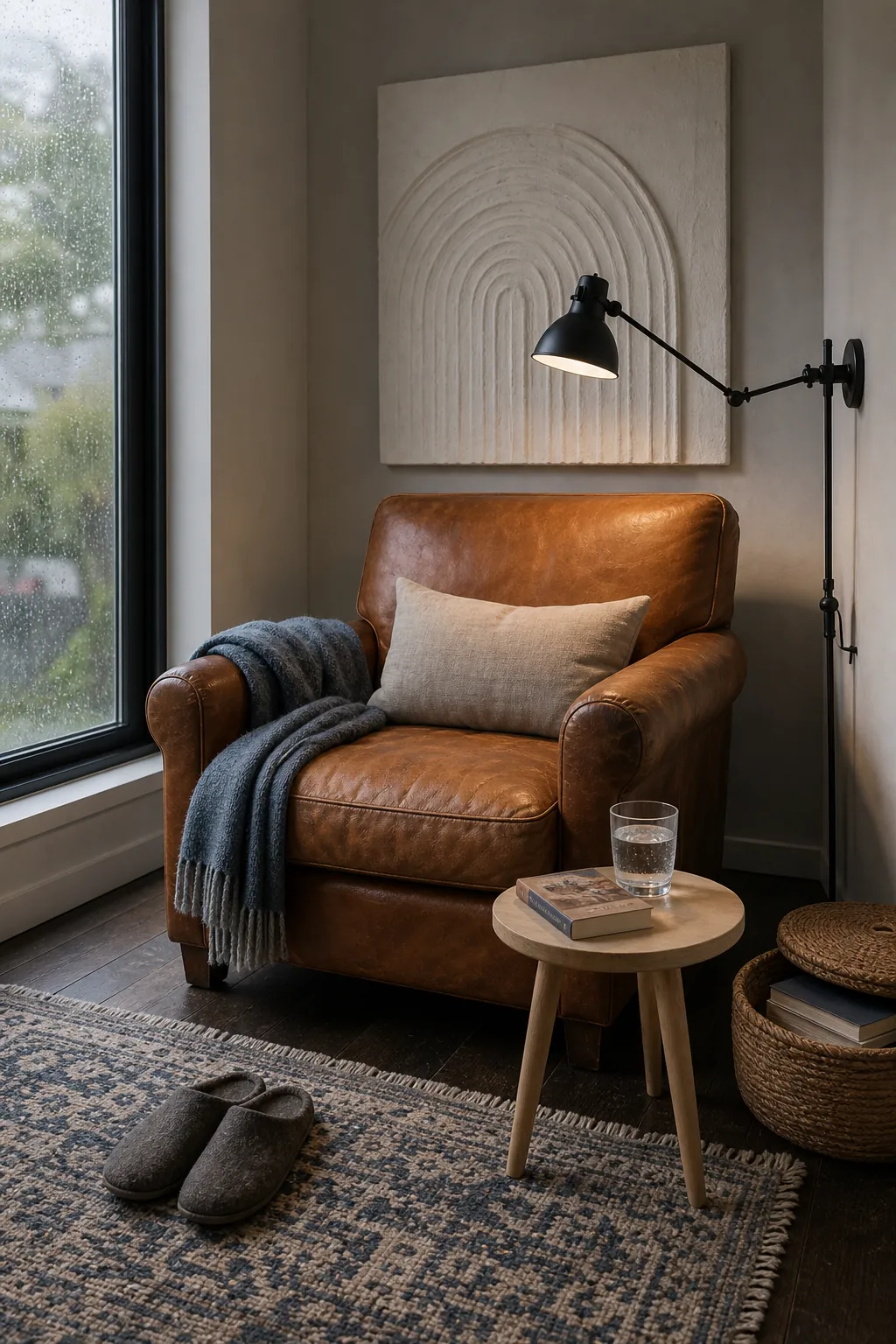
A successful reading nook is not the corner that photographs best; it is the corner you choose without thinking when you pick up a book. Start with the chair, light, and landing surface, then let the details grow slowly around the habit.