

A tiny home can look messy after one meal and feel dirty after one rainy walk through the door. That does not mean it needs hours of cleaning every day. It means the home has less buffer: a two-plate sink is already full, one laundry load can block the floor, and crumbs travel across the entire living area.
The most sustainable tiny home cleaning routine protects capacity first, then rotates deeper work. Daily cleaning keeps essential spaces usable; weekly cleaning removes the dirt that a quick reset cannot. Keeping those jobs separate prevents a ten-minute tidy from turning into an exhausting scrub.
Start the day by restoring air, light, and the bed
Open a window or roof vent for five to ten minutes when weather and outdoor air quality allow. Tiny homes hold cooking moisture, shower humidity, pet odors, and stale air in a small volume. Ventilation is not a replacement for cleaning, but it makes the room feel fresher and helps damp surfaces dry.
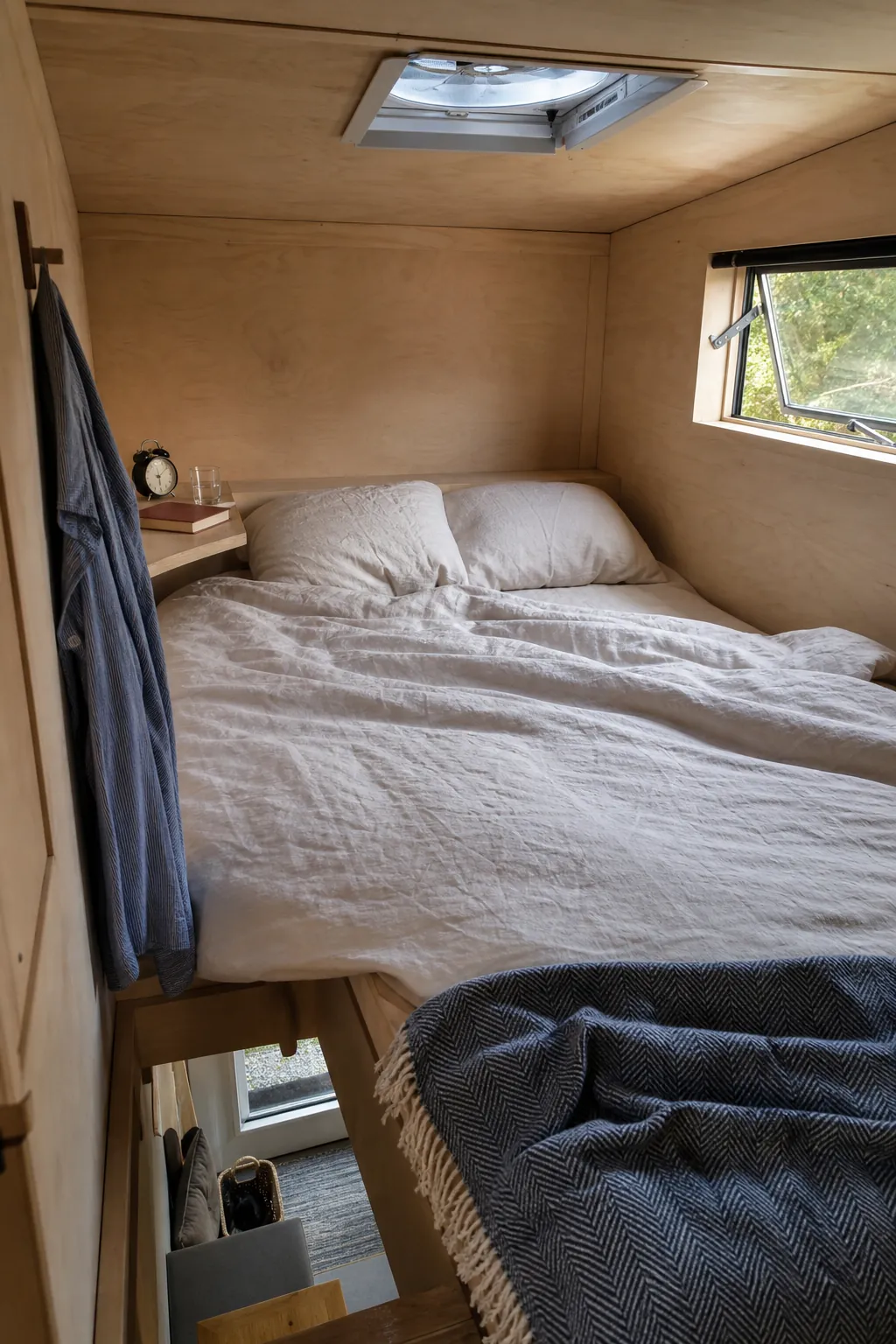
Next, pull the bedding smooth rather than aiming for hotel corners. A made sleeping area removes the largest visual disturbance in many compact homes and gives you a clean place to fold laundry later. Put sleepwear in its drawer or on one dedicated hook—never on the floor, table, or chair.
Close the kitchen after every meal
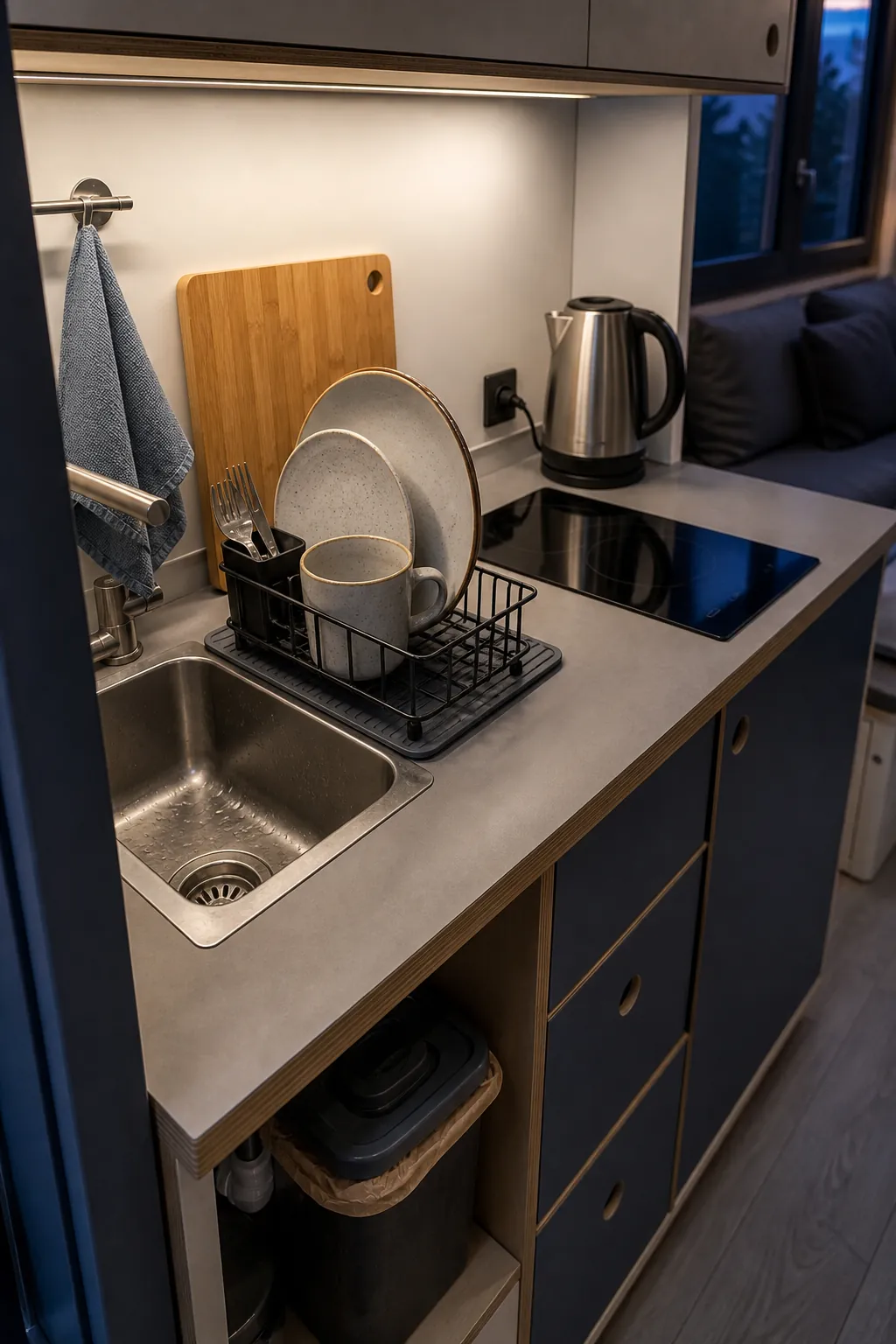
In a compact kitchen, cleaning as you cook is not perfectionism; it is space management. Return ingredients while food cooks, rinse the knife and board before sitting down, and wash or load dishes as soon as the meal ends. If food is stuck, add warm water immediately so tomorrow’s task does not become harder.
Finish with a damp microfiber cloth across the preparation surface, stovetop, and sink rim. Dry the tiny sink if standing water causes marks. Sweep visible crumbs into your hand or dustpan. The goal is a kitchen ready to make the next drink or meal, not a deep clean after every sandwich.
Use a thirty-second bathroom finish
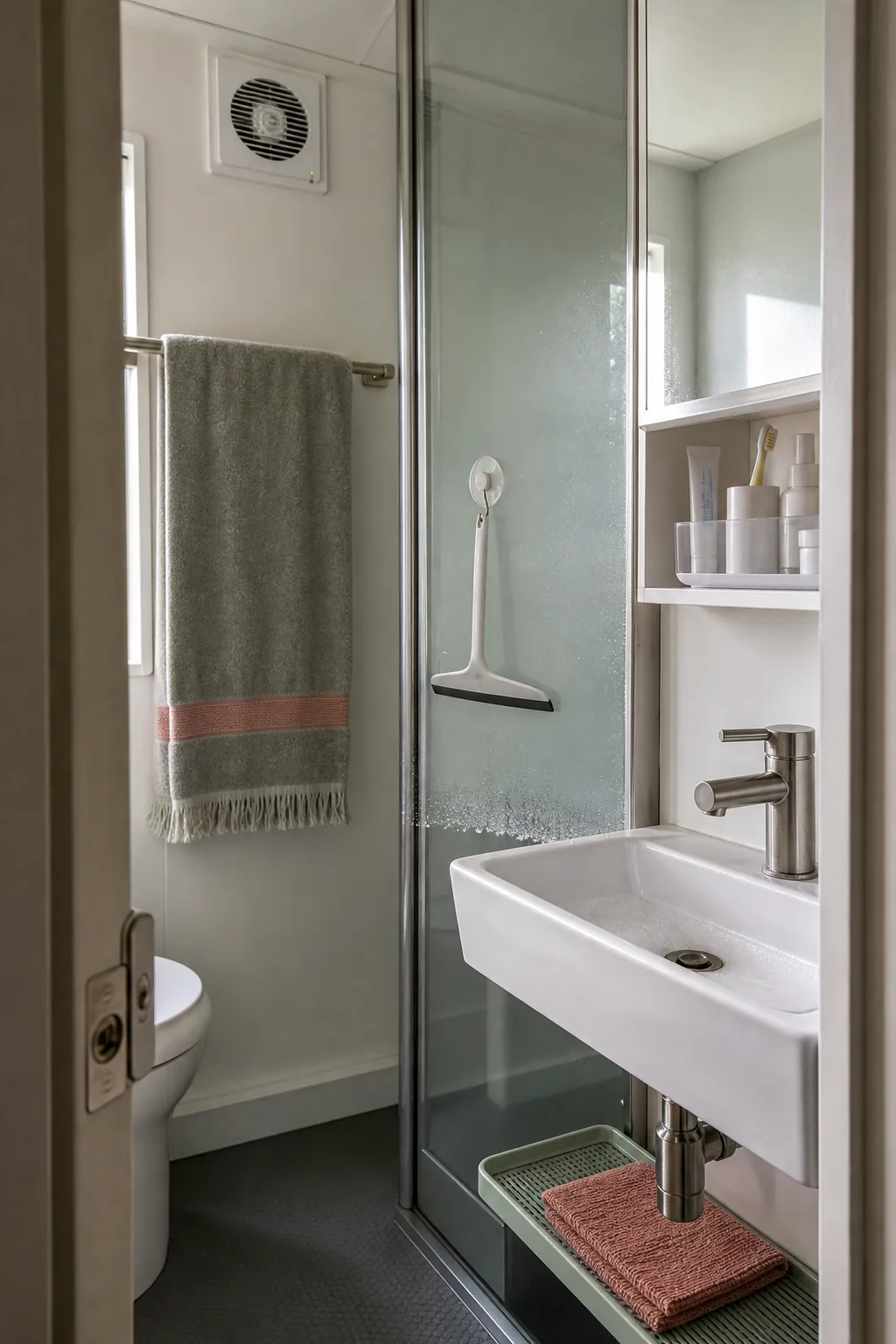
Bathrooms stay cleaner when water and products are handled at the source. After showering, pull a small squeegee across the wettest glass or wall, hang the towel fully open, and run the fan long enough to clear moisture. Return daily products to one tray or cabinet instead of leaving a wet lineup around the basin.
Wipe toothpaste, hair, or splashes when you see them. These tiny actions are faster than removing dried residue later. Keep one washable cloth within reach, but store chemicals safely and never mix cleaning products. The weekly bathroom session will still handle the toilet, shower, mirror, and floor thoroughly.
Keep laundry moving before the basket becomes furniture
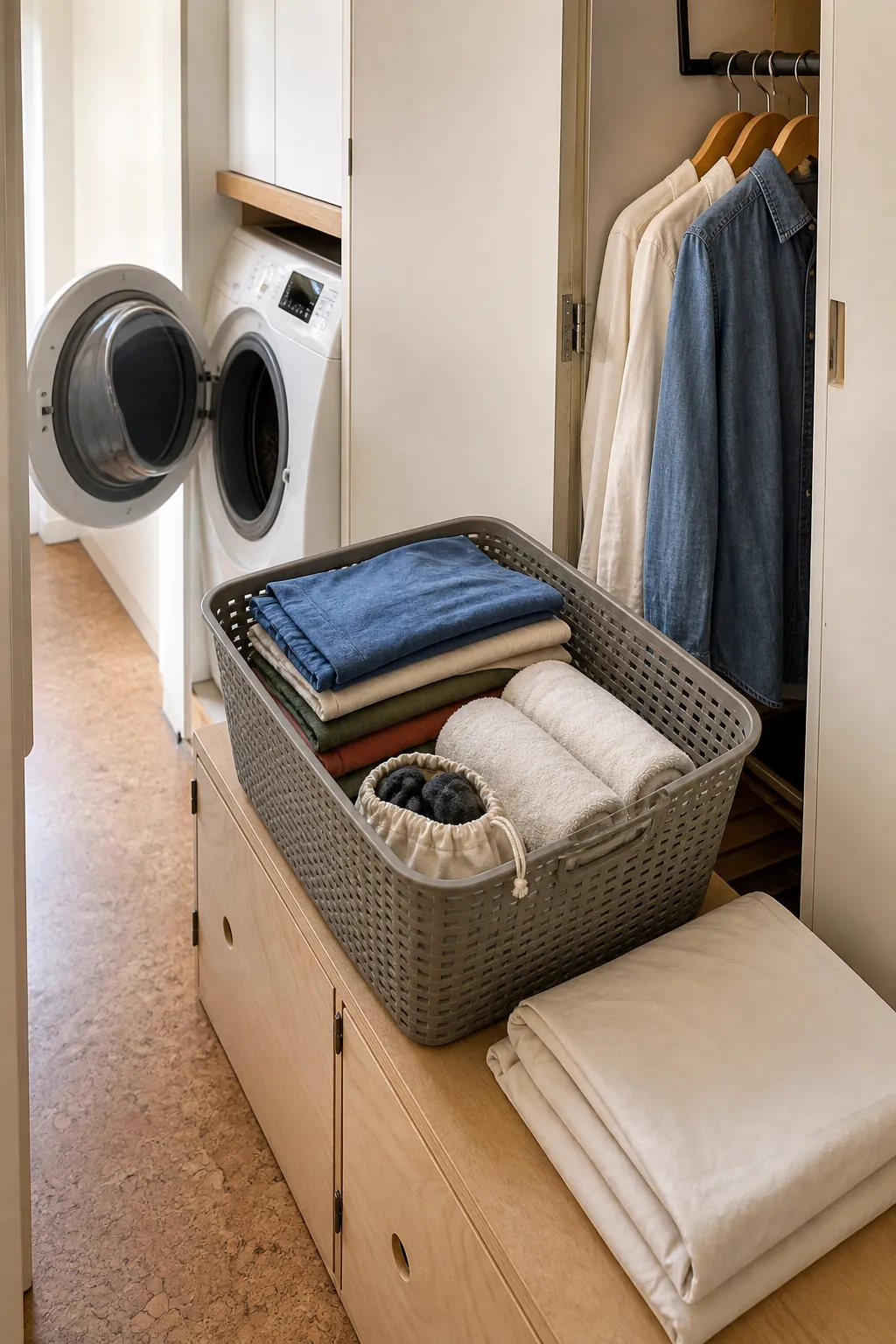
A small basket is useful because it signals the correct load size. Choose fixed laundry days based on your household and machine access. Start a load before the basket overflows, then finish the full cycle—wash, dry, fold, and put away—on the same day whenever possible.
A half-finished load creates more clutter than dirty clothes contained in a hamper. If you cannot put everything away immediately, fold by destination and use the bed as a temporary surface only when you must clear it before sleep. Fewer sheets, towels, and everyday outfits can reduce both storage pressure and washing backlogs.
Sweep the traffic path, not every hidden corner
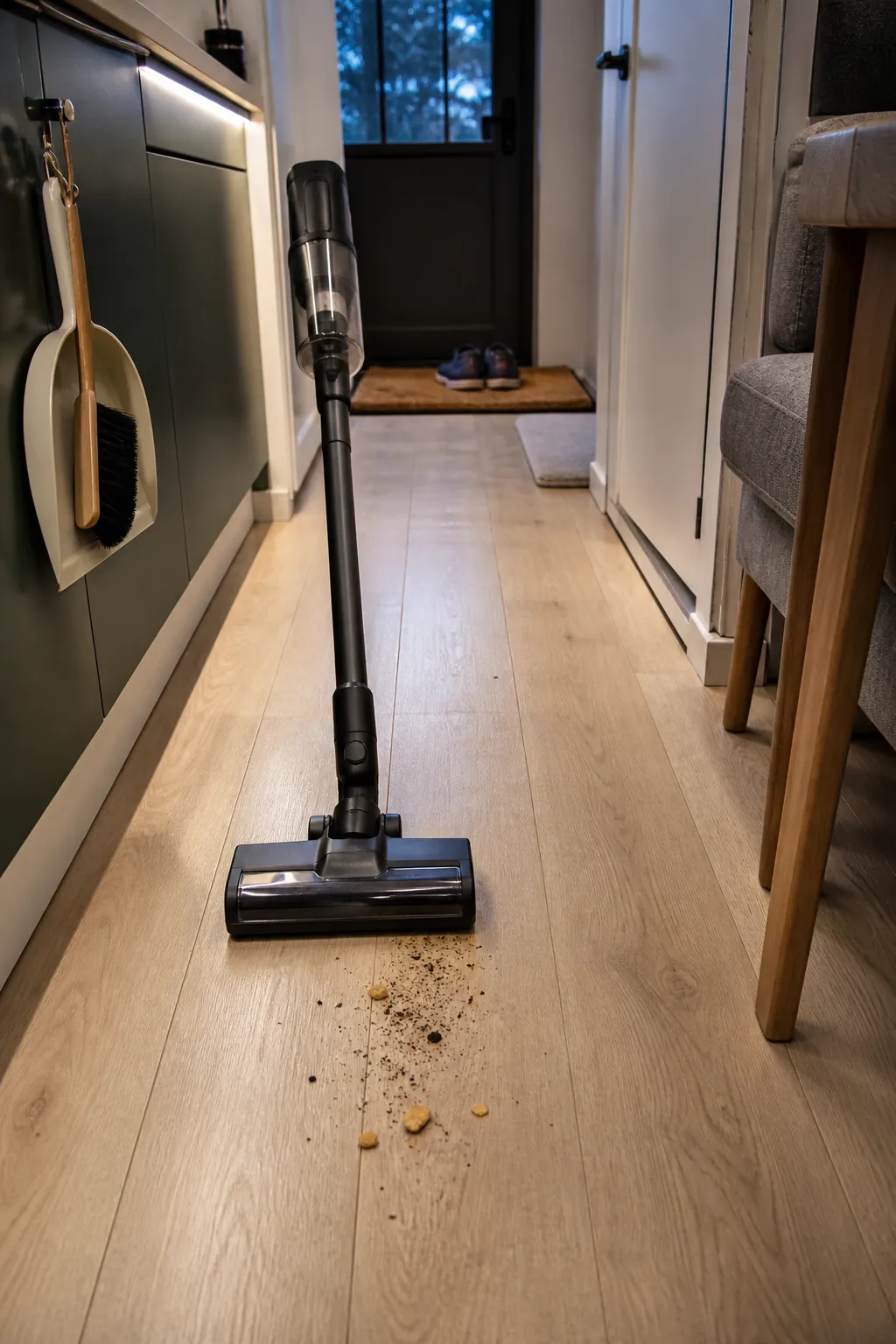
Small-space cleaning feels relentless because the same few floorboards receive nearly every footstep. Keep a compact broom, cordless vacuum, or dustpan where it is easy to grab. Each evening, clean the route from entry to kitchen and bathroom, plus the area around eating and pet zones if needed.
Do not move all furniture during this daily pass. Pick up visible crumbs, grit, hair, and litter in three to five minutes. Save edges, under-bed areas, and furniture moving for the weekly floor session. This protects bare feet and keeps debris from spreading without turning every night into a full vacuum.
End with a ten-minute home reset
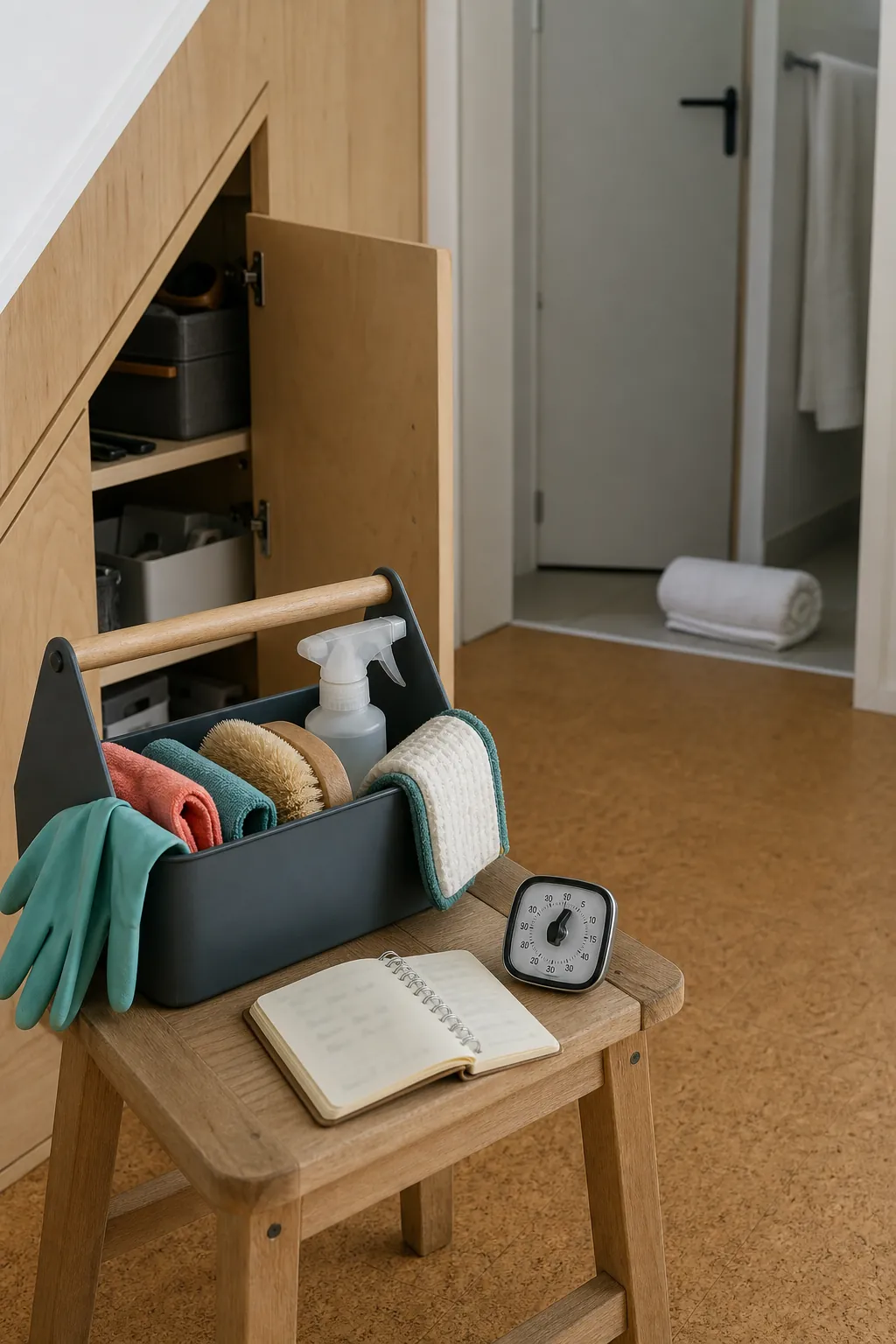
Set a timer after the last meal or before changing into sleepwear. Work in one direction so you do not circle the room: collect trash, return dishes, contain laundry, reset the sofa or bed, put away daily products, and prepare tomorrow’s bag or clothes.
- First: remove anything wet, smelly, or food-related.
- Second: restore the sink, bed, main seat, and walking path.
- Third: return stray items to their closest usable homes.
- Last: choose one task that will make tomorrow easier.
Stop at ten minutes. If the same items remain every evening, treat that as a tiny home organization problem: their storage is inconvenient, full, or nonexistent. Declutter or relocate that category instead of extending the routine indefinitely.
Rotate one deeper zone through the week
A cleaning schedule works best when it avoids sacrificing a whole day. Assign one deeper category to each day and adapt the frequency to pets, children, allergies, climate, and how often you cook.
- Monday: bathroom fixtures, toilet, shower, and mirror.
- Tuesday: vacuum or sweep edges and beneath accessible furniture.
- Wednesday: laundry, towels, and bedding as needed.
- Thursday: dust reachable surfaces, vents, and electronics.
- Friday: deeper kitchen clean, including appliance fronts and bin.
- Weekend: mop, change linens, and declutter one small container.
Missed a day? Do not double the next one. Continue with the task that most affects hygiene or function. A tiny home cleaning schedule succeeds because it is easy to resume. The real win is not keeping every surface photo-ready; it is having clean dishes, dry towels, clear air, safe floors, and a home that can reset without consuming your only day off.