
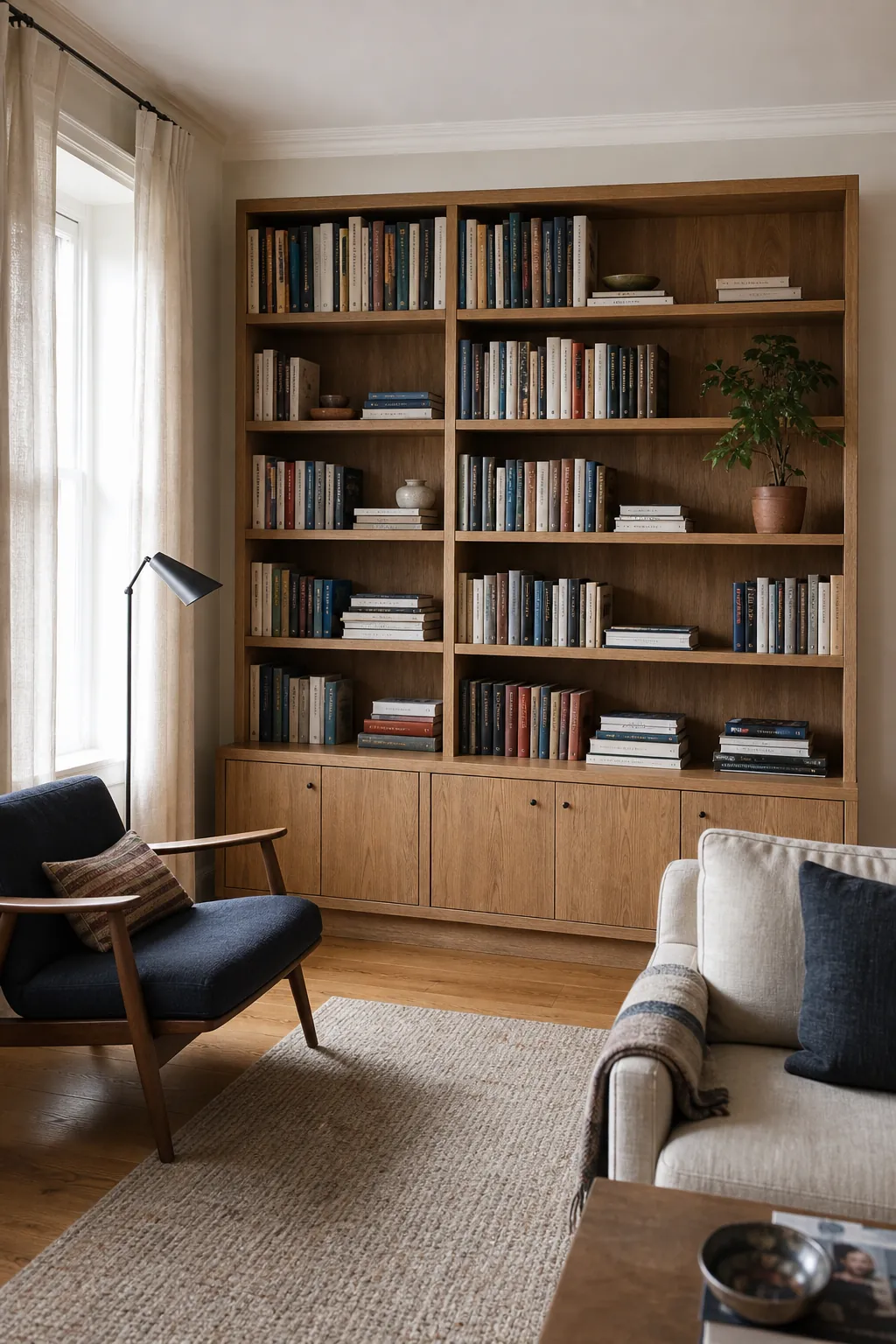
Books already bring color, texture, and personality into a room. The problem is rarely the books themselves. It is the storage around them: a bulky unit that overwhelms the wall, shelves filled edge to edge with unrelated objects, or stacks placed where they are hard to reach and harder to clean.
Good book storage looks decorative because its shape, scale, and empty space are considered—not because every shelf is covered with accessories. Choose a storage idea that suits the collection first, then edit what remains visible.
Use a Glass-Front Cabinet for a Collected Look
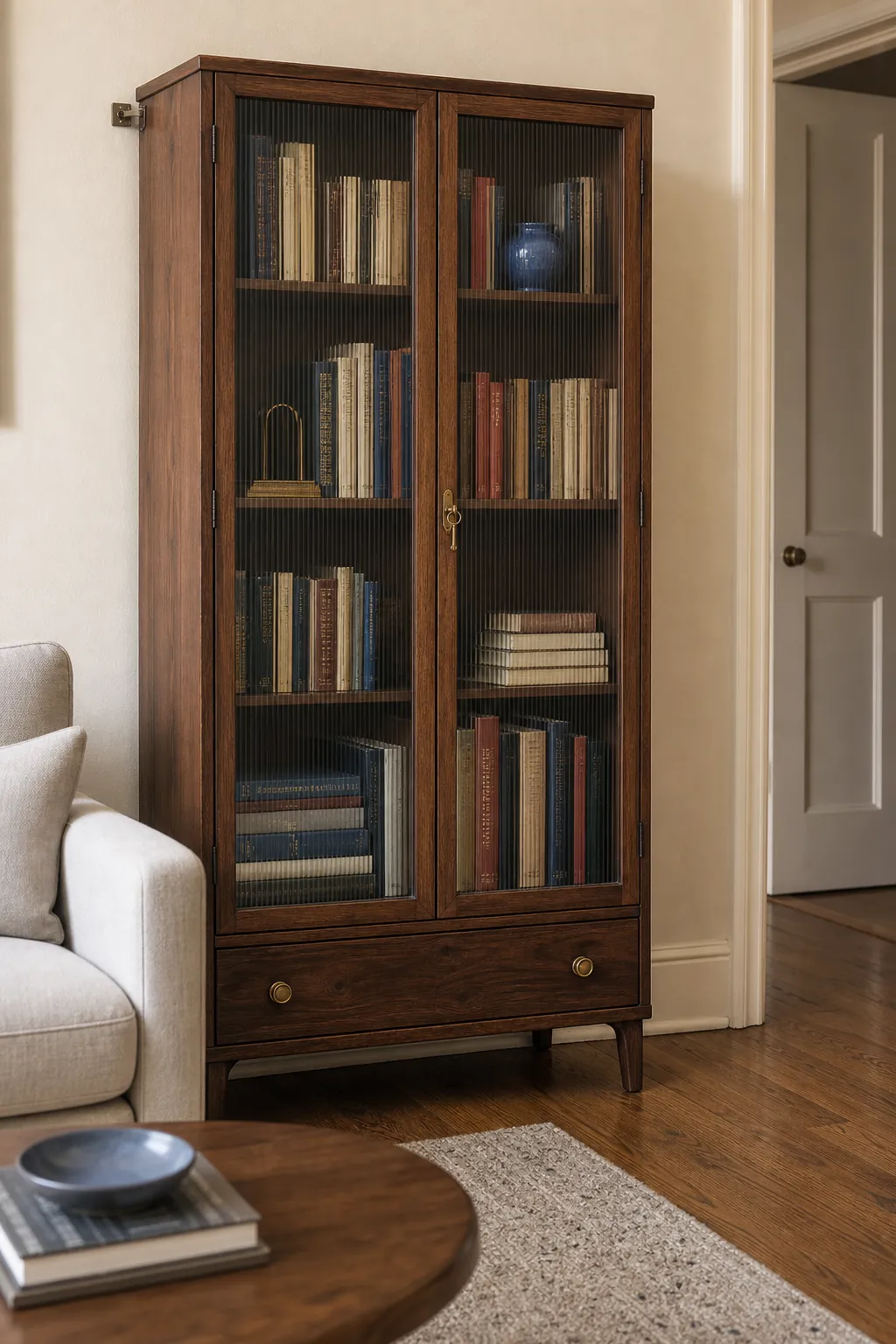
A vintage china cabinet or slim glass-front bookcase turns ordinary shelves into a composed display while protecting books from dust. It works especially well for attractive hardcovers, older editions, and smaller collections that would look lost on a wall of open shelving. Reeded or lightly textured glass softens visual noise while still showing the color and rhythm of the books.
Keep the heaviest books on the lower shelves and leave enough clearance for the doors to open fully. If the cabinet is tall, secure it with the manufacturer’s anti-tip hardware. Repeat one finish from the room—perhaps the coffee table wood or lamp metal—so the cabinet reads like furniture, not an extra storage box.
Turn a Window Bench Into Low Book Storage
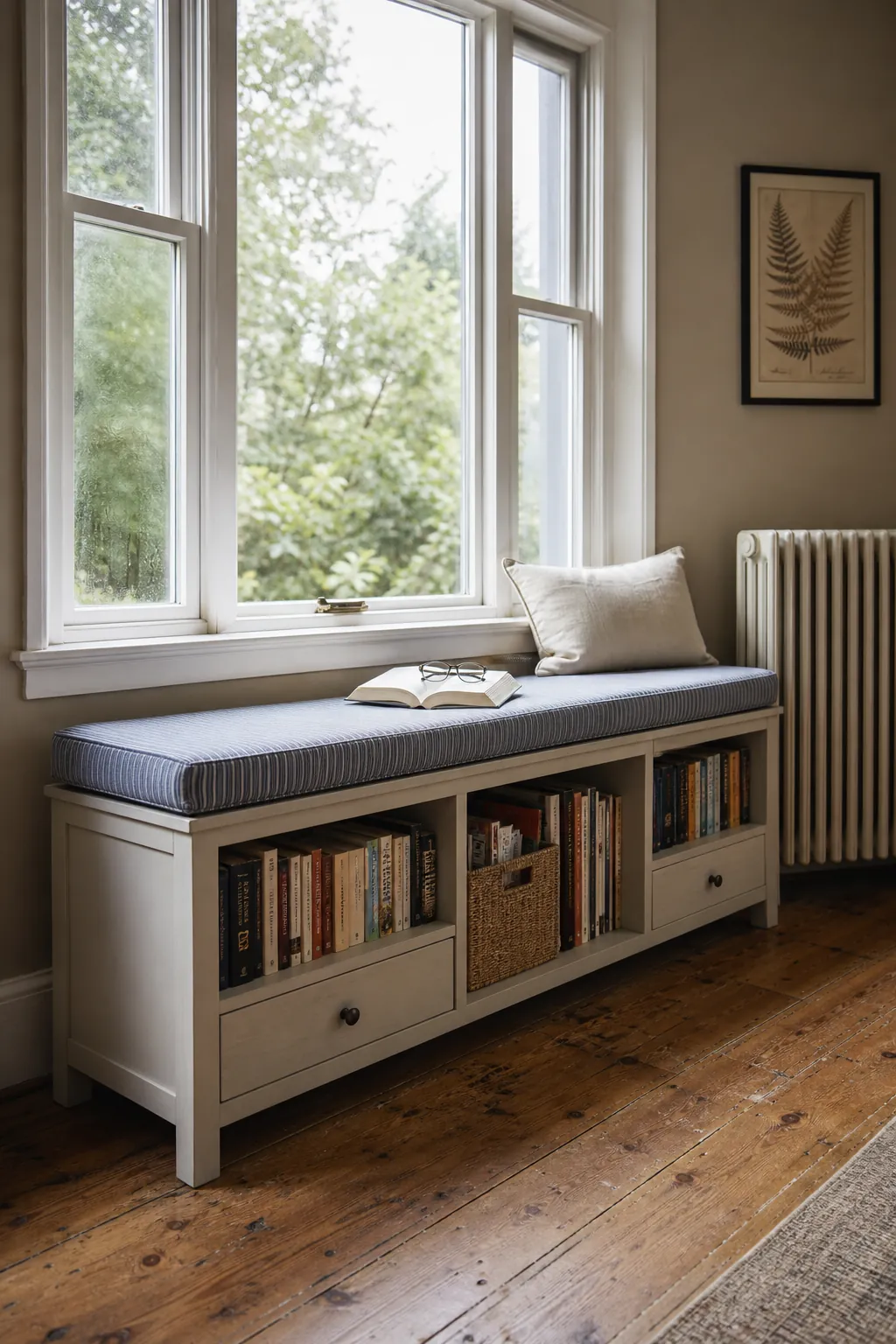
Low storage keeps sightlines open and can make a small room feel calmer than another tall bookcase. A bench with open cubbies, drawers, or lift-up compartments can store books beneath a window and double as seating. It is useful beside a reading nook, in a bay window, or along the back of a sofa where deep furniture would block movement.
Use open cubbies for books you reach often and closed compartments for magazines, chargers, and visual clutter. Do not pack the bench so tightly that books scrape when removed. A fitted cushion in a durable fabric makes the unit feel intentional, but keep the top simple enough that someone can actually sit there.
Let an Open Bookcase Divide the Room
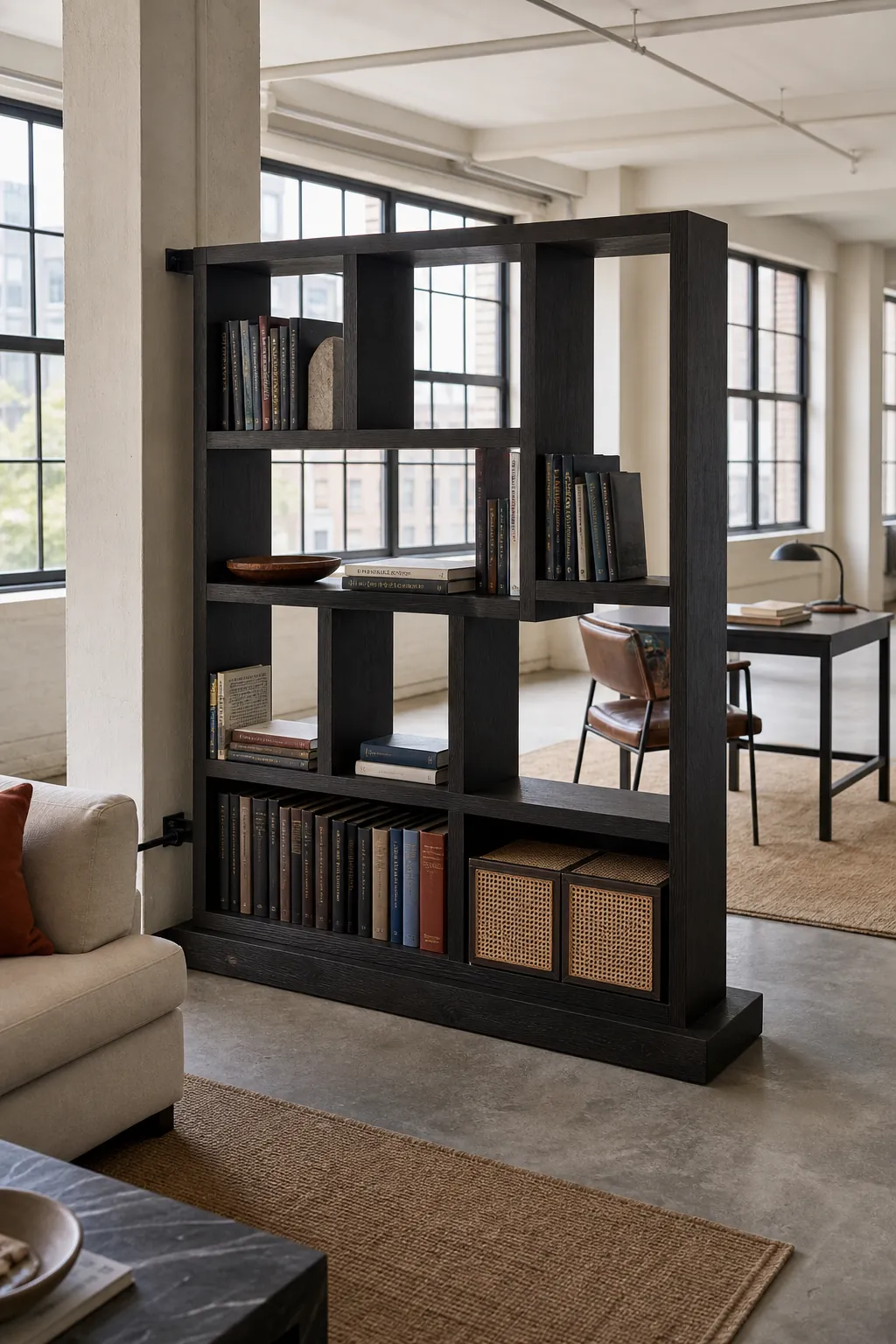
In an open-plan home, a stable open-backed bookcase can define a reading corner or home library without building a wall. Because both sides are visible, use it selectively: books on the lower shelves add visual weight, while a few open sections higher up preserve light and connection between the zones.
This is not the place for a lightweight unit sitting loose in a busy walkway. Follow the installation instructions, use appropriate anchoring or a purpose-designed freestanding divider, and keep heavy volumes low. Conceal cables rather than letting them hang through open shelves. The divider should guide traffic, not create a collision point.
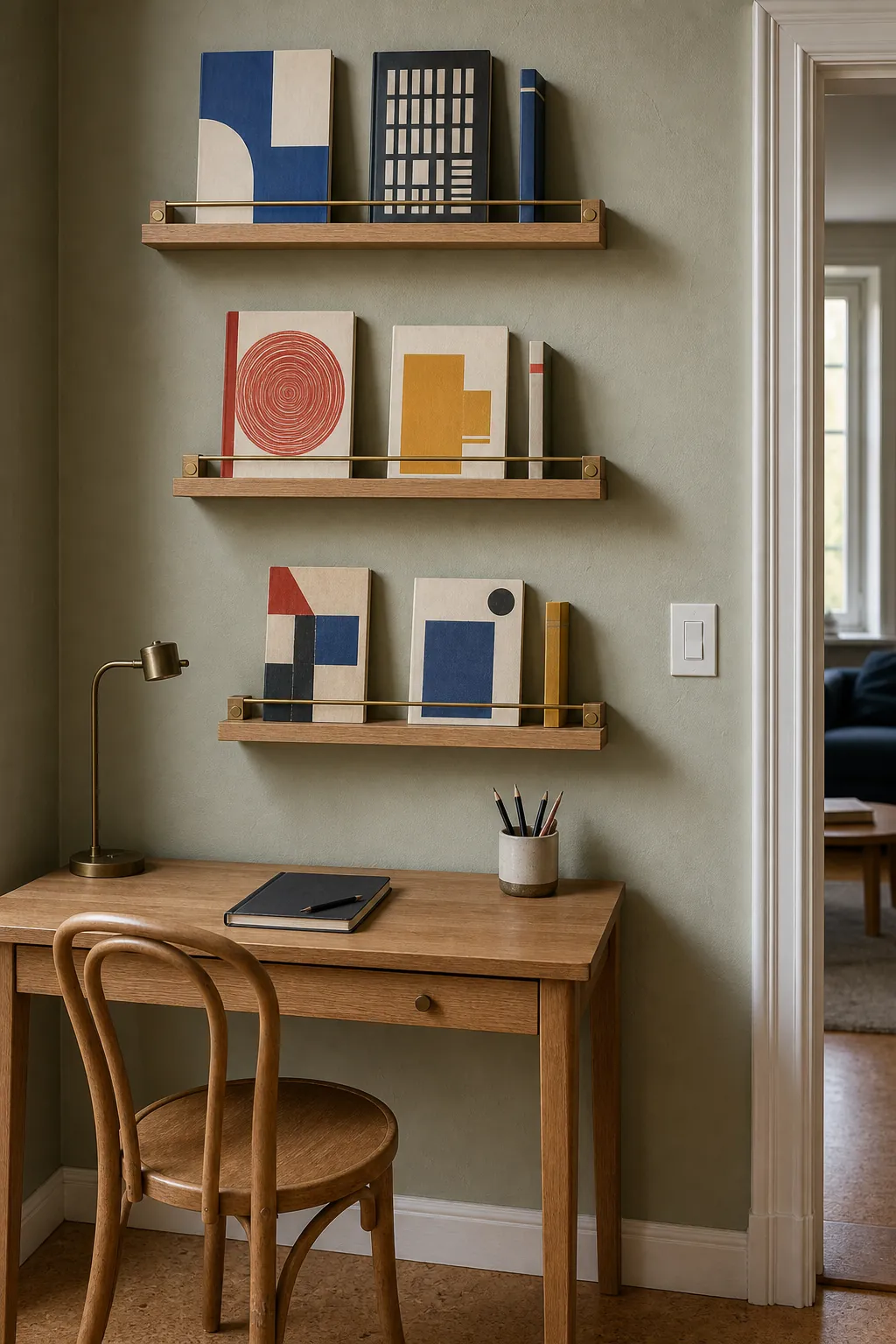
Display Favorite Covers on Picture Ledges
Picture ledges make books function like changeable artwork. Face out a small selection of illustrated covers, photography books, cookbooks, or children’s books, and rotate them seasonally. This gives a narrow wall or the space above a desk useful book storage without the depth of a standard shelf.
Check the ledge’s load rating, anchor it correctly for the wall type, and avoid stacking books so high that they can slide forward. Use several short ledges with deliberate gaps rather than filling every inch from floor to ceiling. The display works best when each cover remains visible and easy to remove.
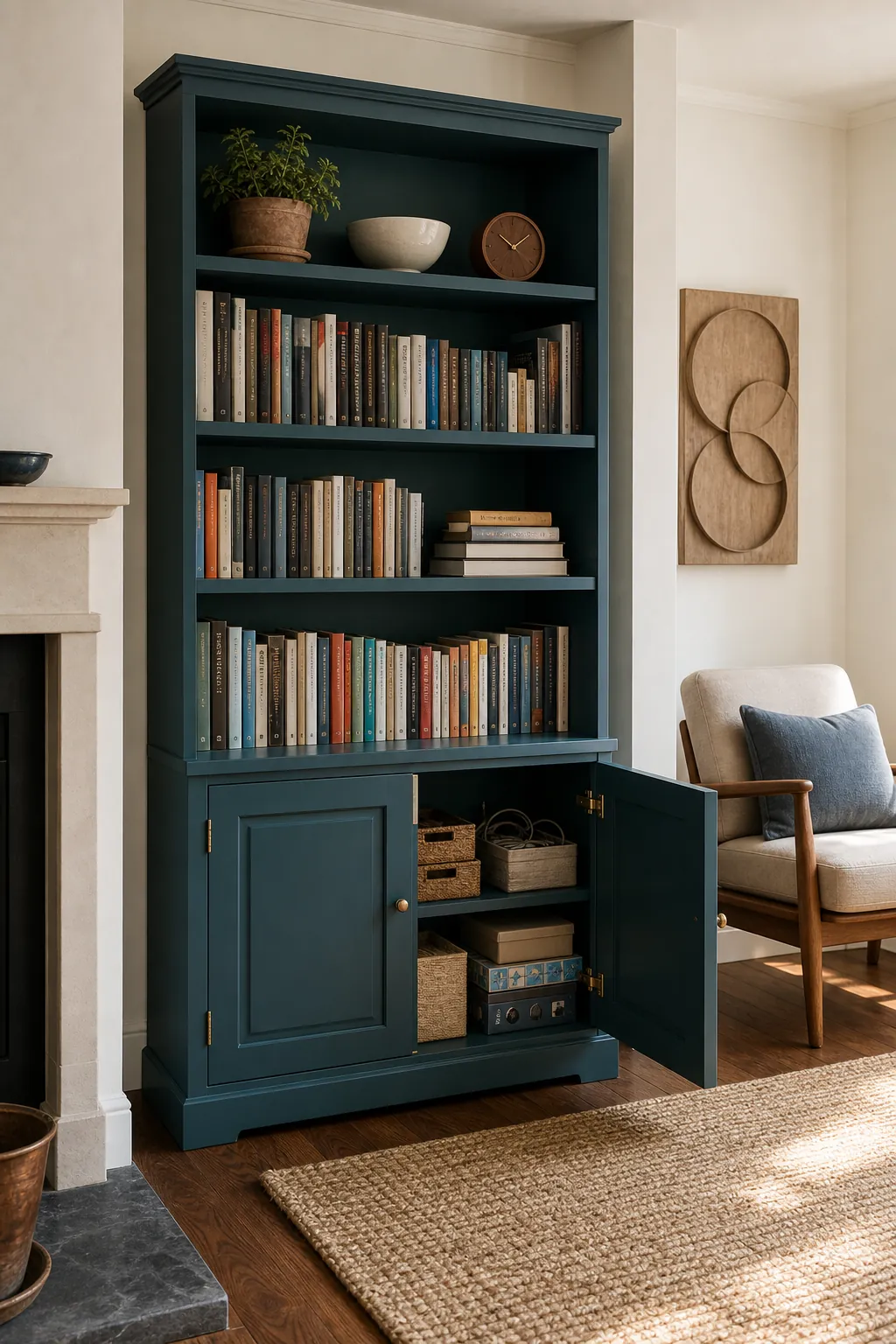
Combine Closed Storage Below With Books Above
A bookcase looks calmer when it does not have to hold every category of household clutter in public view. Use doors or drawers on the lower section for cables, paperbacks with damaged covers, games, and small electronics. Reserve the open upper shelves for books and a limited number of meaningful objects.
Matching boxes or baskets can help, but they should fit the shelf and have a real purpose. Label hidden categories inside rather than covering the room with visible tags. Closed lower storage also creates a stronger visual base, making the upper books feel like a display rather than a pile.
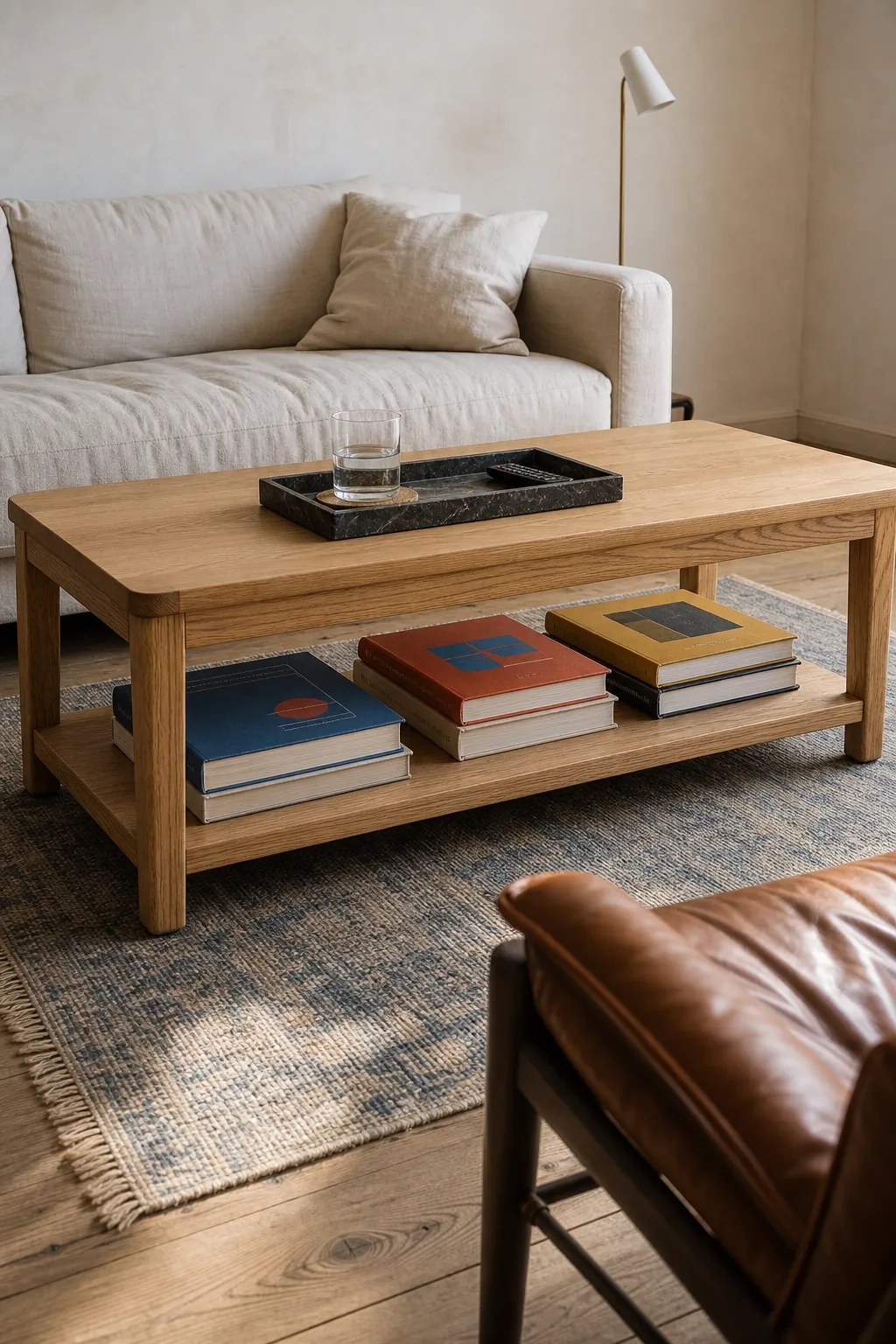
Use a Coffee Table Shelf for Oversized Books
Large art, photography, and design books often fit poorly on standard shelves. A coffee table with a strong lower shelf gives them a natural home close to where they are likely to be opened. Keep the stack low, align it away from feet, and leave part of the shelf empty so books can be removed without lifting a tower.
On the tabletop, resist repeating the same stack purely for styling. A tray and one useful object are enough. The lower books provide color and weight, while the clear top keeps the living room functional.
Style Shelves Around Books, Not Instead of Them
Start by shelving the books, then add decor only where it solves a compositional problem. Alternate a few vertical groups with short horizontal stacks. Leave some backing visible. One plant, a ceramic vessel, framed photo, or sculptural bookend can provide contrast, but every object should have enough space to be recognized.
- Place frequently used books between knee and shoulder height.
- Keep heavy and oversized volumes low.
- Repeat two or three colors or materials already present in the room.
- Remove loose cables, packaging, and objects that have no clear home.
- Re-edit when books become difficult to return to the shelf.
The strongest bookshelf decor still looks like it belongs to a reader. Let the collection provide most of the character, and make the storage quietly support it.