
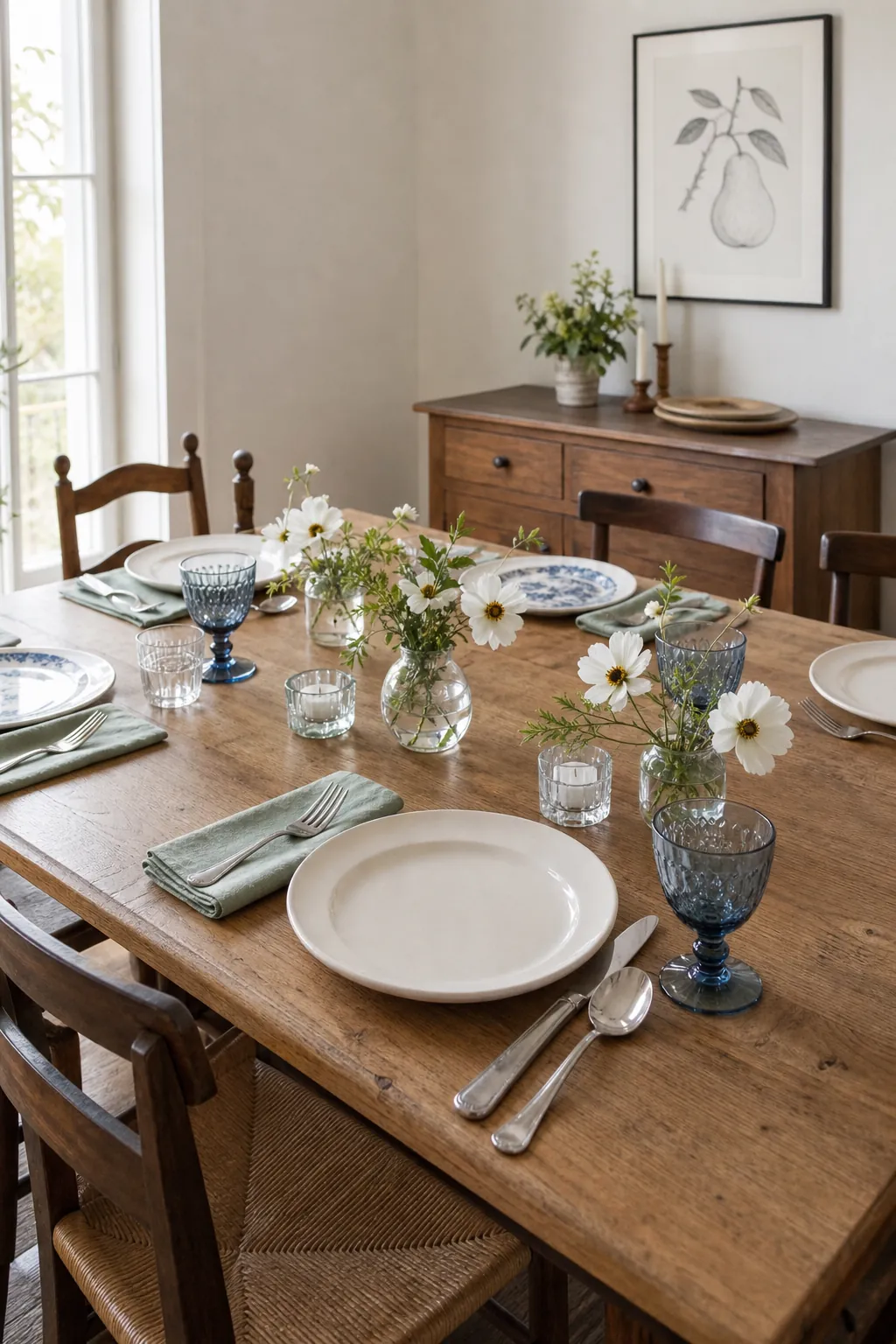
Expensive dinnerware does not make a table elegant. Repetition, proportion, and care do. A stack of plain white plates can look more polished than fine china when the linens are pressed, the glasses shine, and every place setting follows the same visual rule.
This is good news if your cupboards contain everyday stoneware, thrifted salad plates, and only four matching glasses. Instead of trying to imitate a formal table with too many pieces, build a restrained budget tablescape around what guests actually use.
Start with the quietest plates you already own
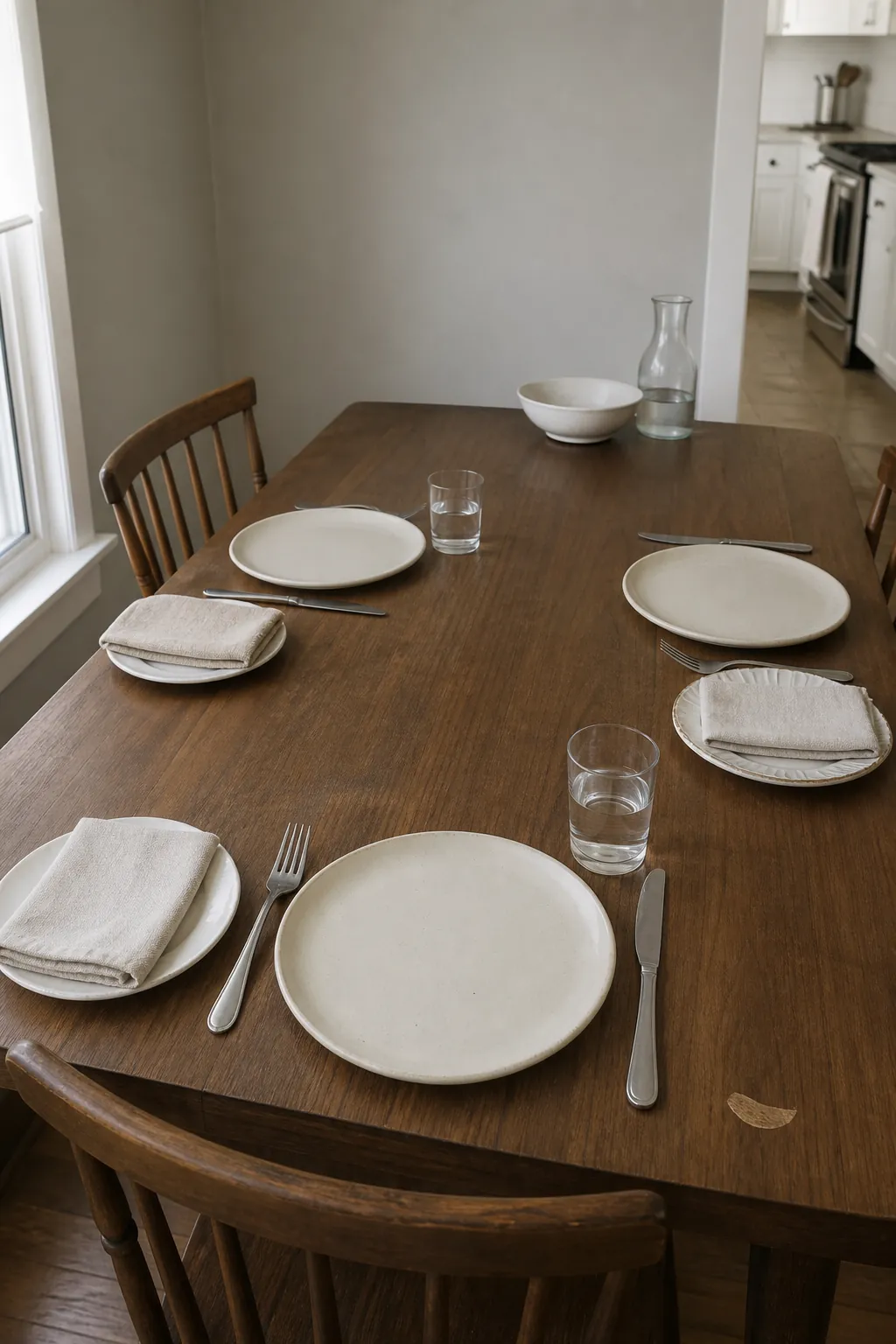
Choose one dependable anchor for every seat. Plain white, cream, gray, or softly speckled dinner plates work especially well because food looks appealing on them and patterned pieces can sit above them. The plates do not need to be identical, but they should share a color family and roughly the same diameter.
Set only the pieces required for the meal. A dinner plate, fork, knife, water glass, and napkin often look more confident than a crowded stack of unused bowls and cutlery. The empty space around each object is part of the design.
Let table linens provide the polish
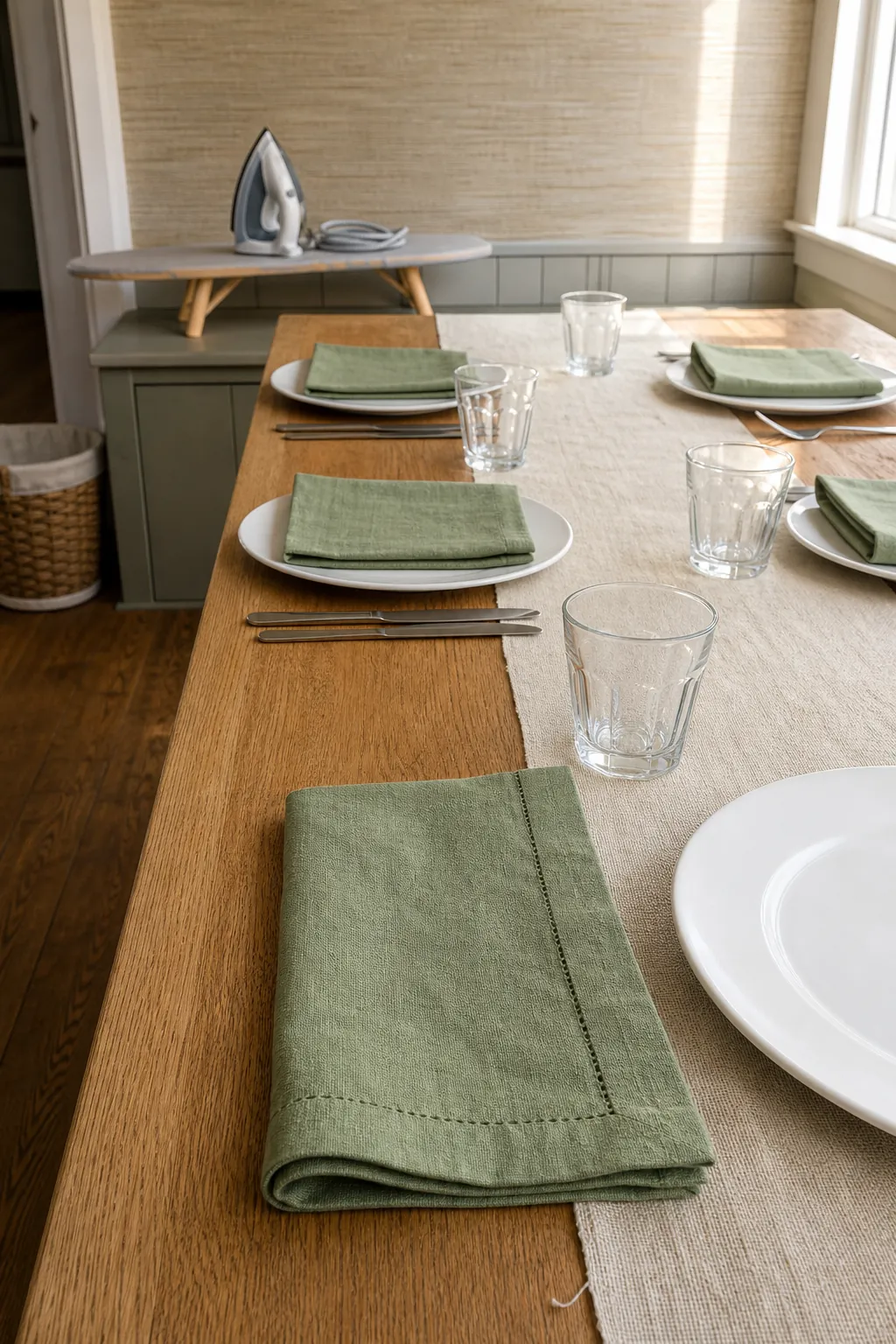
A clean cloth, runner, or set of cloth napkins changes the table faster than new dishes. If the tabletop is attractive, leave most of it visible and use a narrow runner. If the surface is marked or visually busy, a plain tablecloth creates a calmer foundation.
Press or steam the fabric, but do not chase hotel-perfect folds. Washed linen, cotton, and even neatly cut tea towels can look intentional when every seat repeats the same fold. Choose one textile color that links the plates to the centerpiece—sage with cream stoneware, dusty blue with white plates, or oatmeal with patterned vintage pieces.
Mix dinnerware with one non-negotiable rule
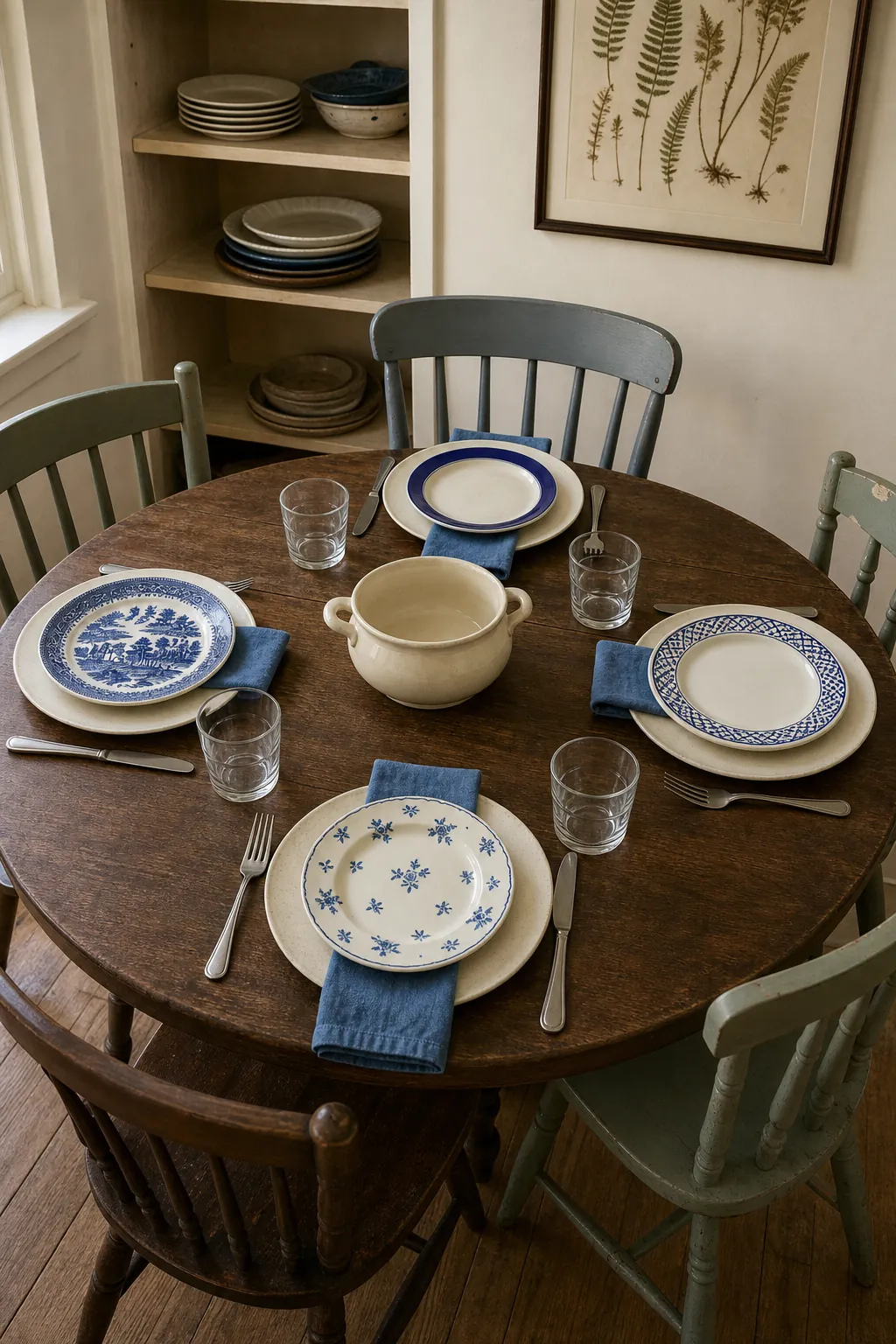
Mismatched pieces look collected when one feature repeats. Keep all dinner plates white and vary the salad plates. Use different floral patterns that share blue. Combine bowls with similar shapes but slightly different glazes. Match one thing; let the rest vary.
Spread distinctive pieces around the table instead of clustering the best ones at one end. If you have only two patterned plates, place them opposite each other. A repeated napkin, charger, or water glass will then connect every seat. Do a full mock-up before guests arrive; mismatching works through distribution, not luck.
Make ordinary glassware sparkle
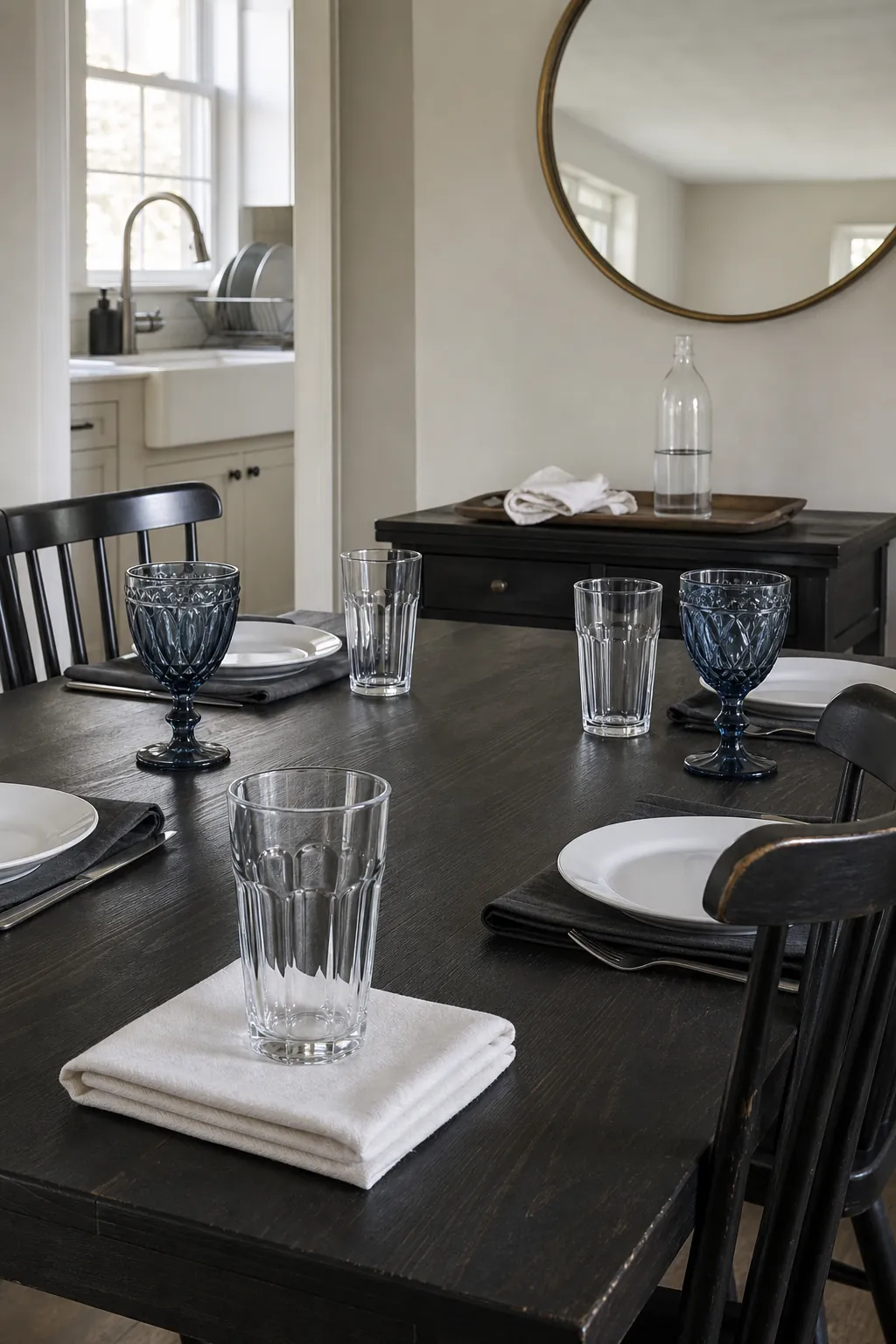
Cloudy glasses undermine an elegant table faster than inexpensive plates. Wash them early, check for water spots in window light, and polish with a clean lint-free cloth. Matching is optional; clarity is not.
If your glasses differ, group them by type or color. Clear tumblers can handle water while two colored goblets become deliberate accents at opposite seats. Keep the stems and rims similar in scale, and avoid putting every style you own on one small table.
Build one low centerpiece from inexpensive ingredients
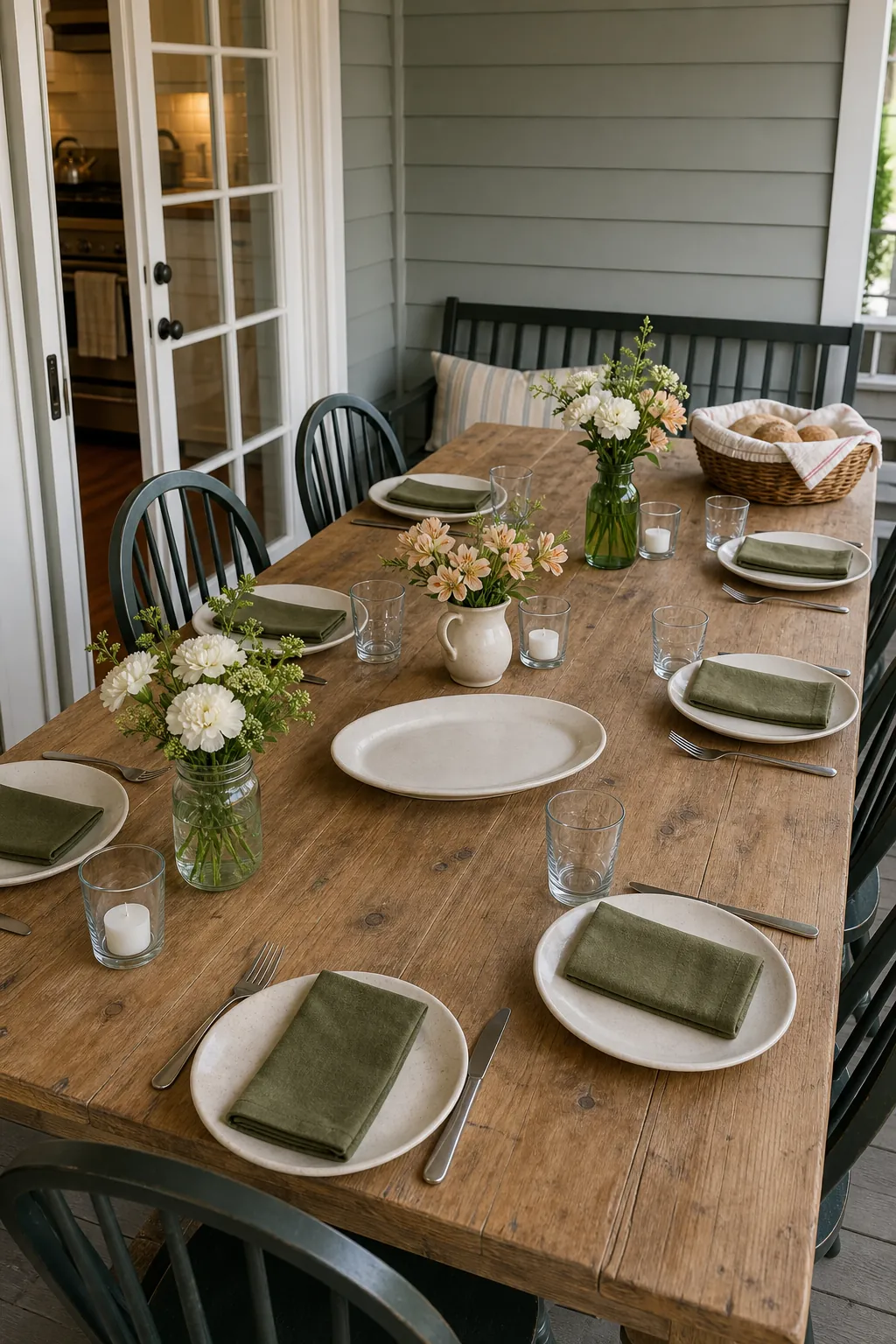
Skip the large floral arrangement. Divide one grocery-store bunch among small bottles, jars, or creamers, then repeat the clusters down the table. Green branches, herbs, or foliage from your garden can supply volume while a few blooms provide color.
Add unscented votives in sturdy holders only where there is generous clear space. Keep flowers low enough for conversation and leave room for serving bowls. A centerpiece earns its place when it improves the atmosphere without making dinner harder to serve.
Spend effort where guests will notice it
Before buying anything, sit at the table. Check that plates align with chairs, glasses are easy to reach, napkins are clean, and no centerpiece blocks a face. Remove unused cutlery and decorative objects that compete with the meal.
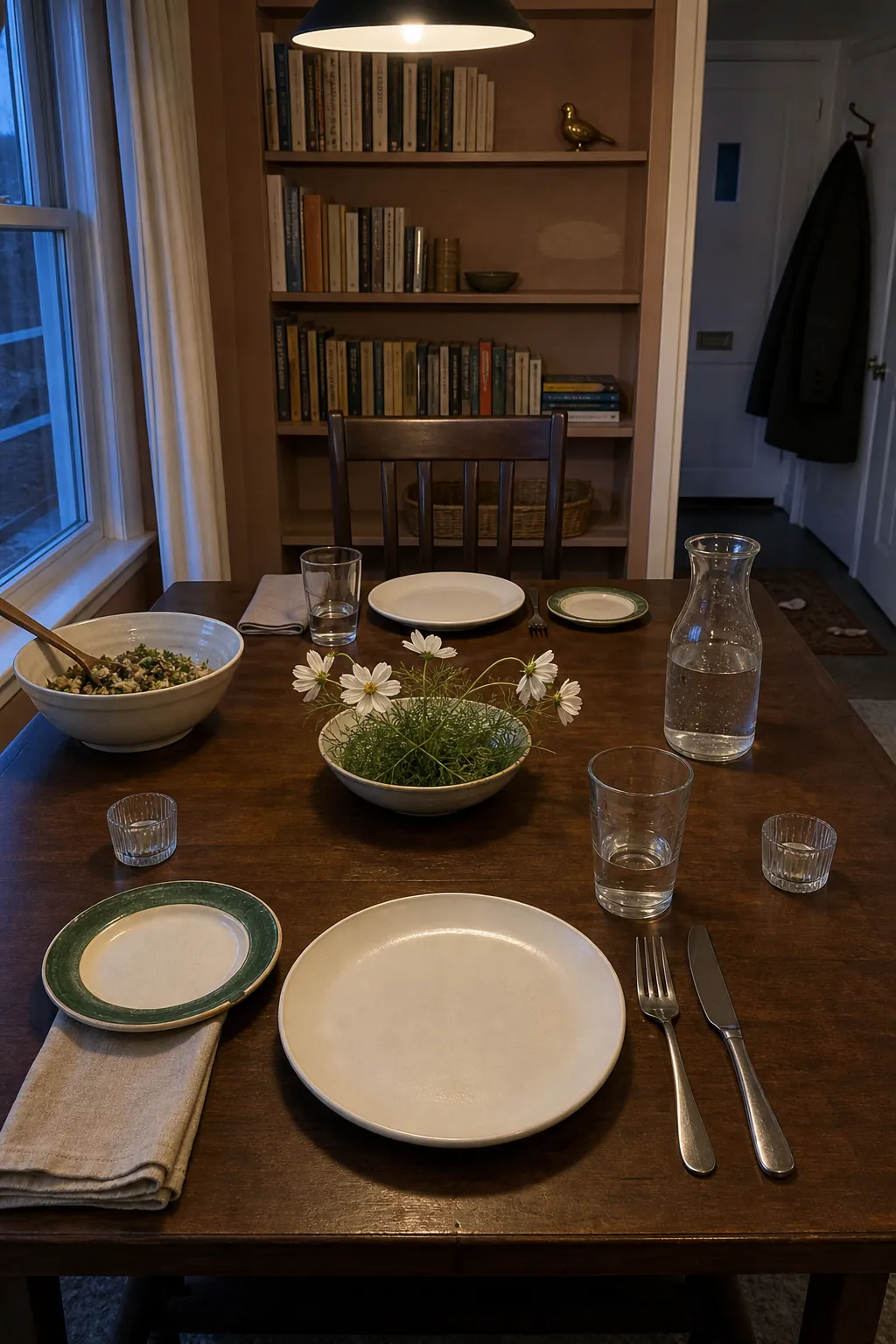
The final table should look considered, not costly. Guests notice whether they can see one another, set down a glass, and enjoy the food. Give them that comfort, repeat one beautiful detail at every seat, and ordinary dinnerware becomes enough.