
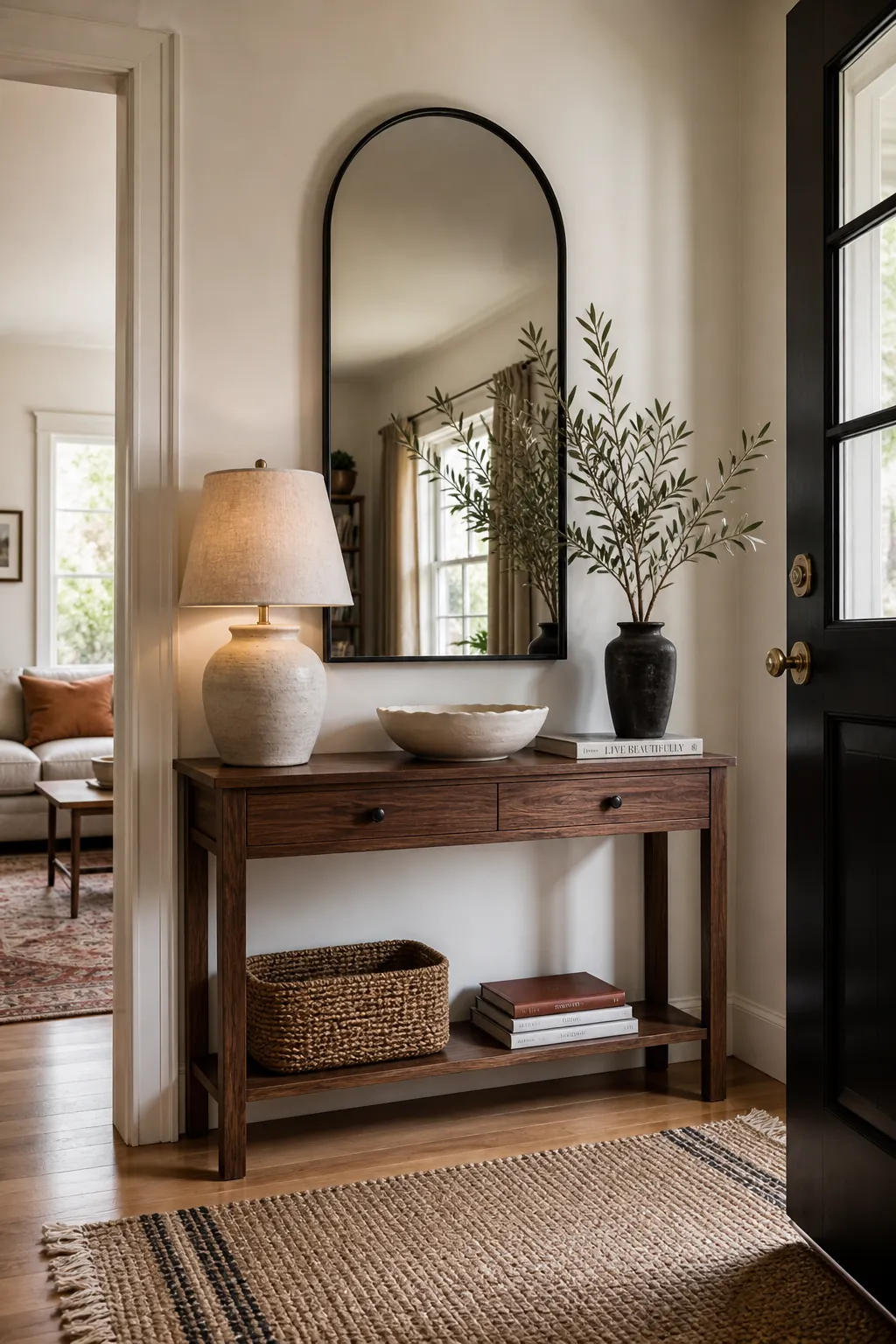
An entryway mirror and console table can look effortless, but the pairing exposes every small mistake. A mirror that is too narrow floats above the furniture. A crowded tabletop leaves nowhere to set down keys. A perfectly symmetrical arrangement can feel stiff when the door, stairs, or hallway are visibly off-center. The answer is not more décor. It is a clearer relationship between scale, function, and visual weight.
Start With the Space You Need to Walk Through
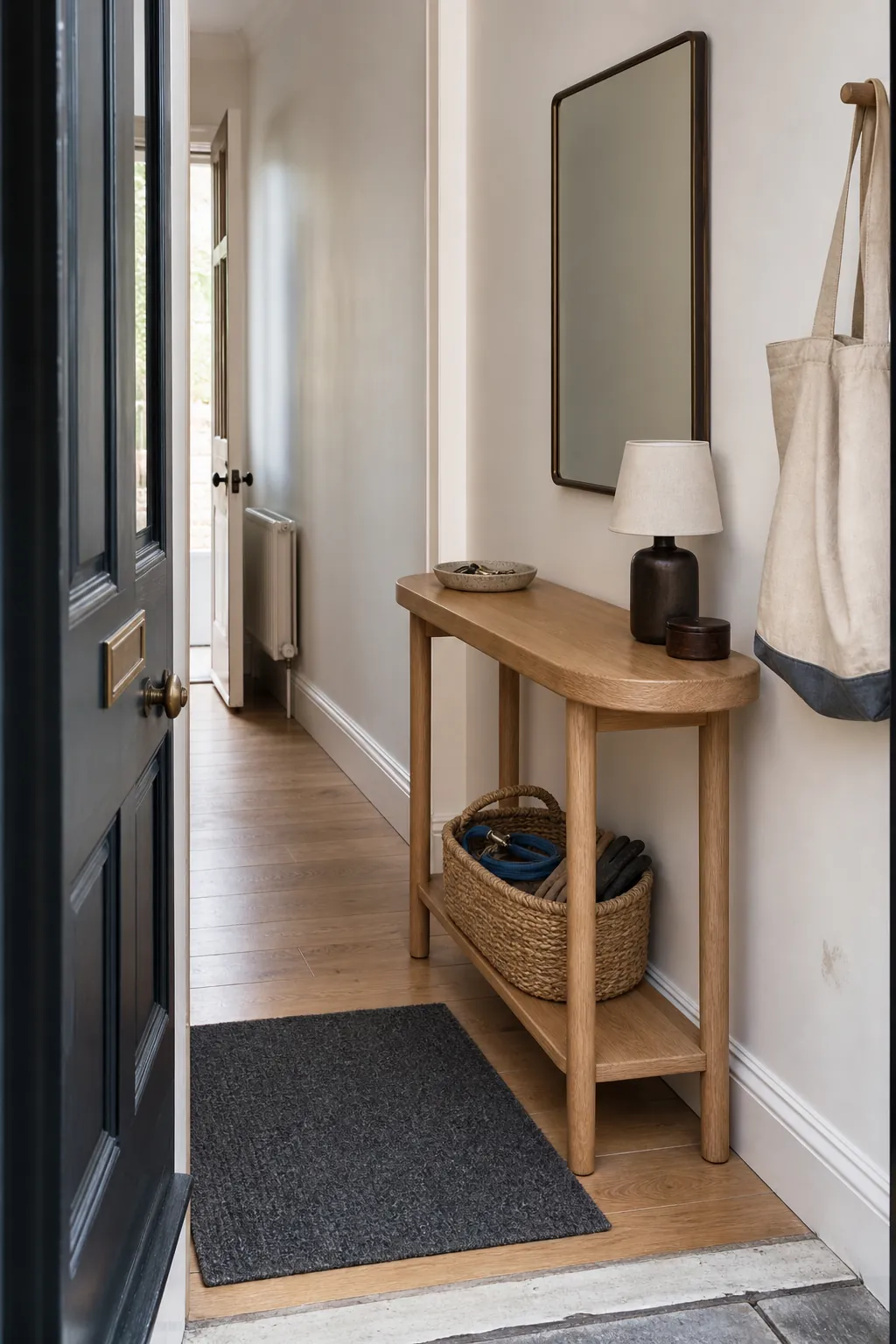
Before choosing an entry table or wall mirror, open the front door fully and walk the route you use every day. The console should not pinch the path, catch a bag, or compete with the door swing. In a narrow foyer, a shallow console with rounded corners often works better than a deeper cabinet, even when the larger piece technically fits.
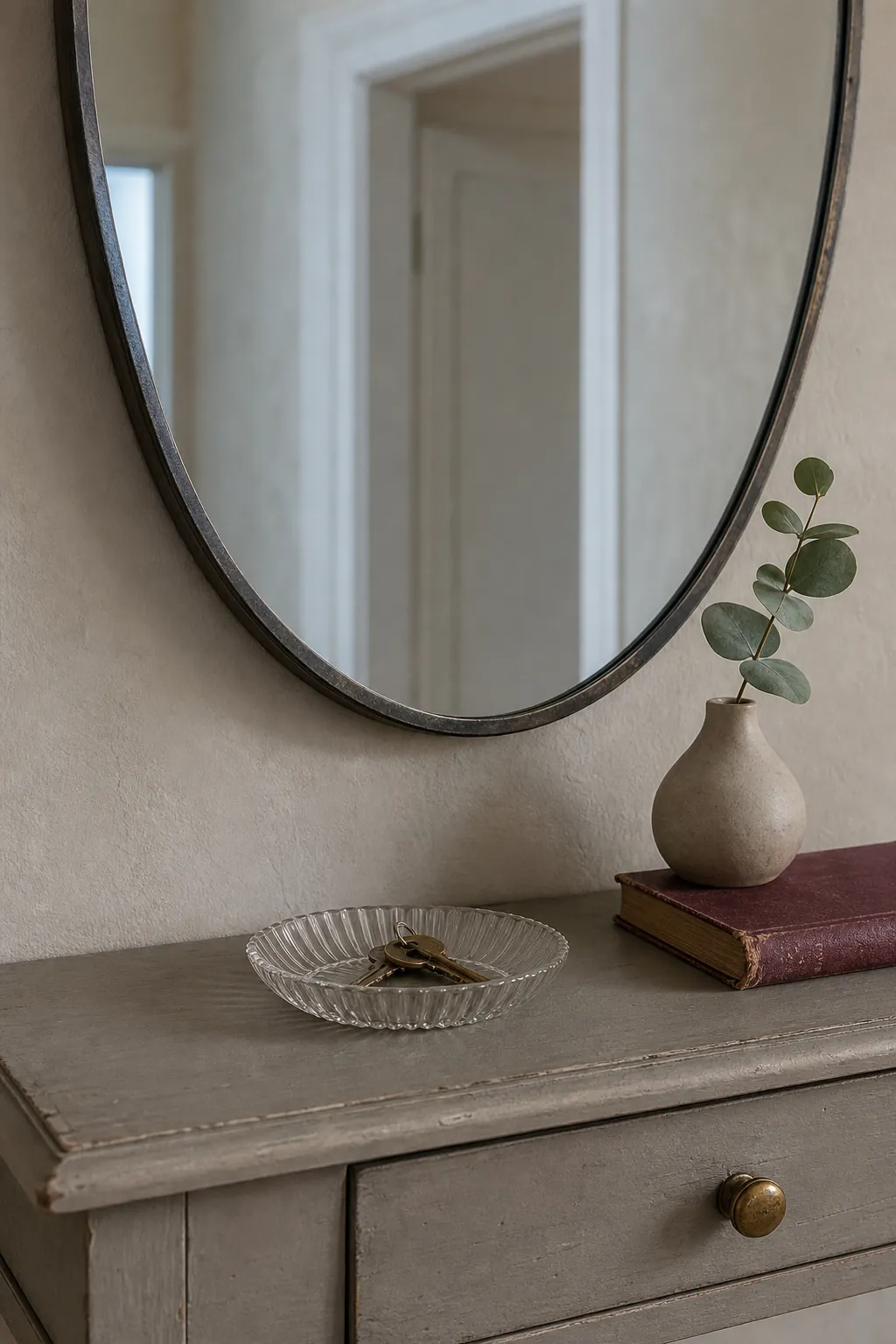
Decide what the surface must do. If it is the household landing zone, reserve a clear section for a tray, mail, or a phone. If shoes and dog leads collect nearby, choose drawers or baskets below rather than trying to disguise daily life with decorative objects. A practical empty space is part of the styling.
Match the Mirror to the Console, Not the Entire Wall
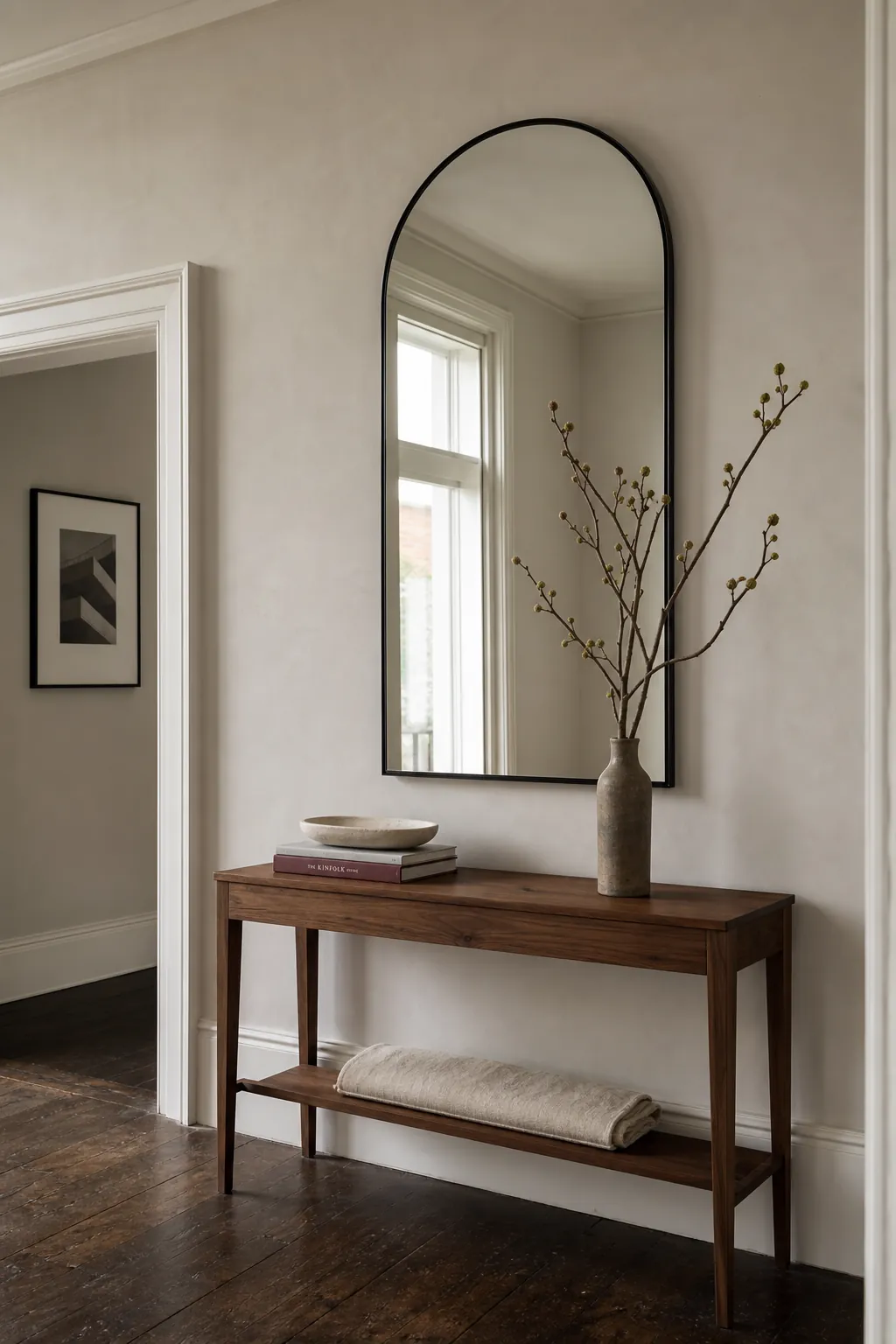
The console is the visual base, so use it to judge mirror scale. A useful starting point is a mirror roughly two-thirds the console width. It can be a little wider or narrower depending on the frame, but it should read as one composition with the furniture below rather than as a small object lost on a large wall.
Shape changes the mood. An arched mirror adds height and softens a boxy table. A round mirror interrupts a hallway full of straight lines. A rectangular mirror feels calm and architectural, especially when its frame echoes the console finish. When choosing between sizes, the larger option usually looks more deliberate, provided it stays comfortably inside the console’s width and does not crowd switches or trim.
Hang It Close Enough to Belong
A common mirror styling problem is excessive wall space between the mirror and console. The gap makes the pieces feel unrelated and encourages people to fill the tabletop with tall clutter. Start with the lower edge about four to eight inches above the surface, then adjust for the mirror’s height, the console décor, and the eye level of the people using it.
Test the placement with paper or painter’s tape before drilling. Stand at the front door, farther down the hall, and directly in front of the mirror. Check what it reflects. Window light, an open room, or a considered wall view helps the entry feel brighter; a cluttered coat rack or harsh ceiling fixture becomes part of the composition too.
Build an Uneven Triangle Across the Tabletop
The easiest console table decor has three height zones rather than a row of similarly sized objects. Place one tall anchor to one side, such as a shaded lamp or leafy branch. Add a medium object closer to the center, then a low tray or shallow bowl on the opposite side. The eye moves up, across, and down without the arrangement feeling engineered.
Objects can overlap the mirror visually, but they should not cover the useful viewing area. Leave breathing room between groups. If the architecture is asymmetrical, let the styling respond to it: a tall lamp can balance stairs rising on one side, while a quieter stack of books can keep the other side open. Balance is about equal visual weight, not matching pairs.
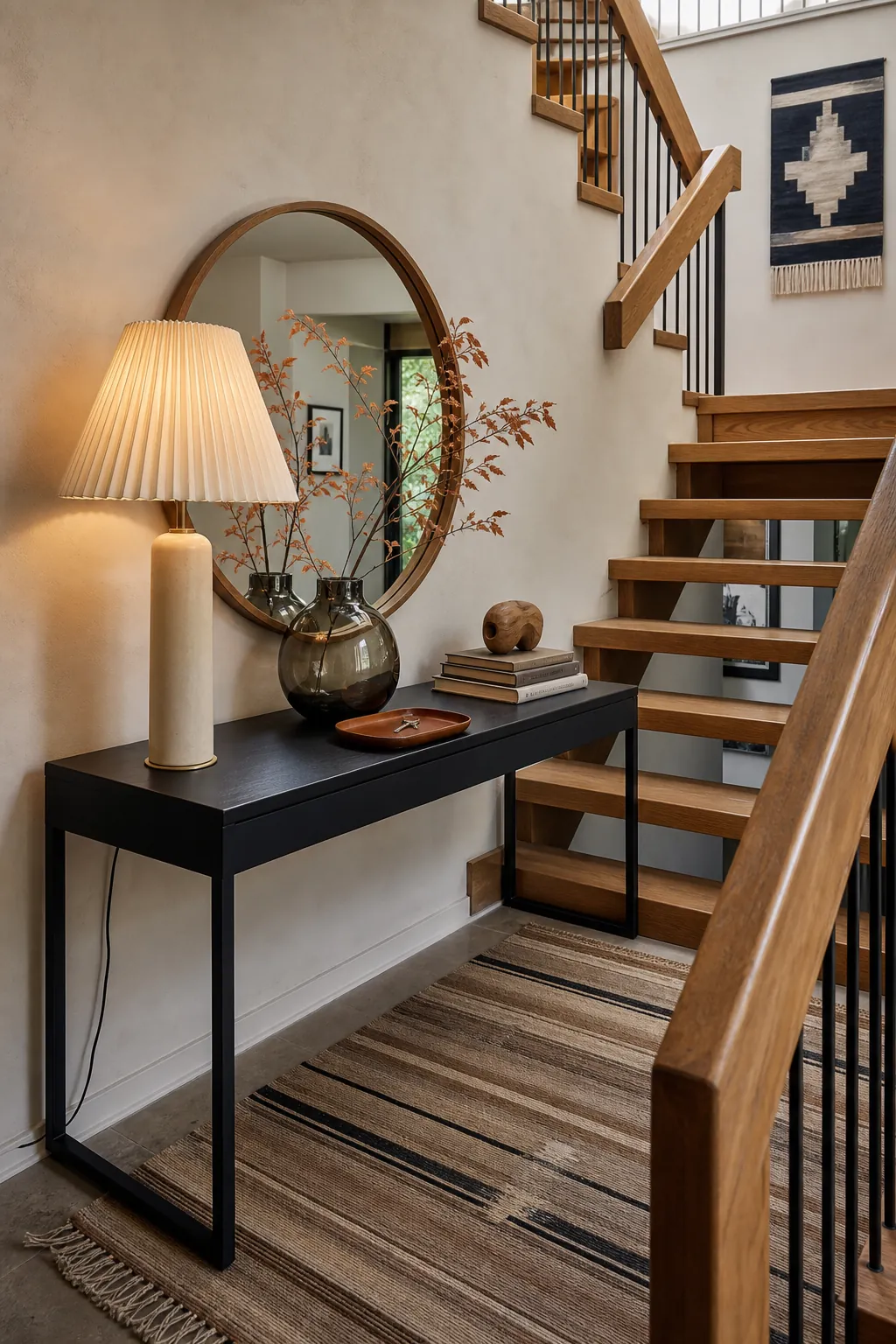
Limit the Materials and Repeat One Accent
Entryway decor feels coherent when the materials have a reason to be together. Start with the console and mirror frame, then add two or three supporting textures: ceramic, woven fiber, glass, aged metal, linen, or wood. Repeating one finish elsewhere in the foyer—black metal from the mirror in a lamp base, or warm brass in a small bowl—connects the vignette without making it look like a furniture set.
Contrast keeps neutral rooms alive. Pair smooth glass with rough pottery, dark metal with pale oak, or a crisp stone tray with a soft fabric shade. Color works best as a controlled accent picked up from the rug, front door, or an adjacent room. Avoid scattering several unrelated small colors across the table; they read as clutter before they read as personality.
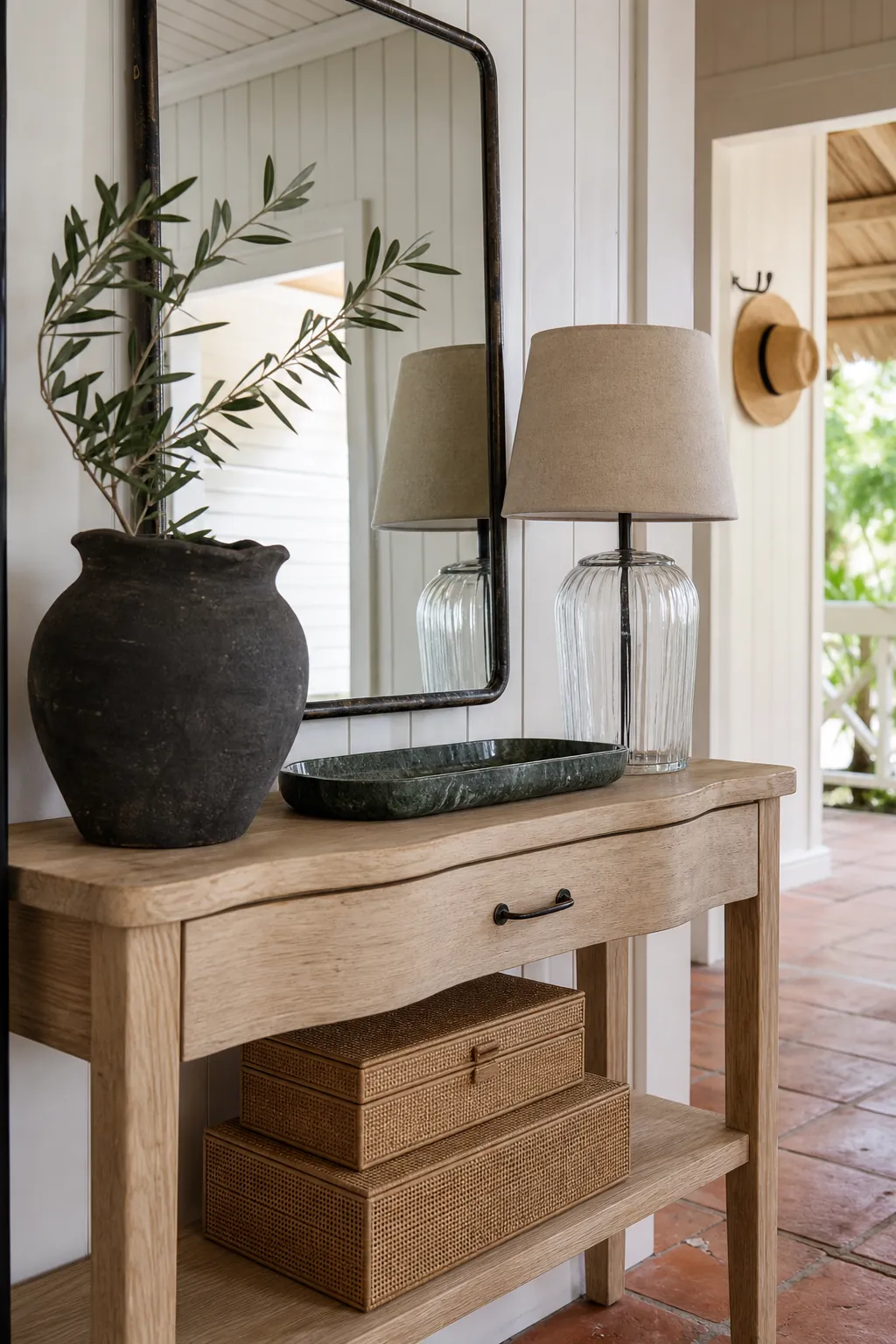
Edit the Display Around Real Daily Habits
Finish by removing, not adding. Keep the objects that support a ritual: a bowl where keys actually land, a lamp that softens the foyer at night, a small box that hides dog bags, or a vase you can maintain. Move decorative pieces that constantly get knocked aside. If the table has a lower shelf, use one or two substantial baskets instead of many small containers.
Look at the arrangement in a phone photo. The flattened view quickly reveals a mirror that is too high, objects lined up like soldiers, or a tabletop with no negative space. Then live with it for a week. The best home styling survives school mornings, deliveries, wet umbrellas, and last-minute departures while still giving you a calm first impression when you come home.
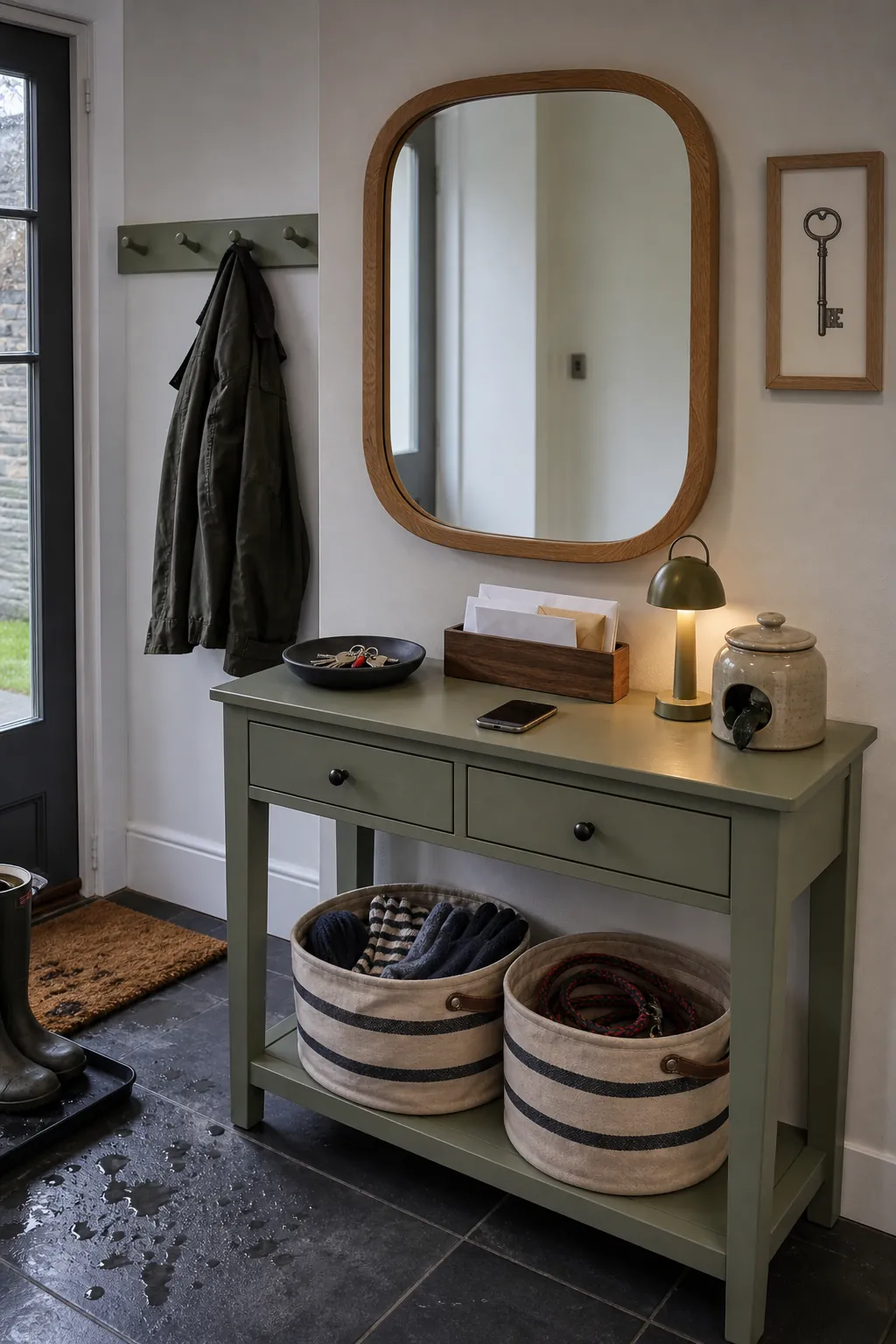
A successful entryway mirror and console table pairing does three jobs at once: it fits the architecture, supports the way you enter and leave, and creates a strong visual pause. Get the scale and hanging height right first. Everything placed on the console should then earn its space.