
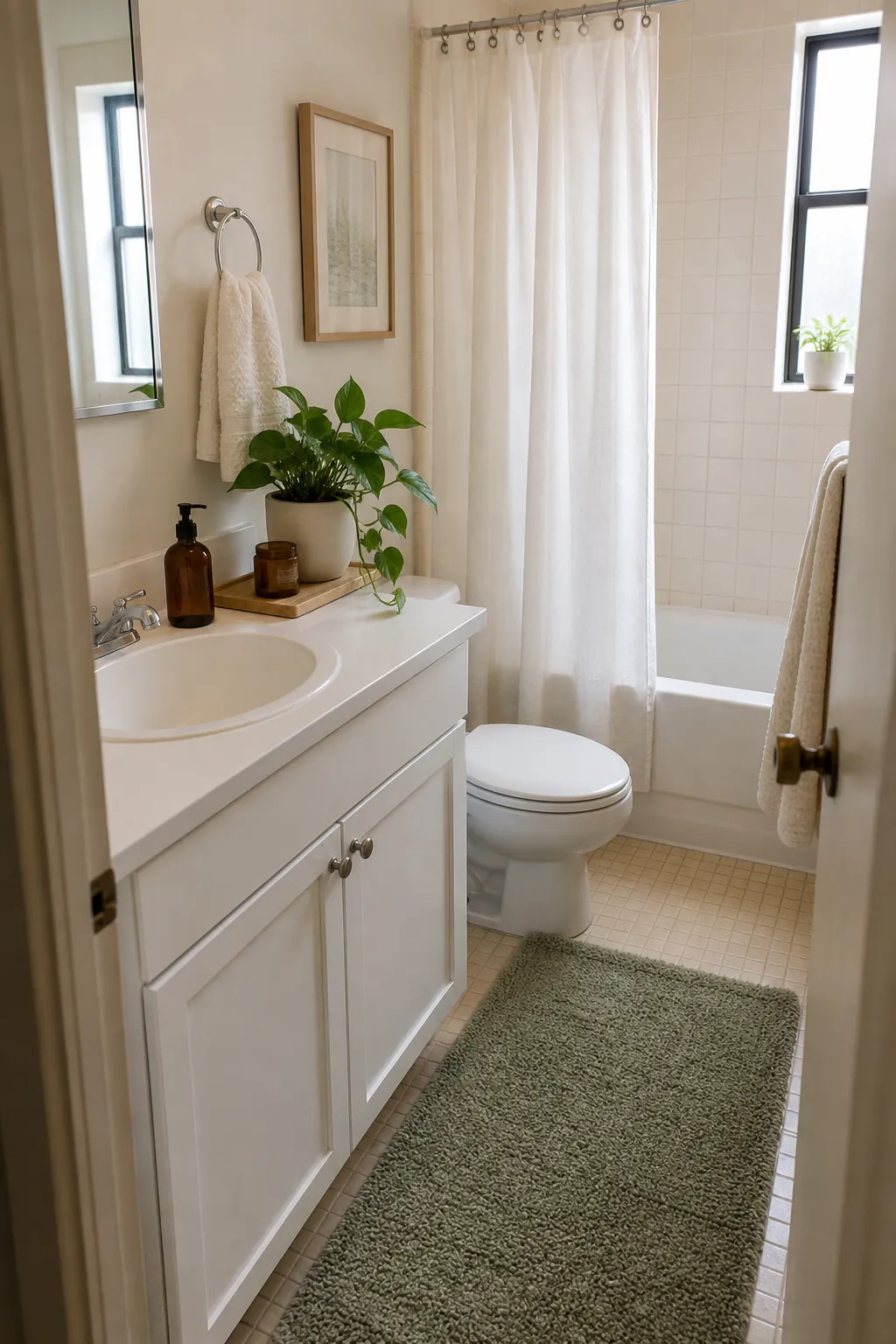
A rental bathroom often feels temporary for a reason that has little to do with tile or fixtures: nothing in it appears connected to the way you actually live. The landlord chose the finishes, toiletries gather wherever they fit, and every removable upgrade can feel like one more thing to undo later. The answer is not to disguise every surface. It is to create a few deliberate, repeatable visual cues that make the room feel settled without risking your deposit or creating a maintenance problem.
Choose a palette that works with the fixed finishes
Start by naming what cannot change: the tile undertone, vanity color, counter, metal finish, and floor. Then choose one warm neutral, one natural material, and one accent color that looks intentional beside them. A gray rental bathroom may need oatmeal textiles, pale oak or bamboo, and muted green. A beige room can feel fresher with cream, walnut, and dusty blue. Working with the fixed finish is more convincing than trying to cover every inch of it.
Use the accent color at least three times—perhaps in the bath mat, a hand towel, and a small tray. Repetition turns separate purchases into a scheme. Before buying anything, photograph the bathroom in daylight and under its normal bulbs; colors that look clean online can become muddy or yellow in the actual room.
Let one textile set the tone
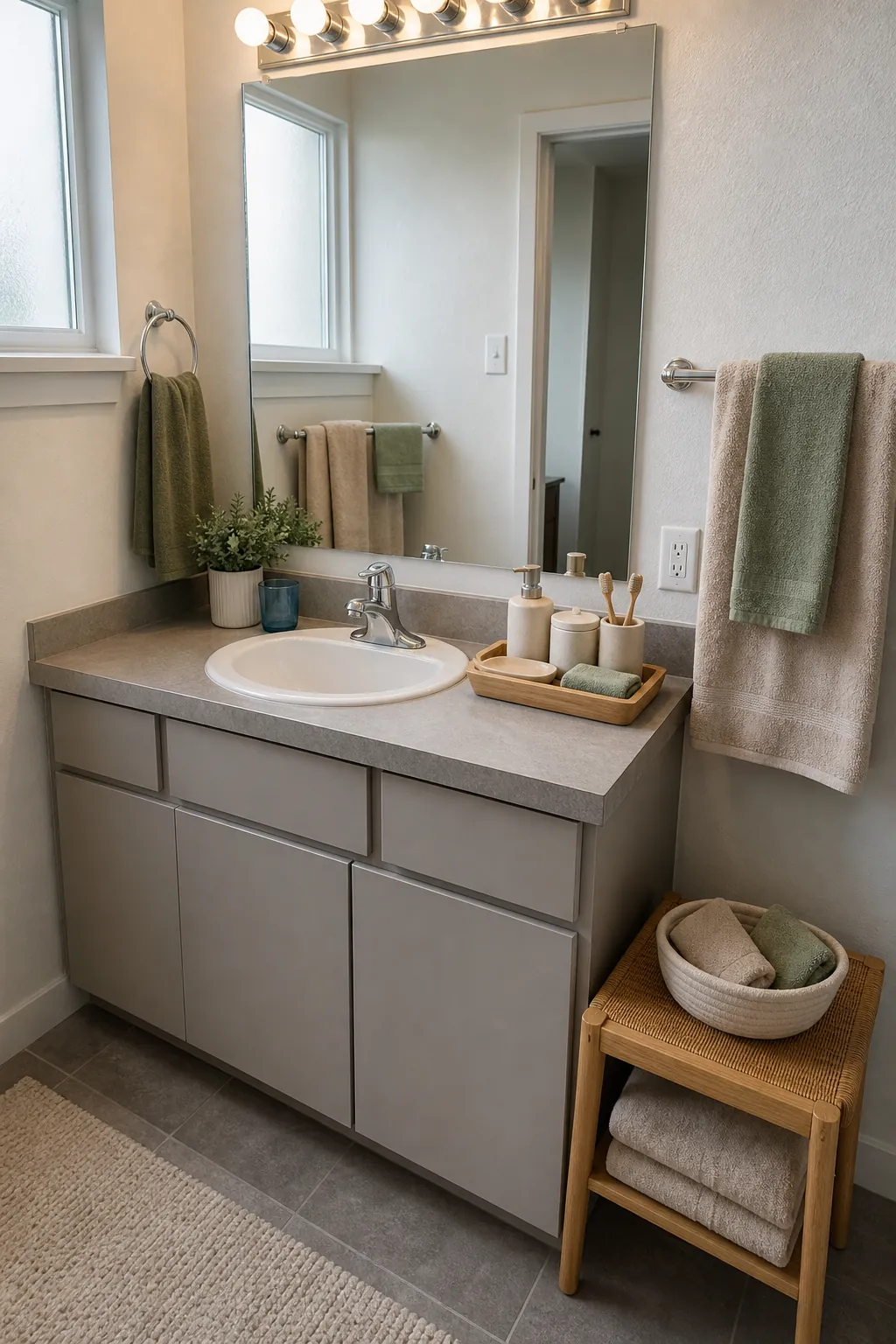
Textiles occupy more visual space than countertop accessories, so they change the room faster. Choose the shower curtain first if you have one; otherwise begin with a generous washable bath mat. Hang the curtain close to the ceiling when the rod and curtain length allow, leaving a small gap above the floor. The taller line makes a standard tub feel more considered.
Avoid buying every piece from a themed set. Instead, repeat texture: a waffle curtain, ribbed towels, and a low-pile mat feel related without looking staged. Keep frequently used towels within easy reach and store extras elsewhere so the room does not become a linen display. In a guest bathroom, one folded spare towel and a visible hand towel are enough.
Replace visual clutter with useful zones
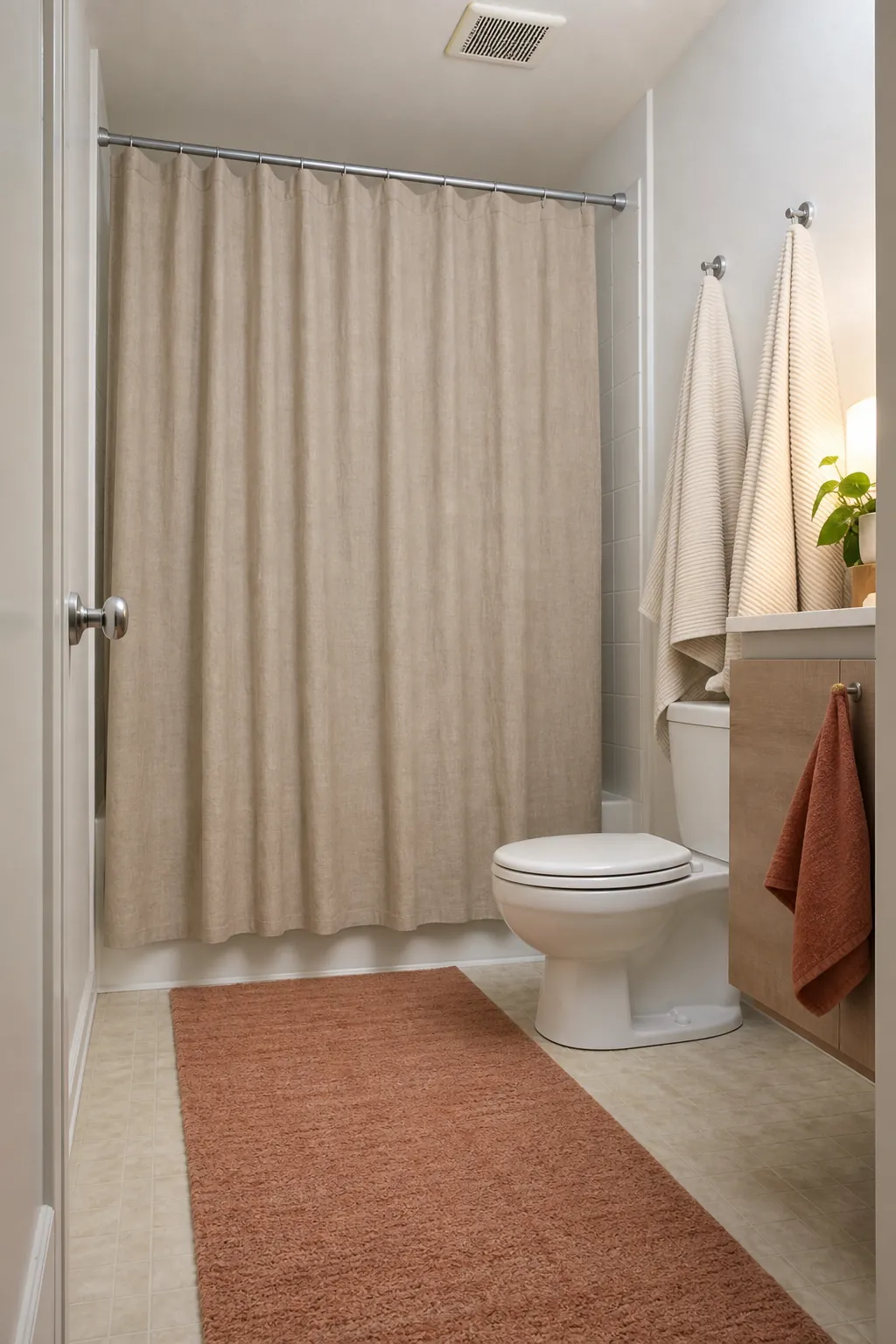
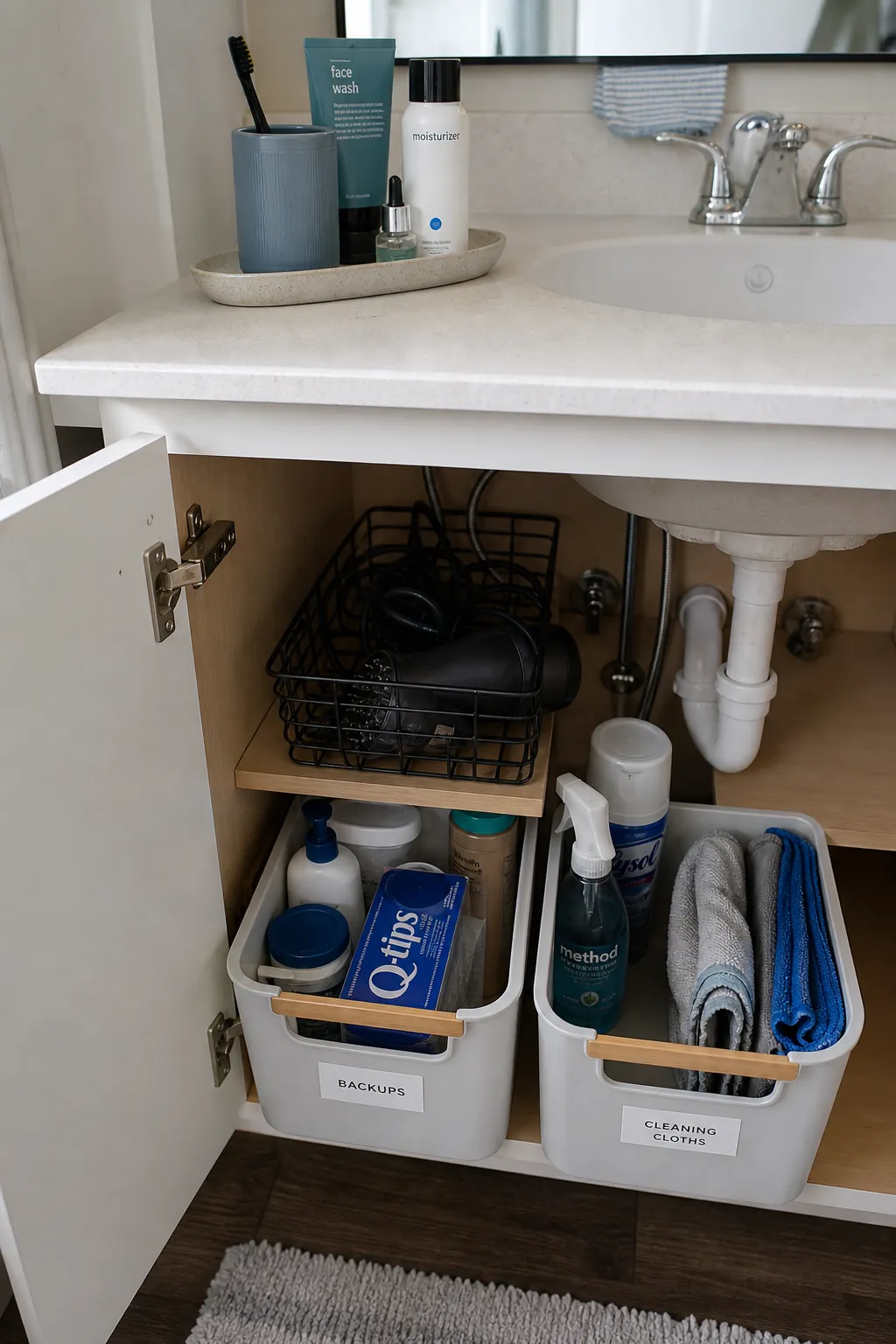
Countertop clutter makes even a well-finished bathroom feel provisional because every item appears to be waiting for a permanent home. Sort products by where you use them: daily sink items, shower items, backups, cleaning supplies, and occasional grooming tools. Give each group one boundary. A washable tray can hold the daily sink routine; a handled bin can keep backups together under the vanity.
The key is not hiding everything. It is making the visible items look chosen. Decant only products you can identify safely, and never remove medication or chemical labels. Use closed storage for noisy packaging and open storage for towels or attractive daily essentials. Good bathroom storage reduces the number of decisions you make each morning.
Add removable storage where the room needs it
Before installing bathroom shelves or adhesive hooks, check the lease and the product’s surface requirements. Humidity, textured paint, grout lines, and recently painted walls can weaken adhesives. Clean the approved surface as directed, respect the weight rating, and let the bond cure before loading it. Keep valuable or breakable objects off adhesive-mounted pieces.
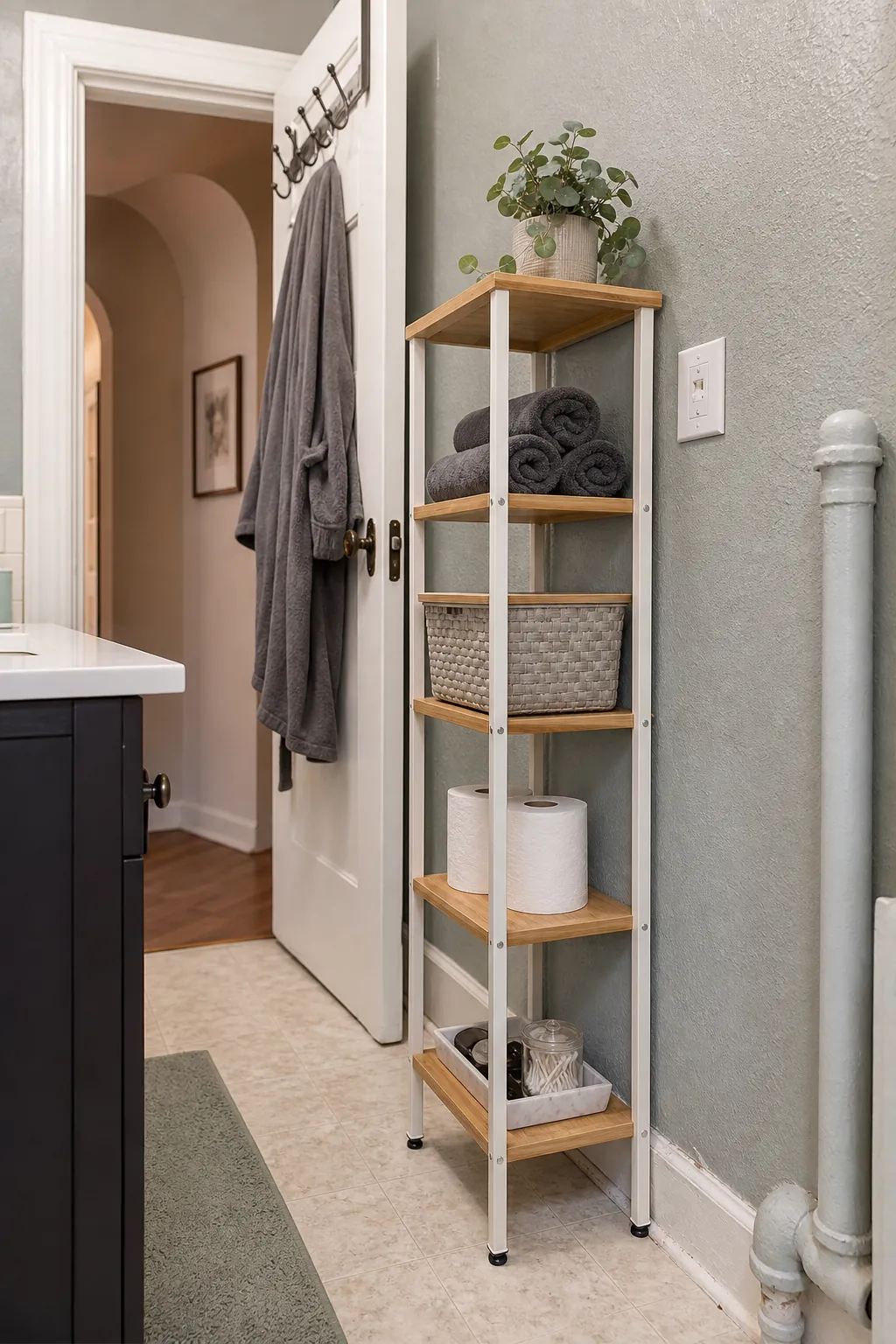
Low-risk options include an over-toilet freestanding shelf, a slim rolling cart, a tension-pole shower caddy, an over-door hook rail, and baskets that sit inside existing cabinets. Choose the smallest solution that resolves a real bottleneck. Empty shelving added only for decoration can make a compact rental bathroom feel busier, not more complete.
Correct the light before adding more decor
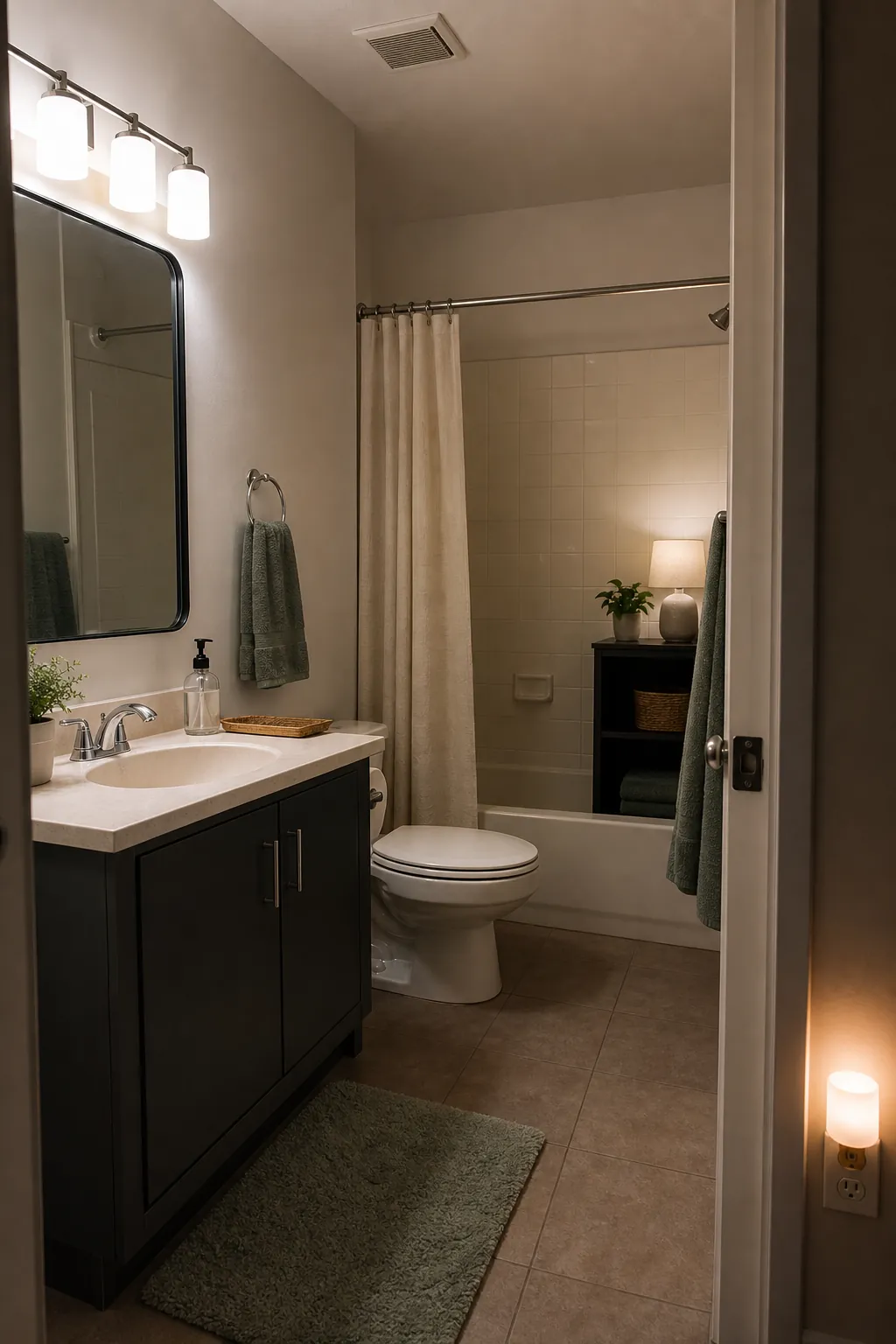
Harsh or poorly placed lighting can flatten every color and make the room feel institutional. If your lease allows bulb changes, keep the original bulbs labeled for move-out and choose replacements compatible with the fixture’s wattage, base, enclosure, and dimmer. A warm-neutral bulb often feels calmer than a very cool one, but accurate mirror light still matters for shaving and makeup.
Rechargeable accent lighting can soften the room after dark, but it should not replace safe task lighting. Keep portable lights away from wet zones and follow their bathroom-use rating. A small plug-in night-light outside splash areas can be more useful than decorative candles. The goal is layered light: clear at the mirror, gentler for a bath, and easy to switch off.
Bring in natural texture that can handle moisture
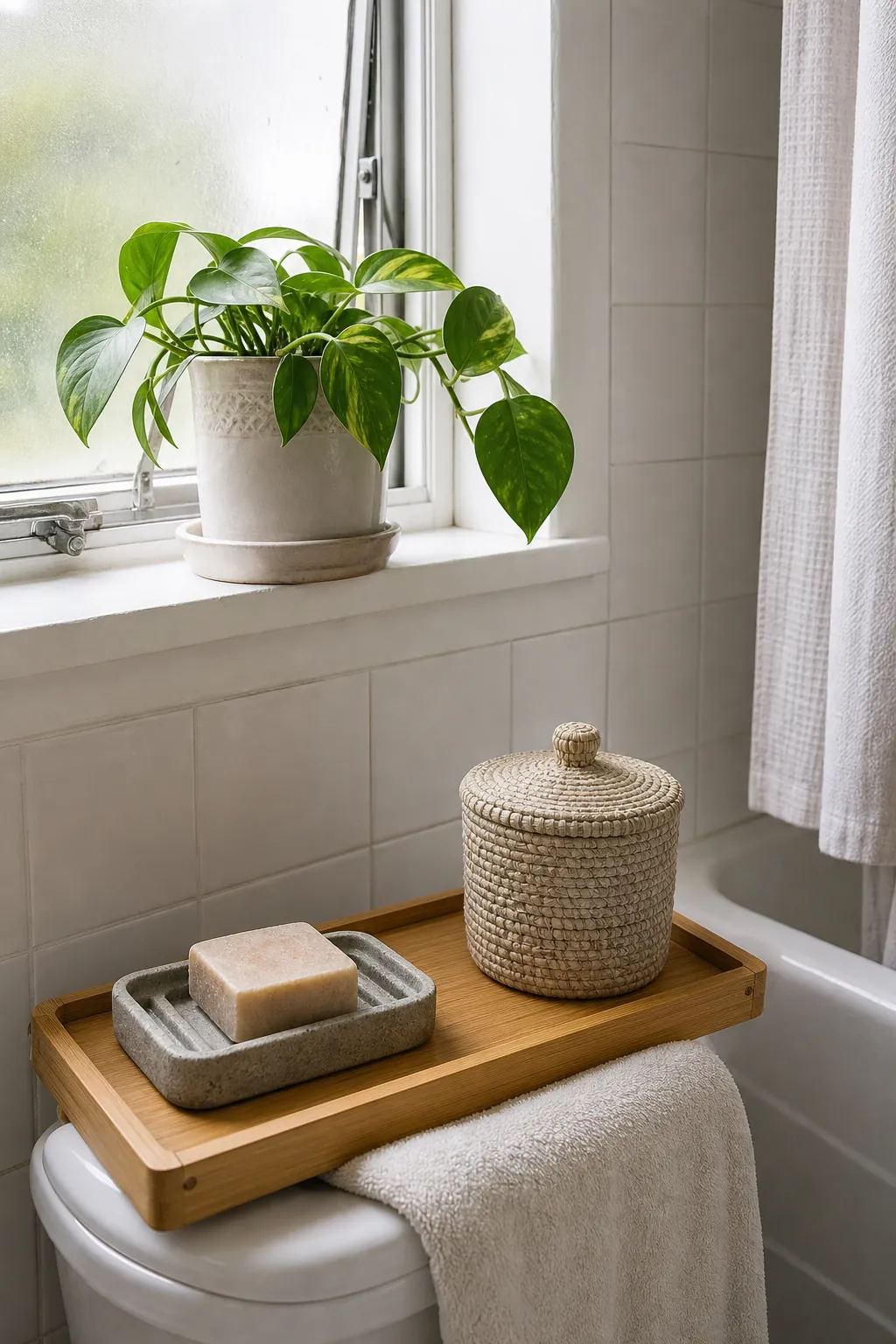
A few natural materials make generic porcelain and laminate feel less sterile. Try a sealed bamboo tray, a washable cotton curtain, a stone soap dish that drains, or a moisture-tolerant woven basket kept outside the splash zone. Do not overload the room with untreated wood or absorbent objects that stay damp. Drying space matters as much as appearance.
Bathroom plants should match the actual light, not the mood board. Humidity does not compensate for darkness. In a bright room, a pothos or fern may work if its care needs fit the window. In a windowless bathroom, rotate an appropriate plant from a brighter room or choose a convincing faux stem and clean it regularly. One healthy plant looks more settled than five struggling ones.
Make the room feel permanent through a routine
The final layer is operational. Give towels a place to dry fully, keep the counter clear enough to wipe in one pass, ventilate after showers, and schedule a ten-minute weekly reset. Save original hardware in a labeled bag if your landlord approves reversible swaps. Photograph the condition before changes and test removable products in an inconspicuous area.
A room starts feeling like yours when it supports your habits without friction. Choose one palette, one strong textile, one storage fix, better light, and a natural detail. That smaller set of decisions will outlast a cart full of temporary decorations—and it can move with you when the lease ends.