
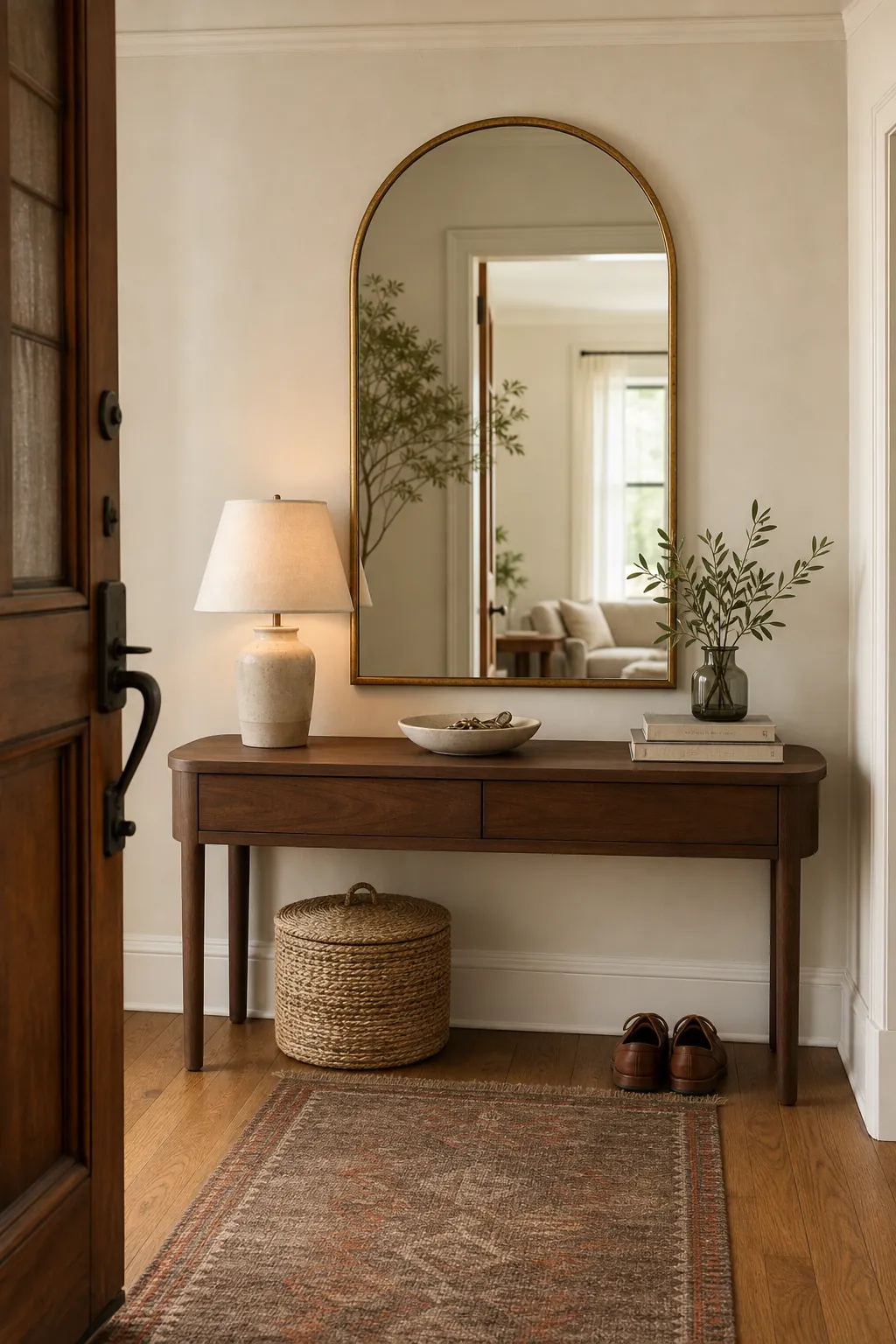
A gold mirror can warm an entryway before you add a single cushion, basket, or branch. The catch is that gold reflects attention as readily as it reflects light. If the scale is timid, the finish fights the room, or the glass faces clutter, the mirror feels like an accessory somebody added at the end. The most convincing entryways treat the mirror as part of the architecture and let everything else support it.
That is also where most decorating uncertainty lives. People wonder whether gold will look gaudy, how large an entryway mirror should be, whether metals need to match, and what belongs on the console below it. These six approaches solve those questions with proportion, useful sight lines, warm materials, and restrained styling.
Choose a softly aged brass finish
Gold reads warmest when it has depth. Look for antique brass, brushed gold, muted champagne, or hand-rubbed finishes with slightly darker low points. Those variations keep a broad frame from looking flat or overly shiny. A high-polish yellow frame can work in a glamorous foyer, but it demands more discipline from every nearby surface.
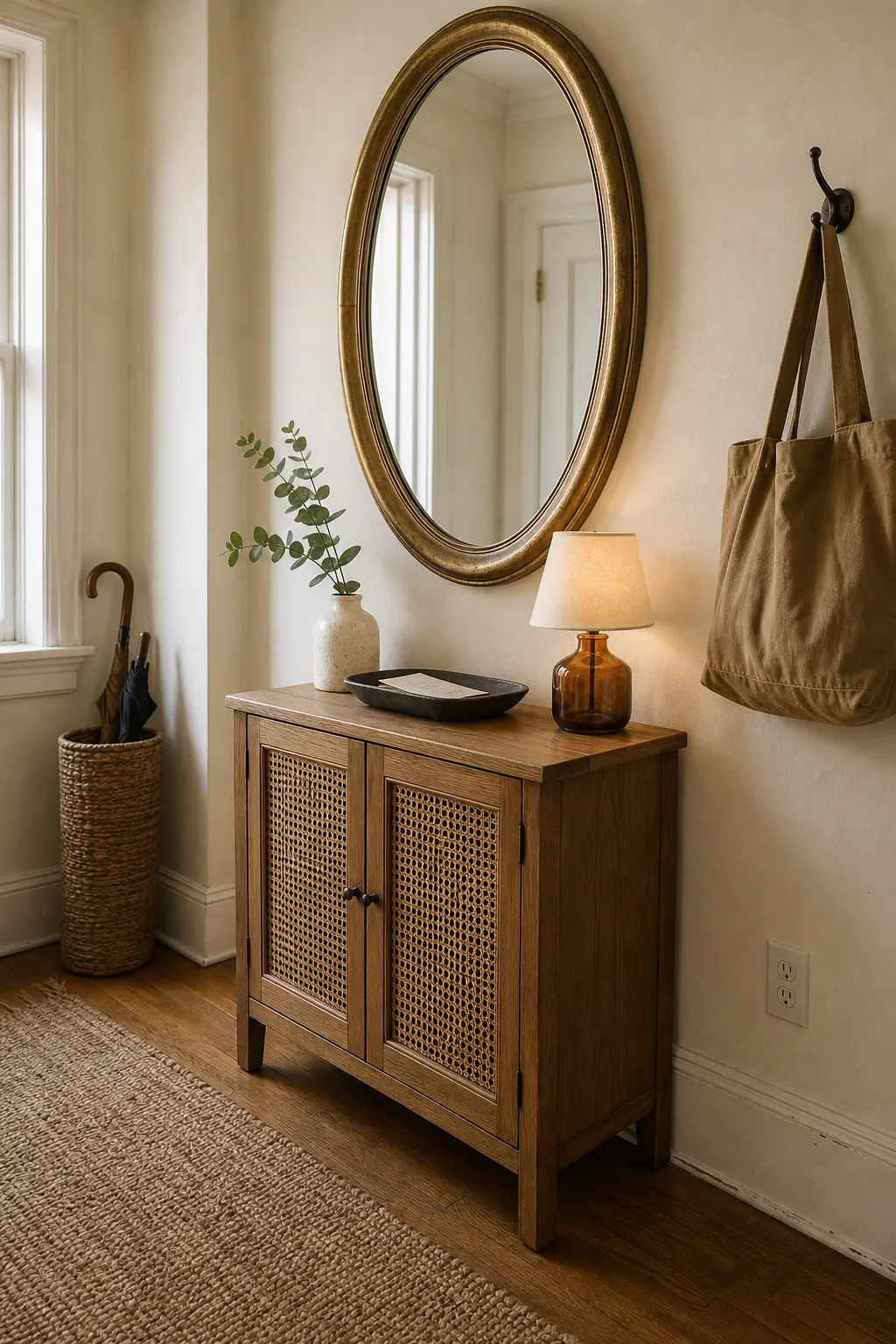
Use the room’s undertones as your filter. Cream, putty, mushroom, clay, olive, walnut, and oak all make aged gold feel settled. Cool white walls do not rule it out, but add a bridge—perhaps a natural runner, warm timber console, or amber-toned lamp—so the metal is not the only warm note. You are matching temperature, not trying to make every finish identical.
Scale the mirror to the console
A common reason mirror styling feels unfinished is that the wall mirror is too small for the furniture beneath it. As a useful starting point, choose a mirror around two-thirds the width of the console. It should feel substantial while leaving visible wall on both sides. Measure the frame’s outside dimensions, not only the reflective glass, and mark the outline with painter’s tape before buying.
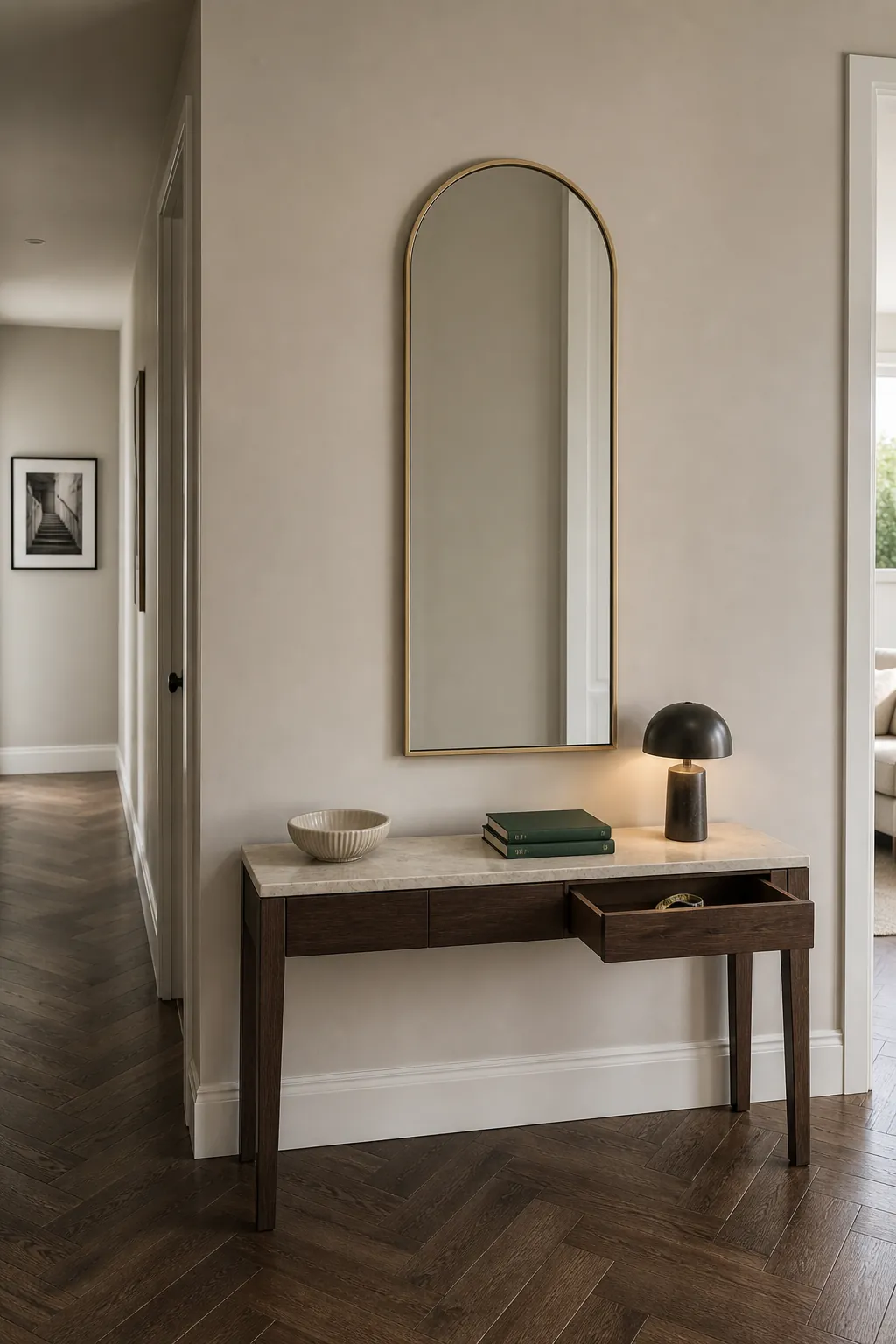
Round and arched shapes soften a corridor full of doors and right angles. A tall rectangle makes a low ceiling feel higher, while a wide horizontal mirror suits a long console and generous foyer. Hang it close enough to create one composition—often about six to eight inches above the console—rather than letting it float halfway up the wall. Check the door swing, switches, and the tallest object you intend to place below before drilling.
Let the mirror borrow natural light
The best placement reflects something worth seeing: a side window, a softly lit room, a plant, or an open view through the house. In a dim foyer, placing the mirror adjacent to or opposite a source of daylight can spread brightness deeper into the space. Stand where guests enter and inspect the reflection before hanging. If the mirror mainly doubles a coat rack, open bathroom door, or kitchen clutter, move it a few inches or choose another wall.
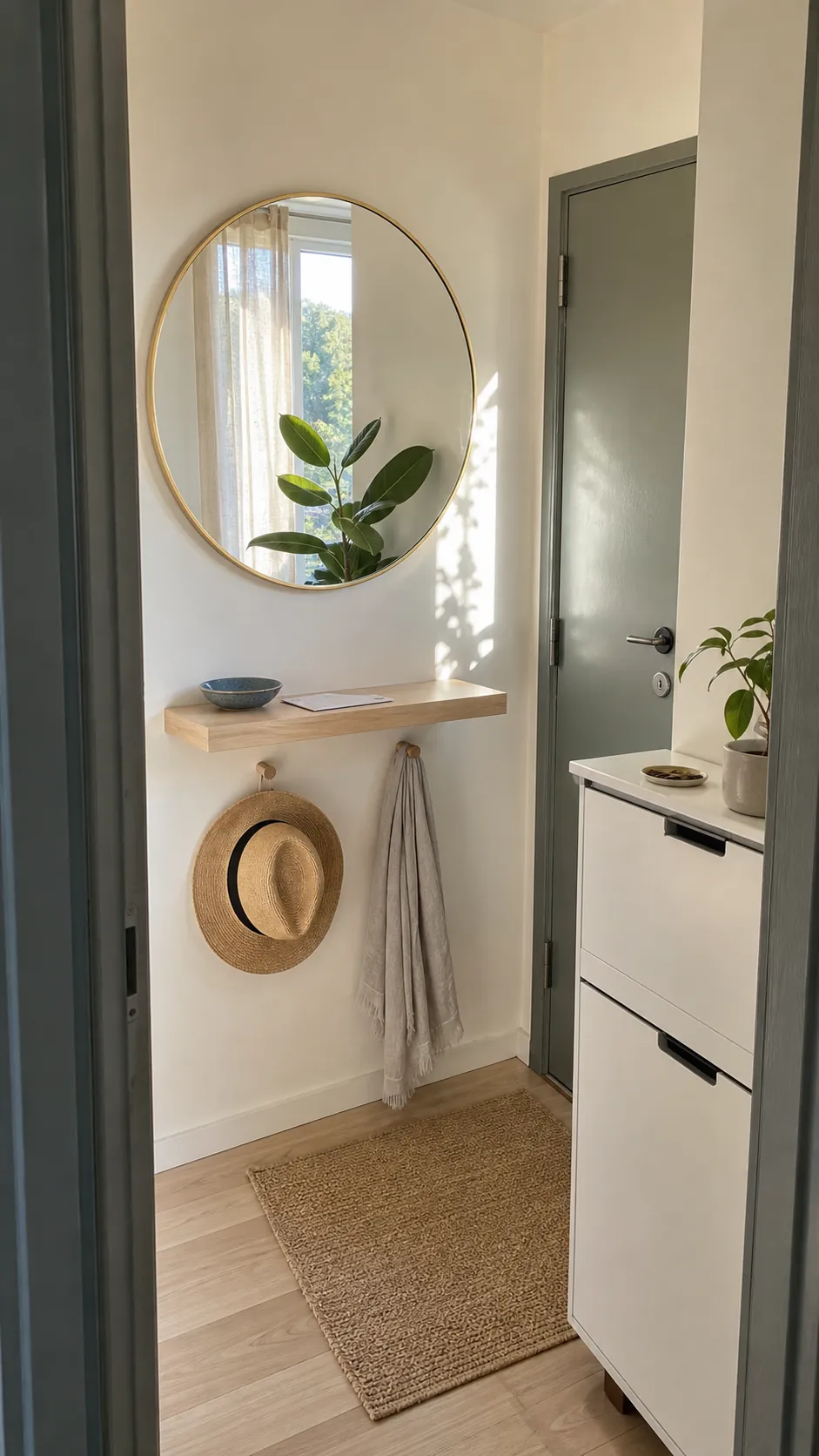
Also test the view at more than one height. A reflection that looks balanced to one person may cut through a pendant or doorway for another. A mirror should improve both the light and the sight line. That practical test matters more than a rigid placement rule, especially in narrow entryway decor where every reflected object feels closer.
Layer warm texture beneath the shine
Metal and glass are hard, smooth surfaces. Give them contrast with tactile materials: a walnut or oak console, a woven runner, a stoneware bowl, linen lampshade, ribbed ceramic vase, or lidded basket for shoes. This is what changes a gold mirror from formal to welcoming. The textures do not need to be rustic; they simply need enough irregularity to balance the polished reflection.
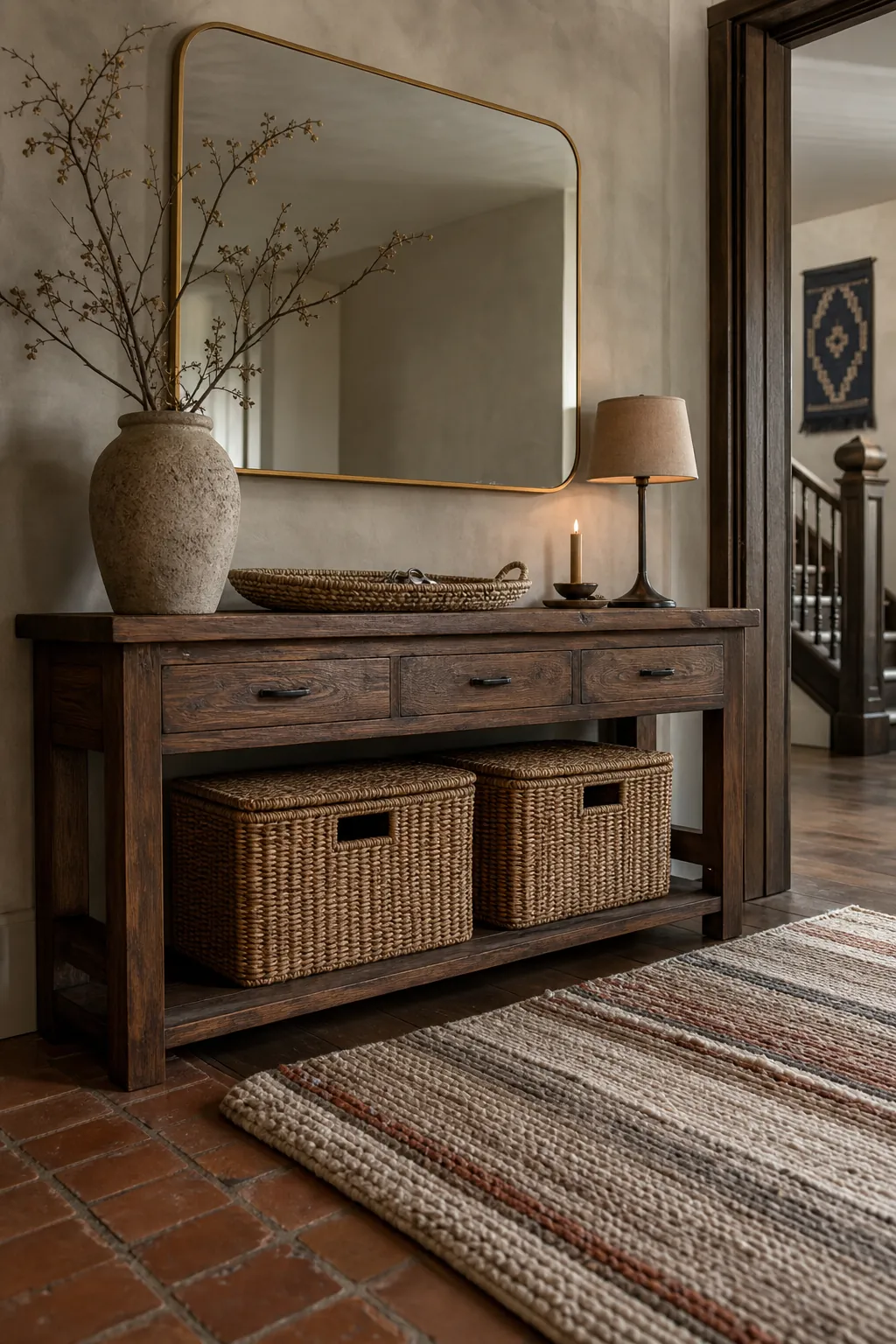
Repeat the frame color sparingly. One small gold accent—a bowl rim, lamp detail, or cabinet pull—is enough to make the choice feel intentional. Avoid surrounding the mirror with several shiny gold objects of equal visual weight. When everything gleams, nothing anchors the eye. Let wood, fiber, and ceramic occupy more area than metal.
Build an asymmetrical but useful console
Good console table decor works on a rushed weekday, not only in a photograph. Start with one taller object on one side, such as a shaded lamp or vase with restrained branches. Place a low catchall near the center for keys, then add a short stack of books or a compact sculptural object on the other side. The heights should step down rather than form a rigid row.
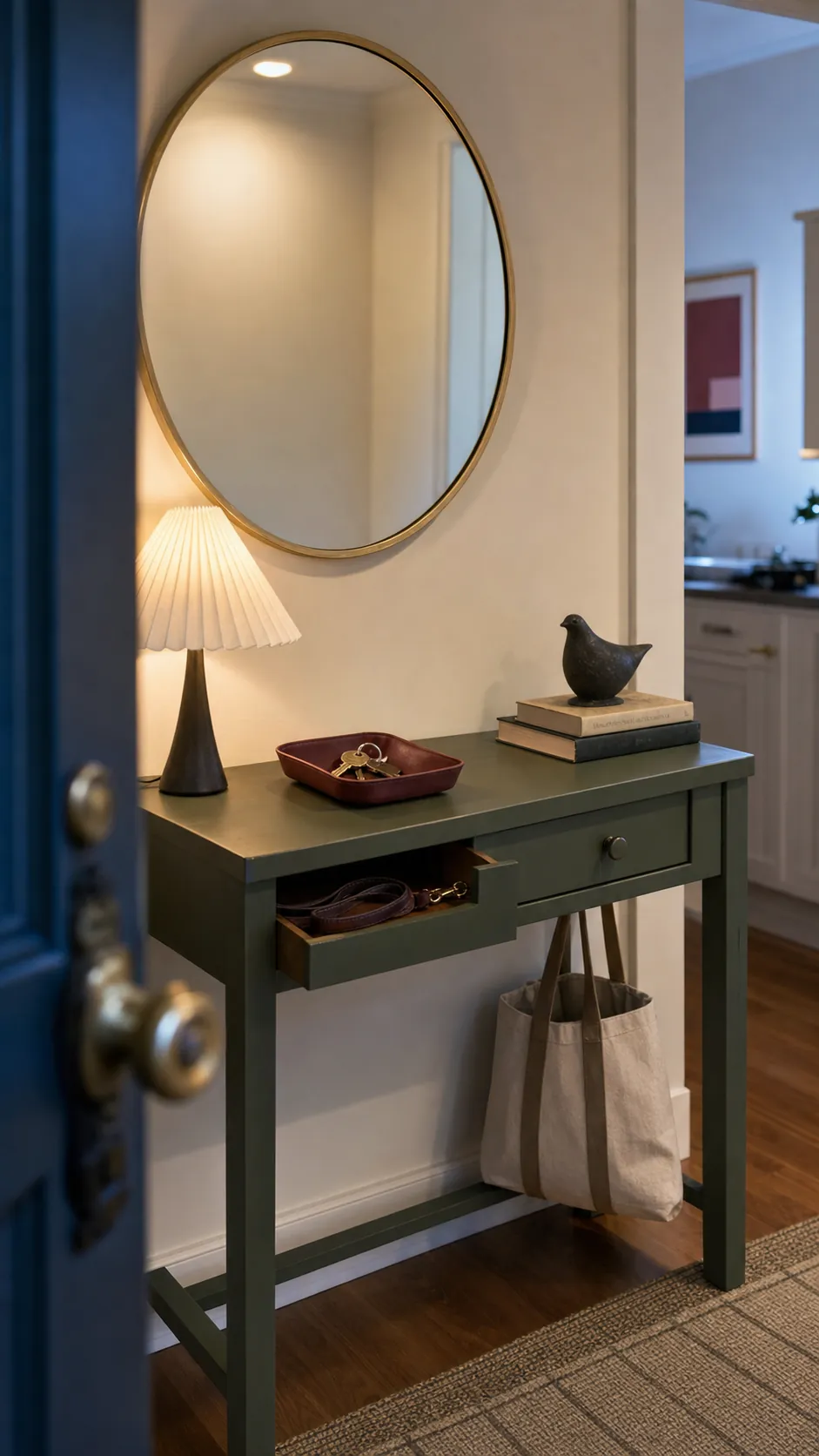
Leave part of the surface empty. That negative space gives you somewhere to set mail and prevents the lower edge of the mirror from becoming visually crowded. Keep branches and lamps from covering the center of the glass. In a tiny foyer, replace the console with a shallow wall shelf and mount a small hook rail elsewhere so practical clutter does not creep into the composition.
Mix metals through finish and distance
Your gold mirror does not require gold door hardware, lighting, and furniture legs. Mixed metals feel natural when one finish is dominant and the others have distinct jobs. Let the mirror be the main warm metal, keep existing black hardware as a quiet outline, and allow nickel or chrome to remain on functional pieces farther away. Repetition matters more than exact matching: echo a secondary metal once so it does not look accidental.
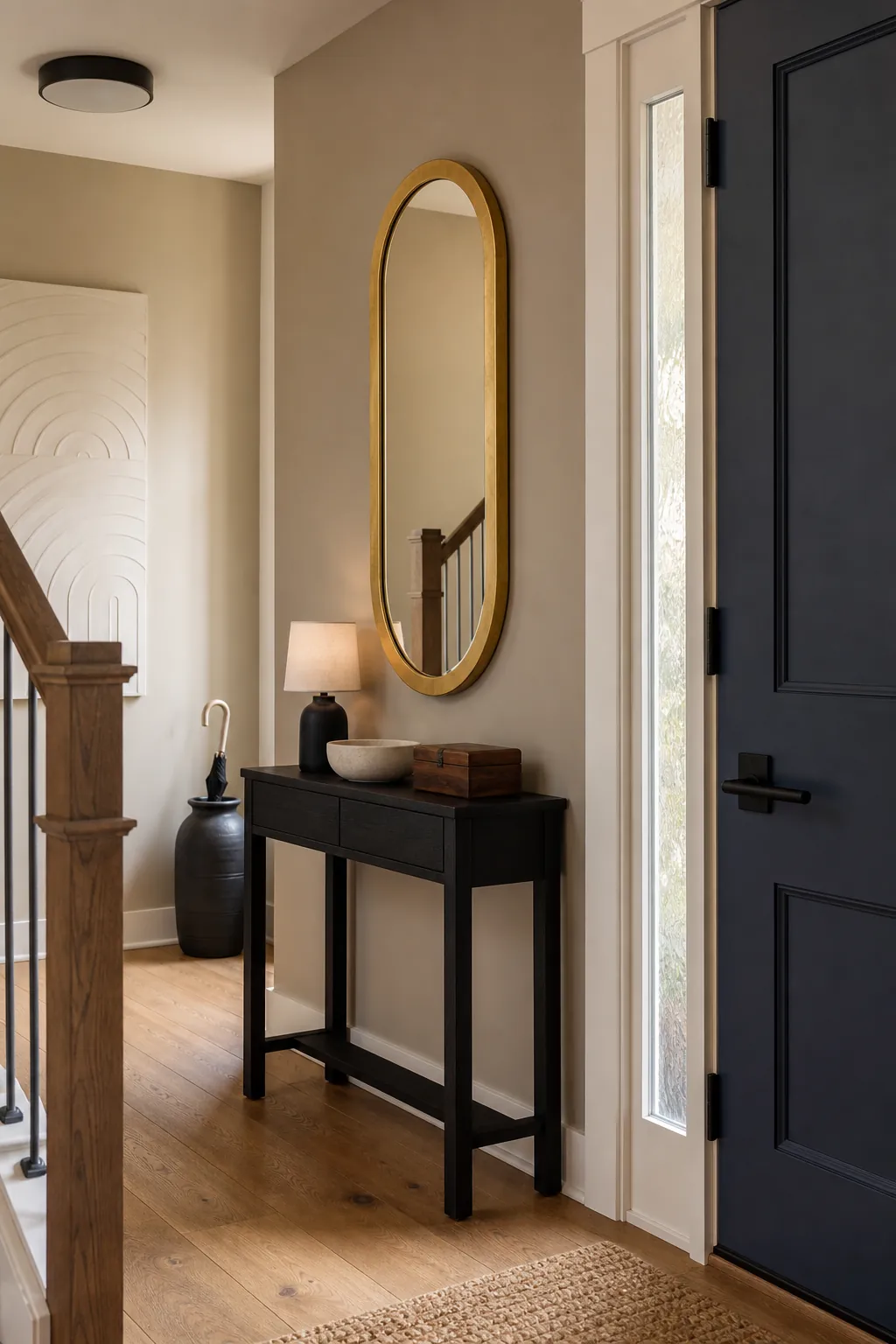
Separate similar-but-not-quite-matching golds instead of clustering them together. Two brass finishes several feet apart read as layers; side by side, their undertone difference is obvious. The same principle applies to lighting: a warm bulb flatters antique brass, while very cool light can make it look green or dull. Test the entryway in daylight and after dark before committing to more gold accents.
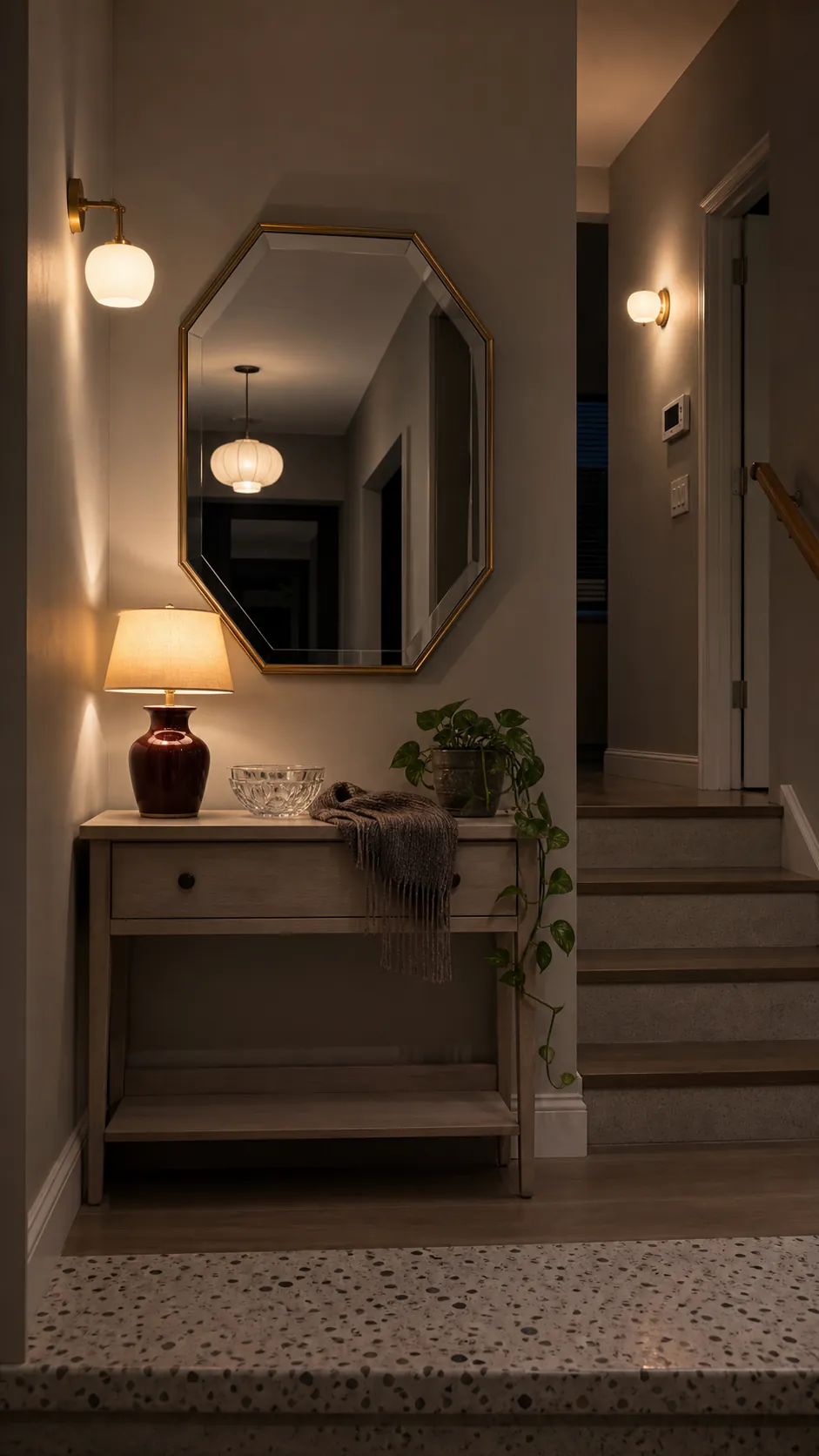
The final check is simple: remove one decorative object, clear the catchall, and look at the entry from the open front door. If the mirror reflects a calm view, relates clearly to the console, and has enough natural texture around it, the warmth will feel effortless. A gold mirror should be the welcome, not the entire conversation.