

A tiny house loft can look dreamy in photos and still feel frustrating at 2 a.m. The real comfort problems are usually practical: heat collects near the roof, the mattress consumes nearly every inch of headroom, bedding is difficult to change, and a steep ladder feels much less charming when you are half awake. The good news is that you rarely need a full rebuild. The most effective improvements protect airflow, usable clearance, safe movement, and the few routines you repeat every day.
Start With the Mattress-to-Ceiling Measurement
Measure from the finished loft floor to the lowest part of the ceiling, then subtract the total height of the bed base and mattress. That remaining number—not the advertised loft height—is your usable clearance. Sit on the mattress where your torso naturally lands and check whether you can turn, prop yourself on an elbow, and get dressed without striking the roof.
If clearance is tight, a thick luxury mattress can make the loft less comfortable rather than more comfortable. Consider a lower-profile mattress that still suits your sleeping position, paired with a thin ventilating underlay or low slatted platform. Do not place foam directly on a cold solid deck without a moisture plan. Body moisture can collect underneath where it is difficult to notice.

Move Heat and Stale Air at Bed Level
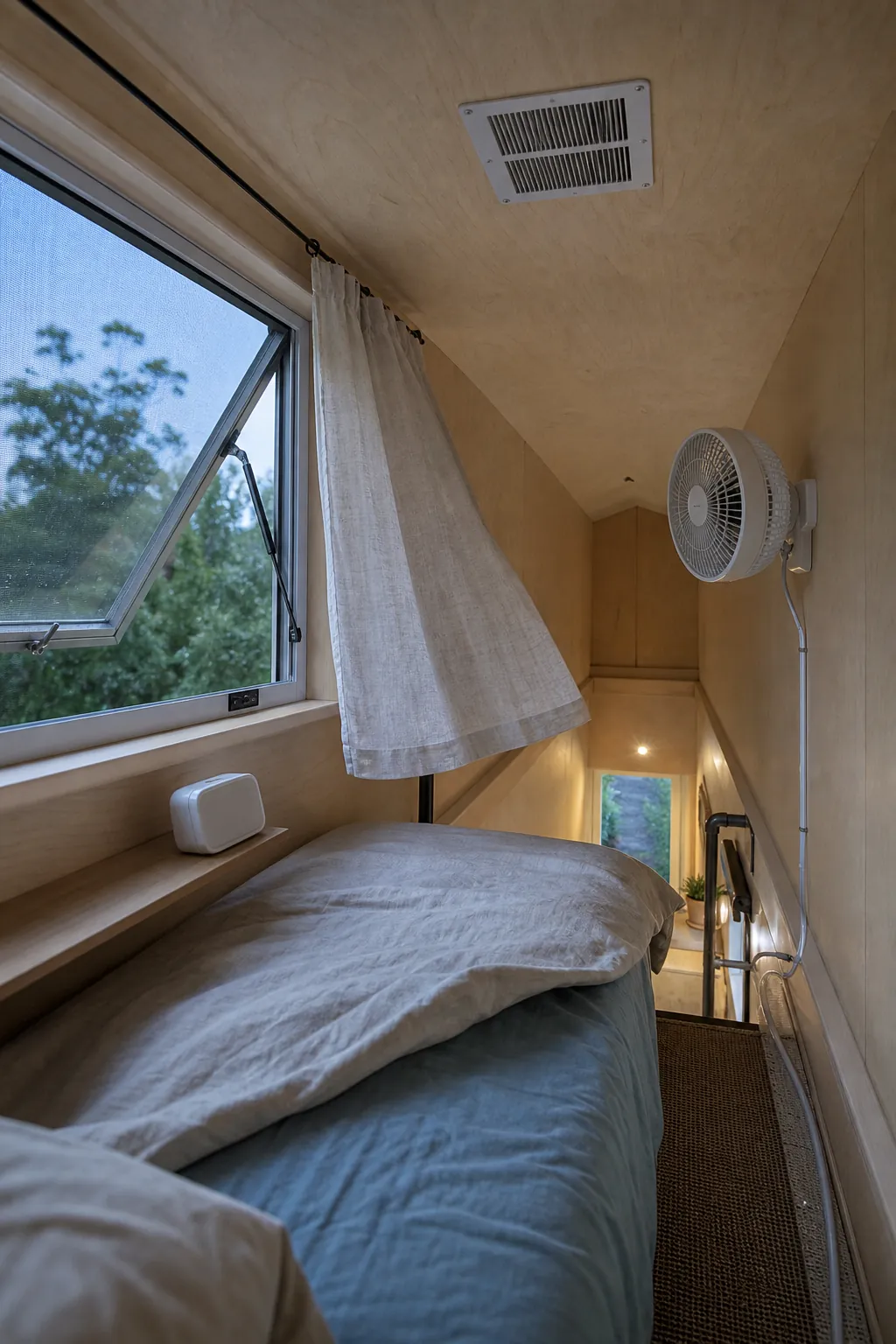
Warm air rises, so a thermostat on the main floor can report a pleasant temperature while the loft remains stuffy. An operable window near the sleeping zone helps, but it works best when air also has a route into the loft. Keep the stair or ladder opening unobstructed and use a quiet, securely mounted fan to move air across the bed rather than blasting directly at your face.
Test airflow with the loft arranged as it is at night: curtains closed, bedding in place, and privacy screens positioned normally. If the loft stays much warmer than downstairs, ask a qualified HVAC professional whether the cooling system needs a dedicated loft supply, return path, or better balancing. A fan can circulate air, but it cannot correct inadequate insulation or an undersized cooling system.
Make the Access Route Feel Safe at Night
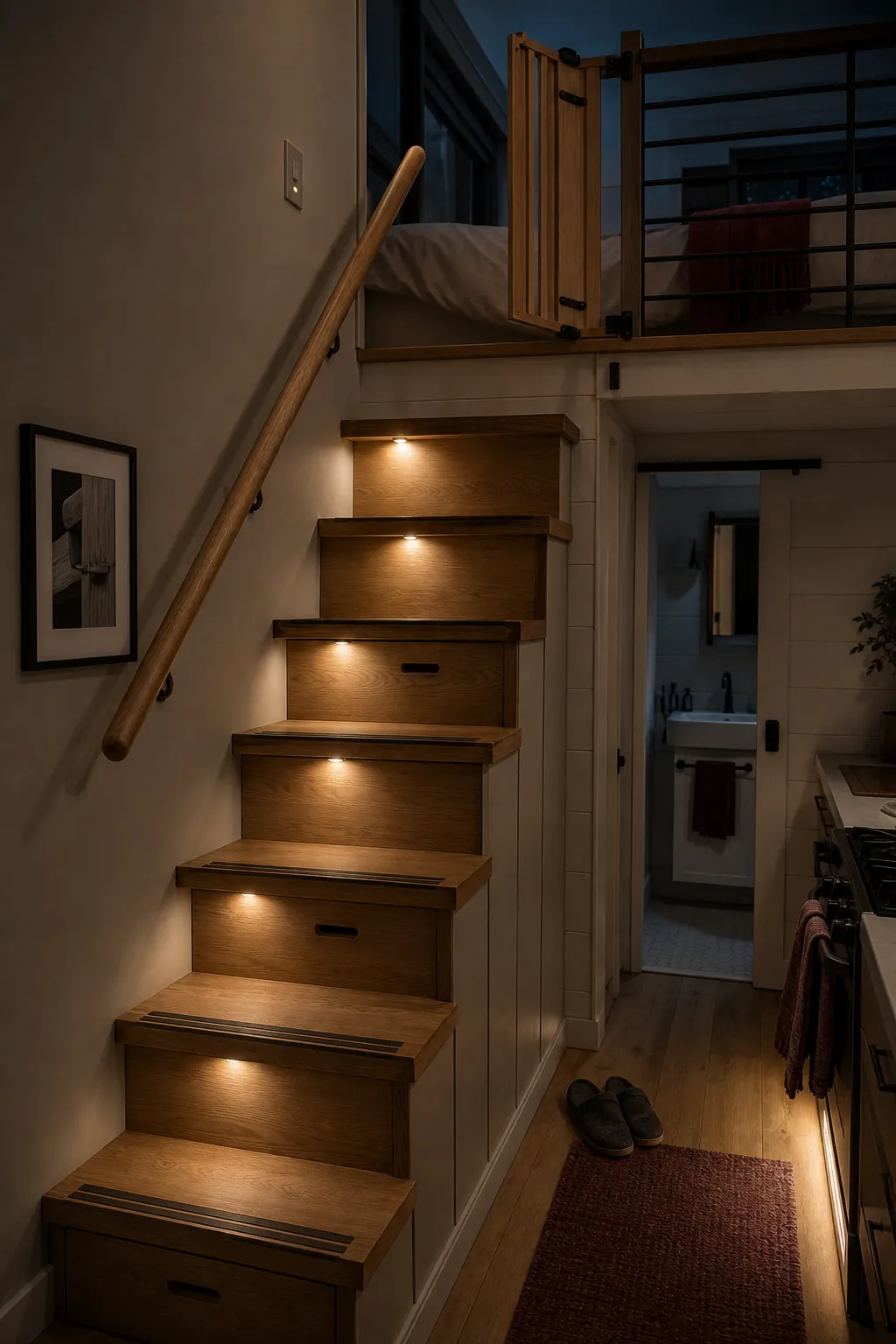
A ladder saves floor space, but the tradeoff appears every time you climb down for water or the bathroom. Keep every tread clear, add a continuous handhold where the layout allows, and place a switch at the loft so you never begin the descent in darkness. Low-glare step lights are more useful than one bright ceiling light because they reveal footing without fully waking you.
Do not treat a decorative ladder as sleeping-loft access. Attachment points, tread depth, angle, guards, and headroom should meet the rules for your jurisdiction and the needs of everyone who sleeps there. Children, pets, sleepwalkers, people with limited mobility, and anyone anticipating pregnancy or aging may need stairs, a gate, or a main-floor sleeping alternative. A loft is only comfortable when getting out of it feels routine, not risky.
Choose Lighting That Works While Reclining
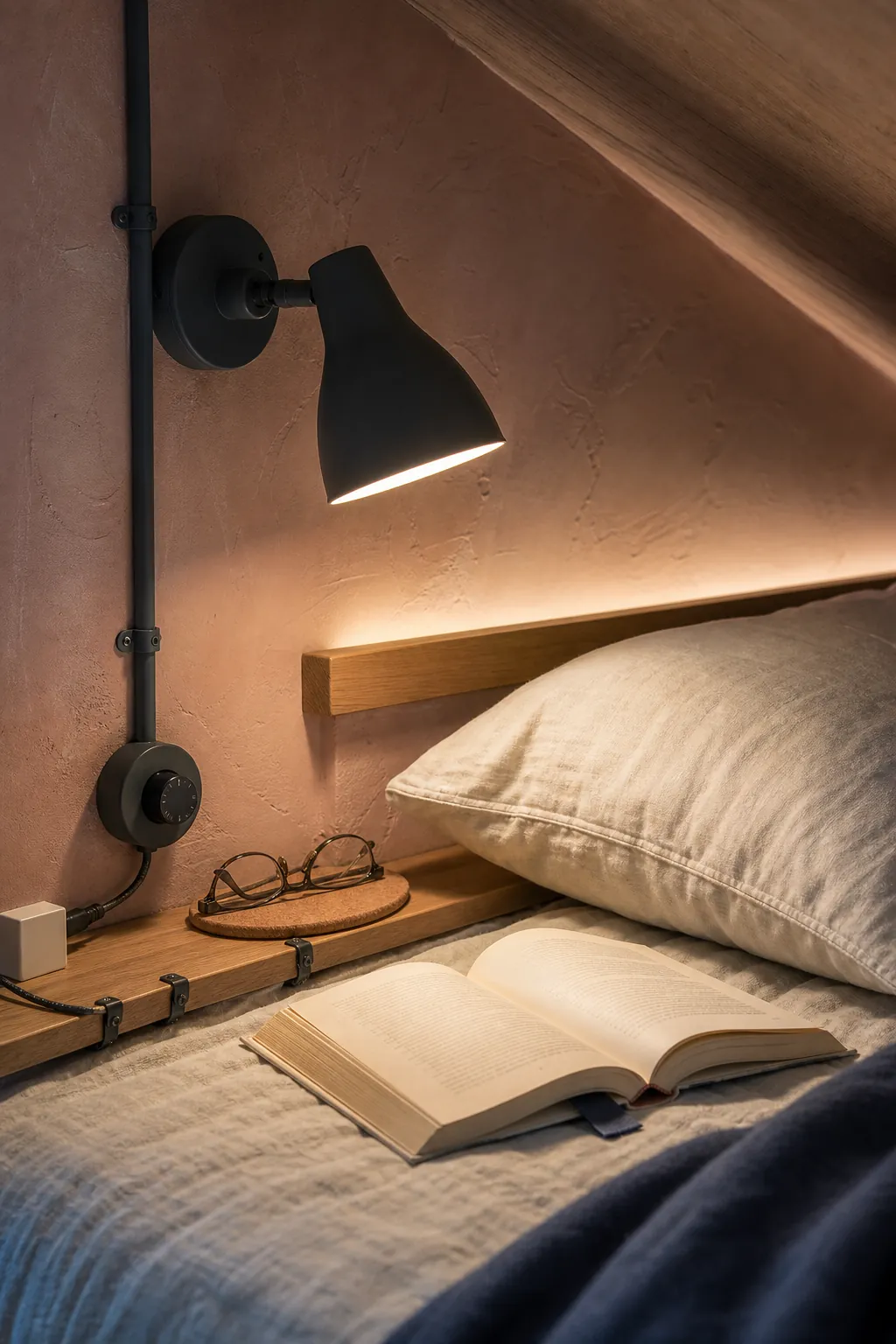
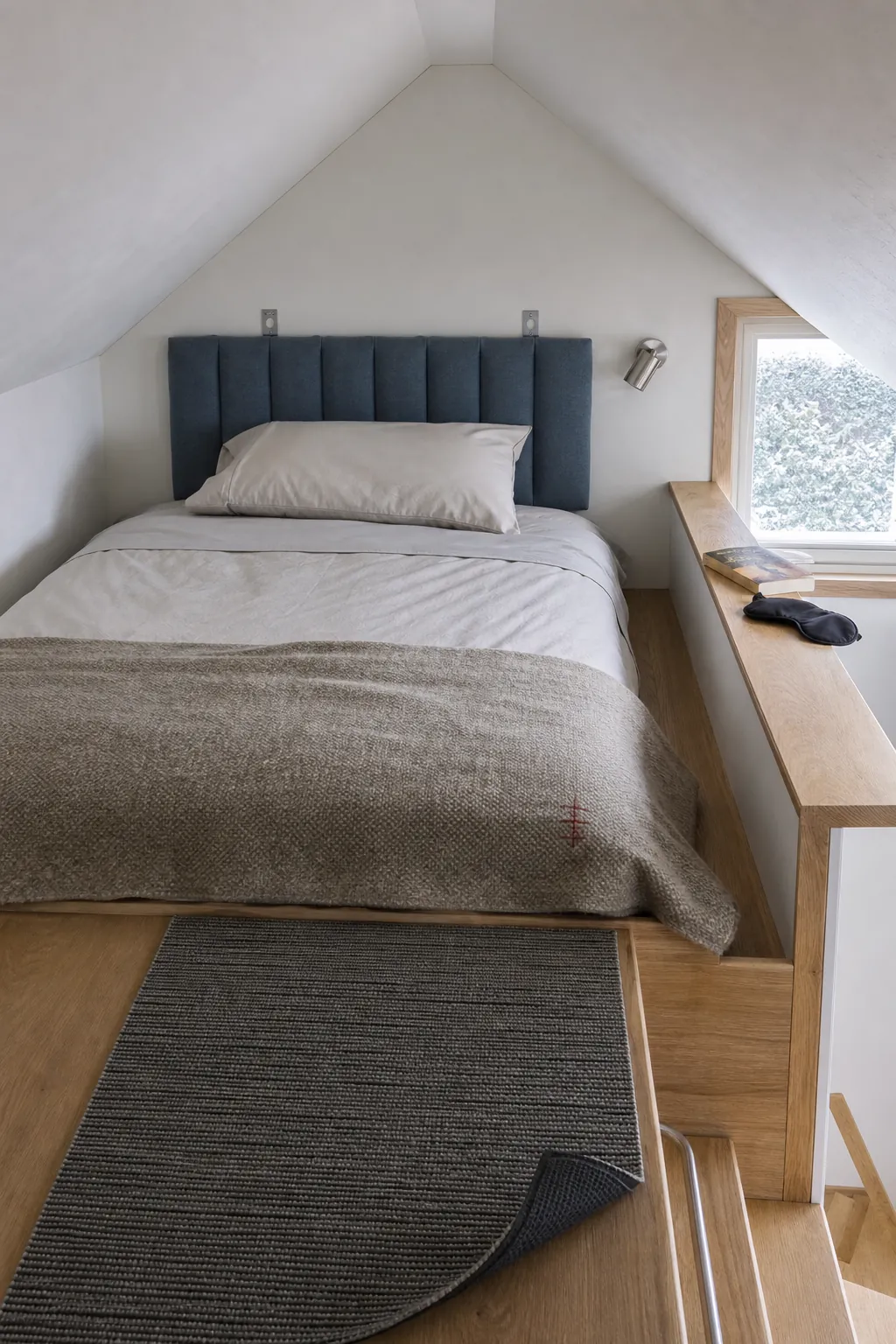
Overhead fixtures can feel harsh when the ceiling is close to your eyes. Layer a dimmable ambient source with a focused reading light that can be controlled from bed. Wall-mounted or headboard-mounted lights preserve precious ledge space, but their hardware must sit outside the path of your head and shoulders.
Warm, shielded light generally feels calmer at night, while daylight or a bright task light helps with dressing and cleaning. Route cords so they cannot cross the mattress or access opening. Rechargeable lights can be useful for renters, provided they are securely fixed and charged away from bedding according to the manufacturer’s directions.
Keep Storage Out of the Crawling and Sleeping Zone
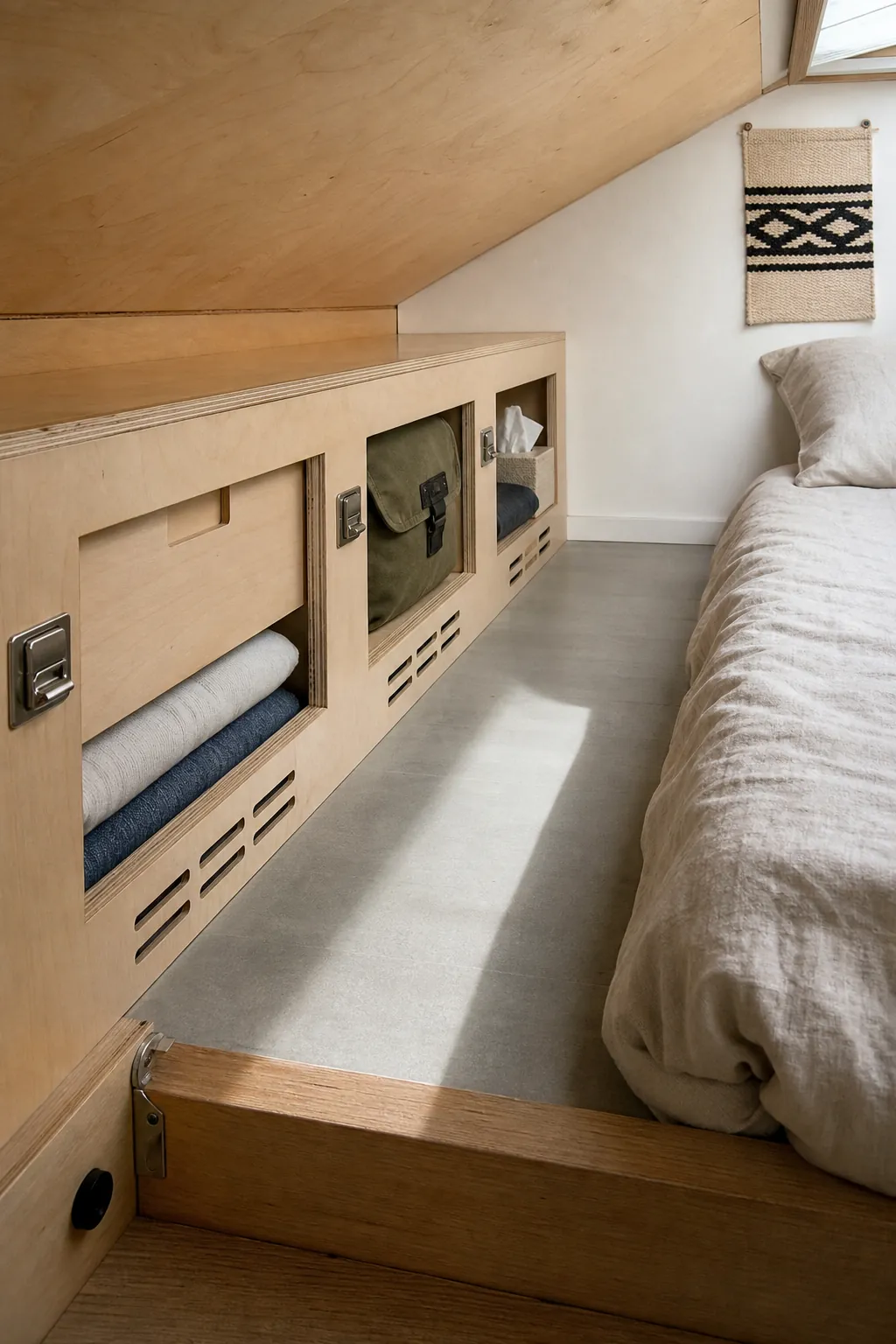
Open baskets surrounding the mattress make a small space bedroom feel tighter and turn every trip to bed into an obstacle course. Reserve the loft for items used at bedtime: a book, glasses, tissues, water, and perhaps one folded layer. Move clothing and bulky linens to stair drawers, a main-floor wardrobe, or storage that can be reached while standing.
If loft storage is unavoidable, use shallow, secured compartments along the high-clearance edge. Choose latches that will not open during travel if the tiny home moves. Leave ventilation gaps around the mattress and avoid blocking windows, electrical equipment, or the access opening. Clear floor area beside the bed is more valuable than squeezing in one more bin.
Make Bedding Easy to Change and Air Out
A wall-to-wall mattress is hard to lift, tuck, and rotate. If possible, leave a narrow service gap on at least one long side or use a split, hinged, or lighter mattress system appropriate for the bed. Fitted sheets with strong elastic, a washable duvet cover, and fewer decorative layers reduce the amount of wrestling required under a low ceiling.
Each morning, pull the duvet back long enough for surface moisture to disperse. Regularly inspect the underside of the mattress, the roof corners, and the window frame for dampness or staining. Condensation is a building-performance warning, not merely an untidy-bed problem; persistent moisture deserves professional investigation.

Use Softness Where It Does Not Steal Space
Once the functional problems are solved, add comfort with low-bulk materials: breathable cotton or linen bedding, one supportive pillow, a washable runner at the loft landing, and a restrained color palette. A fabric headboard panel can soften contact with a wall, but it should be securely attached, kept away from heat sources, and removable for cleaning.
Avoid filling the roofline with hanging décor, shelves, or loose string lights. They collect dust, reduce visual clearance, and can create snag or electrical hazards. The best cozy loft is not the one with the most accessories. It is the one where you can breathe, move, read, sleep, and climb down without negotiating around your belongings.
Know When the Loft Is the Wrong Bedroom
Some discomfort cannot be decorated away. If the sleeper cannot use the access safely, cannot sit without hitting the ceiling, repeatedly overheats, or struggles to reach a bathroom at night, move the primary bed downstairs if the layout permits. The loft can become occasional guest space or low-frequency storage instead.
Try improvements in order: measure clearance, correct airflow, secure access, refine lighting, remove clutter, and simplify bedding. That sequence protects both comfort and budget. A tiny house loft succeeds when its design supports ordinary sleepy behavior—not when the sleeper must adapt to the photograph.