
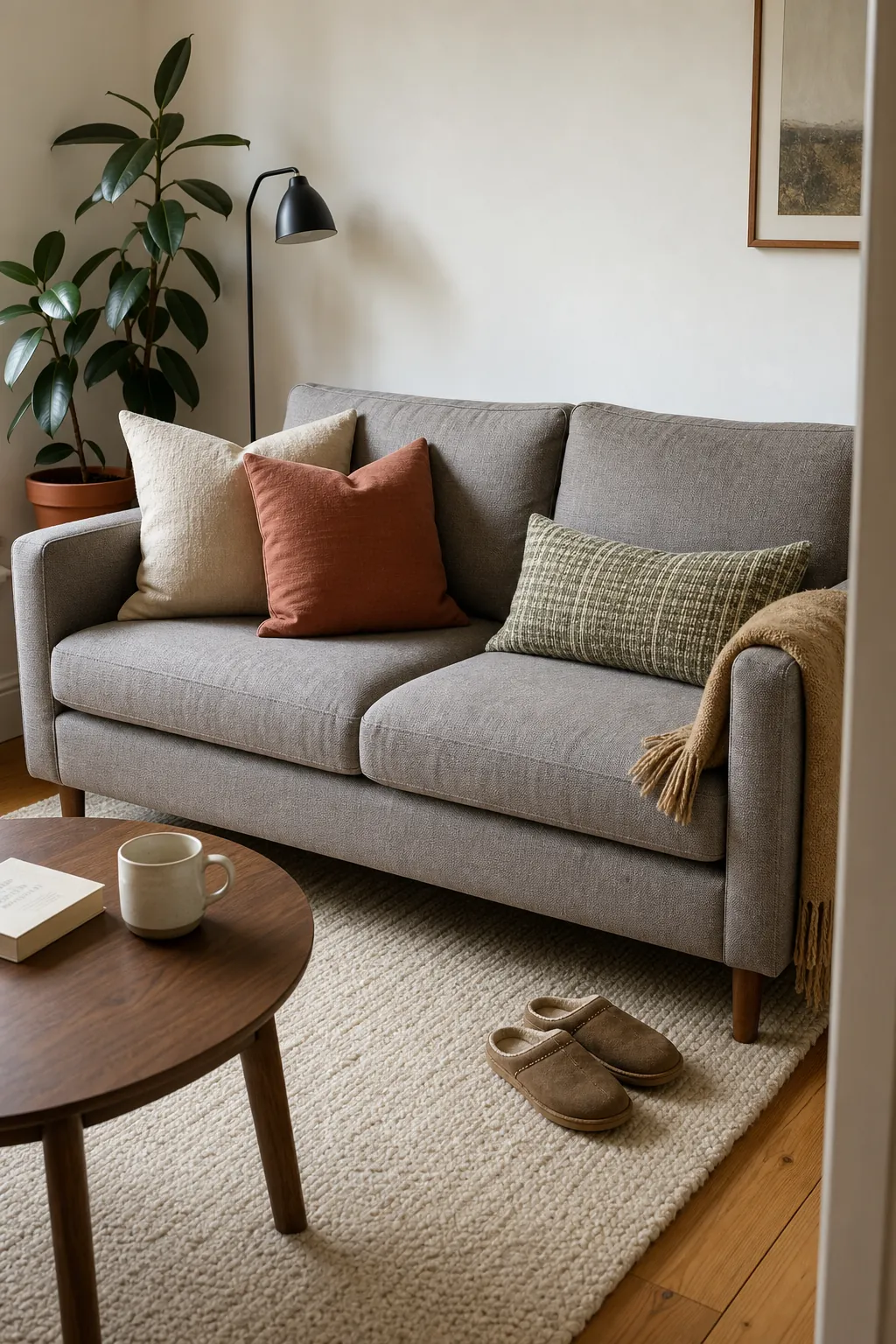
A small sofa does not need a mountain of cushions to feel finished. In fact, the fastest way to make compact seating look cramped is to style it like a deep sectional. The better approach is to protect the seat first, then use scale, texture, and one controlled accent to make two or three pillows do the work of five.
Start With the Space You Actually Sit In
Before buying a cover, measure the usable seat width between the arms. Then sit down with the sofa’s existing back cushions in place. If a decorative pillow pushes your shoulders forward or has to land on the floor every evening, it is too large, too firm, or simply one pillow too many.
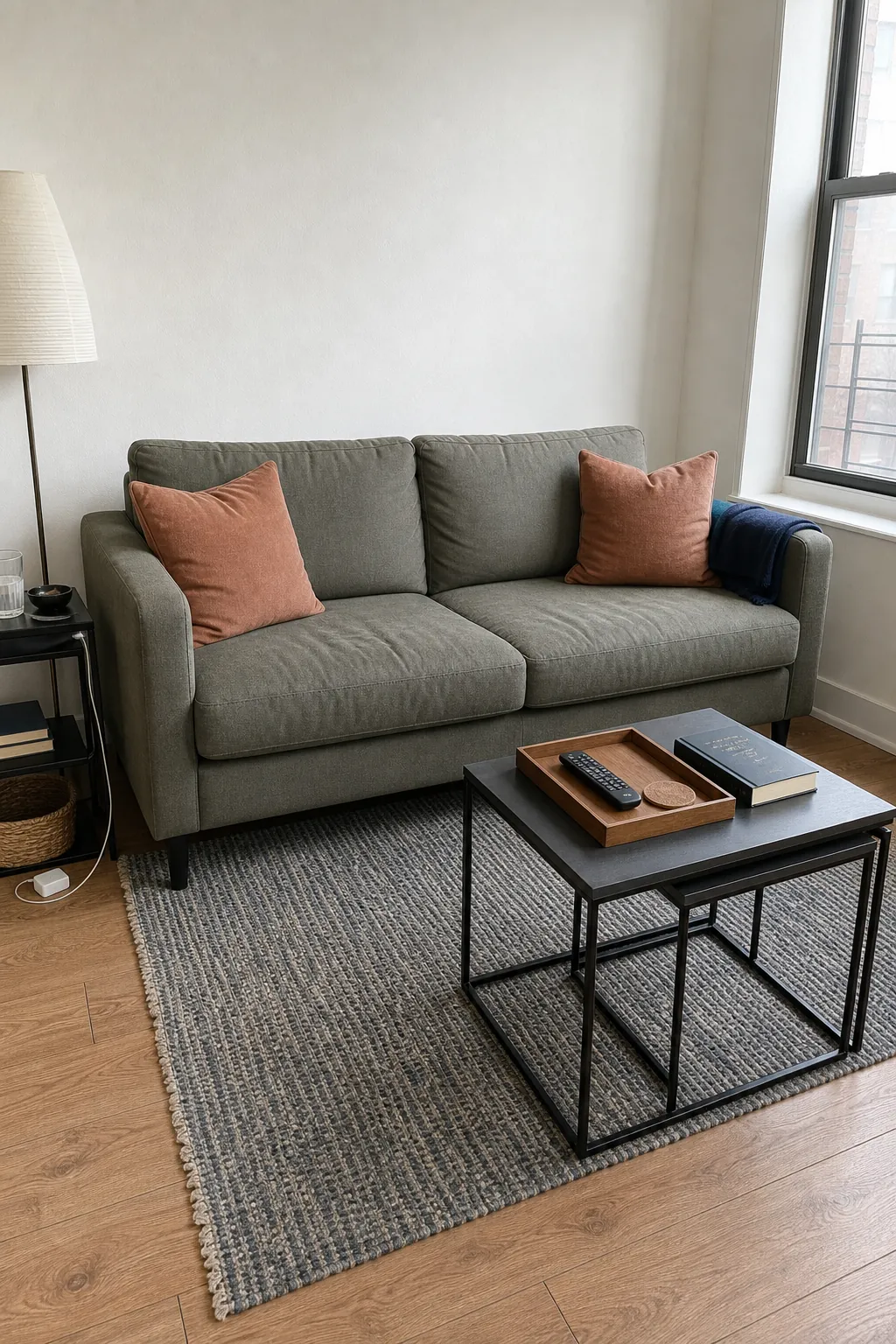
For a loveseat or apartment sofa, begin with two pillows, one at each end. Add a third only when the middle remains comfortable. This practical test matters more than an odd-number styling rule. A sofa that looks photogenic but cannot be used is not well styled.
Use a Large-to-Small Size Step
A clear size hierarchy makes a small arrangement look intentional. Try a supportive 20-inch square at the back and an 18-inch square or compact lumbar in front. On a very petite sofa, shift that pairing down by two inches. Avoid three identical small squares; they often read as clutter because none provides a visual anchor.

The back pillow should be soft enough to compress rather than stand like a board. Feather-and-down alternatives or pliable fiber inserts usually preserve more usable depth than rigid decorative forms. Choose covers about the same size as the insert for a relaxed profile; overstuffing creates a fuller look but steals precious inches.
Build Color From Something Already in the Room
The easiest palette is already visible in your rug, curtains, wood, or favorite object. Pull one quiet base color from the sofa, one neighboring neutral, and one accent from elsewhere in the room. That connection makes throw pillows feel integrated rather than dropped onto the seat as a matching set.
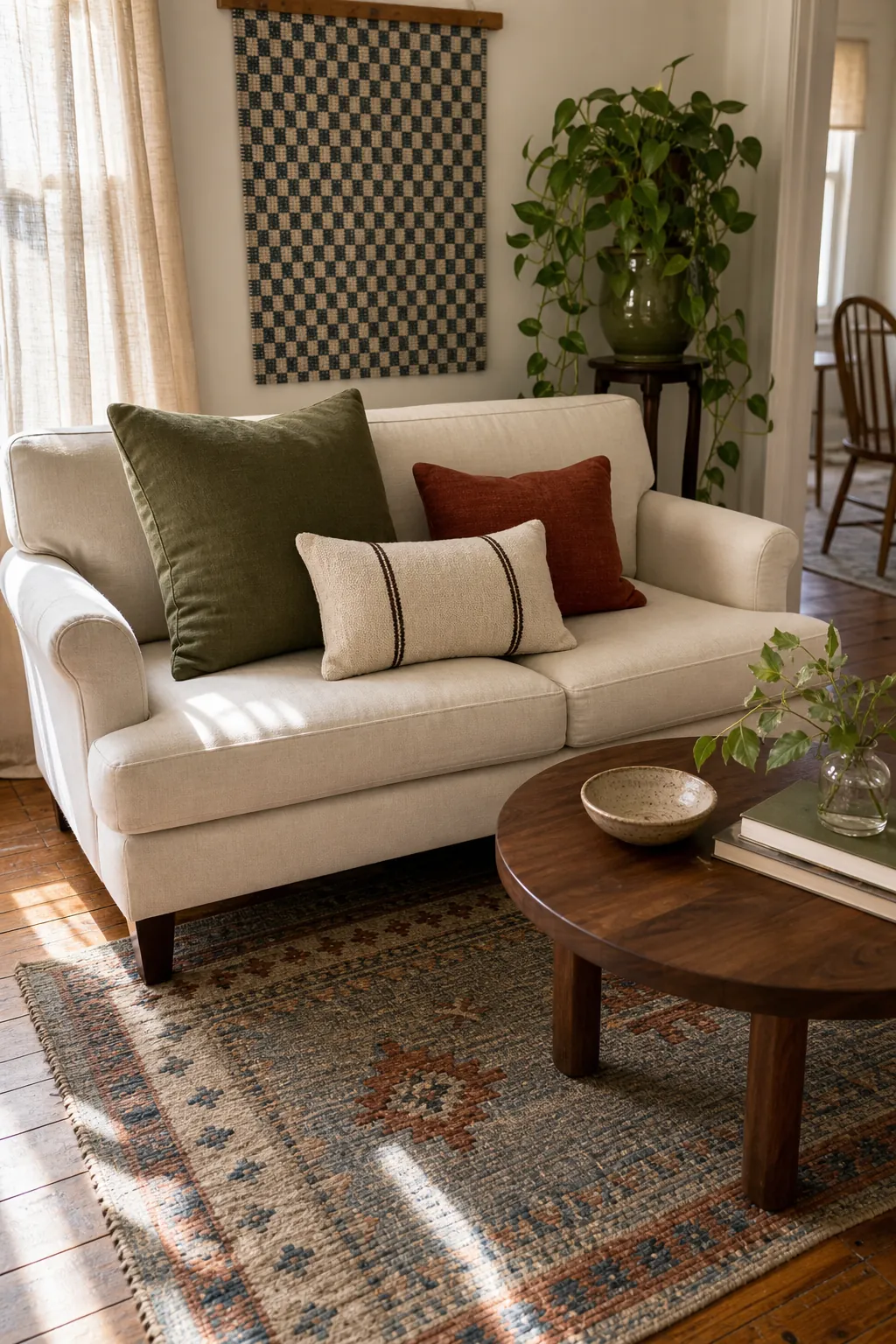
Neutral pillows can still create contrast. On a beige sofa, combine oatmeal linen with a dark cocoa stripe or muted olive lumbar. On gray upholstery, warm it with camel, tobacco, rust, or creamy wool. The goal is not maximum color. It is enough value and temperature difference that the cushions do not disappear into the upholstery.
Mix Texture Before Adding More Pattern
In a small living room, texture adds depth without making the sofa visually noisy. Pair one dry, woven surface such as linen, cotton slub, or small-scale bouclé with one smoother cover. Add a restrained pattern only after the textures look balanced. One patterned pillow is often enough for a compact sofa.
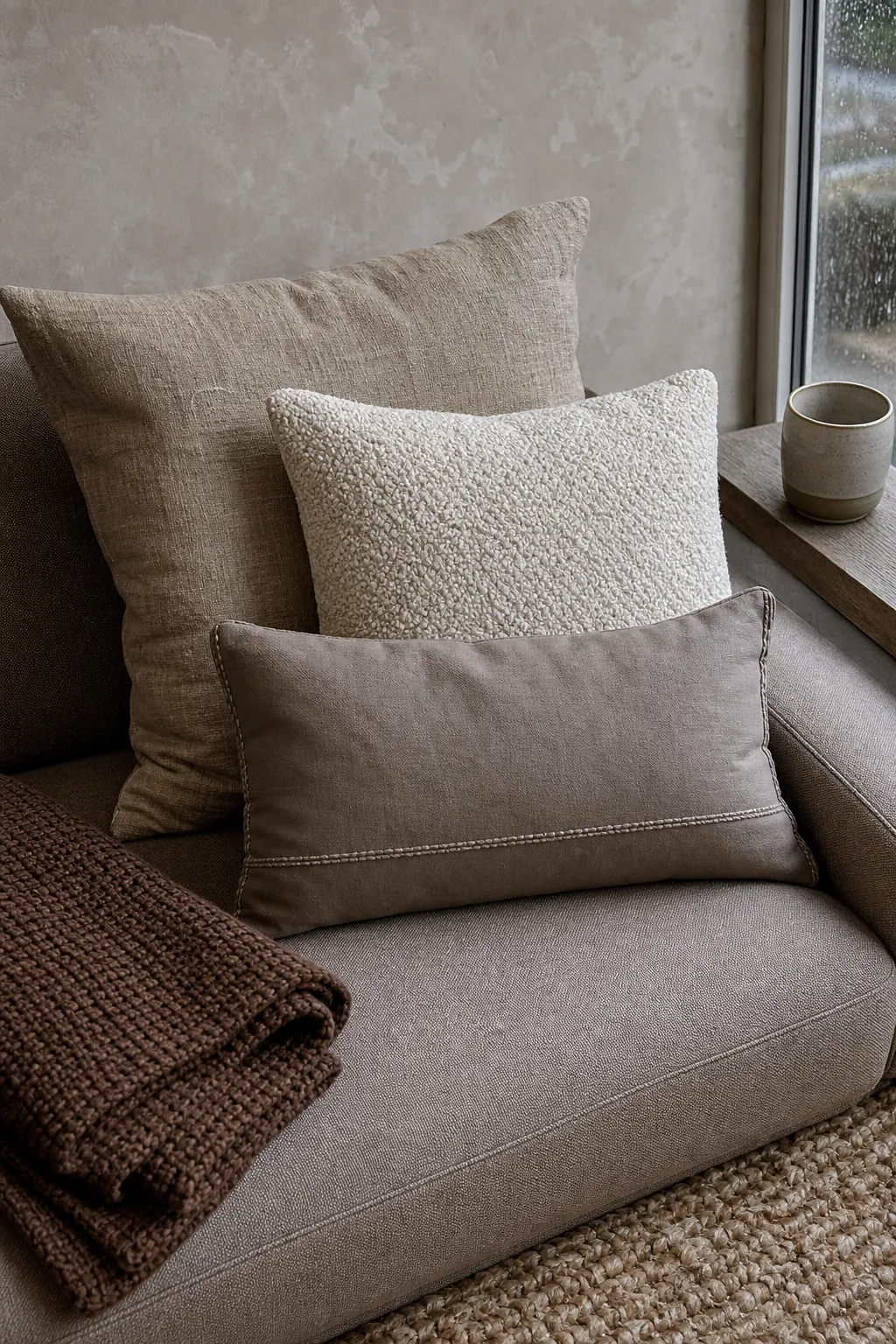
Keep high-fringe, heavy tassels, and chunky loops away from the spot where you lean every day. They photograph well but can scratch, shed, and flatten. Put the more tactile cover toward an outer arm and reserve the center or favorite lounging corner for a washable, soft fabric.
Choose an Arrangement That Matches the Sofa
A symmetrical pair gives a narrow sofa a calm, tailored outline. An asymmetrical cluster—two pillows at one end and one at the other—feels more relaxed and can visually balance a nearby side table or floor lamp. If the sofa has loose back cushions, keep decorative pillows lower so the original cushions do not buckle.
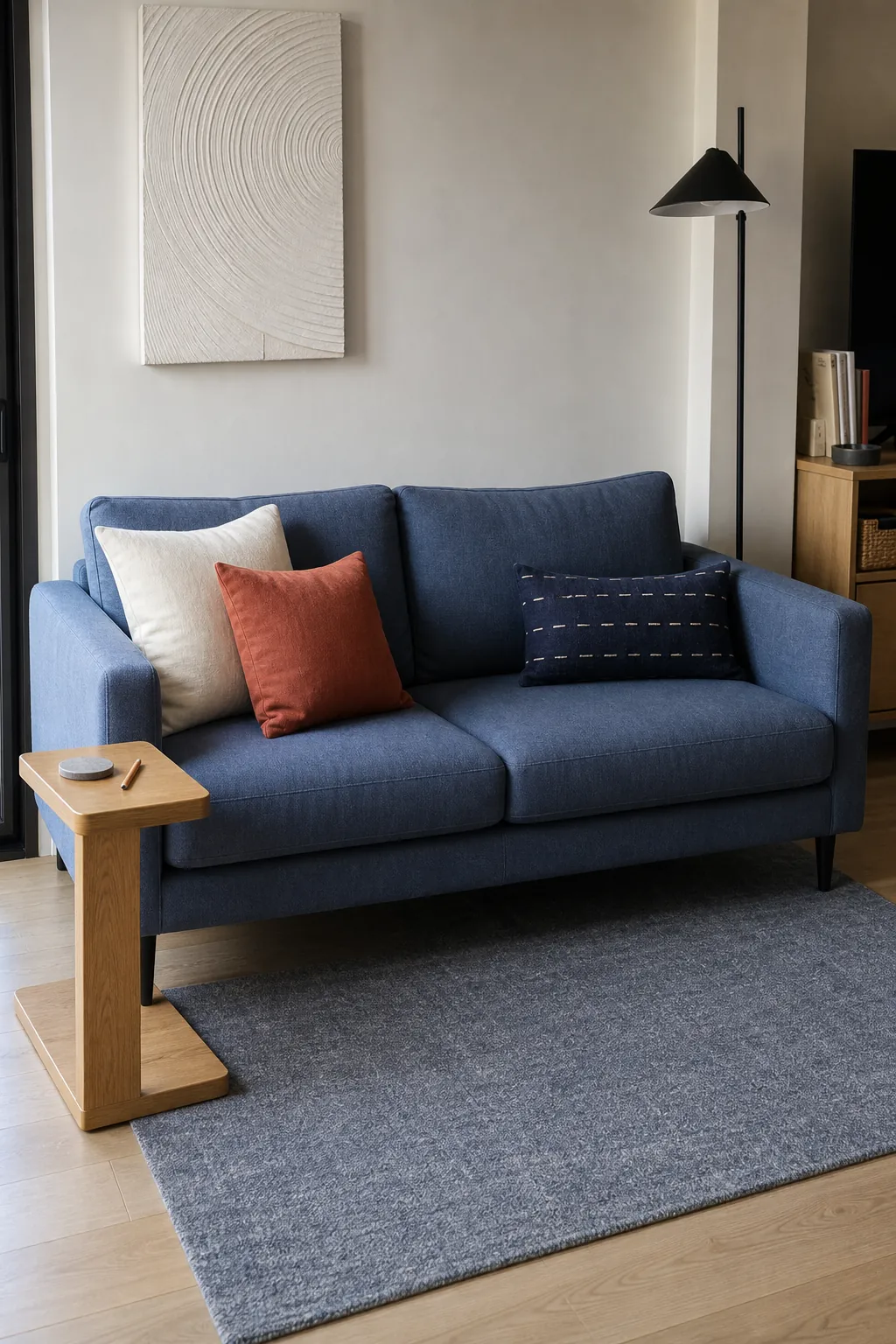
Photograph both options straight on, then leave the room for ten minutes. When you return, notice whether your eye sees the whole sofa or only a pile at one end. That quick distance check is more reliable than adjusting every corner up close.
Make the Everyday Version Easy to Reset
The best home styling survives an ordinary Tuesday. Select zippered, washable covers when pets, children, snacks, or frequent lounging are part of the room. Keep a slim basket nearby only if it has a real job: holding the lumbar pillow while someone stretches out, not storing a permanent overflow of décor.
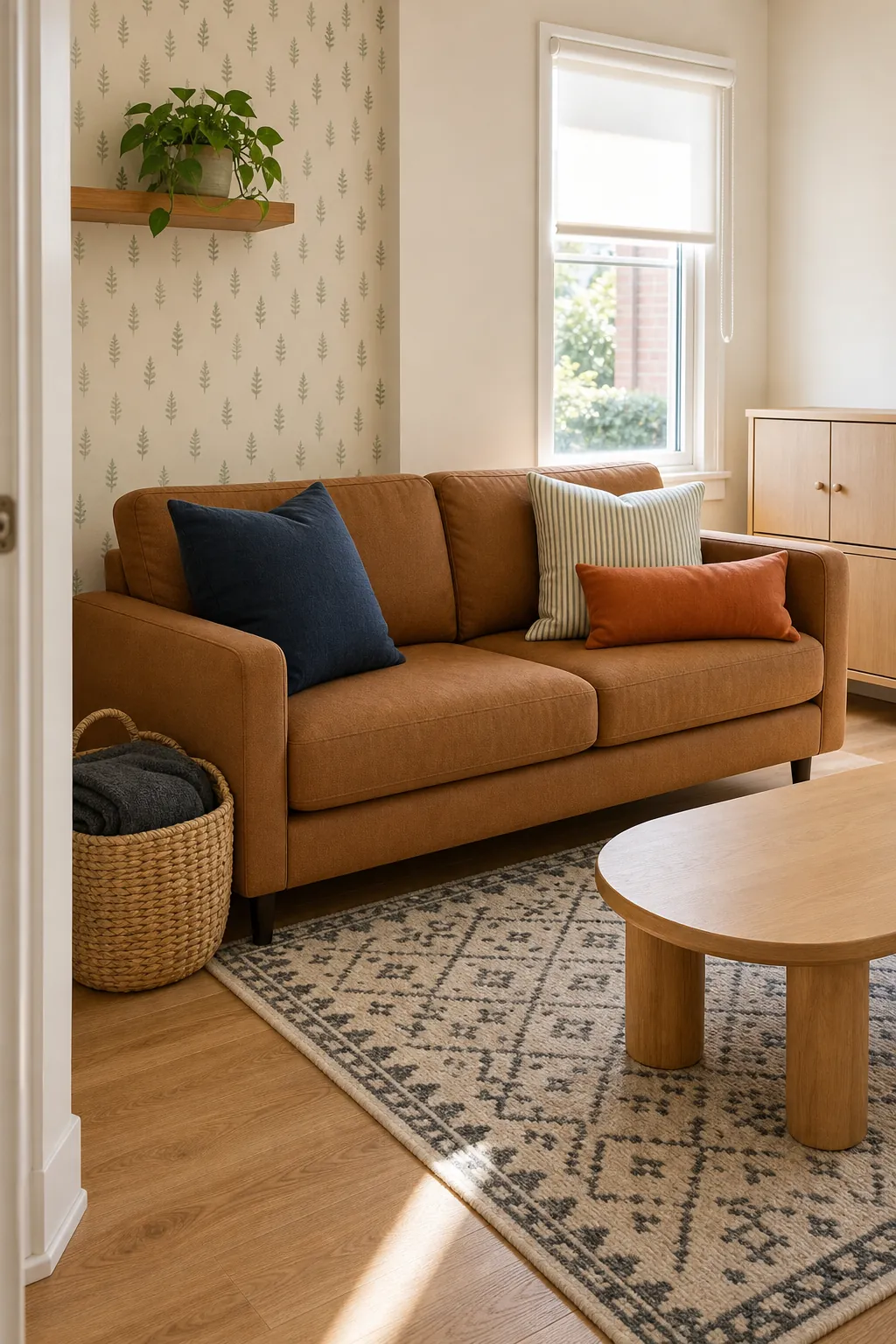
Live with the arrangement for a week before buying more. If the pillows stay on the sofa and support how you sit, the styling is working. If they migrate to the floor, edit the set. On a small sofa, restraint is not an unfinished look—it is what makes the room feel generous.