
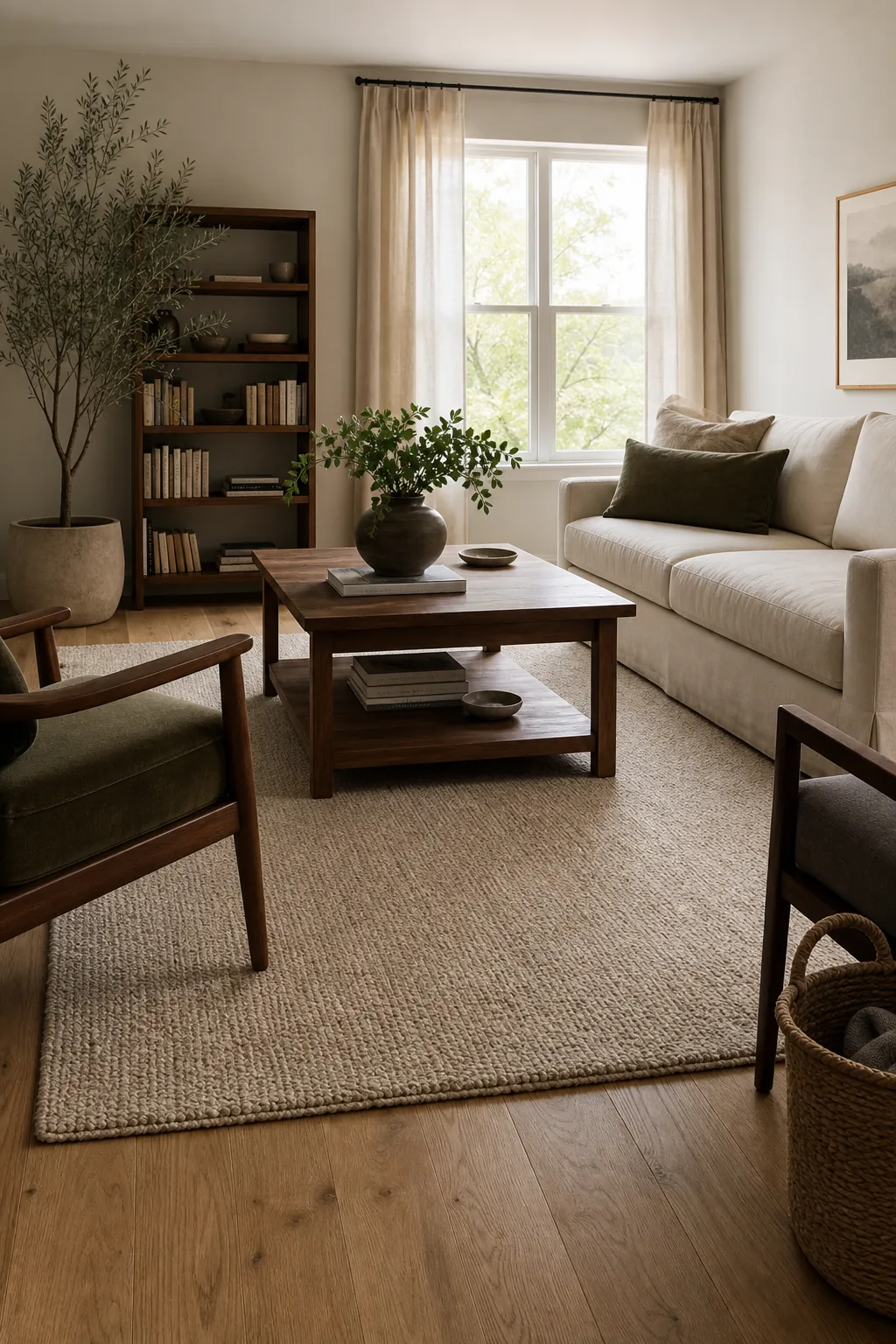
A beige rug can make a living room feel calm and connected, but only when it adds more than another beige rectangle. The useful question is not “does it match?” It is what contrast, texture, and scale does it contribute?
Size the Rug to Unite the Seating
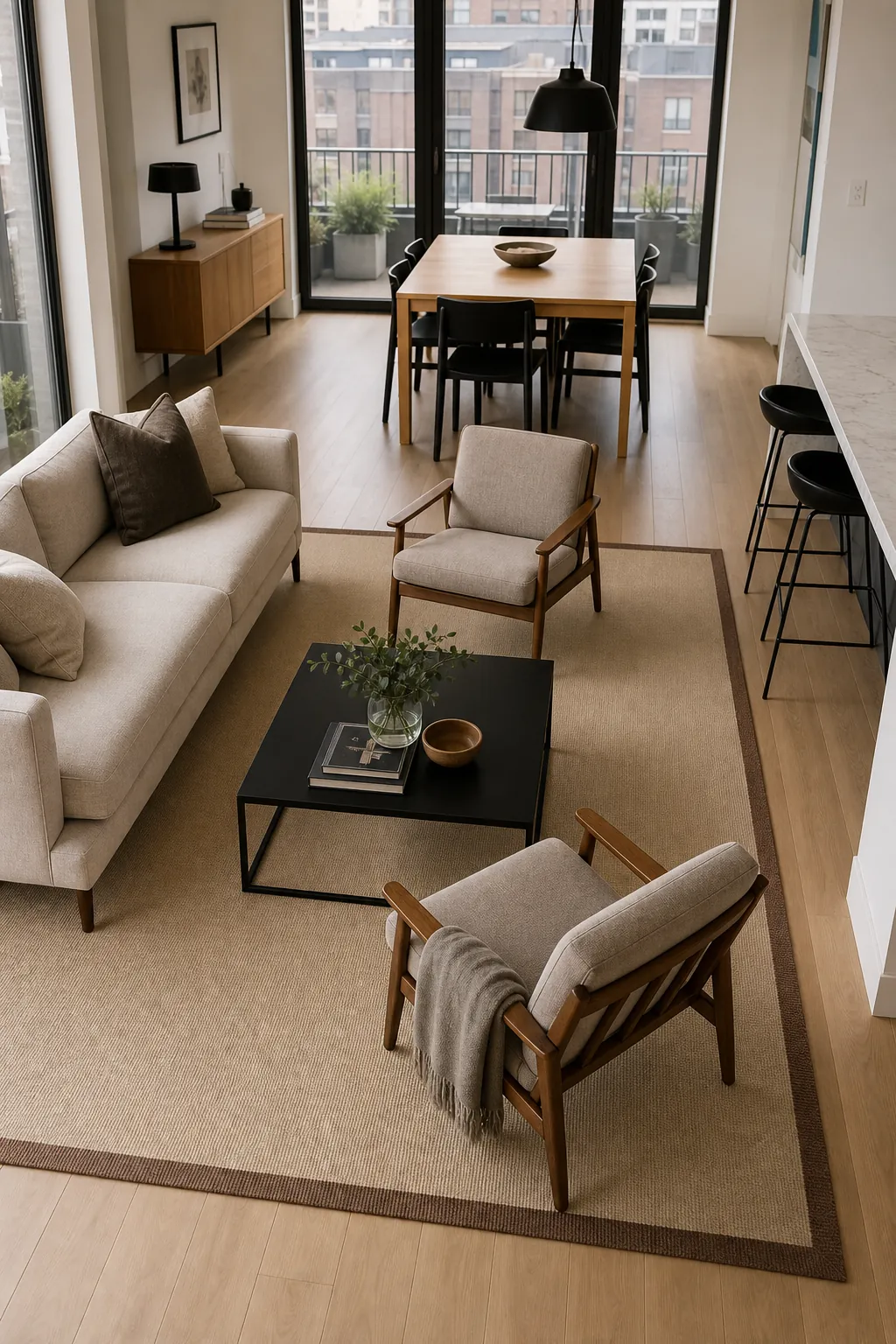
Choose an area rug large enough for at least the front legs of the sofa and chairs to rest on it. A small floating rug breaks the room into fragments and makes furniture look undersized.
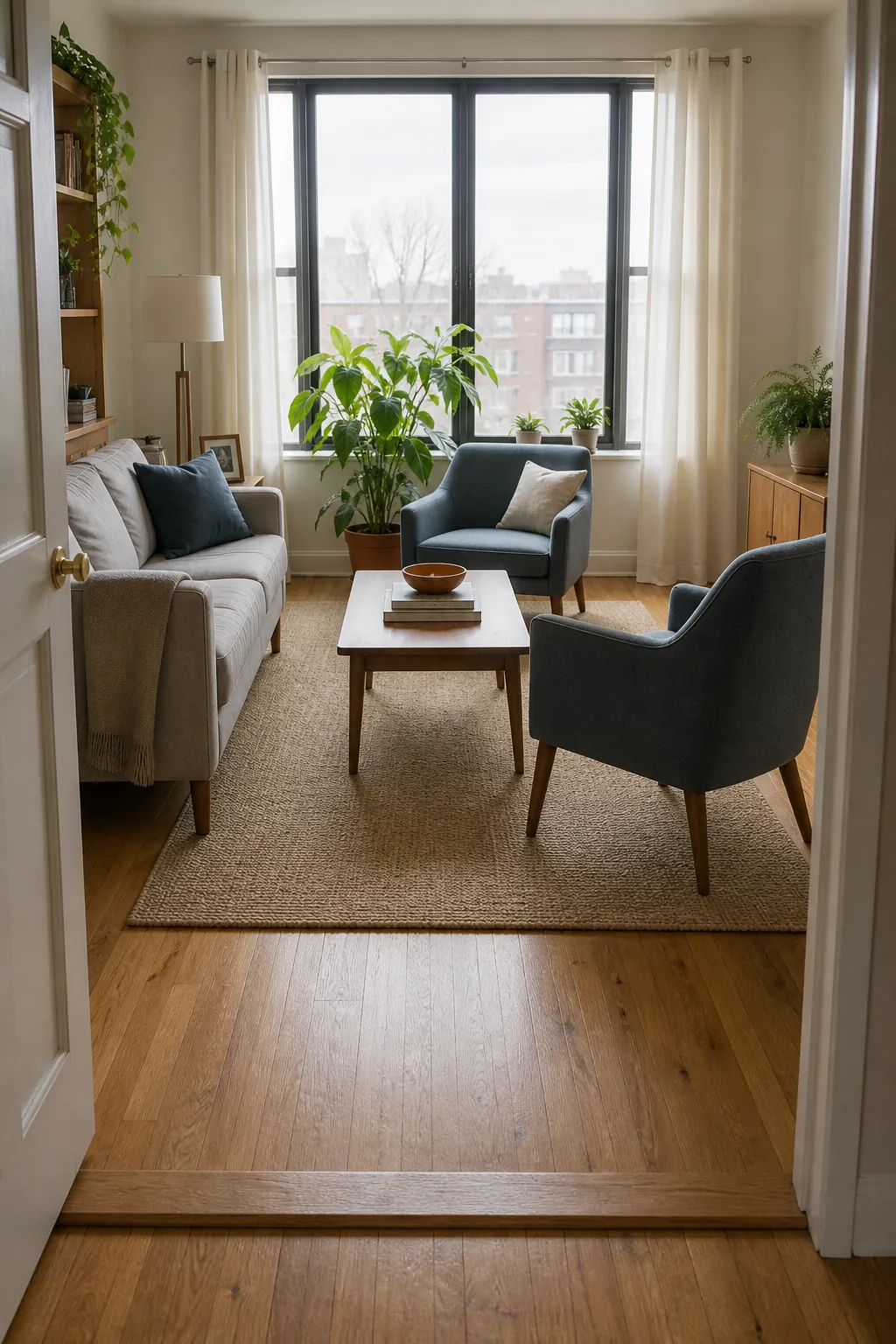
Pick an Undertone That Relates to the Floor
Warm oak usually welcomes oatmeal, sand, and camel. Cooler floors often work better with stone beige or greige. Compare samples in daylight and evening light before committing.
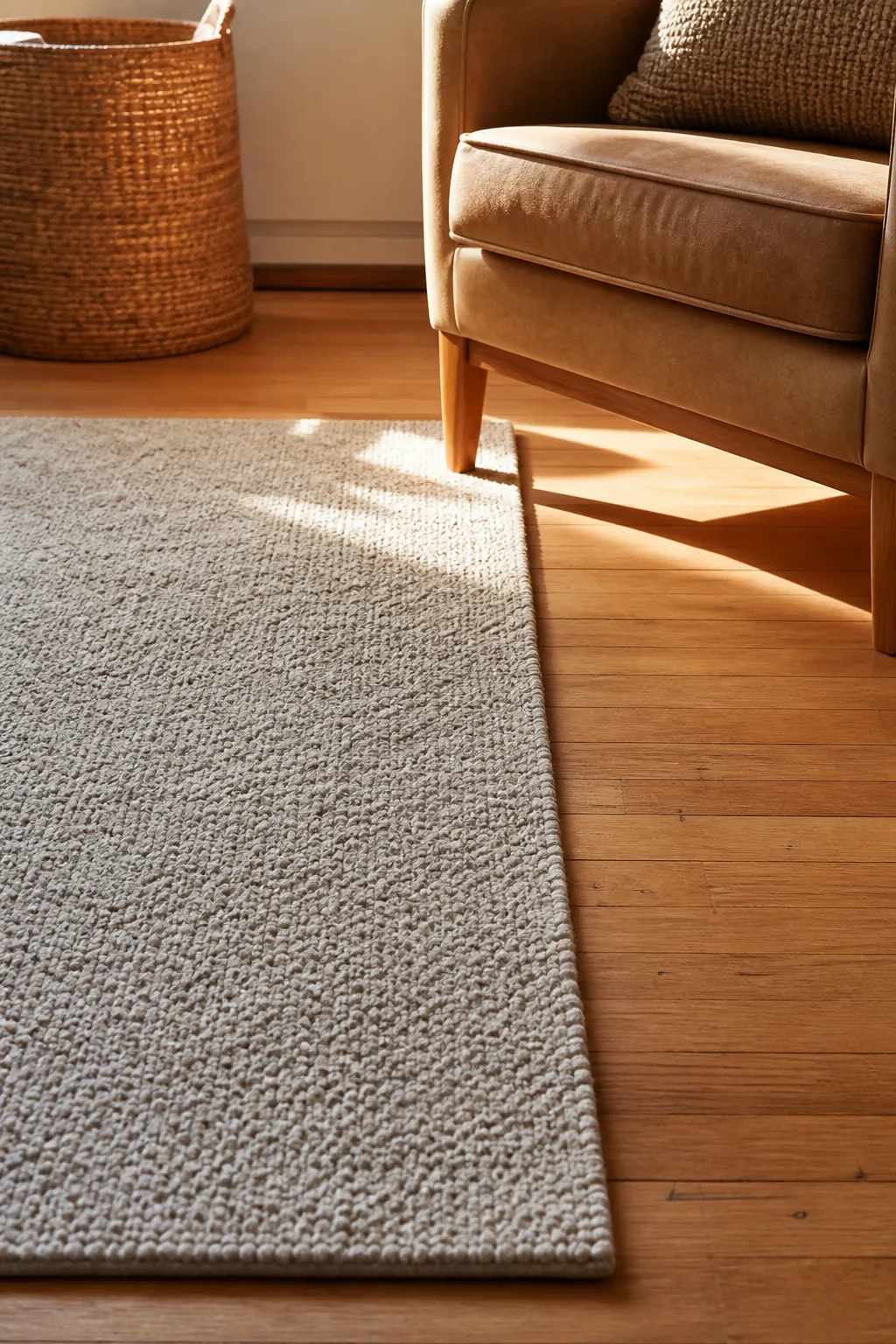
Use Texture to Prevent a Flat Neutral Room
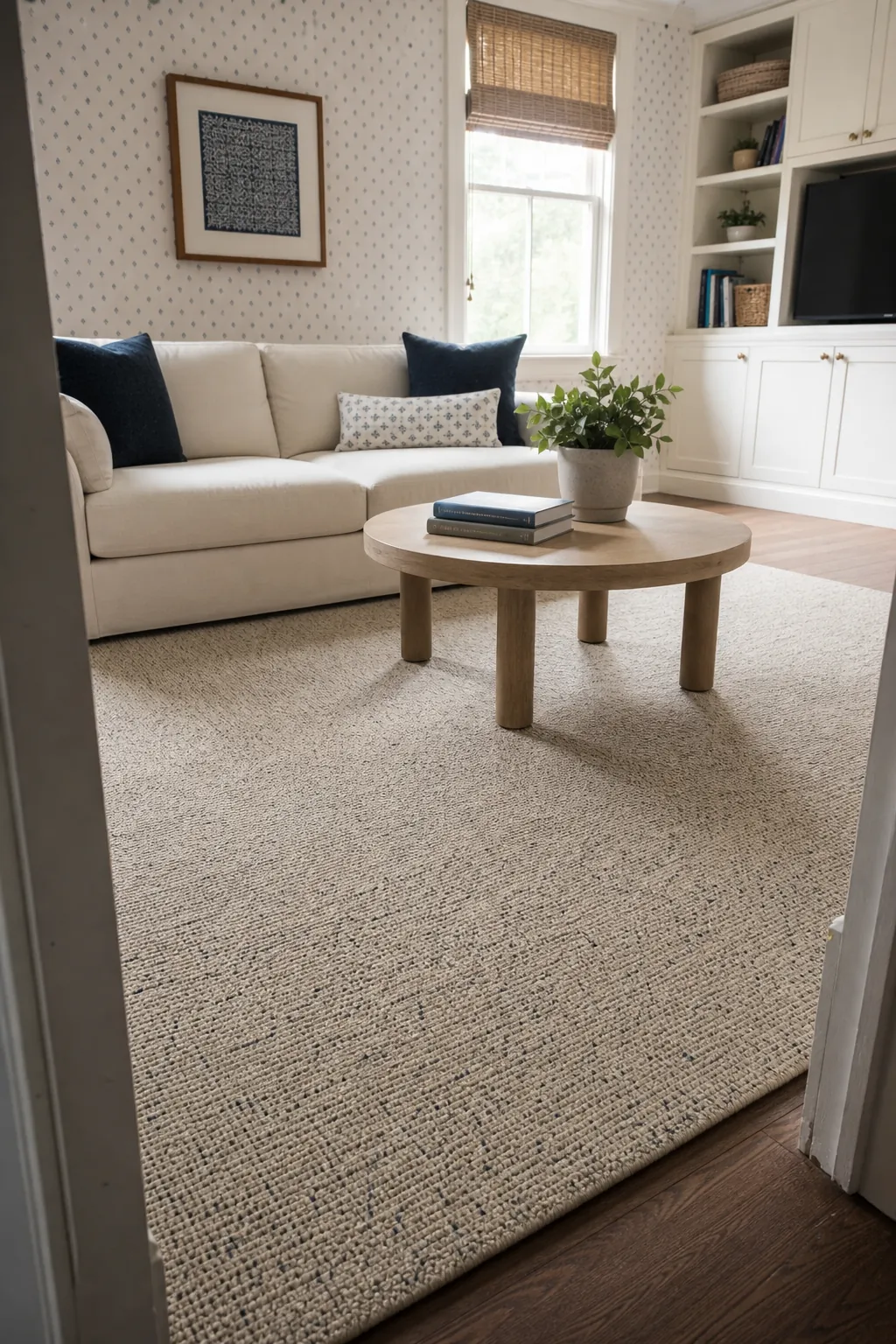
A subtle bouclé-like loop, broken stripe, or low carved pattern catches light and gives a neutral living room depth. Keep the pile practical where pets, children, or frequent vacuuming matter.
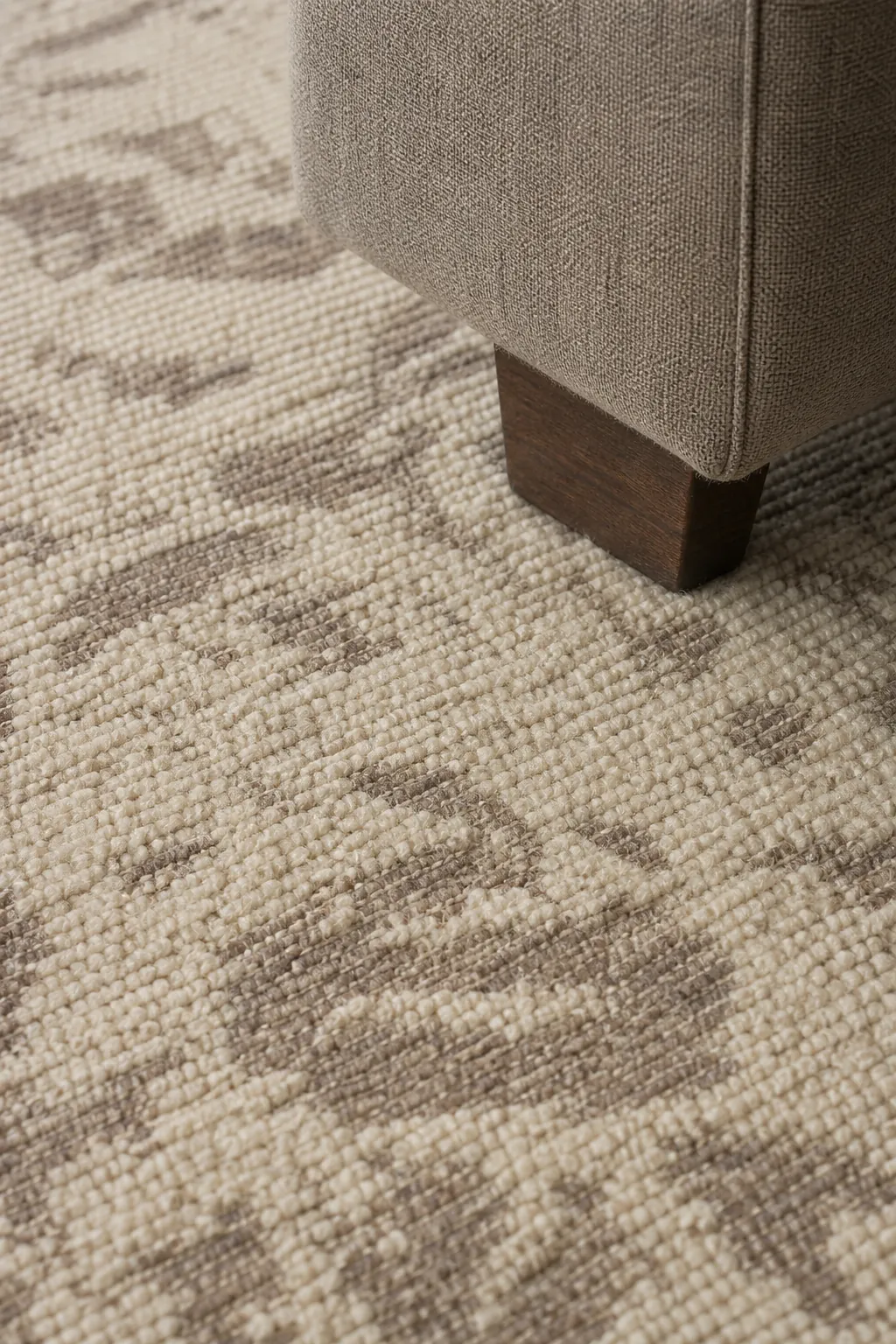
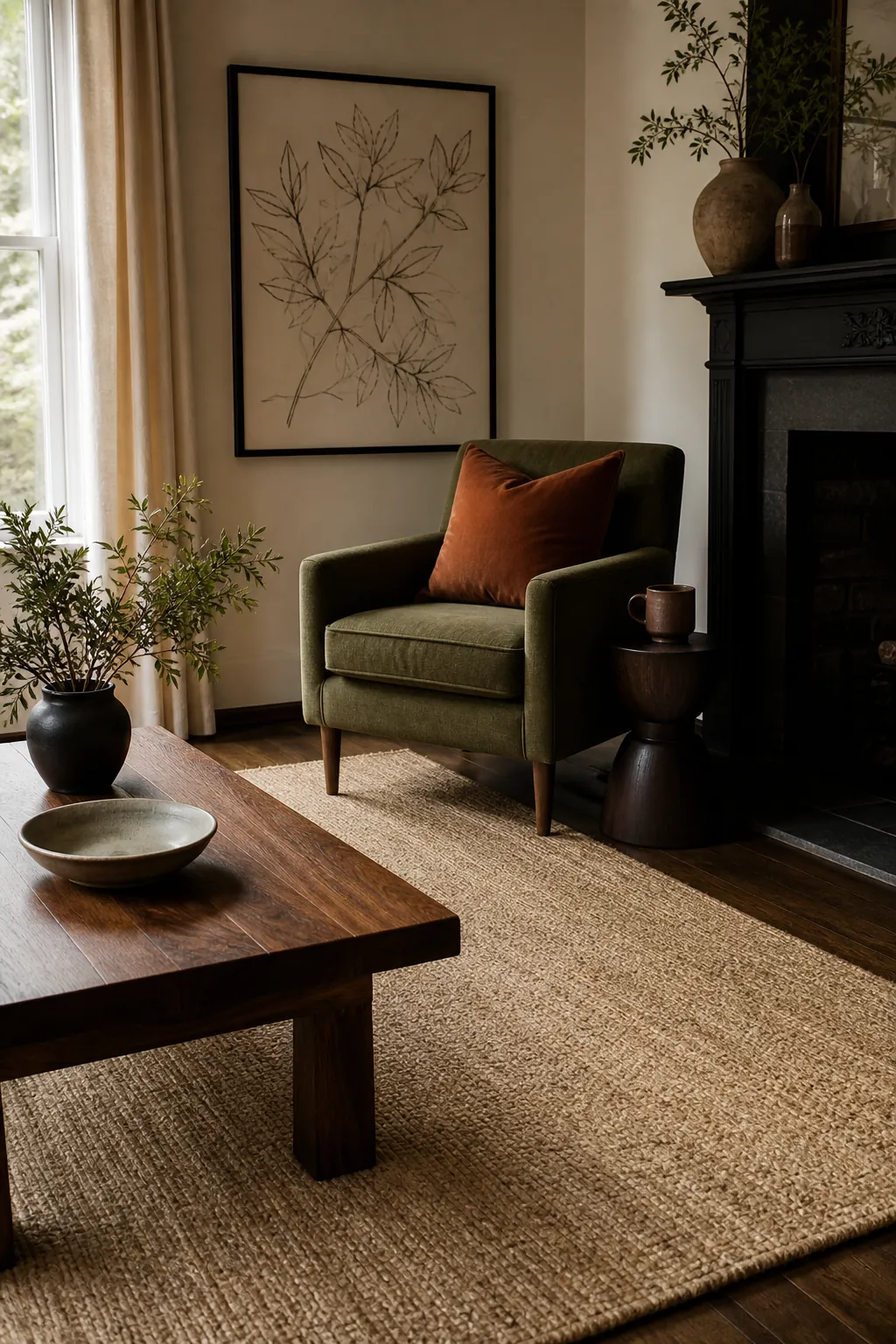
Break Up Beige With Natural Contrast
Walnut, blackened metal, olive, rust, and deep blue keep warm neutrals from dissolving into one tone. Repeat one accent in a pillow or vessel rather than scattering many unrelated colors.
Let the Pattern Solve a Room Problem
A faint border defines an open-plan seating zone; a directional stripe can widen a narrow room; a softly distressed motif hides daily marks. Choose pattern for a purpose, not merely because plain beige feels safe.
Style for Real Maintenance
Low-pile wool blends and dense synthetics are easier to vacuum than shag. Rotate the rug, use a proper pad, and address spills promptly. A cozy living room is one you can use without guarding every pale fiber.
The best beige rug creates a foundation, not a beige box. Get the scale right, add tactile variation, and let darker materials provide the edges your eye needs.