
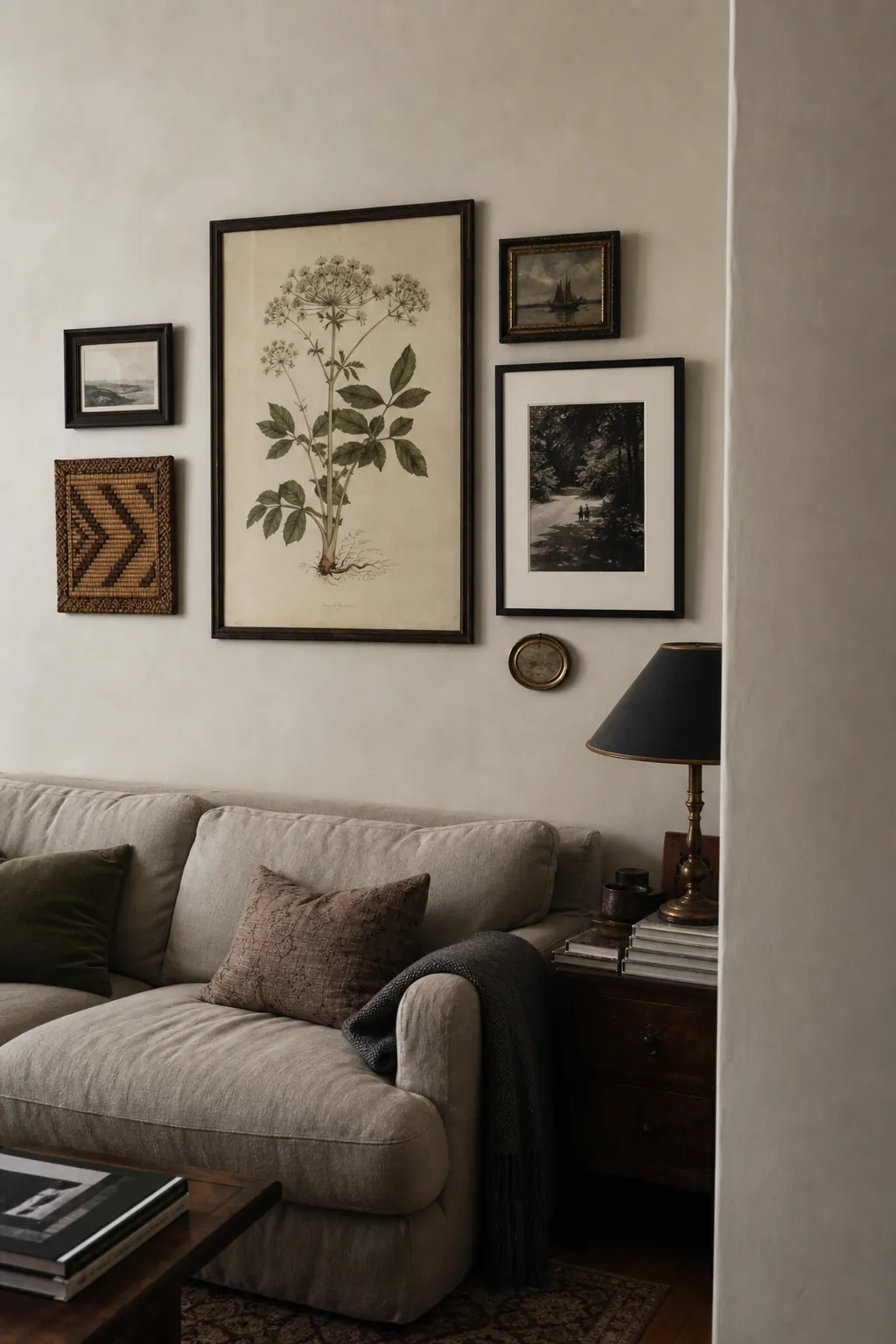
Vintage wall decor feels museum-like when the room seems built to preserve objects rather than support life. The cure is not necessarily fewer old pieces. It is better scale, personal subject matter, present-day contrast, and enough blank wall for the eye to rest. Your art display should belong to the sofa, dining table, desk, or stair it lives beside—not float as a separate exhibition.
Before buying another frame, photograph the wall straight on and measure both the wall and the furniture below it. Those two simple steps prevent most gallery-wall mistakes.
Choose One Piece That Sets the Scale
A wall of tiny frames can read like a postage-stamp collection, especially above a long sofa. Begin with one piece large enough to hold its own from across the room. It does not have to be expensive: enlarge a personal photograph with a generous mat, frame an old textile, or choose a substantial secondhand print you genuinely enjoy.
As a starting point, let the full arrangement span roughly two-thirds of the furniture below it. The anchor piece can sit off-center; it simply needs enough visual weight that the smaller objects have something to answer.
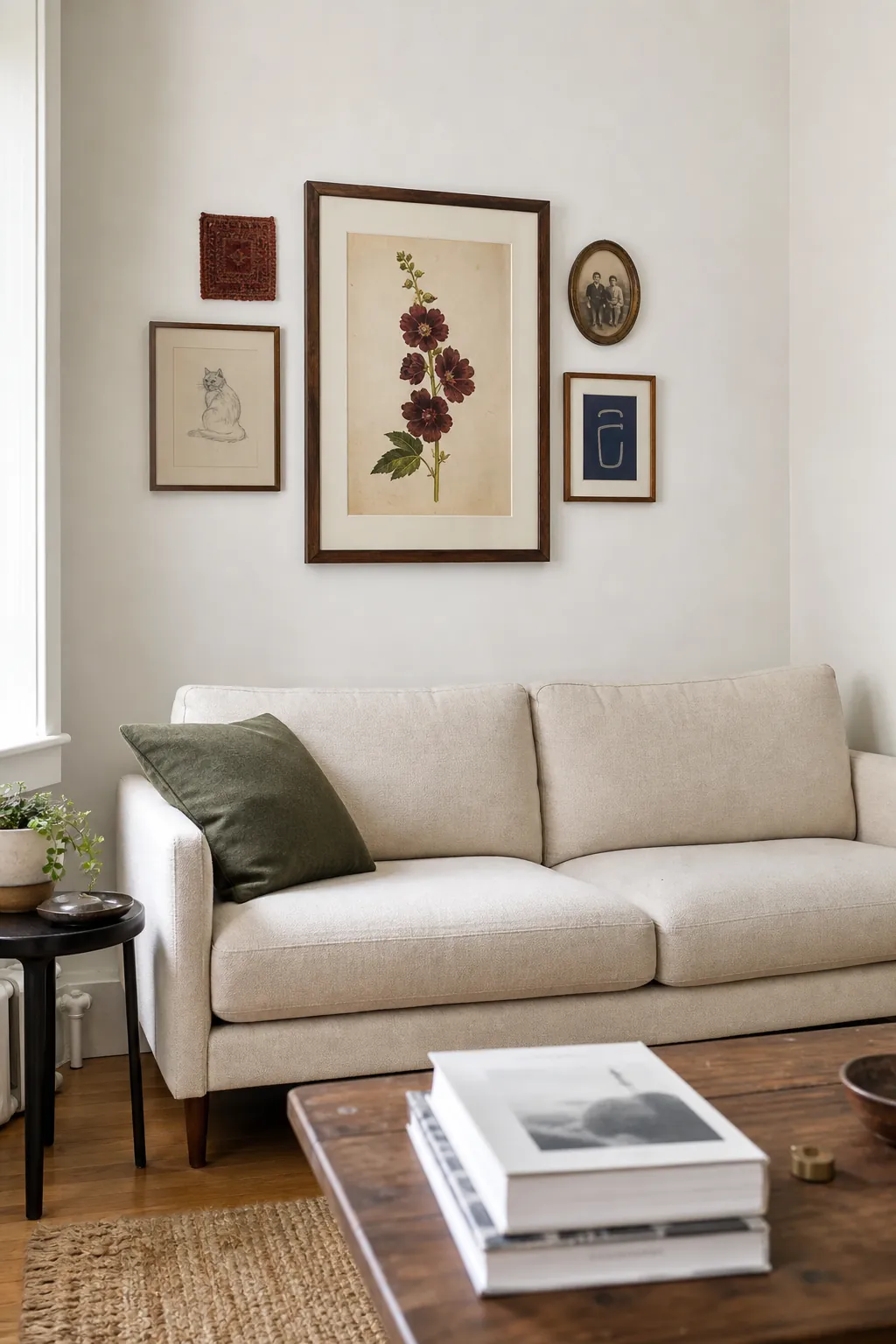
Use Subject Matter That Connects to Your Life
A technically perfect gallery of generic prints can still feel like staging. Mix in evidence of a real person: an artistic travel snapshot, a child’s small drawing, a map of a familiar place, a handwritten recipe, or embroidery made by a relative. These pieces do not need monetary value to give vintage decor emotional weight.
Keep private documents out of direct sunlight, use acid-free mats for fragile paper, and make high-quality copies when the original is too delicate. A reproduction with a story is more personal than an anonymous “antique” print chosen only for color.
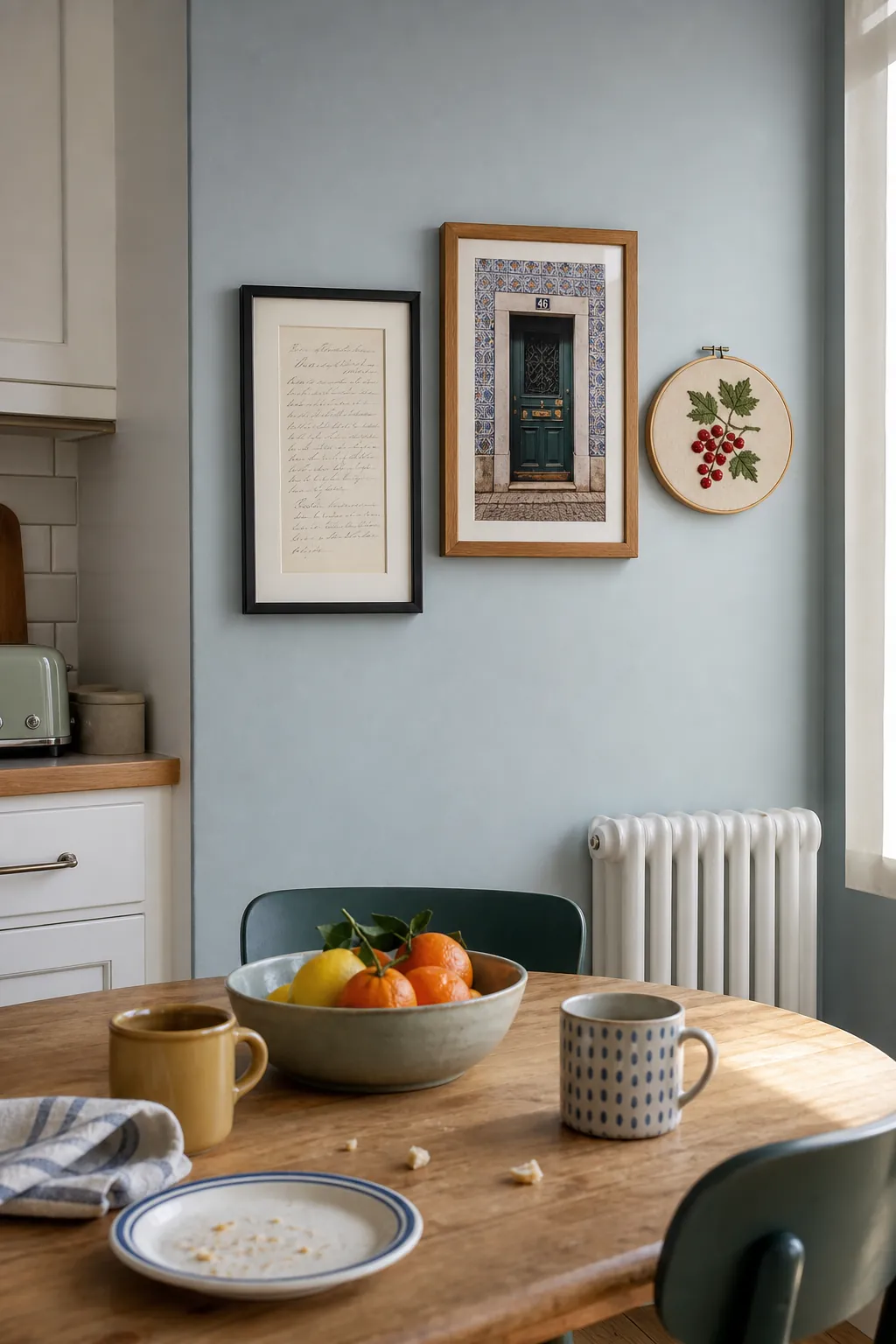
Repeat One Frame Detail, Not Every Frame
Mixed frames look intentional when one quiet thread repeats. Choose similar frame thickness, a recurring dark wood, touches of aged brass, or the same warm-white mat. Then allow shape and age to vary. Exact matching can feel like a purchased set; total randomness makes the frames compete with the art.
Inspect old frames for secure corners and stable hanging hardware. Replace acidic backing, clean glass carefully, and never hang a heavy frame from a nail intended for a lightweight print. Good vintage wall decor must be safe enough for everyday rooms.
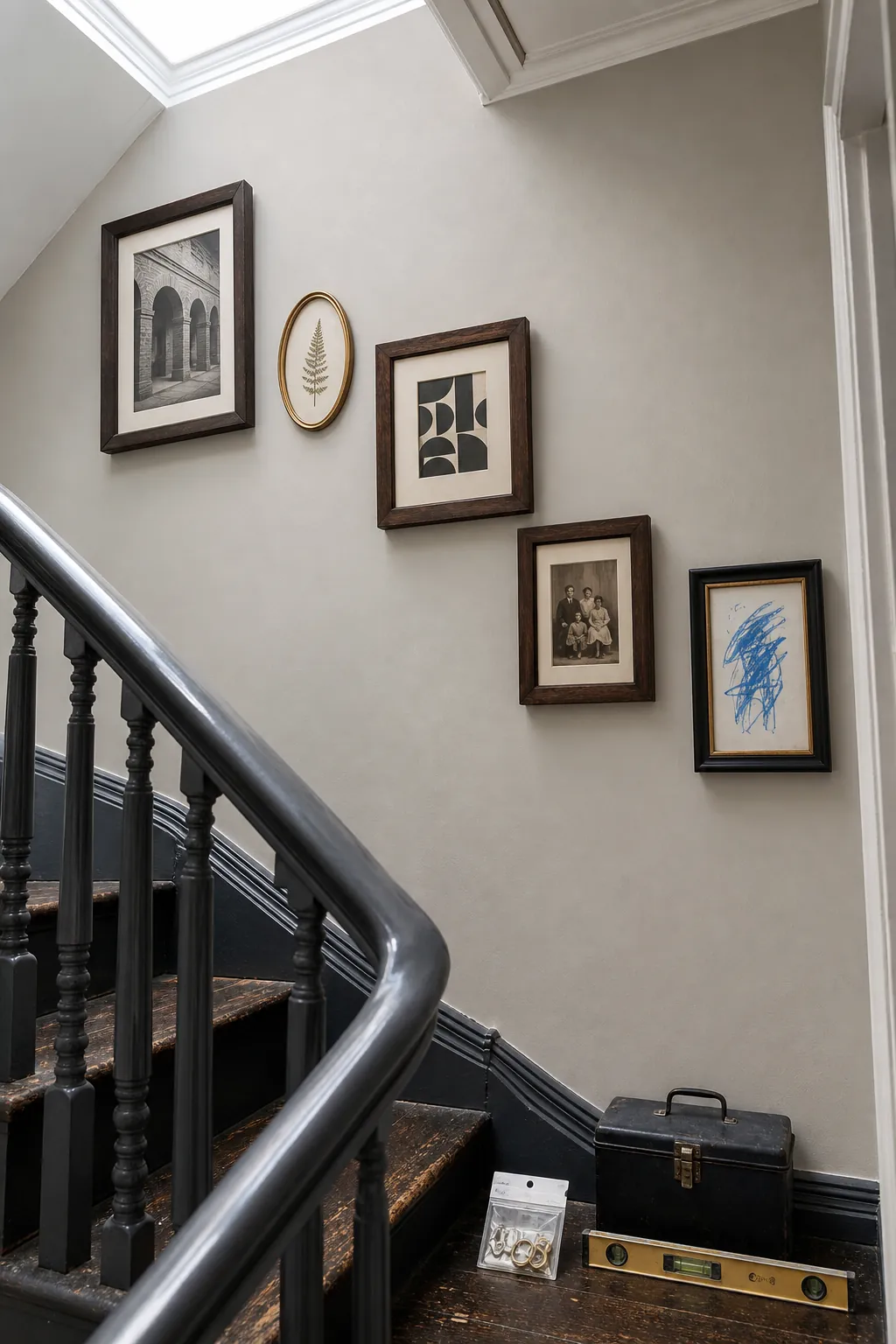
Plan the Arrangement With Paper First
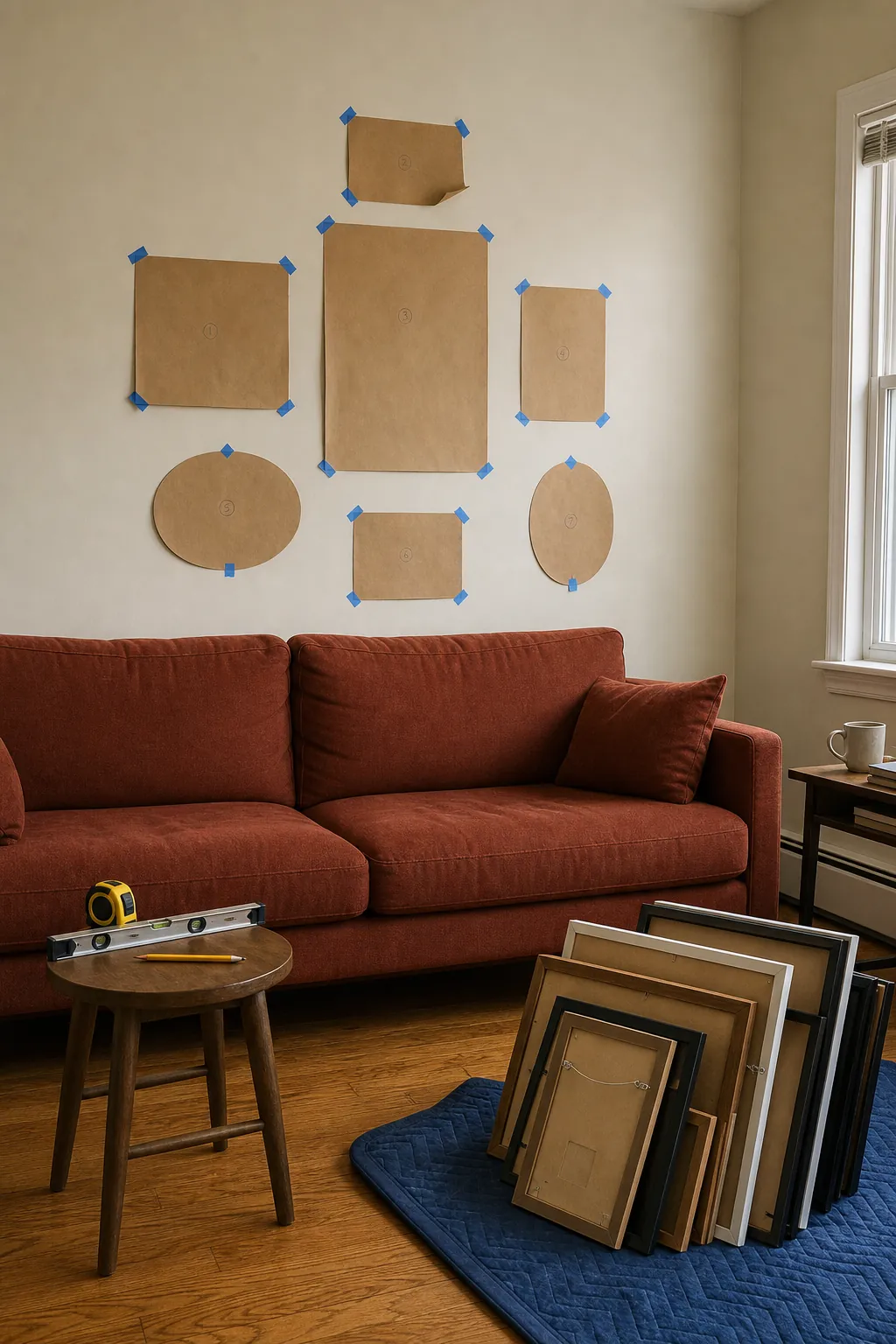
Trace every frame on kraft paper, label each outline, and tape the templates to the wall with low-tack painter’s tape. Start with the anchor, then distribute color and visual weight rather than mirroring both sides. Vary heights while keeping the gaps between neighboring pieces reasonably consistent.
Live with the paper version for several days. View it while seated and while entering the room. This pause reveals whether the group is too high, too small, or pulled toward one side—without creating a constellation of abandoned holes.
Hang Art in Conversation With the Furniture
Art is often hung too high because people center it on the wall rather than relate it to the furniture. Above a sofa or sideboard, begin with the lowest frame about six to ten inches above the furniture, then adjust for the piece and sightline. Over a desk, make sure lamps and monitor lids do not collide with frames.
A narrow wall may need one tall piece, not a miniature gallery. A busy room may benefit from a single woven panel or mirror. Let the architecture and furniture determine the format.
Mix Old Art With Something Clearly Current
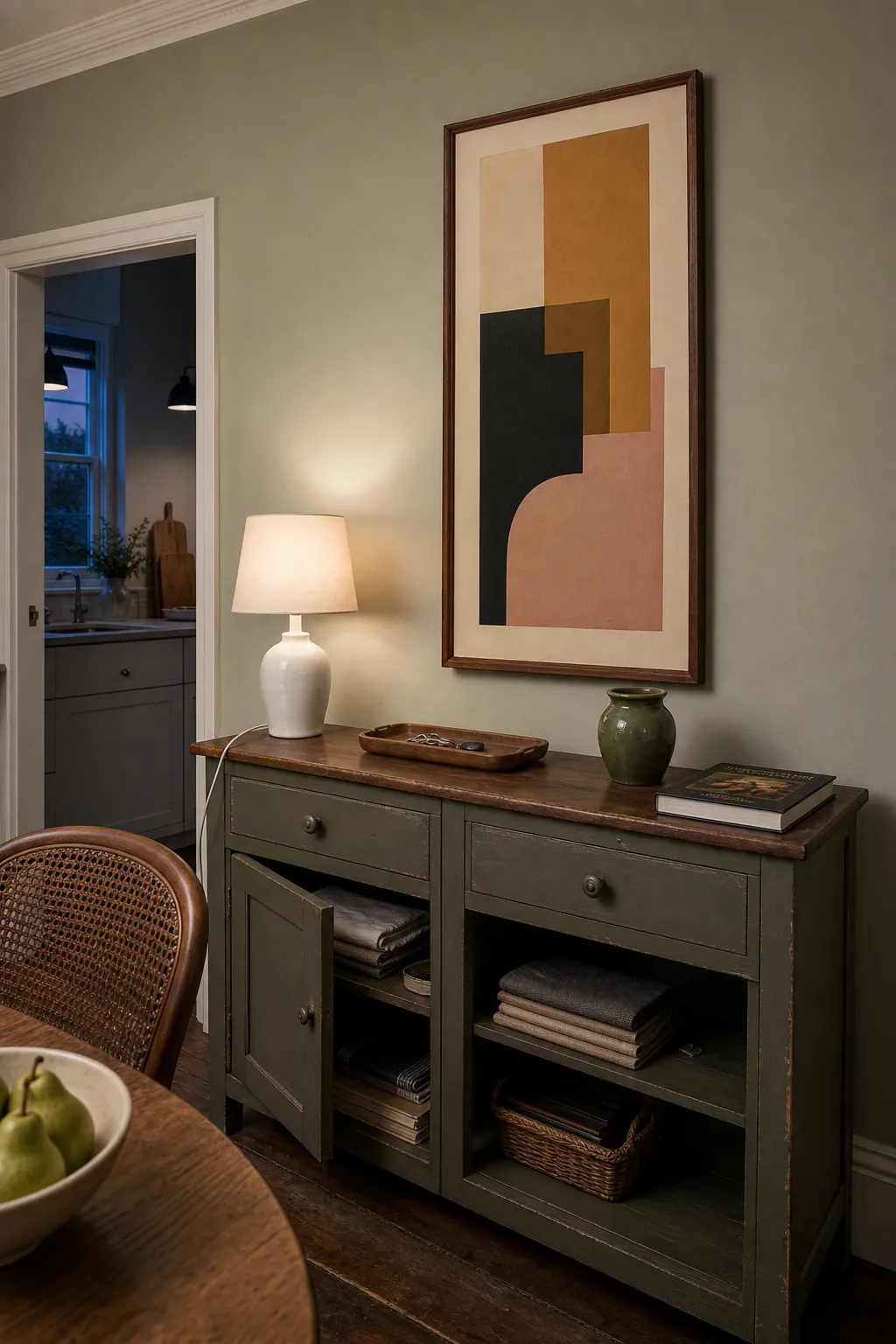
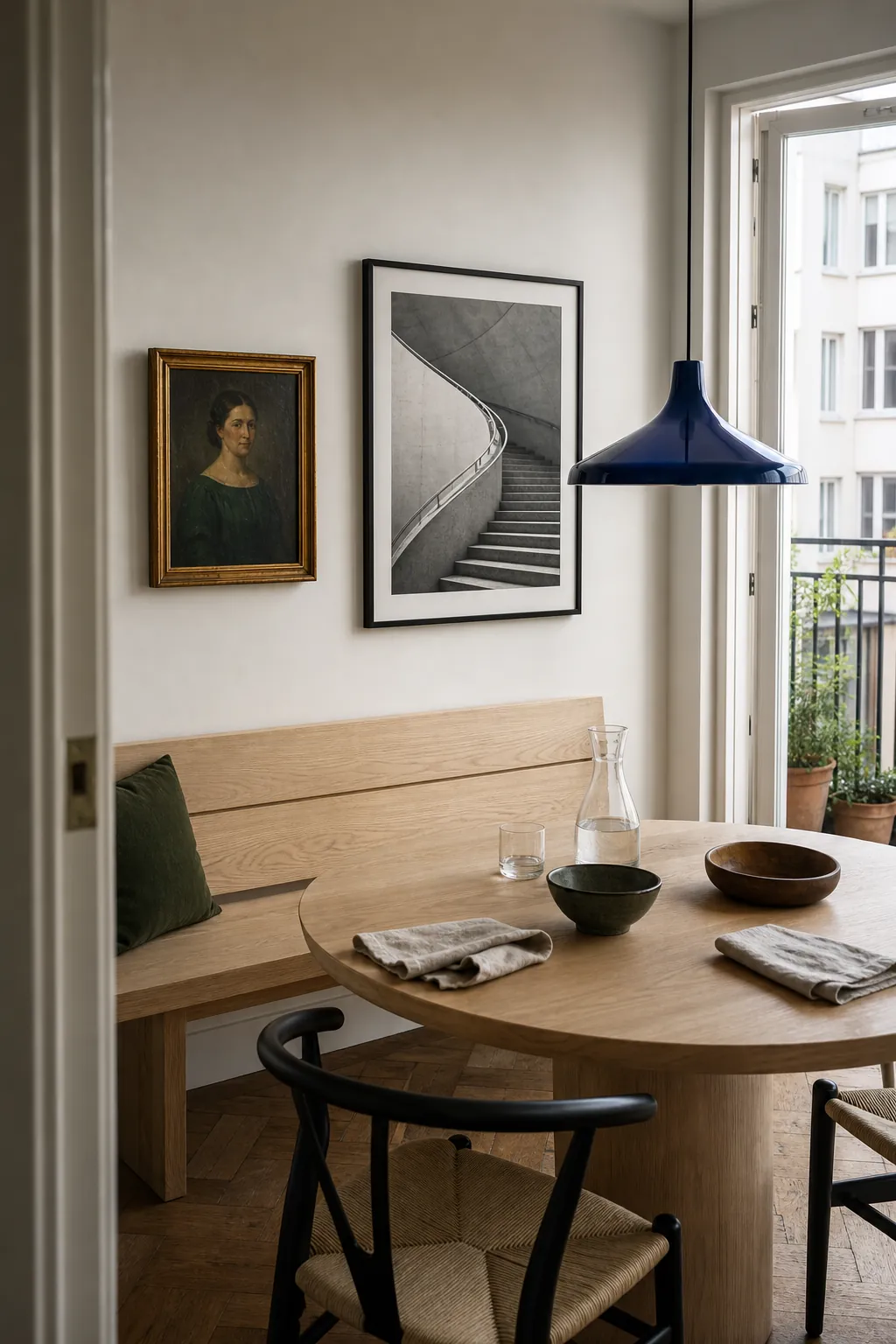
An antique oil painting beside a clean contemporary lamp feels collected; six antique oils under picture lights can feel institutional. Add a modern photograph, a child’s abstract painting, a simple black frame, or a fresh color that appears elsewhere in the room. The contrast tells viewers this is a living home, not a preserved period room.
Keep lighting domestic. A shaded lamp on the sideboard or an adjustable reading lamp nearby usually feels warmer than illuminating every piece equally. Protect sensitive works from strong sun rather than trying to spotlight the entire collection.
Leave Some Walls Quiet
If one wall carries a generous gallery, let an adjacent wall hold one piece or none. Blank space is not unfinished; it frames the decisions you made. It also reduces visual stimulus, makes dusting easier, and leaves room for a future find that matters.
After hanging, remove any piece that exists only to fill a hole. Shift the remaining work before shopping for a replacement. The strongest vintage wall display is rarely the one with the most history on view. It is the one where every piece has enough room to feel connected to life now.