
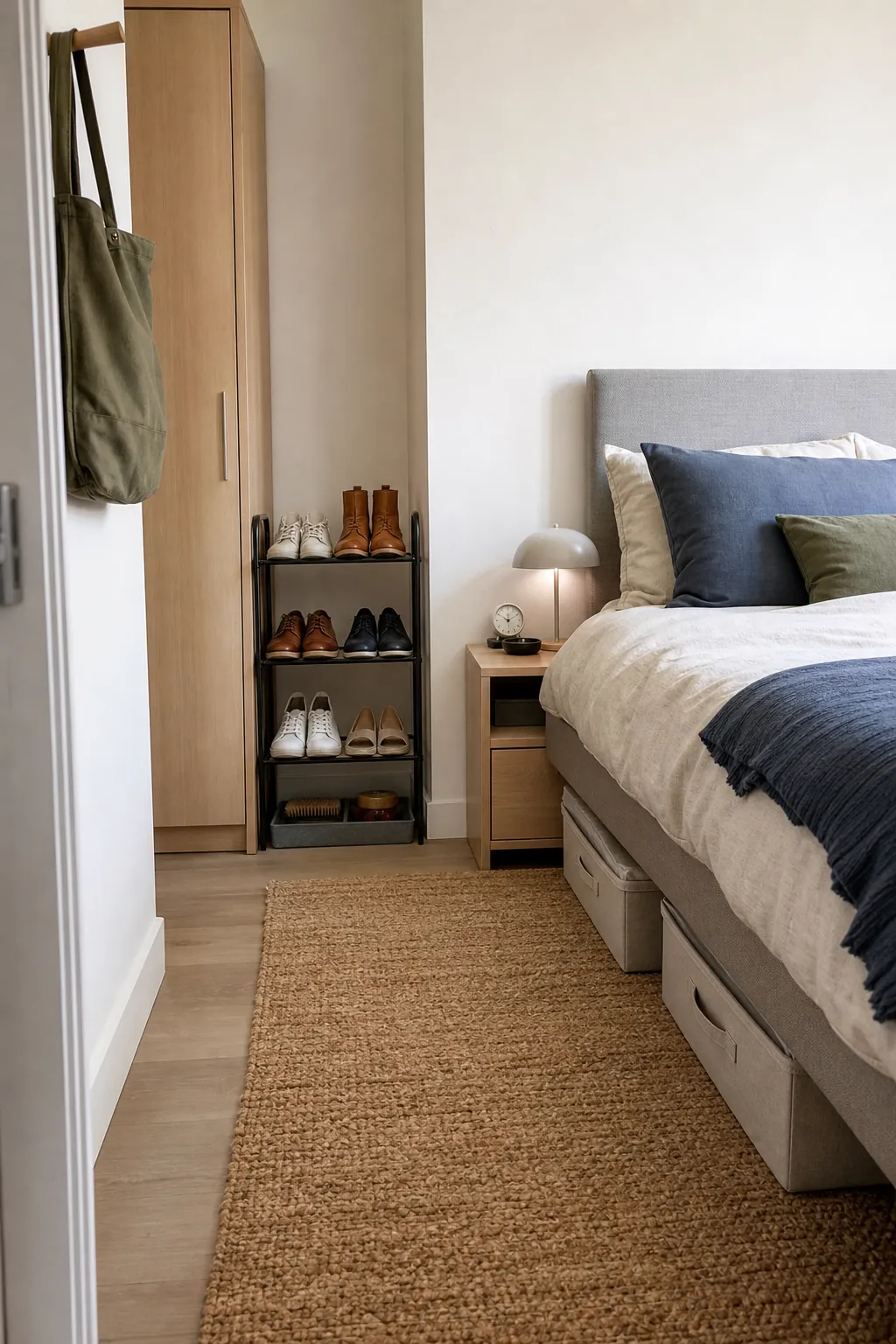
A small bedroom rarely has a shoe-storage problem alone. It has a traffic-flow problem, a cleaning problem, and an access problem happening in the same few square feet. A pile may technically fit beside the wardrobe, but it still catches dust, hides the pair you want, and turns getting dressed into a daily shuffle.
The answer is not to squeeze every pair into one heroic organizer. The most reliable system separates shoes by how often you wear them: daily pairs stay within easy reach, occasional pairs use hidden space, and off-season pairs move to the least convenient zone. That simple hierarchy is what makes shoe storage in a small bedroom stay organized after the first week.
Edit the Collection Before You Buy Storage
Pull every pair into one place and sort by actual behavior, not intention. Make four groups: worn weekly, worn occasionally, seasonal, and ready to leave. The last group includes painful shoes, duplicate styles, pairs that need a repair you have postponed for months, and anything you would not choose today.
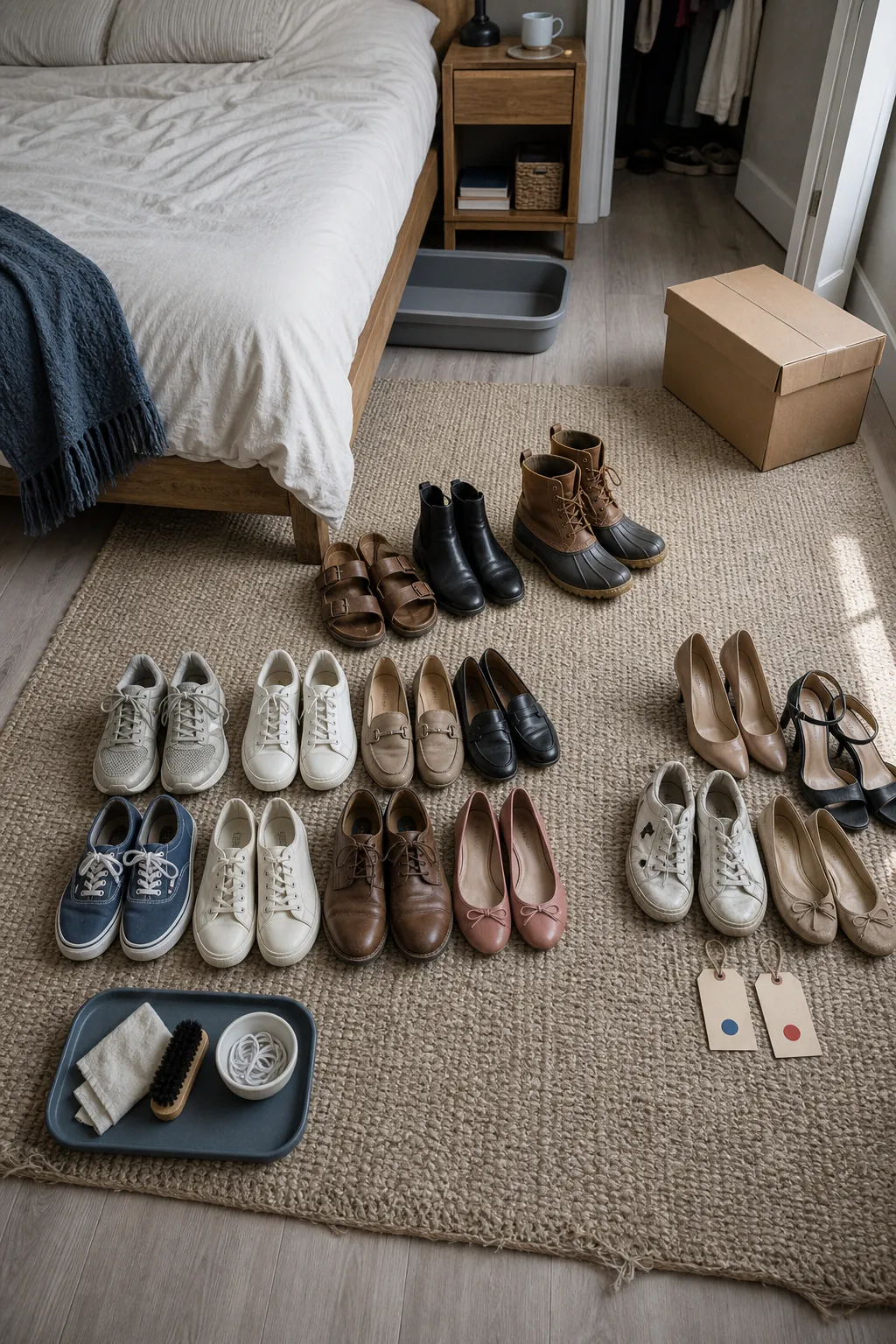
Reddit discussions about tight apartments repeatedly expose the same frustration: people keep adding bins, but the room never becomes easier to use. A container cannot create square footage. Your available storage should set the collection limit, especially when the bed, closet, and doorway already compete for clearance.
- Keep daily pairs where you can reach them without kneeling or moving furniture.
- Keep special-occasion shoes protected but outside the prime-access zone.
- Move off-season footwear into labeled, breathable storage.
- Place donate and repair pairs by the exit immediately so they do not drift back.
Claim the Space Under the Bed
Under-bed shoe storage is useful because it takes no new floor area, but only when the container matches the clearance and the way you access it. Measure from the floor to the lowest rail, then subtract about an inch so a full bin does not scrape. Also measure around center supports and confirm that the container can slide fully into the aisle.
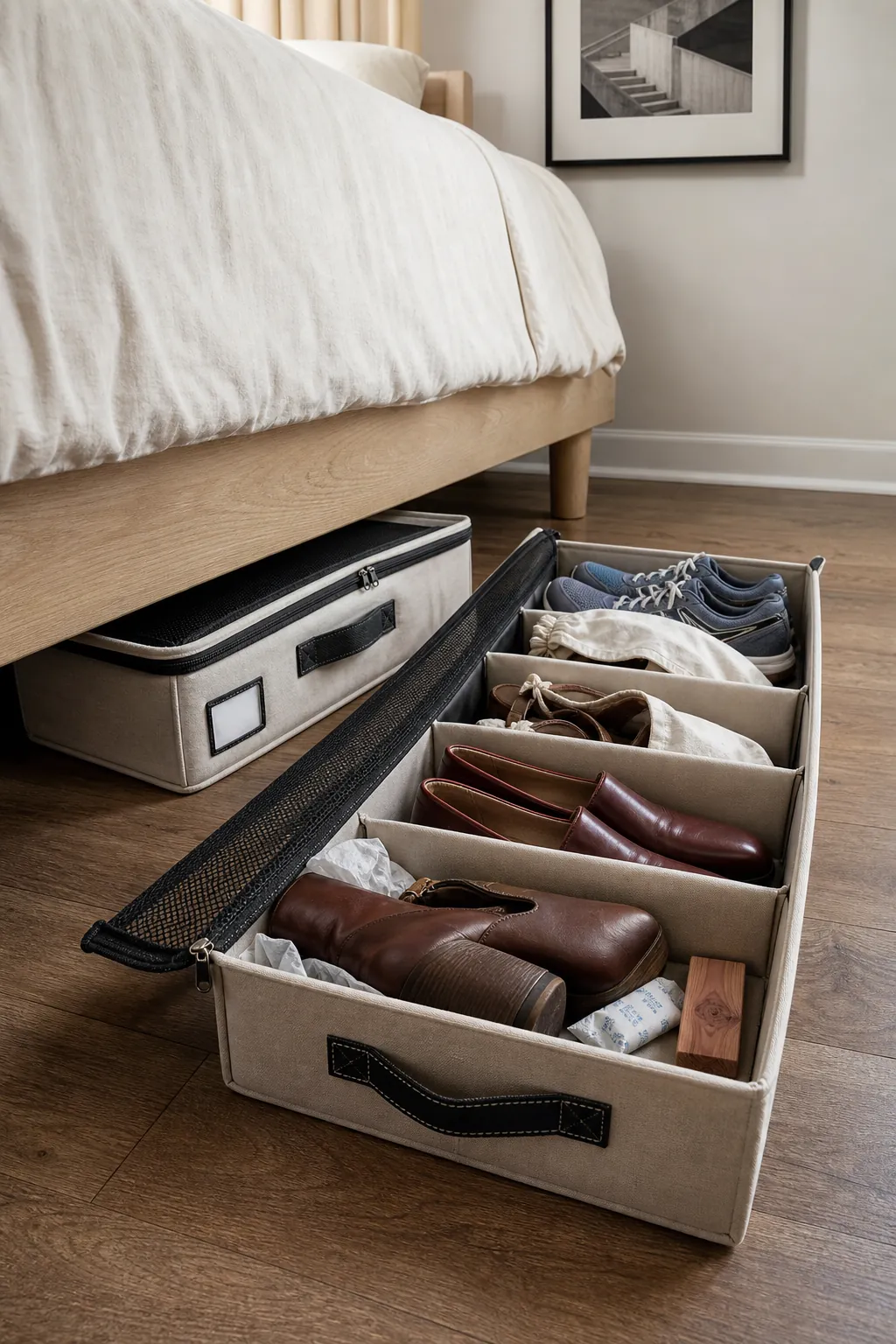
Choose a low bin with a lid, reinforced handle, and some airflow. Fabric or ventilated containers are better for shoes than airtight storage when any moisture may remain. Clean and dry every pair first; support boots or structured shoes with tissue, and avoid stacking leather uppers under heavy soles. Use this zone for seasonal and occasional shoes, not the sneakers you need every morning.
If your bed is too low, risers can work only if they are rated for the bed and do not create a wobbly frame. In a very narrow room, one wide container per side is often easier than several small boxes whose handles disappear underneath.
Use a Slim Rack for Everyday Pairs
The best location for daily shoes is usually a dead strip beside a wardrobe, dresser, or wall—not the center of the closet floor. Look for a shallow rack that fits shoe length without projecting into the walkway. Before buying, tape its proposed footprint on the floor and open every nearby door and drawer.
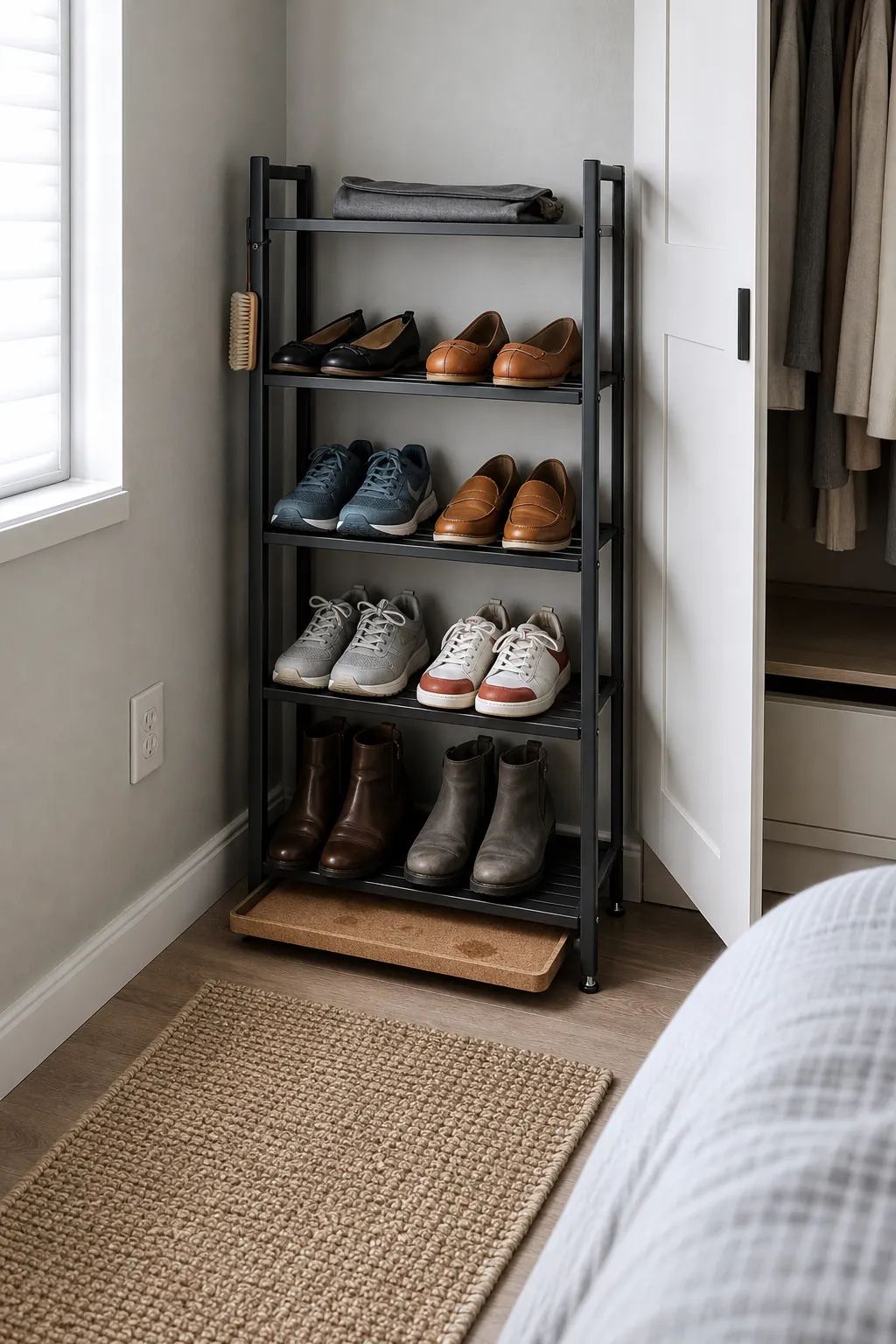
Put boots and heavier shoes on the bottom so the rack stays stable. Keep the most frequently worn pairs between knee and waist height, and leave at least one open slot. That empty space is functional: it gives shoes room to dry and lets you return a pair without reorganizing the whole rack.
A tray beneath the lowest shelf catches grit and protects rental flooring. Skip deep enclosed cabinets if the door clearance makes the room harder to navigate. Open storage works when the collection is edited and maintained; it looks chaotic only when it is asked to hold more than its designed capacity.
Put Lightweight Shoes Behind the Door
An over-door organizer can recover vertical space without drilling, but it has limits. Use it for flats, sandals, slippers, and other low-profile footwear. Heavy boots and chunky sneakers strain hooks, distort pockets, and make the door noisy. Padded hooks or felt guards help prevent paint damage, especially in a rental.
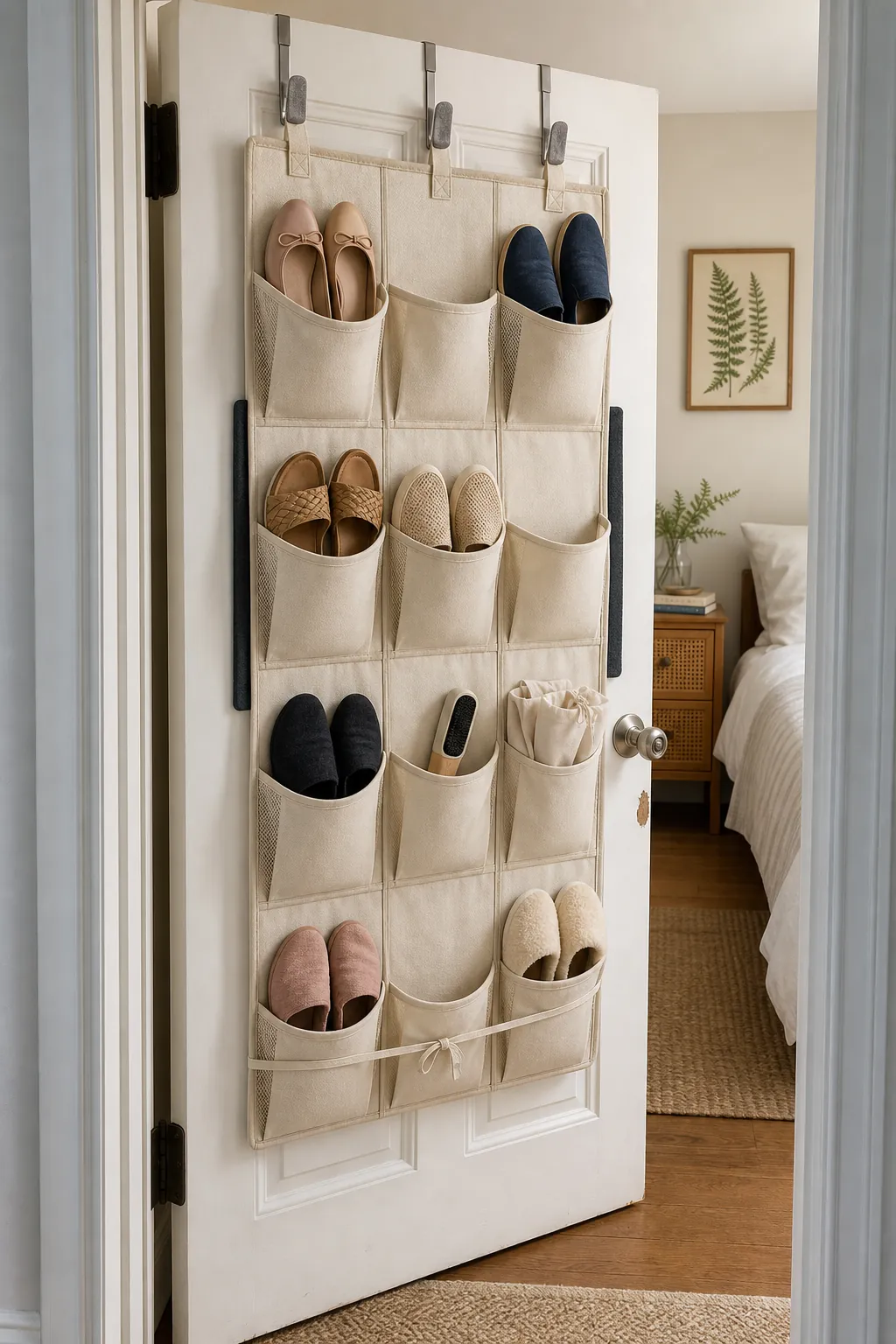
Check three things before committing: the hooks must not prevent the door from closing, the organizer must clear the handle, and loaded pockets must not hit furniture during the swing. Mesh or canvas pockets allow better airflow than clear vinyl. Alternate loaded pockets instead of filling one side first so the organizer hangs evenly.
This option is especially useful when the closet has no free floor space. If the back of the door is visible from bed and the pockets feel visually busy, choose one fabric color close to the door or wall rather than relying on a jumble of transparent compartments.
Build a Better Lower Closet Zone
Many reach-in closets waste the space beneath shirts and short jackets. Freestanding modular cubbies or stackable shelf risers can use that height without modifying the closet. Measure the hanging hems first and keep several inches between clothing and shoes so fabric does not collect dust from soles.
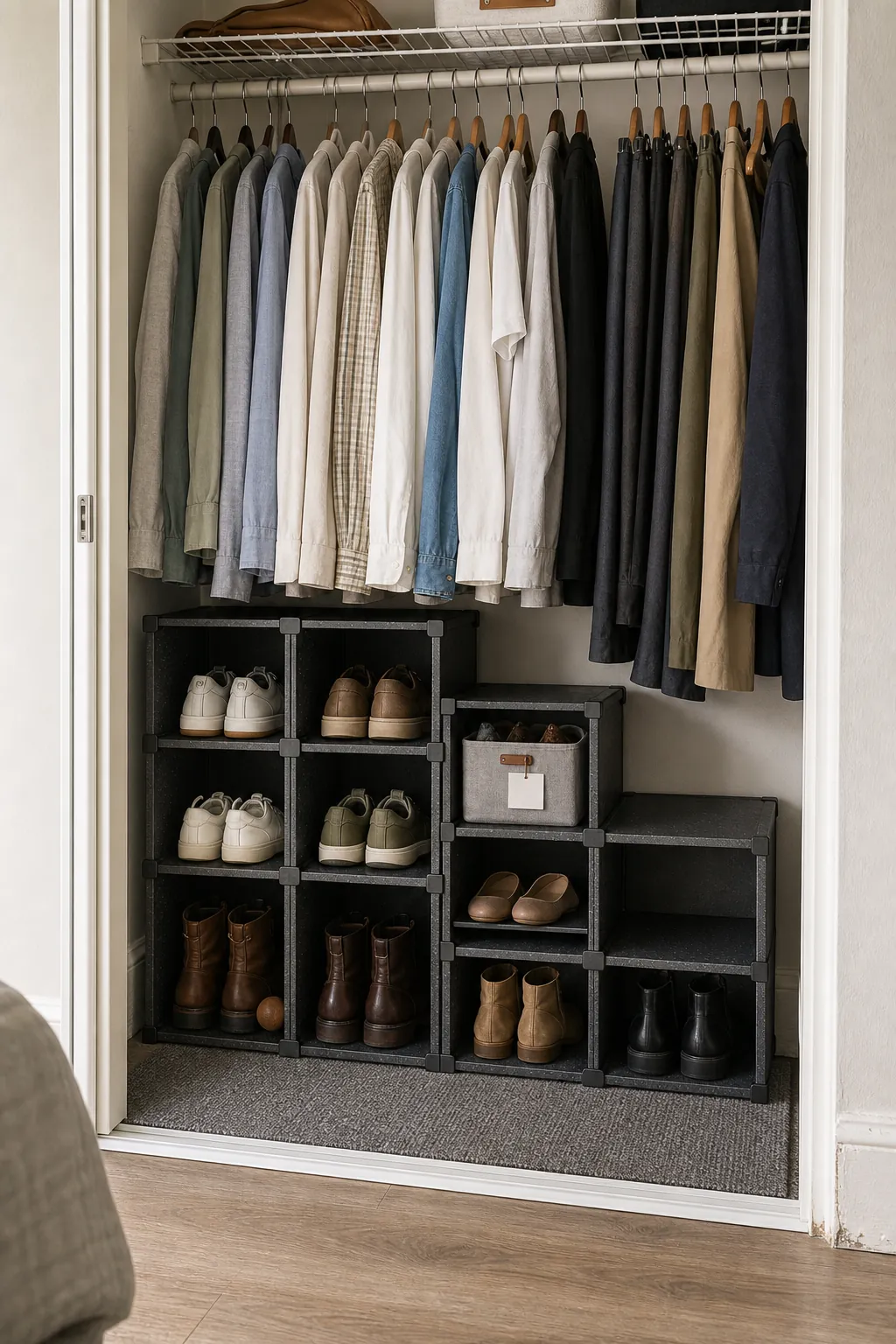
Place ankle boots and heavier pairs in lower cubbies. Use risers to divide a tall opening for flats, but avoid stacking shoes directly on each other. Keep one small bin for brushes, spare laces, and cedar inserts rather than scattering care products among footwear.
The closet threshold should remain empty. If reaching one pair requires moving a hamper, lifting a bin, and shifting three other pairs, the system will fail during a rushed morning. Good closet organization reduces the number of moves between you and the item.
Create a Clean Landing Routine
Keeping shoes in a bedroom raises a sensible concern: dirt and moisture should not migrate toward clothing or bedding. Solve that with a small landing zone. A washable rubber tray, a brush, and a cloth are enough. Recently worn pairs pause there until dry and clean, then return to the rack, closet, or door organizer.
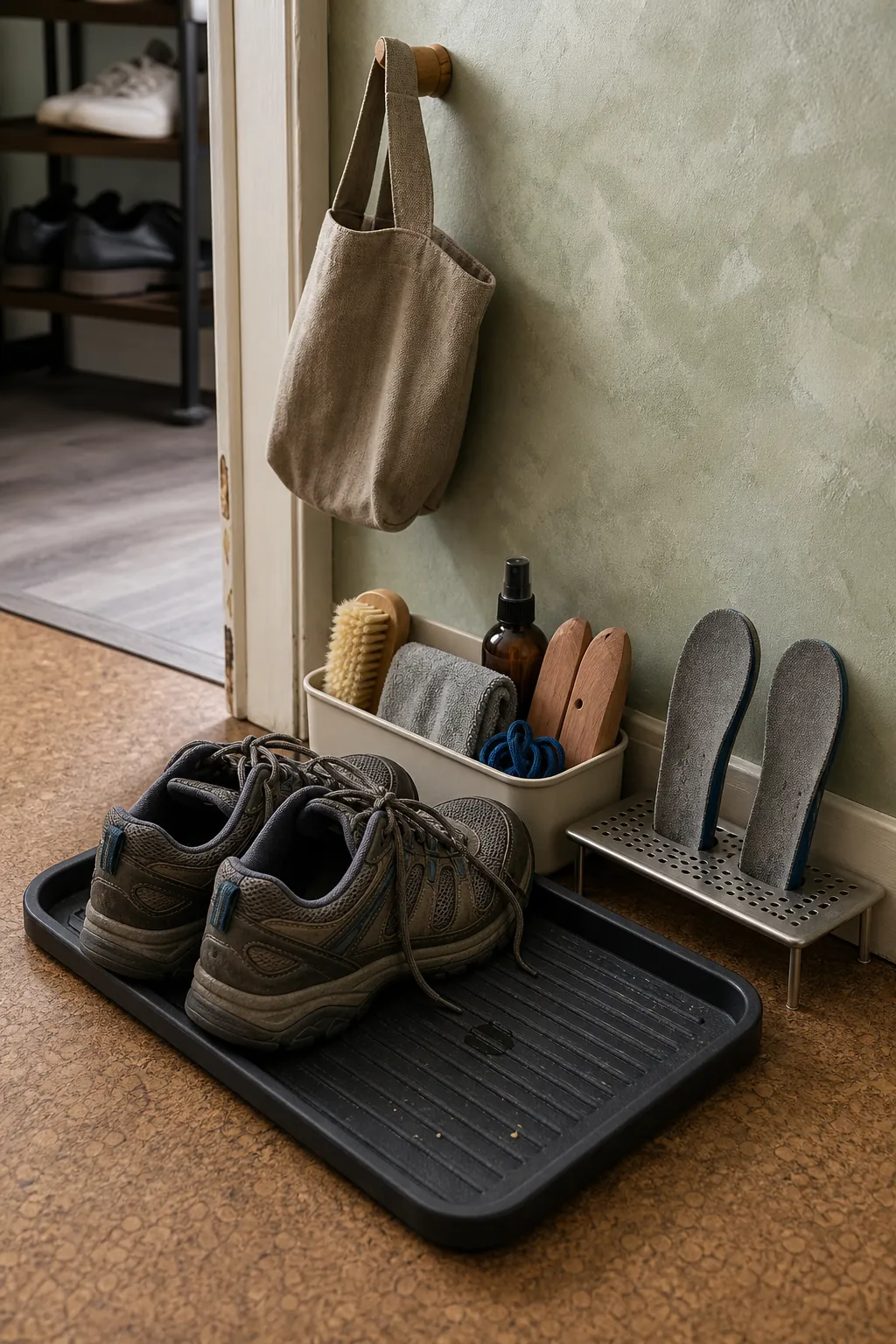
Remove damp insoles when needed and let shoes air before placing them in a lidded bin. Cedar inserts can help absorb moisture and keep shape, but they do not replace cleaning or ventilation. Avoid heavily scented sprays in a sleeping area; an odor usually signals that a pair needs more drying time or a wash.
Contain the grit on one easy-to-clean surface instead of trying to keep every storage location spotless. This two-minute return routine prevents the familiar migration of shoes from the rack to the floor.
Rotate Shoes With the Seasons
Prime storage should hold the weather you are living in now. At the beginning of a season, clean and inspect every pair before swapping. Store sandals loosely with straps supported; keep leather away from plastic that traps moisture; and never seal shoes that are even slightly damp.
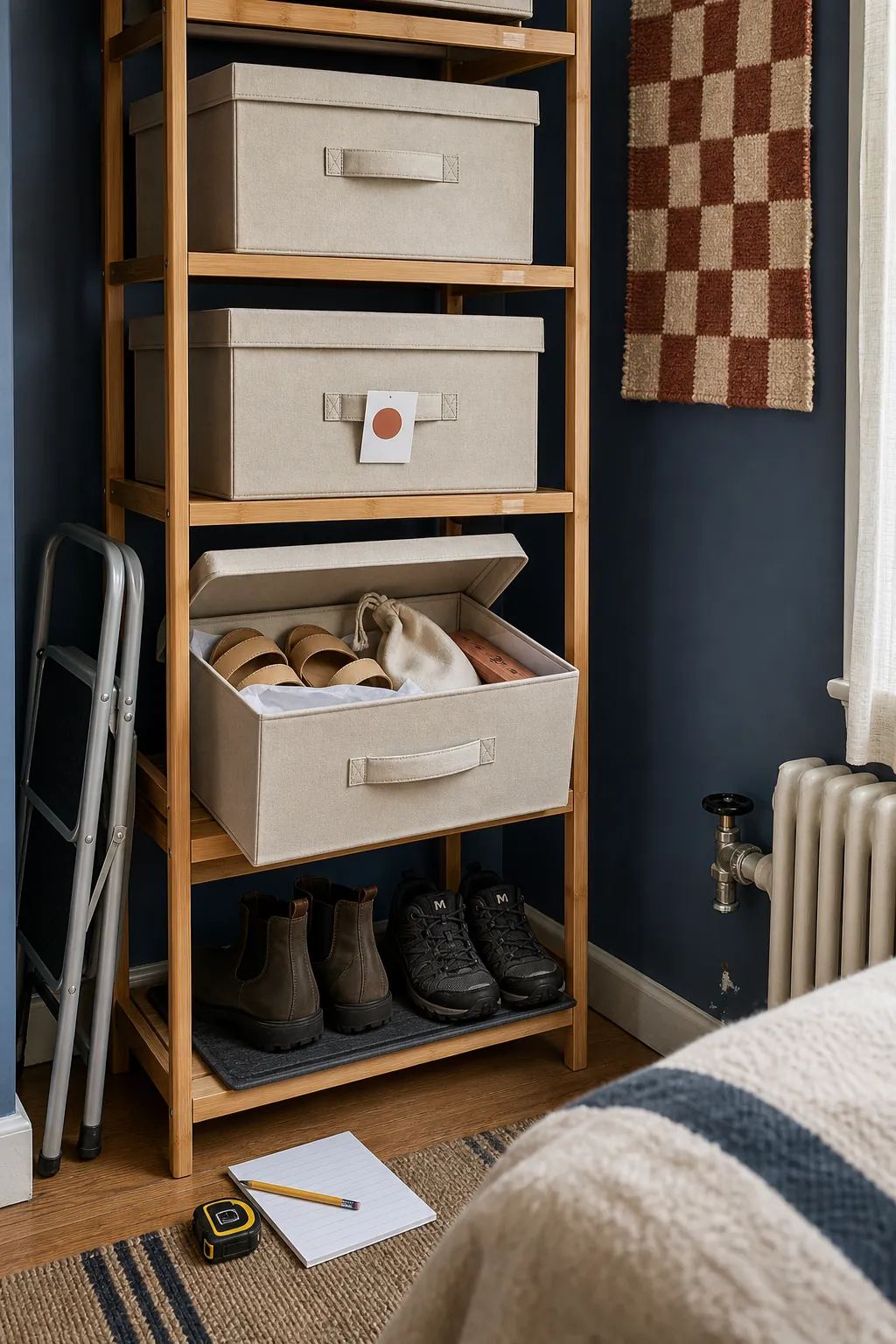
High shelves are appropriate for lightweight off-season boxes if they are stable and reachable with a safe step stool. Handles should face outward, and labels should describe the category at a glance. Set a firm box limit. When the seasonal container no longer closes comfortably, edit the collection instead of adding another tower.
The durable system is simple: daily shoes get the easiest slots, occasional shoes stay protected under the bed or in the closet, and off-season shoes move up and out of the way. When every pair has a storage tier and a return routine, the bedroom floor stops being the default shelf.