
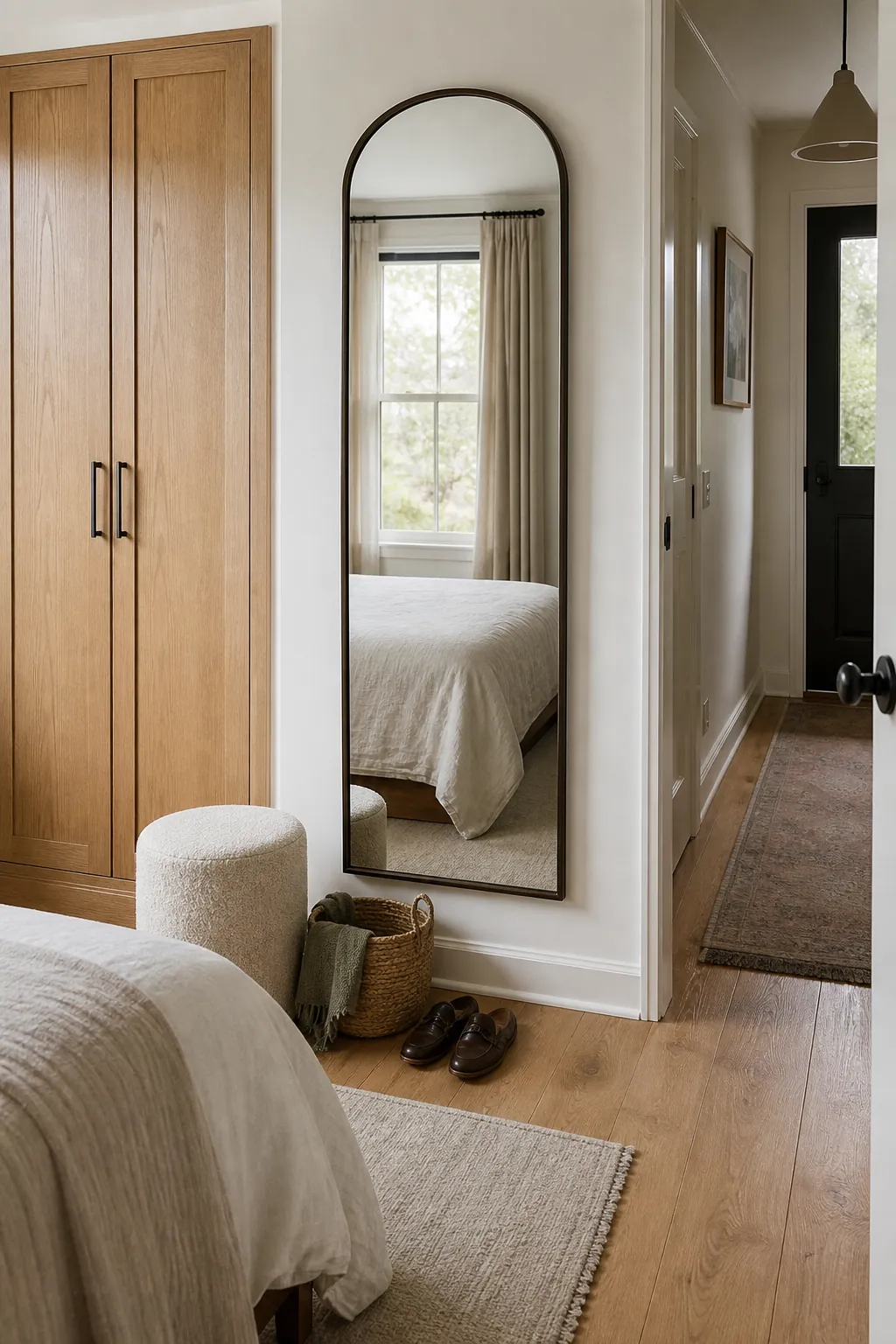
A full length mirror earns its space when it supports a real routine: getting dressed, checking shoes, catching daylight, or making a narrow entry feel less closed in. The shape and frame matter, but placement matters more. A beautiful mirror that reflects clutter, blocks a wardrobe, or feels unstable in a busy walkway will never feel fully resolved.
These ideas focus on bedrooms and entryways because the same mirror behaves differently in each. In a bedroom, privacy, sleep, and access to clothing lead the decision. In an entryway, traffic, door swings, wet shoes, children, and a fast last look come first.
Place the Mirror Where the Routine Happens
In a bedroom, begin beside the wardrobe or dresser—not with the largest blank wall. You should be able to step back, see an outfit from head to toe, and reach the clothes you are comparing without crossing the room. A mirror on the wall perpendicular to the bed often creates a useful dressing zone without becoming the first thing you see when you wake.
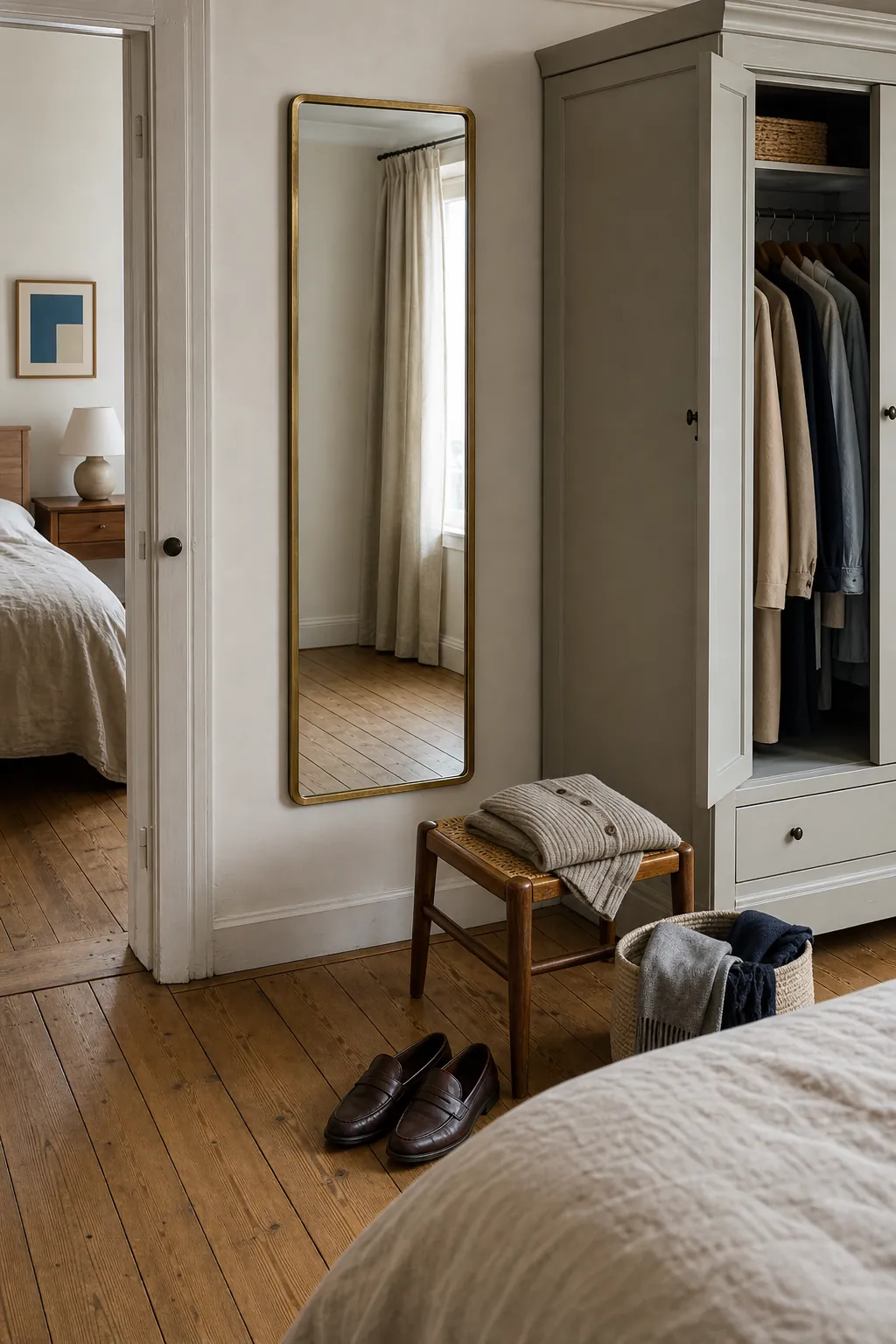
In an entryway, use the same logic. Put the mirror near coats, shoes, and the exit, but outside the door swing and away from the tightest passing point. The most practical location is often an adjacent wall just beyond the door, where a quick outfit check feels natural.
Mount High-Traffic Mirrors Securely
Leaning mirrors can look relaxed in photographs, but an unsecured heavy mirror is a poor choice around children, pets, vacuum cleaners, luggage, or a busy entrance. Use the manufacturer’s rated hanging hardware or anti-tip system, matched to the wall construction and mirror weight. When the mirror is unusually large or the wall condition is uncertain, hire an installer.
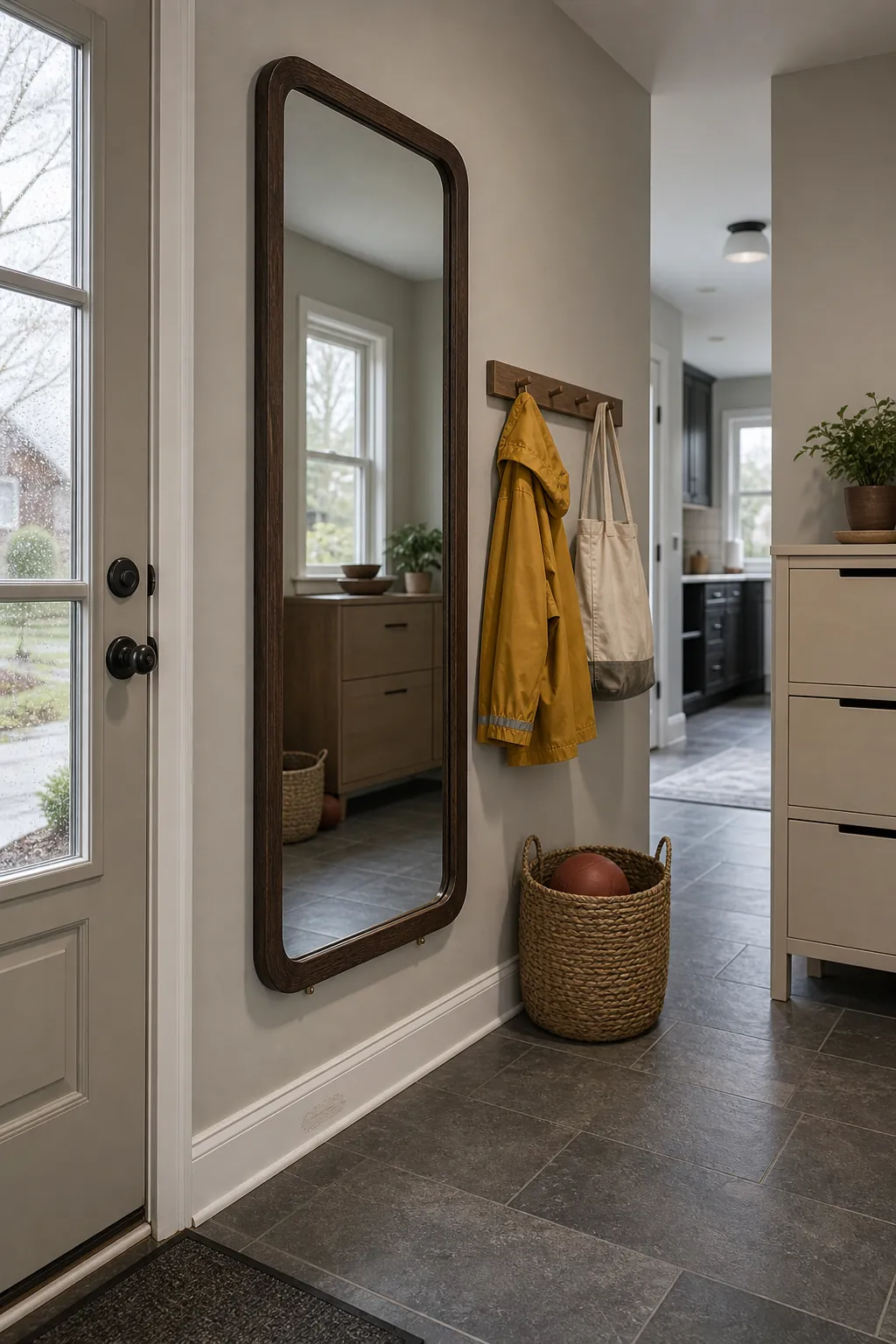
A wall-mounted mirror also looks more intentional and is easier to clean beneath. Leave enough space above the baseboard for the frame to sit flat, then test the view at the heights of everyone who will use it before drilling.
Use a Slim Mirror on an Overlooked Wall
A narrow wall between a closet and doorway can hold a surprisingly useful mirror. Slim rectangles and pill shapes add height without demanding furniture below them. This works well in small bedrooms where every floor-level object competes with drawer and door clearance.
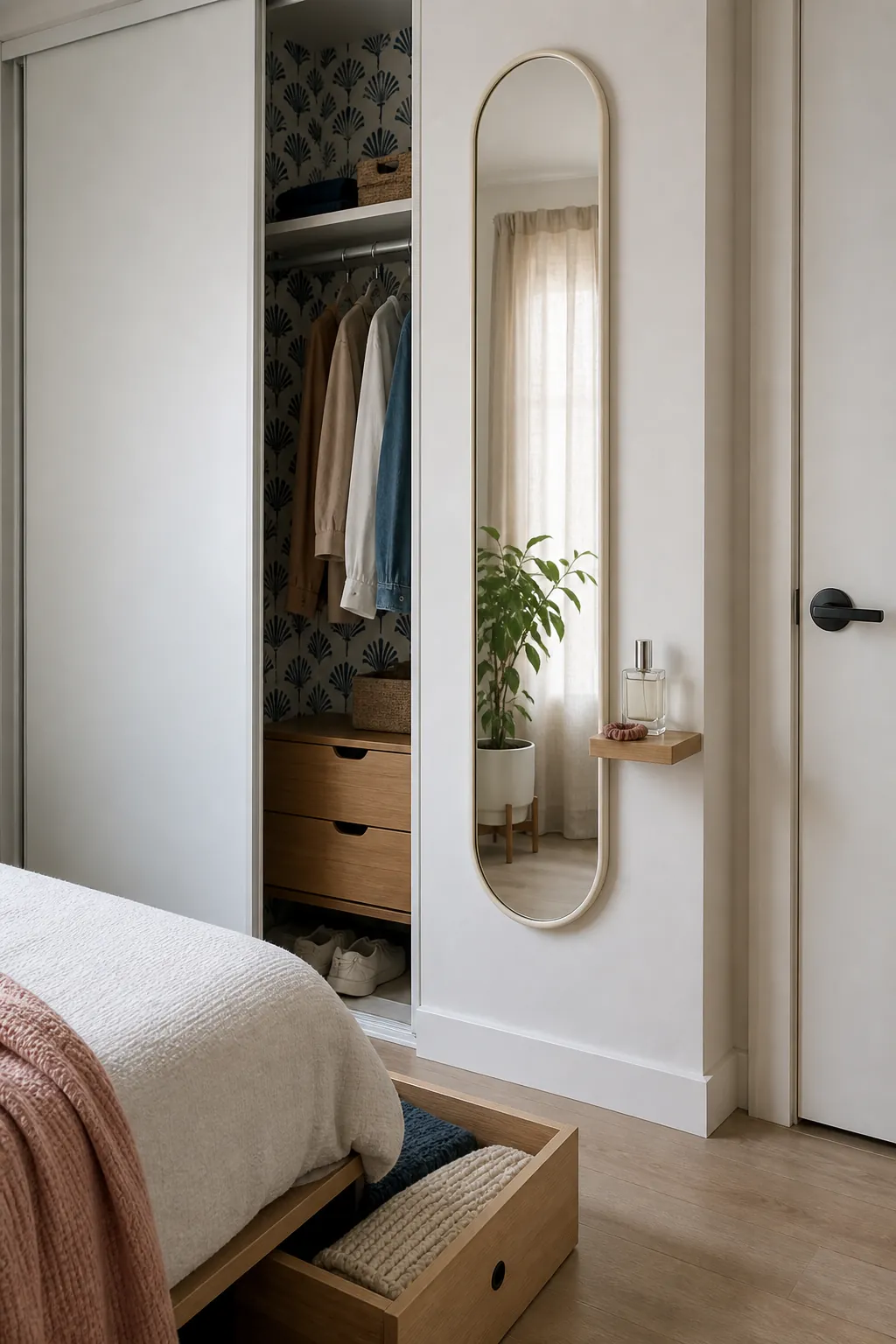
Check that the reflected view is calm. A window, neatly made corner, or textured curtain adds light and depth. An open closet or pile of laundry creates twice the visual noise. If the only available position faces clutter, change the angle or improve the storage before blaming the mirror.
Make a Freestanding Mirror Feel Deliberate
Renters do not have to settle for a loose mirror propped against the wall. A stable cheval mirror or manufacturer-designed floor stand creates an adjustable viewing angle while keeping the frame supported. Choose a base that sits flat, does not rock on a rug edge, and leaves the walking route clear.
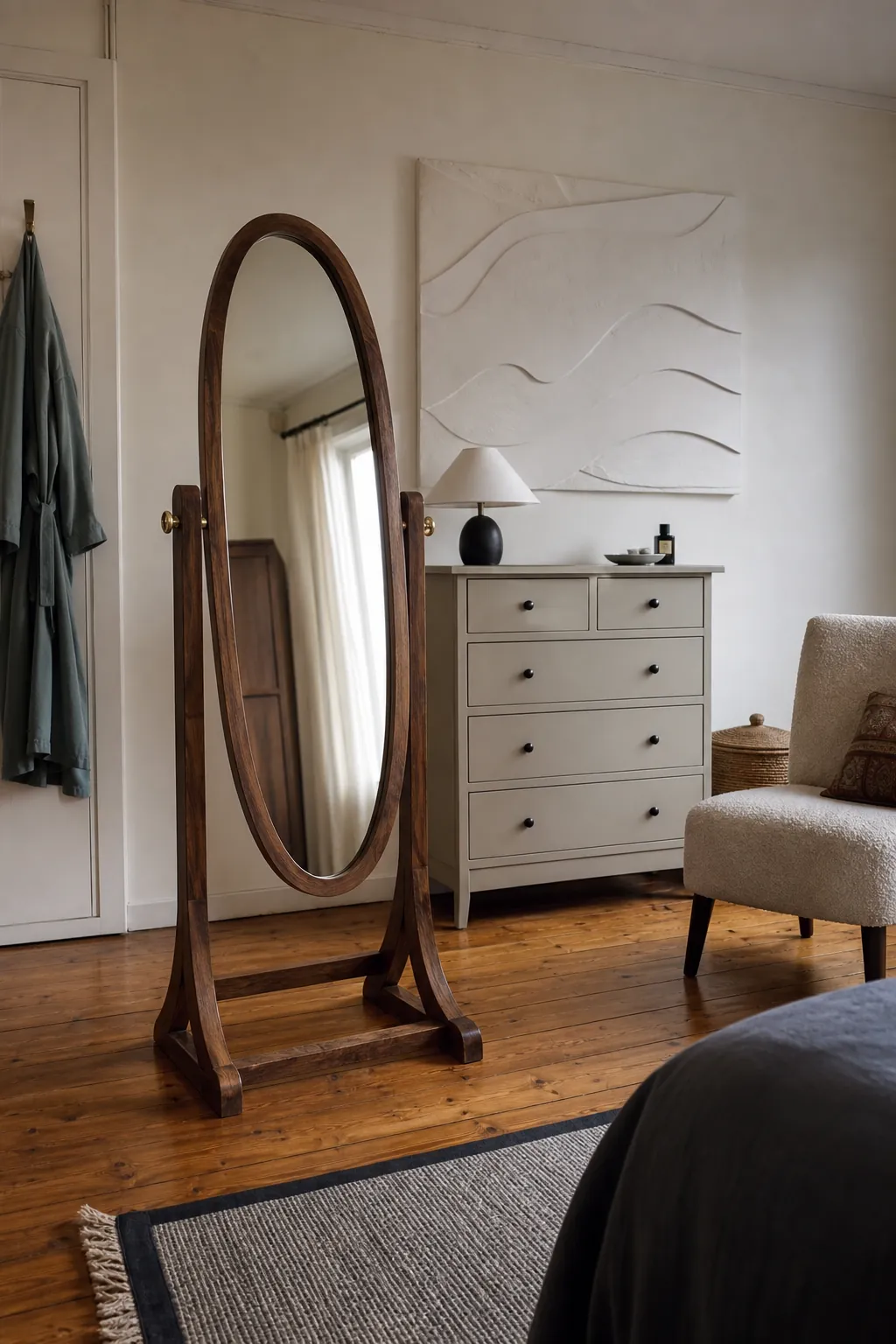
Place it on hard, level flooring or a completely flat rug surface. The frame should look connected to a dressing area through a nearby stool, wardrobe, or basket—not abandoned in a random corner. Even a freestanding model may still require the safety restraint specified by its maker.
Turn the Entry Mirror Into a Last-Look Station
A full length entryway mirror works best with just enough support around it: a narrow shoe cabinet, one hook rail, a small tray, or a low bench. Keep the glass itself visually dominant and preserve open floor in front so someone can step back without colliding with furniture.
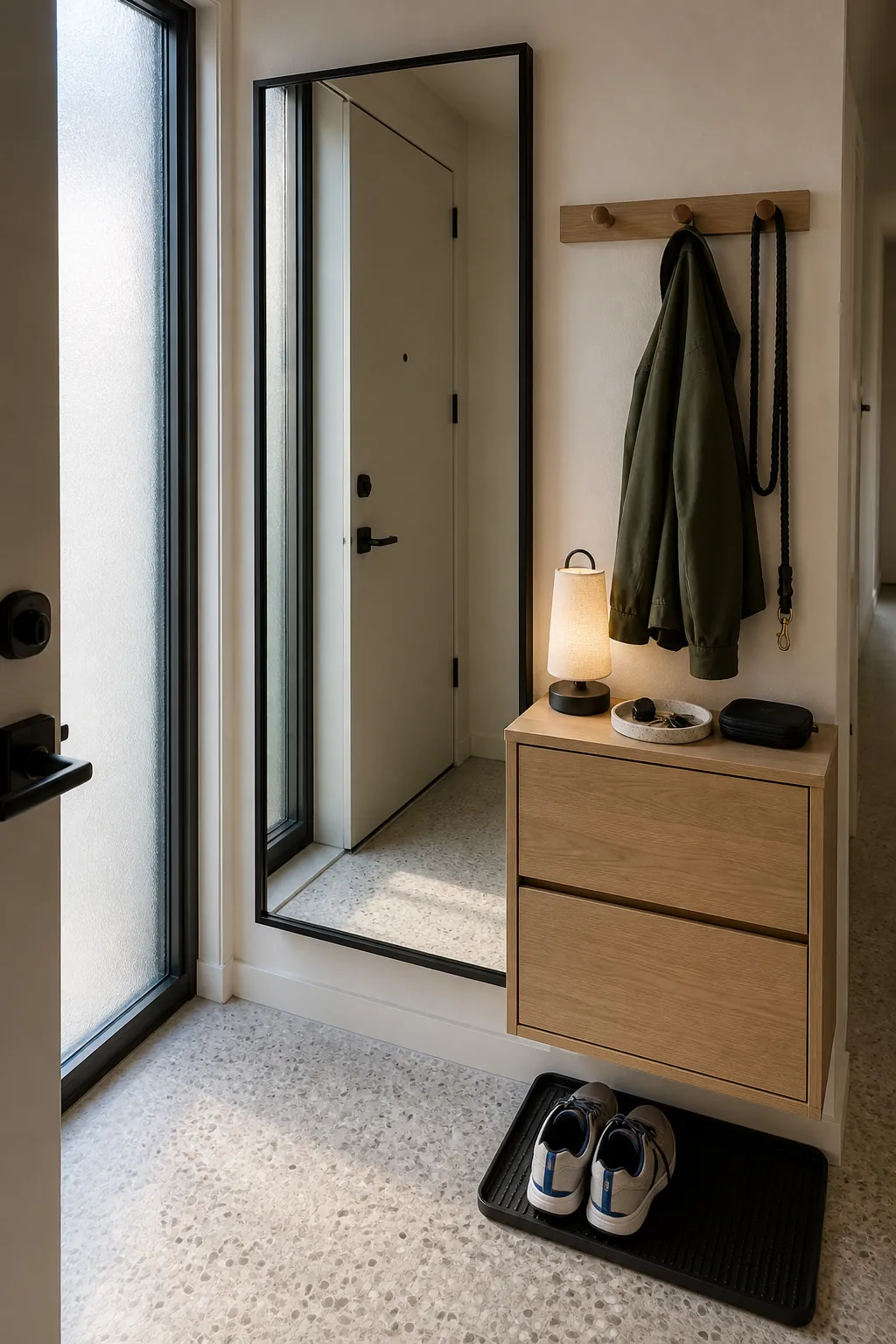
Lighting should fall toward the person rather than shine directly into the mirror. Side daylight or a shaded lamp is usually more flattering than a bare overhead bulb. At night, verify that the glass is useful rather than a dark reflection with a single glaring fixture.
Let the Frame Connect to the Room
A black metal frame can repeat door hardware and sharpen a pale room. Oak or walnut adds warmth near bedroom textiles. A softly arched top can ease the straight lines of wardrobes, doors, and drawer fronts. You do not need every finish to match; repeat one material or color once elsewhere and let the mirror remain the strongest vertical element.
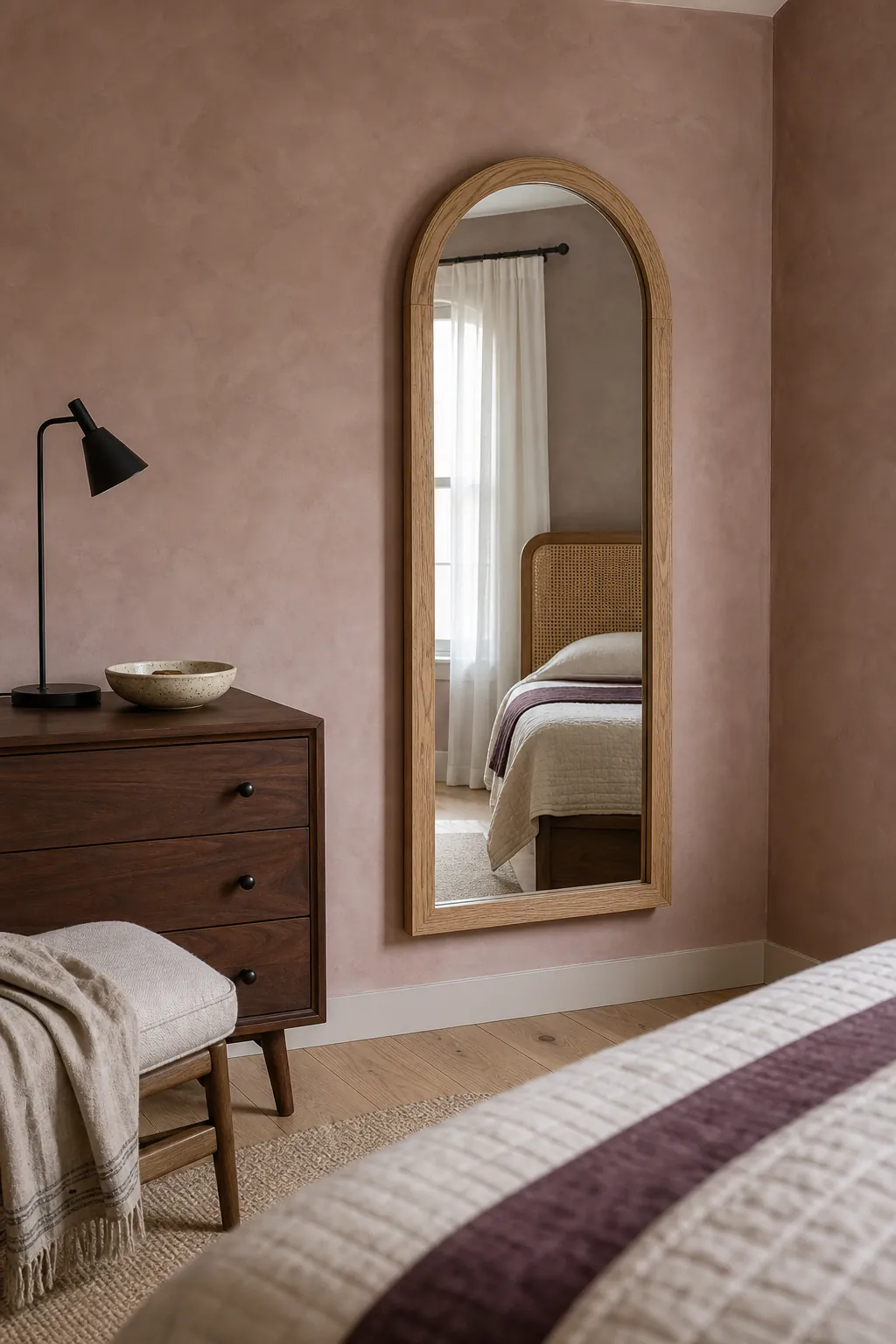
Before committing, mark the outline with painter’s tape and live with it for a day. Open every door and drawer, walk the normal route, view the reflection from bed and from the entrance, and test the mirror in daylight and at night. The right choice is not simply the biggest glass that fits. It is the mirror that makes dressing or leaving easier while keeping the room calm, safe, and clear.