

A small apartment can look chaotic after one ordinary day, even when you are not especially messy. The problem is simple: there is almost no buffer space. One bag by the door, a drying rack in the living room, and two parcels on the counter can occupy a visible share of the home.
That is why the usual advice to empty every cabinet and sort everything at once often backfires. In a tight home, the sorting piles become the clutter. This small apartment decluttering plan works differently: finish one contained zone, move discards out, restore the room, and only then continue. You should be able to stop after any session without leaving the apartment worse than you found it.
Set Up a No-Mess Decluttering Station
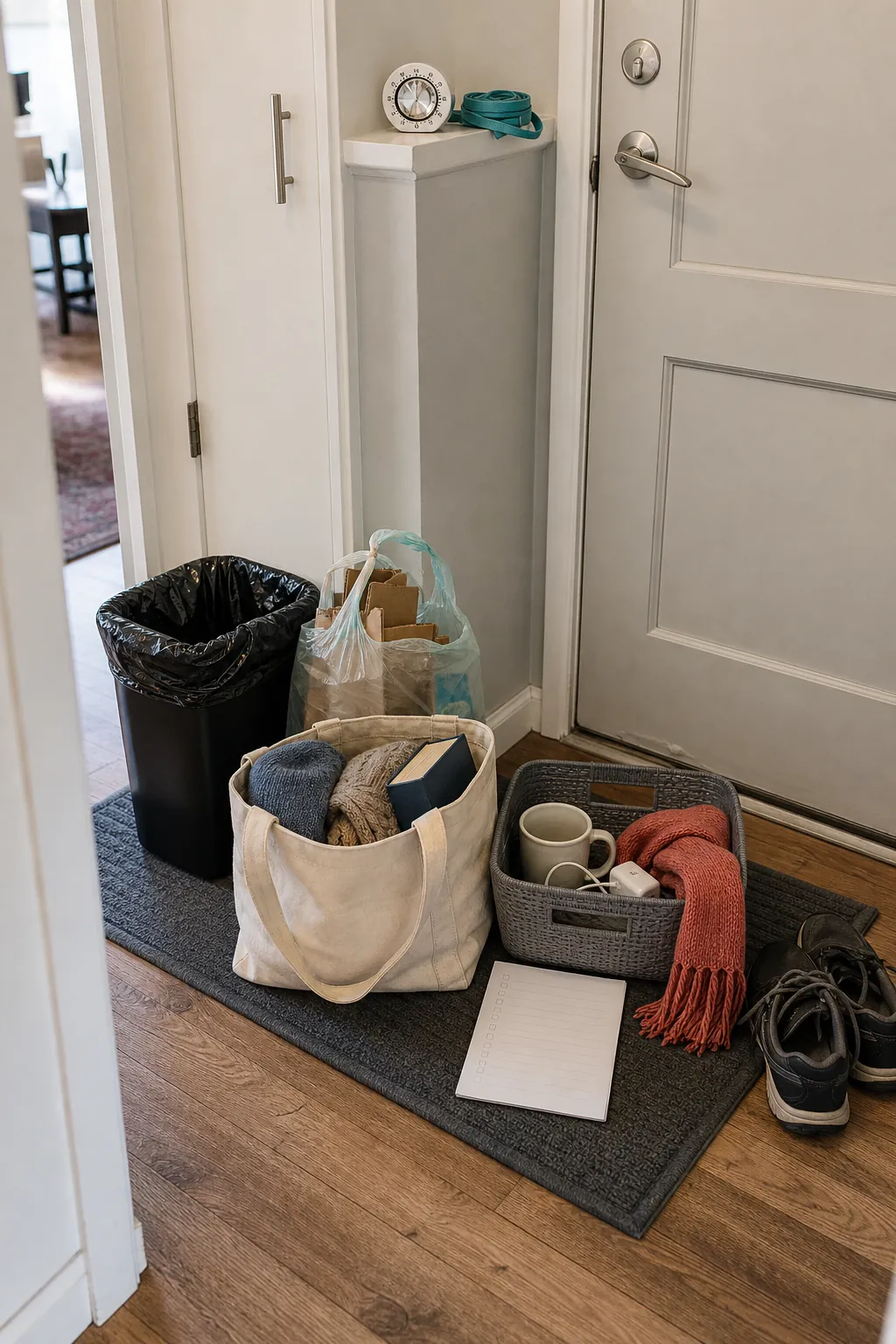
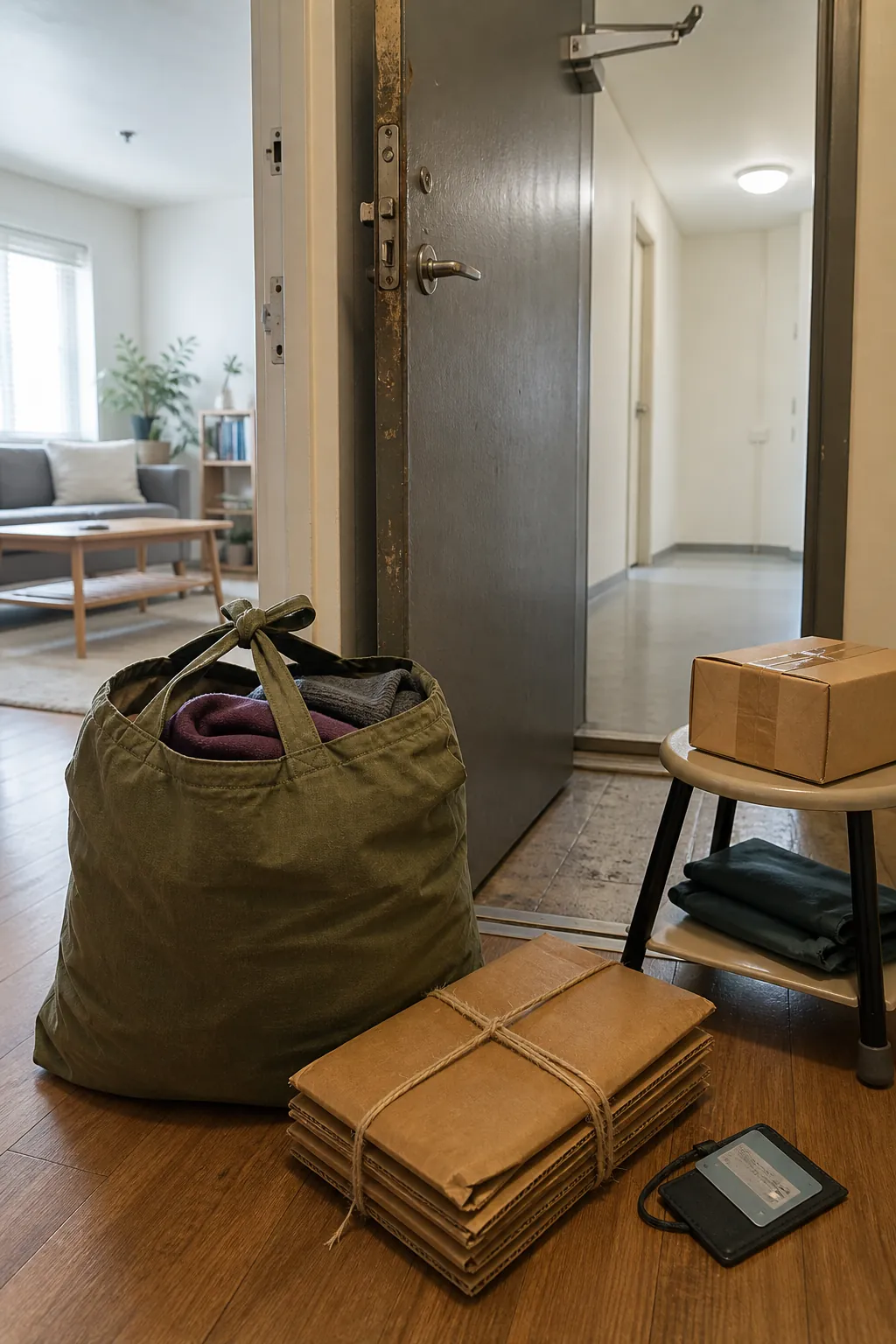
Before choosing a room, create an exit system that takes up no more than one square meter. Use one trash bag, one recycling bag, one donation bag, and a small basket for items that belong elsewhere. Skip the “maybe” box for this first pass; in a small home, delayed decisions quickly become permanent storage.
Choose a stopping rule before you begin: one drawer, one shelf, or 20 minutes. Never pull out more than you can put back within that session. Work in this order: obvious trash, items that already have another home, duplicates, then genuine keep-or-release decisions. The goal is not to make a bigger sorting pile; it is to reduce the volume inside one finished boundary.
- Put donations directly into a carryable bag, not a decorative basket.
- Schedule the drop-off or pickup before the bag is full.
- Keep cleaning supplies nearby, but clean only the area you just emptied.
- Photograph sellable items immediately and set a seven-day deadline.
Clear the Entryway First
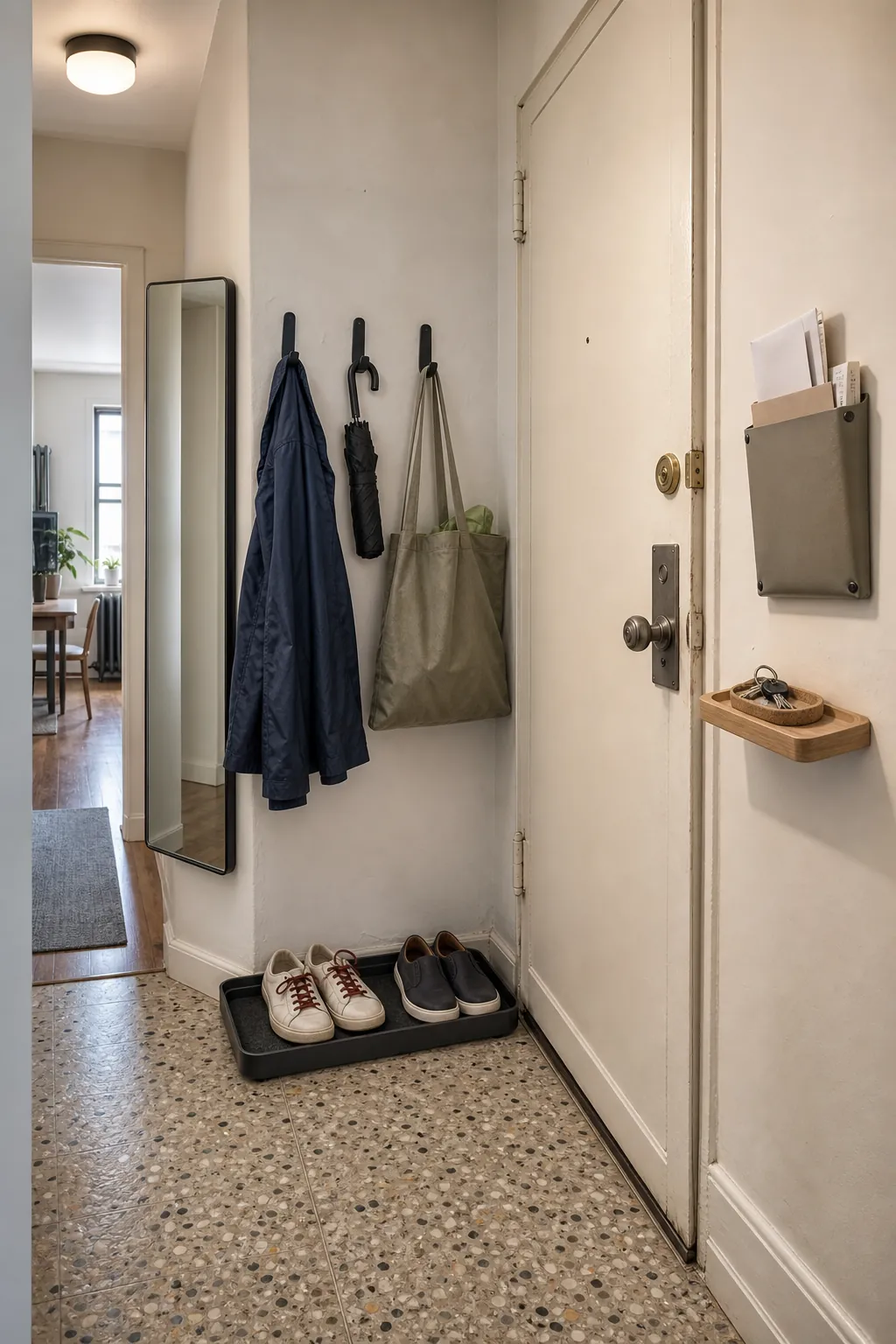
The entry is the apartment’s intake valve. If shoes, mail, bags, returns, and outdoor gear stop here without a limit, clutter spreads into every other room. Start with the floor because a clear walking path creates the fastest visible win.
Keep only the shoes and outerwear you use in the current season at the door. Move occasional pieces to their real storage location and release uncomfortable shoes you repeatedly avoid. Give each resident one hook or bag spot. A narrow tray can hold keys, but it should not become a landing pad for receipts, coins, and unopened mail.
Create a two-minute paper rule: recycle junk mail immediately, place action items in one slim folder, and take packages apart the day they arrive. If the entry has no closet, use vertical storage only after reducing the inventory. Hooks solve frequently used items; they do not solve excess volume.
Reset the Kitchen by Frequency of Use
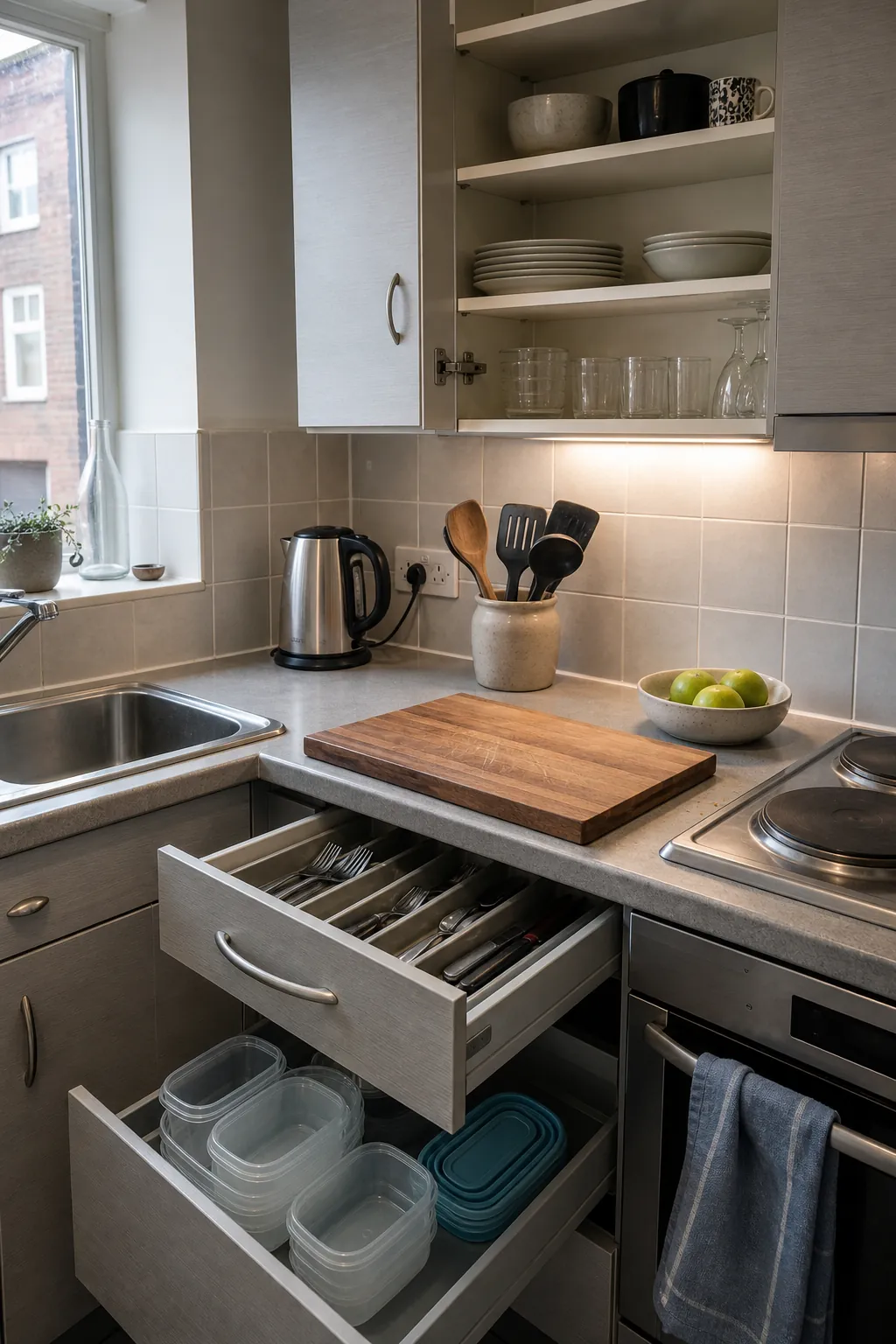
A small kitchen works when the easiest storage locations hold the things used most often. Begin with the counters. Return daily appliances, a small cooking tool crock, and perhaps a fruit bowl. Question everything else. An appliance used twice a year does not deserve the same access as the kettle used twice a day.
Next, declutter one food category at a time so the counter never disappears under pantry contents. Remove expired food, combine safe duplicates, and group open packages where you can see them. In cookware and utensils, compare function rather than appearance. If three tools do the same job, keep the one that fits your hand and your cabinet.
- Keep a realistic number of food containers and match every base to a lid.
- Store occasional appliances outside the prime preparation zone.
- Use shelf risers only when they make both levels easy to reach.
- Leave a little empty capacity so groceries can be put away without rearranging the cabinet.
Do not buy organizers until you know the reduced dimensions of what remains. Small space storage succeeds when it protects daily movement, not when it packs every cabinet to its limit.
Give the Living Room One Job per Zone
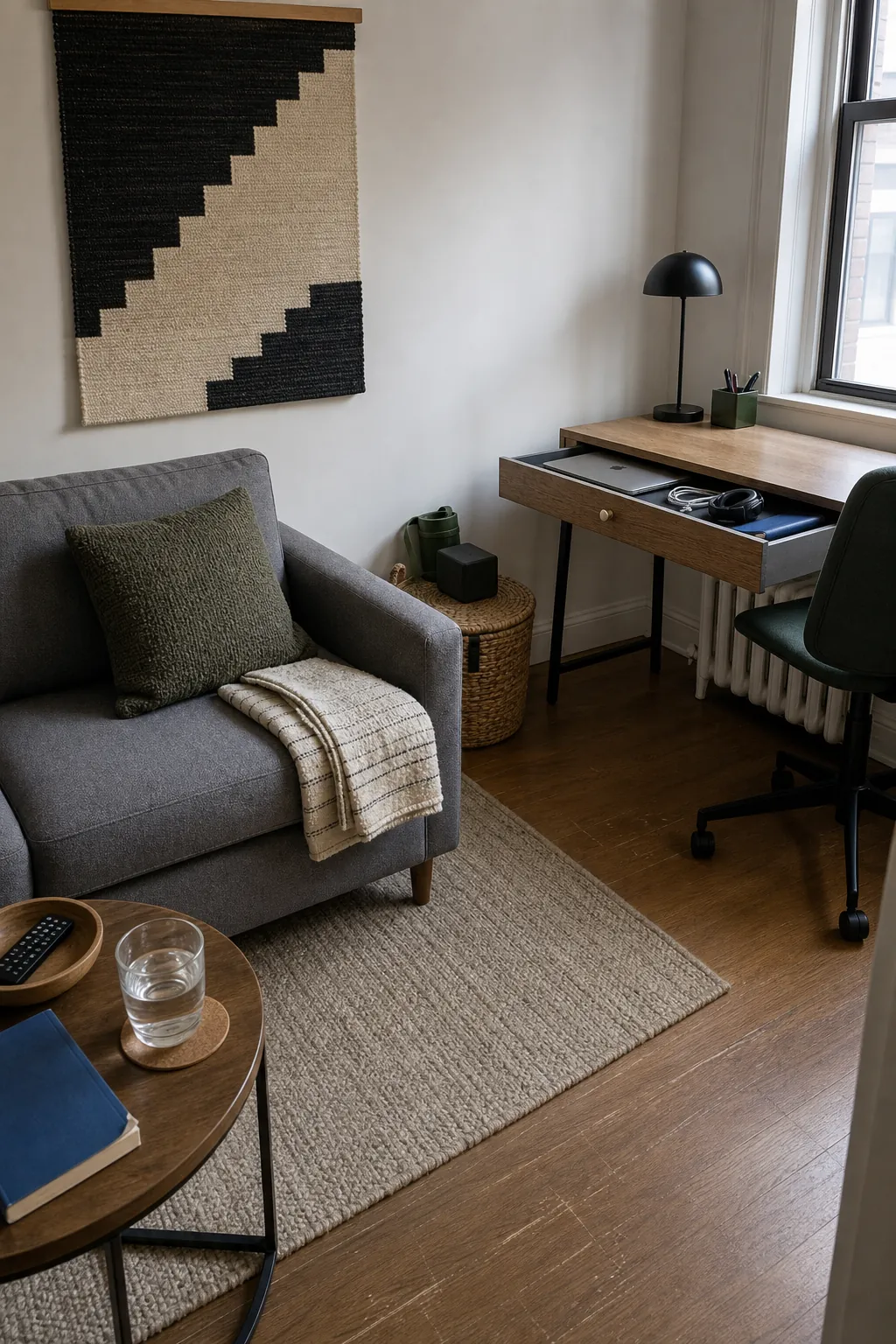
In a studio or one-bedroom apartment, the living room may also be an office, dining area, workout space, and guest room. Clutter grows when every activity leaves equipment behind. Define a small physical boundary for each function: one desk drawer for work supplies, one basket for exercise gear, one shelf for current books, and one cabinet section for games.
Clear the sofa and coffee table completely, then return only what supports how you use them. Keep remote controls together. Limit throws to what fits in one basket or on the sofa without being moved every time someone sits down. Remove decorative objects that force constant shuffling rather than adding calm.
For work-from-home gear, create a close-down ritual: laptop, charger, notebook, and headphones return to one defined location at the end of the day. A room feels tidy when one activity can end cleanly before another begins. This is clutter control through boundaries, not through repeated cleaning.
Edit the Bedroom and Closet Around Real Life
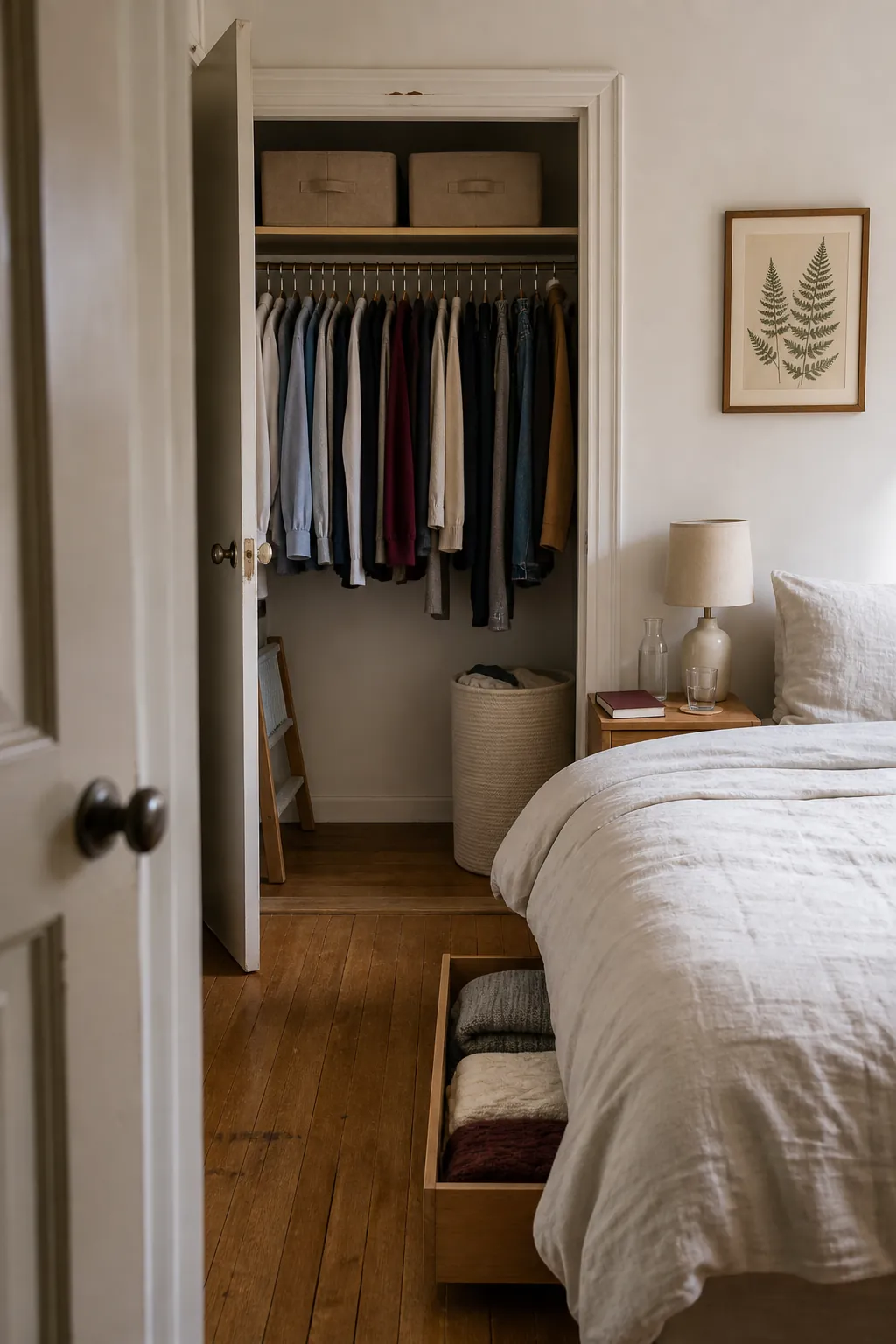
The bedroom often absorbs items that have no home elsewhere. Start with visible surfaces: remove laundry, dishes, paperwork, and abandoned projects. Keep the nightstand functional enough for sleep rather than turning it into a backup medicine cabinet, charging station, and book archive.
In the closet, work by category without dumping the entire wardrobe on the bed. Pull out ten hangers at a time. Release clothing that does not fit your current body, climate, work, or laundry routine. Duplicates are useful only when they survive the gap between wash days; beyond that, they consume limited rail and drawer space.
- Keep everyday clothing between shoulder and knee height.
- Use under-bed storage for a defined category, not miscellaneous overflow.
- Label opaque containers so stored items do not disappear from memory.
- Give sentimental clothing a fixed container limit instead of mixing it with active clothes.
Finish by making the bed and clearing the floor on both sides. That complete visual reset matters: it proves the room-by-room declutter produced a usable bedroom, not a new set of hidden piles.
Reduce Bathroom Inventory Before Adding Storage
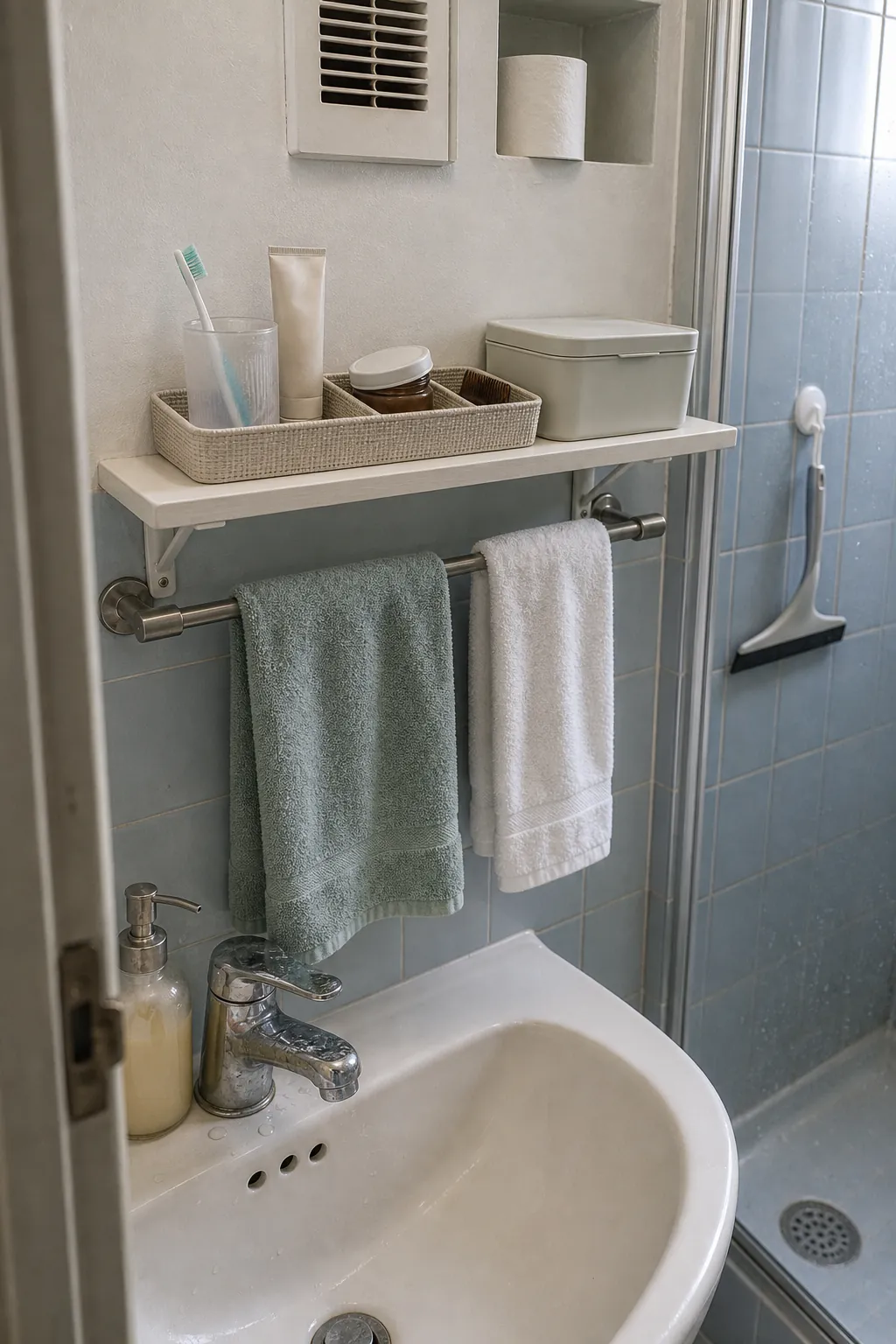
Bathrooms become crowded through partial bottles, samples, backup products, and items that did not work but feel wasteful to discard. Check medicine and cosmetic dates, following local guidance for safe medication disposal. Consolidate only products that are compatible and clearly identifiable; never create mystery containers.
Keep the sink ledge nearly empty so it can be wiped without relocating a collection. Store one open product per routine within reach and place genuine backups together. A shallow tray or drawer divider can prevent small items from migrating, but the container should have breathing room.
Count towels according to the household’s actual washing cycle, not an imagined guest scenario. Hang only what can dry properly in the available ventilation. In a humid small bathroom, accessible and dry is more important than tightly packed.
Keep the Apartment Tidy With Capacity Limits
A successful apartment reset is not measured by how many bags leave on day one. It is measured by whether everyday items can return home without a puzzle. Let each shelf, drawer, hook, and basket set a visible capacity. When a category no longer fits comfortably, edit it before buying another container.
Use a ten-minute evening closing routine: clear the entry, reset the kitchen counter, return living-room activity gear, put clothing in the hamper or closet, and prepare the donation bag to leave. This is a cleaning routine only in the lightest sense; most of the work is returning items along short, obvious paths.
Most importantly, finish the exit step. Donations belong at the drop-off point, returns belong back at the shop, and recycling belongs outside the apartment. A tidy apartment is not a home that never gets used. It is a home with enough open capacity to recover quickly after real life happens.