
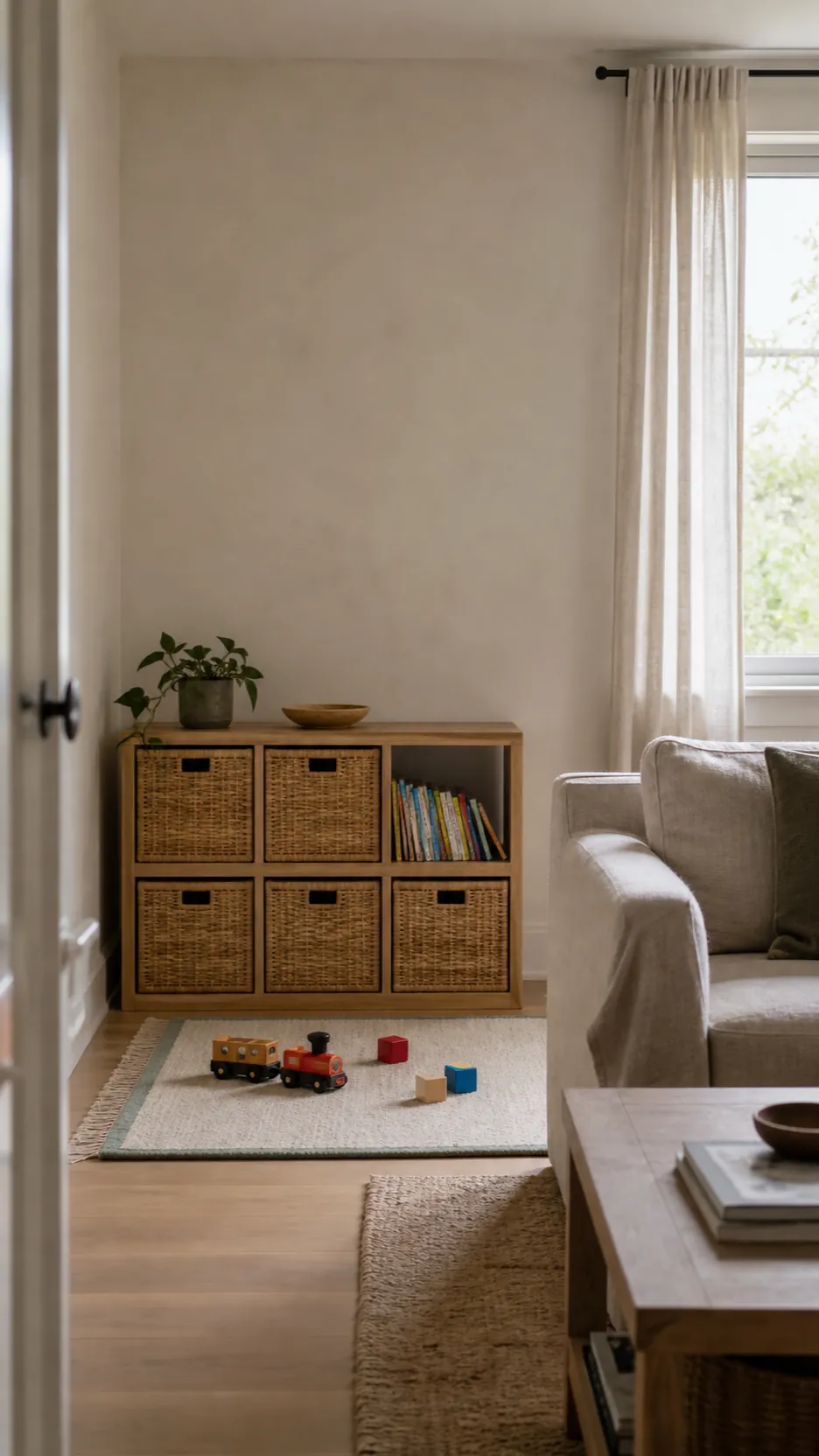
A living room can welcome children without looking as if every toy in the house moved in permanently. The useful shift is to stop treating cleanup as hiding random objects and start treating the toy corner as a small, designed zone with a firm capacity.
The best living room toy storage is not the system with the most bins. It is the one a child can understand, an adult can reset quickly, and the room can visually absorb. Fewer categories, fewer toys in circulation, and one clear boundary do more for calm than matching labels ever will.
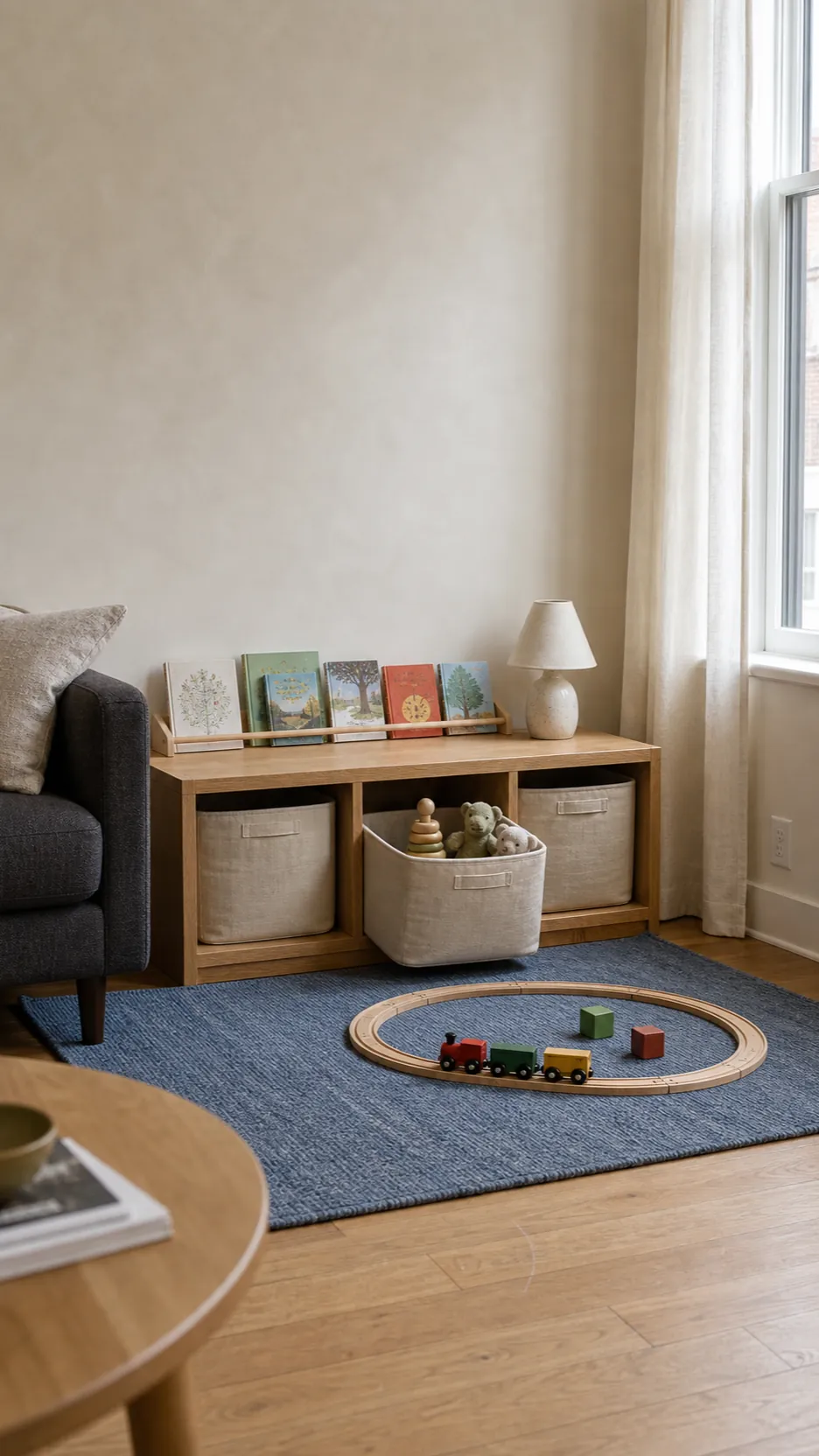
Mark one corner as the play boundary
Choose a corner where play can happen without blocking the route between the sofa, doorway, and kitchen. A small washable rug, low shelf, or change in furniture direction can define the zone without a divider. Once the boundary is visible, it becomes easier to return wandering toys to one place.
Keep the footprint smaller than you think. If the corner expands whenever new toys arrive, it is not a zone; it is overflow. Decide what fits comfortably, then move the rest to bedroom storage, donate it, or place it in a rotation.
Use furniture that belongs in the living room
Low cabinets, benches, and sideboards can hold toys now and serve another purpose later. Match their material and height to the larger room rather than buying a brightly themed organizer that visually announces a separate playroom. Rounded corners and wall anchoring matter more than a fashionable finish.
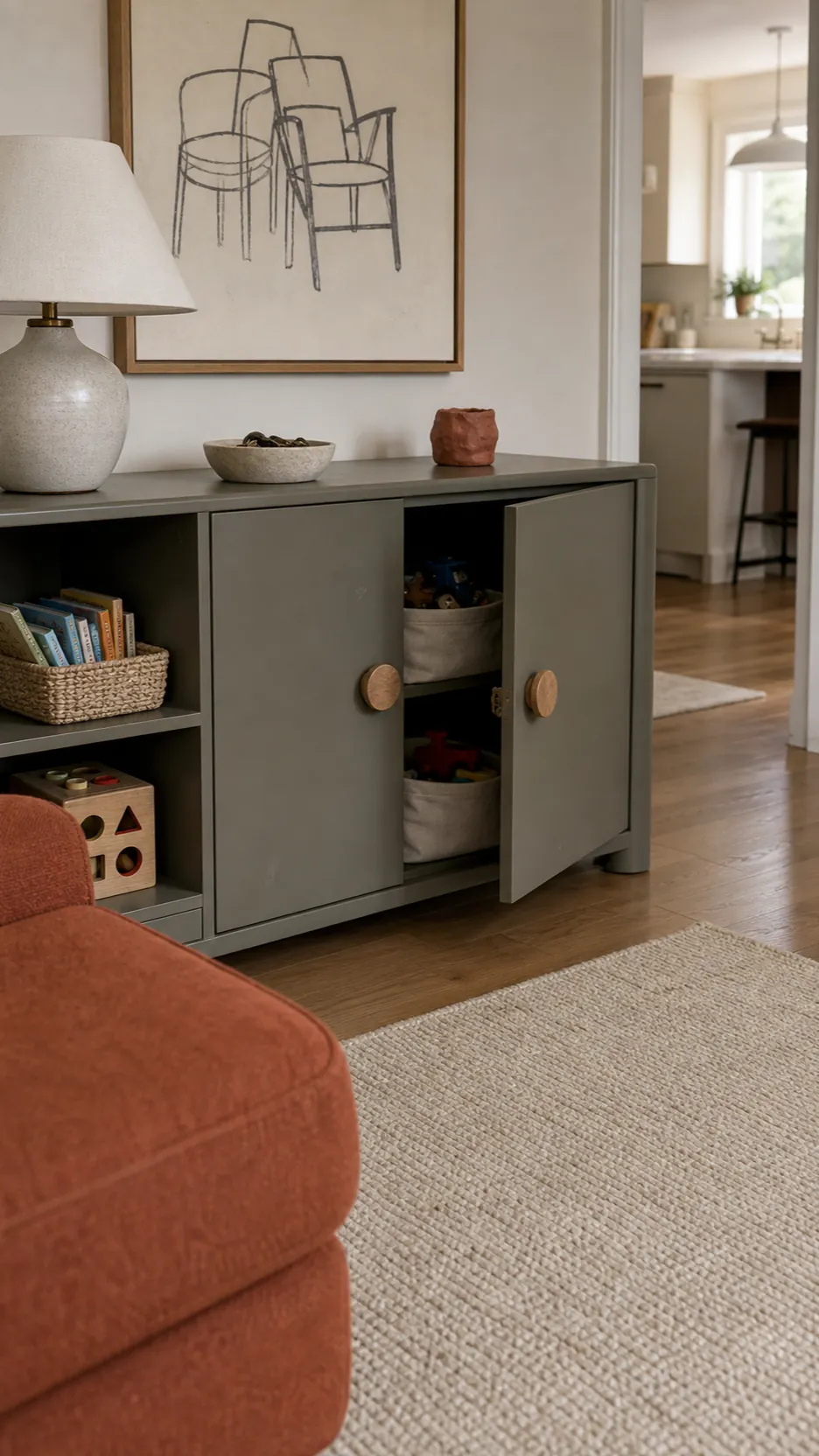
Closed fronts are especially helpful for visually noisy toys. Reserve one open shelf for current books or a favorite set and close the rest. This gives children an obvious choice while preventing dozens of colors and shapes from competing with the family room decor.
Make every container easy to carry and empty
One enormous basket seems efficient until a child empties it to find a single car. Smaller storage baskets create manageable categories: blocks, vehicles, pretend play, and soft toys are often enough. Choose lightweight containers with open handles and avoid stacking them higher than a child can safely return them.
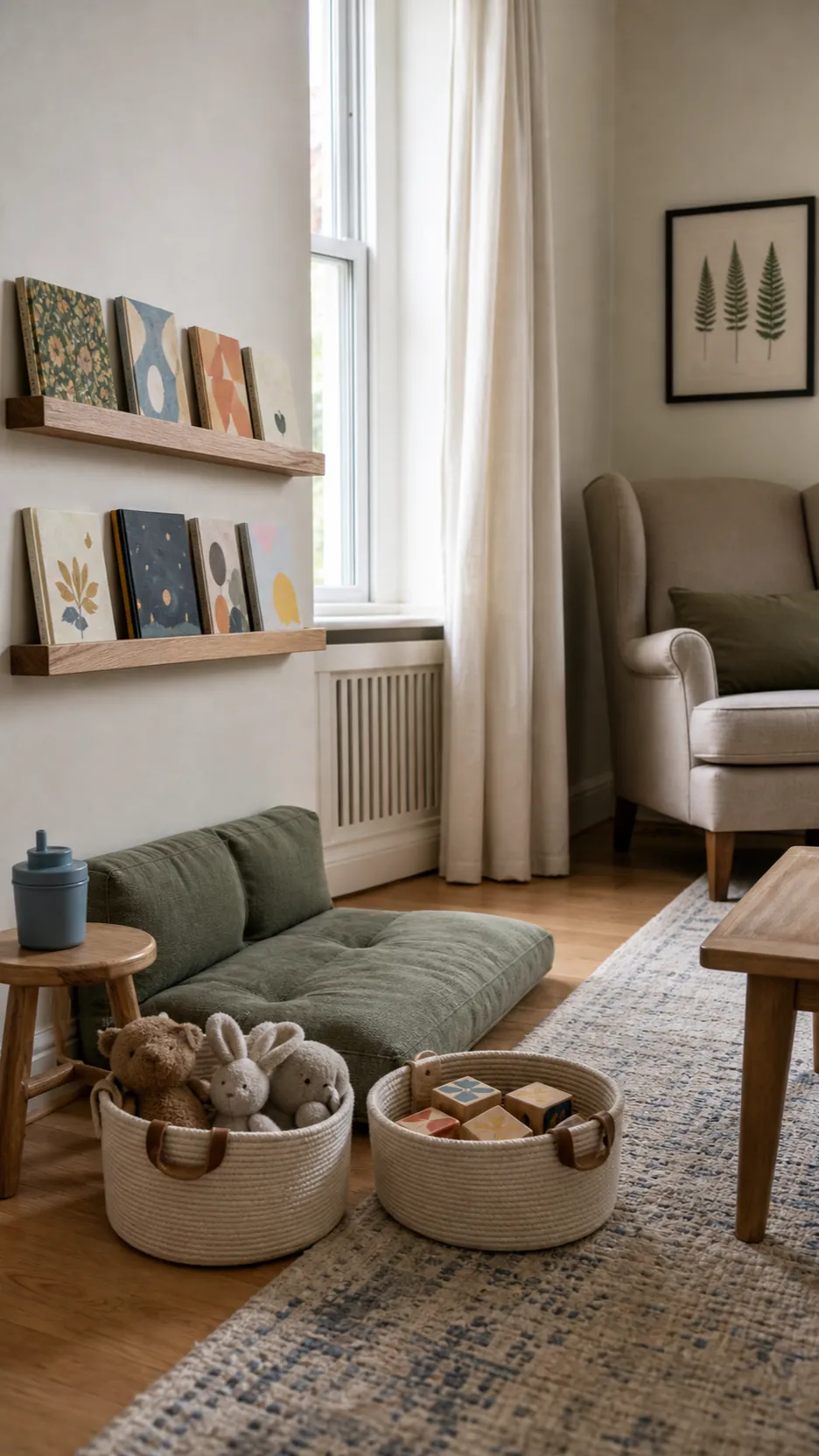
Test the system at cleanup time, not styling time. A basket that catches on a cubby, a lid that needs two hands, or a label that only an adult understands will create a floor pile. The shortest reset path usually becomes the lasting habit.
Build the corner around one kind of play
A calm toy corner does not need to support blocks, crafts, dress-up, puzzles, and movement at the same time. Give the current setup a dominant purpose. A reading corner might need forward-facing books and one soft-toy basket; an art corner needs a wipeable mat, paper, and a cart that can roll away.
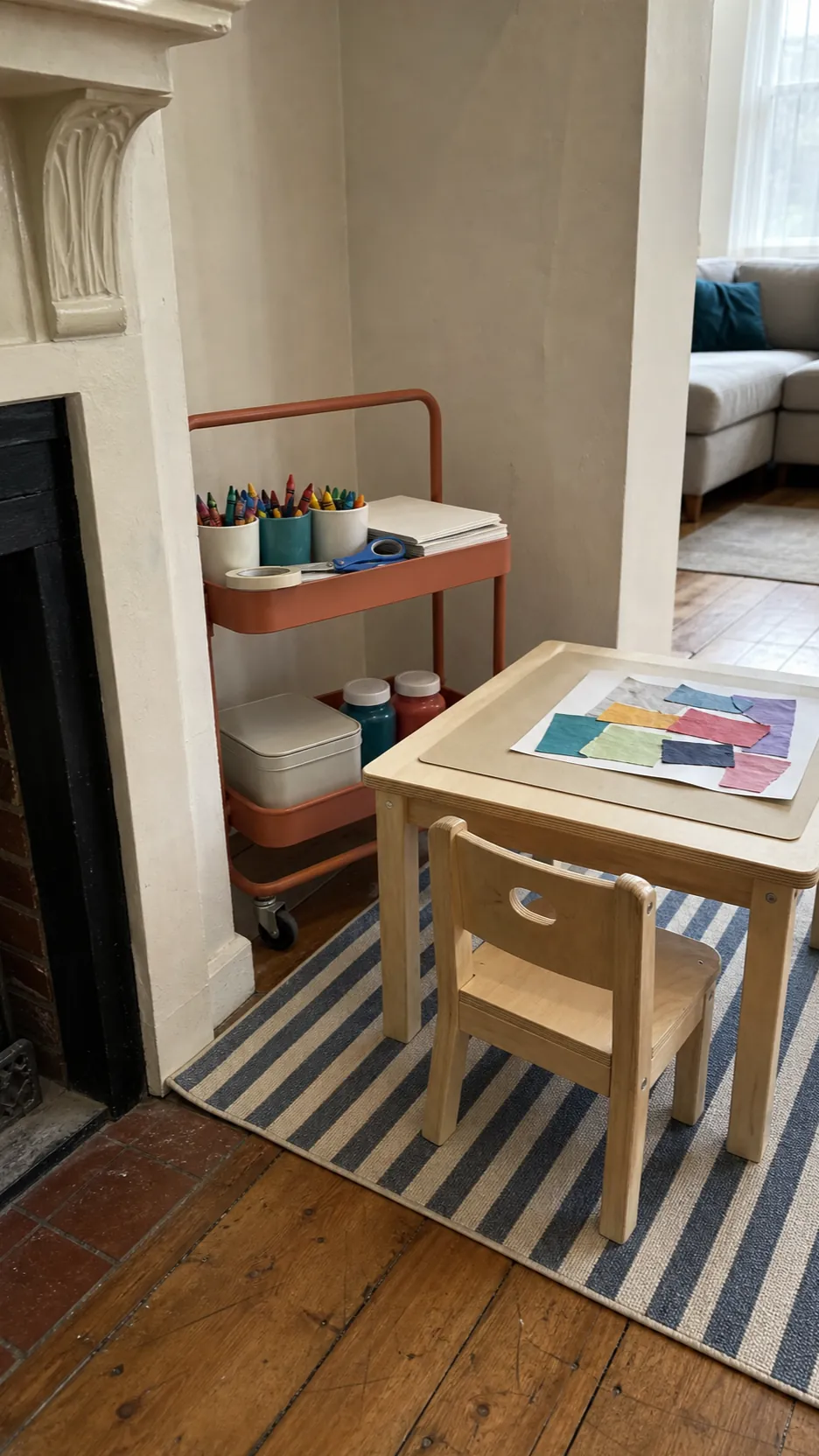
When interests change, change the activity rather than adding another station. The same corner can become a puzzle table next month. This keeps the room responsive to a child’s real habits instead of preserving abandoned setups out of guilt.
Create a five-minute evening reset
Give loose toys one quick-drop basket, return books to their ledge, and close the cabinet doors. That is enough. Do detailed sorting less often. A complicated nightly routine will be skipped on the exact evenings when the living room most needs to feel calm.
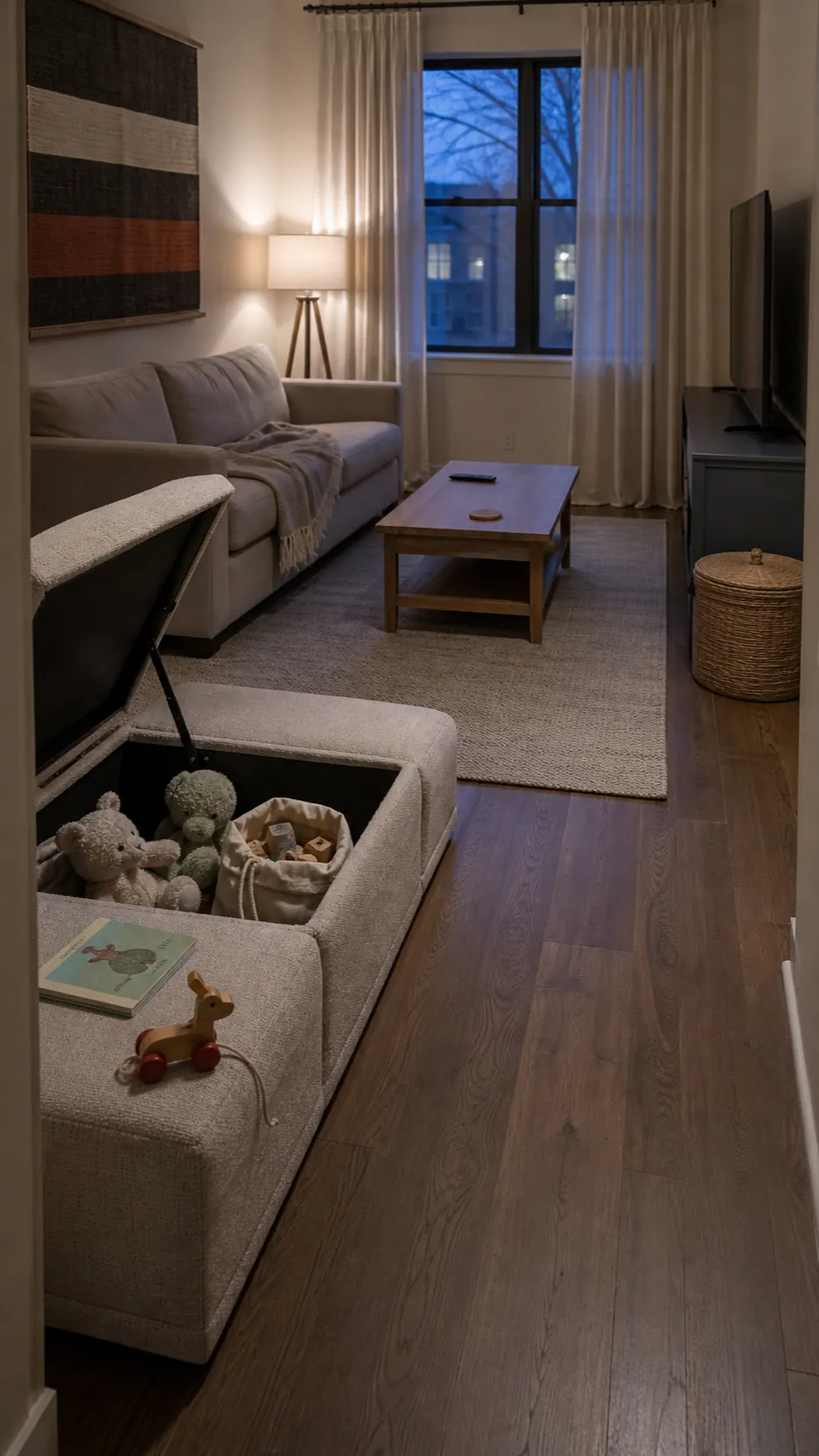
Keep the reset container within arm’s reach of the play rug and make sure every cabinet can close without careful packing. Empty air is useful storage. It leaves room for a new toy and prevents the system from failing after the next birthday.
Rotate toys instead of expanding the corner
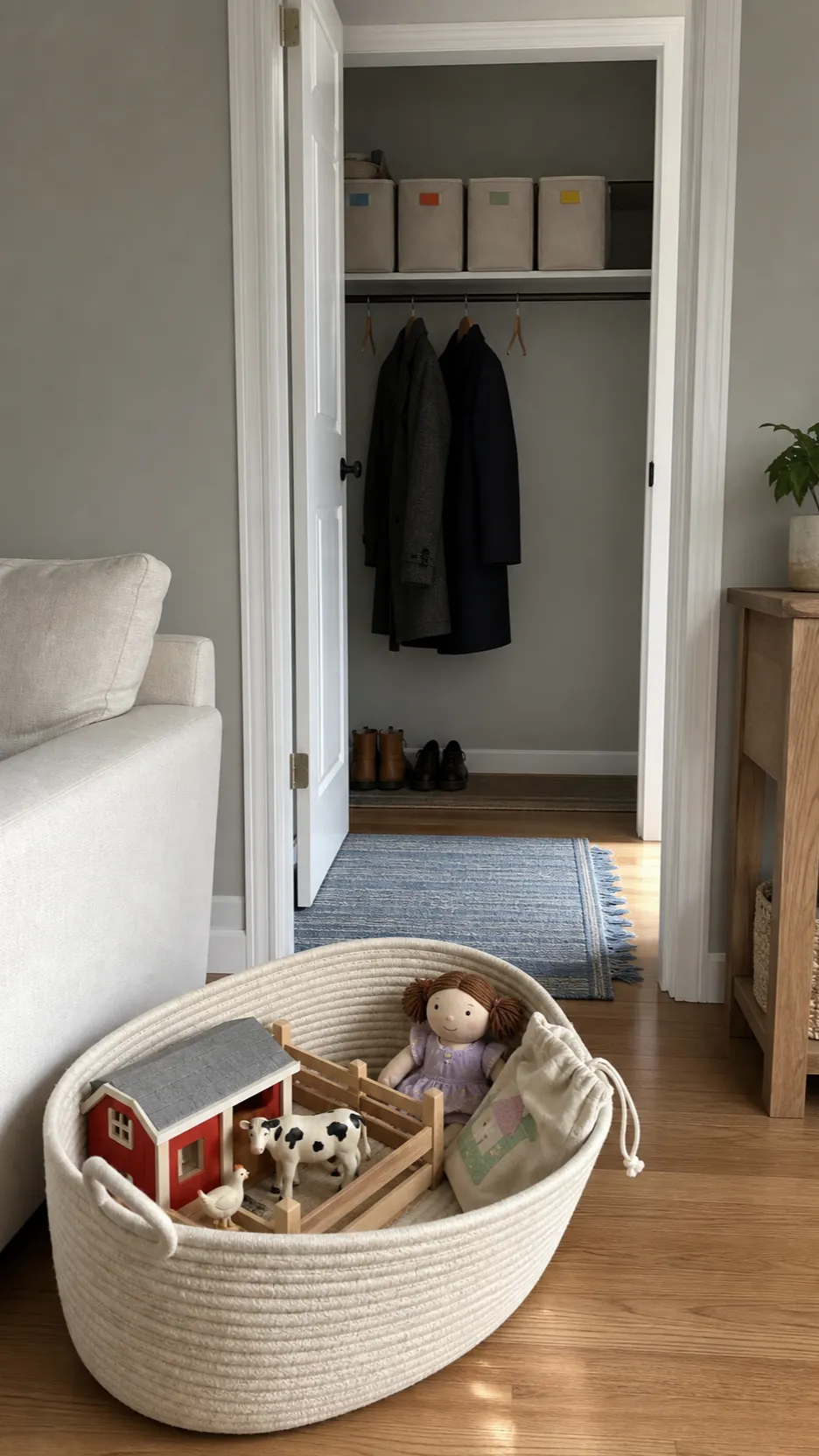
Keep a small mix of toys available and store the rest out of sight. Rotate when interest drops, not according to a rigid schedule. Children often play more deeply when they can see a few complete choices instead of confronting one crowded container of unrelated pieces.
A toy corner succeeds when it supports family life in both directions: children can begin play without asking for help, and adults can recover the shared room without a major project. The goal is not a living room with no evidence of children. It is a room where every family member can find space.