
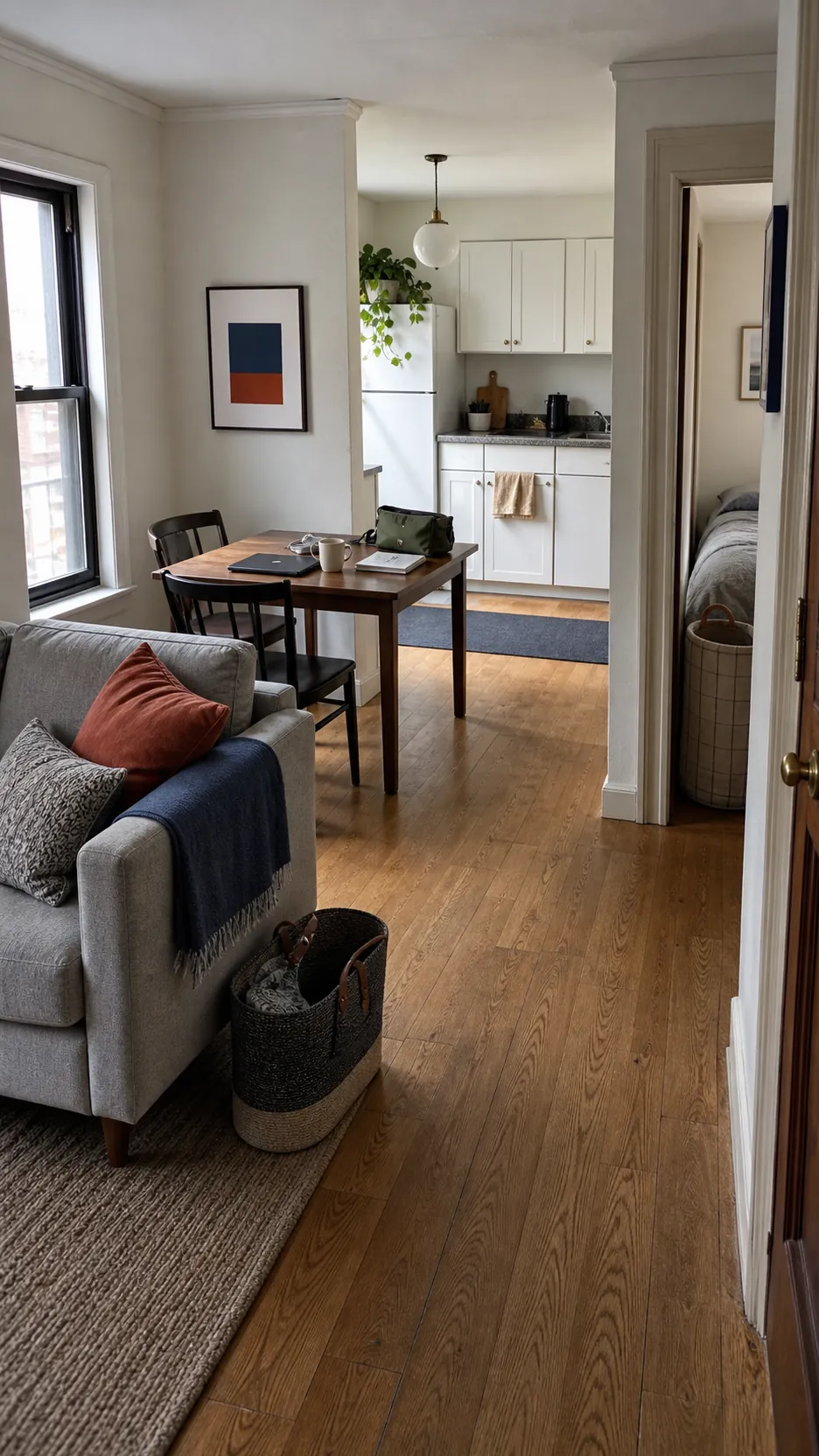
A small home can feel messy long before it is actually dirty. A few dishes occupy half the counter, one load of laundry fills the only chair, and everyday cables turn a dining table into a storage zone. Cleaning harder does not fix that pattern. It only resets the surfaces until the same objects return.
The sustainable answer is to make recovery easy. A tidy home is not one you constantly polish; it is one where daily activities can close without a long chain of decisions. The systems below reduce the number of times you handle things, protect a few high-impact surfaces, and separate quick tidying from actual cleaning.
Stop Treating Tidying and Cleaning as the Same Job
Tidying returns items to their homes. Cleaning removes dust, grease, crumbs, and mineral buildup. When you combine them, every task expands: you cannot wipe the counter until you move the mail, and you cannot vacuum until you collect shoes, cables, and laundry from the floor.
Choose a small daily baseline for order: dishes contained, kitchen preparation space open, laundry off the floor, entry path clear, and tomorrow’s essentials findable. Save vacuuming, bathroom scrubbing, and detailed dusting for a separate weekly slot. Your home can be functionally reset without being freshly deep-cleaned.
Make Every Item Easy to Put Away
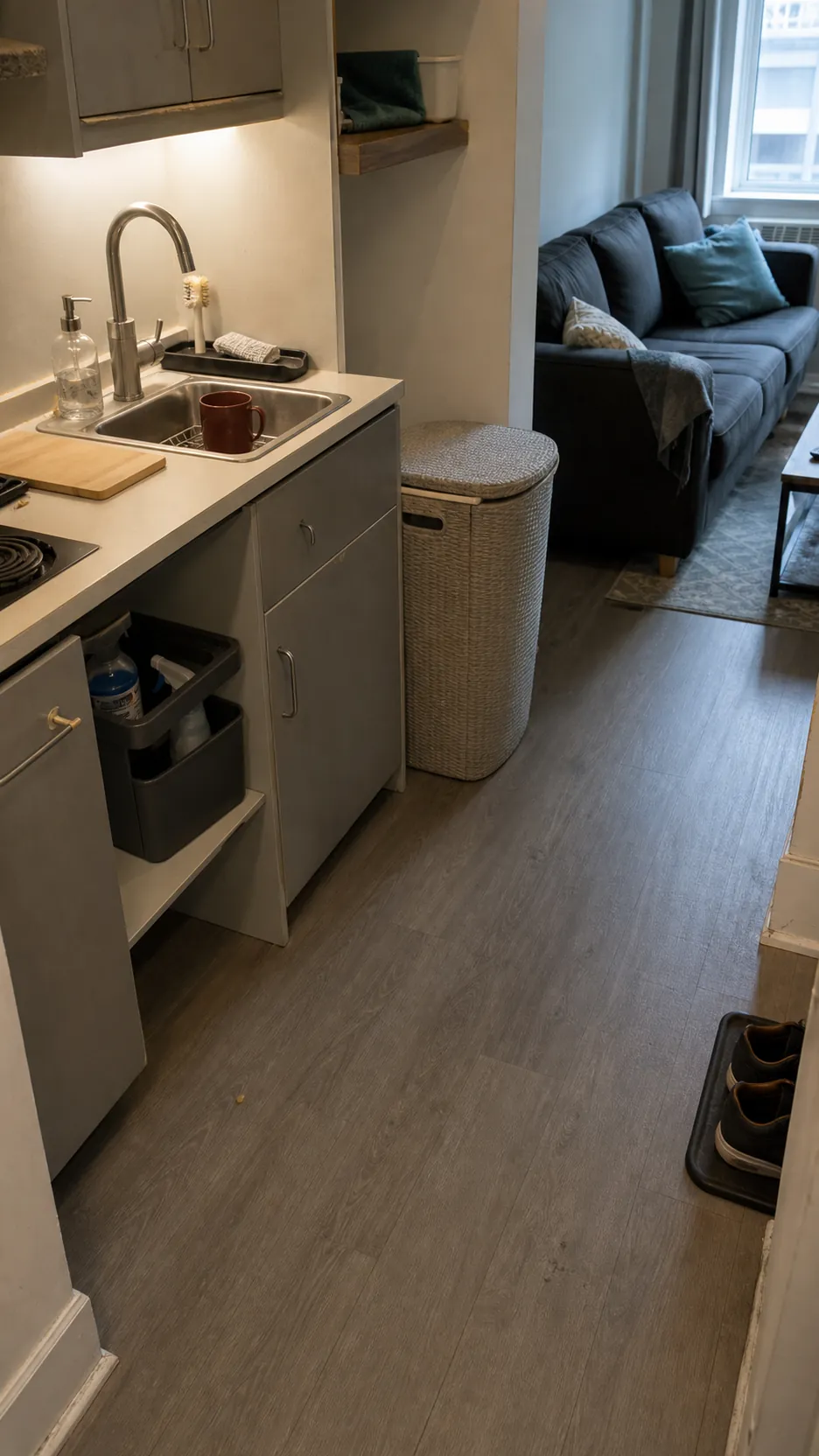
If putting something away requires opening a closet, moving a box, lifting a lid, and rearranging a shelf, it will live on the nearest flat surface. Watch where clutter repeatedly lands. That location is evidence that the current storage path has too much friction.
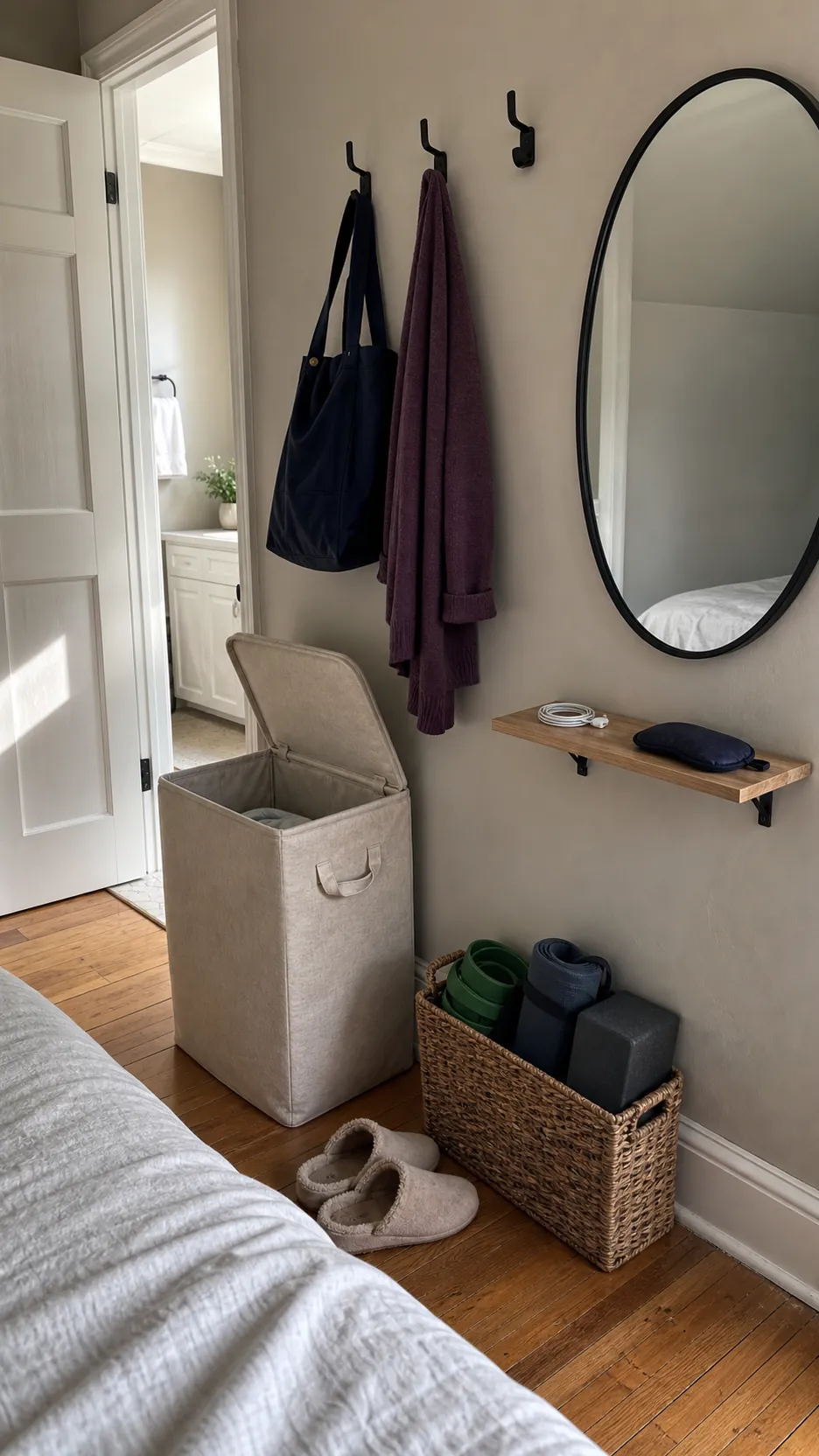
- Place open hooks where bags and jackets naturally come off.
- Use one easy-access basket for workout or hobby gear that appears daily.
- Keep the hamper where clothing is actually removed.
- Store cleaning cloths near the room where they are used.
- Move rarely used items out of prime shoulder-to-knee storage.
Do not mistake a bigger container for a better system. If a category regularly overflows, edit the category or improve its return path. Small home organization works when putting away is easier than putting down.
Close Activities at Natural Transition Points
A rigid hourly cleaning routine makes home care feel constant. Transitions are easier anchors because they already happen: arriving home, finishing dinner, closing a laptop, changing clothes, and preparing for bed.
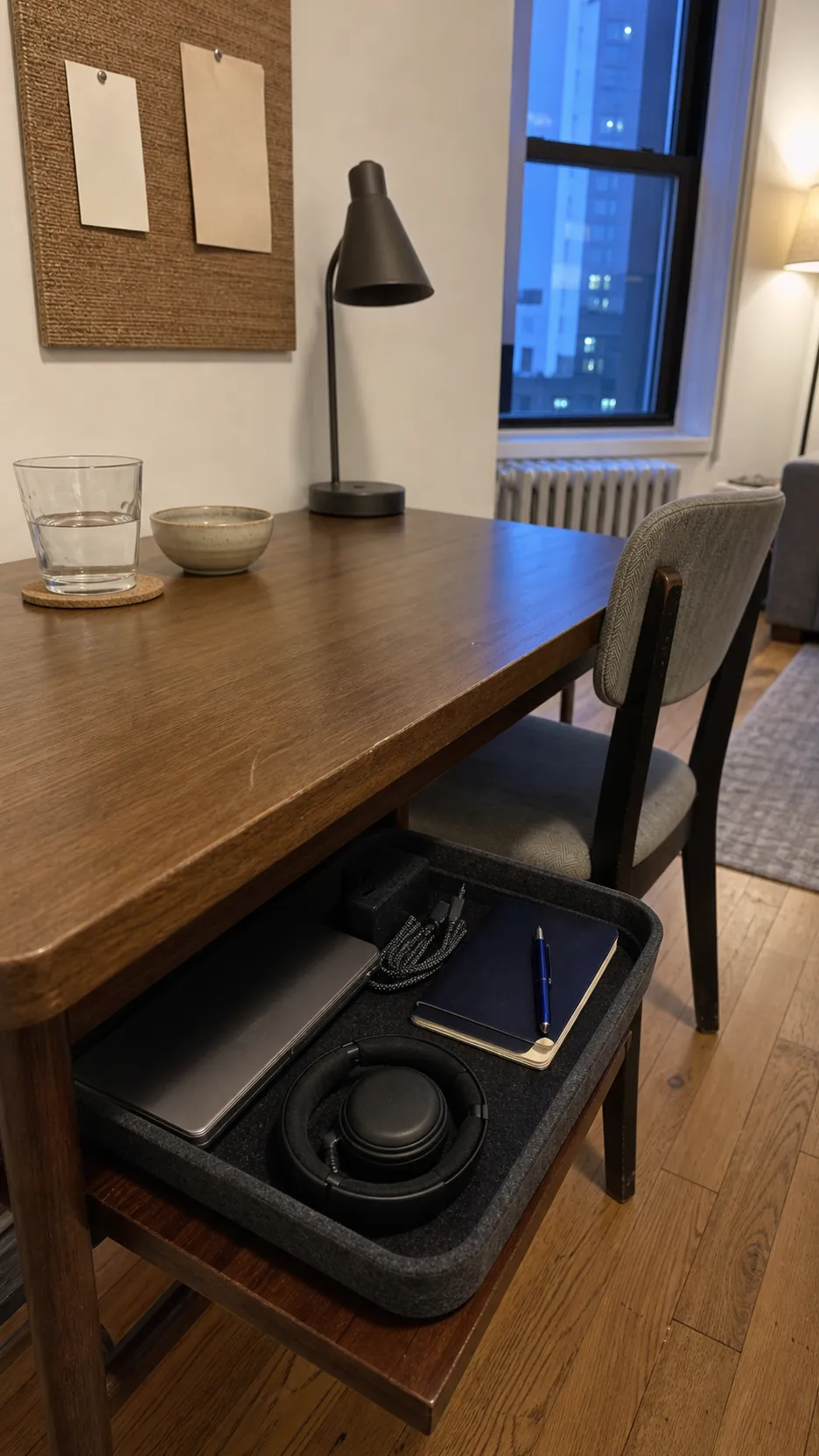
When work ends, put the laptop, charger, notebook, and headphones into one work kit. After dinner, load or wash the dishes and clear one preparation area. When you change, send clothing directly to the closet, a wear-again hook, or the hamper. Avoid the chair as a fourth category.
These closures should take one to three minutes. If they take longer, the system needs simplification or decluttering. A transition habit prevents open activities from stacking across the room and turns clutter control into part of the activity itself.
Protect the Entry and Kitchen From Incoming Clutter
The entry and kitchen counter receive the most incoming material: bags, mail, parcels, groceries, dishes, and food packaging. Give each arrival an immediate next step. Recycle junk mail at the door, place action papers in one slim folder, flatten shipping boxes after opening, and put groceries away before starting another task.
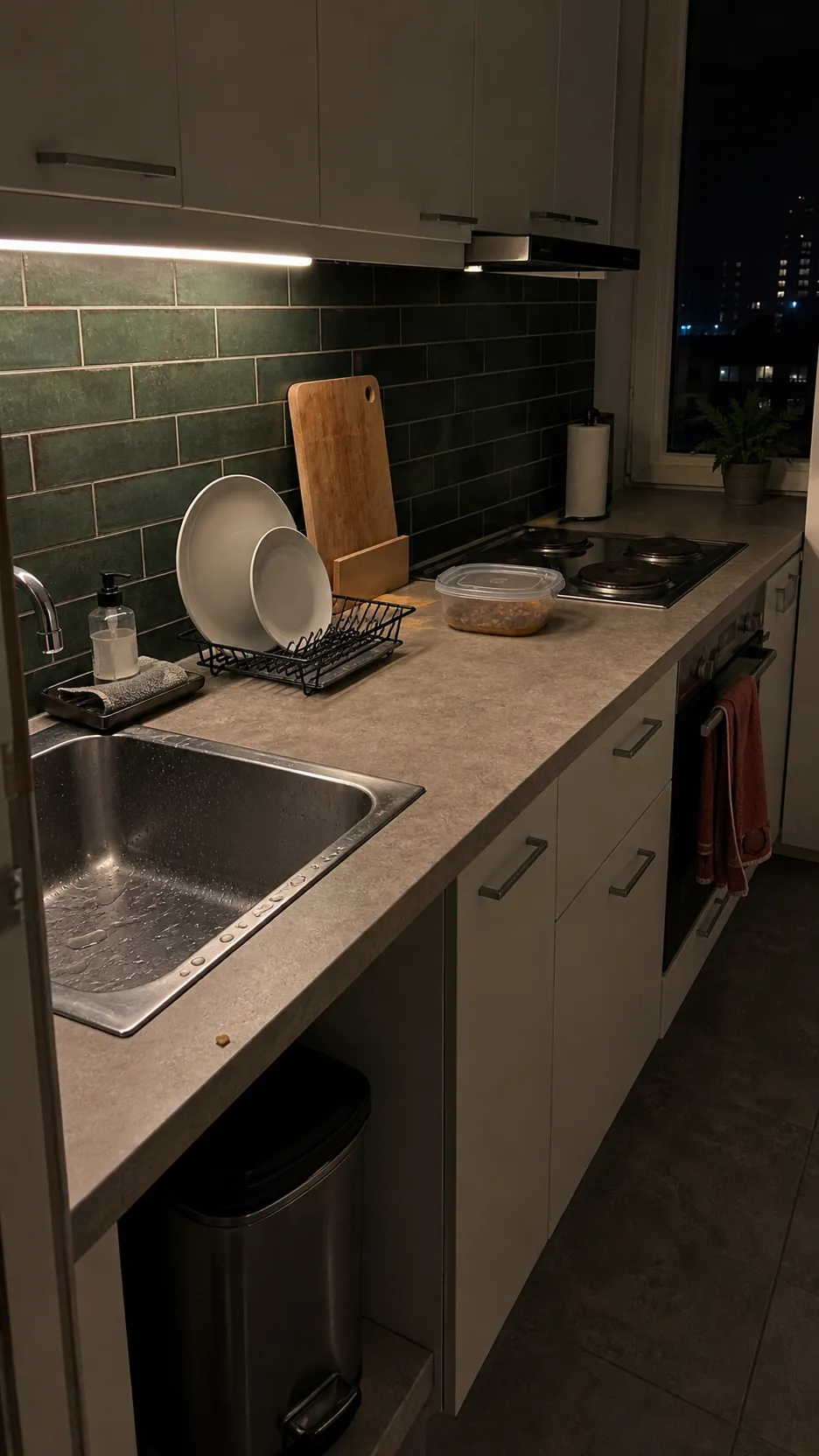
In the kitchen, protect one rectangle of counter as permanent preparation space. It does not need to be empty all day, but it should return to clear after meals. Keep a small tray for the few items that genuinely stay out; the tray edge is the capacity limit.
A useful nightly reset is simple: dishes contained, food stored, sink rinsed, counter wiped, and rubbish removed if full. That is maintenance, not a complete kitchen clean. Clear space is the tool that makes tomorrow’s meal easier.
Shorten the Laundry Loop
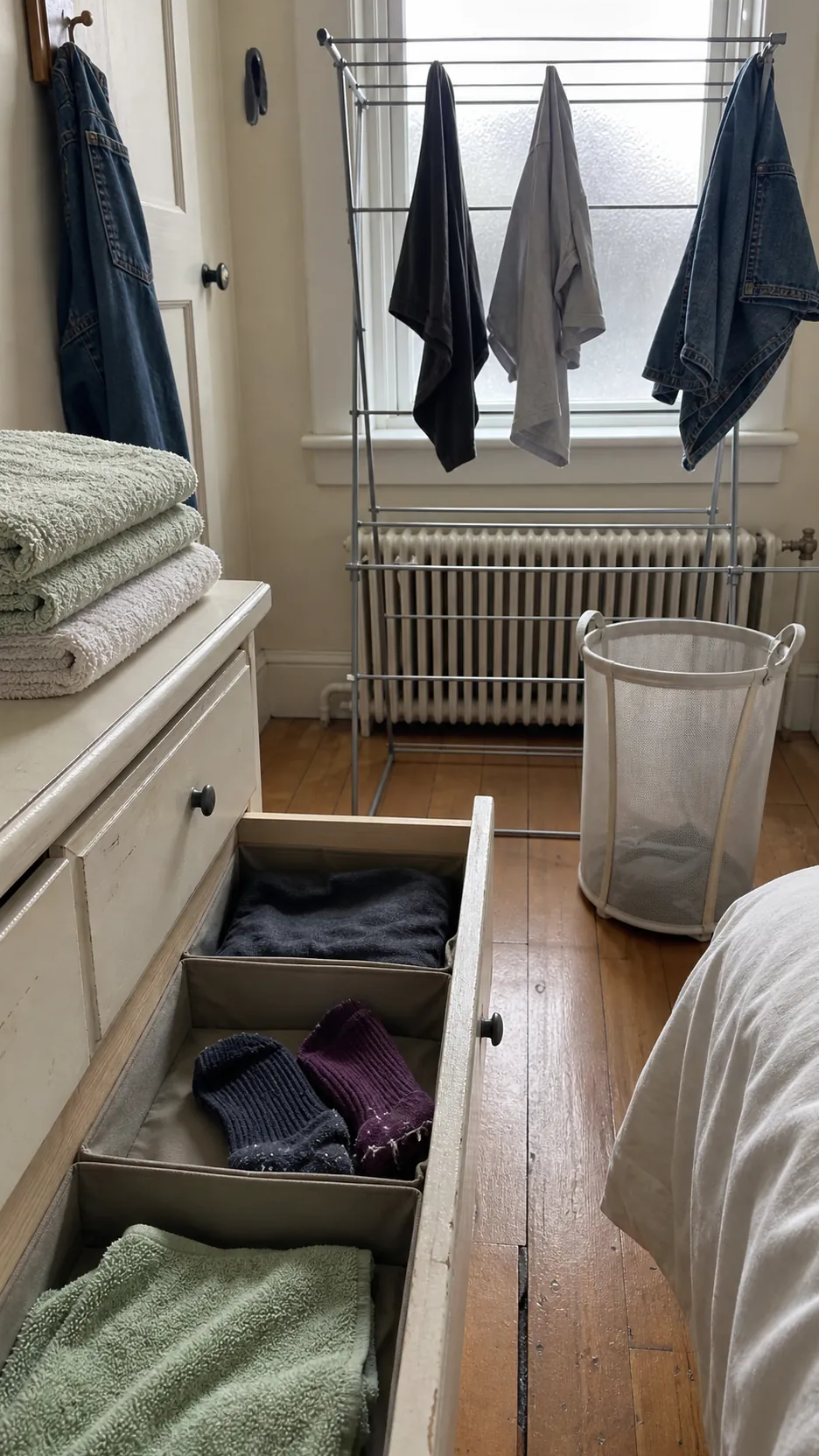
Laundry creates visual clutter because it changes state several times: worn, waiting, washed, drying, clean, folded, and put away. In a small home, every unfinished state occupies furniture or floor space. Use one hamper for washable clothing, one hook for the limited wear-again category, and a drying setup that can be cleared promptly.
Run loads small enough to finish in one cycle. Fold near the storage destination and put each category away immediately instead of creating a clean-laundry holding area. If folding is the repeated bottleneck, simplify it: undergarments, workout clothes, and cleaning cloths may work better in divided bins than in perfect stacks.
The goal is not beautiful drawers. It is to keep clothing moving until the loop is closed. A practical laundry system respects your energy and the limited surfaces in your home.
Use One Basket for a Ten-Minute Home Reset
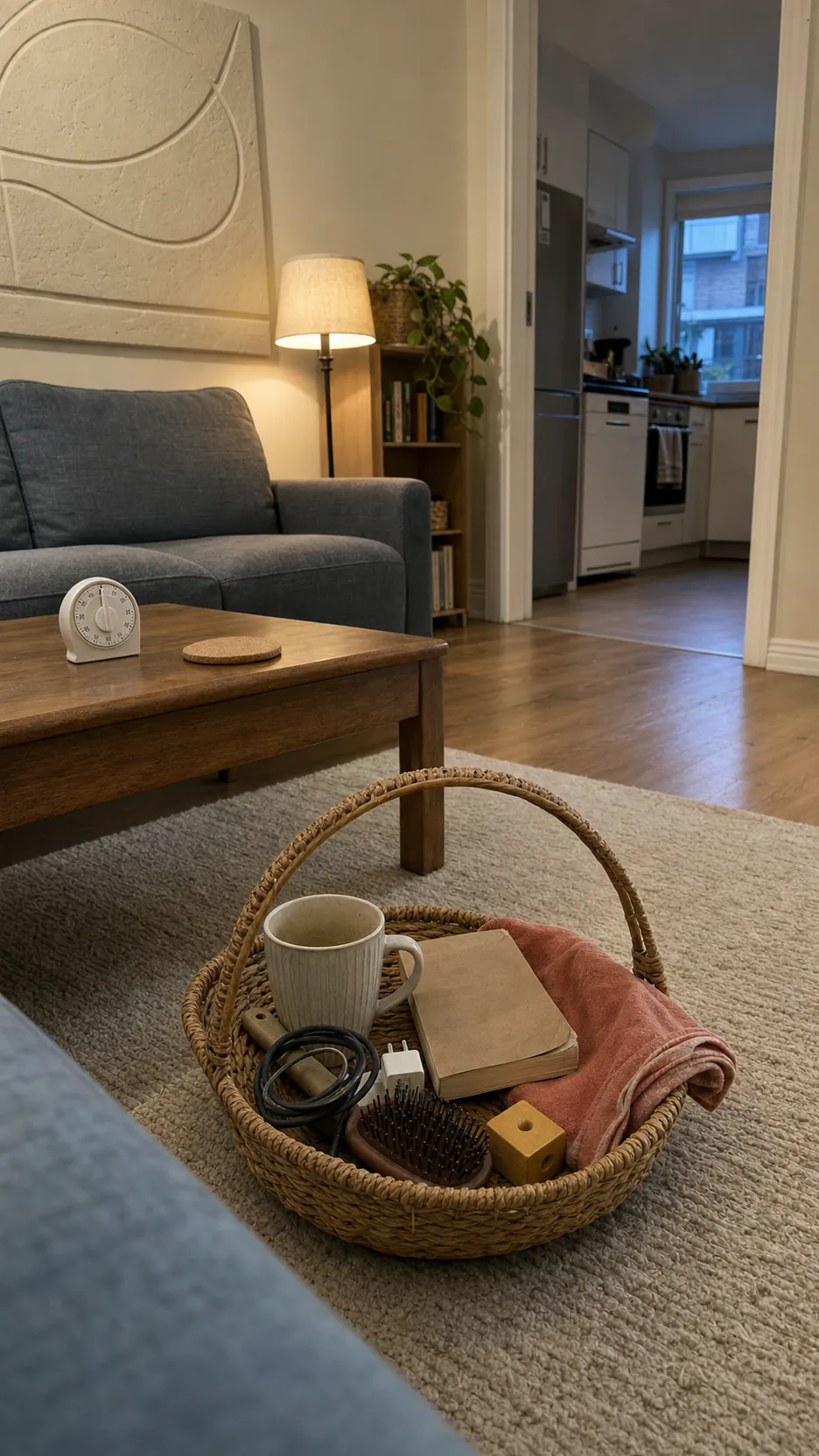
Even good systems cannot prevent objects from wandering during a busy day. Once each evening, carry a small basket through the home. Collect only items that belong in another room, then make a second loop to return them. The basket is a transport tool, not permanent small space storage.
- Start with the floor and clear anything that affects safe movement.
- Reset the entry, kitchen counter, dining table, sofa, and bedside surface.
- Return activity kits instead of reorganizing drawers.
- Stop when the ten-minute timer ends and choose one visible win if time is short.
On low-energy days, shrink the baseline to dishes, rubbish, laundry containment, and a clear path. A simple cleaning approach should support real life, not turn a difficult week into a moral failure.
Choose a Baseline You Can Recover to Quickly
A tidy small home is not frozen in its best condition. It moves between use and recovery. Your baseline might be a clear sink, contained laundry, an open walkway, a usable table, and tomorrow’s essentials ready. Those outcomes matter more than whether every shelf is styled.
Keep weekly cleaning separate and finite: vacuum or sweep, clean the bathroom, change linens, dust the most used surfaces, and choose one rotating detail task. If the basic session keeps expanding, reduce the scope rather than letting home care consume the weekend.
The best home reset is not the most thorough one. It is the one that restores function before you run out of time or energy. Build short return paths, close activities where they end, and let your home look lived in between resets. That is how you stay tidy without feeling as if you are always cleaning.