
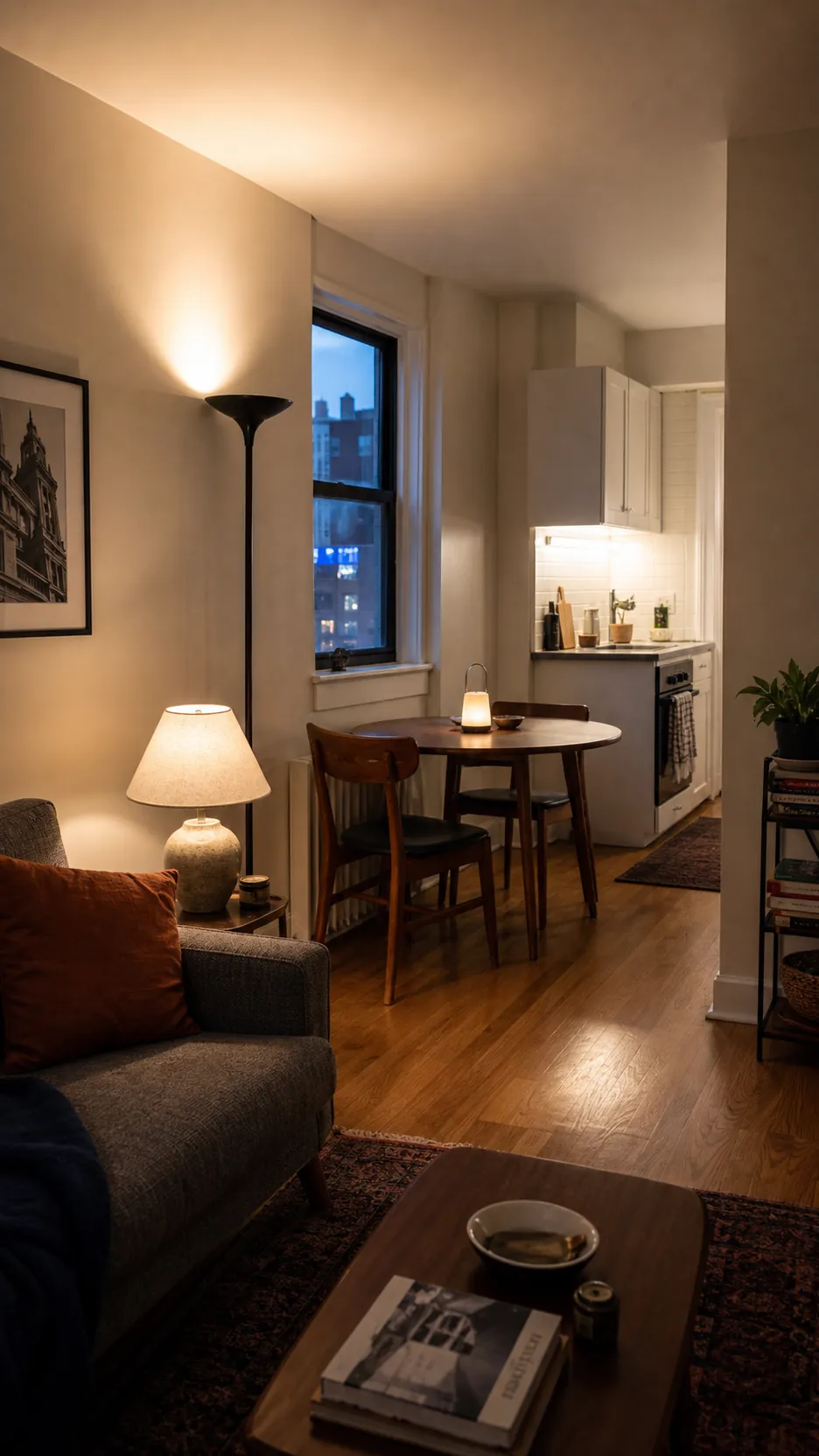
A dark rental does not need one powerful ceiling fixture. In fact, a single bright source often creates glare at eye level while leaving corners and work surfaces dim. A small apartment usually feels brighter when several modest lights spread illumination across walls, ceilings, and the places where you actually read, cook, work, and get dressed.
These small apartment lighting ideas without hardwiring use plug-in or rechargeable fixtures that can move with you. Before buying anything, read your lease, confirm whether removable hooks or small patchable holes are allowed, and check every fixture’s mounting instructions. “Renter friendly” still has to mean stable, cool, and safely routed.
Build Three Layers Instead of Chasing One Bright Light
Good apartment lighting has three jobs. Ambient light lets you move comfortably through the room. Task light supports reading, food preparation, and desk work. Accent light softens dark corners or highlights texture. You do not need all three fixtures switched on at once; you need the right combination for each activity.
Walk through the apartment after sunset and mark where light fails: the sofa seat, dining table, counter, entry, closet, or bedside. Then place light near those failures instead of spacing lamps decoratively. A lamp earns its floor or surface space when it solves a specific dark zone.
Bounce Floor-Lamp Light Off the Ceiling
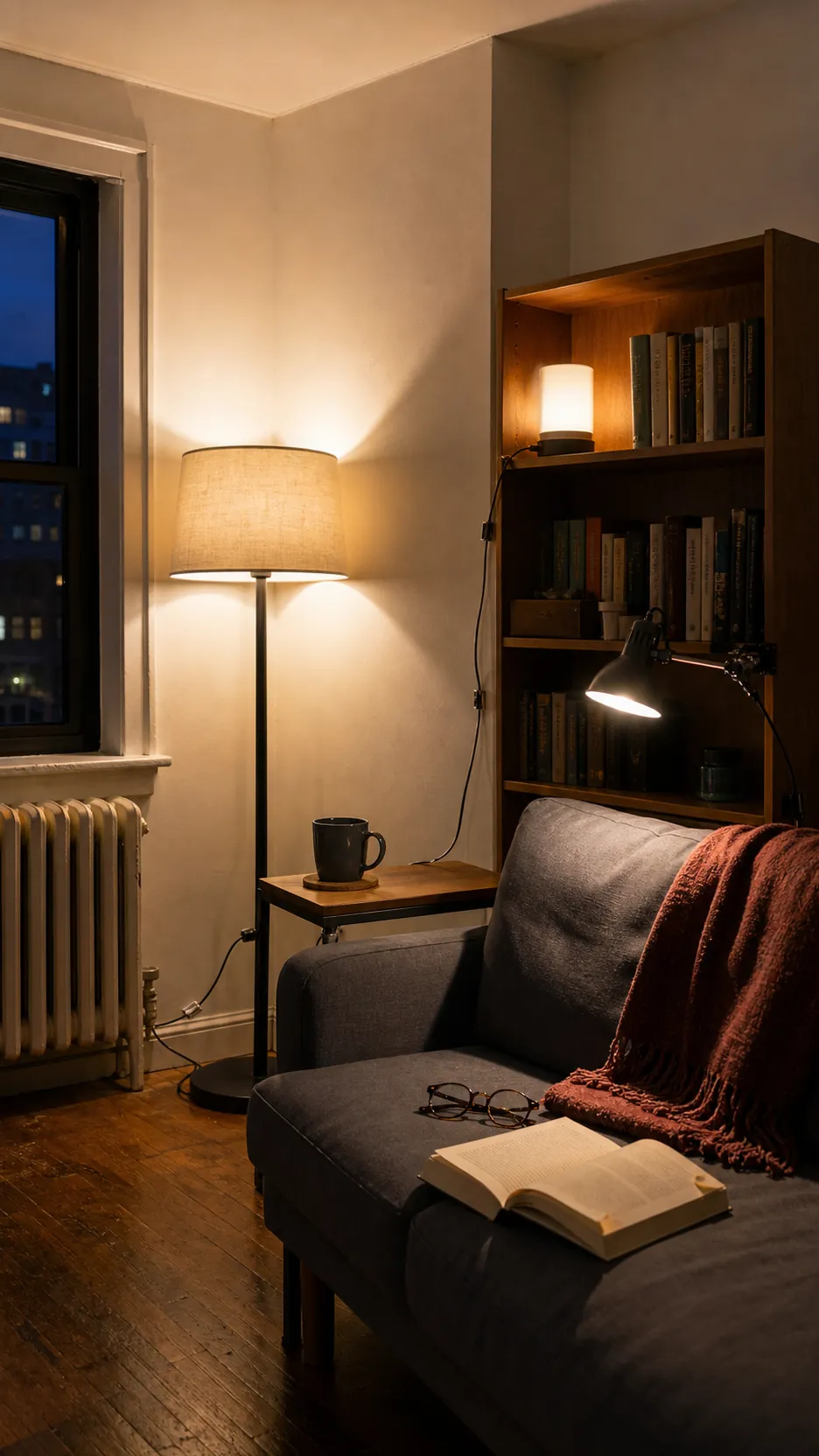
When a living room has no ceiling fixture, use a tall floor lamp that sends some light upward. A pale matte ceiling becomes a broad reflector, spreading softer ambient light than a bare bulb aimed directly into the room. Place the lamp near a corner so two wall planes help carry the glow.
Choose a stable base that can slide partly beneath a sofa or side table if floor space is tight. Keep hot bulbs away from curtains, upholstery, and plants, and never exceed the fixture’s rated wattage. An opaque metal shade provides directional light; a translucent fabric shade spreads more light sideways. The right choice depends on whether the room needs general brightness or reading support.
Connect a switched outlet or listed smart plug if reaching behind the sofa is inconvenient. Convenient control is not a luxury—it determines whether the lighting plan gets used.
Use Plug-In Sconces Where Floor Space Is Scarce
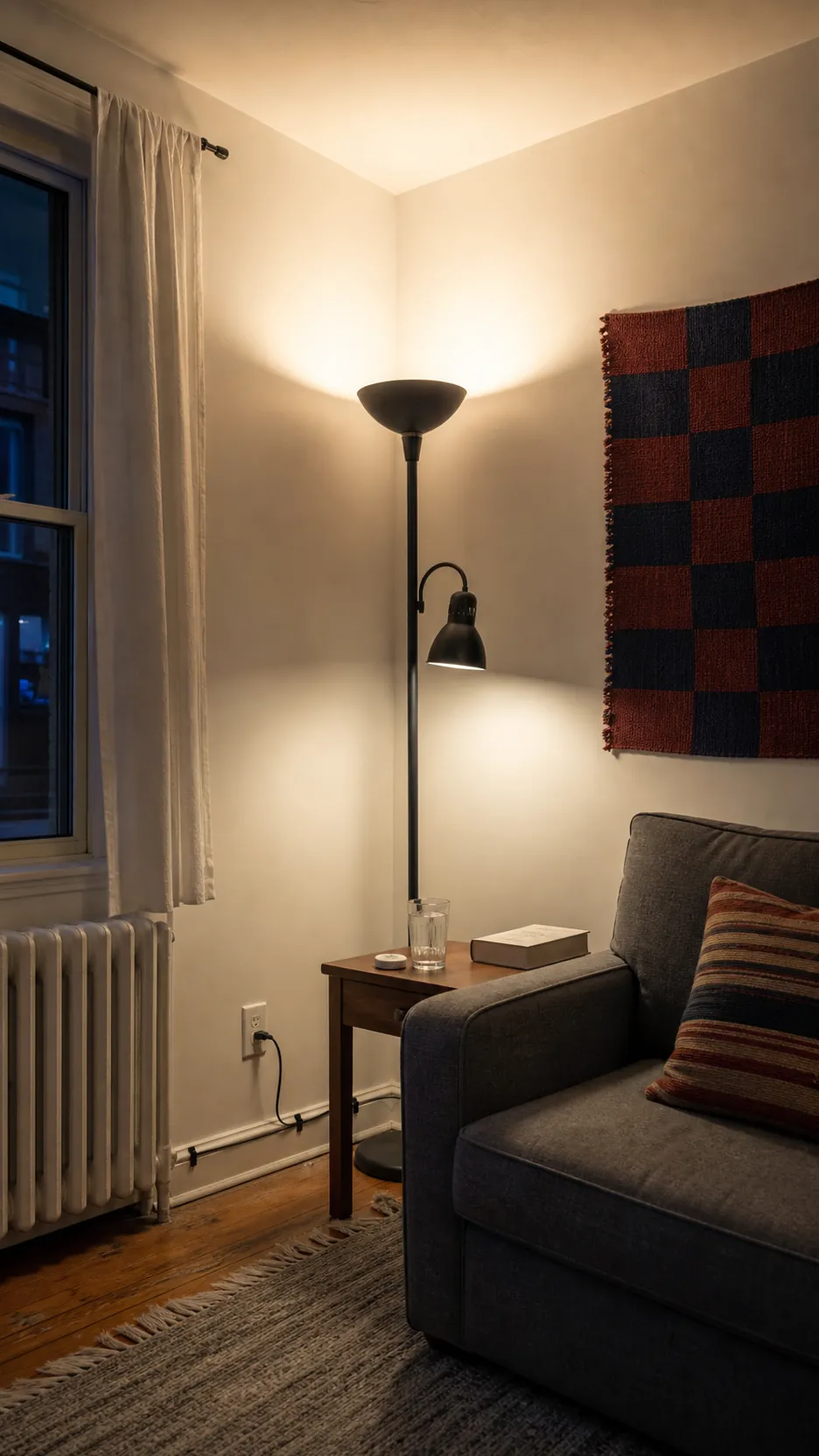
Plug-in sconces deliver wall-mounted task light without opening an electrical box. They work especially well beside a bed, above a compact desk, or beside a sofa where a floor lamp would block circulation. Swing-arm versions can direct light toward a book or work surface and fold back afterward.
Mounting matters. Use only the hardware and wall type approved by the manufacturer. Rechargeable sconces may support adhesive mounting because they do not carry a cord, but check the fixture weight and adhesive cure time. A plug-in metal sconce is often heavier and may require screws, anchors, and landlord permission.
- Keep bedside light high enough to clear pillows but low enough to avoid glare.
- Route cords straight down or along trim using listed removable cord clips.
- Leave slack at an adjustable arm so movement does not pull the plug.
- Keep cords away from cribs, pets, water, and walking paths.
Give Each Table Lamp a Clear Task
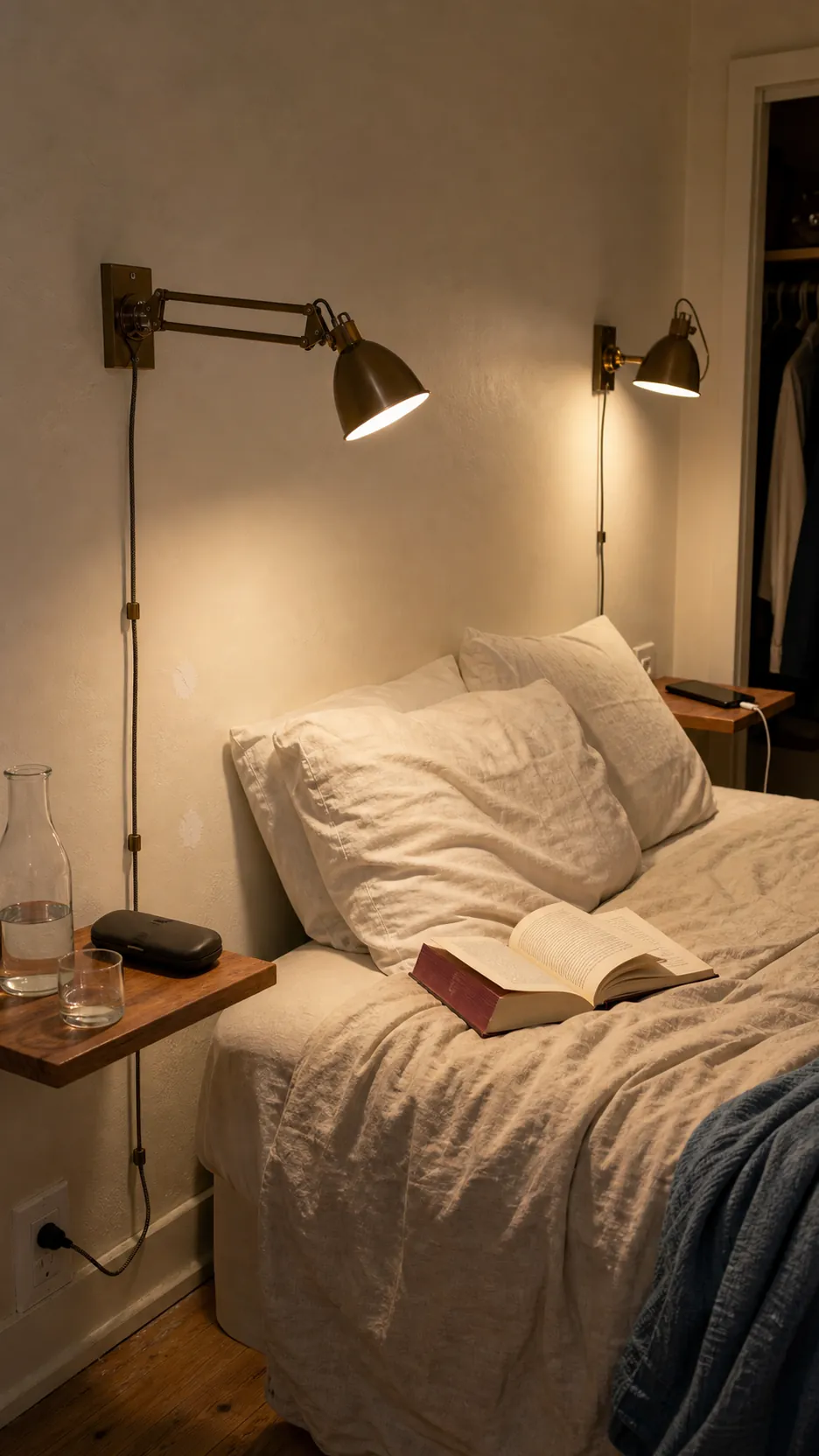
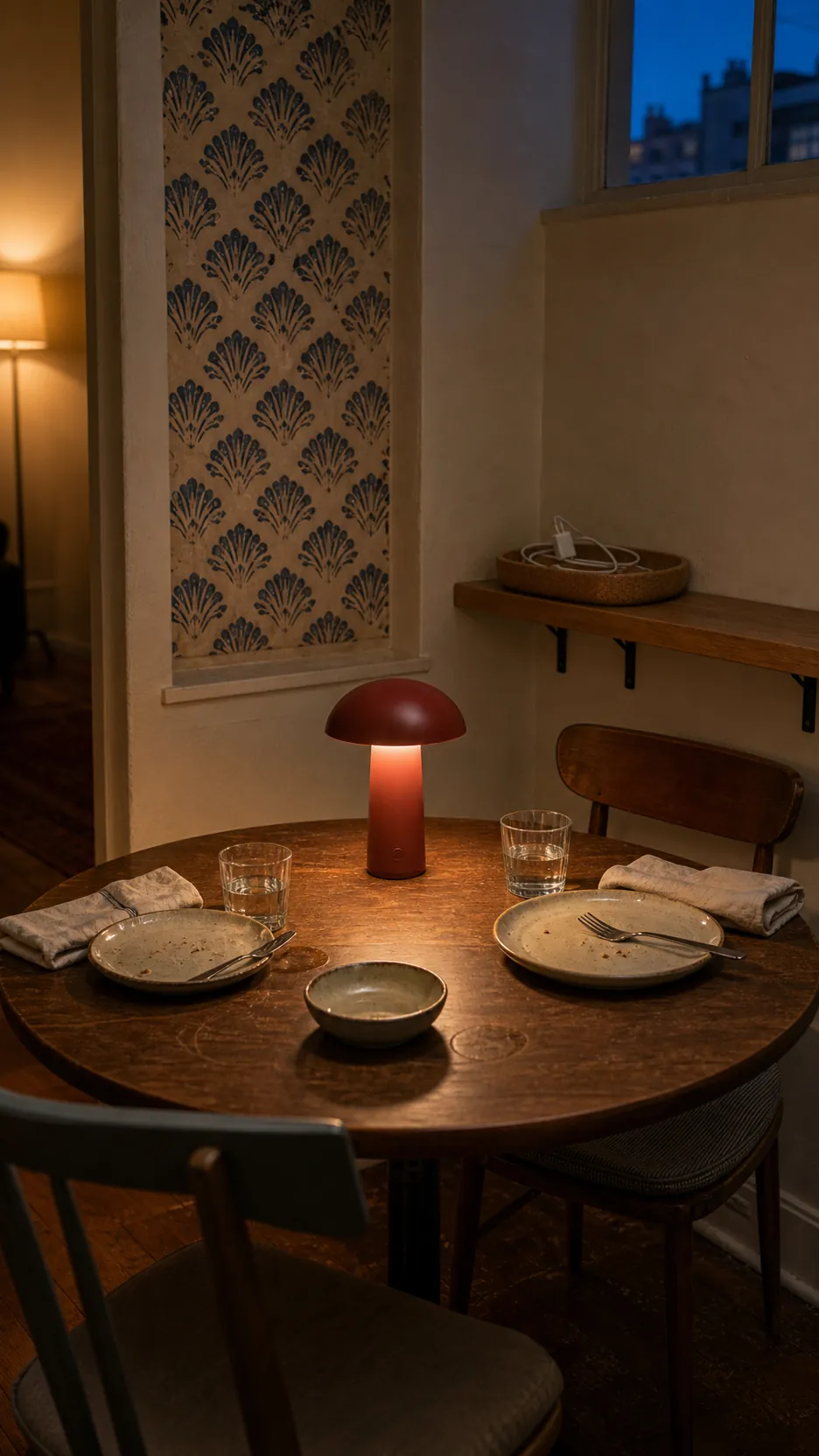
Small table lamps are useful because they can change roles as the apartment changes. A shaded lamp on a bookcase can light the living area at night, while a compact directional lamp can move from a dining-table workspace to a reading shelf.
Protect limited surfaces by matching lamp footprint to function. A bedroom lamp should leave room for water, glasses, and a phone. A desk lamp should aim below eye level so the bulb does not reflect in a screen. A shelf lamp needs ventilation and a cord path that does not cross the shelf edge where it can be snagged.
Rechargeable lamps remove trailing cords from awkward shelves and dining nooks, but they require charging. Assign one charging location and check advertised run time at the brightness you expect to use. Battery light is most reliable as a targeted layer, not the only light in the room.
Hang a Plug-In Pendant Over a Fixed Zone
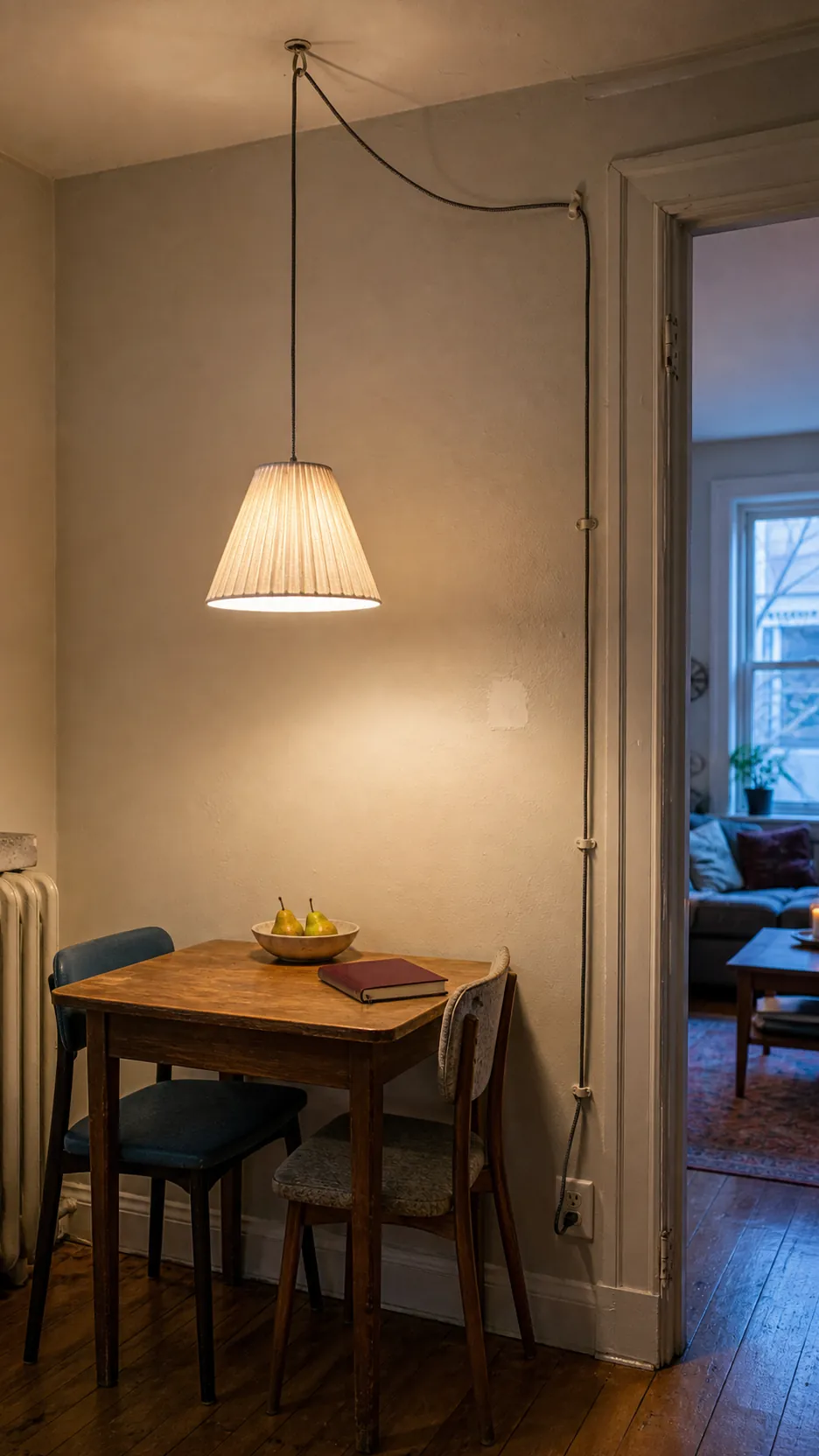
A plug-in pendant can give a dining nook or reading corner the focus of overhead light with no hardwiring. It plugs into a wall outlet and hangs from a ceiling hook or approved support. This is best over a zone that does not move; a dangling fixture in an open walking route is a collision hazard.
Check the fixture’s total weight, the ceiling material, and the hook rating. Adhesive ceiling hooks are not interchangeable with mechanical hooks, and textured or dusty surfaces weaken adhesion. If the lease forbids holes, choose a tension-pole lamp or tall arc lamp instead of improvising a ceiling attachment.
Adjust the pendant so seated sightlines do not meet a bare bulb. Use a shade or diffuser, keep cord swag away from cabinet doors, and clip the vertical drop neatly along the wall. The fixture should look intentional, but safety and removability come first.
Add Task Light Under Cabinets and Shelves
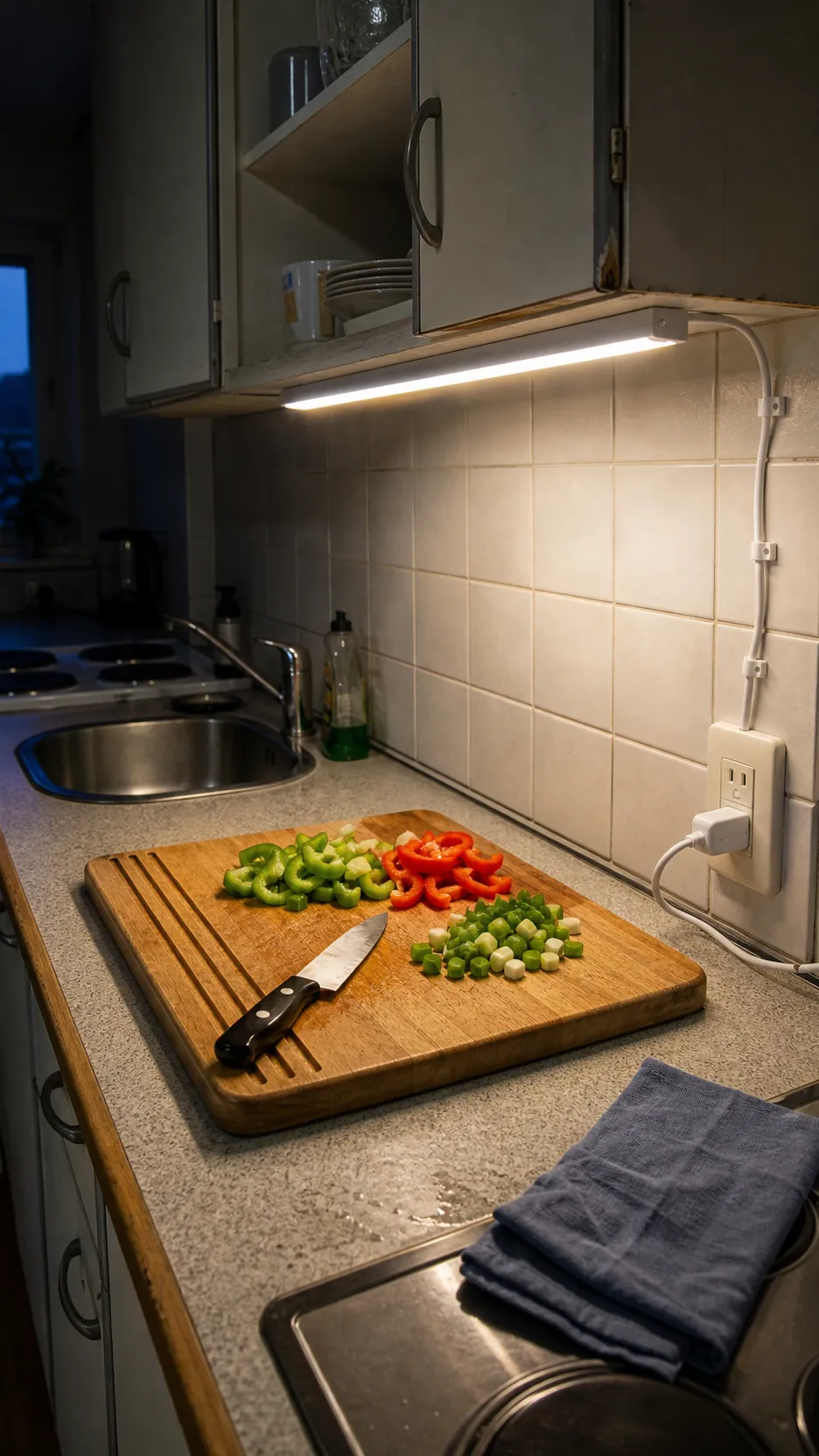
A bright kitchen ceiling does not guarantee a bright counter because your body and upper cabinets can cast shadows over the work surface. Plug-in under-cabinet bars place light directly where food preparation happens. Rechargeable bars can work where outlets are scarce, though frequent cooking makes a plug-in model easier to maintain.
Choose a listed fixture intended for the location, keep it away from steam and heat unless rated for that exposure, and follow clearance instructions. Mount it near the front underside of the cabinet so the light reaches the counter instead of creating a bright strip against the backsplash.
The same principle works beneath an office shelf or inside a dark open closet, provided the product is rated and ventilated appropriately. Good task lighting improves visibility without forcing the entire apartment to be equally bright.
Choose Bulbs and Controls That Make the Layers Work
Keep color temperature reasonably consistent within a sightline so adjacent lamps do not look accidentally blue and orange. Warm-white light often suits living and sleeping zones, while a neutral task light can make a kitchen or desk easier to use. Compare the bulb or fixture’s color appearance in your own room; paint, shade material, and daylight change the result.
Use dimmable bulbs only with compatible dimmers and fixtures. Listed smart bulbs, remote outlets, or smart plugs can group lamps into simple scenes such as “work,” “evening,” and “all off,” but never exceed device ratings or use indoor products in wet locations. Avoid overloading outlets or daisy-chaining extension cords.
The best renter-friendly lighting plan is easy to switch, safe to route, and specific to how you use the apartment. Start with the darkest task, add one ambient source, and live with the result before buying more. Layer by layer, a small rental can become brighter and more comfortable without touching its wiring.