
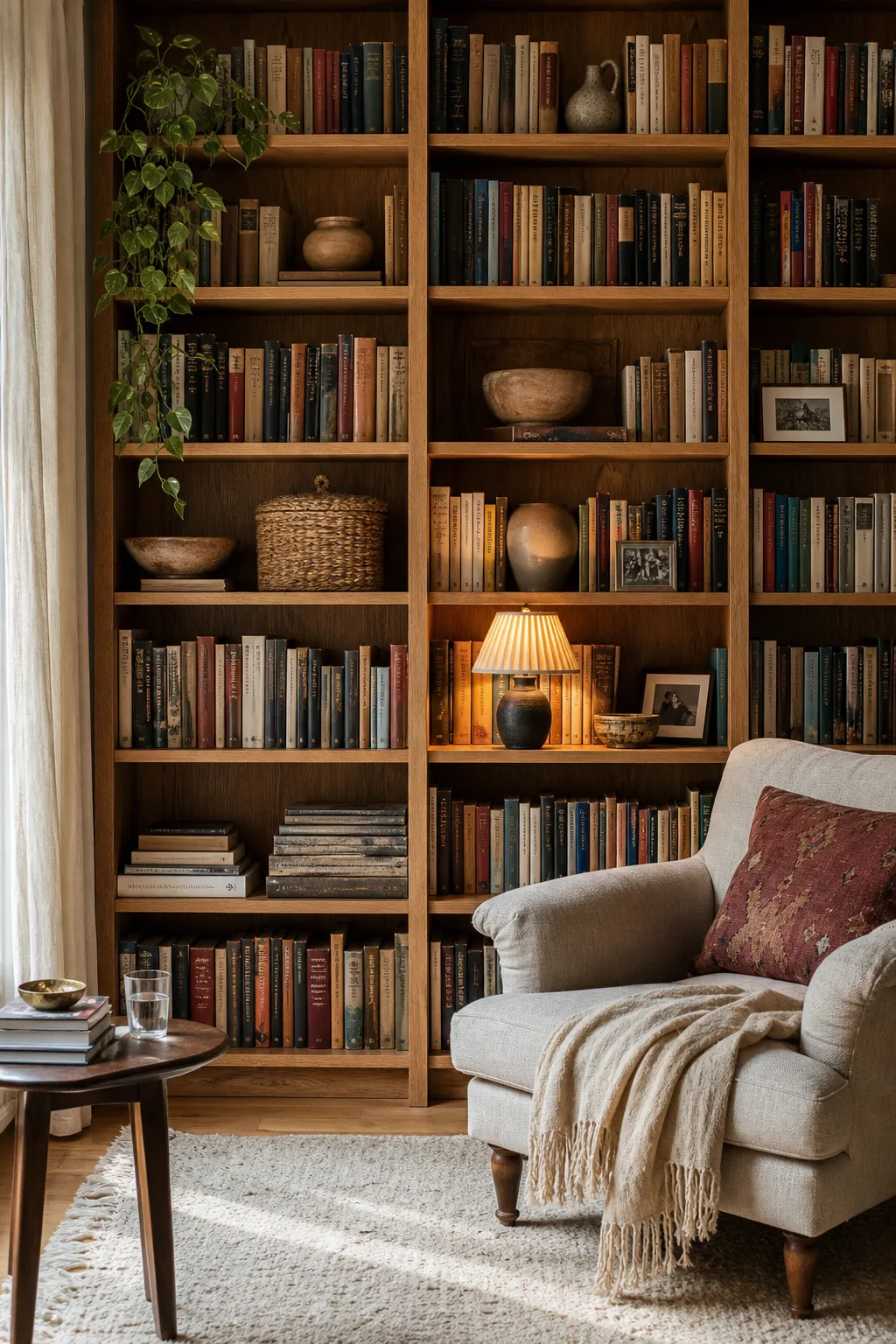
A bookshelf wall can hold everything you love and still feel oddly impersonal. The usual response is to add more: another vase, another basket, another stack of decorative books. That often makes the wall busier without making it warmer.
The better approach is to make the shelves tell the truth about the room. Books should look readable, keepsakes should earn their space, storage should solve an actual problem, and light should support the way you live. That balance matters because people often worry about two opposite outcomes at once: a sterile display with no character, or a cluttered wall with nowhere for the eye to rest.
Edit for Meaning Before You Style
Take everything off one section at a time and sort it into three groups: books you use or value, objects with a real story, and filler bought only because the shelf looked empty. Put the filler aside. A wedding keepsake, a child’s clay bird, a travel find, or a photograph has more emotional weight than several coordinated accessories.
This does not mean every object must be precious. A beautiful bowl can stay because you enjoy its shape, and a basket can stay because it hides chargers. The useful test is simple: can you explain why this belongs in your home? If the answer is only “it fills the gap,” leave the gap open for now.
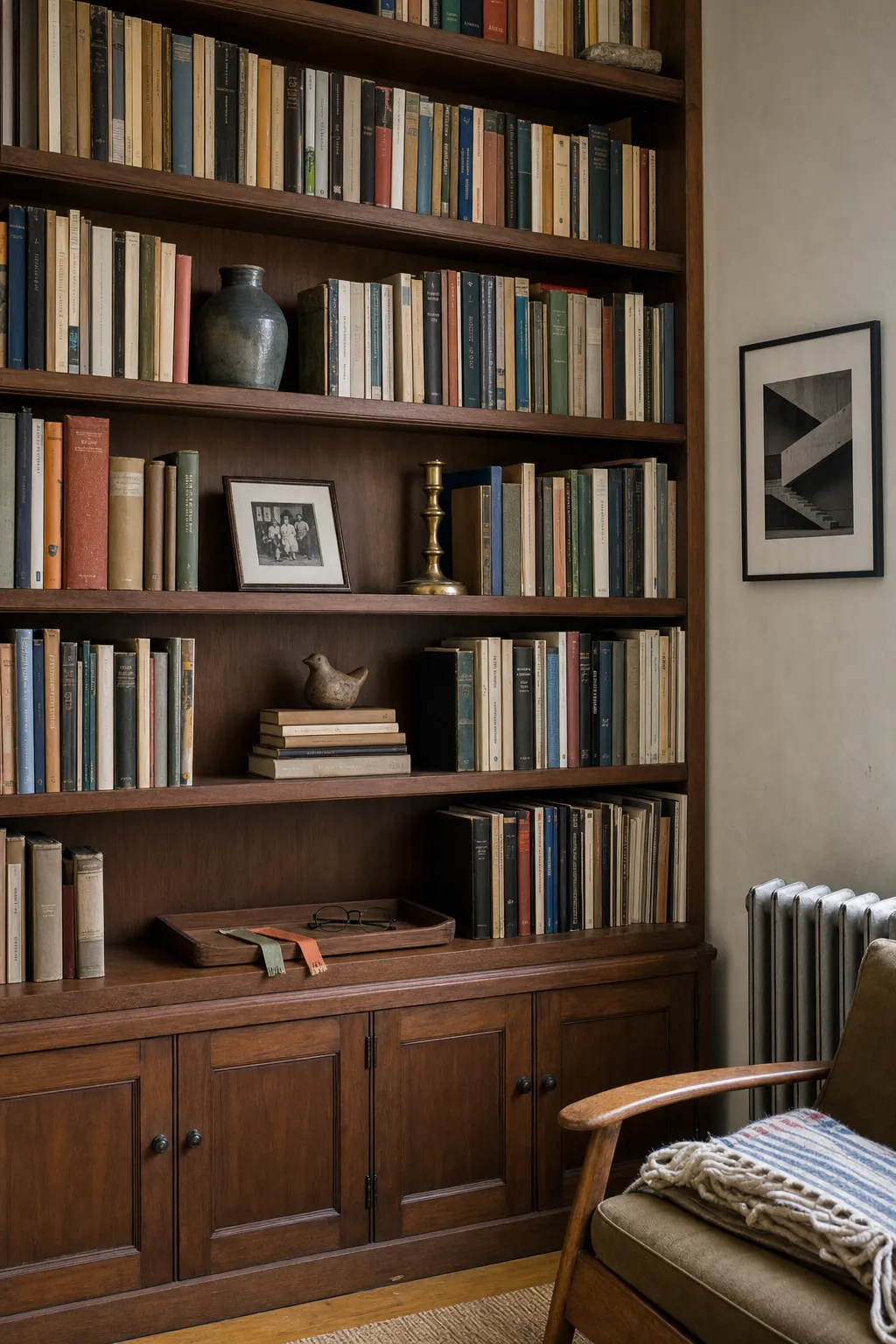
Begin rebuilding with the books. Strong runs of books act like visual architecture, while too many small objects can make a bookcase feel scattered. Keep frequently used titles easy to reach. Mix upright books with a few horizontal stacks where a change in height is genuinely helpful, rather than turning every shelf into a decorative formula.
Create Breathing Room With Tighter Groupings
Clutter is not simply a high object count. A shelf can hold many books and still feel calm because the books read as one solid mass. Visual restlessness happens when similar-size objects are evenly scattered, each one asking for attention. Pull related pieces together and leave some bare shelf beside them.
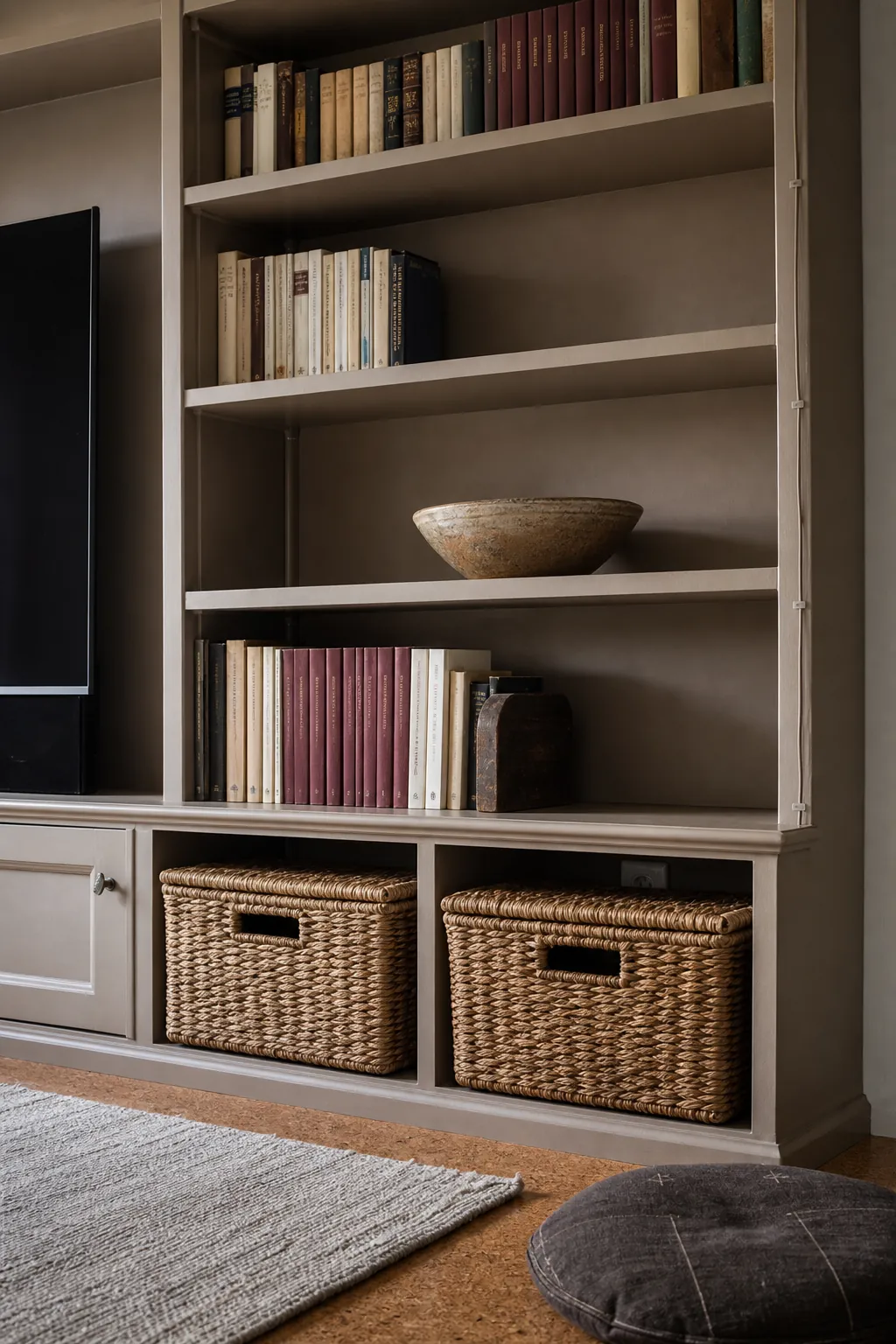
Try one larger piece instead of four tiny ones. Set a low bowl beside a compact row of books, or place one keepsake on a short stack so the items read as a group. Then step back and check the whole wall. You are looking for a rhythm of dense areas and quiet areas, not identical styling in every cubby.
If a television shares the wall, calm the shelves closest to it. The screen already creates a large dark rectangle, so a dozen small objects around it can feel especially restless. Closed baskets or uninterrupted book runs below the screen often create a steadier center.
Connect the Shelves to a Real Reading Nook
A home library feels personal when the room makes reading easy. Pull a chair slightly away from the wall instead of pressing every piece against the perimeter. Add a table that can hold glasses and a mug, then place a focused lamp on the side that will not cast your hand’s shadow across the page.
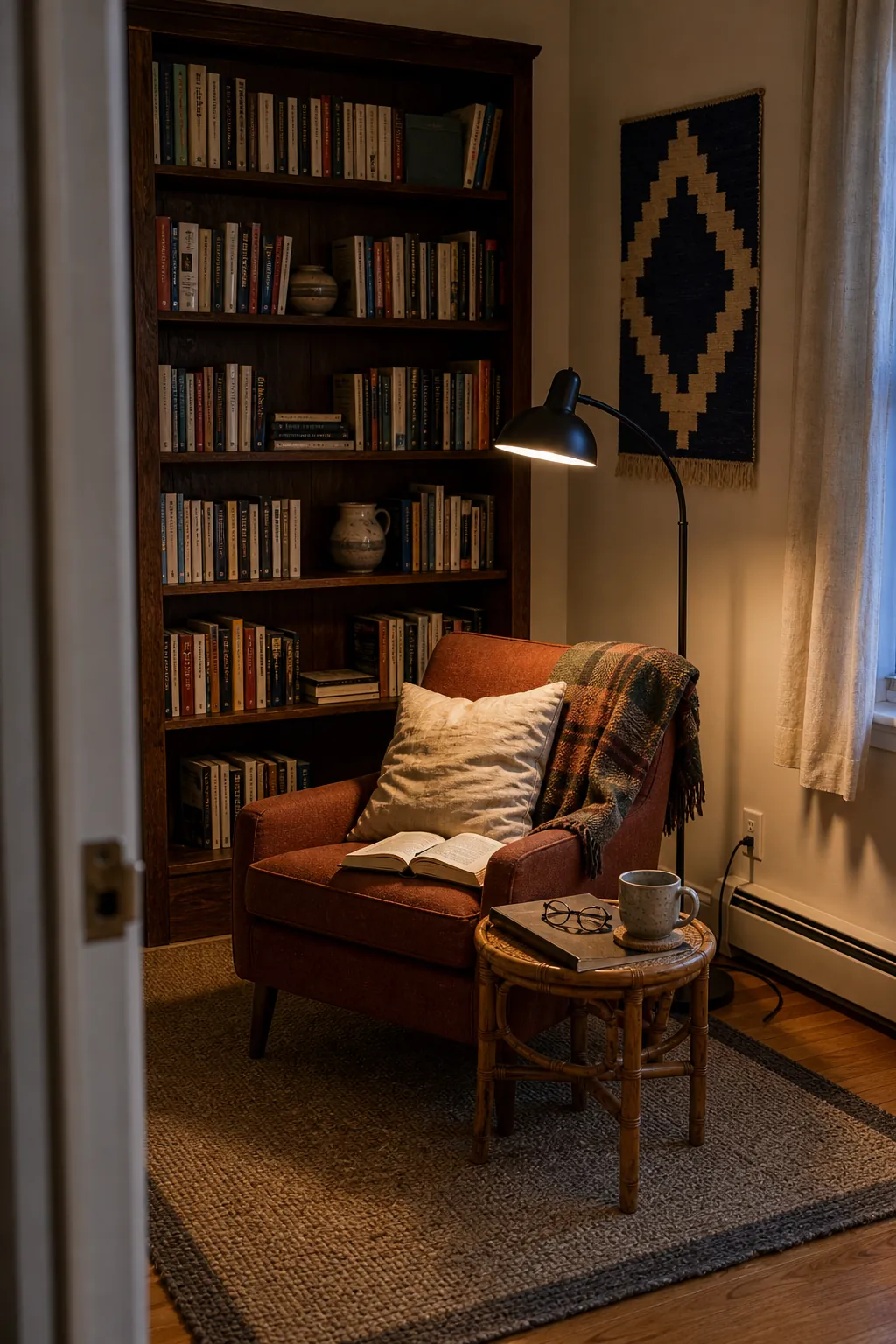
A small rug helps a chair corner feel intentional, especially in an open living room. Let the chair’s front feet sit on it, and keep enough floor visible for a comfortable path. One textured cushion and a washable throw are enough to soften the zone. Piling on textiles can make the chair less comfortable and harder to use.
Look at reach as well as appearance. The books you are currently reading belong between seated shoulder and waist height. Display-only objects can sit higher. Heavy volumes and storage should stay low. When the arrangement follows the body, it looks natural because it is natural.
Use Plants as Punctuation, Not a Curtain
Greenery brings movement and life to bookshelf decor, but plants need more than an empty spot. Match each plant to the available light, give foliage clearance, and protect wood and books with a waterproof saucer. A trailing plant should fall toward an open edge rather than covering titles or cabinet doors.

One trailing plant and one compact upright plant usually create more impact than a small pot in every bay. The repeated green connects the shelves while different leaf shapes prevent monotony. If the wall receives little daylight, use one healthy low-light plant near the brightest end rather than several struggling plants spread across the bookcase.
Keep plant care tools nearby but out of sight. A narrow watering can and cloth can live behind a cabinet door. This tiny practical decision protects the calm surface you created and makes maintenance more likely to happen before dusty leaves and water rings undermine the effect.
Build Rhythm With Height and Repeated Color
When every object is the same height, a shelf reads like a line of inventory. Vary the silhouette instead. Pair a tall vessel with a low stack, place a small object on books, and let a dense row of records or oversized volumes create a strong square shape. Scale changes give the eye a path through the wall.
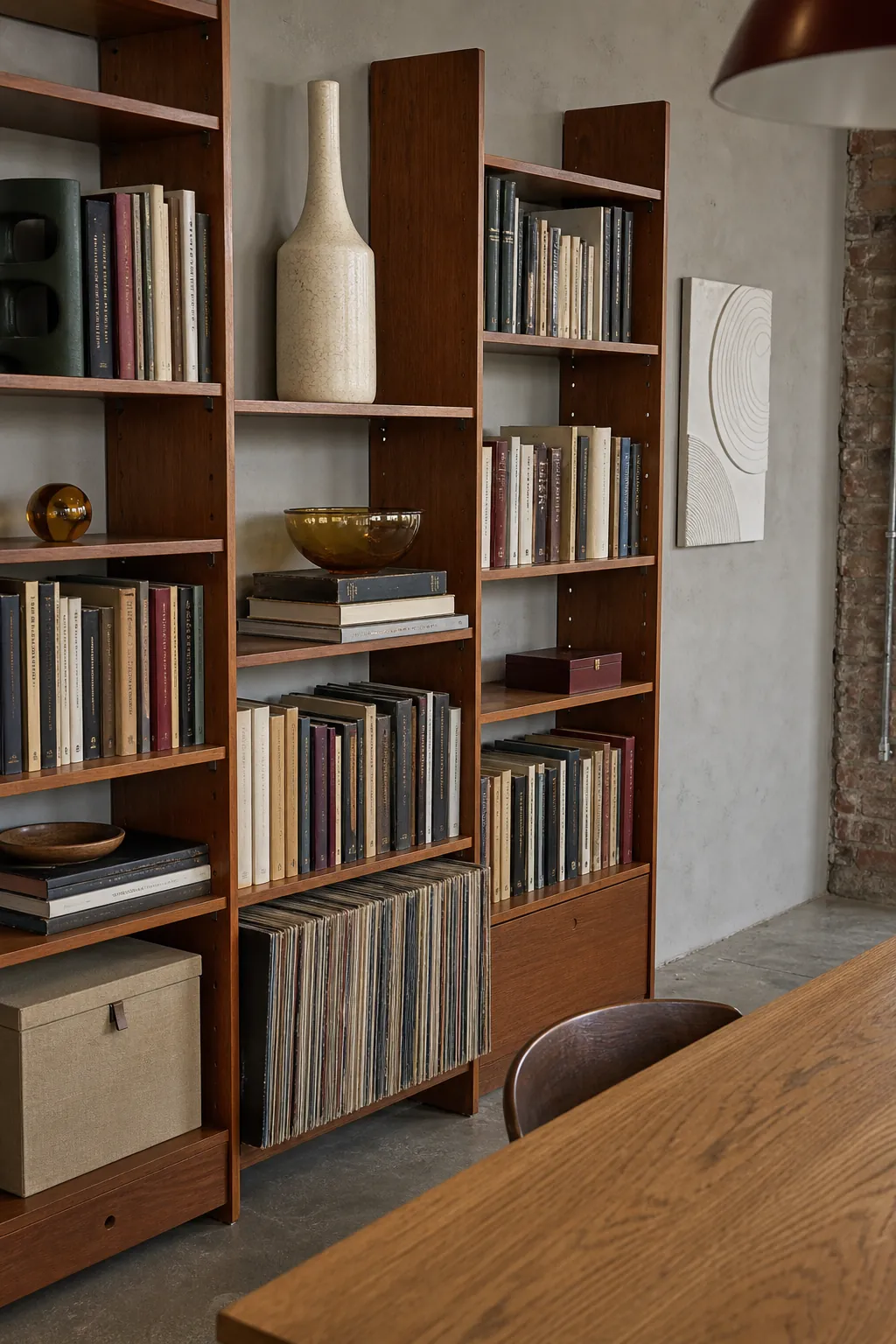
For color, choose two or three notes already present in the room and repeat them loosely. A rust spine can echo a chair; a dark-green bookend can pick up a plant; a cream vessel can connect to the curtains. The echoes should be separated across the wall, not grouped into obvious color bands.
Avoid wrapping books or turning every spine backward for a neutral look. That removes the very evidence of taste that makes a home library personal. Cohesion should help the collection speak clearly, not erase its identity.
Hide Utility Clutter and Finish With Layered Light
Lower shelves are ideal for the things a living room actually needs but does not need to display. Use lidded baskets or fitted boxes for chargers, controllers, papers, and toys. Choose containers large enough to create one calm block, and keep their material related to something else in the room—a woven rug, warm wood, linen curtains, or leather chair.
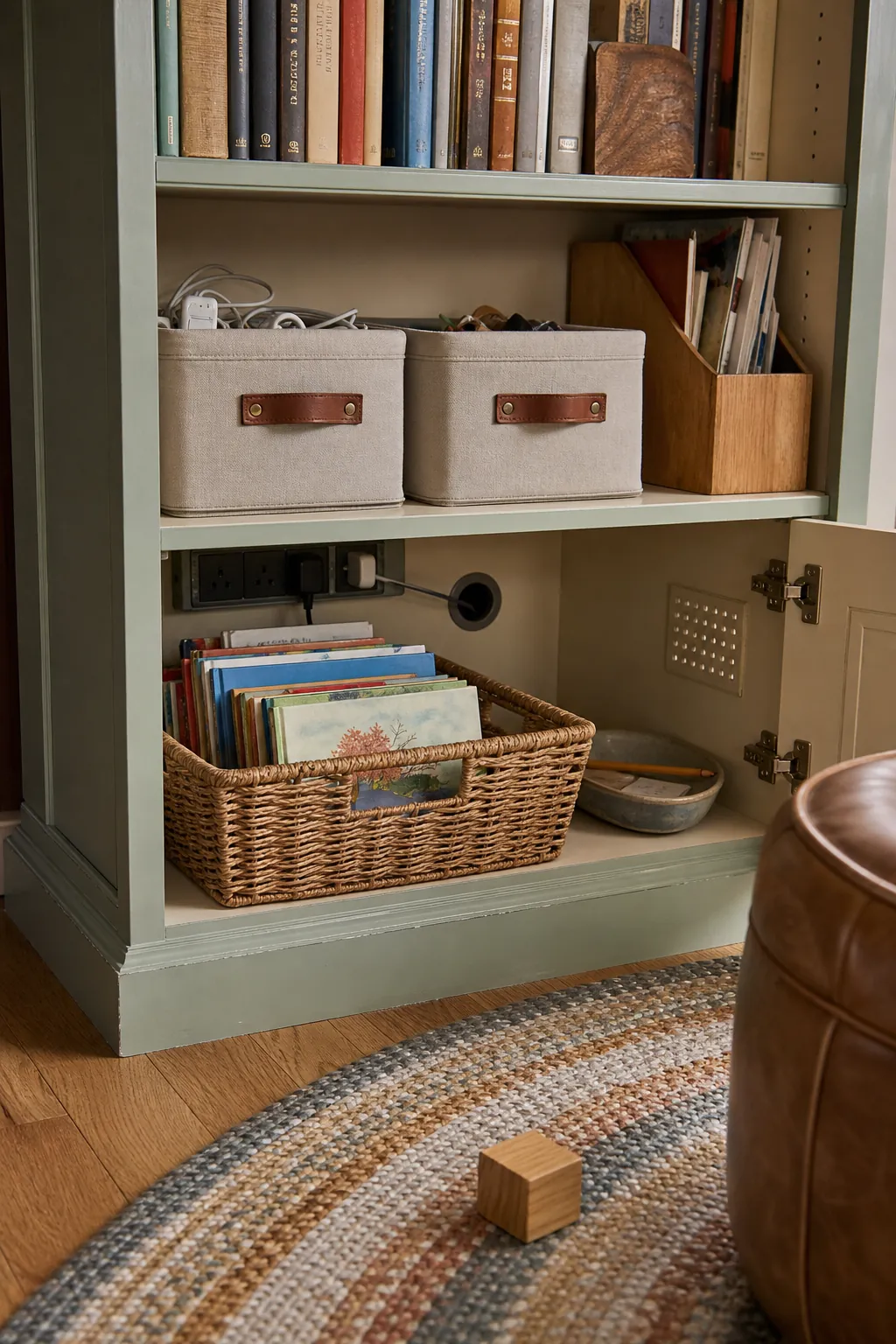
Route lamp and media cables down a rear corner so they do not dangle across open shelves. Keep power strips ventilated and accessible. Cord control is not glamorous, but a single loose cable can make an otherwise thoughtful wall feel temporary.
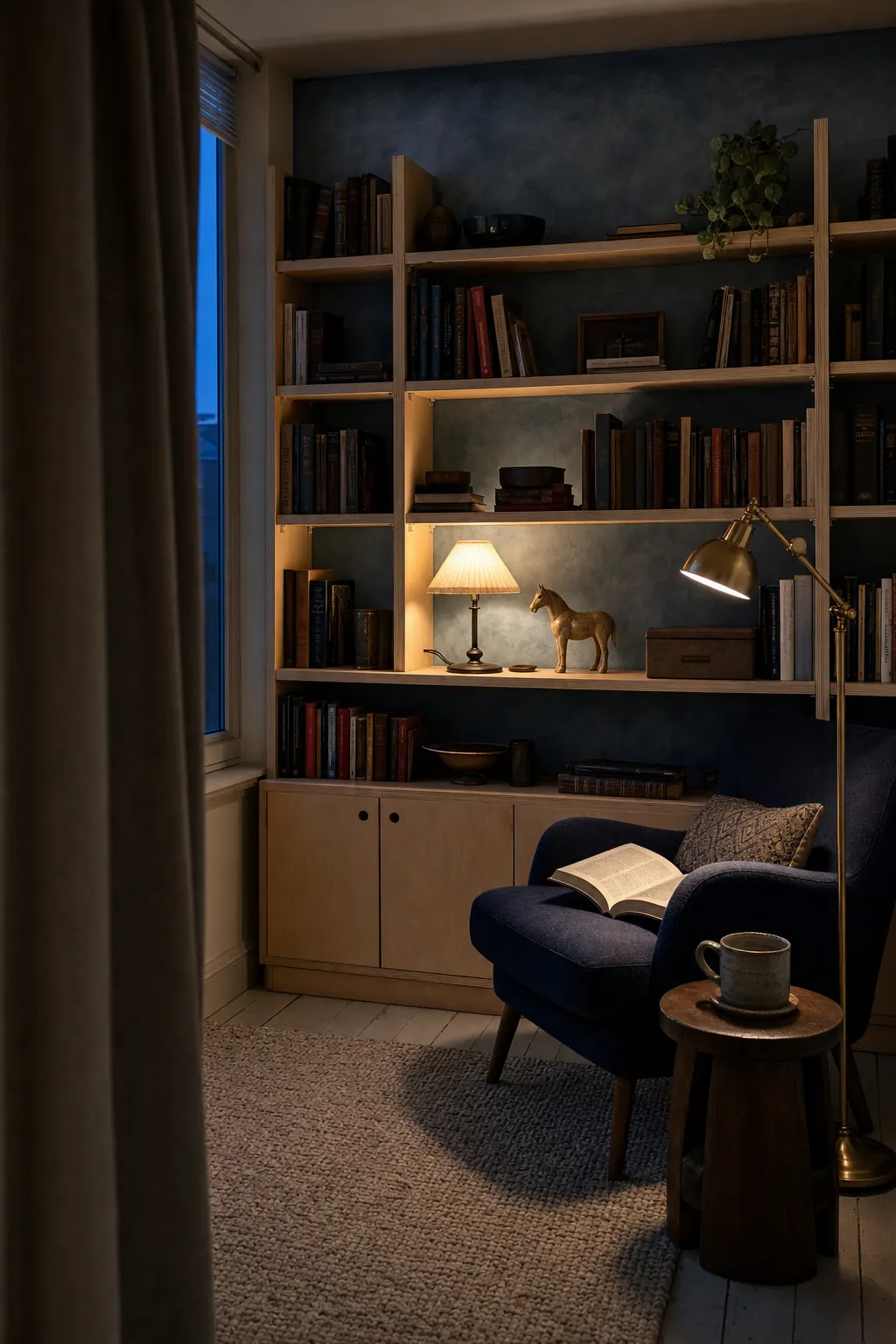
Finally, turn off the overhead light and assess the wall in the evening. A small shaded lamp on a deep shelf can reveal wood grain and book texture, while a separate adjustable lamp should light the page. Keep safe clearance around every bulb and avoid washing the whole room in amber. The goal is not a decorative glow; it is a bookshelf wall that supports the quiet routines and memories already making the room yours.