
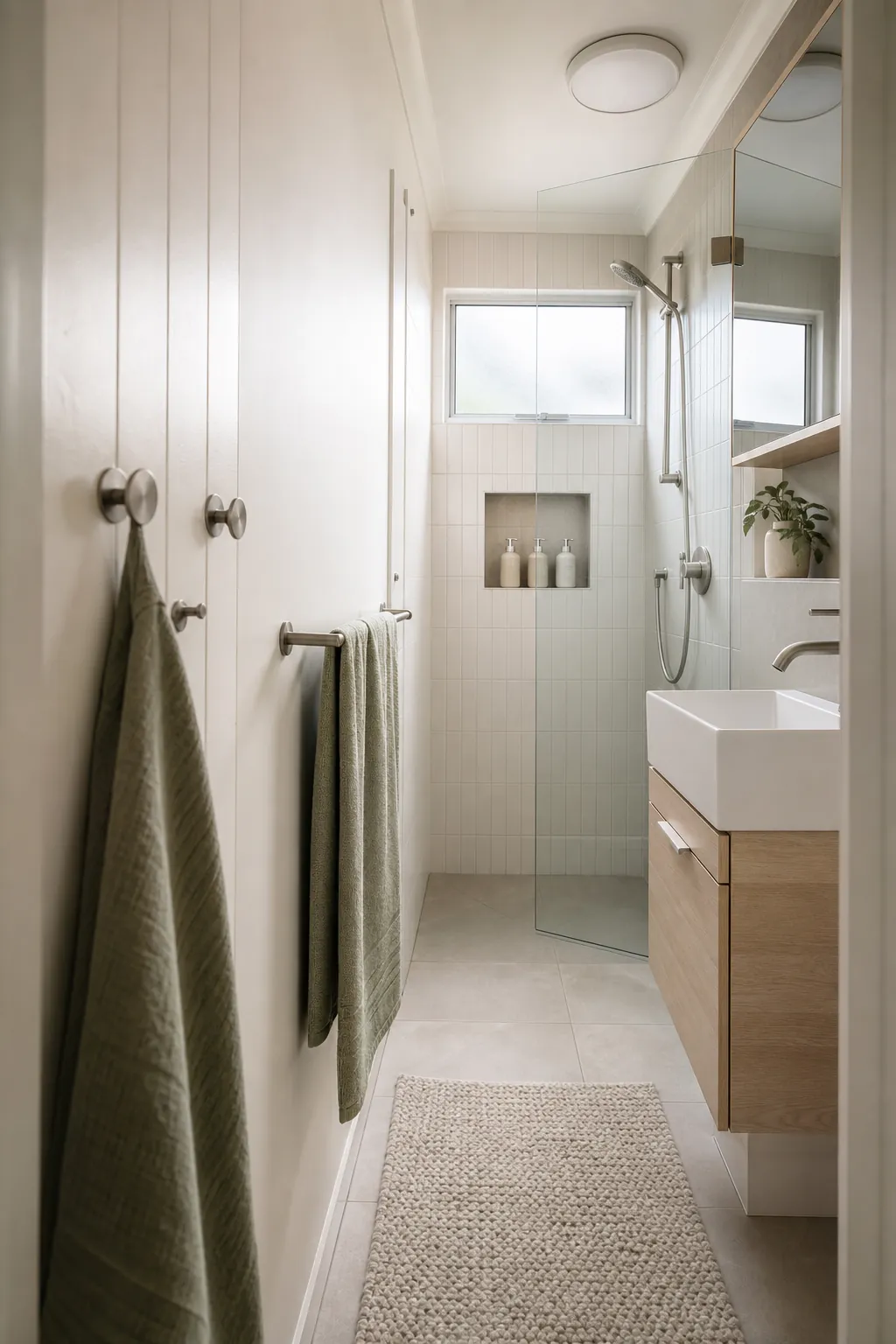
A tiny bathroom rarely fails because it lacks one more basket. It fails because the things you touch every day have nowhere sensible to land. A towel hangs in the shower spray, a robe hook catches your shoulder, shampoo bottles collect on the floor, and the only clear ledge becomes a crowded shelf. The fix is to treat hooks, rails, and niches as a small storage system, with each piece assigned to a specific action and moisture zone.
That distinction matters in a tiny home bathroom, where a few inches of projection can change how comfortably you turn, dry off, or clean. The best plan does not cover every wall with hardware. It gives high-frequency items the shortest possible path from hand to storage while keeping the floor, doorway, and shower controls clear.
Map the wet, damp, and dry zones first
Before buying bathroom hooks or a towel rail, sketch the room and mark three zones. The wet zone receives direct spray. The damp zone catches splashes and steam. The dry zone sits beyond the shower opening and has enough airflow for towels and clothing to dry. This quick map prevents the common mistake of mounting attractive hardware where it is awkward or constantly soaked.
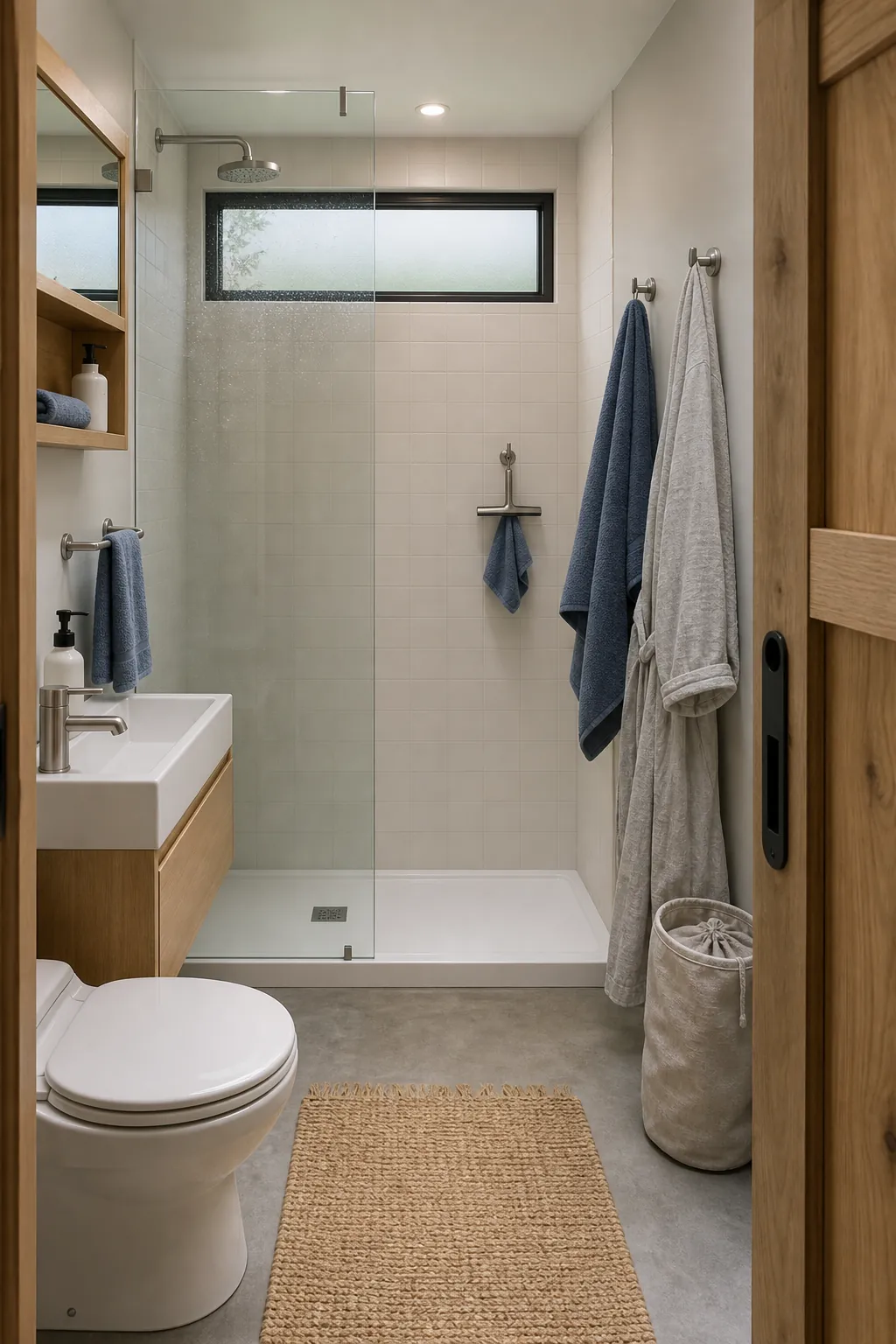
Stand at the doorway, then mimic the routine: enter, set down clean clothes, shower, reach for a towel, use the sink, and leave. Mark the natural hand positions. A hook used while stepping out of the shower belongs close enough to reach without dripping across the room, but far enough from the spray to keep the towel dry. A washcloth rail can sit inside the wet zone because the cloth is expected to get wet. A robe hook should stay in the dry zone.
Also mark the door swing, cabinet doors, toilet clearance, and the shoulder-width path through the room. In compact bathrooms, a hook that projects into this path can be more irritating than useful. Choose rounded, tight-profile hardware for pinch points and reserve deeper pegs for protected corners.
Give every hook one clear job
Hooks are ideal for irregular items that do not need to lie flat: robes, toiletry bags, a shower squeegee, hair tools after they cool, and the clothes you will put back on. They also work better than a long bar when several people need separate towel spots. The catch is that a crowded hook becomes a knot of damp fabric.
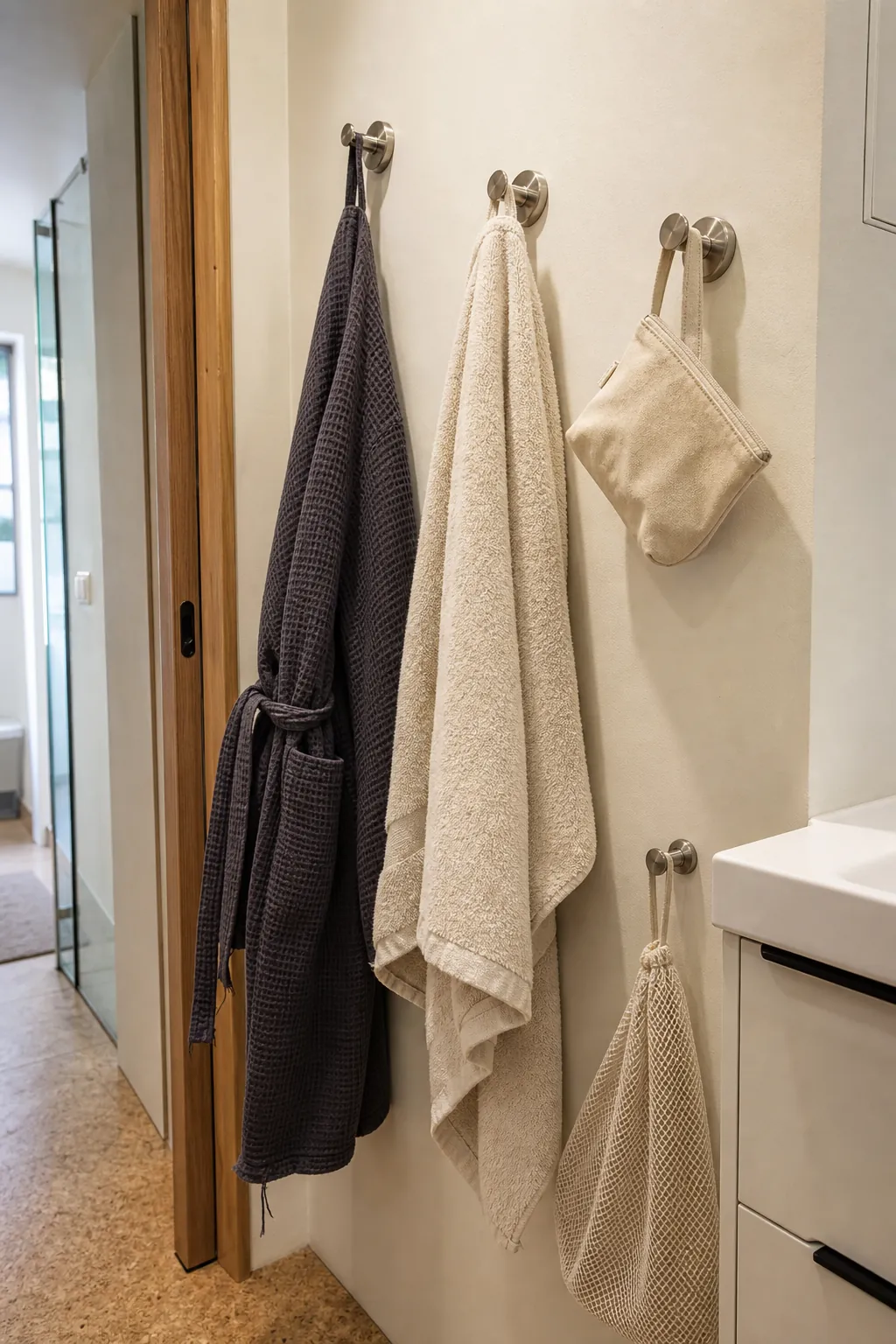
Use a one-hook, one-job rule. Place two towel hooks with enough breathing room that the towels do not overlap. Add a smaller hook near the shower controls for a loofah or squeegee, and keep a separate dry hook behind or beside the door for clothing. Do not solve a storage shortage by stacking more onto the same hook. Reduce what lives in the bathroom or give it a dedicated home.
Permanent hooks should fasten into framing or suitable anchors for the wall construction. Adhesive and suction hooks are useful for renters or experimental layouts, but steam, textured tile, and repeated loading can weaken them. Treat no-drill hardware as load-limited and test it with something unbreakable before trusting it with a mirror, heavy caddy, or electrical tool.
Use rails when airflow matters
A rail earns its wall space when an item benefits from being spread open. Bath towels dry faster on a rail than in a folded bundle, while a short rail beside the vanity keeps a hand towel neat and reachable. In a small bathroom, the useful question is not “bar or hook?” but which items need airflow and which only need a landing spot.
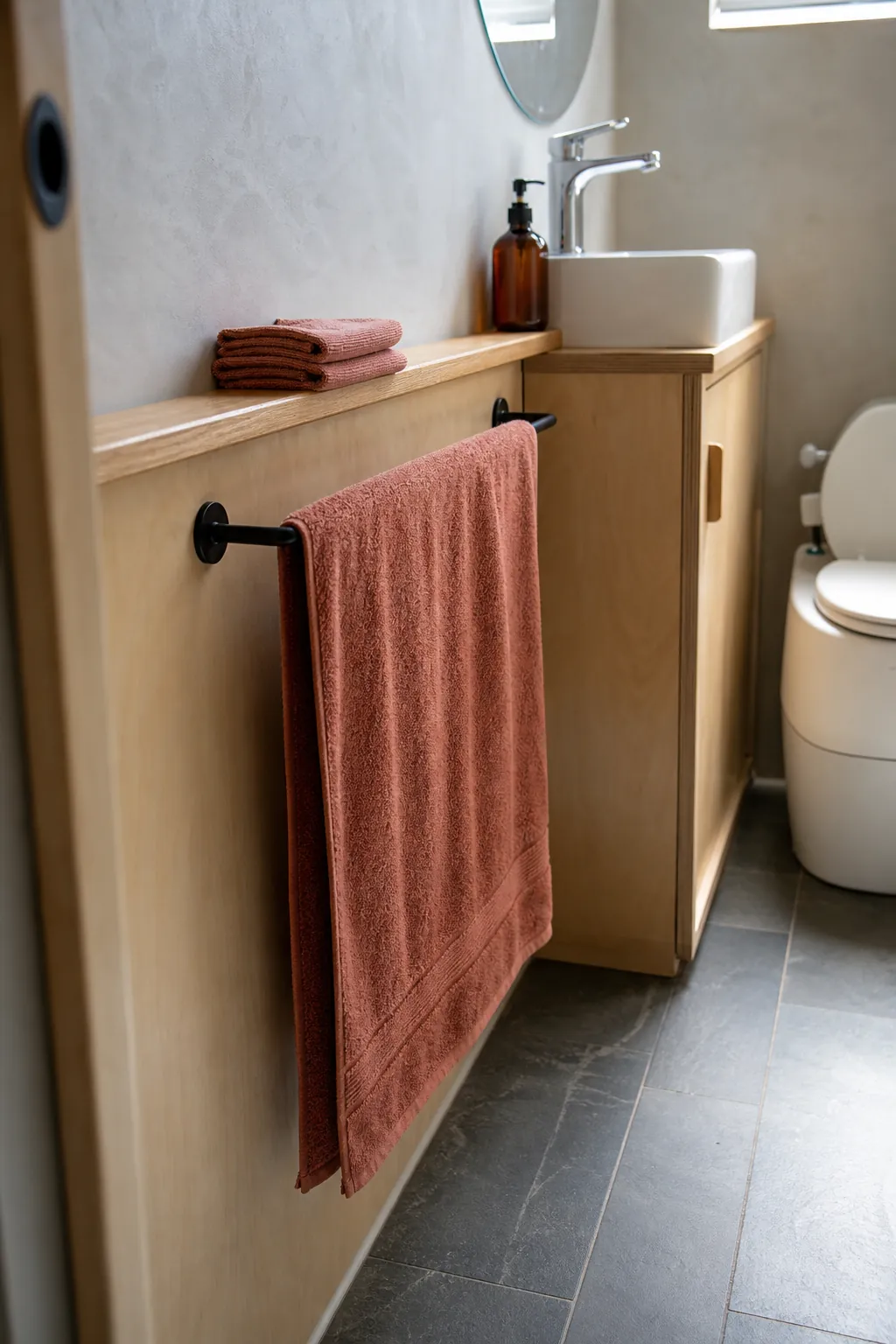
Look for overlooked rail locations: the side of a vanity, a protected wall above the toilet, the inside face of a solid door, or a shallow wall section beyond the shower screen. A rail with a shelf above can store folded clean towels while the bar below holds the towel in use. Keep bulky heated rails out of the circulation path unless the room was planned around their depth and electrical requirements.
Measure with the towel on the rail, not just the bare hardware. The fabric adds depth and length. Confirm that it will not brush the toilet, drag on the floor, block a drawer, or sit against a damp shower wall. In a shared tiny house bathroom, two short rails in different zones can work better than one crowded full-length rail.
Build shower niches around bottles and reach
A shower niche removes bottles from the floor without projecting into a narrow enclosure. It is one of the most effective forms of small bathroom storage, but only when planned around actual products, framing, plumbing, and waterproofing. A beautiful niche that cannot fit a pump bottle or sits directly in the strongest spray is a permanent inconvenience.
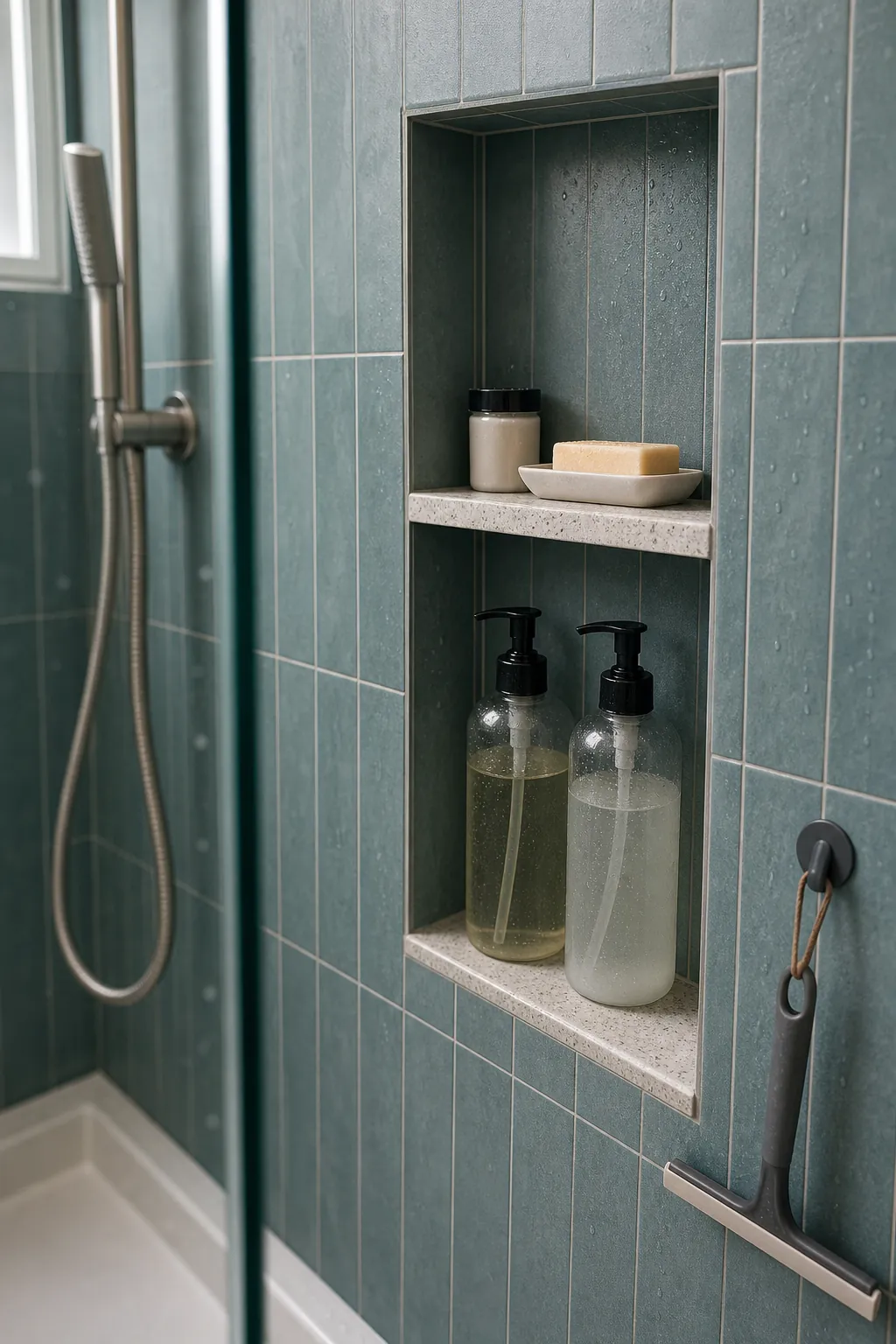
Line up the tallest bottles you use and measure their height, width, and pump clearance. Add room for fingers to grip them. A tall niche with an intermediate shelf can separate everyday products from occasional ones, while a long horizontal niche offers easy visibility but may conflict with studs. Check the wall cavity before committing; exterior walls, plumbing runs, and structural framing can make another wall the safer choice.
Waterproofing is not a decorative detail. The niche must integrate with the shower’s approved waterproofing system, and its bottom should drain toward the shower rather than hold water. Follow the niche and membrane manufacturers’ instructions or use a qualified installer. Avoid drilling through finished waterproof surfaces later just to add a shelf that could have been planned at the start.
Create a no-drill version for renters and uncertain layouts
If you cannot open walls or are still learning how the room works, build a reversible system first. An over-door rail, a tension-pole shower caddy, and a few properly rated adhesive hooks can reveal the best permanent locations. This approach also suits tiny homes that move, where reducing heavy tile work and checking hardware after travel may be part of regular maintenance.
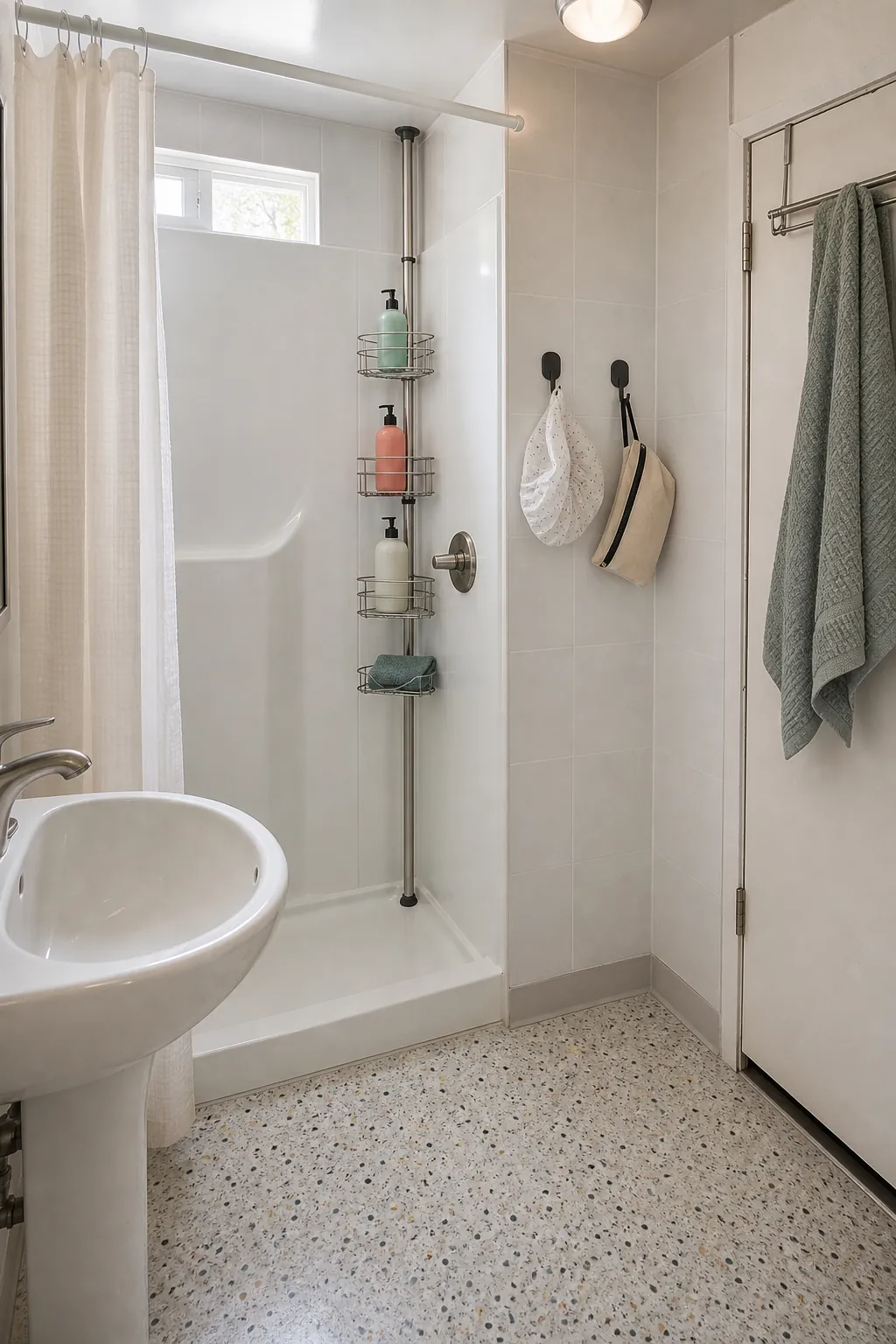
Keep the temporary setup restrained. A floor-standing cart may add shelves but steal the only turning space. A deep over-door organizer can stop the door from opening fully. A tension pole works best in a stable corner where shelves do not obstruct elbows or controls. Choose rust-resistant materials, respect weight ratings, and clean mounting surfaces exactly as the manufacturer specifies.
Live with the arrangement for several weeks. Notice what falls, stays damp, or requires an awkward reach. Those observations are more useful than copying a styled bathroom photo because they reflect your towel size, product count, dominant hand, shower direction, and daily routine.
Combine storage without creating visual clutter
Hooks, rails, and niches feel calm when they share a simple finish and align with existing edges. A hook row can follow the vanity top, a niche can align with a tile course, and a short rail can match the width of a cabinet side. These quiet relationships matter more than making every accessory identical.
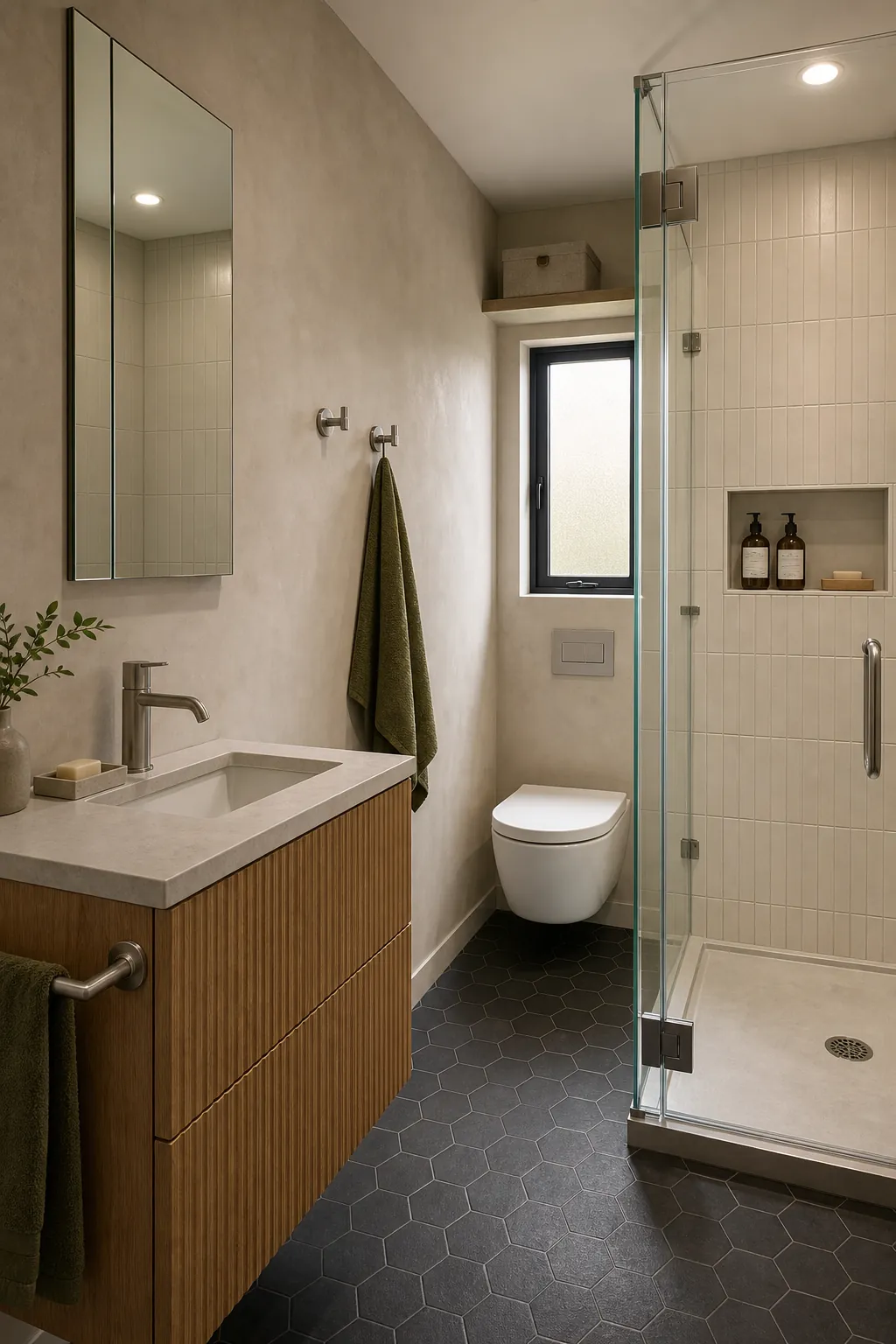
Limit open storage to items that are attractive, frequently used, or need to dry. Put backups, medicine, cleaning concentrates, and visual clutter behind a door or in a labeled bin elsewhere. In a tiny house, the bathroom does not need to store every bathroom-related product. It only needs the current supply and the tools required for the next routine.
Leave some wall space empty. The negative space makes the room easier to scan and clean, and it keeps hardware from feeling like an obstacle course. Storage is successful when the room feels simpler after you use it.
Test the bathroom as a working system
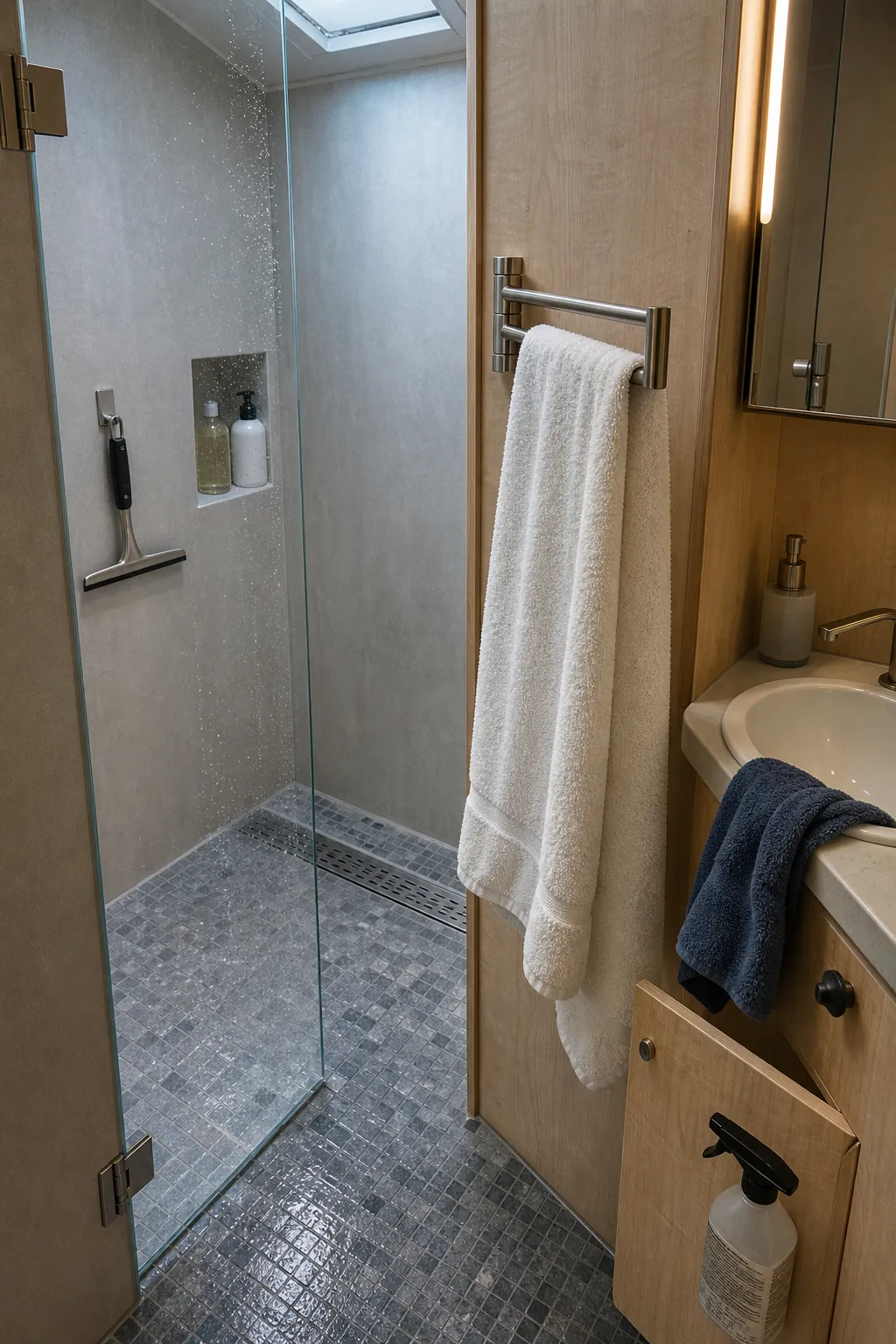
Once everything is installed, run a real shower-day test. Can you reach a dry towel without stepping into the doorway? Does the hand towel dry between uses? Can you remove and clean every caddy or rail? Does water drain from the niche, and can you wipe its corners without moving a dozen bottles?
Make one adjustment at a time. Move the over-door hook before adding another basket. Reduce duplicate products before enlarging open storage. Separate towels so they dry before buying stronger ventilation to compensate for a crowded rail. The aim is not to squeeze the maximum number of objects into a compact bathroom. It is to make a small set of necessary objects easy to reach, dry, return, and clean around.
That is the real advantage of a deliberate hook, rail, and niche plan: the bathroom stops asking you to negotiate with it. Each routine has a clear path, each item has a stable home, and the limited space works harder without looking or feeling packed.