
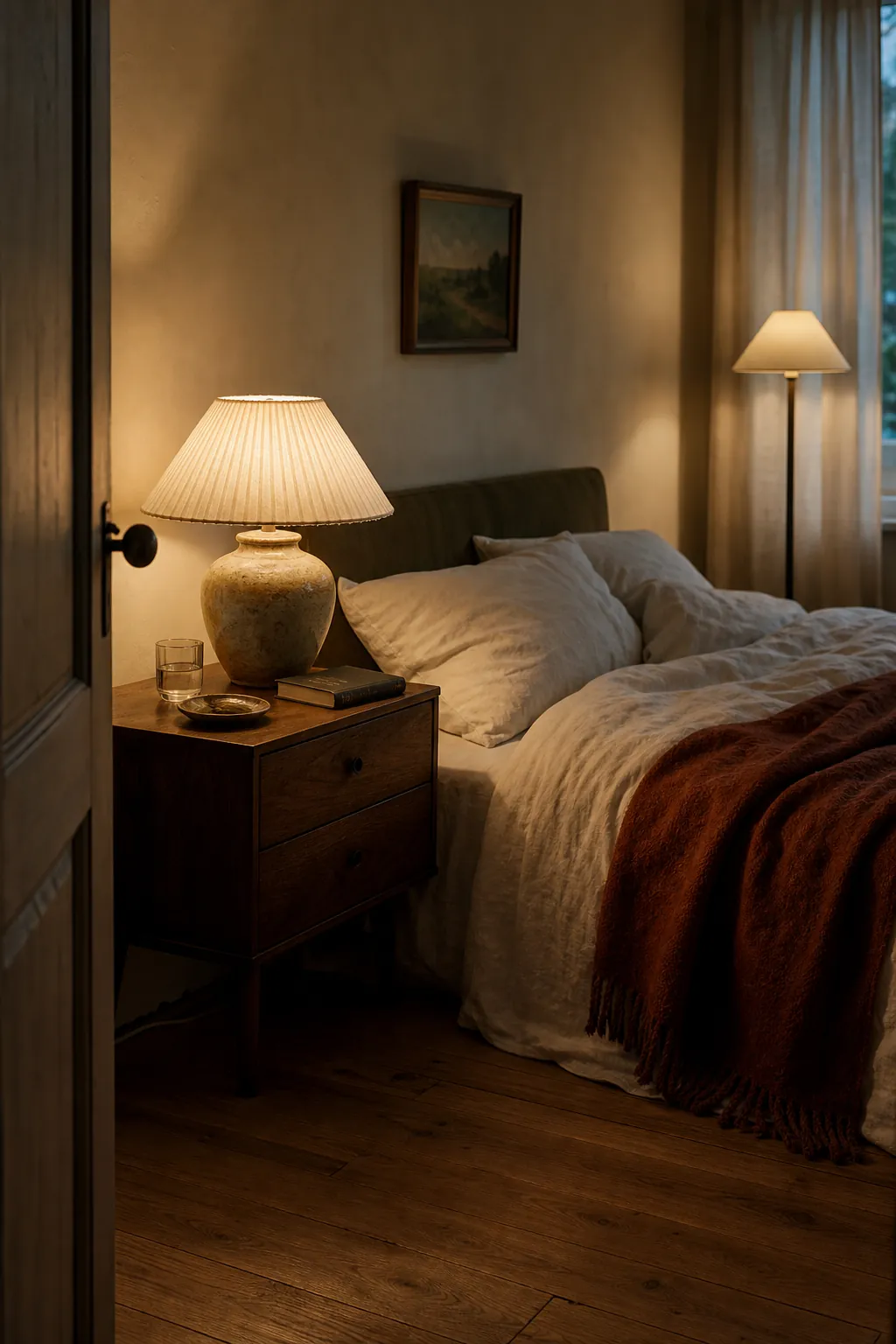
A vintage lamp can change a bedroom faster than almost any decorative object because it affects both what the room looks like and how it feels after dark. But age alone does not create warmth. The shade, bulb, height, and surrounding objects determine whether a lamp gives a soft evening glow or becomes one more awkward item on the nightstand.
Start by switching off the overhead light and noticing where you actually need illumination. Most bedrooms need readable light beside the bed, gentle light across the room, and an easy path to the door—not a collection of decorative lamps all competing for attention. Use that practical map to decide which vintage lamps deserve space.
Let bedside lamps feel related, not identical
Matching lamps create symmetry, but a carefully mismatched pair often feels more collected. Keep one visual connection between them: similar overall height, repeated shade fabric, compatible base colors, or shapes from the same era. A ceramic lamp on one side can sit comfortably with a brass lamp on the other when both shades cast the same warm, diffused light.
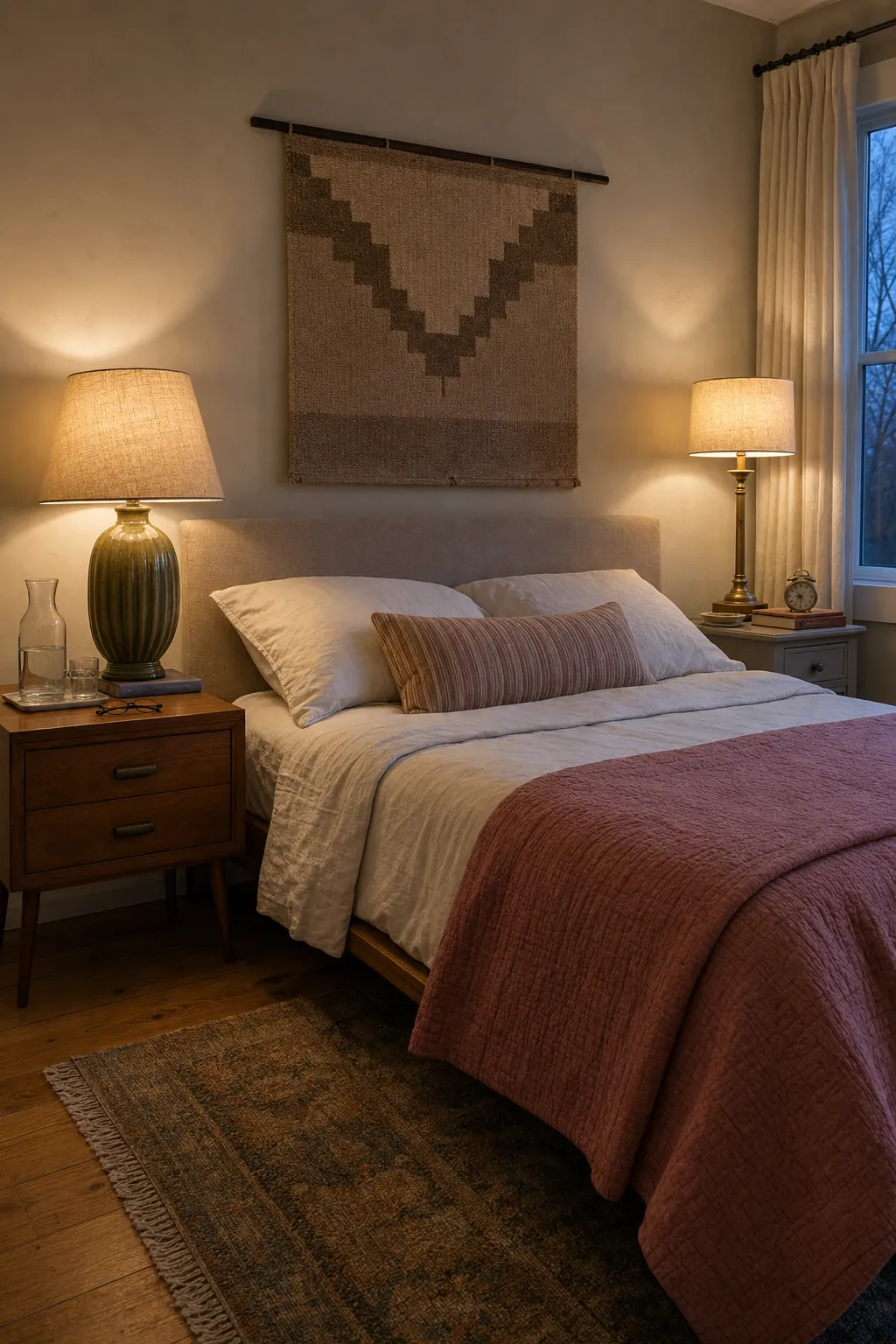
Judge the pair from the bed, not just from the doorway. The bottom of each shade should be near seated eye level so the bulb remains hidden while light reaches a book. If one nightstand is shorter, use a sturdy book or low wooden riser to correct the height. The fix should look intentional and remain stable during daily use.
Give a small dresser lamp breathing room
A low vintage lamp on a dresser can illuminate folded clothes, jewelry, and the wall without crowding the bedside. Choose a lamp that occupies roughly one side of the surface, then leave the other side useful. A shallow tray and one taller object are usually enough; rows of tiny decor make the dresser harder to use and weaken the lamp’s silhouette.
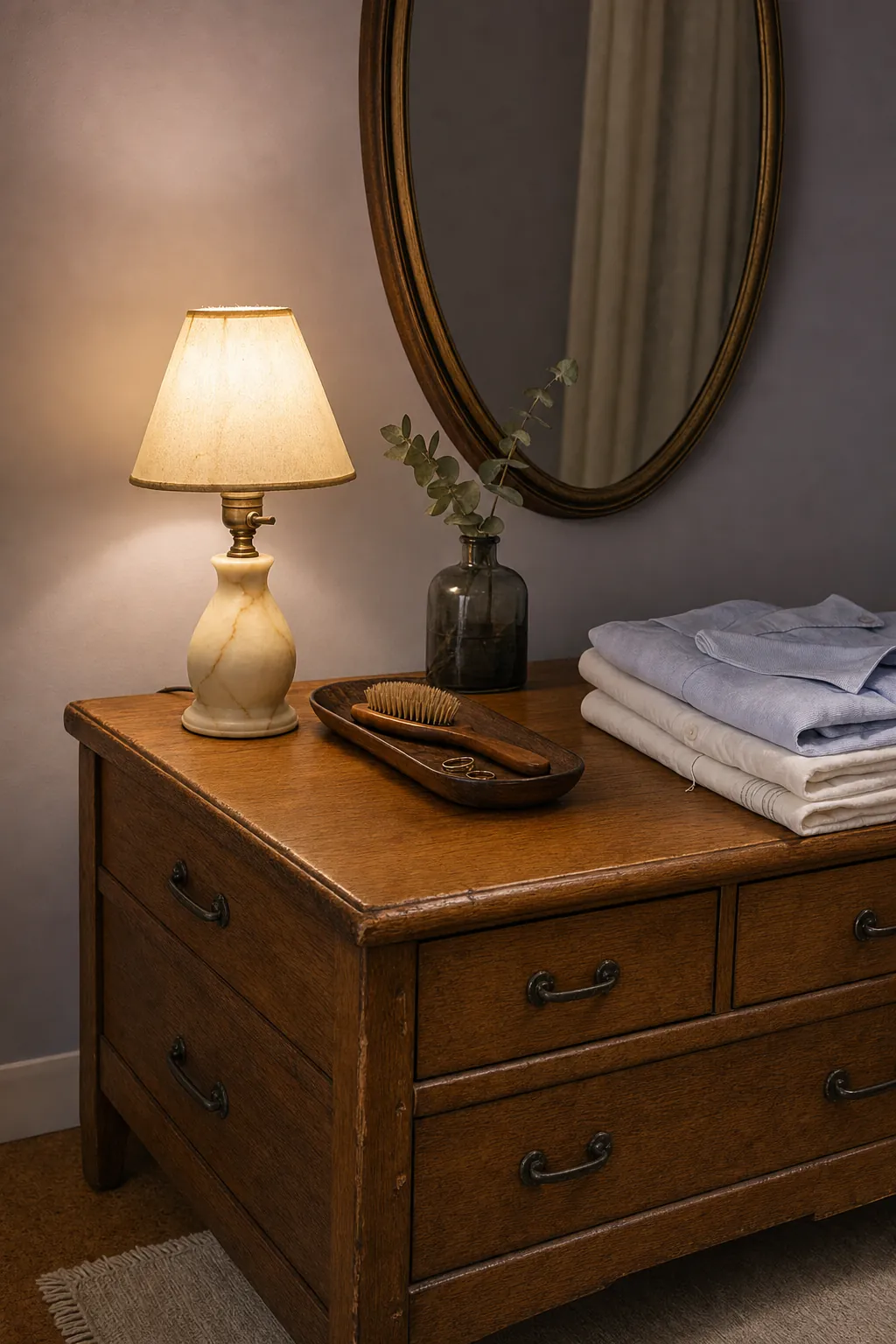
A mirror can double the glow, but test it at night before settling the arrangement. Move the lamp sideways until the reflected bulb disappears from normal standing and seated viewpoints. A fabric shade, frosted glass globe, or low-output bulb prevents a bright point from dominating the reflection.
Use one sculptural lamp in a compact corner
A tiny bedroom does not need tiny lighting everywhere. One medium sculptural lamp can make a narrow corner feel deliberate, provided it does not block drawers, curtains, or walking space. Mushroom lamps, ribbed glass bases, and weighty pottery lamps work especially well because their shapes stay interesting even when switched off.
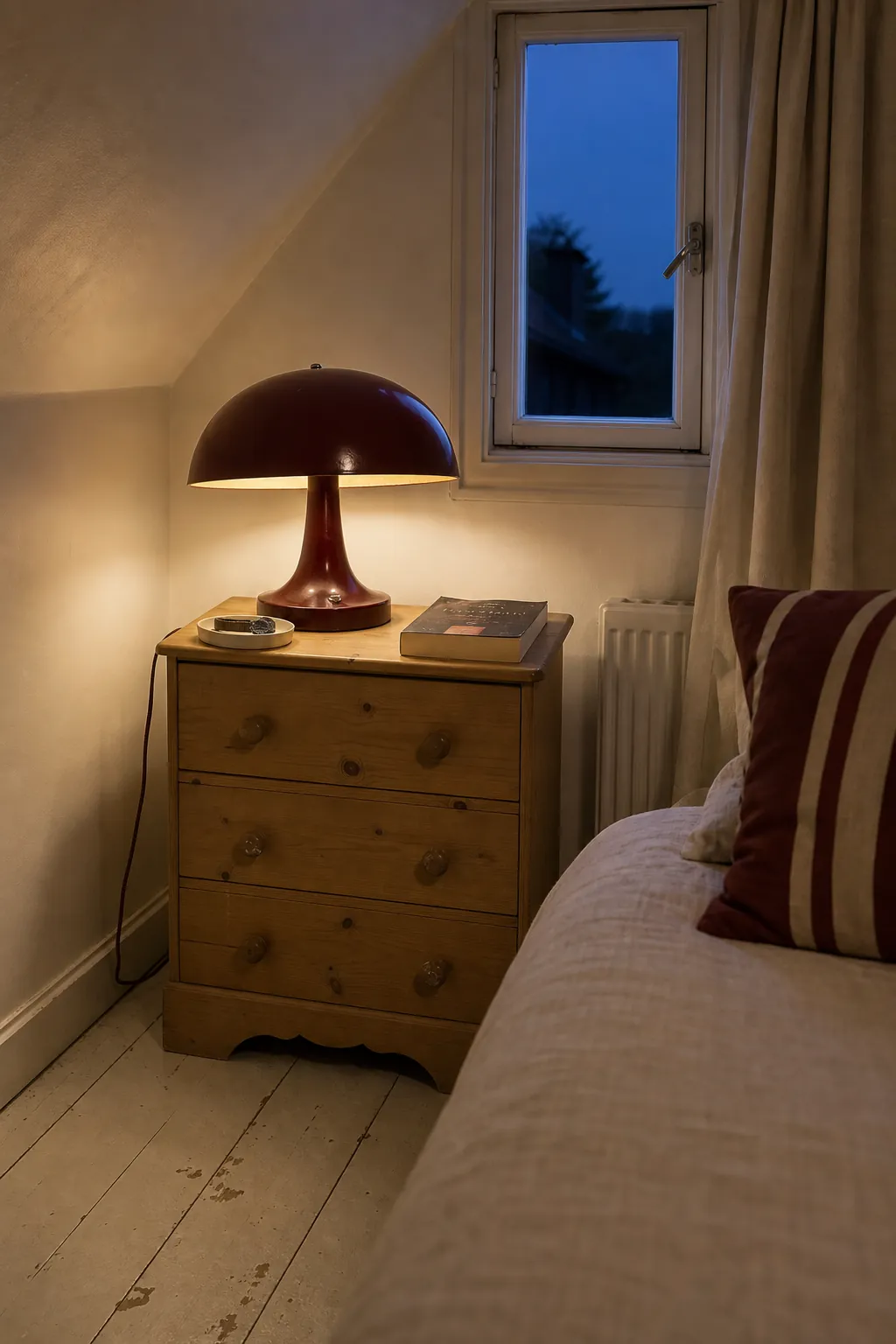
Keep the immediate styling quiet: perhaps a small dish for jewelry and one book. When the lamp already has a strong color, unusual base, or distinctive shade, it should be the object that carries the visual personality. Repeating its color once in a pillow or throw is enough to connect it to the bed.
Refresh an old base with the right shade
Many secondhand lamps look wrong because the shade was replaced with the nearest available size. A shade that is too small exposes hardware and makes the base look top-heavy; one that is too large overwhelms the nightstand. Bring the base to a shade shop when possible, or make a paper outline of several shapes before ordering.
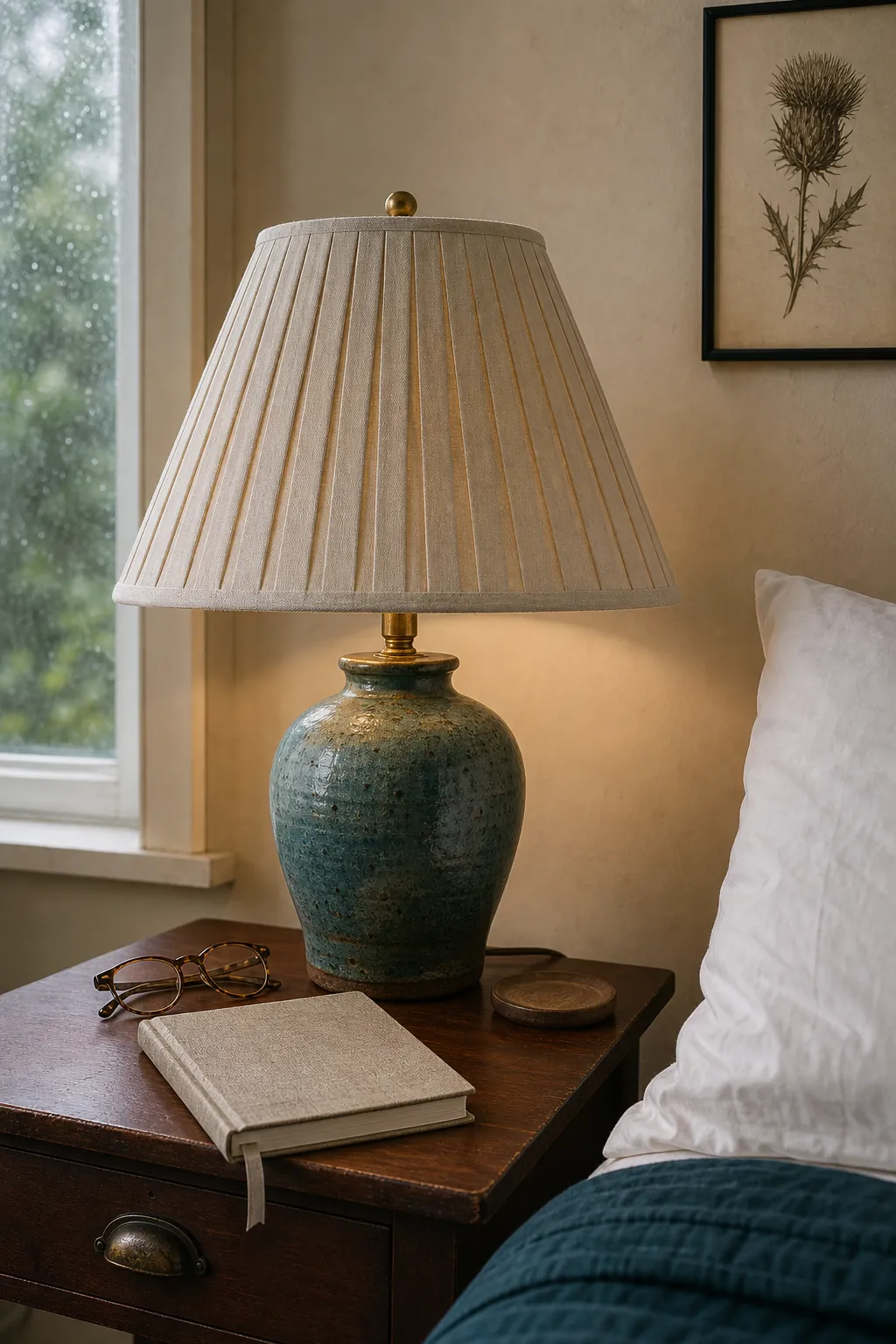
Pleated linen adds texture and spreads a gentle light; parchment directs more light up and down; an opaque metal shade creates a focused pool. Check the harp, fitter, and maximum bulb rating rather than forcing incompatible parts together. Old wiring, cracked sockets, or brittle cords should be assessed by a qualified lamp repair professional before use.
Layer a floor lamp beyond the bedside
Two bedside lamps can still leave the room flat if every light sits at the same height. Add a slender vintage floor lamp near a chair or dresser to brighten a different plane. Its job is not to make the bedroom brighter everywhere; it is to reduce the contrast between the glowing bed and a dark corner.
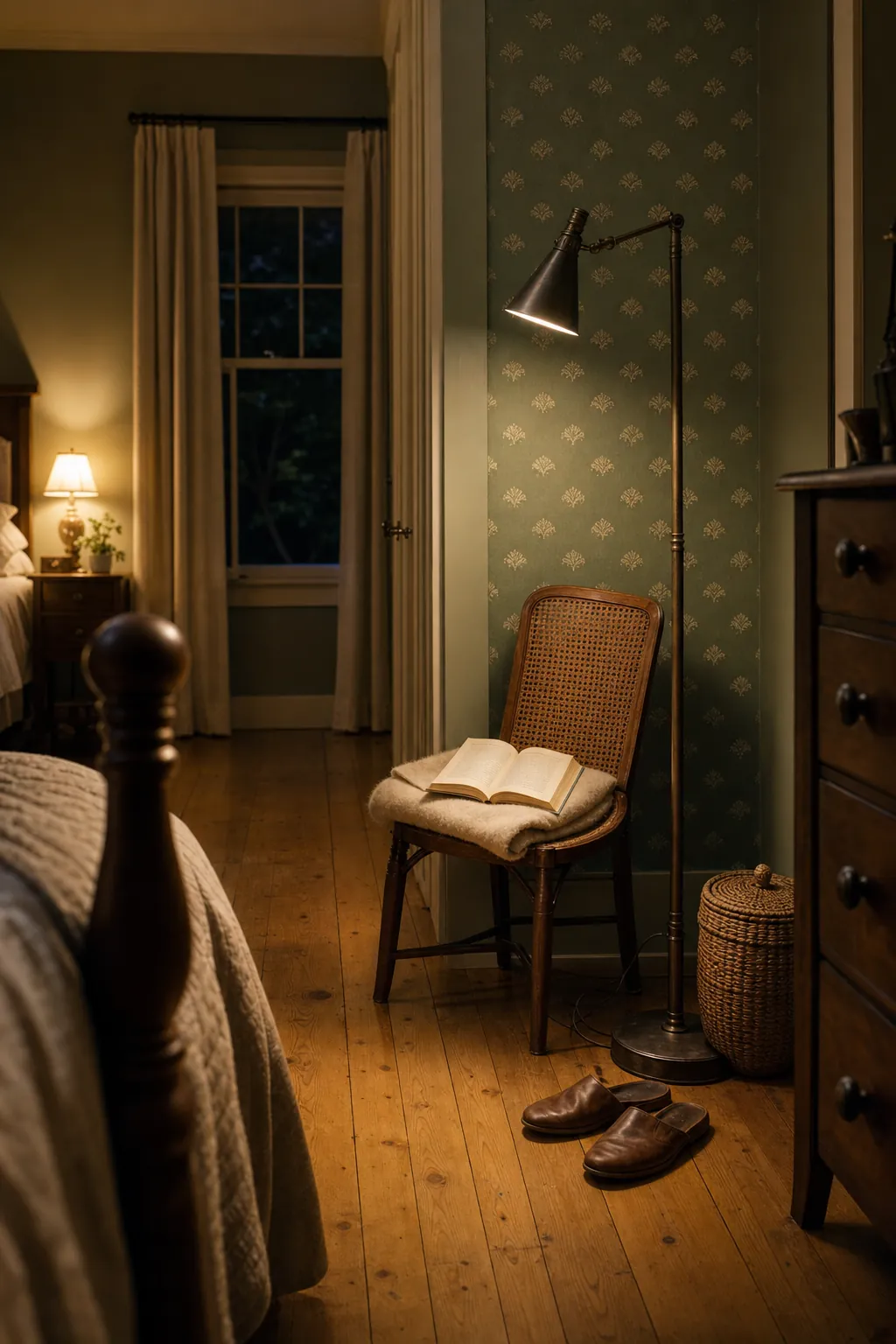
Use bulbs within the same warm color family so one source does not look green, pink, or stark white beside another. Dimmers are valuable, but only with compatible bulbs and controls. At bedtime, the floor lamp can provide enough orientation to move around while the bedside lamp remains dedicated to reading.
Make a vanity lamp flattering and useful
A small vintage lamp near a vanity or dressing mirror creates a softer face-level layer than a ceiling fixture. Place it to the side rather than directly beneath the mirror, and use a shade that diffuses the bulb. If accurate makeup color matters, choose a warm-neutral bulb with good color rendering instead of an extremely amber decorative bulb.
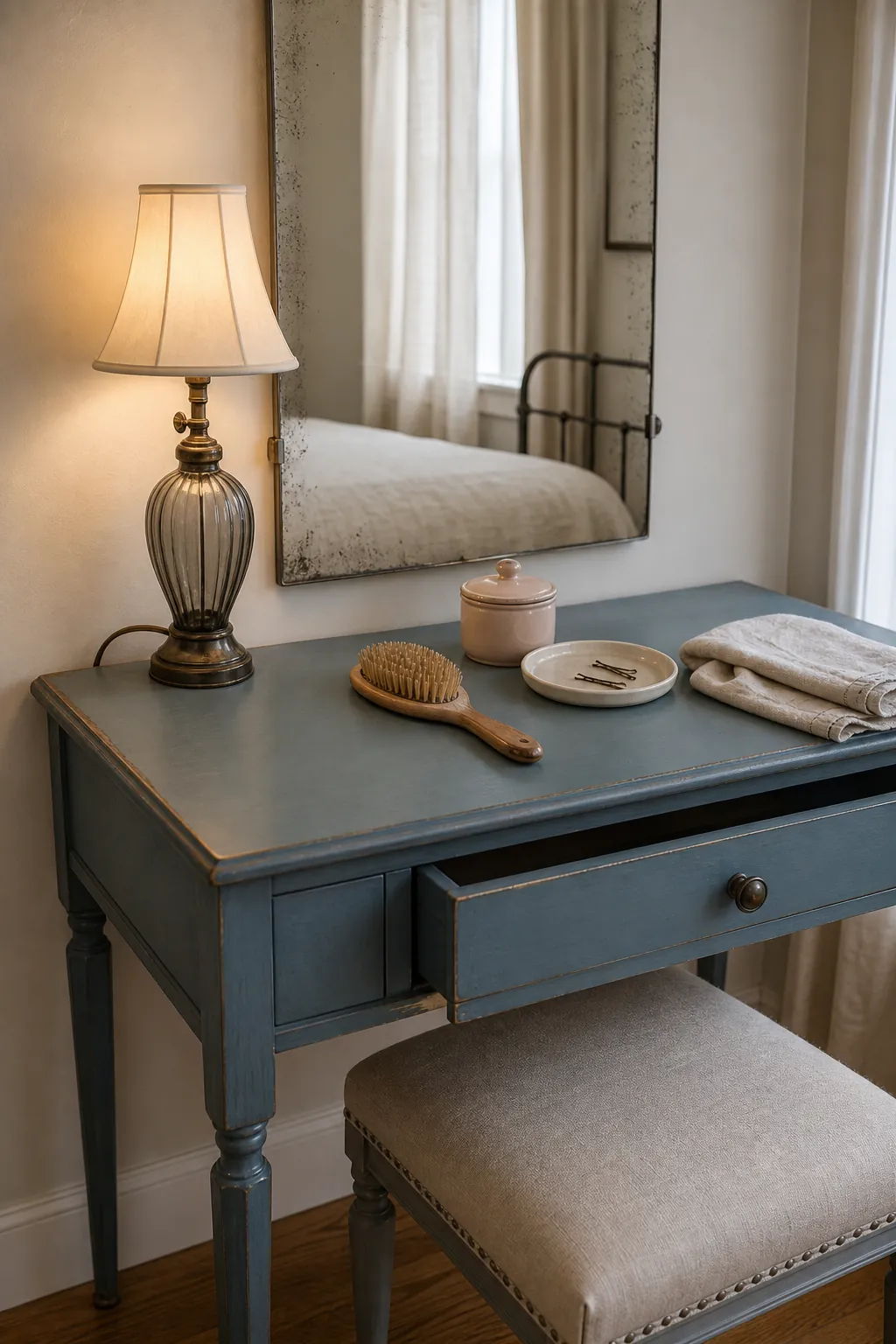
Limit the surface to the things used there: a brush, a small tray, and perhaps one lidded container. This keeps cords clear and makes cleaning easier. A lamp should improve the ritual of getting ready, not turn the vanity into a display that must be rearranged every morning.
Test the room during your real evening routine
Before buying another lamp, spend a week using the ones you have at different levels. Read in bed, open the dresser, walk to the bathroom, and look at the room from the hall. Remove anything that causes glare or steals useful surface area. The right vintage lamp styling does not look like a collection assembled for a photograph; it gives each evening task a comfortable pool of light while letting the bedroom settle quietly around it.