
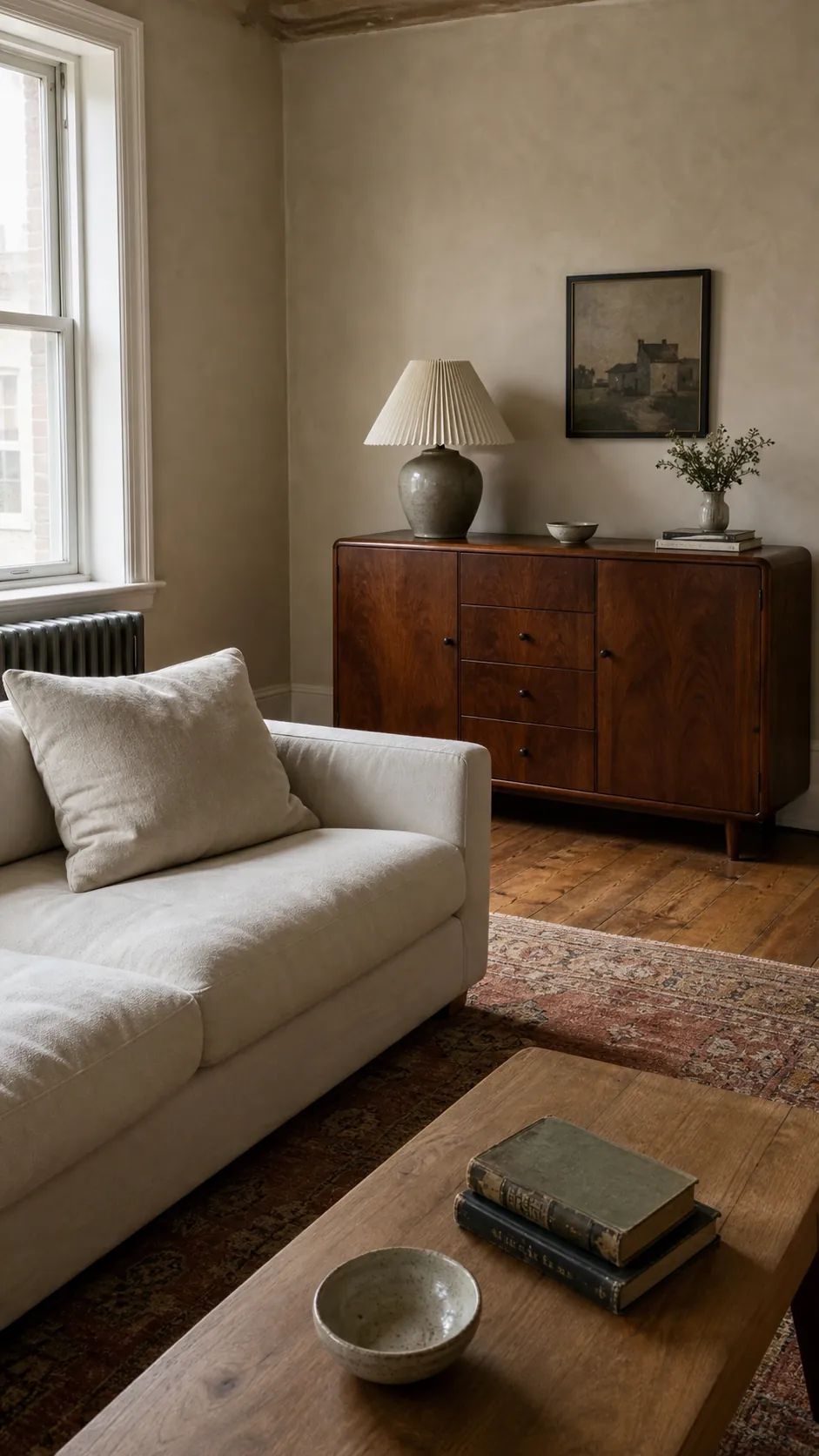
Nostalgic decor works best when it brings back a feeling, not when it recreates a decade room by room. The goal is a home that feels familiar, collected, and warm while still supporting the way you live now. That distinction matters: a stack of vintage objects can look like inventory, but one old piece given enough space and a clear purpose can make an entire modern room feel personal.
The most convincing rooms also solve the worry many decorators have when mixing eras: How do you make old and new look intentional rather than accidental? The answer is not a rigid ratio. It is a series of visual connections—repeated woods, controlled color, balanced scale, useful lighting, and enough quiet space for character pieces to register.
Start With a Modern, Livable Foundation
Begin with the parts of the room that need to work hardest: comfortable seating, practical storage, good window coverage, and flexible lighting. Clean-lined foundational furniture gives nostalgic decor a calm setting and prevents the room from slipping into period-set territory. A simple sofa, an unfussy bed, or a streamlined dining table can carry contemporary comfort while older pieces supply the emotional detail.
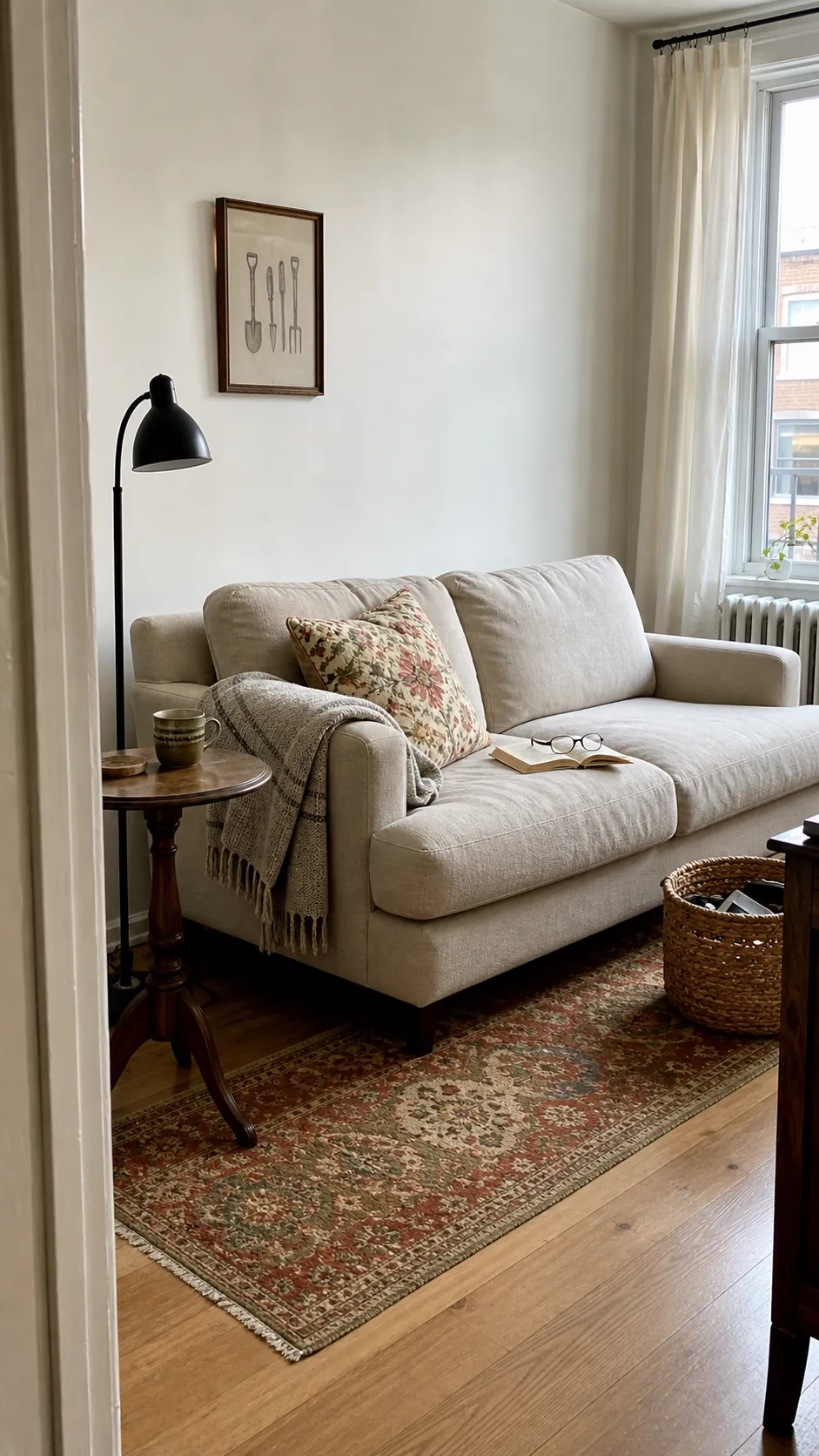
Work with what you already own before replacing major pieces. A plain contemporary sofa can become part of a modern vintage decor scheme through a faded wool rug, a turned-wood side table, and linen pillows in colors pulled from an old textile. This approach is especially useful for renters and budget-conscious homes because the atmosphere changes without requiring a full furniture reset.
Choose one dominant visual language for the large pieces. If the room already leans modern, let it stay modern and use vintage as the character layer. If the architecture has old house charm, keep modern additions visually light so original trim, floorboards, or built-ins remain the focus. A clear foundation gives every later choice a role.
Let One Vintage Piece Carry the Story
Tiny nostalgic accents scattered everywhere can create noise. A more confident move is to choose one substantial piece—a walnut sideboard, an iron bed, a weathered farmhouse table, or an old glass-front cabinet—and treat it as the room’s anchor. Its age, patina, and silhouette become meaningful because the eye has time to notice them.
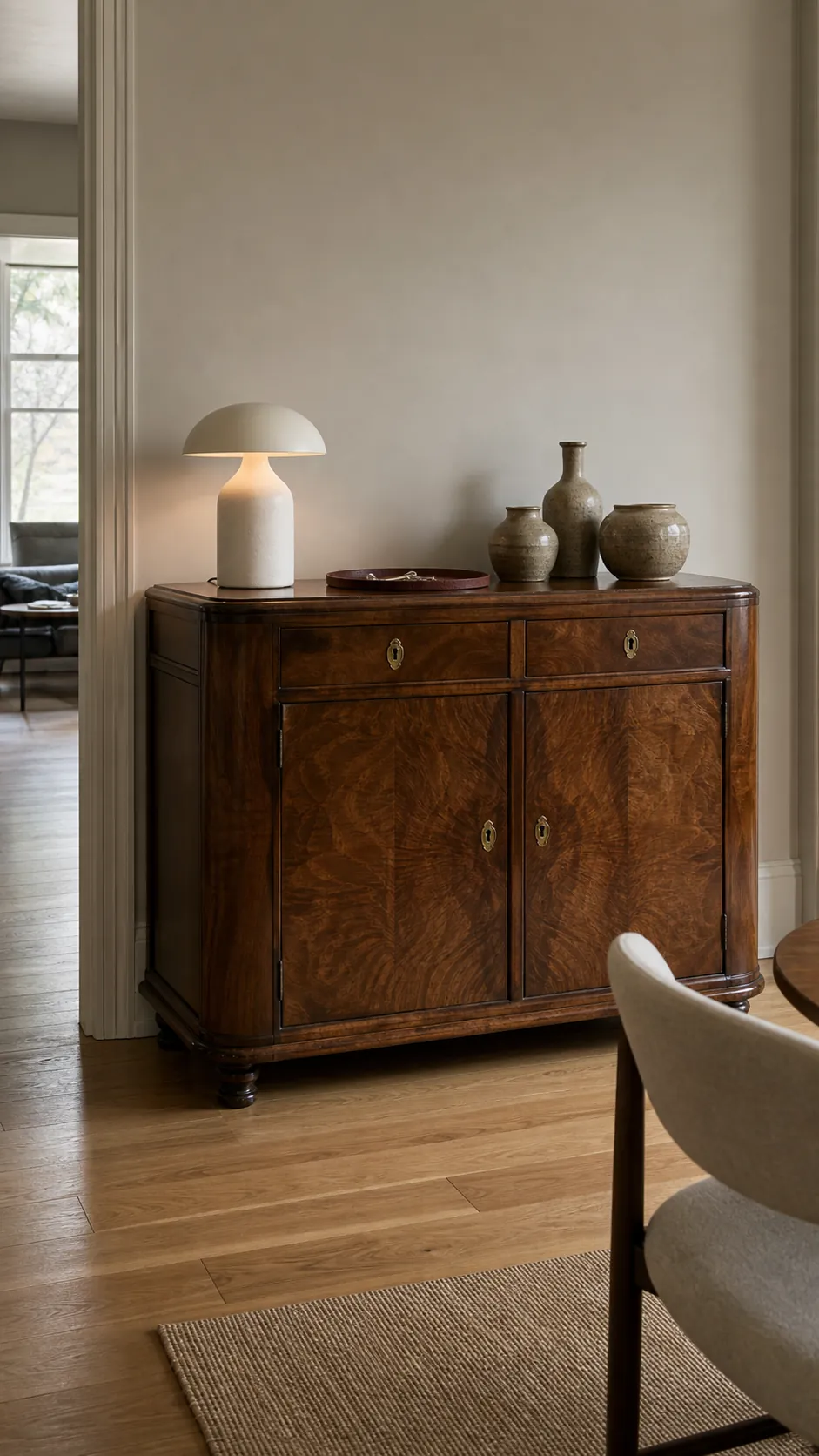
Give the anchor breathing room. Avoid covering every inch of a sideboard with thrifted decor. Instead, add a contemporary lamp, a small group of ceramics, and one personal object. The contrast makes the older craftsmanship feel deliberate. It also keeps practical surface area available, which is one of the clearest signals that the room belongs to real life rather than a styled display.
If the piece needs repair, preserve the qualities that reveal its age while correcting the issues that make it unpleasant to use. Tighten loose joints, clean sticky drawers, replace unsafe wiring, and protect dry wood. Patina should communicate history, not neglect. That line keeps vintage decor charming without making the home feel shabby.
Repeat Color and Material Across Eras
Cohesion usually comes from repetition rather than perfect matching. Pick a restrained palette based on colors already present in the room: perhaps tobacco brown, muted olive, cream, and a small rust accent. Then distribute those tones between old and new pieces. A contemporary olive chair can connect to green in a vintage botanical print; a new cream curtain can echo the ground color of an old quilt.
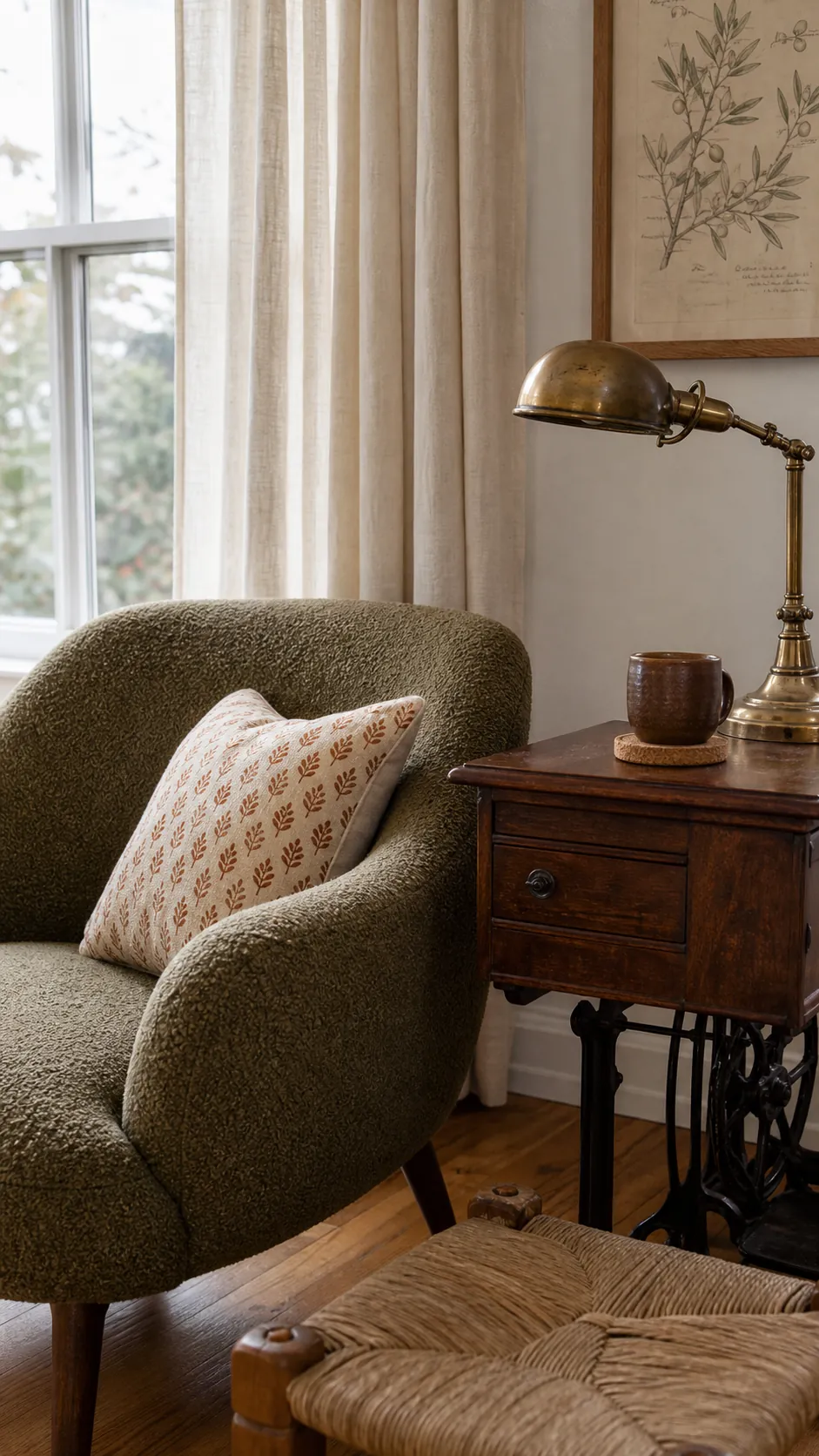
Materials can do the same work. Repeat aged brass in one vintage lamp and one modern cabinet pull, or carry warm wood tones from an inherited table into a new picture frame. The finishes do not need to be identical. In fact, slight variation helps a collected home feel evolved rather than purchased as a set. What matters is that each material appears more than once.
Limit strong nostalgic patterns to a few locations. A floral cushion, striped café curtain, or block-print shade can add retro home decor energy without overwhelming the modern foundation. If two patterns share at least one color and have noticeably different scales, they are far easier to combine.
Use Old Objects in Useful New Ways
An object feels integrated when it participates in the household. Fill an old stoneware crock with cooking utensils, use a library drawer for charging cables, turn a small trunk into a bedside table, or place everyday linens in a vintage cabinet. These adaptations preserve the memory embedded in a piece while giving it a reason to remain visible.
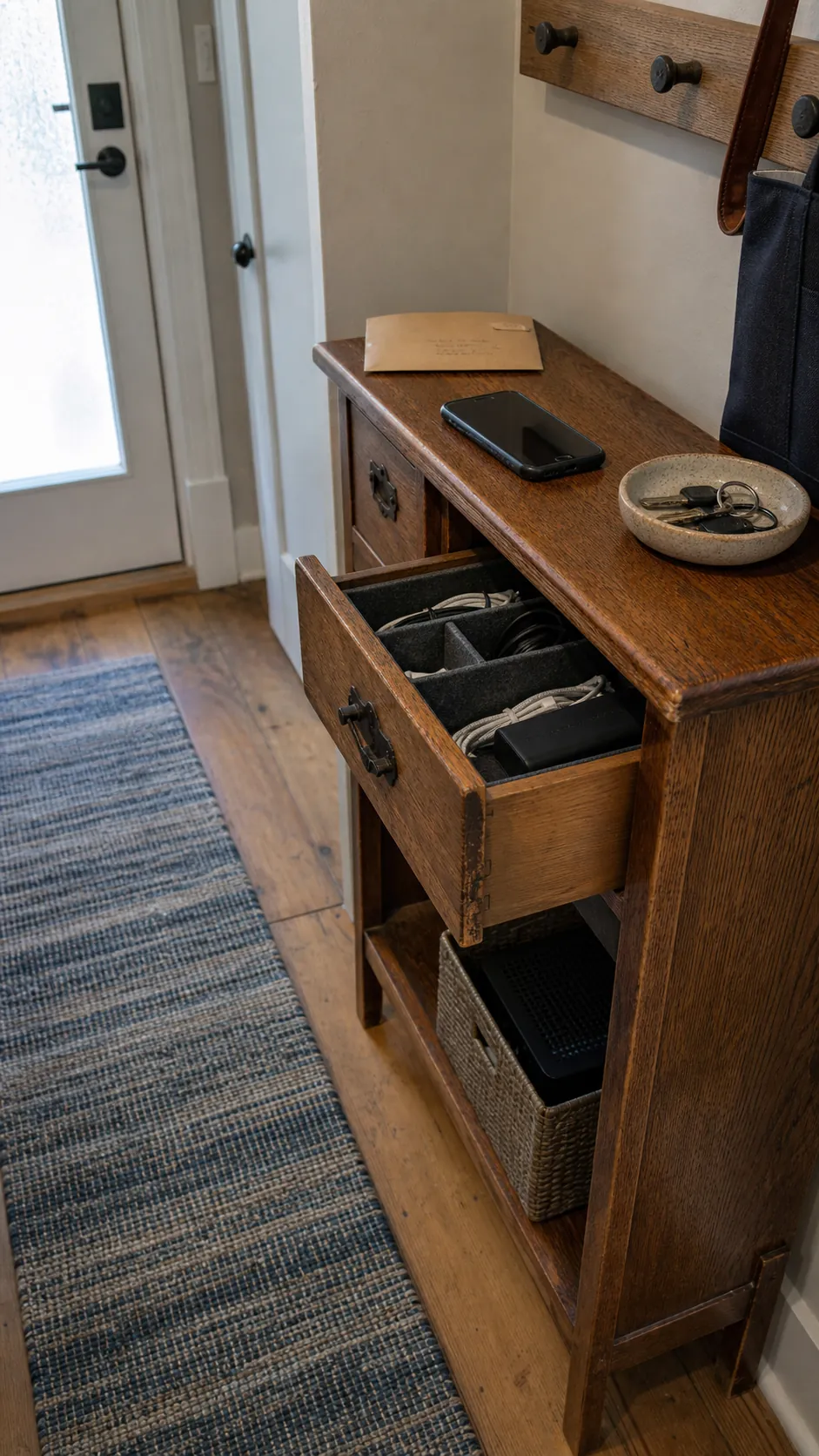
Technology deserves the same consideration. Conceal a router in a ventilated basket, route television cords through a paintable cover, or store a printer inside furniture with enough airflow. Do not sacrifice safety or ease of access for appearance. The strongest nostalgic homes accommodate modern life openly and gracefully.
This functional test also helps when shopping. Before bringing home a thrifted piece, identify its location and job. If you cannot name either, leave it behind for now. That pause prevents the common cycle of buying charming objects cheaply and later spending time trying to make random acquisitions look coherent.
Edit Displays So Collections Can Breathe
Collected does not have to mean crowded. Group related pieces and leave visible pauses between groups. Three creamware vessels on one shelf read as a collection; the same vessels spread among fifteen unrelated objects can disappear into visual clutter. Vary height and shape, then stop before every gap is filled.
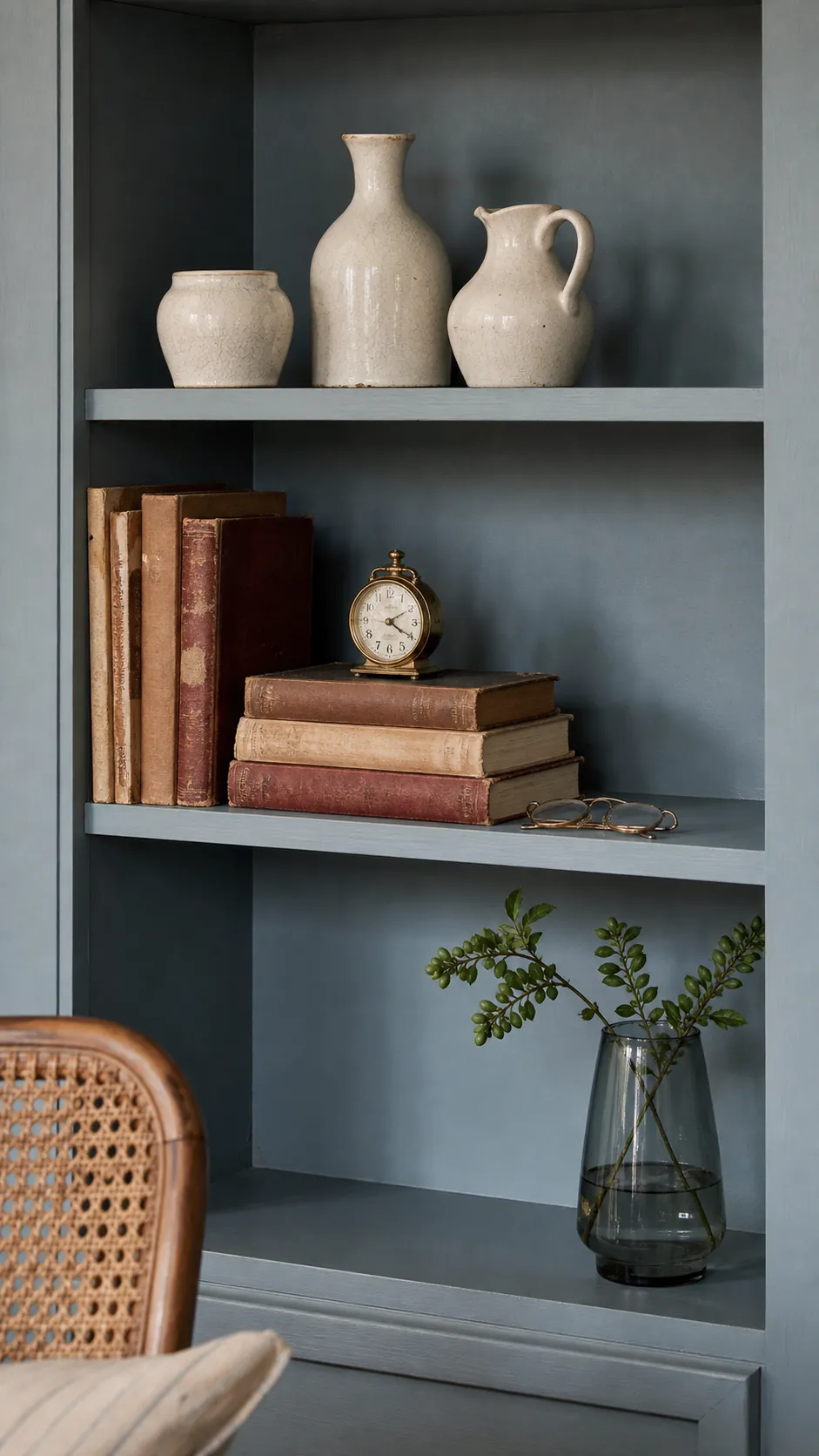
Rotate smaller items seasonally instead of displaying everything at once. This lets you keep sentimental belongings without demanding that the room hold all of them every day. A shallow storage box labeled by season or category is often enough. The rotation makes familiar pieces feel newly noticed and reduces dusting—a practical detail that matters more than styling photographs admit.
For framed pieces, find a connecting rule. It might be a shared mat color, a repeated wood tone, or consistent spacing. The images themselves can span decades. A family photograph, a modern color-block print, and a charcoal sketch can coexist when their placement creates rhythm. Order around meaningful objects makes eclectic decor legible.
Build Nostalgia Slowly Around Real Memories
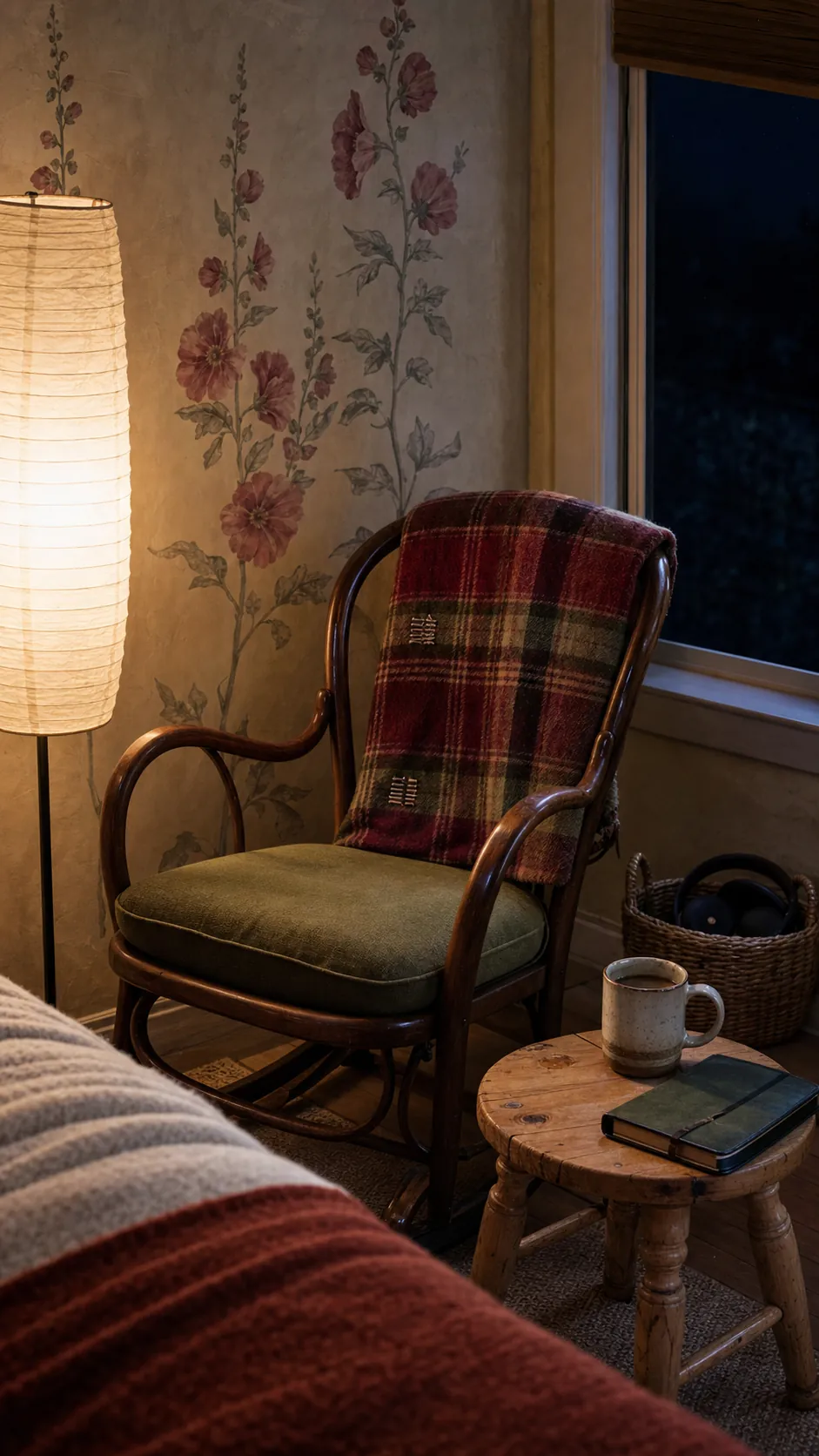
The most durable nostalgic decor is specific to the people who live with it. Start with a memory: the amber light in a grandparent’s sitting room, the weight of a wool blanket from a childhood cabin, the shape of a chair in an old family photograph. Translate the sensation rather than copying the room. A warm lamp, a tactile throw, or a curved wood chair may be enough.
Allow the home to develop through use. Keep a short list of genuine needs and look for secondhand solutions over time. The right vintage living room chair found six months from now is better than five rushed purchases made this weekend. Slow collecting also makes it easier to notice your own recurring preferences in color, shape, and material.
A modern twist is not a layer added to nostalgia; it is the editing that makes nostalgia livable. When every older object has space, purpose, and a relationship to something else in the room, the result avoids both showroom blandness and museum stiffness. It simply feels like a warm home with a past—and enough room for the life happening now.