
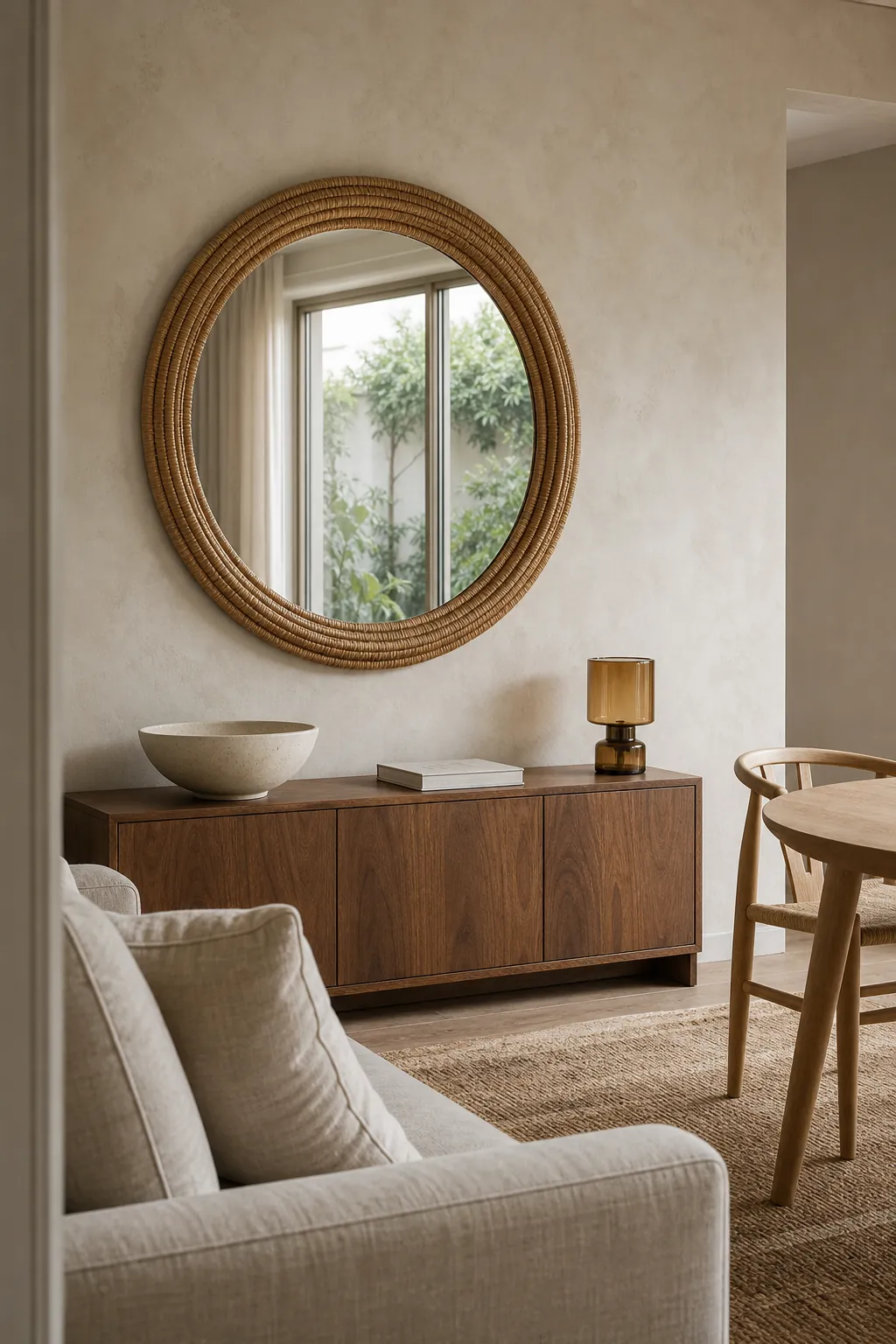
A rattan mirror can soften a room in one move, but the frame alone does not guarantee a calm result. Scale, reflected view, hanging height, and the number of other woven pieces matter more than a “boho” label. When a room feels busy, the culprit is often too many similarly sized accents, not the mirror itself.
These 21 rattan mirror ideas treat the mirror as useful architecture: a way to bounce daylight, finish an entry, make a dresser practical, or give a blank wall one confident focal point. Use the natural texture once, allow wood and cane tones to vary, and check what the glass reflects before making a hole in the wall.
Center a Sunburst Mirror Over a Slim Console
A sunburst rattan mirror brings movement to a narrow entry without using surface space. Choose one whose outer diameter is roughly two-thirds the console width, then center the glass—not the longest reed tips—over the furniture. A shallow key tray and one lamp below are enough; extra baskets and small ornaments compete with the radiating frame.
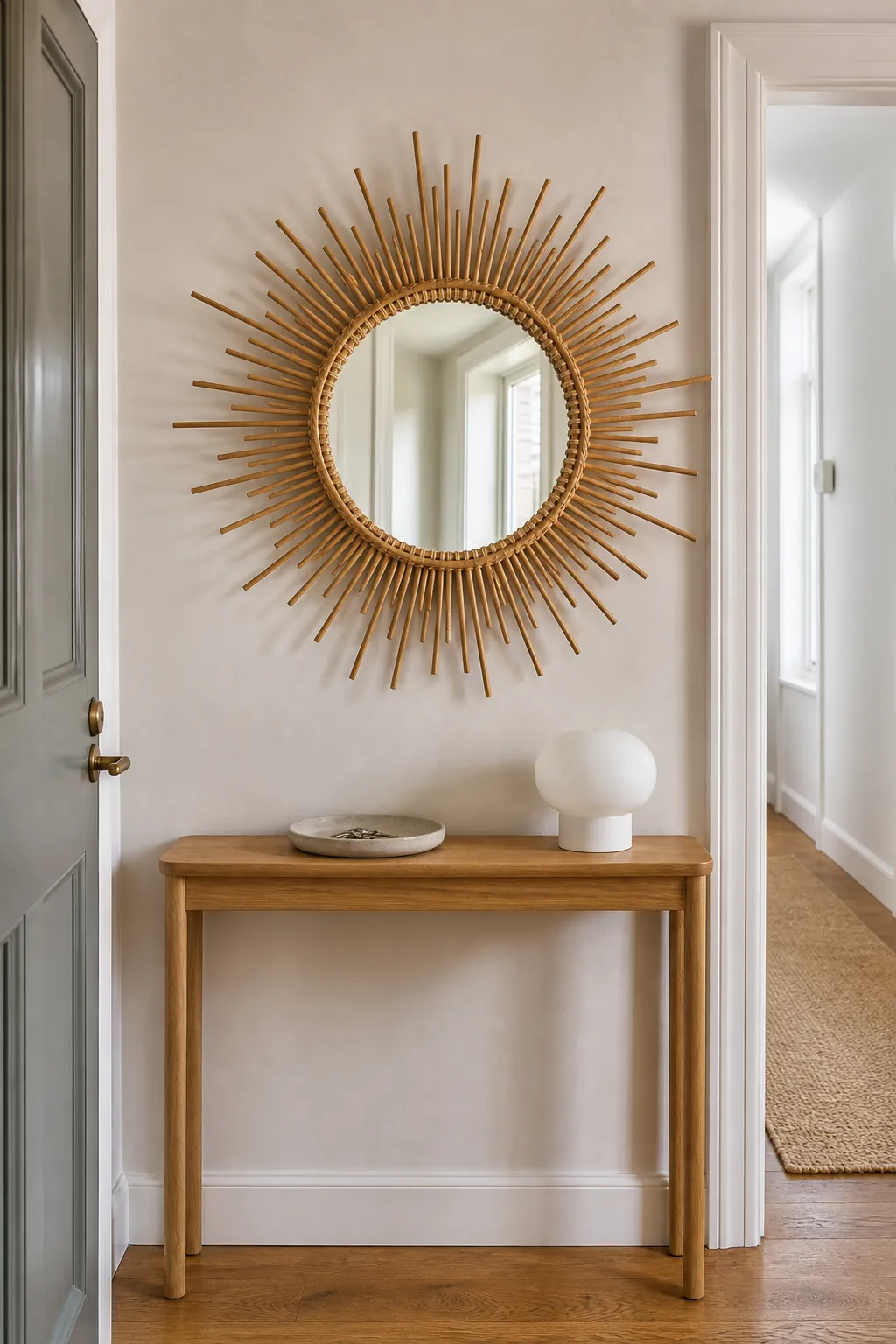
Before hanging, stand at the door and check the reflection. Daylight, an open passage, or a quiet wall will make the entry feel deeper; a coat rack or cluttered counter will simply be repeated. Keep delicate spokes clear of a busy shoulder-height walkway.
Soften a Bedroom Dresser With a Scalloped Frame
A scalloped rattan mirror offsets the hard rectangle of a dresser and introduces a gentle rhythm without becoming childish. Hang it low enough to work while standing, with the bottom edge visually connected to the furniture. Repeat the curve once in a lamp or ceramic bowl, not in every accessory.
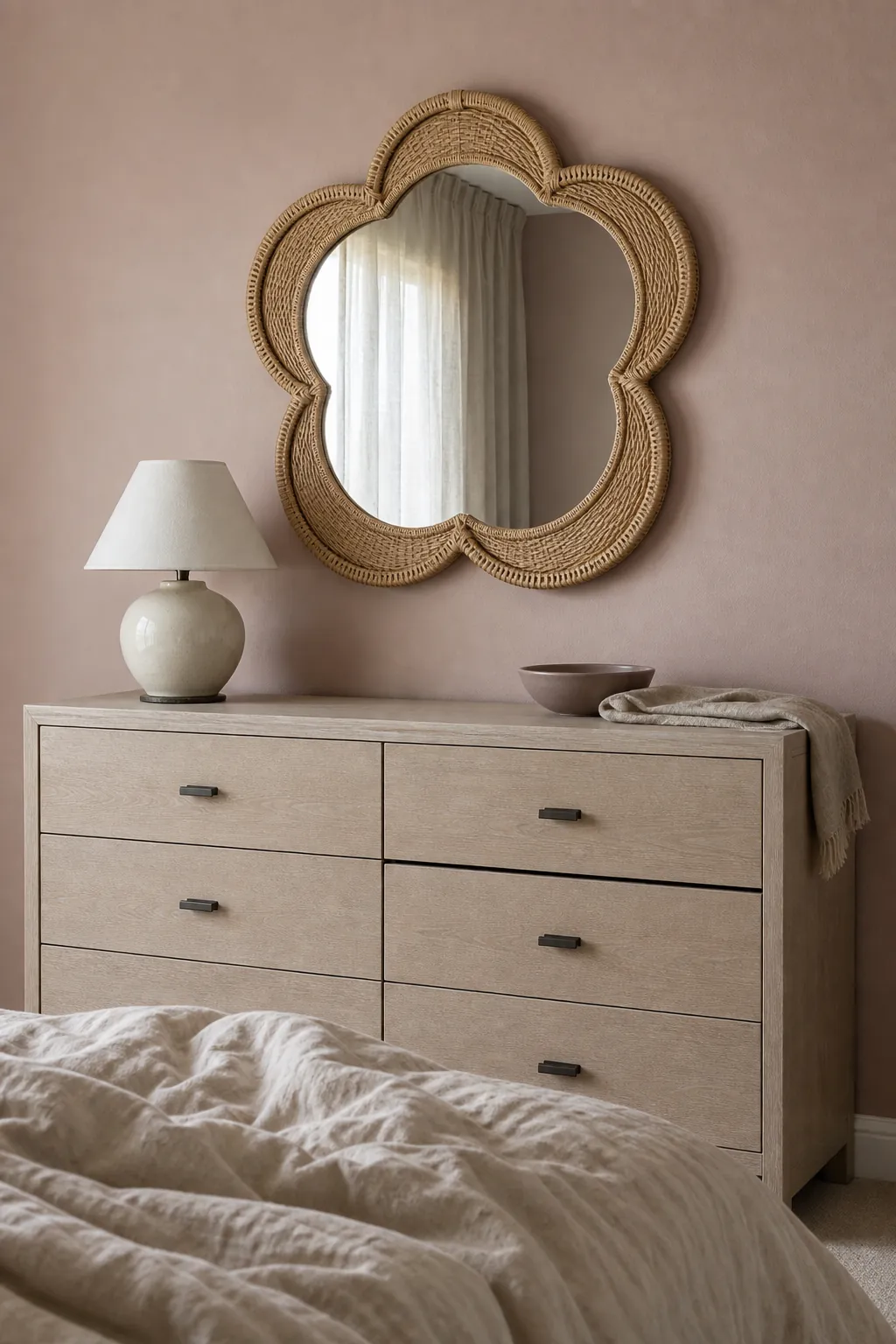
Linen bedding and plain painted walls let the weave read clearly. If the dresser already has cane-front drawers, choose a simpler scallop with open spacing rather than dense basket weave. That difference keeps natural room decor layered instead of matched.
Use a Simple Oval in a Narrow Hall
An oval rattan mirror has less visual width than a round design, so it suits a narrow hallway or the wall between two doorways. Its vertical proportion gives a useful head-and-shoulders reflection while the woven frame softens all the surrounding door trim.
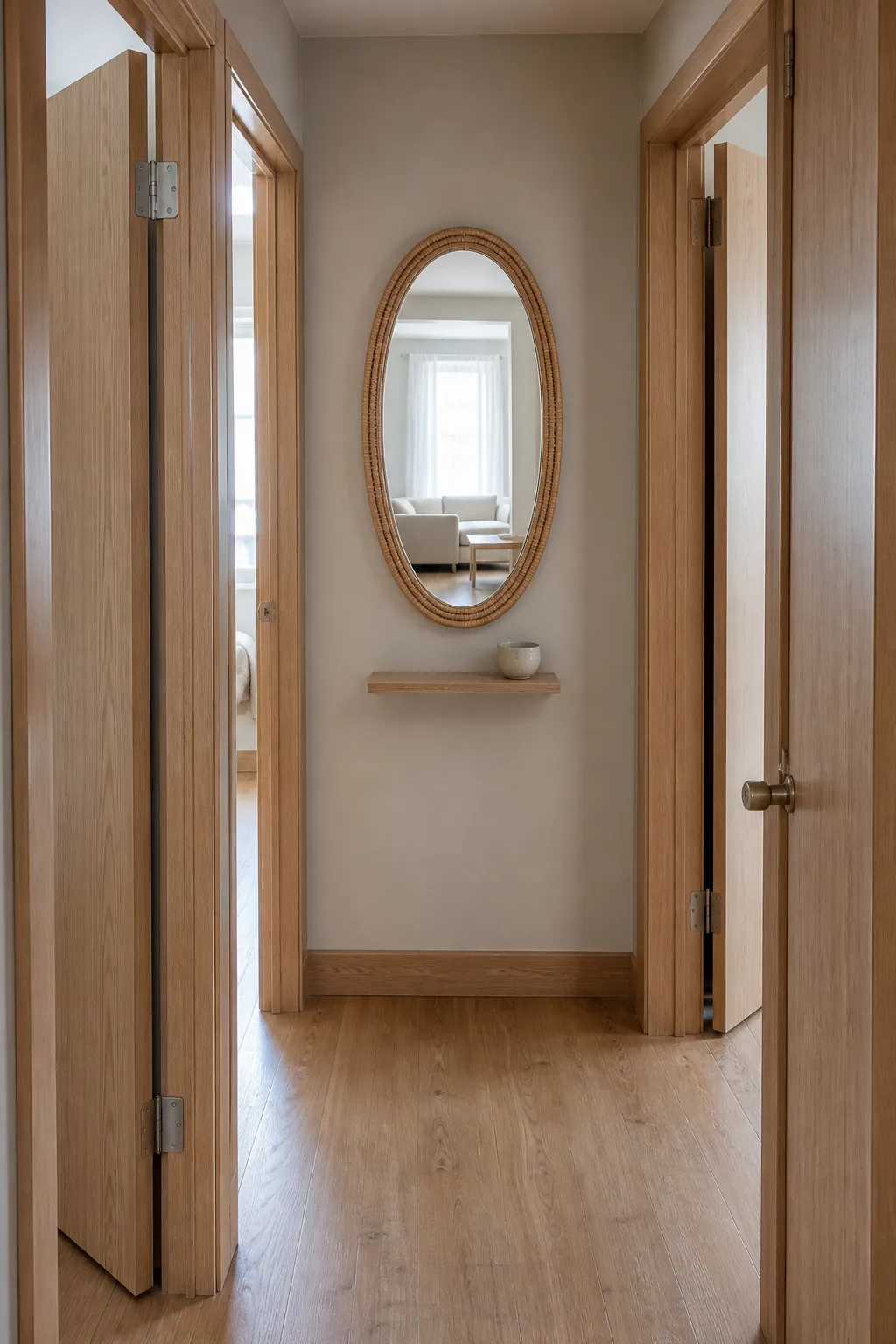
Mount it where a passing shoulder or opening door cannot catch the frame. A small wall shelf below can hold keys, but leaving the floor open usually makes the hall feel wider. Aim the glass toward a window or brighter room rather than directly at a blank close wall.
Lean a Full-Length Rattan Mirror in the Bedroom
A full-length rattan mirror can make a bedroom feel taller and more relaxed, especially when its frame is slim and the weaving stays close to the glass. Leaning looks casual, but safety should not be casual: secure the top with an anti-tip strap and keep the base out of the door swing.
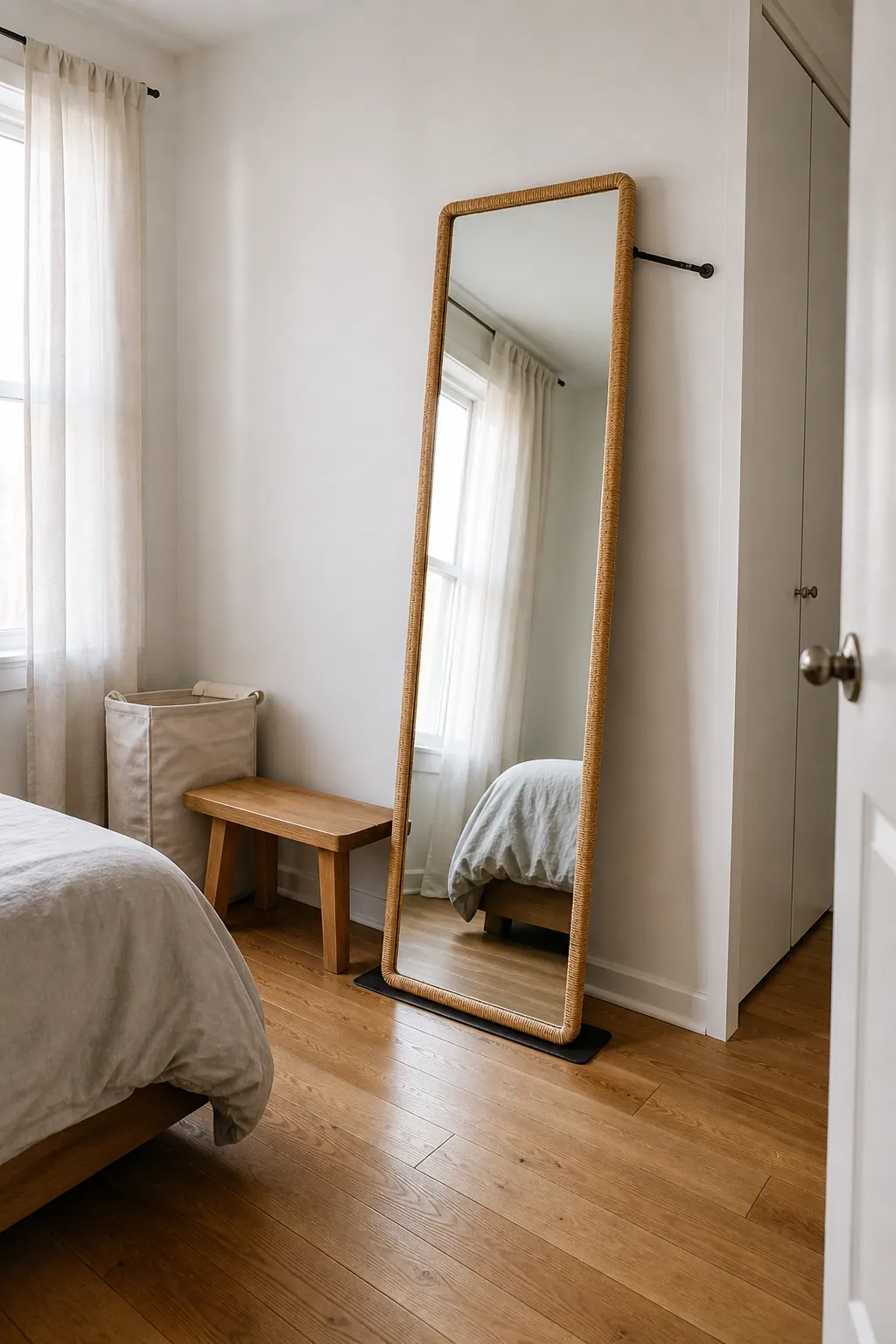
Give the mirror enough distance to reflect a full outfit without forcing the viewer into a corner. One bench or laundry basket nearby is practical; a crowd of floor plants and poufs makes the dressing space harder to use and harder to clean.
Choose a Double-Loop Mirror for a Powder Room
A frame made from two clean rattan loops gives a small powder room texture without the visual fuss of a broad sunburst. Pair it with simple ceramic sconces or a single overhead light so the face is evenly illuminated. Cold blue bulbs tend to fight the warm cane tone.
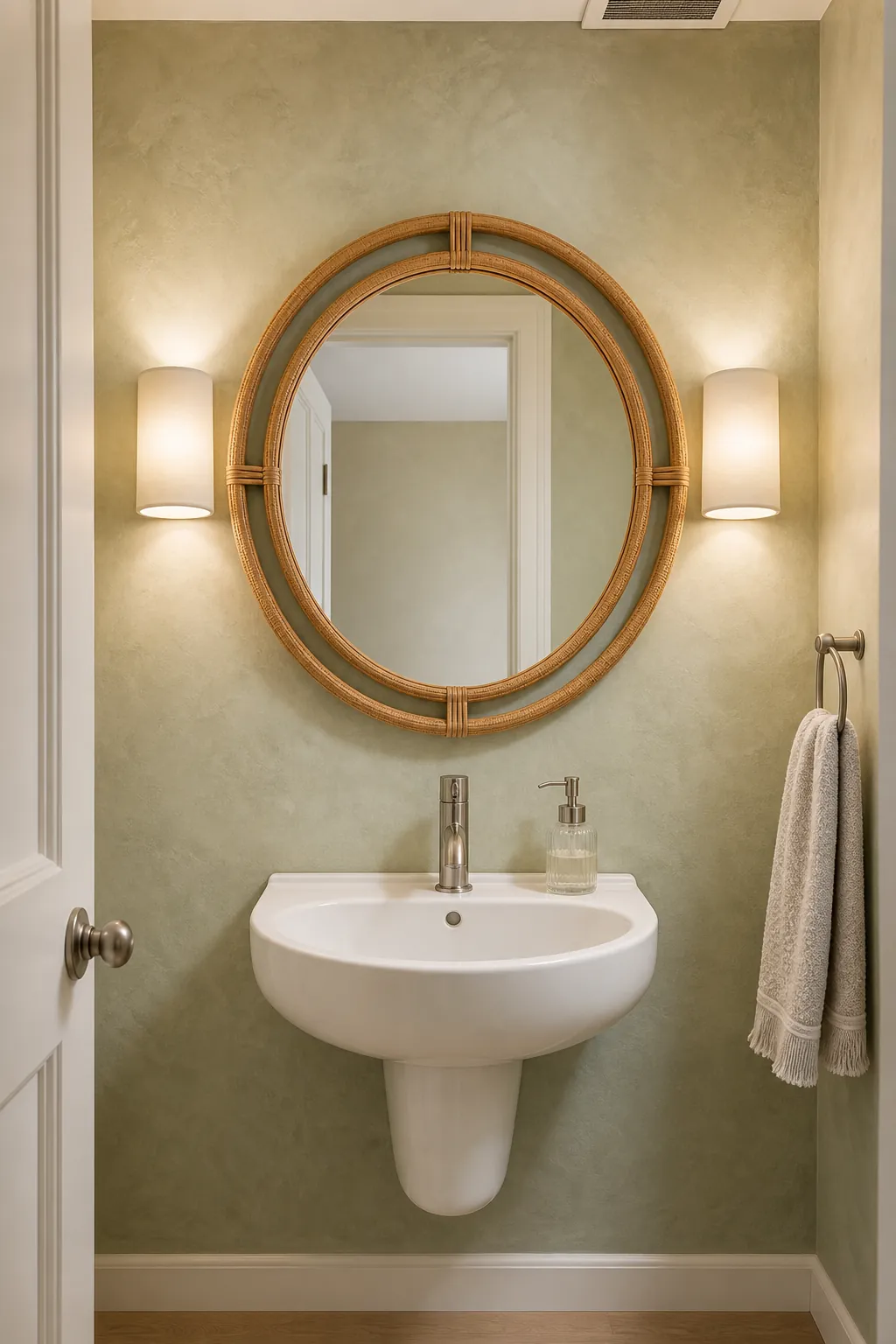
Use a sealed frame and good ventilation even in a room without a shower. Leave clearance from the faucet splash zone, and wipe the cane with a dry cloth rather than saturating it. The mirror should be centered on the basin, not necessarily on the whole wall.
Add a Square Cane Grid Above a Dining Sideboard
A square mirror with a structured cane grid feels calmer and more architectural than a bohemian burst. It works above a long sideboard when the room already contains rounded dining chairs or a curved pendant. The straight frame gives those softer shapes something to push against.
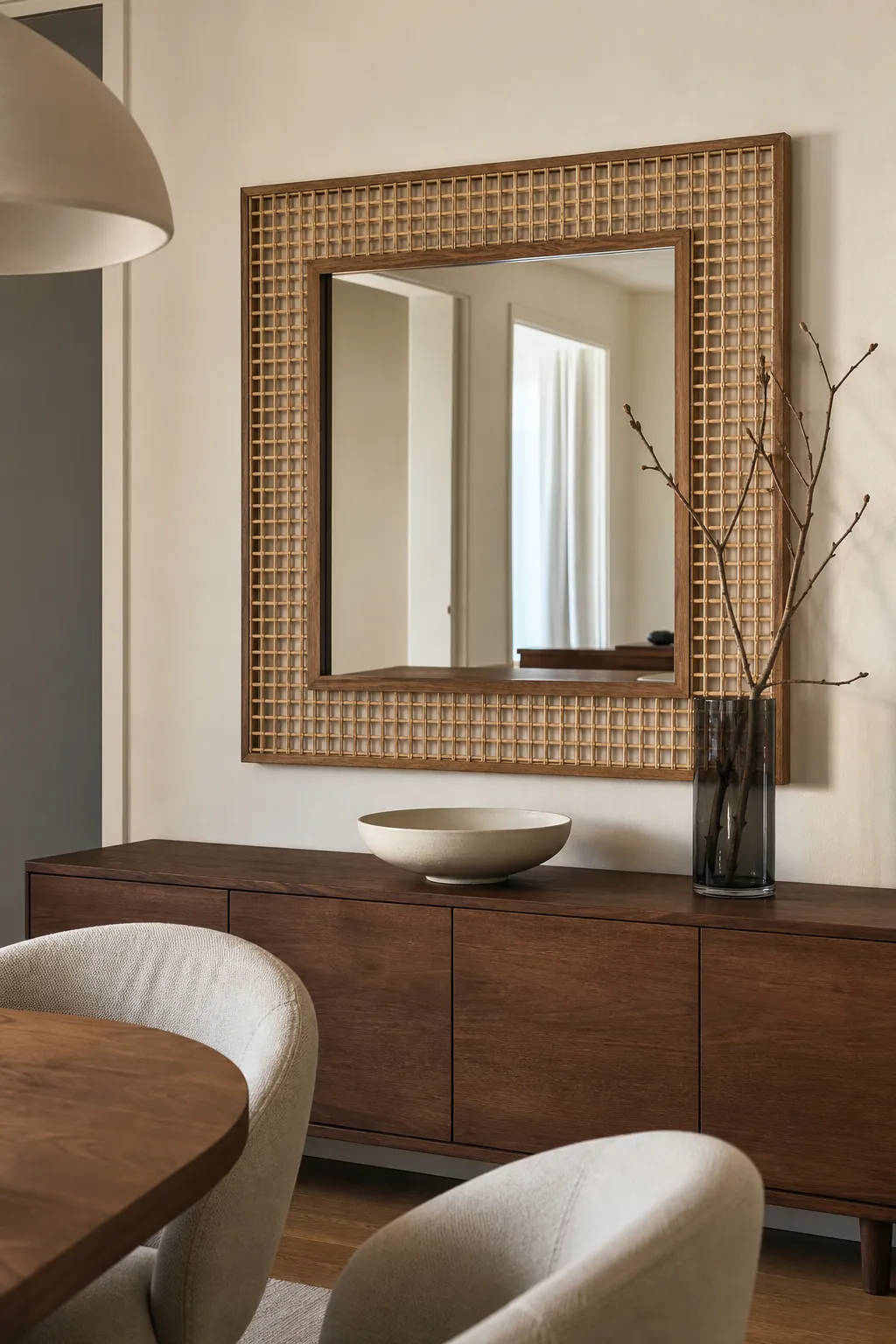
Keep the sideboard styling low so the grid remains visible. A broad bowl and one branch vessel are usually sufficient. Reflect the dining table or a bright adjacent opening, not a ceiling light that produces a distracting glare in the glass.
Try a Petal Frame in a Gentle Nursery
A small petal-shaped rattan mirror adds softness to a nursery without relying on printed themes. Hang it where an adult can enjoy the reflection but a child cannot pull or strike it. A secure closed-back mounting point matters more than a lightweight appearance.
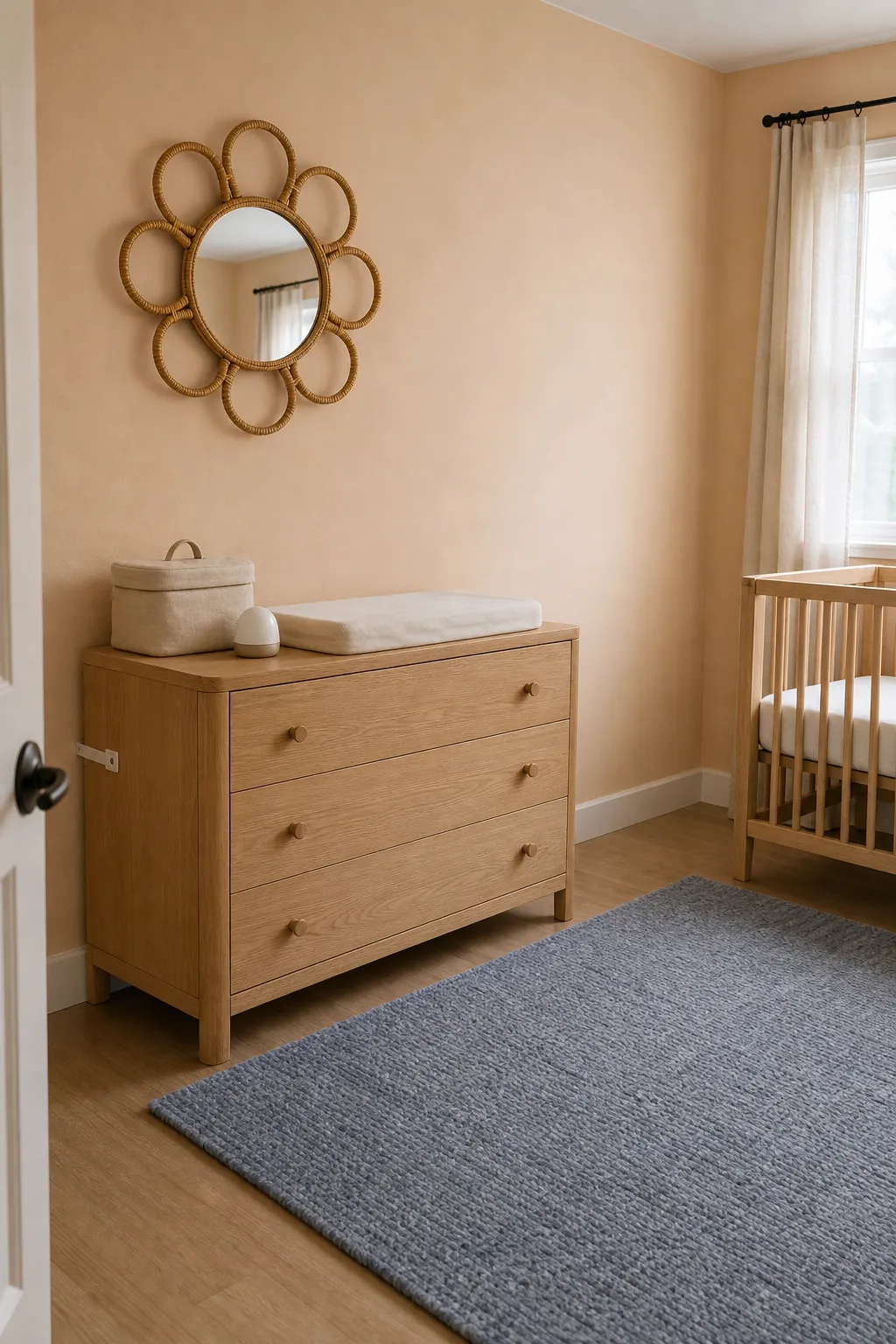
Let the frame be the playful detail and keep textiles simple: washed cotton, a wool rug, and one muted accent color. Avoid hanging the mirror over the crib or changing table. Natural style feels most restful when safety and clear floor space lead the arrangement.
Ground a Modern Room With Dark-Stained Rattan
Natural honey rattan is not the only option. A dark-stained round frame can connect a soft room to black window frames, dark hardware, or a charcoal lamp while retaining woven texture. It is especially useful when pale cane would disappear against cream walls and light furniture.
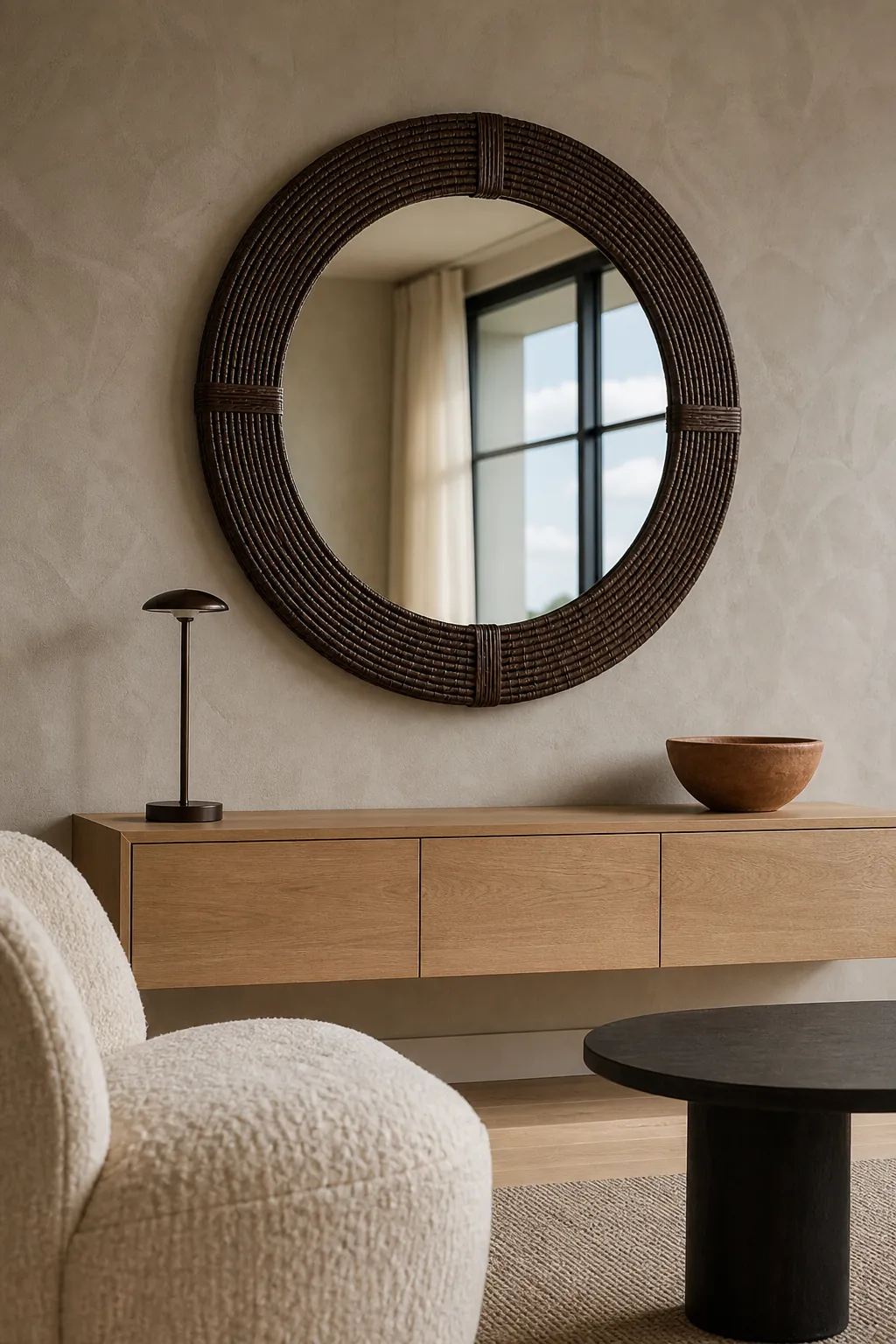
Repeat the dark tone only twice elsewhere, perhaps in a table leg and thin lamp stem. Too many black accents can erase the softness you wanted. The visible cane grain prevents the mirror from reading as a flat metal circle.
Make an Asymmetrical Mirror the Only Wall Accent
An asymmetrical woven frame has enough personality to stand alone. Use it on a small wall between living zones and remove the surrounding mini prints, tassels, and baskets. Open wall around the irregular outline is what makes the design feel artistic rather than busy.
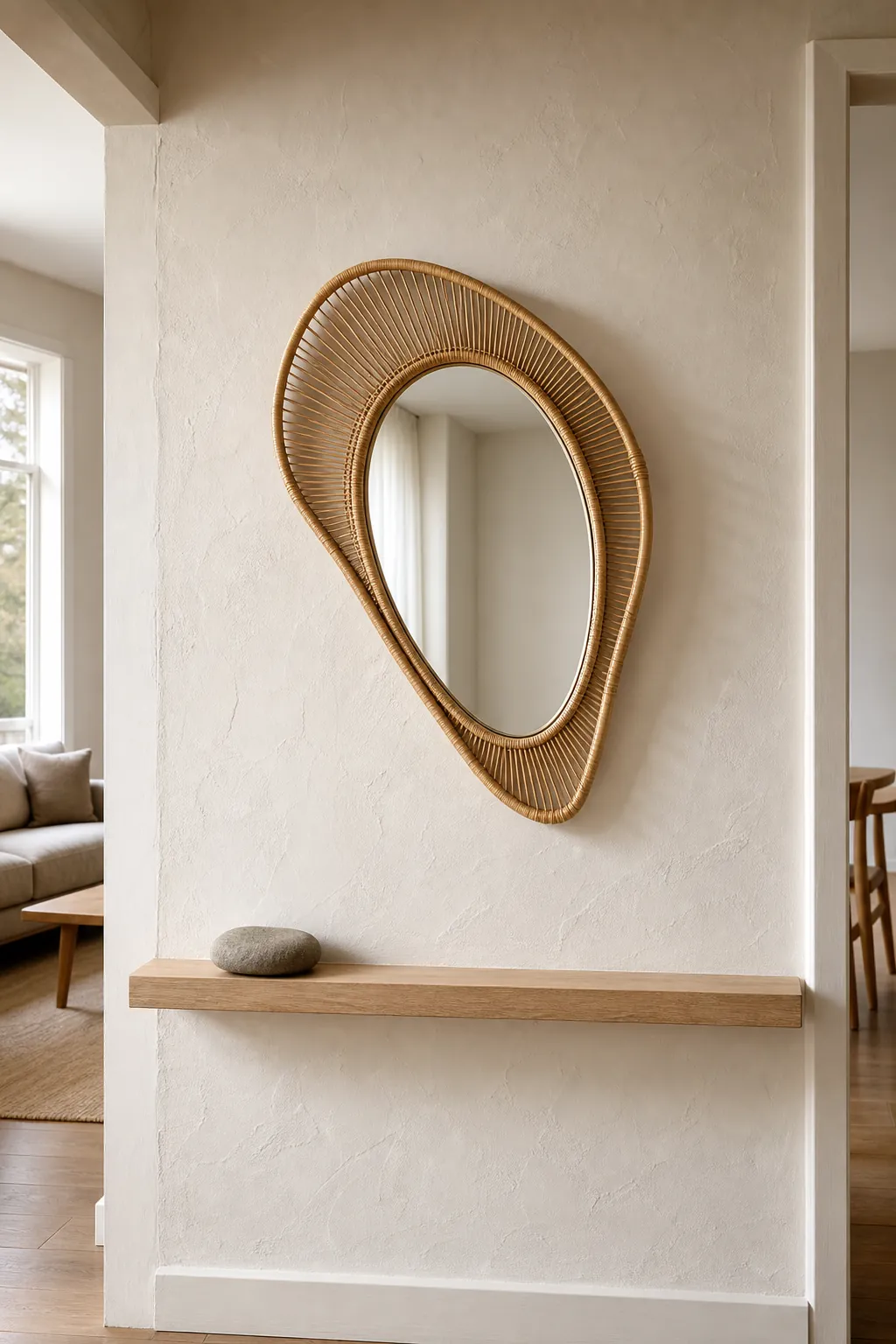
Rotate the piece on the floor before mounting to find the orientation that balances nearby furniture. The mirror glass should still provide a usable reflection; if decorative reeds overwhelm a tiny center, it may function more like wall sculpture than a mirror.
Build a Dressing Corner Around a Bamboo Ladder Frame
A bamboo mirror with ladder-like side rails gives a dressing corner a clear vertical line. Pair it with a small stool and wall hook, leaving the rest of the floor open. The rails should be structural or firmly attached decoration, not something used for hanging heavy bags.
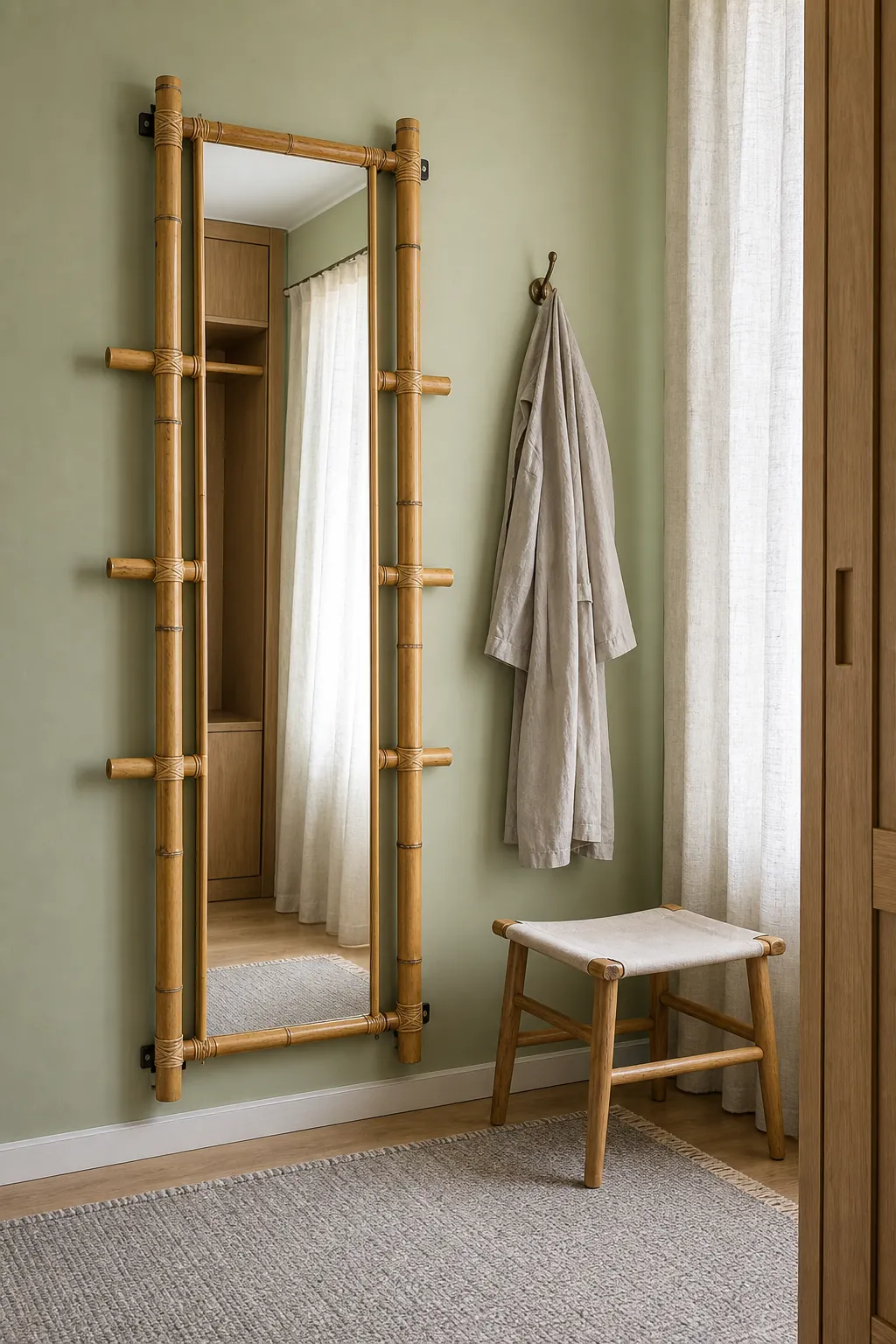
Choose bamboo nodes and color variation you can see rather than a plastic print. A flatwoven rug and linen curtain support the natural material without repeating cane on every surface. Position the mirror so the dressing area receives indirect daylight, not harsh backlight.
Style a Tiny Rattan Mirror on a Shelf
A small tabletop rattan mirror can brighten a deep shelf or act as a quick grooming check near the entry. Use a weighted easel or secure stand, angle it away from bare bulbs, and keep companions lower than the glass. One dish and two books create enough context.
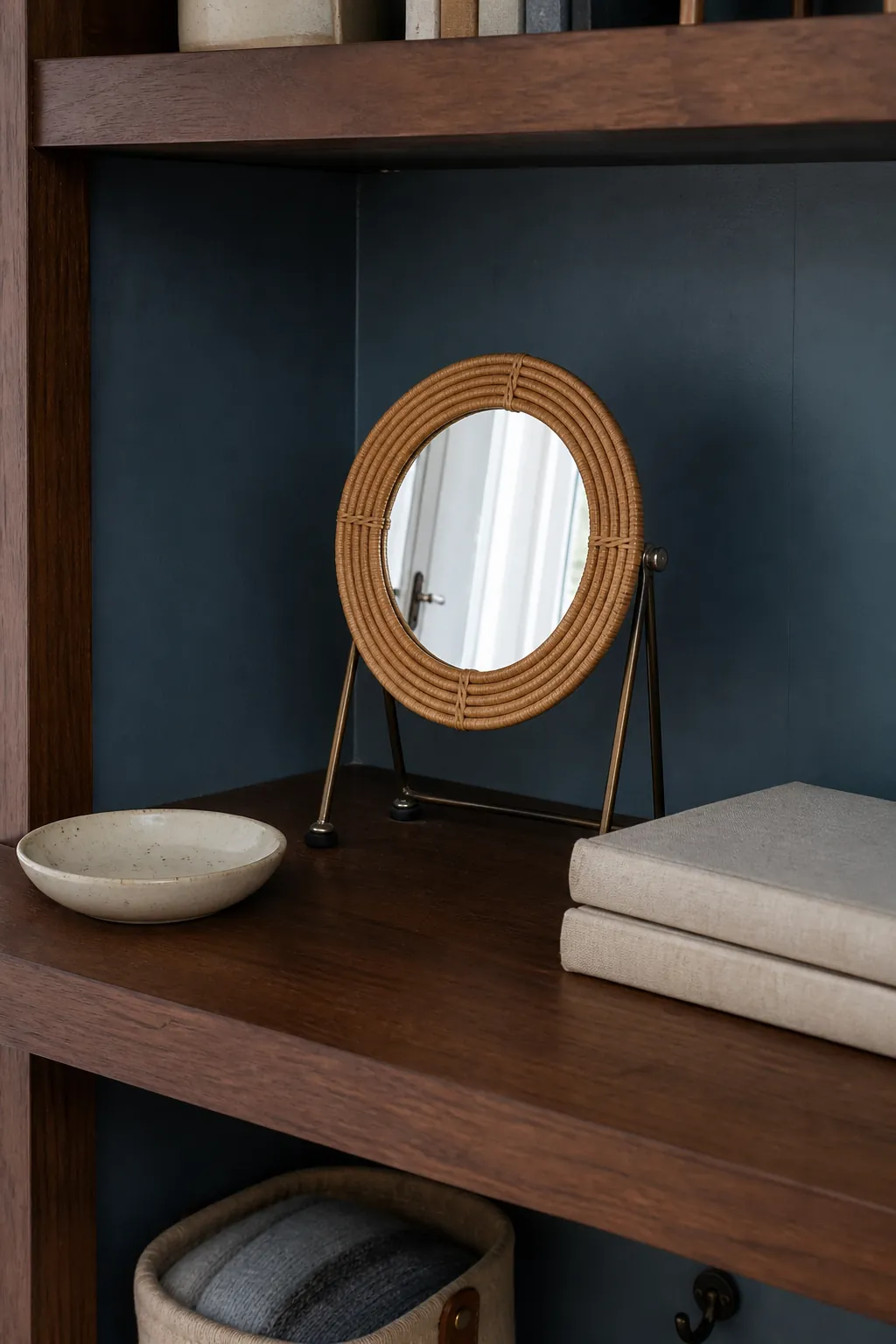
This is a good way to test natural texture before committing to a large wall piece. Avoid placing the mirror near the shelf edge or where a closing cabinet door can hit it. Its reflection should add light, not duplicate shelf clutter.
Scale Up a Round Mirror Above the Sofa
A large round rattan mirror can anchor a sofa wall more effectively than a cluster of small objects. Aim for a frame width that relates to the seating—often around two-thirds of the sofa or console beneath it—and hang it close enough that the two read as one composition.
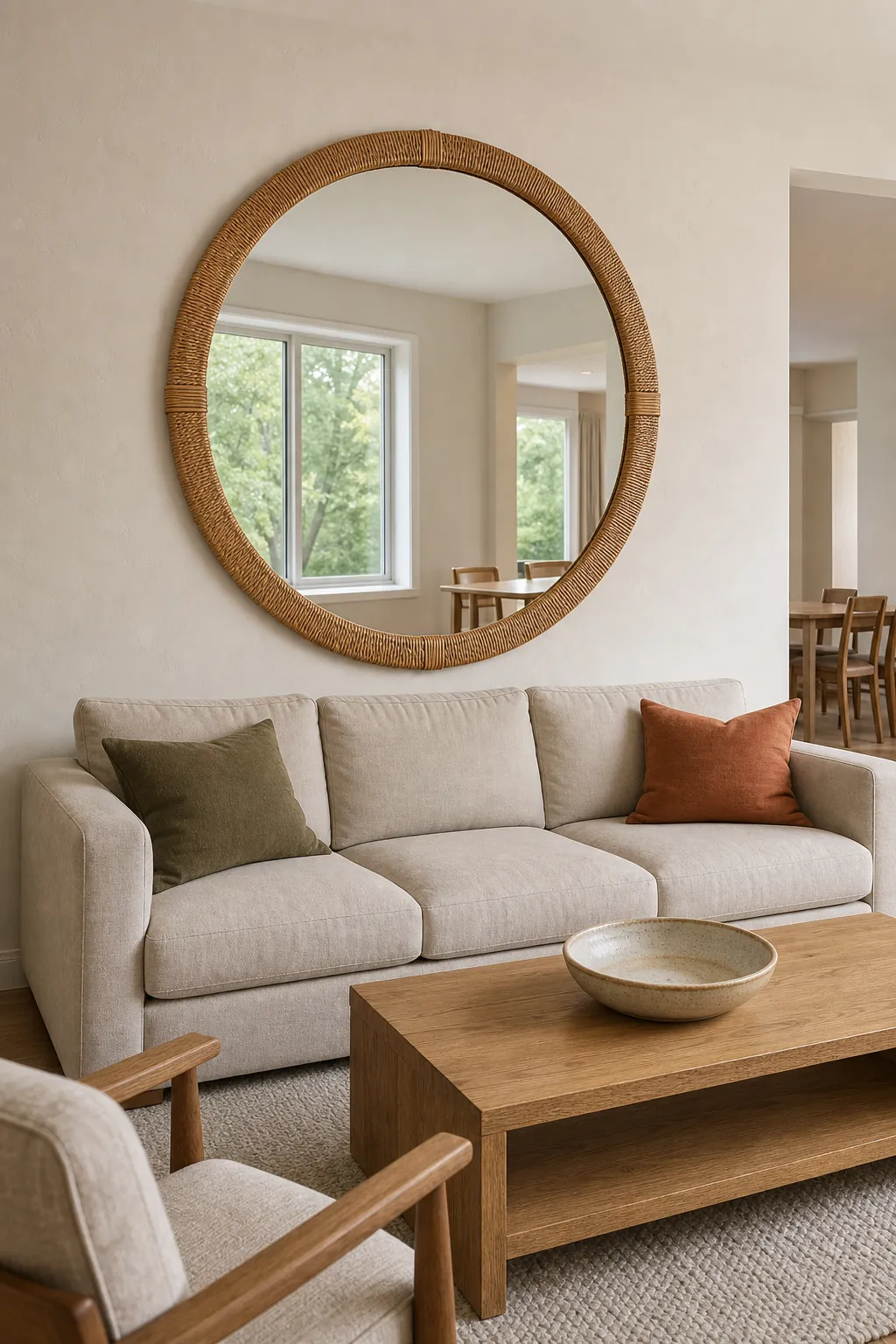
Check seated sightlines for glare before drilling. A reflection of windows, greenery, or an open dining area expands the room; a television or bright downlight may become an annoyance. Use mounting hardware rated for the combined mirror and frame weight.
Pair Rattan With Quiet Ceramic Sconces
Ceramic sconces bring a smooth, mineral counterpoint to woven rattan. Flank a bathroom or entry mirror with small matte fixtures, leaving enough side clearance for the frame’s outer reeds. The sconces should illuminate the face or console, not spotlight the weave.
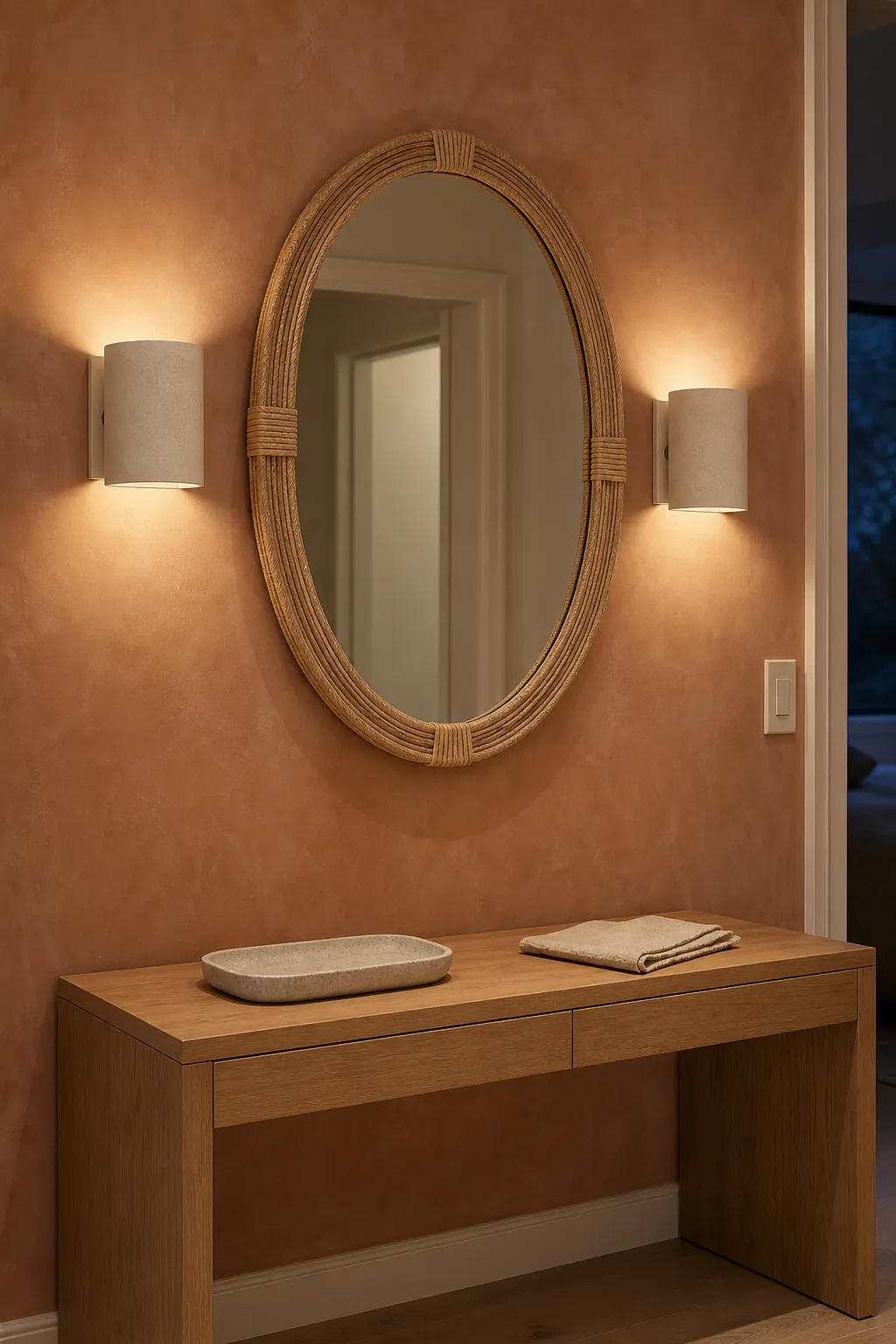
Warm-white bulbs flatter cane and skin without turning the room orange. Keep the wall plain and the hardware simple. The material contrast—woven, glazed, reflected—is already enough detail for a polished natural interior.
Mix Rattan With Uneven Wood Tones
Rattan does not need to match the furniture exactly. Honey cane can sit above a medium walnut cabinet while a pale oak chair occupies the same room, provided the undertones feel warm and each material appears more than once. Variation makes the space look collected rather than purchased as a set.
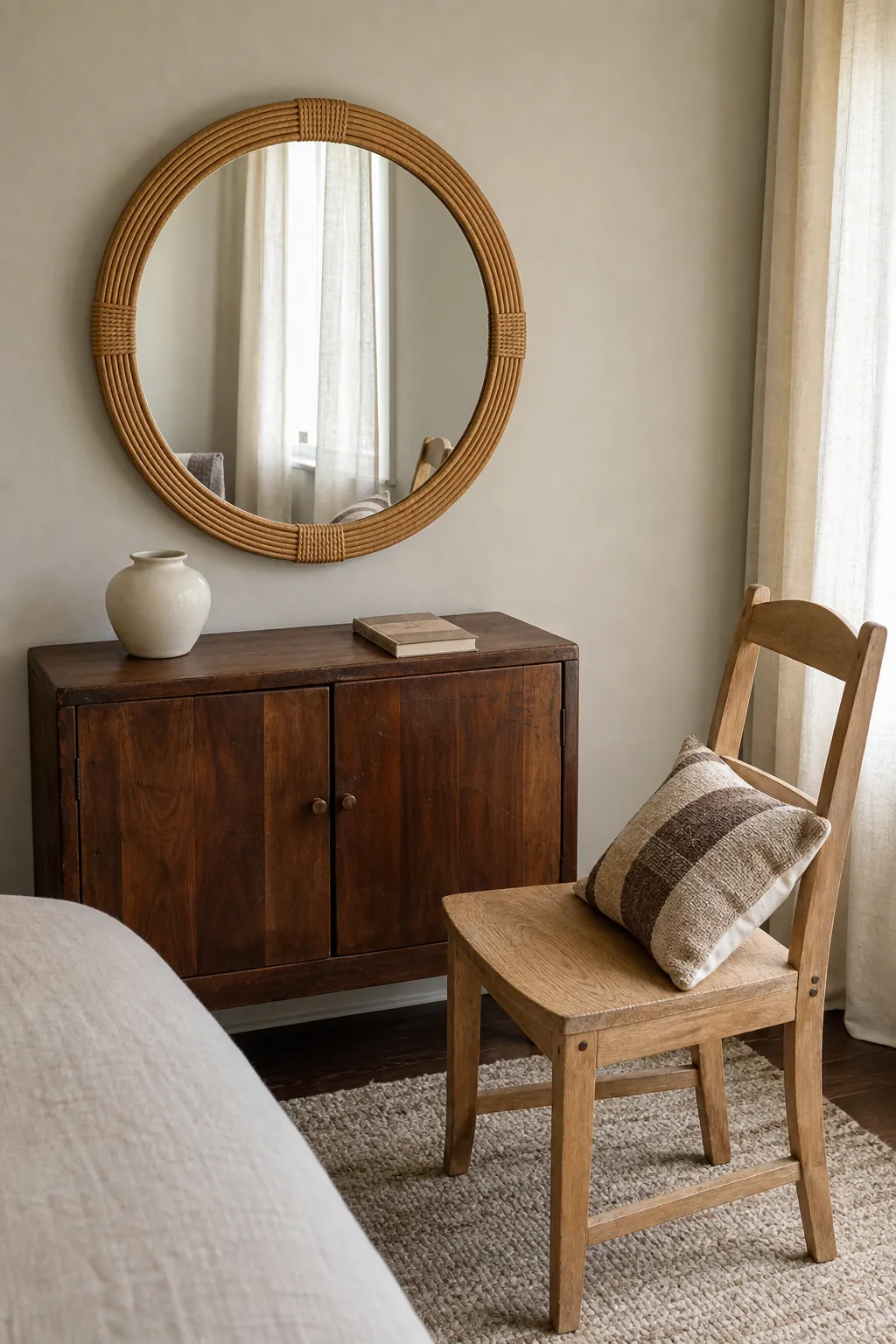
Take a daylight photo of the materials together before buying. If one piece reads strongly red and another looks ashy gray, bridge them with a textile containing both tones instead of painting every natural surface the same color.
Finish a Reading Nook With an Arched Mirror
An arched rattan mirror makes a small reading nook feel taller and reflects the side of a window without placing the glass directly opposite a seated reader. Hang it beside the chair rather than above the head, then let the curve echo one rounded lamp or cushion.
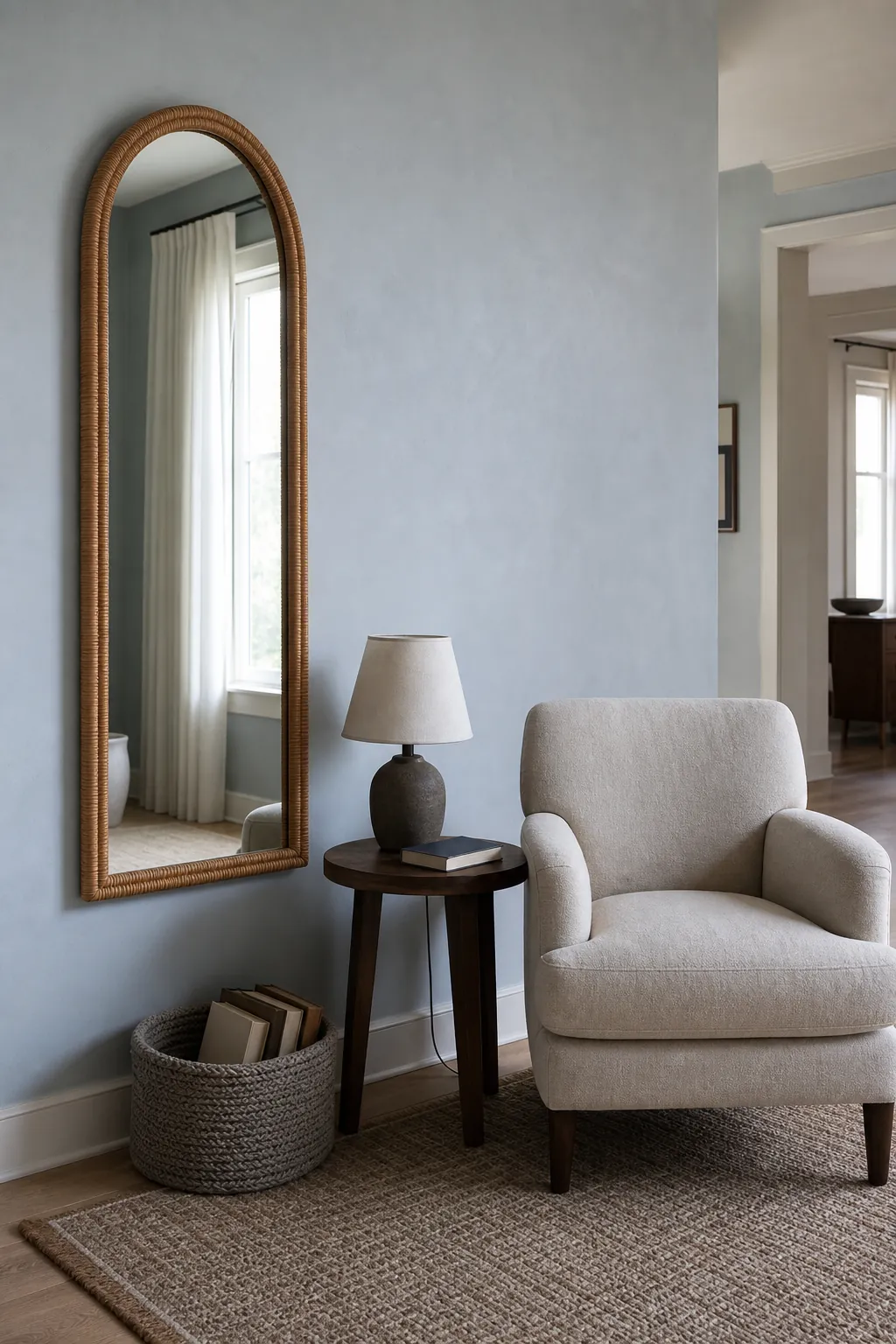
A book basket and small table provide function. Resist adding a macramé hanging, cane plant stand, and woven pendant to the same corner. The mirror’s texture is most effective when it has smooth plaster and solid upholstery nearby.
Angle the Glass to Catch Window Light
A mirror placed opposite or perpendicular to a window can carry daylight into a darker part of the room. Test the position with a temporary lightweight mirror first, observing the reflection morning and afternoon. The best location may be slightly off-center rather than directly across.
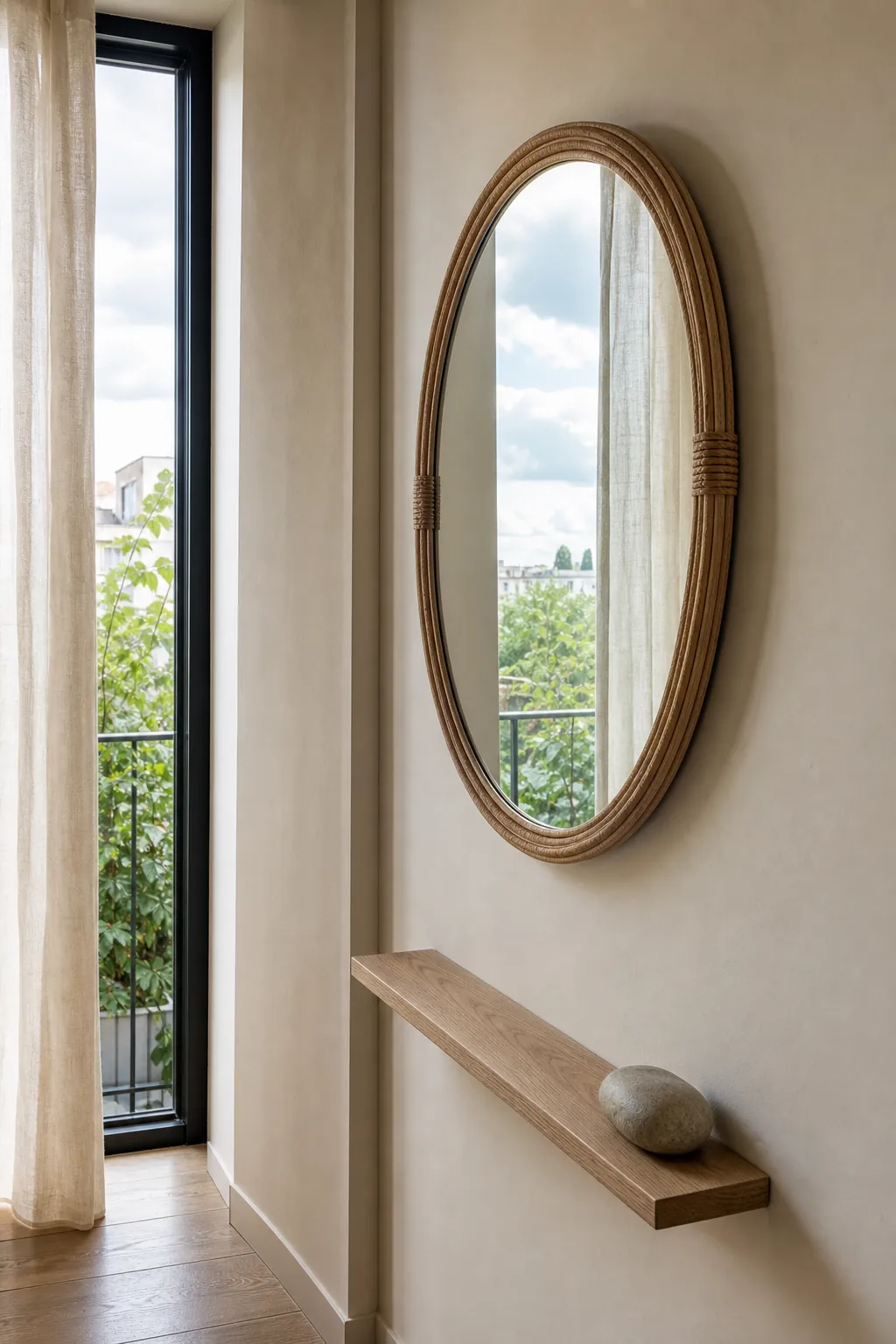
Watch for hot glare, direct sun on delicate cane, and an unwanted reflection of the street or neighboring window. A good placement expands a pleasing sightline and makes the frame glow softly; it does not create a bright patch at eye level.
Group Three Small Mirrors With Real Spacing
Three small rattan mirrors can fill an awkward stair or landing wall when one large mirror will not fit. Choose related but different frames—round coil, small flower, and simple loop—then keep consistent generous gaps so each silhouette remains legible.
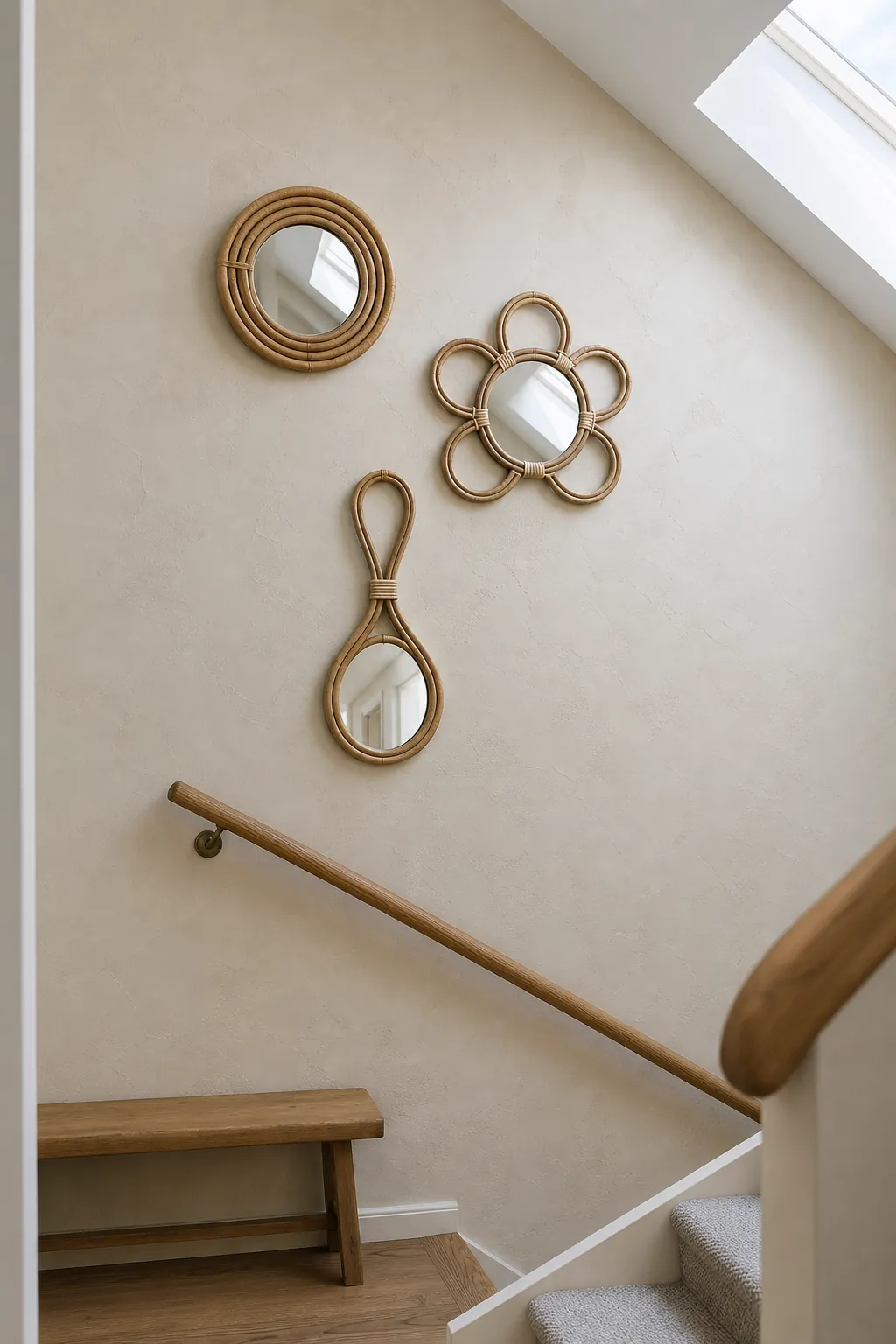
Lay the arrangement on the floor and transfer the outer dimensions with paper templates. Keep the group away from a narrow collision path, since projecting reeds are more vulnerable than a flat frame. The reflections should share a broad view rather than chop up a busy display.
Use a Black Edge to Sharpen the Weave
A thin black inner rim can give a rattan mirror definition in a contemporary room. The crisp line separates the reflective glass from the irregular cane and connects naturally to black hardware, window frames, or a narrow table base.
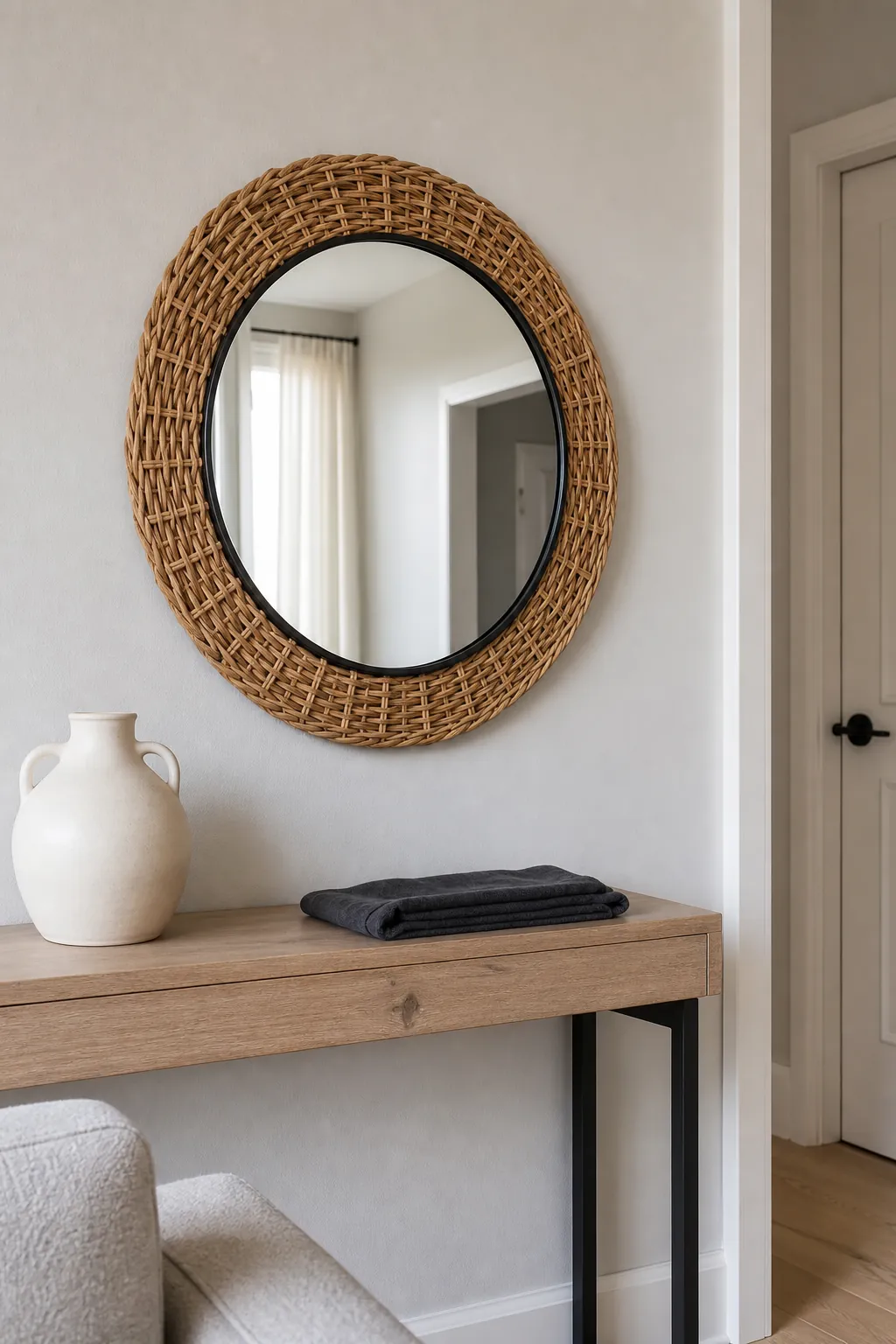
Choose a fine edge rather than a heavy black frame that hides the woven construction. Pair it with solid upholstery and simple wood furniture. This approach keeps organic home decor from drifting into a fully themed boho room.
Protect a Sealed Frame in the Bathroom
A rattan or bamboo mirror can warm cold tile, but only if the frame is sealed, the room ventilates well, and direct splashes are avoided. Ask how the cane was finished rather than assuming every natural mirror is bathroom-safe.
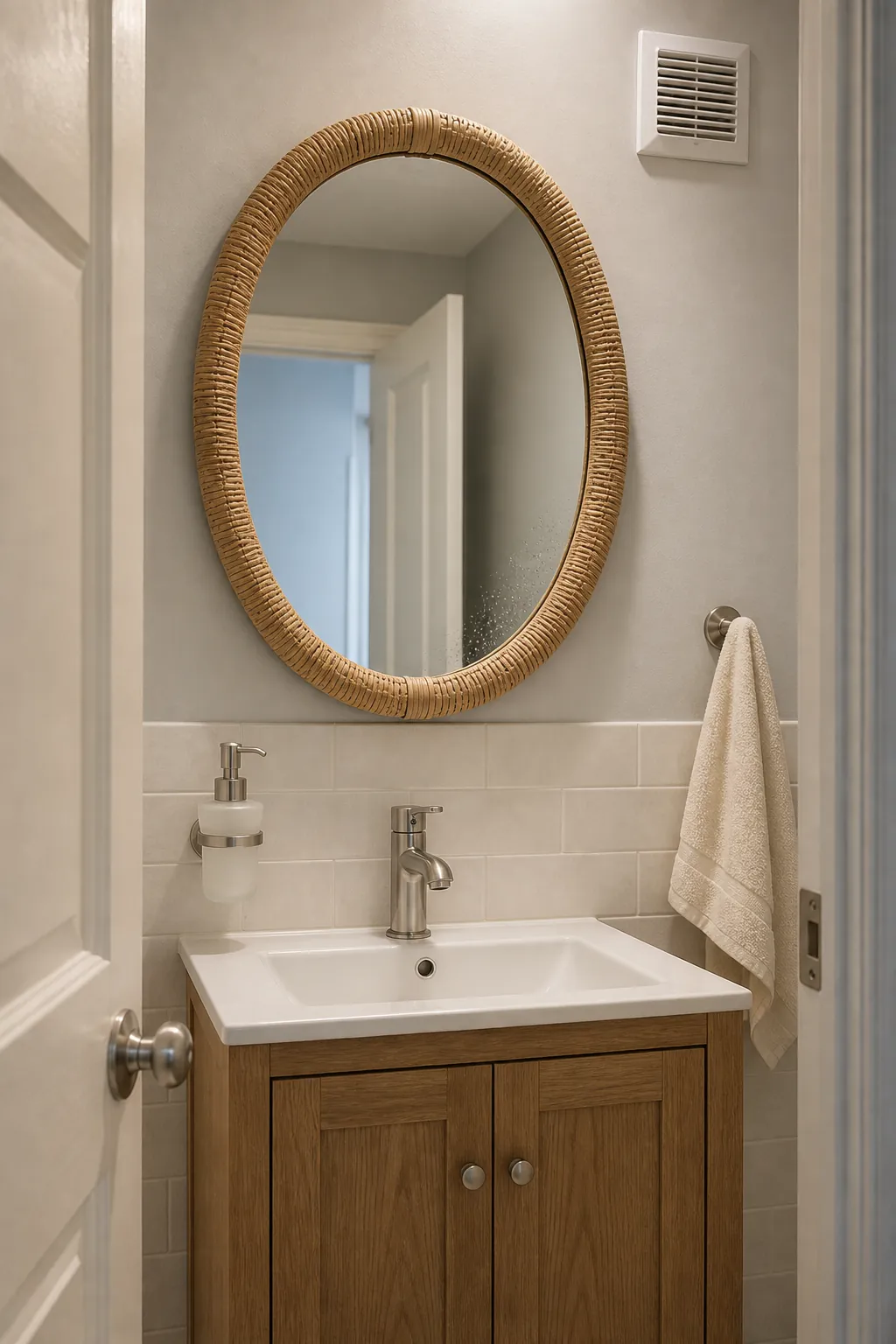
Leave a visible gap above the faucet, run the exhaust fan, and wipe condensation from glass without soaking the frame. Inspect joins occasionally for loosening, dark spots, or lifted finish. In a frequently steamy bathroom, a rattan-look resin or metal frame may be the more durable choice.
Let a Thrifted Mirror Keep Its Patina
A thrifted rattan mirror can add the irregular color and handwork that new pieces often imitate. Clean it gently with a soft brush, tighten the hanging hardware, and check for brittle splits. Minor tone variation and darkened binding are character; active mold or structural breakage is not.
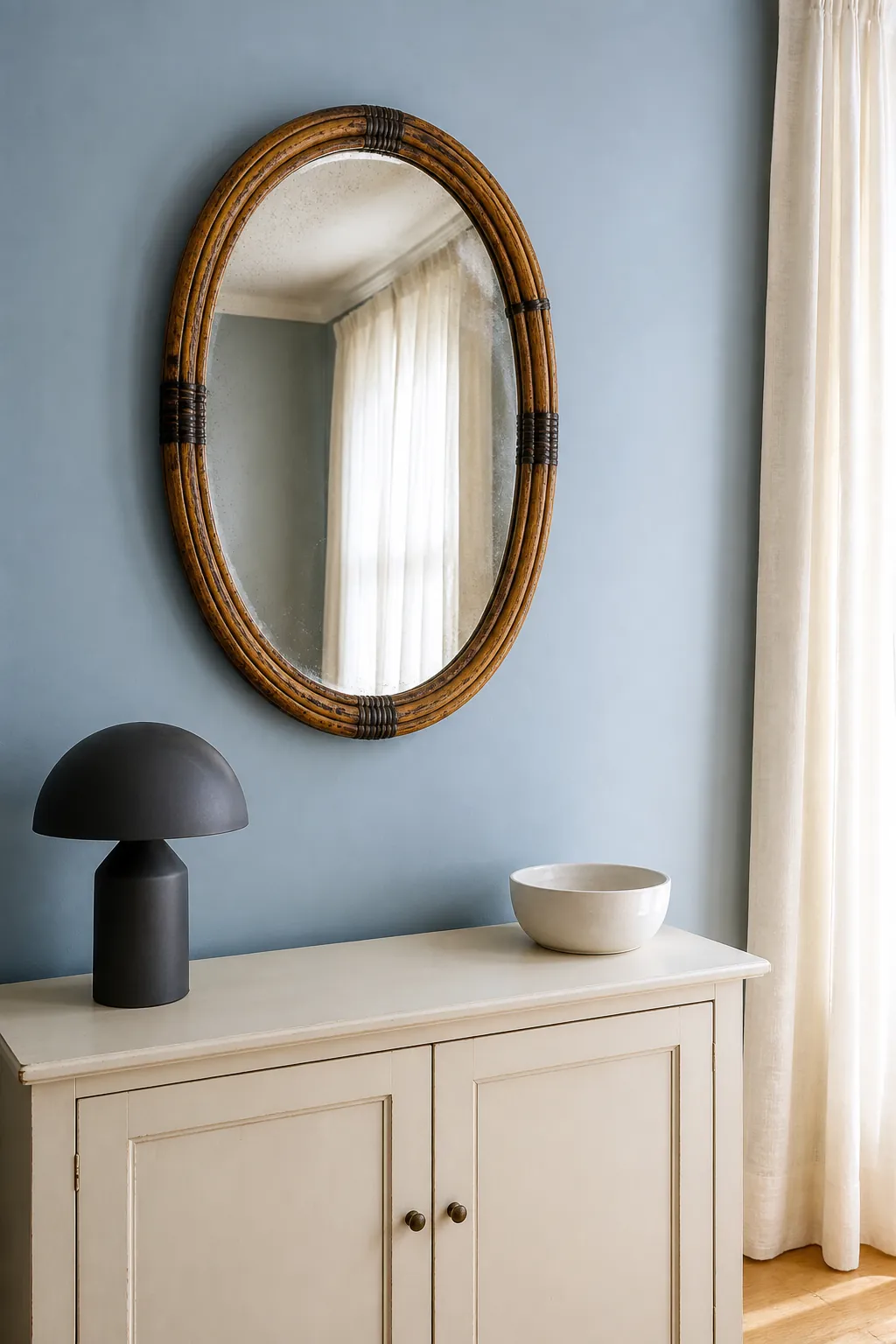
Use the older mirror beside clean-lined furniture so its age reads as intentional. Avoid surrounding it with many distressed accessories. One credible vintage object carries more visual authority than an entire collection of artificially aged decor.
Choose One Calm Mirror for a Minimal Room
A minimal room does not need to avoid texture; it needs to control it. Choose one generously scaled rattan mirror with a simple coil or wrapped frame, then let it stand against plain plaster, solid linen, and uncluttered wood. Skip the matching rattan pendant, basket wall, and cane-front cabinet.
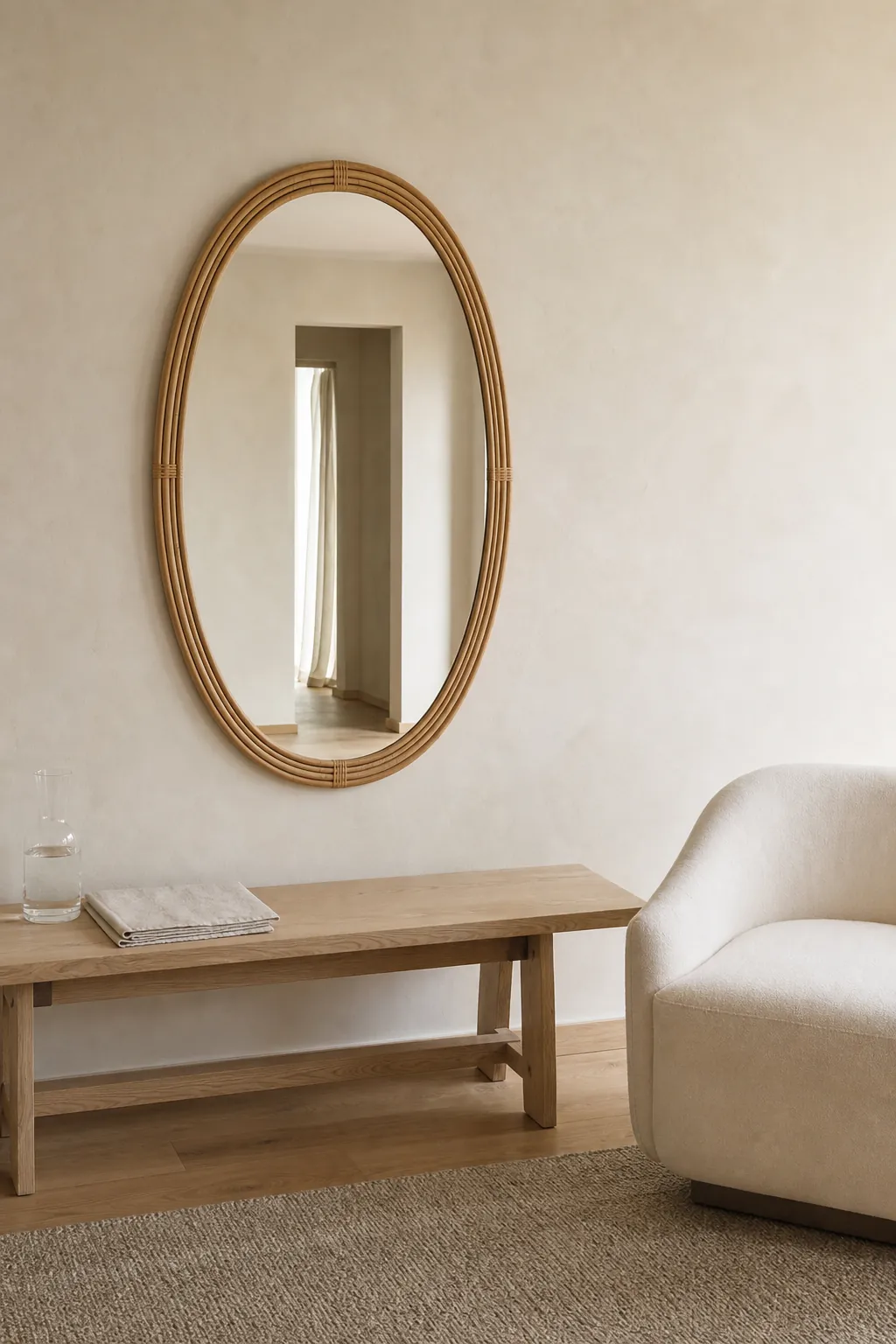
The softest natural rooms rely on contrast and restraint. Rattan looks richer beside smooth ceramic, painted wall, clear glass, and tightly woven fabric than it does in a room where every surface is woven. Measure the furniture, test the reflection, secure the frame properly, and let one useful mirror do the work.