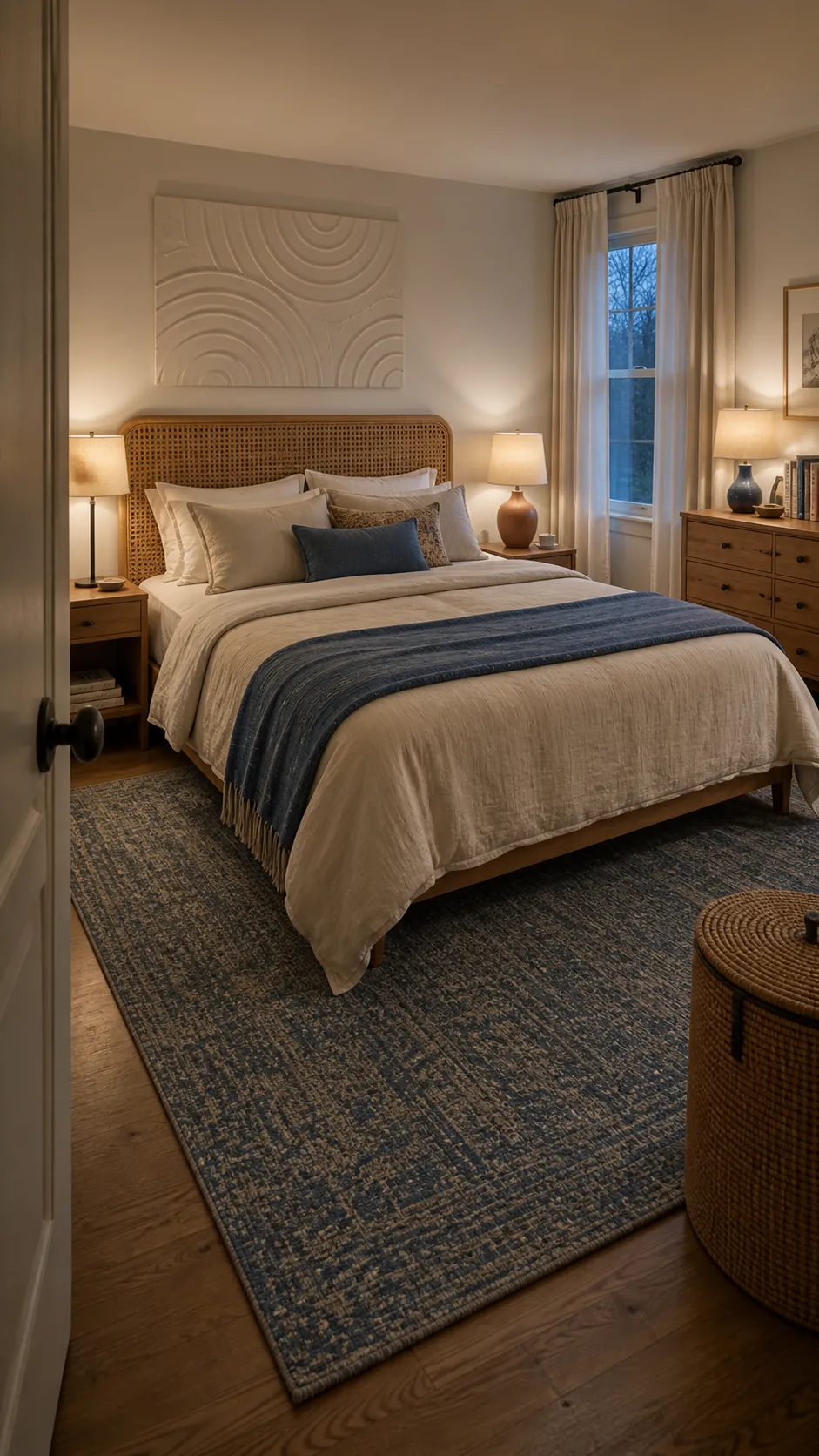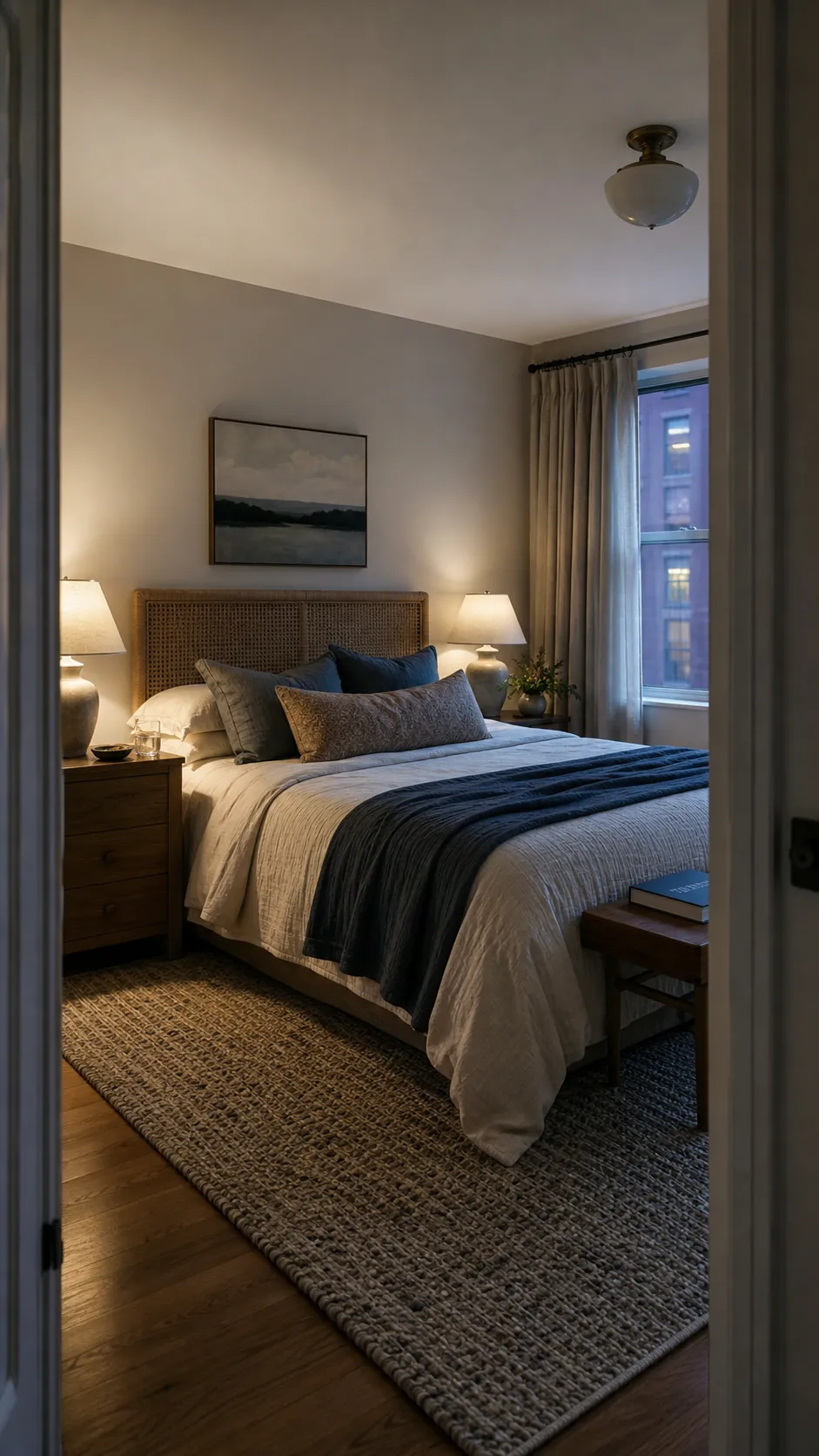
You can like every object in your bedroom and still dislike the room. That uneasy “something is off” feeling is rarely a sign that you need more décor. It usually means the room has a problem with placement, scale, light, or visual connection. Work through these common bedroom decorating mistakes in order. The early fixes change the structure of the room; the later ones add warmth and personality.
The Bed Has No Clear Focal Point
The bed is the largest object and should tell your eye where to land. When it floats on a random wall, sits under undersized art, or competes with a dresser and television, the whole bedroom feels unfinished. Start by making the bed wall unmistakable. Center the bed on the most useful uninterrupted wall when circulation and doors allow it, then give it one strong anchor: a headboard, a painted color field, or a deliberate group of art.
Do not solve a weak focal point by scattering more small accessories around the room. Strengthen the area immediately around the bed. Matching does not have to mean identical, but the nightstands, lamps, and wall treatment should read as one composition. In a small bedroom makeover, even a simple upholstered headboard and two wall-mounted lights can create the structure that was missing.
The Furniture Layout Blocks Natural Movement
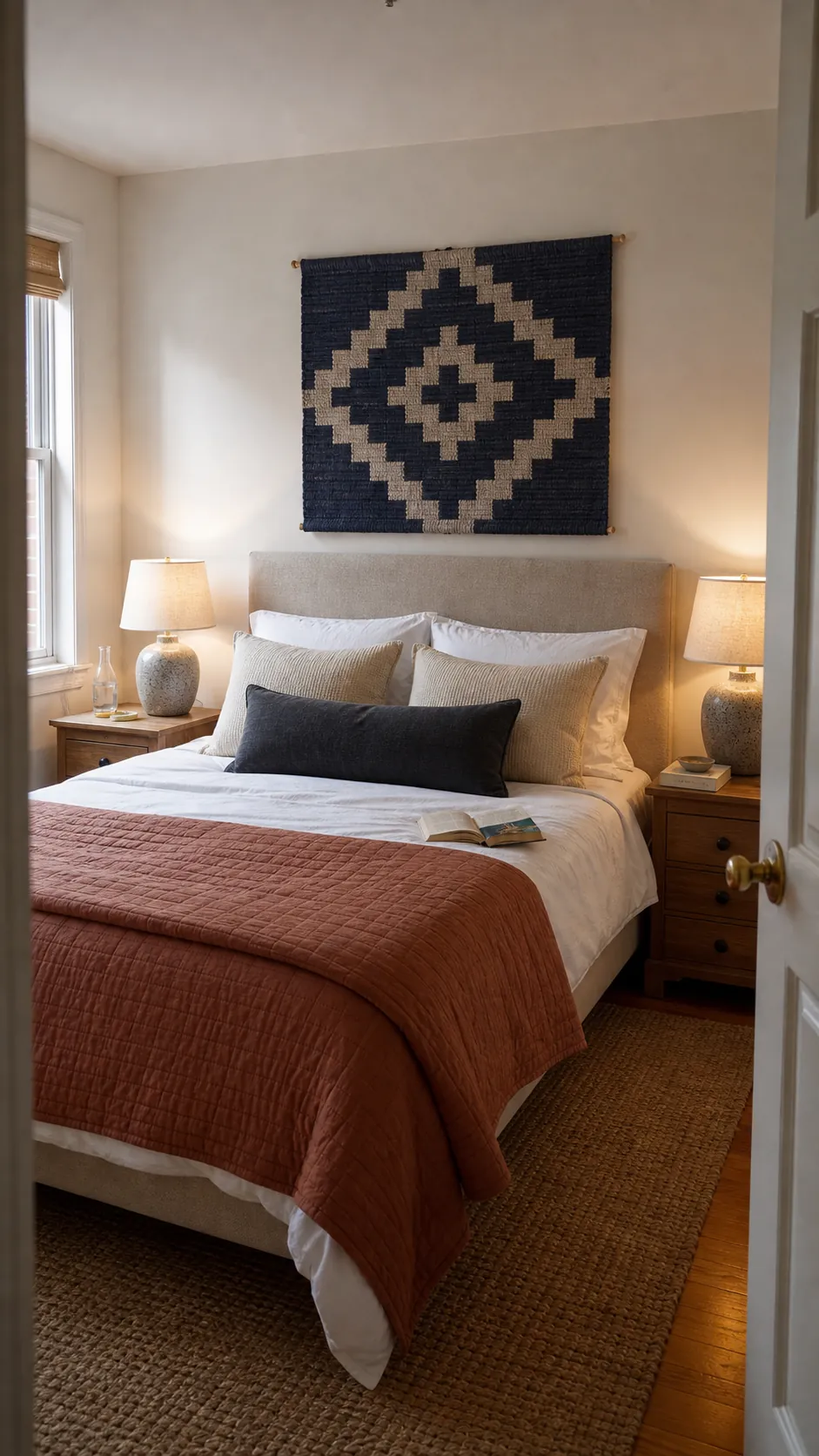
A room can look acceptable in a photo but feel irritating every day because its pathways are wrong. Notice where you hesitate, turn sideways, hit a drawer, or walk around a corner of the bed. Those tiny interruptions keep your body aware that the layout is fighting you. Better bedroom layout ideas begin with the route from the door to the bed, closet, and bathroom—not with perfect symmetry.
Remove or relocate the piece that pinches the main path. Leave enough clearance to open storage fully, and keep the entry view calm. If the only workable bed position is asymmetrical, embrace it with one wider nightstand, a wall sconce, or a compact reading chair rather than forcing two bulky pieces into the plan. Ease of movement will make a bedroom feel settled faster than another decorative purchase.
The Rug Is Too Small or Misplaced
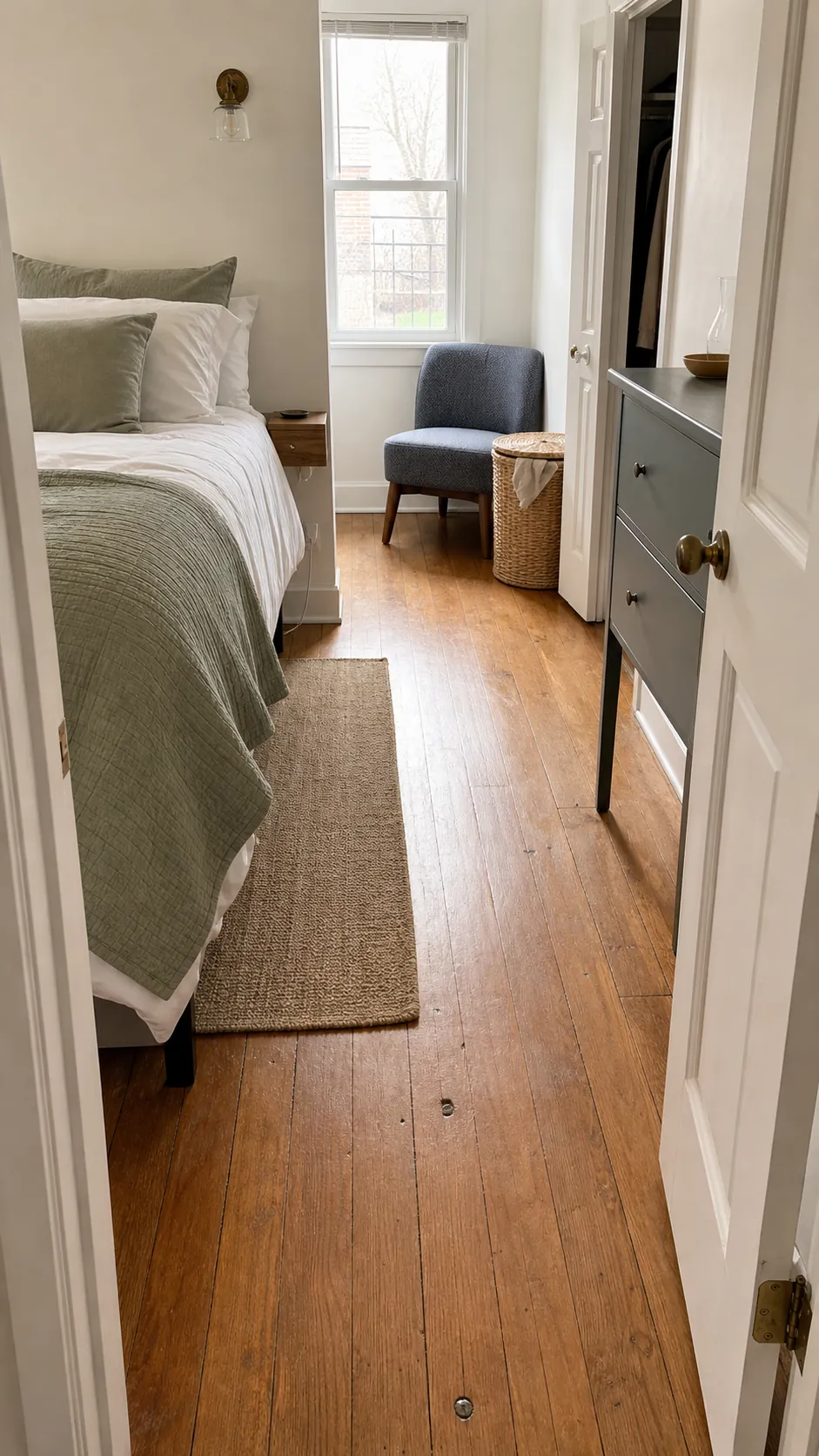
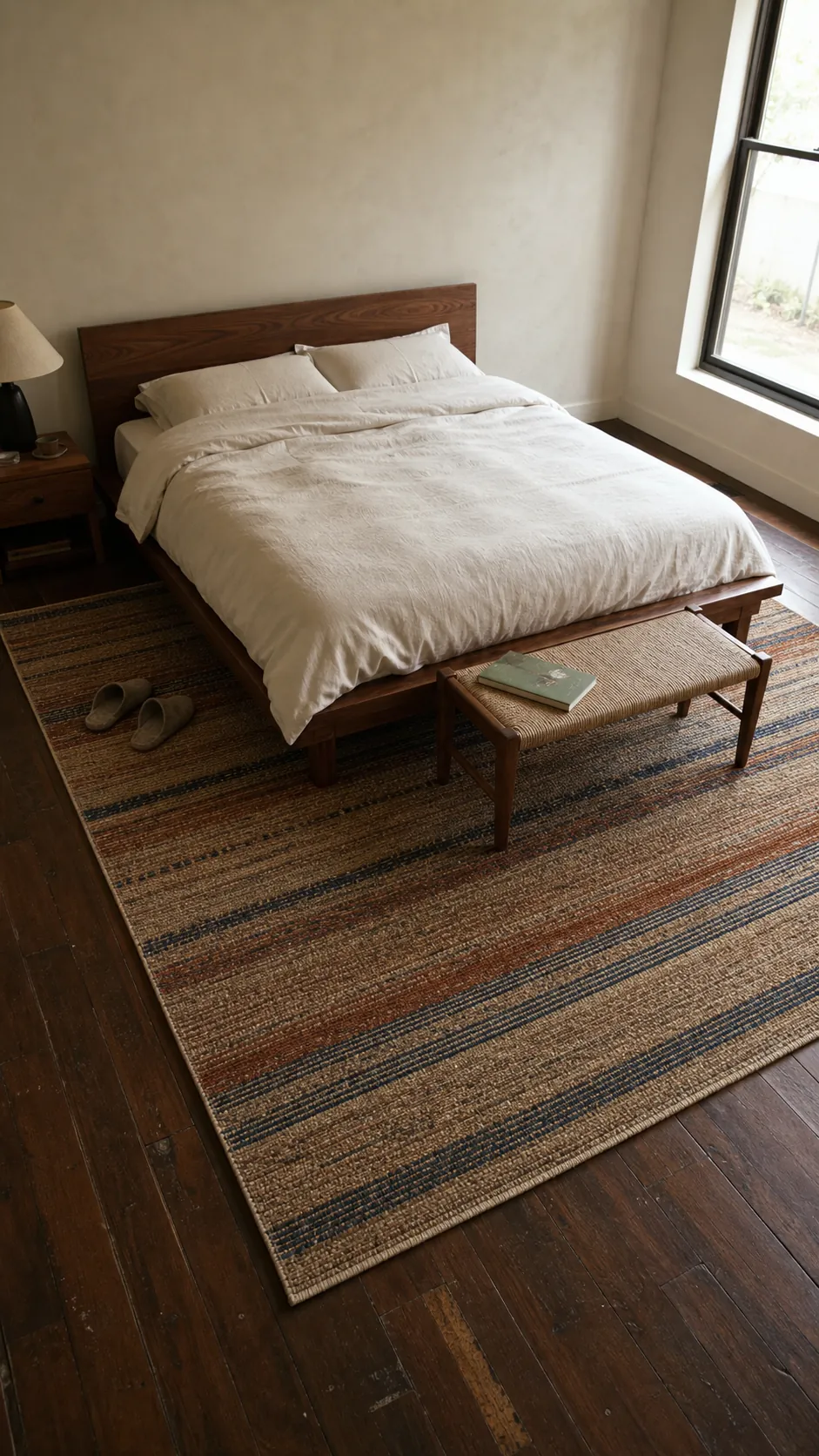
A little rug at the foot of a large bed looks detached, while a rug hidden almost entirely underneath adds cost without doing much visual work. Good bedroom rug placement makes the bed and nightstands feel connected to the floor plane. For a typical arrangement, place the rug perpendicular to the bed so it extends beyond both sides and leaves a generous landing area at the foot.
If a larger rug is not in the budget, use two substantial runners along the sides instead of one undersized rectangle floating beyond the footboard. Check door clearance before buying a thick pile. The useful test is simple: your feet should land on softness where you naturally get out of bed, and the visible edges should frame the bed rather than look accidental.
The Curtains Stop the Room Short
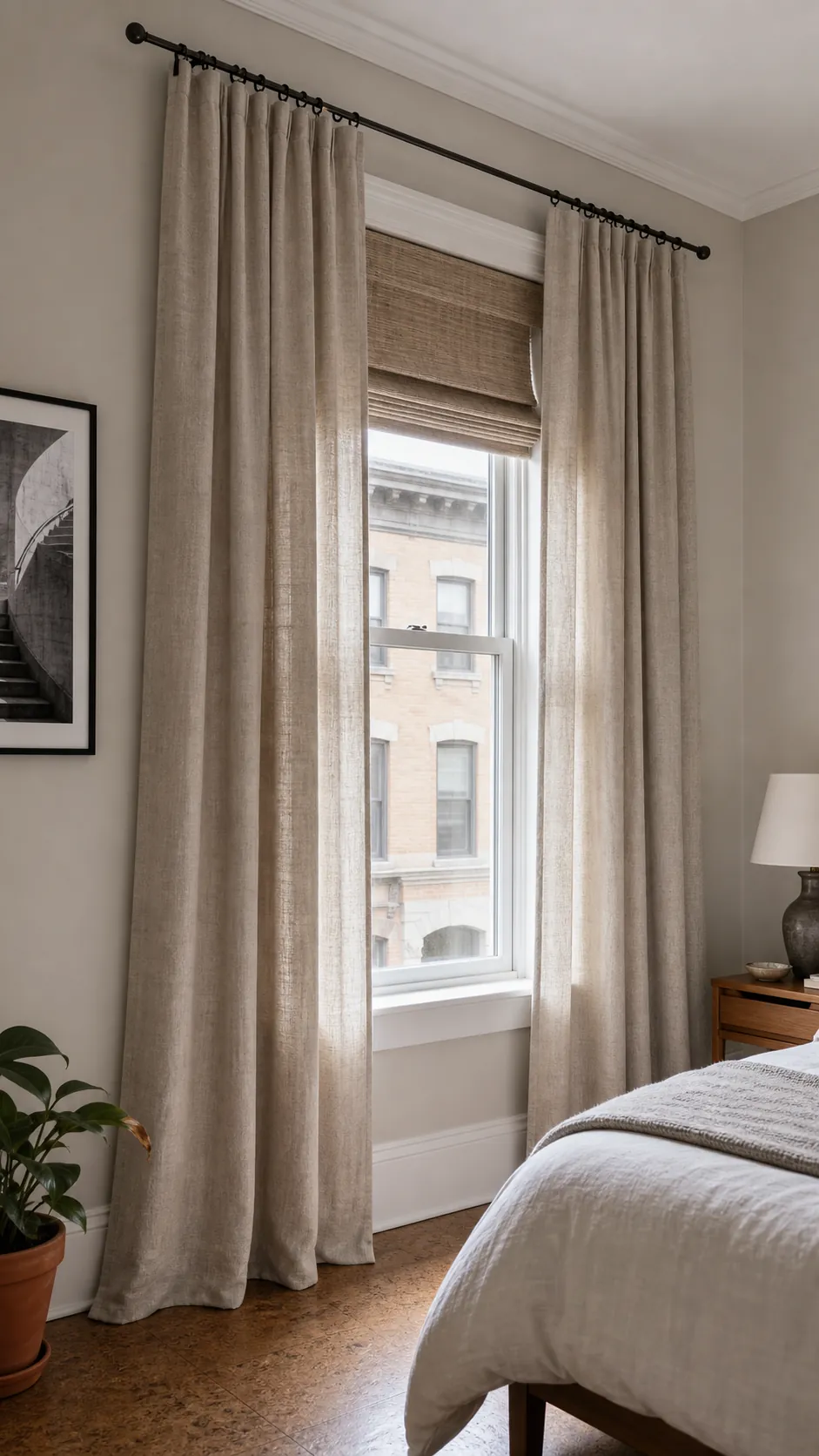
Short panels and rods mounted directly on the window trim visually shrink the wall. Sparse curtain panels also look strained when closed. Bedroom curtain ideas work best when they improve both proportion and sleep: mount the rod higher and wider than the frame, use enough fabric for soft fullness, and let the panels finish just at the floor.
Layer a light-filtering treatment with blackout curtains or a shade if privacy and darkness matter. Extending the rod beyond the glass lets open panels stack against the wall instead of stealing daylight. In a rental, removable brackets or no-drill options can still create a cleaner vertical line. Well-fitted curtains make the architecture look more intentional before you add any bedroom wall décor.
One Harsh Ceiling Light Does Everything
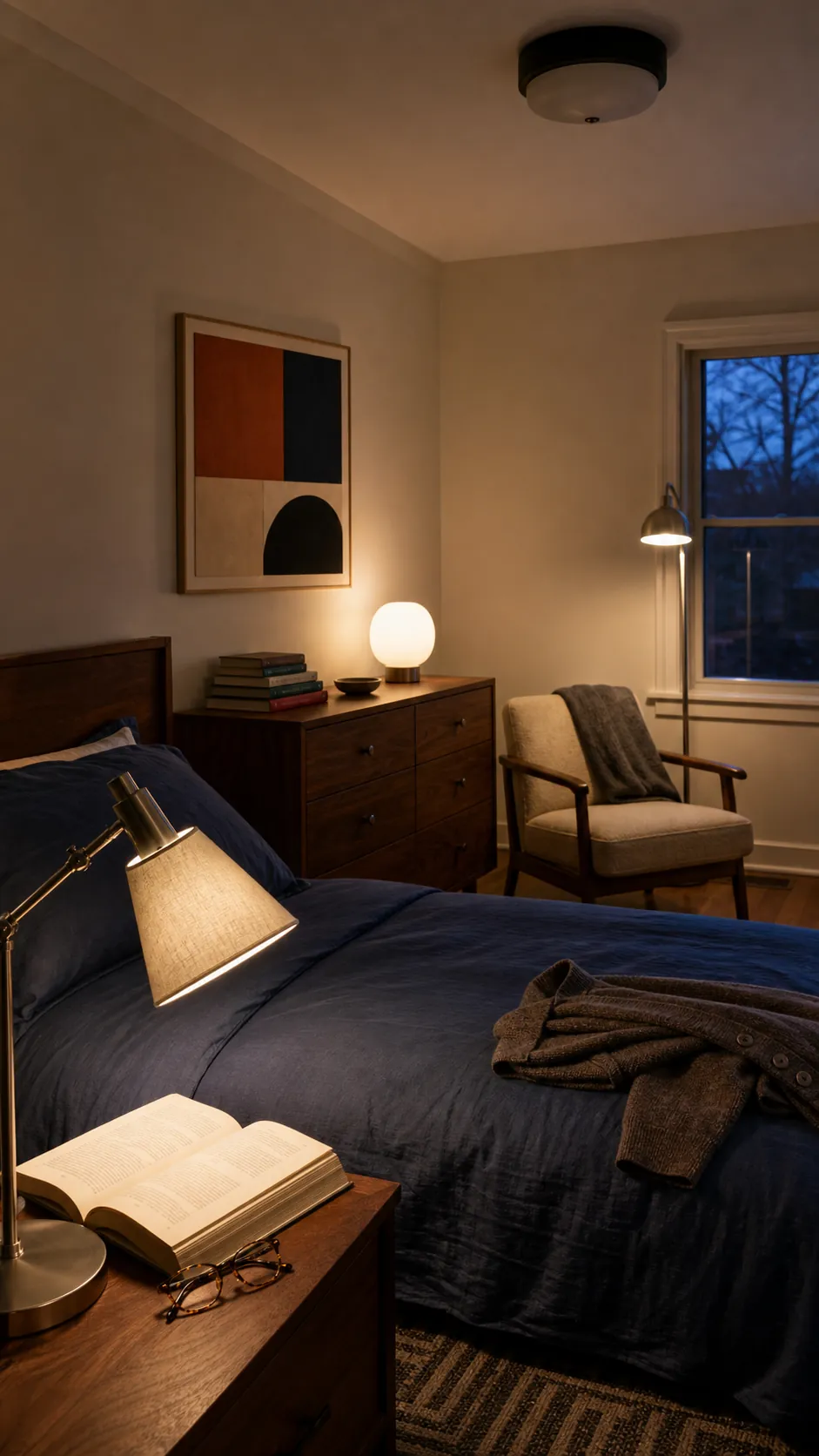
Many rooms that feel cold during the evening are being lit like kitchens. A bright ceiling fixture flattens texture, creates hard shadows, and makes bedtime feel less restful. Better bedroom lighting ideas divide the work among several sources: bedside lamps for reading, a shaded floor or dresser lamp for ambient light, and the overhead fixture for cleaning or getting dressed.
Choose compatible warm-white bulbs so one lamp does not glow orange while another looks blue. Keep light sources below eye level when you are in bed, use shades that soften glare, and add dimmers where practical. Try living for one evening without the overhead light. If the room suddenly feels calmer, you have found the problem without changing the paint or furniture.
Everything Is the Same Size
A row of medium objects creates a strange visual monotony: medium bed, medium lamps, medium art, medium plant. Cohesive rooms use a hierarchy. The bed is usually the dominant mass, bedside pieces support it, and smaller details provide rhythm. If your headboard is tall and broad, tiny lamps will look timid. If the room is compact, an enormous dresser can make every other choice seem accidental.
Photograph the room straight on and look only at the silhouettes. Identify the largest, second-largest, and smallest elements. Then change one outlier. It may be enough to replace several little pictures with one correctly scaled piece or trade delicate lamps for taller ones. Scale is about relationships, not rules printed on a product listing.
The Color Palette Has No Repetition
A collection of pretty colors does not automatically become a palette. If the blue appears only on one pillow, the rust exists only in the rug, and the green is isolated in one print, the room reads as a set of unrelated decisions. To make a bedroom look cohesive, repeat two or three anchor colors at different heights and in different materials.
Pull a muted tone from the rug into the bedding, echo a wood finish in a frame or tray, and repeat a darker accent in a lamp base or throw. Exact matching can feel rigid; recognizable family resemblance is enough. Let one color lead, one support, and one add contrast. Repetition gives the eye a route through the room, which is why a limited palette often feels richer than a crowded one.
The Bedding Has No Depth
A single flat duvet can make even an expensive room look incomplete. Cozy bedroom ideas are often less about adding objects and more about varying surfaces. Start with breathable sheets, add a duvet or quilt with visible loft, then fold a contrasting blanket across the lower third. Use pillows that support sleep first, with only enough decorative cushions to shape the head of the bed.
Mix texture without turning the bed into a prop: washed linen, cotton matelassé, a knitted throw, or a velvet lumbar cushion can each catch light differently. Limit the palette so the layers feel connected. The finished bed should invite you to get in, not require a nightly furniture-removal routine.

The Walls Are Either Bare or Visually Noisy
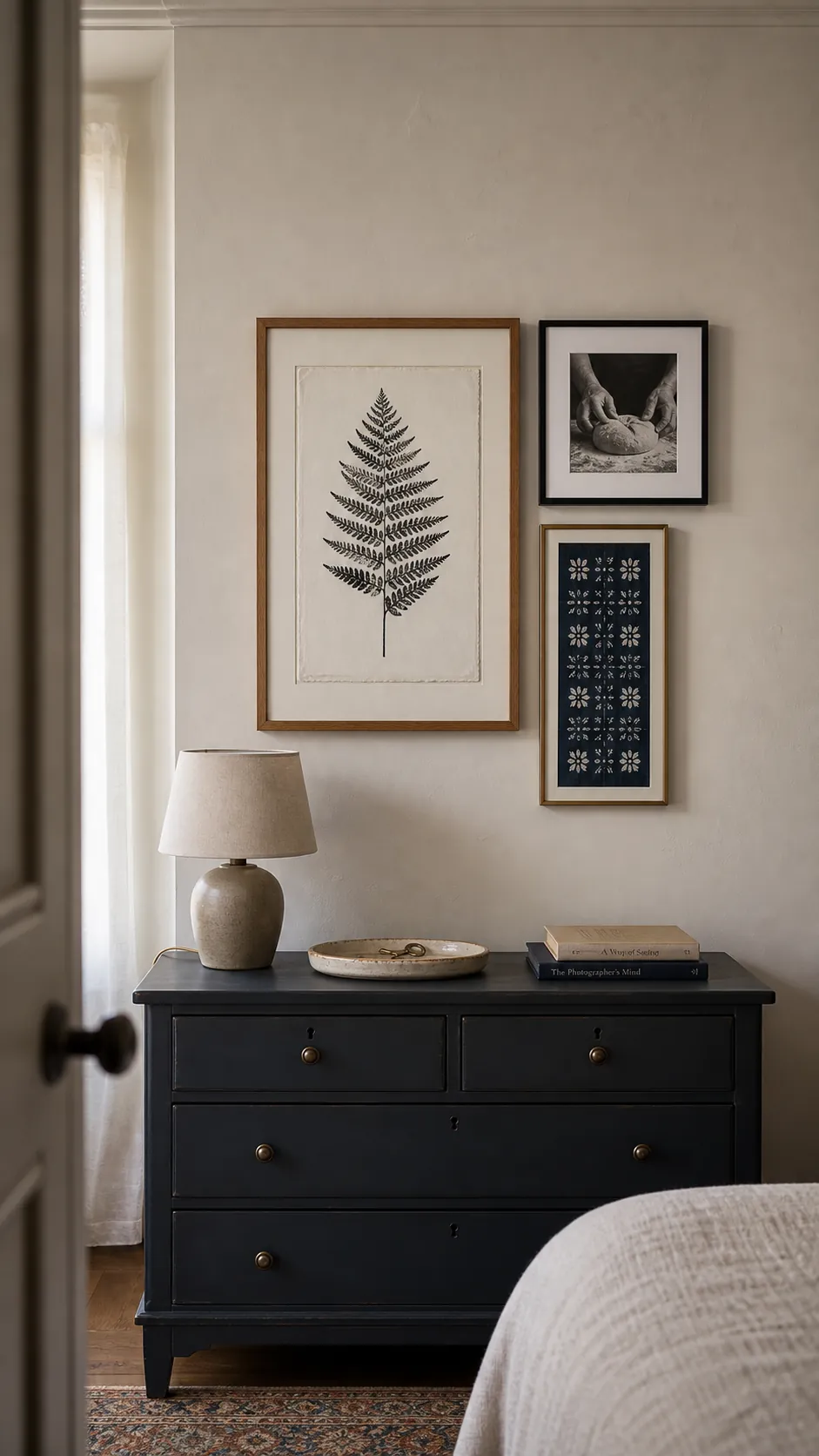
Bare walls can make a bedroom feel temporary, but many unrelated small frames create a different kind of unease. Decide which wall deserves attention. The bed wall can hold one generous piece or a tight, measured arrangement; a secondary wall can stay quiet. Give art enough breathing room and relate its width to the furniture below it.
Before making holes, tape paper templates to the wall and view them from the doorway and bed. A renter-friendly picture ledge or removable hanging system can offer flexibility, but the same scale principles apply. Choose images with actual meaning, not generic filler purchased to occupy space. Personality comes from specificity: a family photograph, a textile, or a print you would still love outside the current color scheme.
Visible Clutter Has No Landing Place
Clutter is often a storage-design problem, not a discipline problem. Clothes collect on a chair because there is no convenient alternative. Chargers sprawl across the nightstand because the outlet is badly placed. Laundry sits in view because the hamper is too small or too far away. Watch where objects naturally land for a week before buying organizers.
Put a hook where the robe is dropped, a lidded hamper where clothes are removed, and a small tray where jewelry accumulates. Use a bedside table with a drawer for medication, cables, and sleep accessories. Then edit the open surfaces until each has useful negative space. A calm bedroom is not empty; it simply gives daily objects an easy home.
The Room Has No Personal Evidence
A bedroom assembled entirely from one retailer can be polished and still feel anonymous. The answer is not random clutter. Add a few pieces that reveal a life: a worn book beside the bed, a handmade ceramic dish, a framed note, a travel photograph, or a textile with a story. These objects interrupt the showroom effect.
Choose personal items that can participate in the palette and scale of the room rather than forcing every keepsake onto display. Rotate small pieces seasonally if you own more than the room can hold. A useful filter is whether the object would prompt a real memory or conversation. Specific belongings create warmth that trend-driven accessories cannot imitate.
Too Many Fixes Are Happening at Once
When a bedroom feels off, changing the rug, paint, bedding, art, and curtains together makes it impossible to learn which decision helped. It also encourages expensive overcorrection. Take photos in daylight and at night, remove obvious clutter, and fix the biggest structural issue first. Live with that change for several days before judging the next layer.
Use this order: movement, focal point, scale, lighting, textiles, color repetition, then personal detail. Borrow items from another room to test size or color before buying. Tape out a rug footprint, raise a temporary curtain rod, or move a lamp for an evening. A cohesive bedroom is rarely produced by one dramatic purchase. It emerges when each decision supports the same calm, practical experience.
The goal is not a bedroom that looks finished forever. It is a room whose layout works, whose lighting helps you wind down, and whose objects feel connected to one another and to you. Once those three things are true, the nagging sense that something is off usually disappears.