
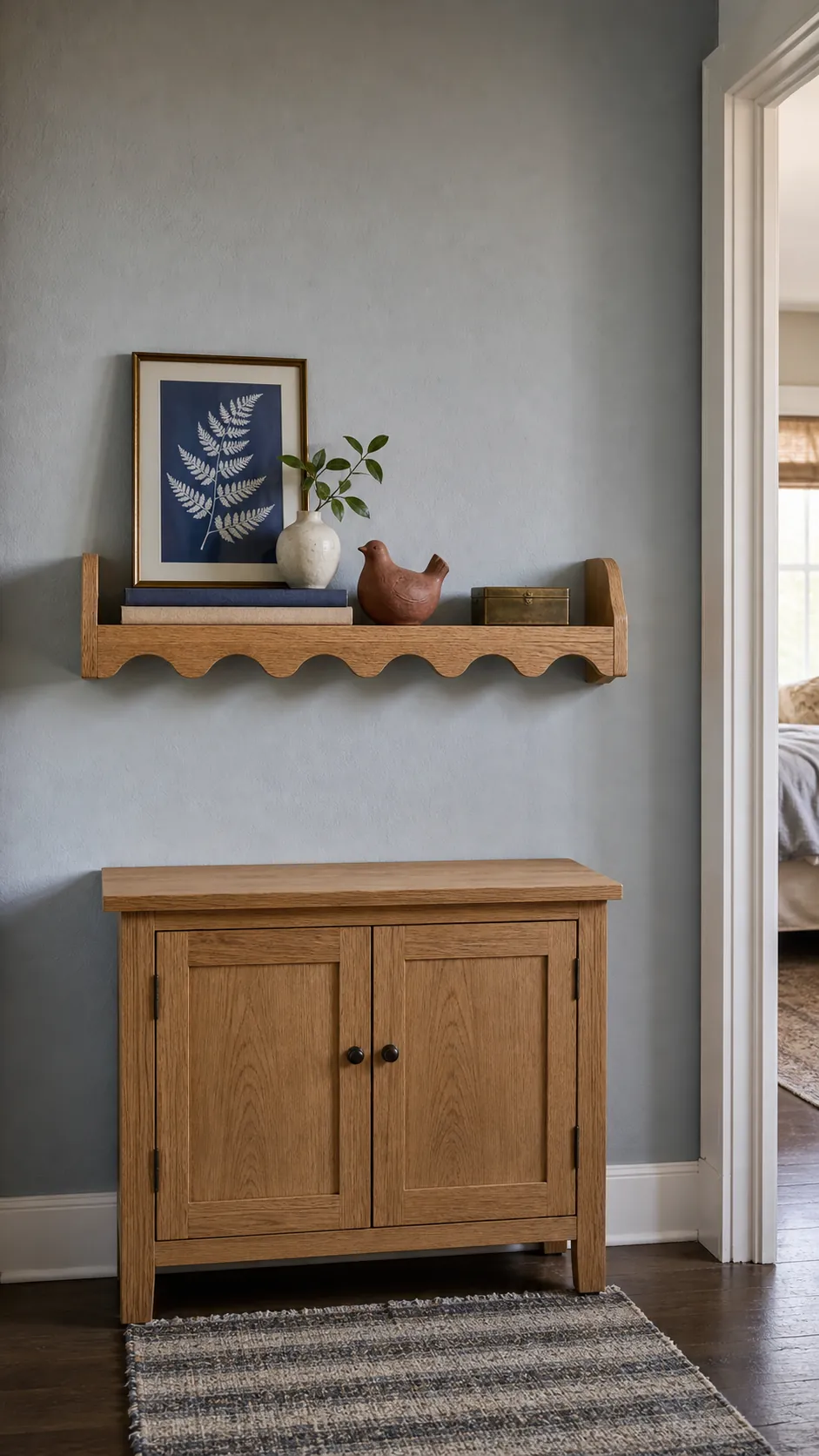
A scalloped shelf already has a strong decorative rhythm. If you line its top with a row of same-size trinkets, the curve disappears and the whole display starts to look like storage. Good shelf styling is less about finding more cute decor and more about giving a few objects enough space to register.
The most useful approach is to work from large to small, vary height and shape, and edit from across the room. Odd-number groupings can help, but they are not a law. Balance comes from visual weight and negative space, not from counting objects.
Clear the Shelf and Set a Space Limit
Take everything down, clean the surface, and look at the shelf by itself. The scalloped apron is part of the composition, so plan to leave roughly a quarter to a third of the top open. If the shelf is shallow, test the actual object bases before styling; decor that hangs over the lip looks precarious even when it is lightweight.
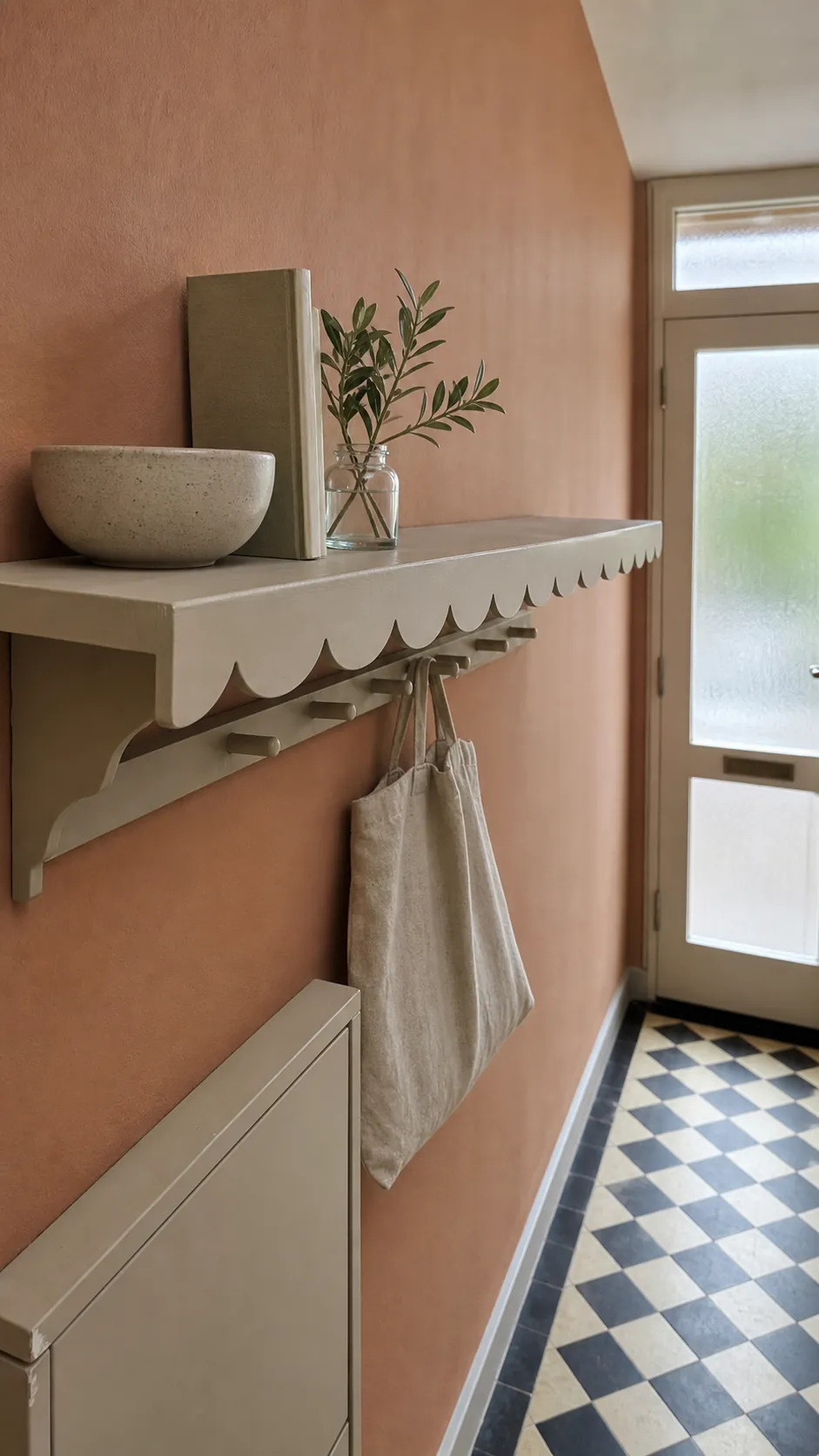
Create an overflow box for objects that do not make the first edit. You are not discarding them; you are choosing what this shelf says now. Rotating small decor makes meaningful pieces easier to notice and cleaning considerably faster.
Choose One Anchor Before the Tiny Pieces
Begin with the object that carries the most visual weight: a small framed print, a substantial book, a low vase, or a sculptural box. It should be tall or broad enough to establish a focal point without hiding the curved edge. Place it slightly off center; dead-center alignment often makes every smaller piece line up like a formal display.
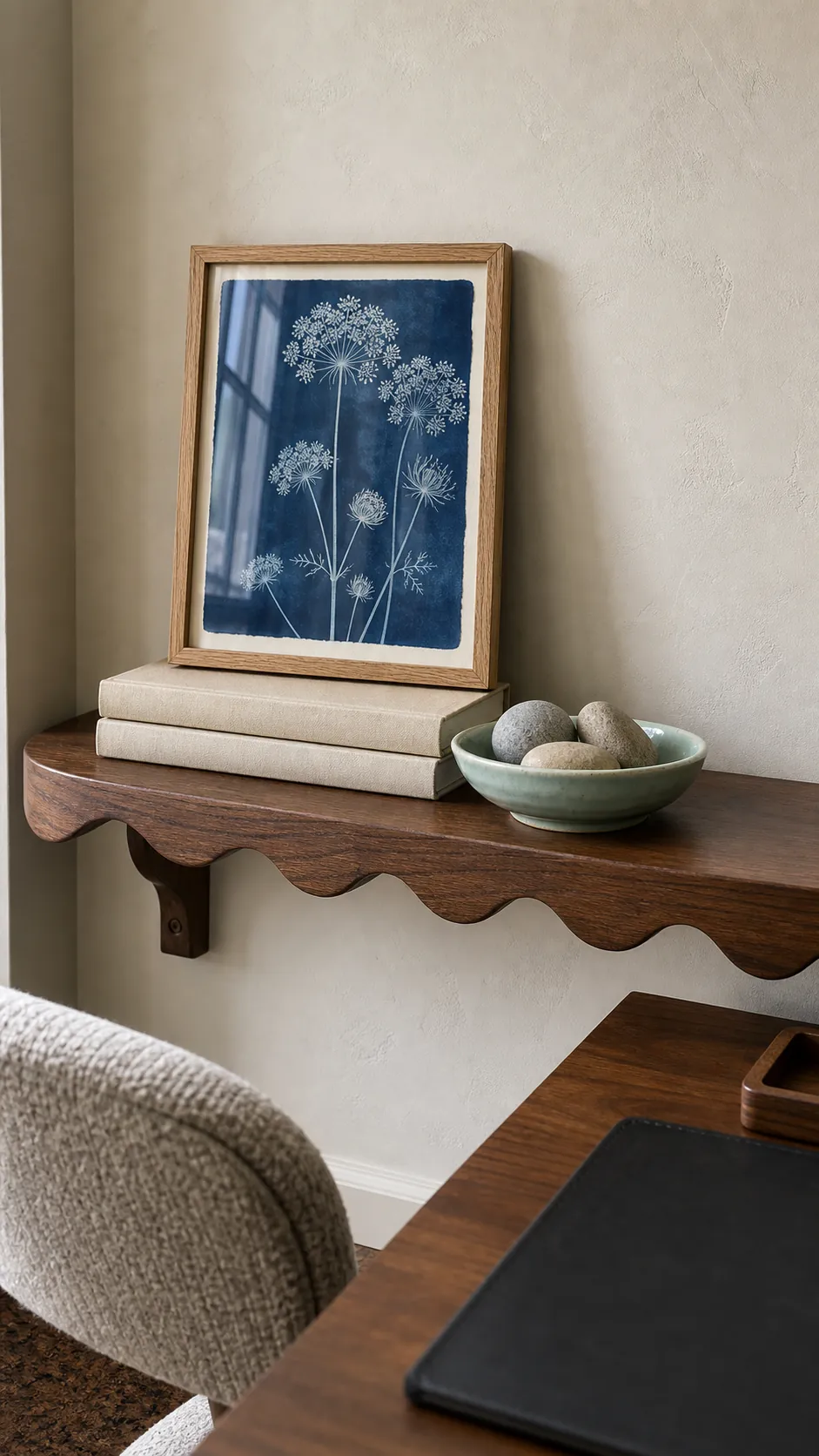
Then add only one or two supporting objects. A horizontal book can widen the anchor; a tiny bowl can balance its base. The supporting pieces should share a color, material, or story with the anchor without matching it exactly.
Build a Loose Triangle With Different Heights
When every item is the same height, the eye stops moving. Arrange a tall, medium, and low element so their tops make a loose triangle. Overlap silhouettes slightly rather than spacing every object at equal intervals. This creates a group, while a larger gap on the other side lets the scallops remain visible.
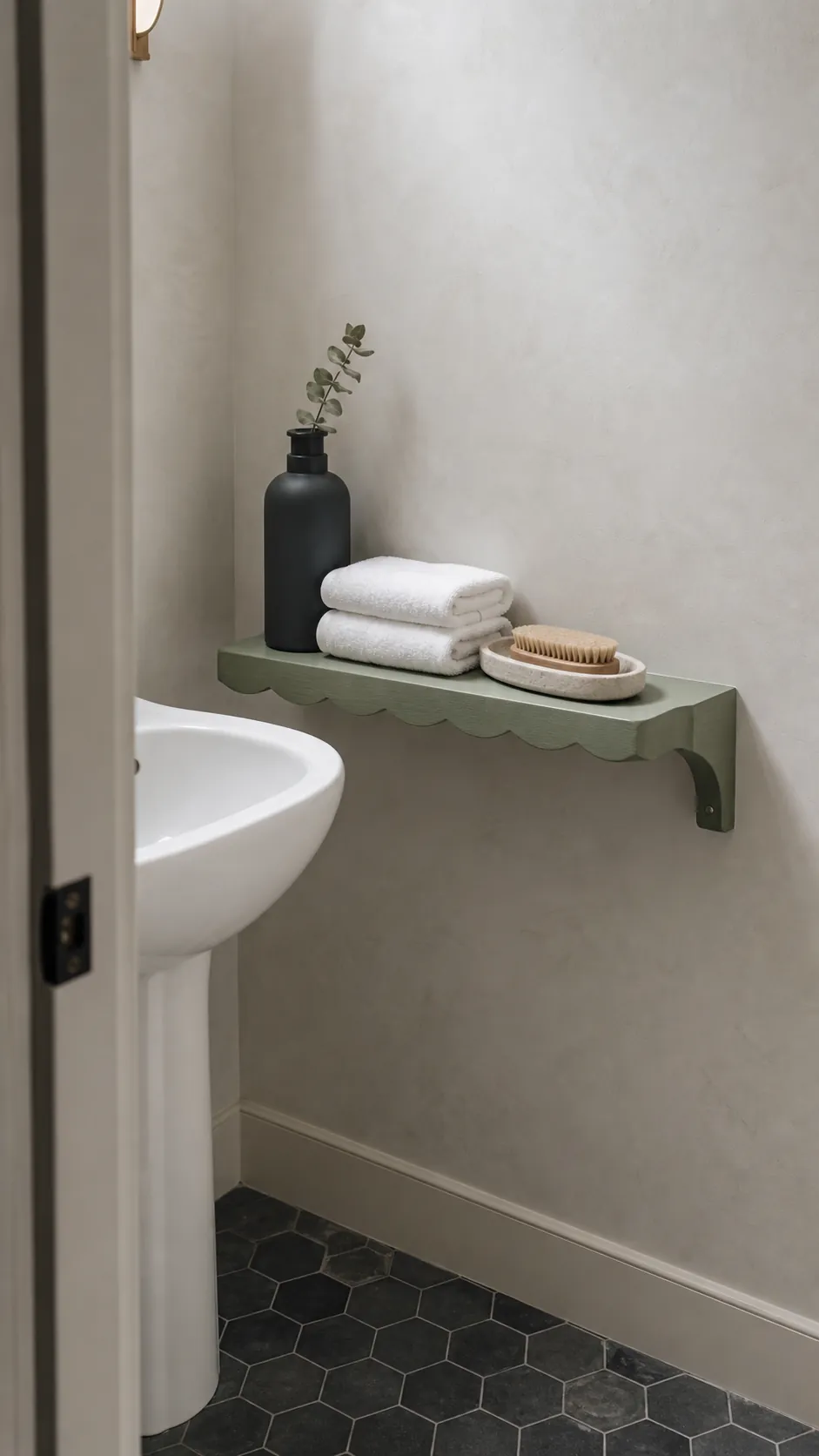
A stack of two slim books is an easy riser, but use books you actually enjoy rather than color-coordinated filler. Turn spines outward so they remain usable. If a taller item feels unstable or crowds the wall above, replace it with a broader medium-height piece instead.
Mix Texture Instead of Adding More Color
A shelf can feel flat even when the palette works. Combine one matte surface, one natural or woven texture, and one gently reflective detail. For example, pair an unglazed ceramic vessel with a tiny lidded basket and an aged brass keepsake. The contrast becomes visible in changing daylight without making the shelf busy.
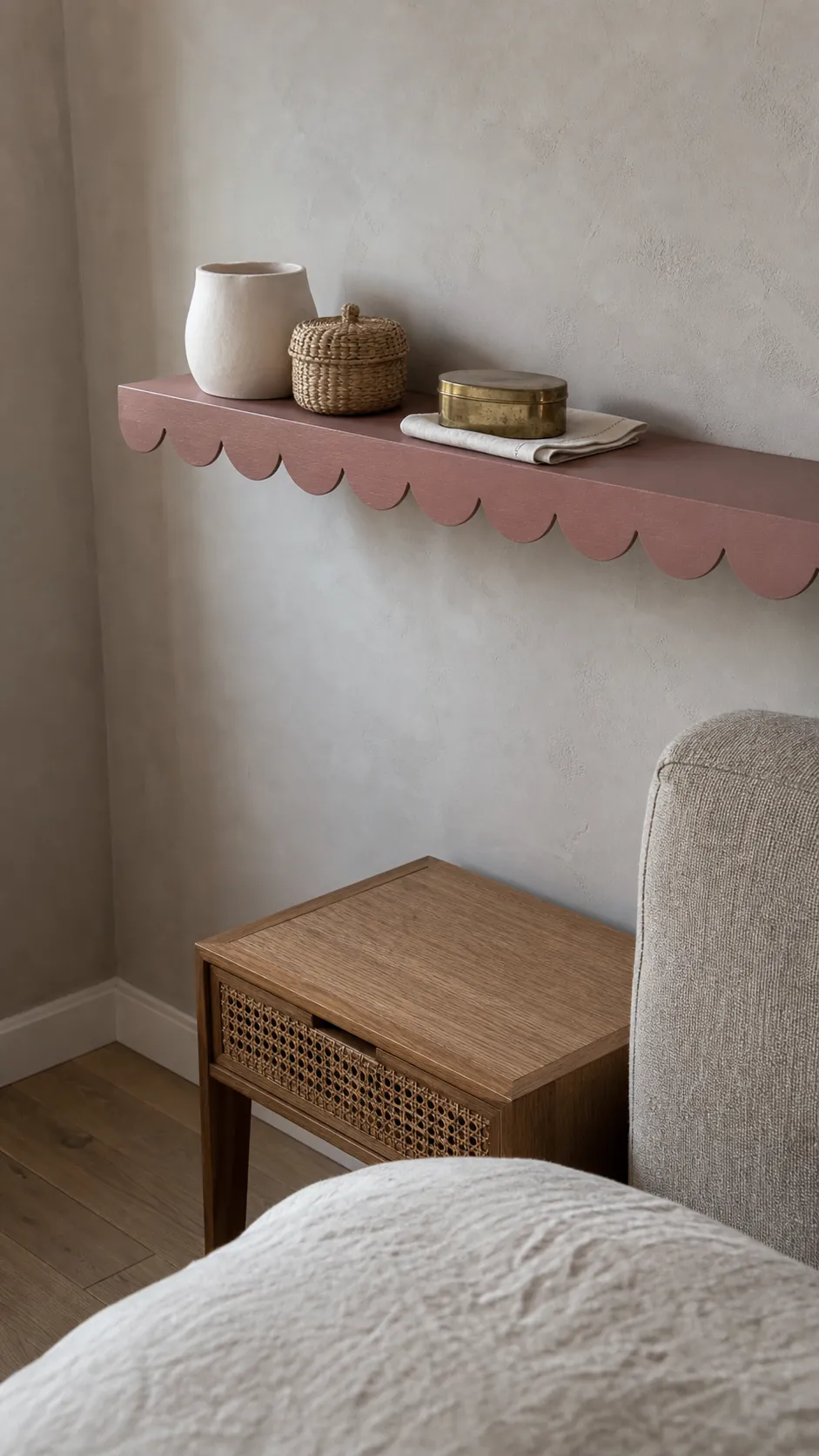
Repeat a material already in the room so the shelf belongs to its surroundings. A wood frame can echo a bedside table; a woven object can connect to a rug. Avoid placing open flame, fragile glass, or anything valuable where children, pets, doors, or chair backs can reach it.
Add One Object That Explains Who Lives Here
Catalog-style decor often feels wrong because it could belong to anyone. Replace one generic ornament with a real keepsake: a smooth stone from a trip, a child’s clay figure, an inherited wooden toy, a small photograph, or a handmade card. Personal does not have to mean crowded. One specific object can carry more warmth than a coordinated set of five.
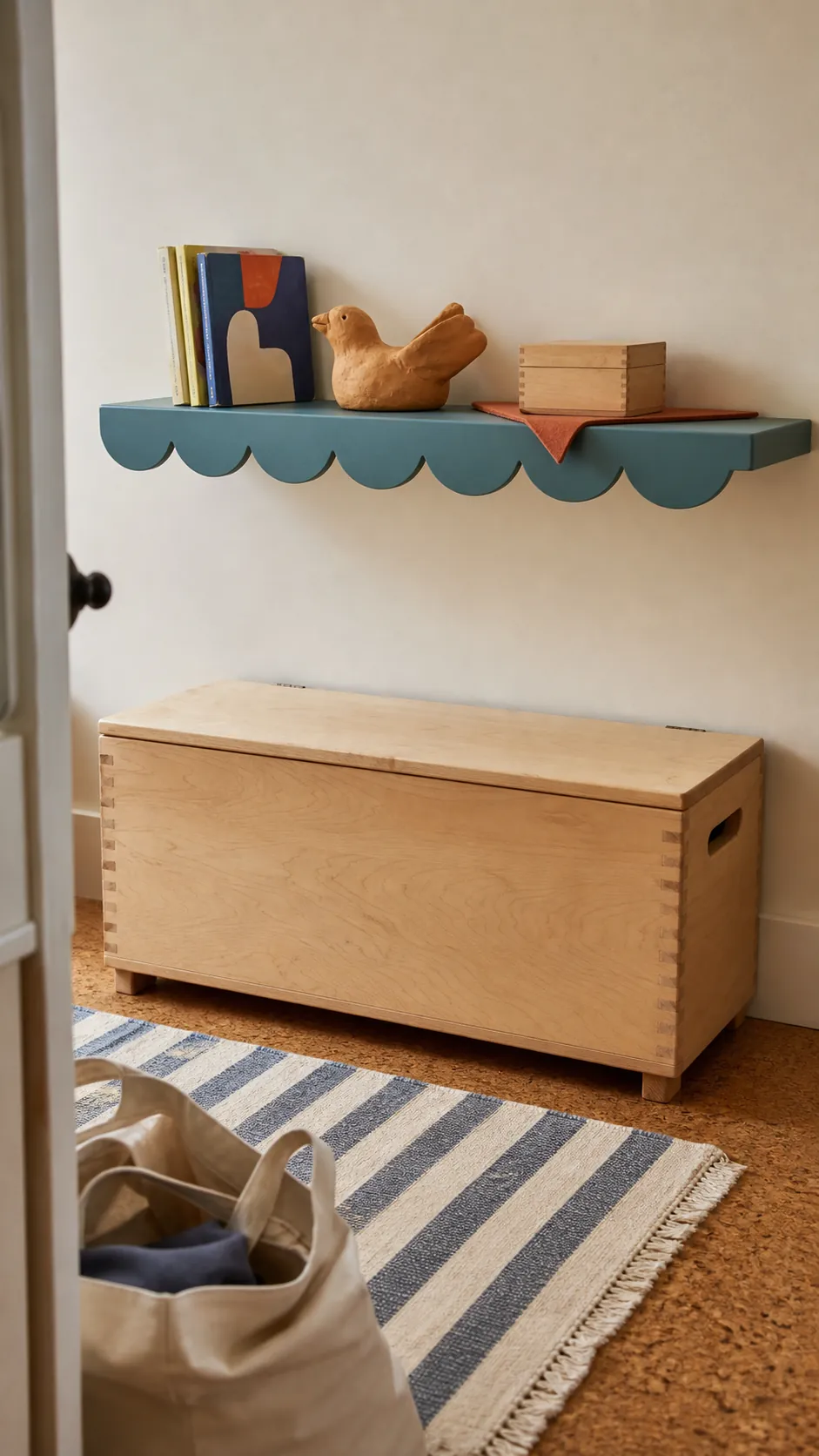
In a nursery or kids room, adjust the display as the child grows. Secure the shelf with the correct wall fixings, keep hard or breakable objects away from sleep and changing areas, and reassess reach once a baby begins standing or climbing. A shelf that is purely decorative today may become accessible sooner than expected.
Step Back, Photograph It, and Remove One Thing
Shelf styling is judged from the room, not from six inches away. Walk to the doorway and look for three things: a clear focal point, varied but connected heights, and open space around the group. A phone photograph often exposes equal gaps, accidental centering, and objects that disappear against the wall.
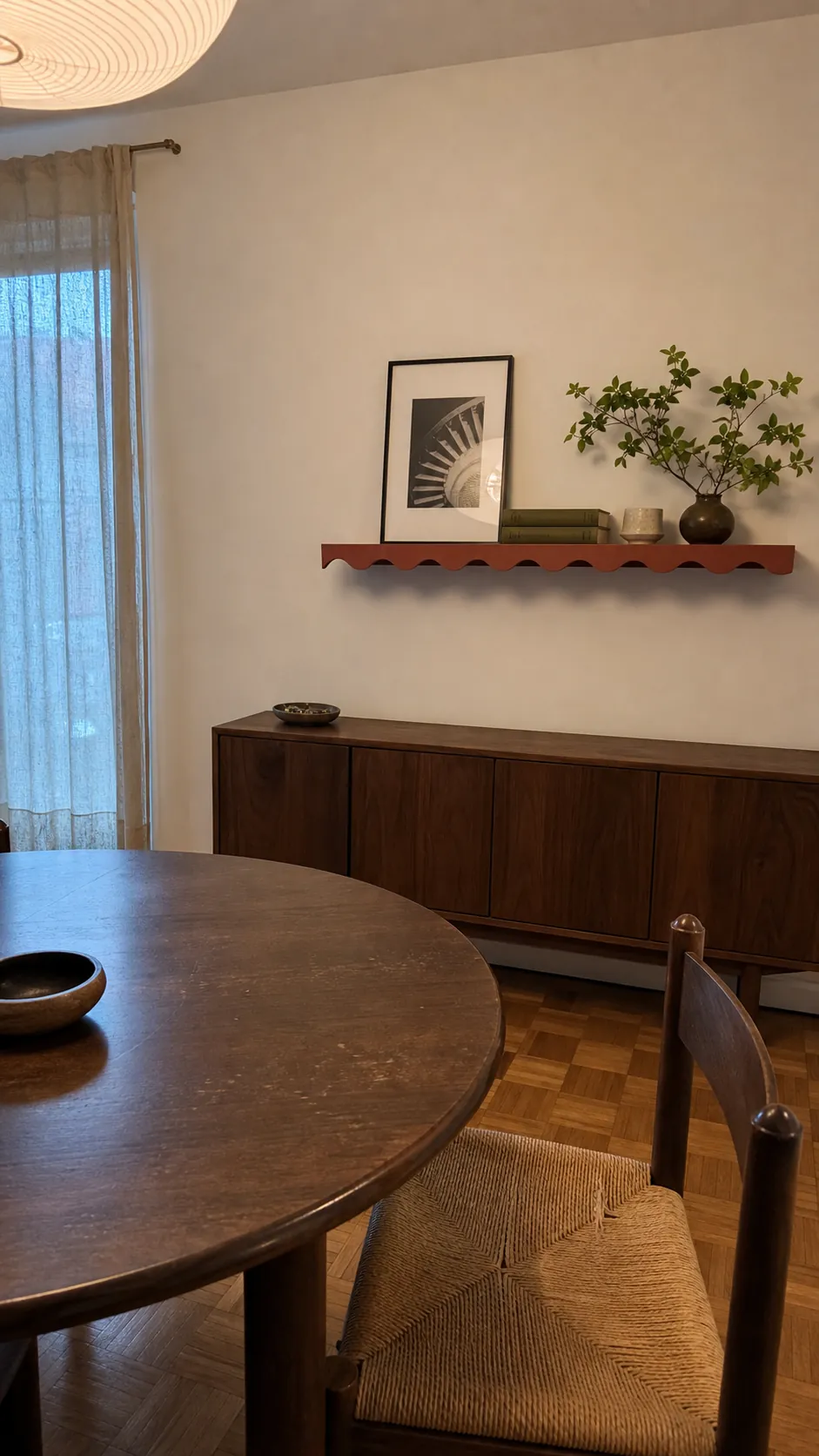
Remove the weakest object and look again. If the arrangement becomes clearer, leave it out. If one side now feels unsupported, shift the remaining group before adding anything back. Move pieces by inches, not by buying replacements.
Stop when the shelf looks connected to the room and the objects are easy to see, dust, and use. Seasonal changes can come from one branch, one book, or one color—not a second layer of decor placed in front of the first. The scalloped edge supplies the charm; your edit supplies the style.