
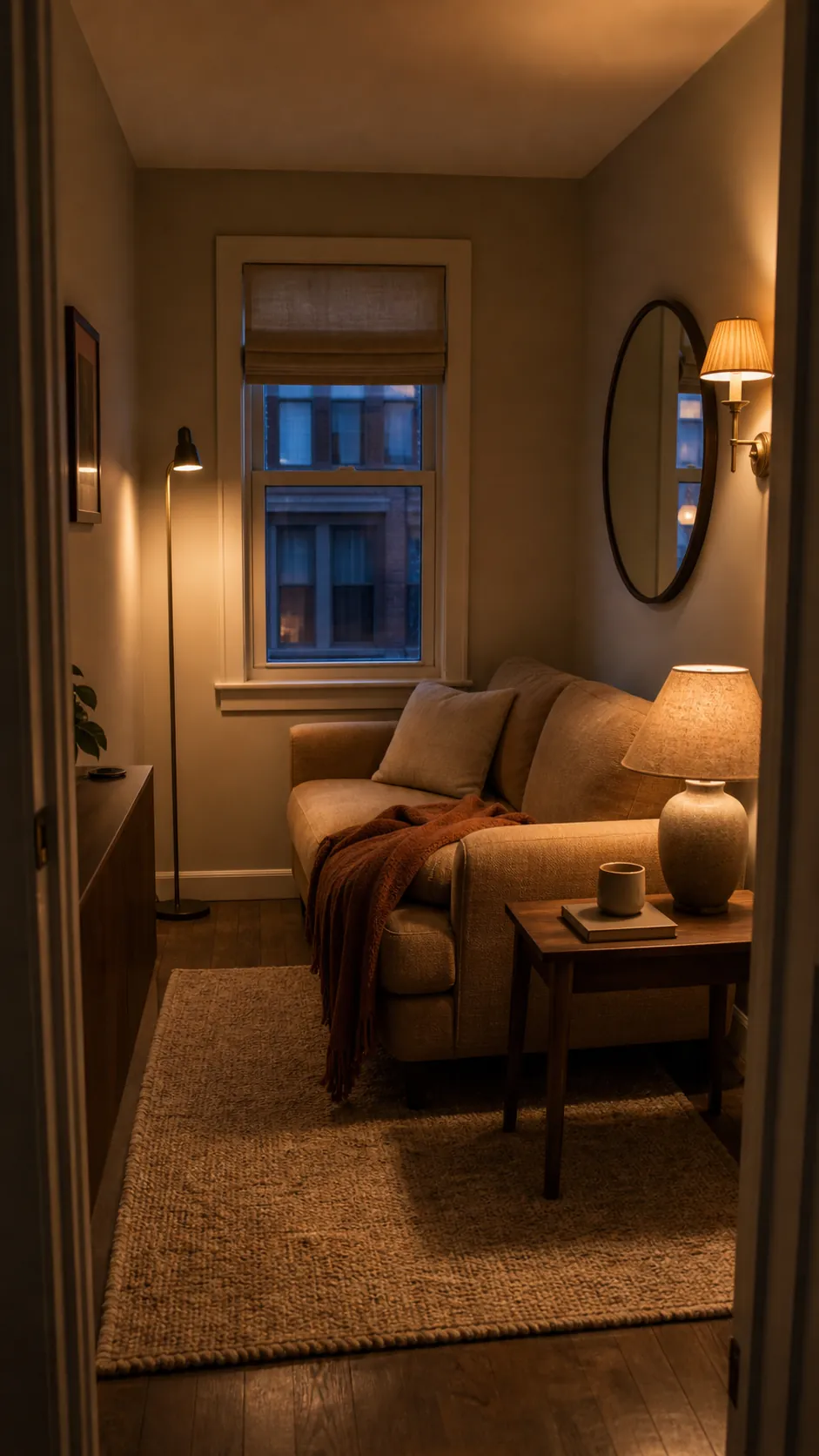
A dark small room often looks cold for a reason that paint alone cannot fix: one weak ceiling light is trying to do every job. It creates a bright spot overhead, leaves the corners gray, and flattens every warm material you hoped would make the room cozy.
The answer is not necessarily to paint everything white. In low natural light, a cool white can look dingy, and a dark color can feel wonderful if the room has enough layered light. Warmth comes from coordinating wall undertones, lamp placement, bulb quality, texture, and a few reflective surfaces. Here is how to make those elements work together without crowding limited square footage.
Diagnose Where the Room Loses Light
Spend one day noticing the room rather than buying decor. Which corner stays gray at noon? Does a neighboring building, porch, tree, or deep window reveal block the sky? Does the only lamp sit behind you when you read? Dark small rooms are rarely uniformly dark; they have dead zones and glare zones.
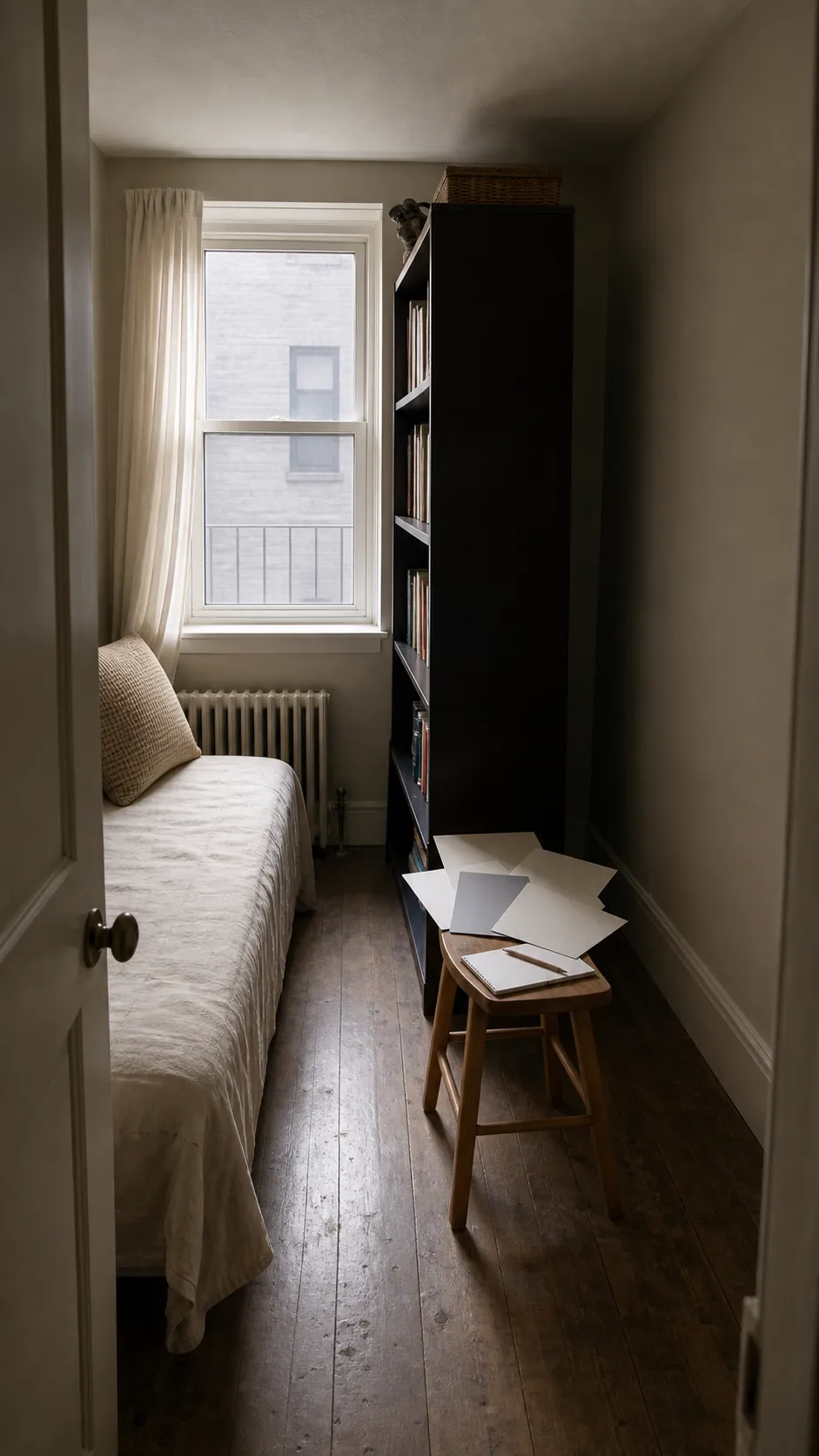
Remove anything that blocks the useful part of the window. A tall bookcase beside the glass, a dark valance, or furniture pushed across the sill can cost more daylight than its size suggests. Keep privacy treatments light-filtering during the day and move visual weight to the wall opposite the window.
Layer Light at Three Heights
A warm lighting plan needs ambient, task, and accent light. Ambient light lets you move safely. Task light supports reading, dressing, or working. Accent light grazes a wall, shelf, or curtain and removes the gloomy perimeter. In a small room, these can be compact: a plug-in wall sconce, a shaded table lamp, and a slim floor uplight.
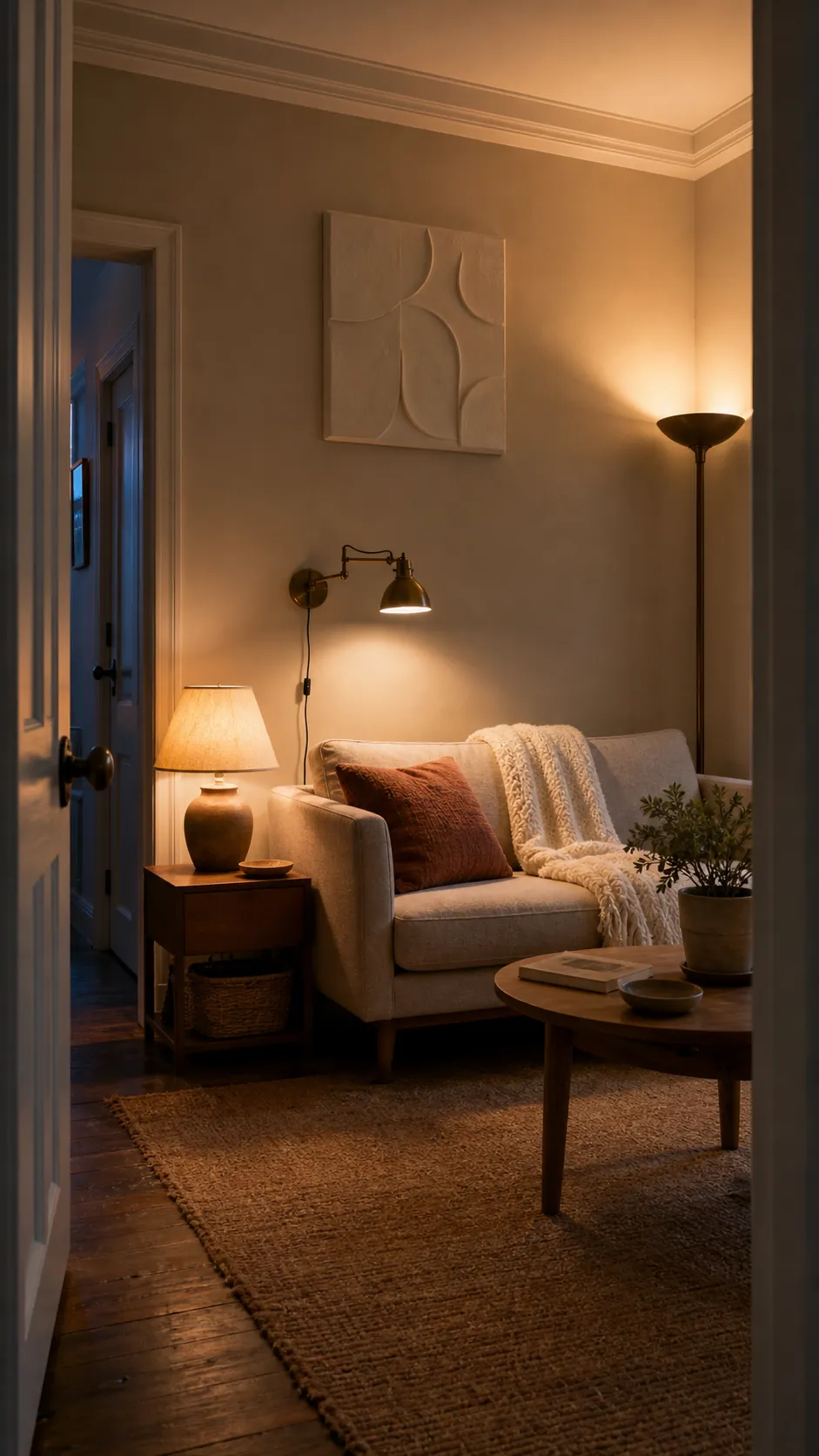
Place lights around the room instead of clustering them beside one seat. The goal is overlapping pools, not maximum brightness. A wall-washing lamp in the darkest corner often makes the room feel larger because it restores a visible boundary. Put lamps on dimmers or use dimmable bulbs so evening light can stay low without becoming harsh.
Choose Warm Bulbs That Render Color Well
Color temperature describes whether light appears warm or cool, but it does not tell you whether colors will look healthy. For a cozy room, 2700K is a familiar starting point; 3000K can feel cleaner for task areas. Look for a high color rendering index, ideally 90 or above, so wood, skin tones, textiles, and warm neutrals do not look dull or green.
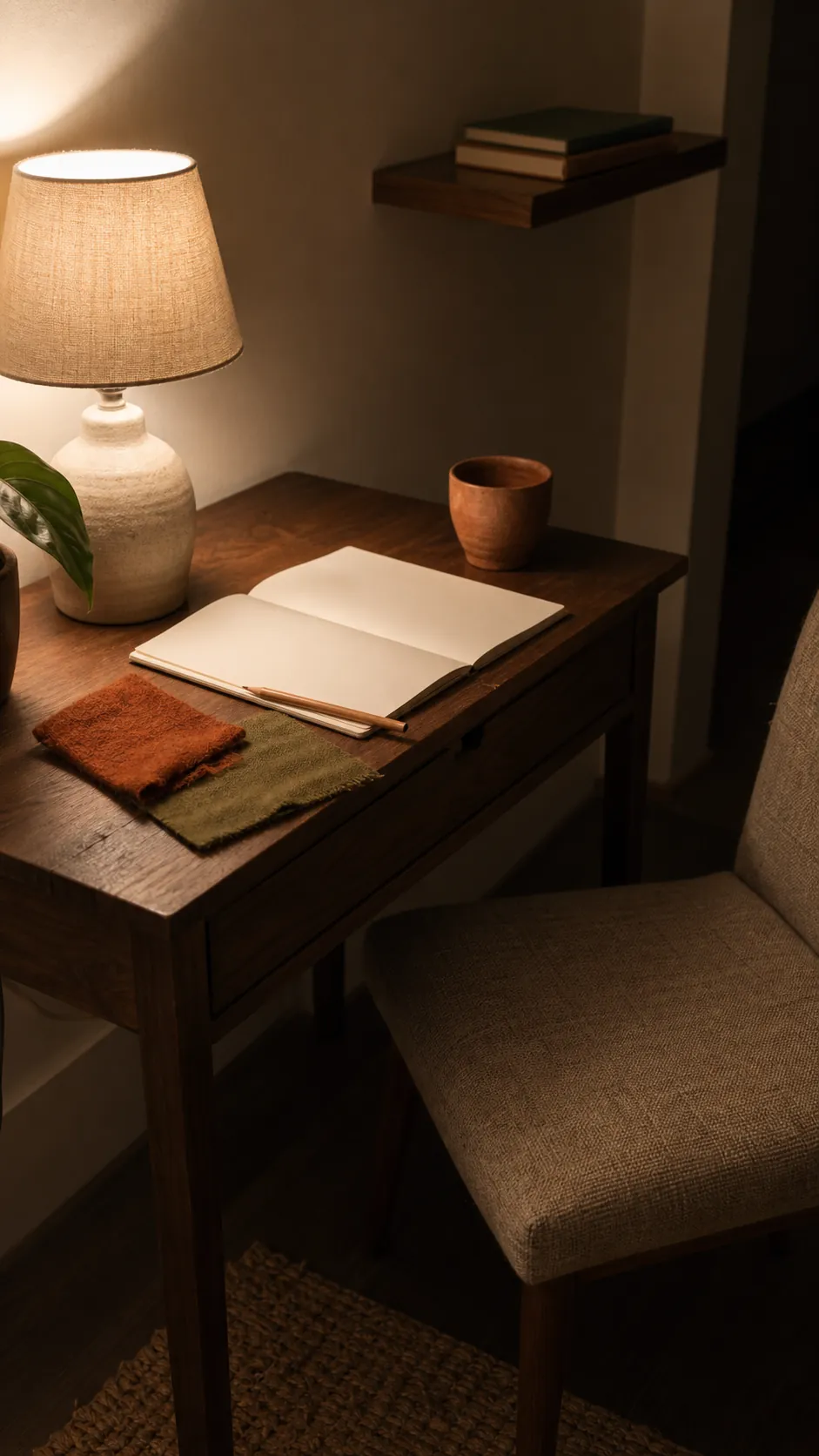
Use the same general color temperature across lamps visible at once. One icy bulb beside one amber bulb makes the room look accidental. If you prefer very dim evenings, “dim-to-warm” bulbs can become warmer as they dim, closer to the visual behavior people expect from firelight.
Pick Wall Colors That Survive Shadow
Cool northern light and deep shade amplify gray, blue, and green undertones. If you want a lighter room, test warm cream, pale putty, soft peach-beige, or a warm neutral with little obvious gray. If light paint still looks dirty in the darkest corner, a saturated mid-tone may look more intentional than a white that never reads white.
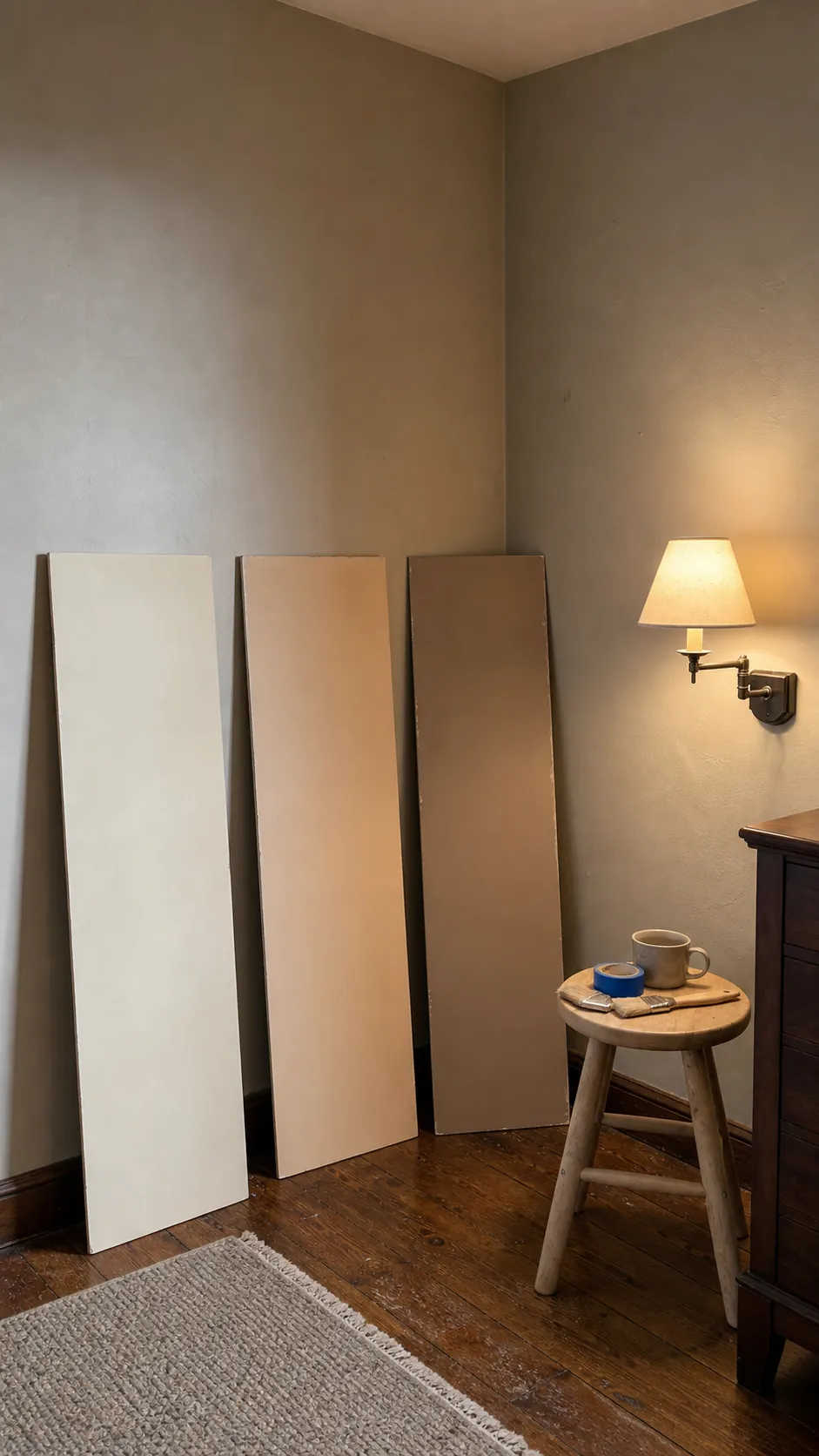
Paint large movable boards and place them where the color goes dead, not just beside the window. Check them morning, afternoon, and under your lamps. A digital render can exaggerate ambient light and ceiling height, so let the actual room decide. A color that looks “lit from within” in the shadow is more useful than one that wins under a store light.
Bring Warmth Through Touchable Materials
Warm colors help, but texture is what makes a dark room feel comfortable. Add one soft layer, one natural grain, and one matte handmade surface: a wool throw, an oak or walnut tray, and a clay lamp base, for example. Their uneven surfaces catch small highlights and make low light feel dimensional.
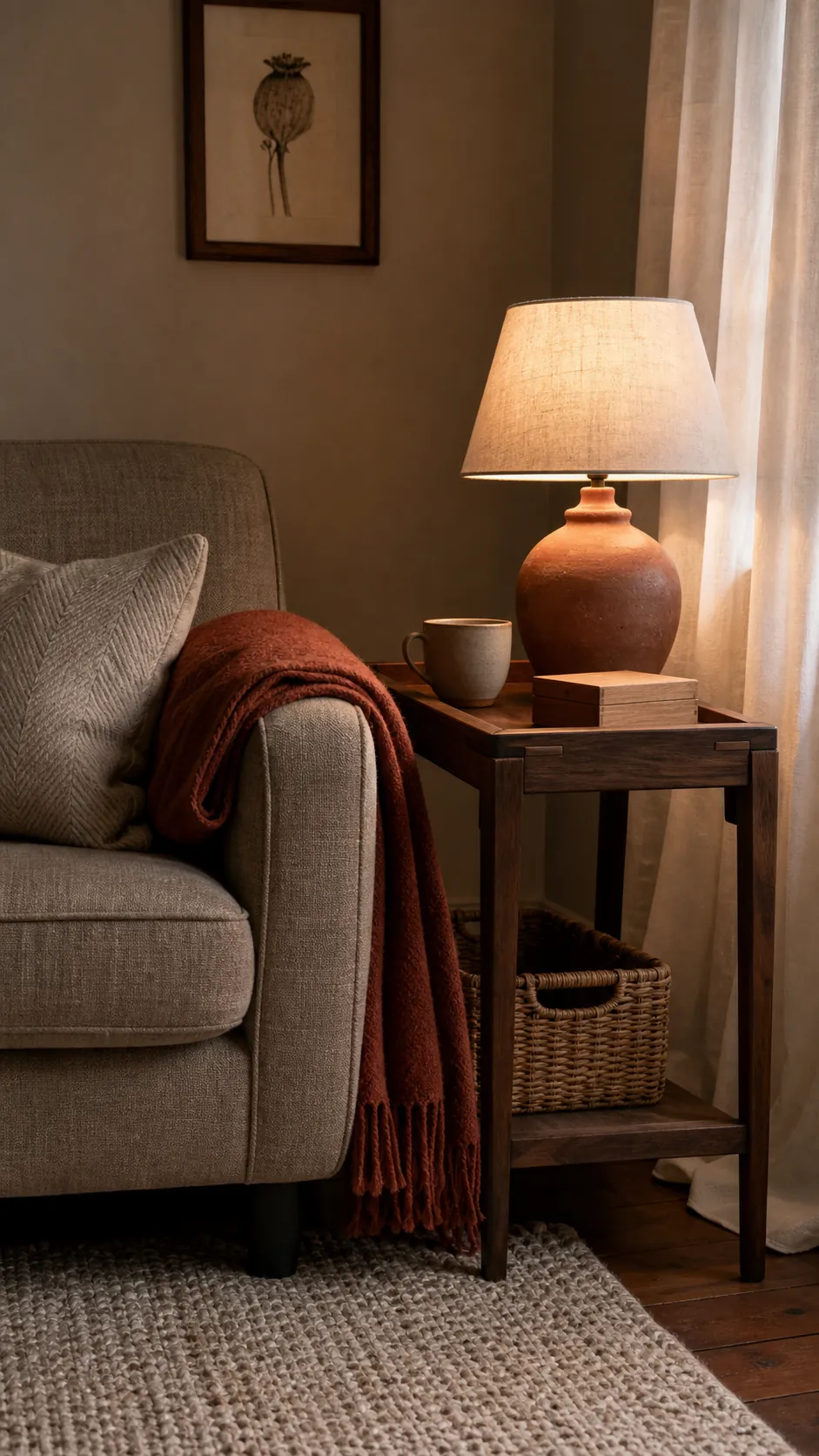
Avoid covering every surface in heavy fabric. Thick curtains, a high-pile rug, multiple bulky throws, and dark upholstery can absorb light and physical space at the same time. Choose a few tactile pieces and leave some smoother, paler surfaces available to reflect the lamps.
Bounce Light Without Creating Glare
A mirror helps only when it reflects something useful. Place it where it can catch a window, lamp-washed wall, or bright doorway—not where it doubles a television, cluttered shelf, or bare bulb. Satin paint, glazed ceramic, light wood, and small metal details also move light gently without the hard glare of a room full of glass.
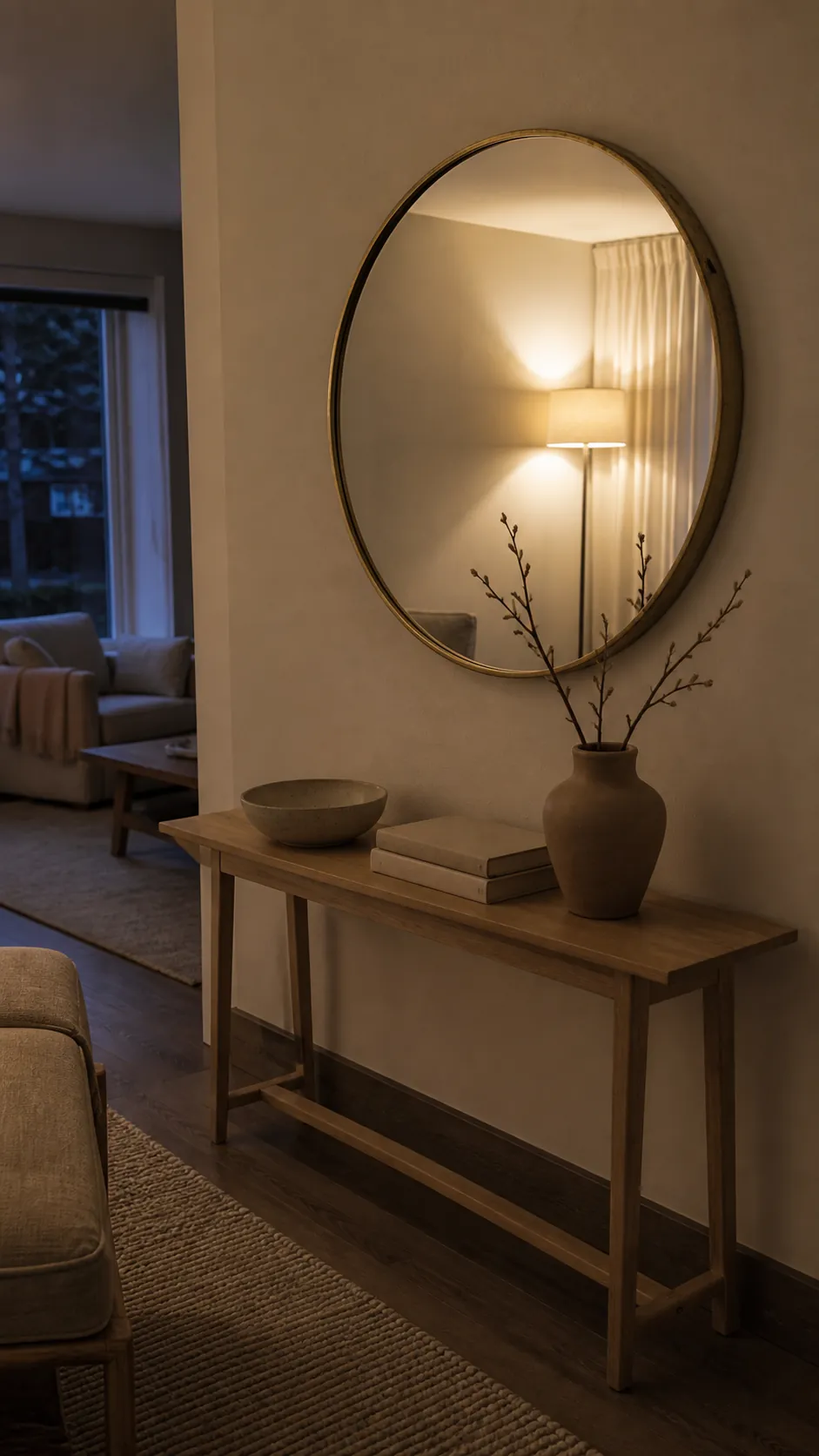
Keep the reflected view simple. A medium mirror opposite a softly lit wall can feel warmer and calmer than a huge mirror facing a messy room. For rentals, a leaning mirror secured with an anti-tip strap or a lightweight mirror on approved anchors can achieve the effect without construction.
Edit the Room Before Adding More Decor
Warmth is not the same as fullness. In a dark small room, too many small objects break up the limited light and make every surface harder to read. Remove items from the window zone, clear the top of the tallest furniture, and group necessary objects in one tray or basket. Open floor and visible wall are part of the lighting plan.
Then turn on the lamps you actually use and look from the doorway. If the corners are visible, the main task has comfortable light, and the warm materials still show their true color, the room is working. The aim is not to imitate daylight at midnight. It is to make a naturally dark room feel deliberate, useful, and welcoming.