
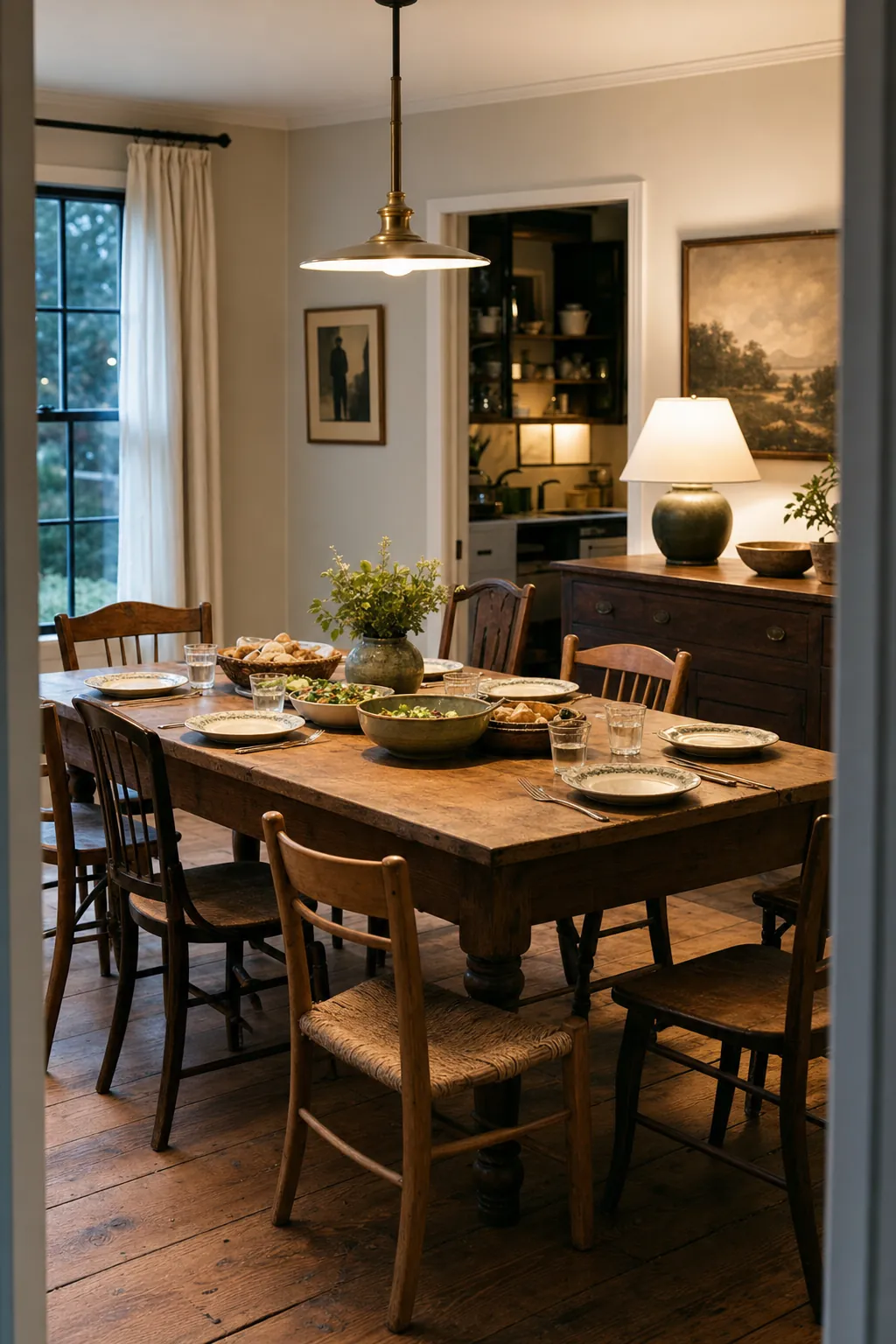
A vintage dining room earns its charm at six o’clock on an ordinary Tuesday—not only when the table is set for guests. The best family dining room welcomes homework, toast crumbs, extra chairs, and long conversations without making anyone afraid to touch the furniture.
That means choosing useful old pieces, forgiving surfaces, comfortable light, and table decor that can move in one trip. These ideas create a collected home around casual family meals while keeping spills, chair clearance, and daily cleanup firmly in view.
Choose a Table That Looks Better With Use
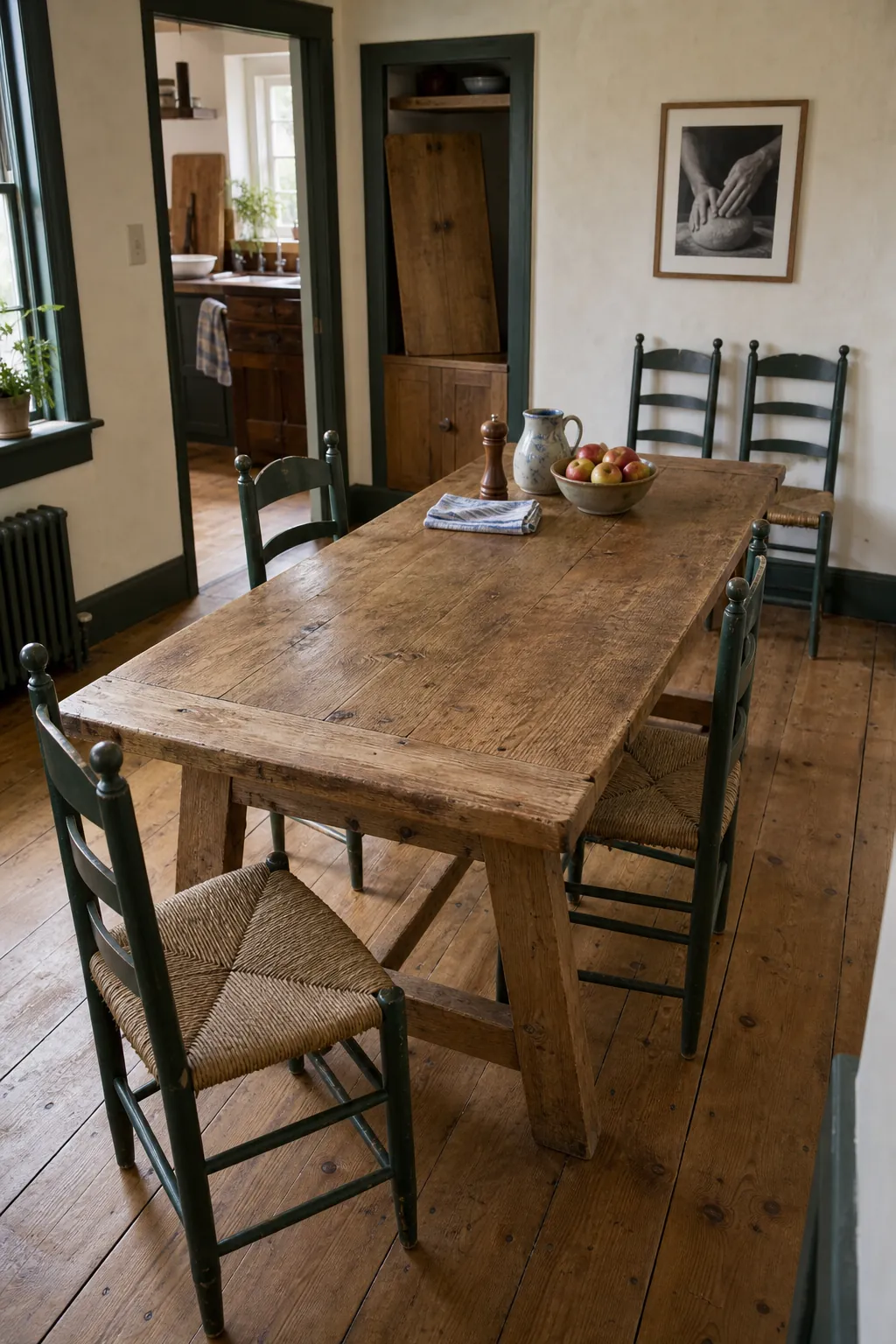
Solid timber is ideal for a hardworking vintage dining room because small scratches become part of its finish. Inspect old tables for stable joints, a flat top, comfortable apron clearance, and leaves that operate smoothly. A scrubbed pine farmhouse table feels relaxed; darker oak brings weight to a bright room.
Size the table for everyday circulation before planning for the largest holiday. Leave enough space to pull a chair out and pass behind it. An extension leaf or a simple folding spare table handles occasional crowds better than an oversized table that constricts the room all year.
Mix Chairs Around One Repeated Detail
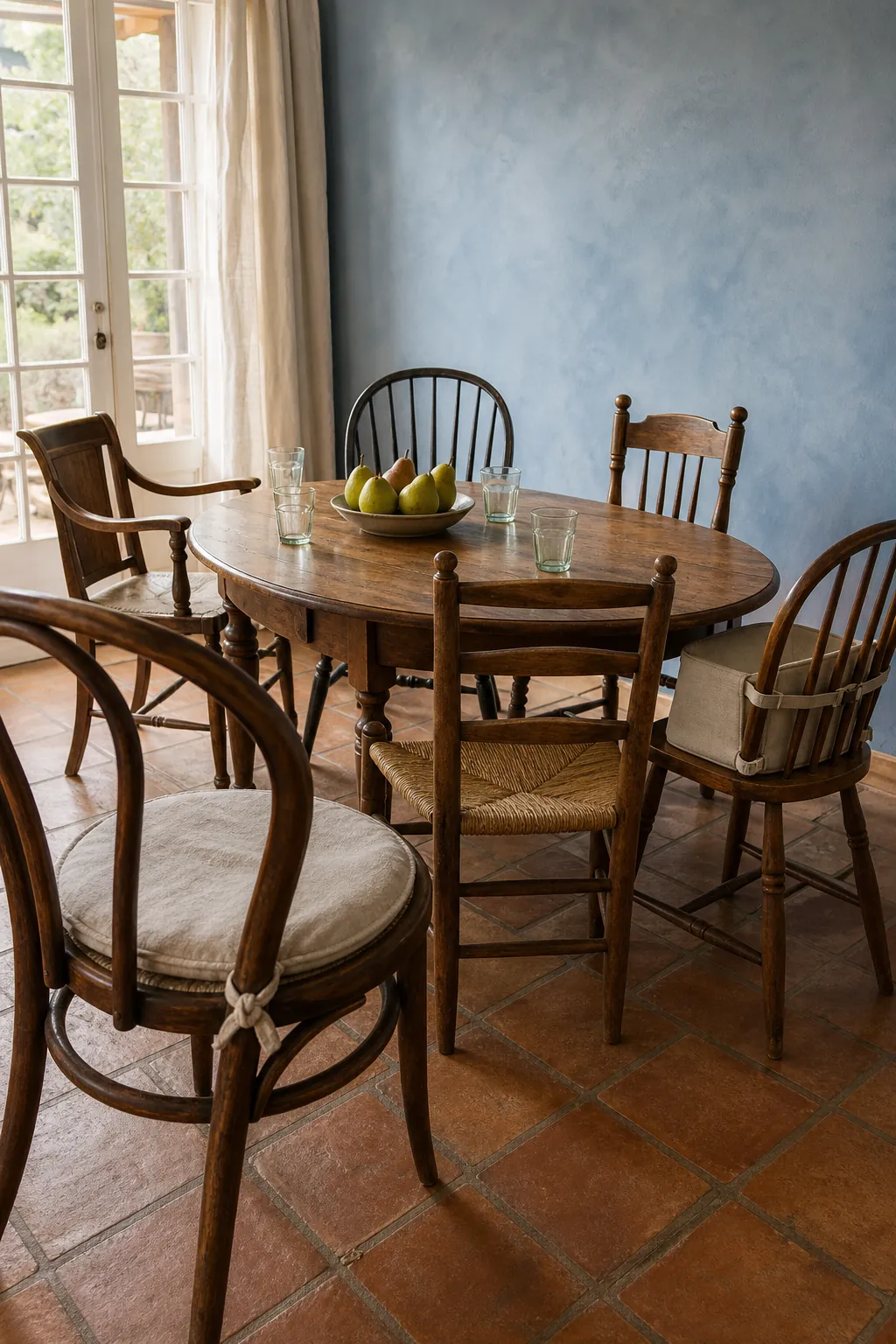
Mixed chairs make a room feel accumulated, but they still need to work together. Repeat one quality—dark wood, curved backs, woven seats, or a muted painted finish—while allowing silhouettes to vary. Check seat height and depth so family members do not feel noticeably higher or lower at the table.
Put the most supportive chairs where they are used longest. Armchairs can mark the ends if there is room, while lightweight side chairs suit children and frequent rearranging. Tighten joints and replace failing glides before the chairs join daily service.
Keep the Centerpiece Low and Portable
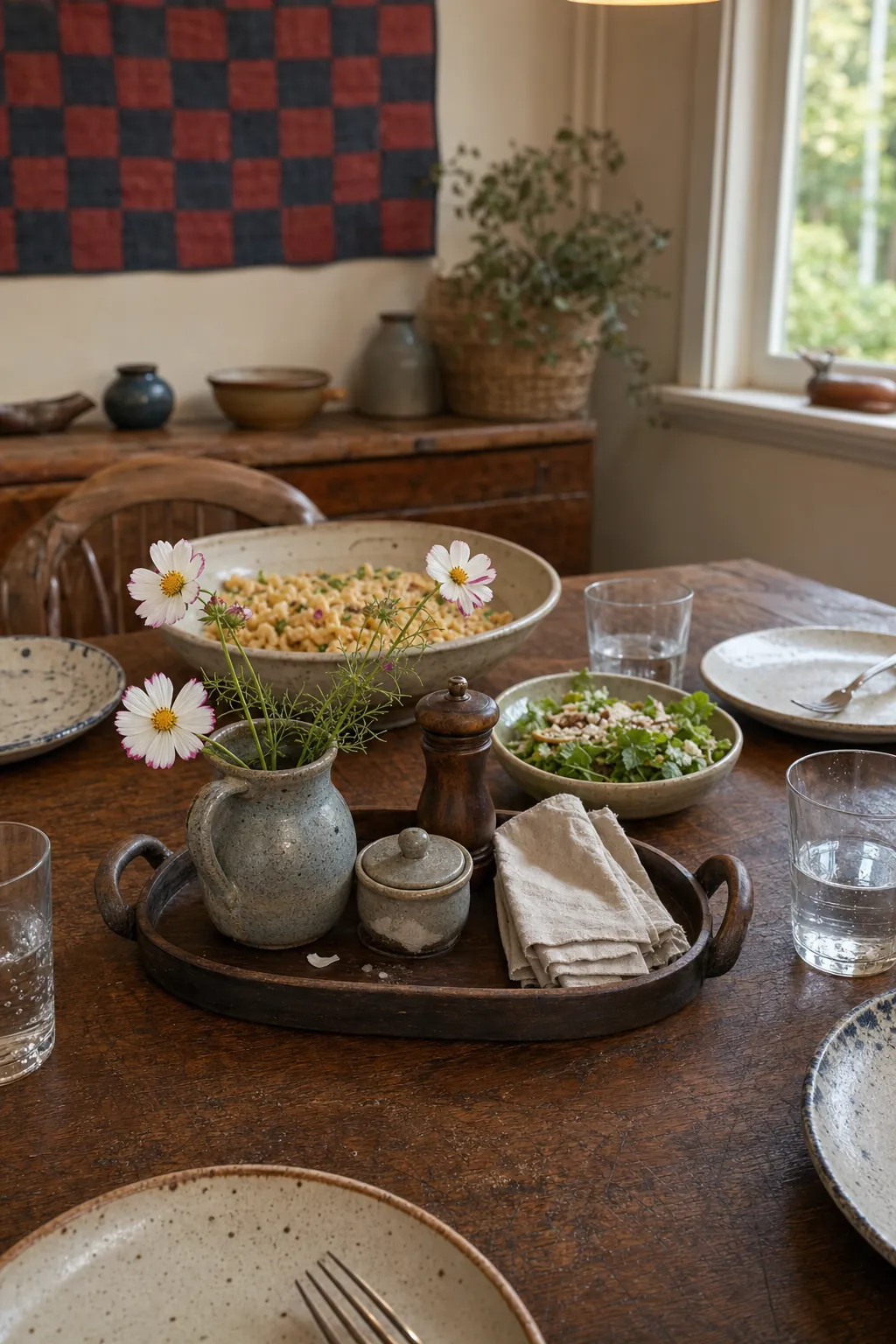
Everyday table decor should leave room for serving dishes and eye contact. Gather a small stoneware jug, salt cellar, and seasonal stems on one shallow tray. The group reads as intentional, yet can move to a sideboard with one hand when dinner arrives.
Avoid keeping a full formal place setting on display. A bare timber top, simple runner, or folded cloth at the center feels more casual and is easier to wipe. The table should look ready for a meal, not protected from one.
Make the Rug Decision for Your Household
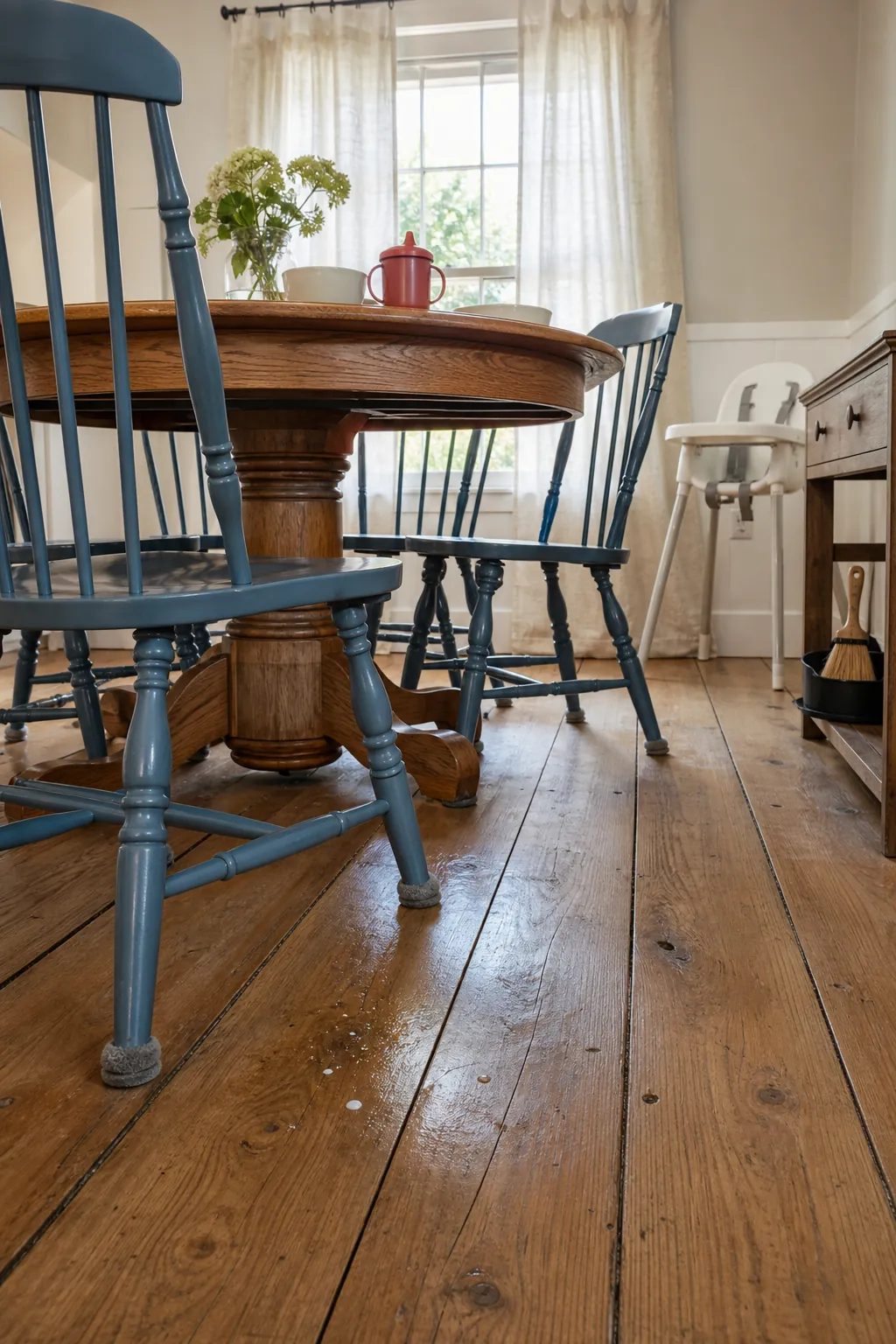
A rug can define an open dining zone and soften sound, but it is not compulsory. Homes with toddlers, messy eaters, or chairs that must slide easily may be happier with exposed timber, tile, or linoleum and felt pads beneath every chair leg.
If you want a rug, choose low pile, stain-tolerant color, and enough size for the rear legs of pulled-out chairs to remain on it. Washable and indoor-outdoor options can be sensible. Skip pale shag and loose natural fibers that trap crumbs; practicality is part of cozy cottage decor.
Lower the Light Toward the Table
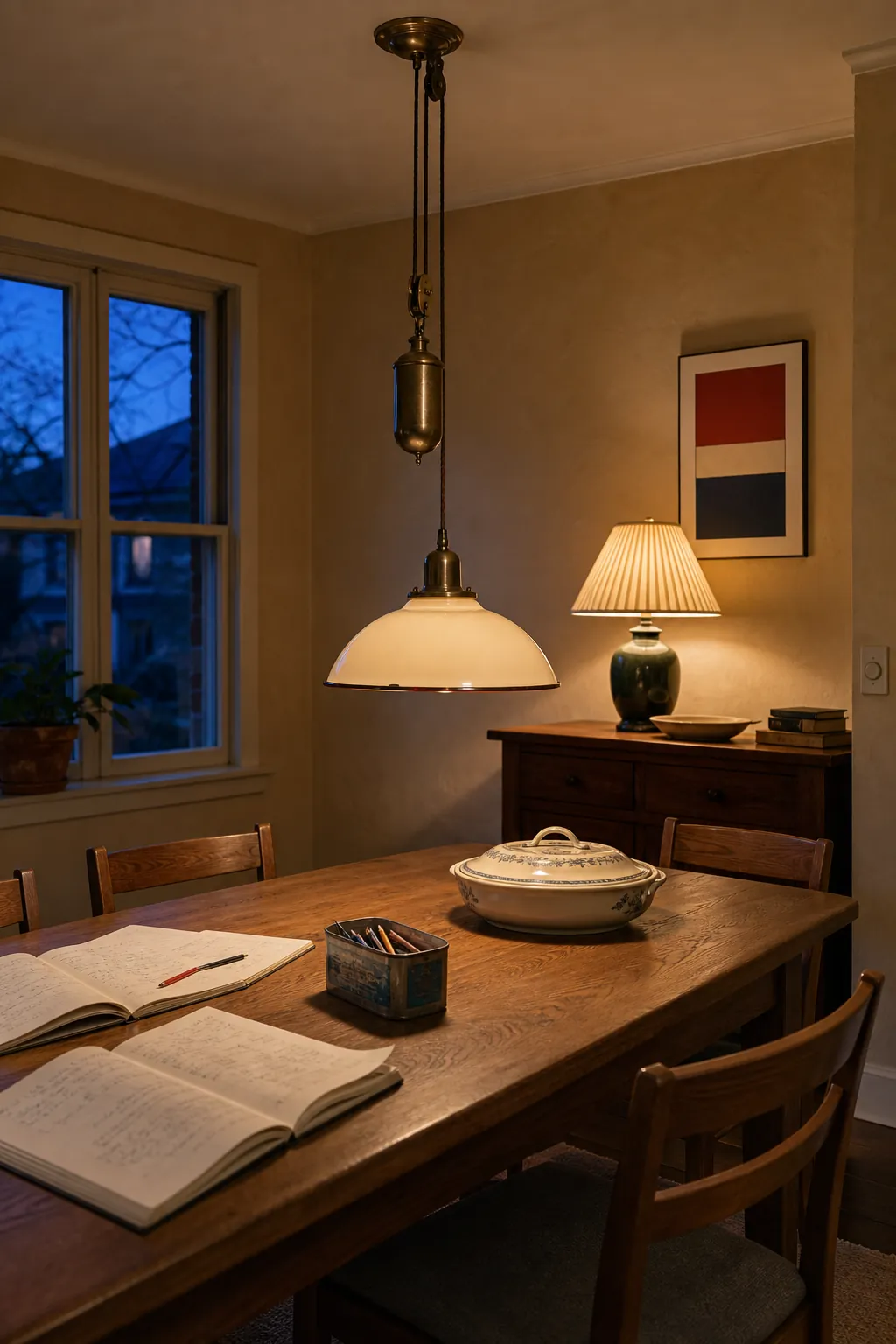
A pendant gives the table a center, especially in an open plan. Its lower edge should feel visually connected to the tabletop without blocking faces or sightlines. A rise-and-fall vintage fixture is especially useful when the same surface shifts from homework to dinner.
Use warm-neutral bulbs with good color rendering so food looks natural. Add a lamp on the sideboard for evening depth, and put bright task light back on when crafts or homework require it. A dimmer lets the room change jobs without changing identity.
Give Daily Supplies a Nearby Home
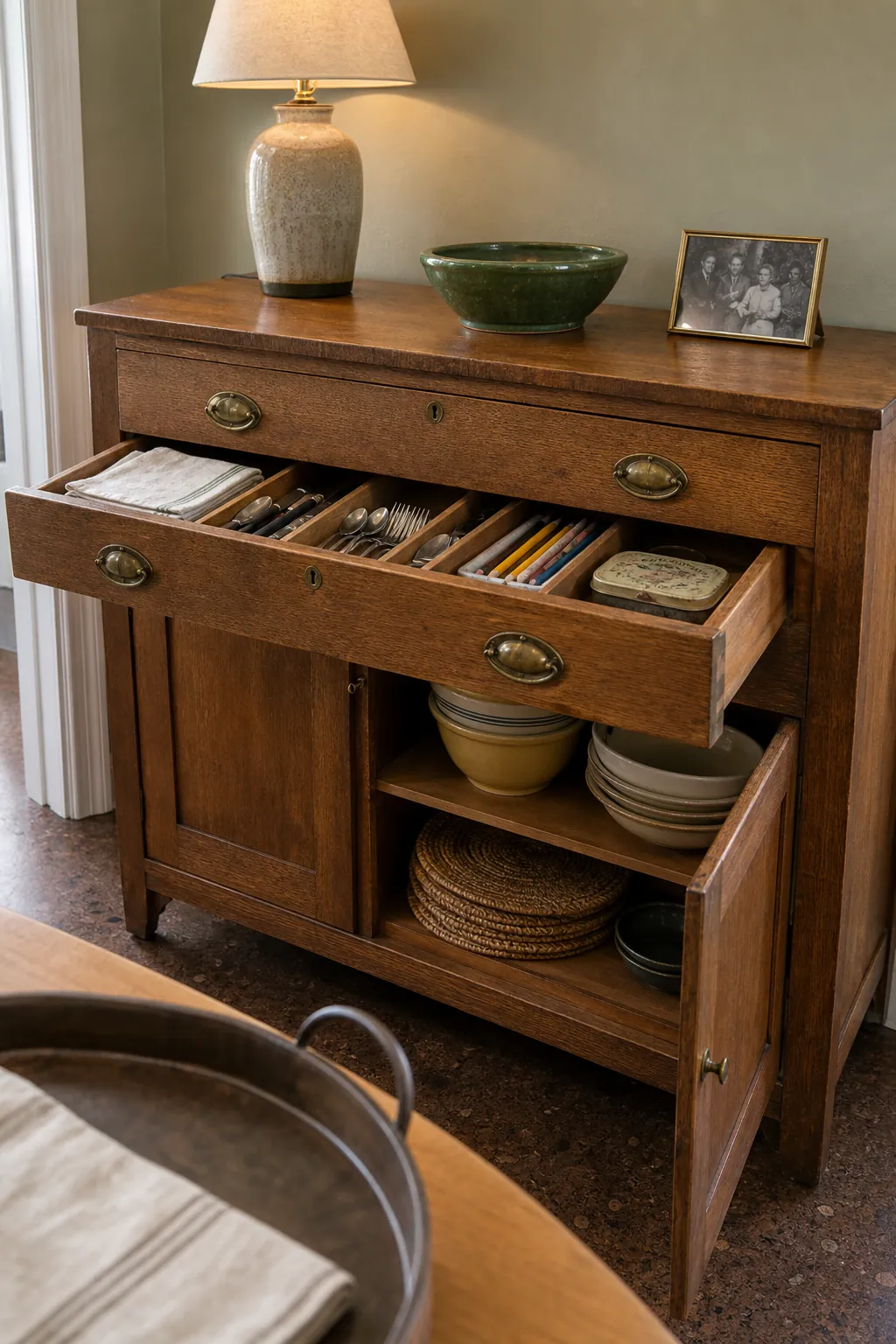
A vintage sideboard can hold napkins, placemats, serving bowls, homework pencils, and the tray that leaves the table at mealtime. Assign drawers by activity and keep the top mostly clear. Storage near the table reduces the temptation to let everyday items accumulate in the center.
Use small boxes or cutlery trays inside rather than filling the surface with baskets. Display only pieces that can tolerate dining-room life: a lamp, a durable ceramic bowl, and perhaps one photograph. The room will feel collected without sacrificing working space.
Let the Room Show Family Life
The final layer is not more retro home decor. It is evidence that people gather here: a child’s drawing in a good frame, a repaired chair, a bowl made by a local potter, a shelf of cookbooks with notes tucked inside, or a table marked by years of shared meals.
Clear the table after each activity, reset the portable centerpiece, and leave one chair slightly angled as an invitation. A vintage dining room feels welcoming when no one has to choose between preserving the look and sitting down together.