

The most useful home cleaning hacks are rarely dramatic. They are the small changes that make the right action easier than postponing it: a cloth within reach of the sink, a basket where belongings naturally land, or a vacuum you can grab without assembling a machine.
That matters because the real enemy is often friction. When a two-minute spill requires a trip to a distant supply closet, the spill waits. When every quick vacuum becomes a whole-house project, the floor waits. Build a home that helps you finish small messes at their source, and weekend cleaning becomes lighter.
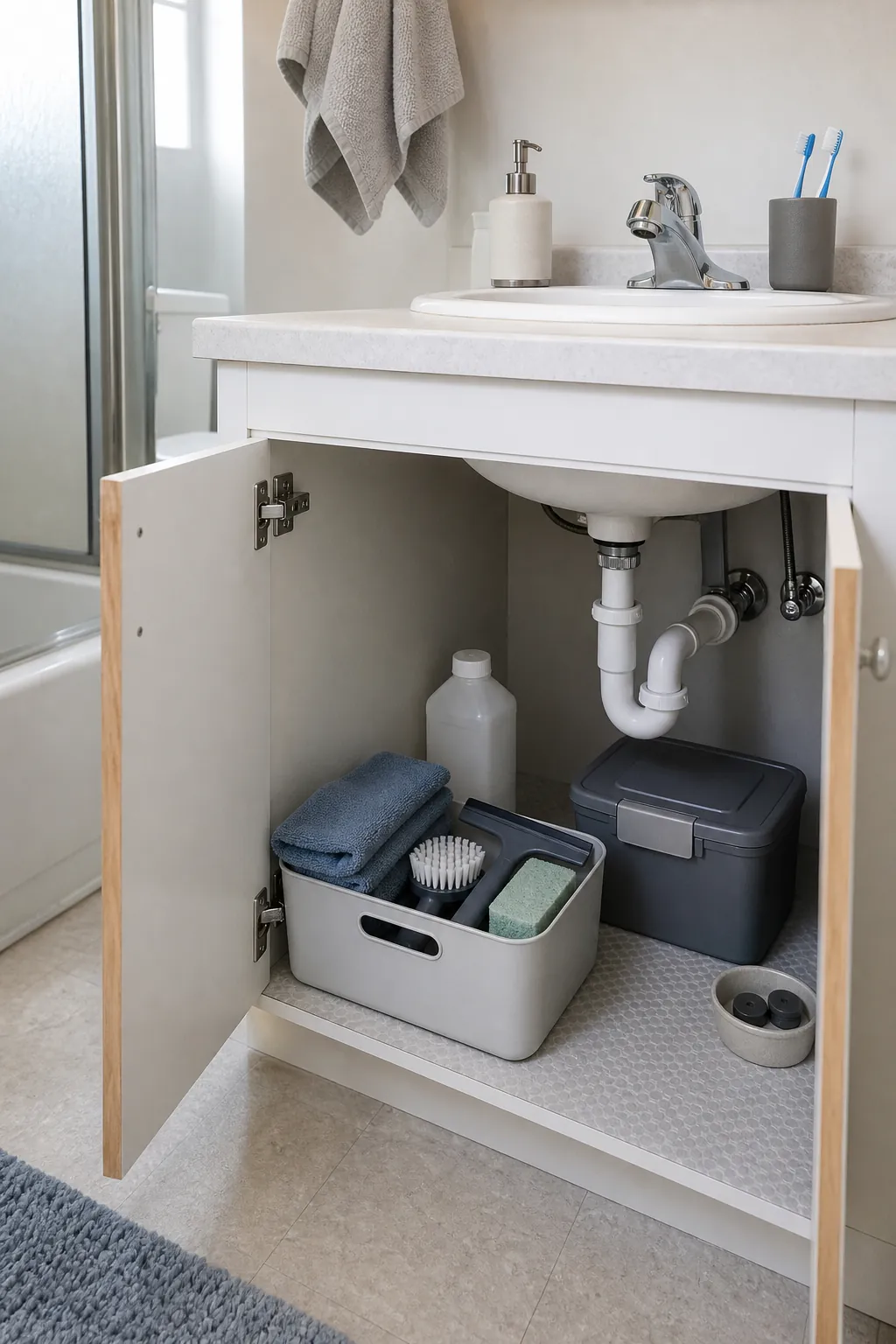
Put a small cleaning kit where messes happen
Instead of one overloaded caddy, keep a minimal, surface-appropriate kit at the point of use. A bathroom might need a microfiber cloth, small squeegee, soft brush, and the cleaner approved for its fixtures. A kitchen kit might hold dish soap, washable cloths, and a non-scratch tool. Keep chemicals secured away from children and pets, and never decant them into food or drink containers.
The rule is simple: store the tool where the cue appears. When toothpaste marks catch your eye, the cloth is already beneath the sink. When shower droplets remain, the squeegee is on its hook. The CDC recommends using products suitable for the surface, following labels, ensuring ventilation when needed, and never mixing products.
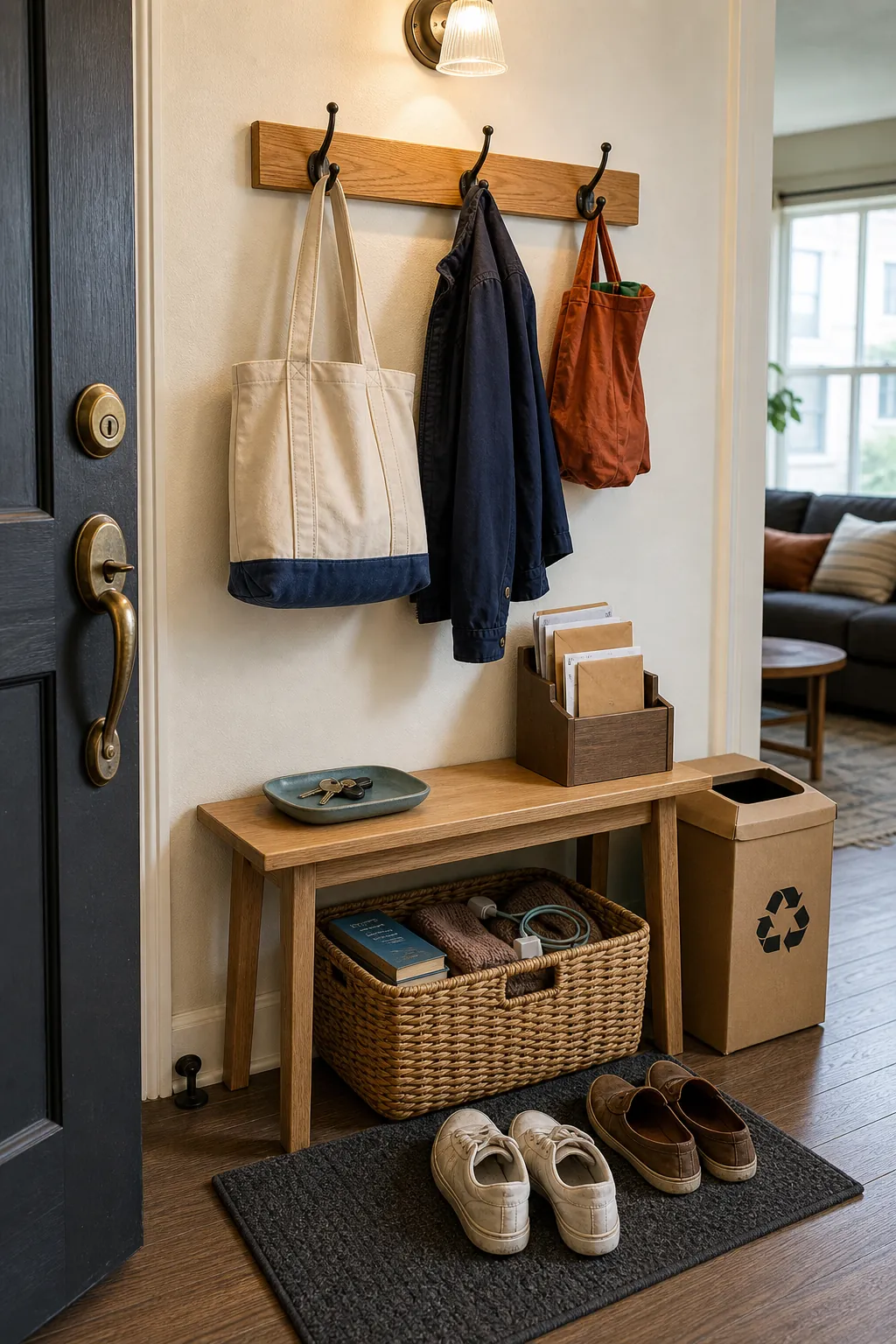
Create drop zones that match real behavior
If shoes, bags, mail, or charging cables land in the same place every day, treat that spot as information. Put a hook, tray, basket, or recycling slot there rather than insisting the household use storage across the room. Good decluttering ideas work with the path people already take.
Use a return basket for items that belong elsewhere. Carry it through the home during a short evening reset and empty it as you go. Limit each drop zone so it cannot become permanent overflow: one tray for mail, one hook per regular bag, and one basket sized for a single reset. Containment is a bridge to putting things away, not a substitute for it.
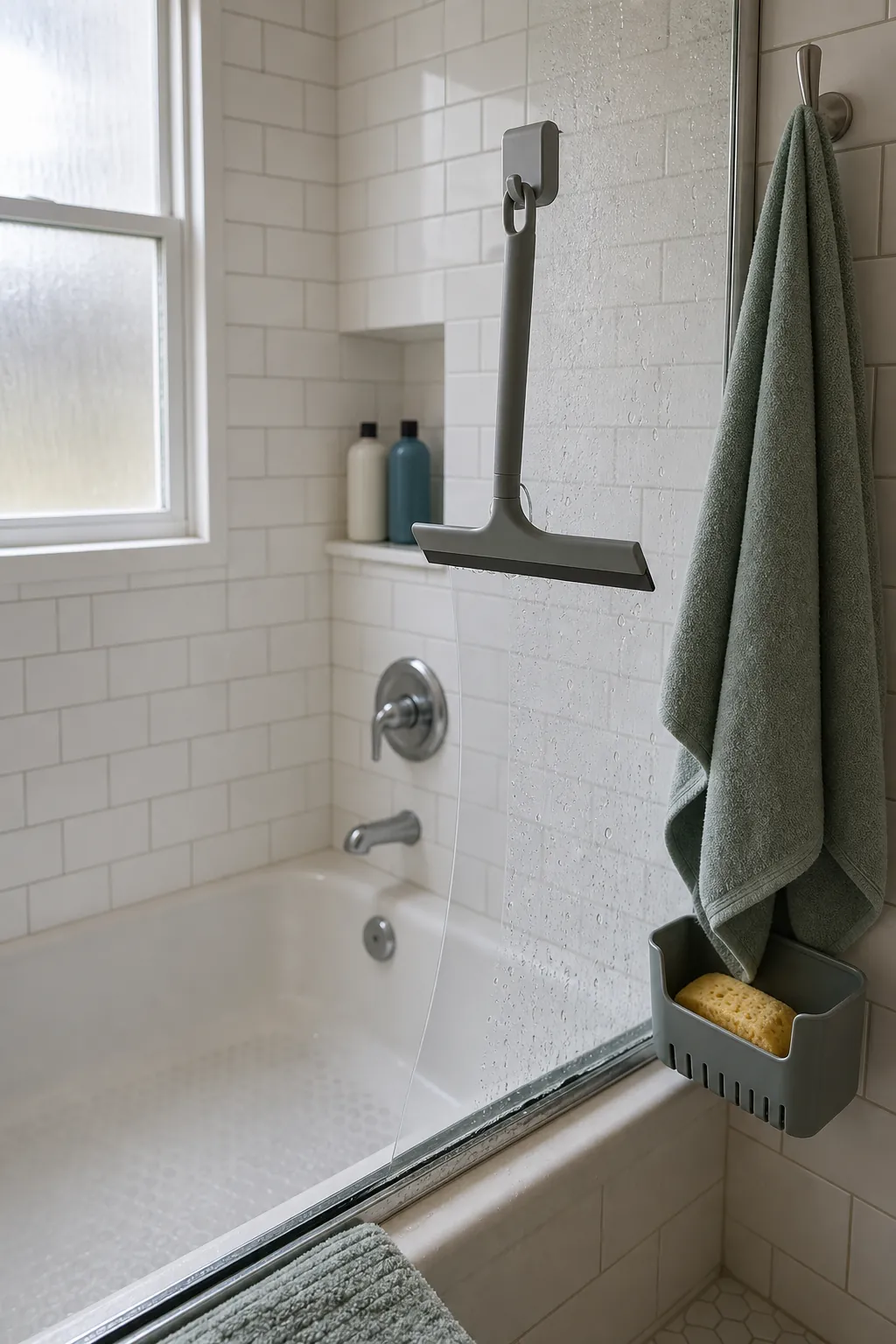
Attach tiny cleans to routines you already do
A habit is easier to remember when it has a reliable cue. Squeegee the shower after the water stops. Wipe the bathroom counter after brushing your teeth. Clear the coffee station while the kettle heats. Check the refrigerator for expired food before taking out the trash. These are life hacks for home because they borrow time from an existing routine.
Keep the task smaller than the cue. The shower habit is only glass and the wettest tile, not a complete bathroom scrub. The kettle habit is only the coffee station, not every cabinet. A two-minute finish repeated often prevents the buildup that turns maintenance into a deep cleaning project.
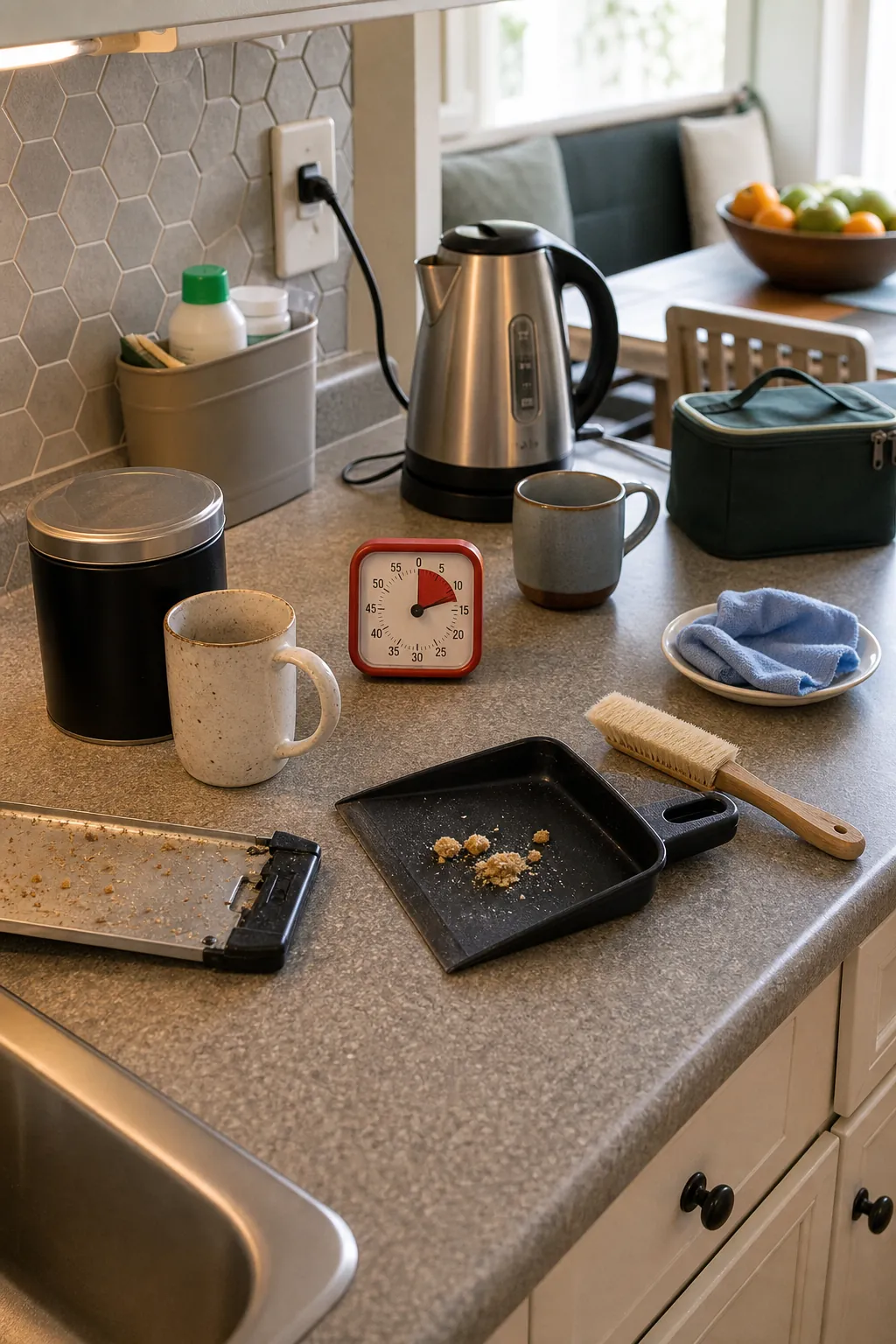
Use waiting time for one visible win
Waiting for pasta water, coffee, or the microwave can disappear into phone scrolling. Give that interval one bounded job: clear the counter, load five dishes, wipe appliance handles, or sweep the high-traffic strip. Stop when the timer ends. You are not trying to sneak an exhausting shift into dinner; you are preventing tomorrow’s mess.
Choose tasks that are safe to pause and keep food separated from cleaning products. Never spray near an active burner or exposed food. A clean sink and open counter at bedtime provide an outsized morning payoff, which is why the kitchen “closing shift” appears so often in real house hacks.
Make reusable cloths easy to use correctly
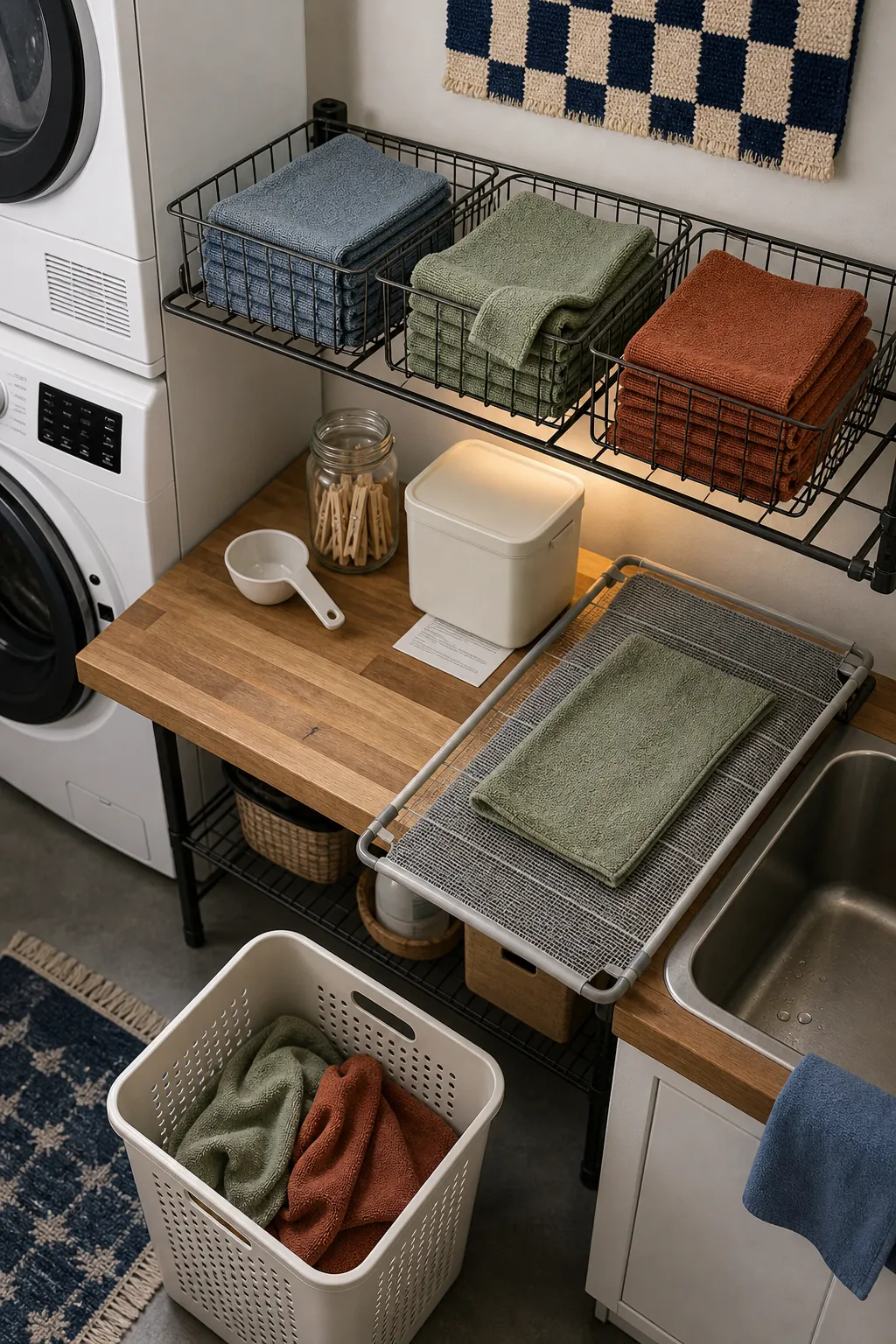
Microfiber works best when the cloth is clean, folded into usable faces, and matched to the task. Assign simple colors or storage locations so a bathroom cloth never wanders onto a kitchen counter. Use a fresh face as one becomes soiled, then place used cloths in a ventilated container to await laundering.
Follow the cloth manufacturer’s wash guidance; fabric softener can reduce the performance of some microfiber. Do not reuse a cloth across raw-food areas and general surfaces. This system is not about achieving a perfect cleaning aesthetic. It is about making the next safe cloth obvious before you reach for a disposable alternative.
Lower the setup cost of floor cleaning
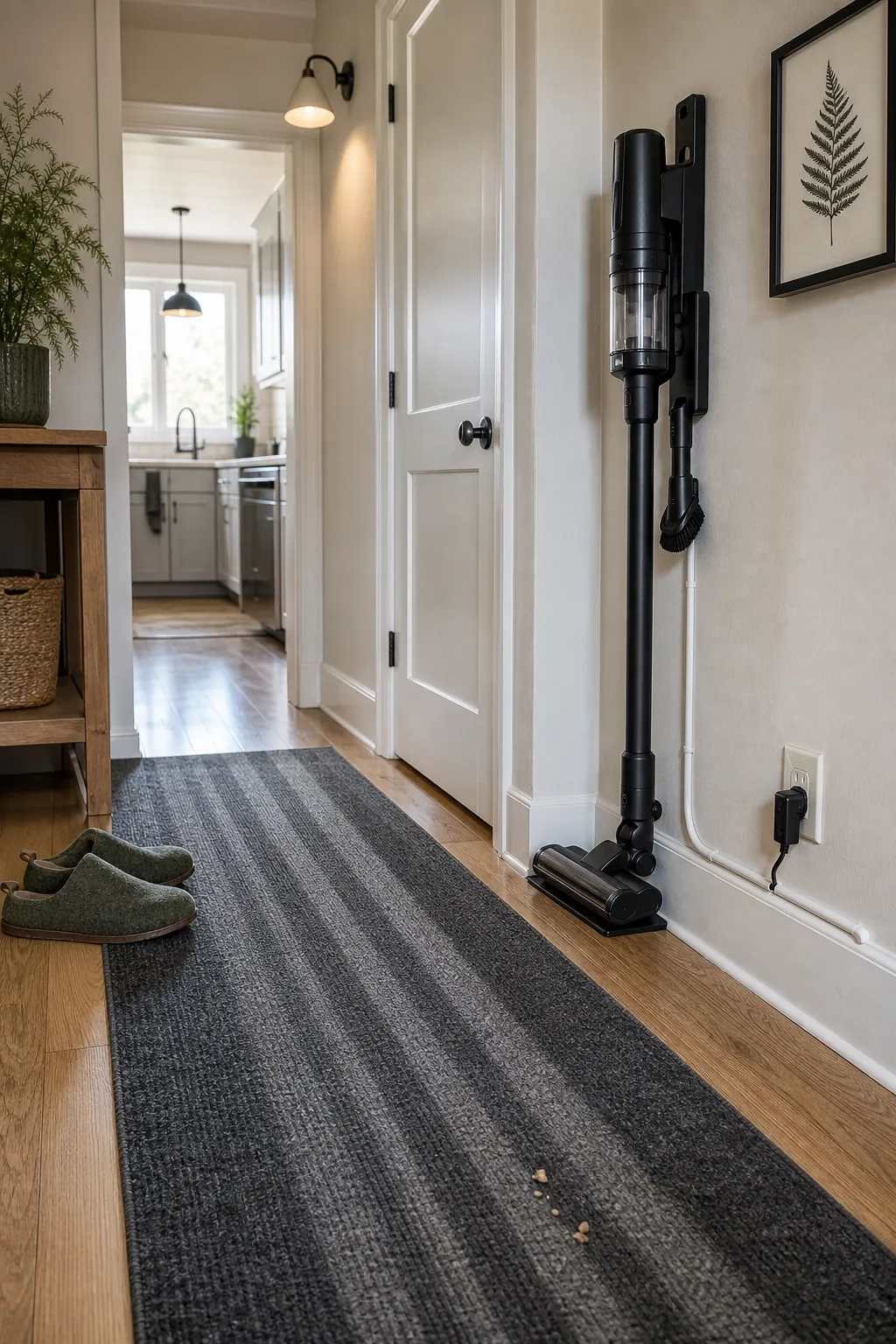
A lightweight broom, hand vacuum, or cordless vacuum stored near the busiest floor can turn a ten-minute delay into a ninety-second pass. Clean the dirty hallway without declaring that every bedroom must also be vacuumed. Spot cleaning is not failure; it is maintenance that keeps grit from traveling.
Choose storage that is stable, does not block an exit, and follows charging and battery guidance. Empty debris and clean filters as the manufacturer directs. Tools only save time when they are ready, so a reachable machine with a maintained filter beats a powerful one buried behind boxes.
Choose a reset you can repeat
Pick three daily outcomes that make tomorrow easier: dishes contained, main surfaces clear, and the busiest floor passable. Everything else can rotate. A bathroom detail on Monday and a bedroom dust on Tuesday will take you further than an elaborate schedule abandoned by Wednesday.
The best home cleaning hacks do not make you clean all day. They shorten the distance between noticing a mess and finishing it. Place the cue, tool, and stopping point together, and a cleaner home becomes the result of ordinary minutes rather than heroic weekends.